Are Inverter Generators More Fuel-Efficient Than Regular Generators?
Quick Answer
Yes, in most real-world use an inverter generator is more fuel-efficient than a regular generator, because its engine slows down when the load is light instead of running at full speed all the time. The saving is largest at light and medium loads, such as a fridge, lights, and a laptop, and smallest at full load. For a ready-made shortlist, see the best fuel-efficient portable generators.
Why the inverter wins most of the time
- Variable engine speed: The engine idles down at light load, so it burns less fuel per hour.
- Eco mode helps: Economy mode lets the engine drop further when demand is low.
- Light-load gap: A fridge and a few lights may draw only 300 watts, far below a regular generator’s fixed-speed appetite.
- Full-load gap shrinks: At near-full load, both types work hard and the fuel gap narrows.
- Size still matters: A right-sized inverter beats an oversized regular generator, even before eco mode.
If you buy for fuel savings, start here
- Add up running watts for your must-run loads, then size close to that total.
- Compare runtime at 25% load on the spec sheet, not tank size alone.
- Turn eco mode off before you start a large motor, such as a fridge compressor.
I’ve run both types through the same kind of night, and the fuel cans told the story before I did the math. A fridge, a CPAP machine, a router, and a few lights ran for hours on one small inverter, while a regular generator drank through the same job much faster.
That gap is not magic. It comes from one design choice: how fast the engine must spin.
This guide explains that choice, shows when it saves fuel, and shows when it does not.
In This Guide
- What Does Fuel-Efficient Mean for a Generator?
- How Does an Inverter Generator Save Fuel?
- How Does a Regular Generator Use Fuel?
- Inverter vs Regular Generator: Fuel Use Compared
- How Much Fuel Can You Actually Save?
- When Is a Regular Generator More Fuel-Efficient?
- Does Eco Mode Really Save Fuel?
- How to Get the Best Fuel Efficiency From Any Generator
- Conclusion
- FAQ
What Does Fuel-Efficient Mean for a Generator?
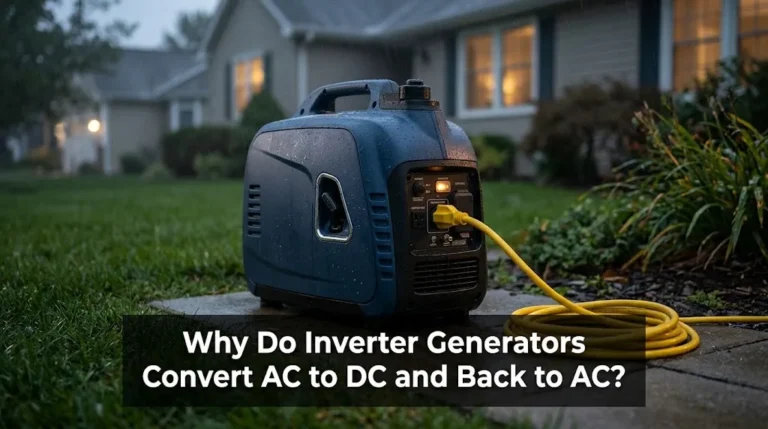
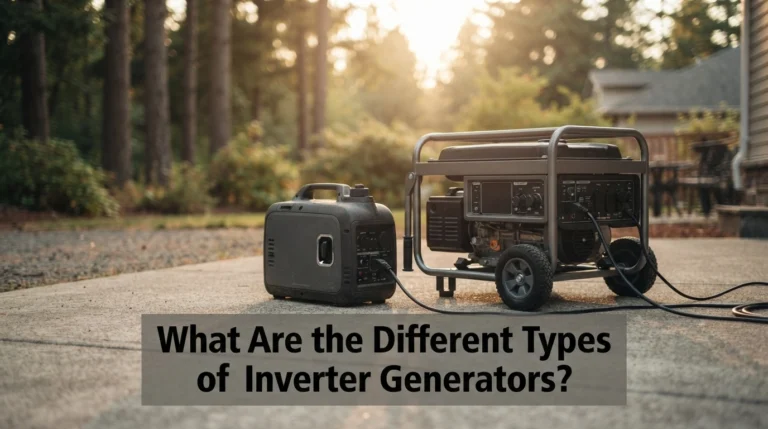
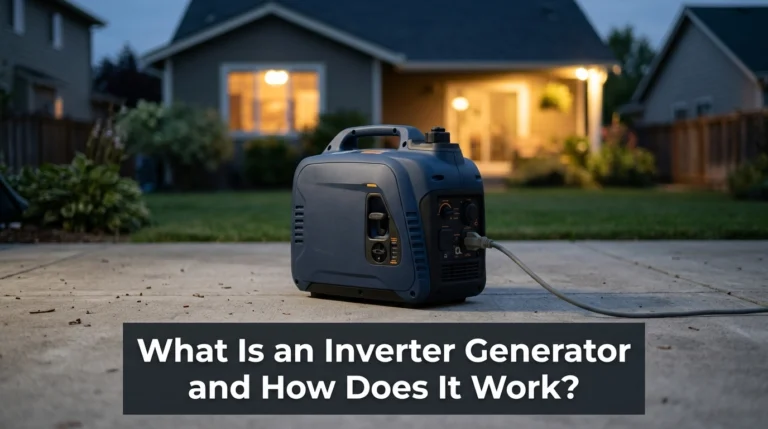
An inverter generator is a portable generator that converts raw power to DC, then rebuilds it as a clean sine wave, so its engine can run at variable speed. A regular generator, also called a conventional or open-frame generator, ties engine speed to output frequency, so it must hold near full speed to make 60-hertz power.
Fuel efficiency for a generator is not miles per gallon. It is how much power you get from each gallon of fuel at the load you run.
Two numbers matter most on a spec sheet. Runtime at 25% load shows light-load efficiency, and runtime at 50% load shows medium-load efficiency.
Tank size alone can mislead you. A big tank can hide a thirsty engine, and a small tank can look weak next to a long runtime.
Use gallons per hour at your load, or hours per gallon, to compare fairly. A unit that runs 8 hours on 1 gallon at a light load beats a unit that runs 8 hours on 3 gallons at the same load, even if both say 8 hours.
Load is the other half of the term. Running watts are the steady watts a device needs to keep running, and starting watts are the brief surge a motor needs to start.
Most home backup loads sit well below full power for most of the night. A fridge cycles on and off, lights draw little, and a laptop draws less than a hair dryer.
That light-load pattern is where the inverter design earns its keep. For the full inverter design in plain English, see what an inverter generator is and how it works.
Section Takeaway: Fuel efficiency means power per gallon at your real load, so compare runtime at 25% load, not tank size alone.
How Does an Inverter Generator Save Fuel?
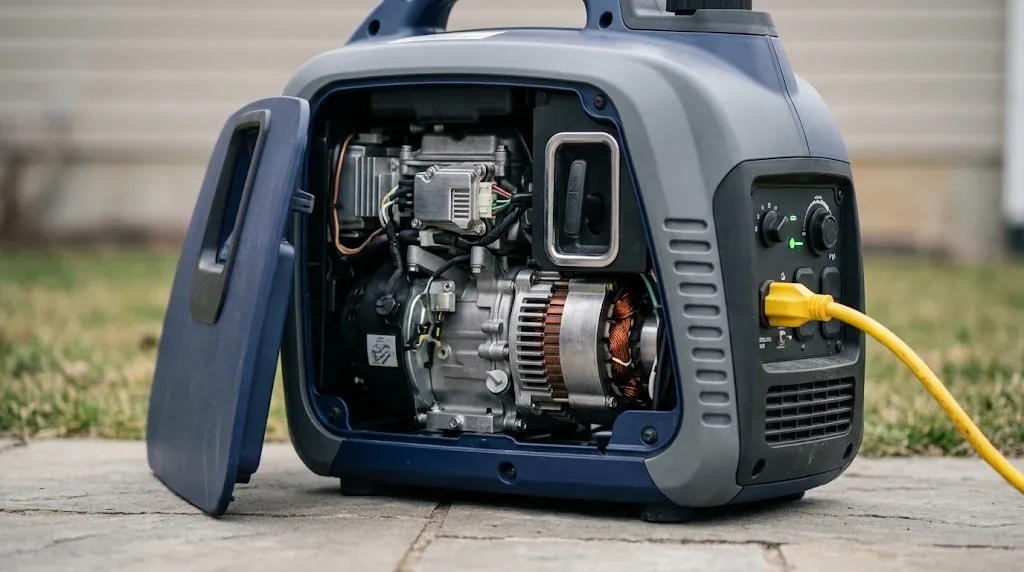
It saves fuel by letting the engine slow down. The inverter module, not engine speed, sets the output frequency.
Here is the path in three steps, with the fuel saving in the last one.
- Burn fuel to spin the engine: Gasoline, propane, or natural gas spins a small engine and alternator.
- Make raw power, then DC: The alternator makes rough, high-frequency AC, and a rectifier turns it into DC.
- Rebuild clean AC: The inverter module turns DC back into a smooth sine wave at 120 volts and 60 hertz.
A microprocessor watches the load the whole time. Plug in a phone charger and it tells the engine to idle down, and start a fridge compressor and it tells the engine to ramp up.
That speed change is the whole trick. A car sips fuel at a steady cruise and gulps it at full throttle, and an inverter engine works the same way.
Power quality follows from the same design. Many quality inverter generators hold total harmonic distortion, or THD, under 3%.
THD describes how far the wave strays from a perfect sine shape, and lower is cleaner. Conventional open-frame generators often run much higher, commonly in the 10 to 25 percent range, depending on load and design.
Some sources list 6 to 25 percent for conventional models, so the range varies by model and source. The clean power matters for laptops, routers, furnace boards, and CPAP machines, but it is not the reason the unit saves fuel.
The fuel saving comes from speed, not from clean power alone. For the voltage and frequency control behind that speed change, see how inverter generators regulate voltage and frequency.
Safety note: Run any fuel generator outdoors only, at least 20 feet from the house, with exhaust pointed away from doors, windows, and vents. Never run it in a garage, even with the door open.
Section Takeaway: An inverter saves fuel because its engine speed follows the load, while the inverter module keeps voltage and frequency steady.
How Does a Regular Generator Use Fuel?
A regular generator burns fuel at near full speed, even when the load is tiny. Its engine speed sets its output frequency, so it cannot slow down without losing 60 hertz.
Most regular portable generators hold about 3,600 revolutions per minute to make 60-hertz power in the United States. That speed stays fixed whether you run a fridge or a single lamp.
Fixed speed has one clear benefit. The design is simple, rugged, and cheap to build at high wattage.
That simplicity is why open-frame models dominate the 5,000-watt-and-up range as of 2026. A large well pump, a welder, or several big motors at once often needs that raw output.
The cost shows up at light load. The engine still spins fast, still pumps air and fuel, and still makes noise, even when the plug draws only 200 watts.
Noise follows the same pattern. A regular generator stays loud at fixed speed, while an inverter quiets down as the engine slows.
Fuel use at full load is a different story. At near-full load, a regular generator is working as designed, and its engine runs at its most useful speed.
That is why a regular generator can look efficient on a spec sheet at 50% or 100% load, yet drink fuel overnight at 15% load. The test load changes the answer.
Section Takeaway: A regular generator must hold near full speed to hold 60 hertz, so it wastes fuel at light load even when it shines at full load.
Inverter vs Regular Generator: Fuel Use Compared
At light load, the inverter wins by a wide margin. At full load, the gap narrows to a small edge.
The table below compares the two types at the same kinds of loads. Use it as a general pattern, not as a rating for any one model, and check the spec sheet for the unit you buy.
| Factor | Inverter generator | Regular generator |
|---|---|---|
| Engine speed | Varies with load | Fixed, near full speed |
| Fuel use at light load | Lower, engine idles down | Higher, engine stays fast |
| Fuel use at full load | Similar, both work hard | Similar, often close |
| Power quality (THD) | Often under 3% | Often 10 to 25% |
| Noise at light load | Usually quieter | Usually louder |
| Typical size | 1,000 to 4,500 running watts | Often 3,500 watts and up |
| Best for | Fridge, CPAP, laptop, RV, camping | Heavy tools, large motors, high load |
Think of it as two cars on the same road. One can coast downhill at low revs, and the other must hold highway revs even in slow traffic.
The inverter coasts at light load. The regular generator holds its revs, because its speed is its clock.
Dual-fuel and tri-fuel models follow the same split. An inverter dual-fuel unit still idles down, while a conventional dual-fuel unit still holds fixed speed.
Propane adds one more wrinkle to the math. Propane often gives about 10% less running watts than gasoline on the same model, so size on the propane rating if propane will be your main fuel.
For the inverter path in more depth, see how inverter generator technology works.
Section Takeaway: The inverter wins big at light load and by a little at full load, so your load pattern decides how much you save.
How Much Fuel Can You Actually Save?
You can save a lot at light load, and a little at full load. The exact saving depends on load, size, and eco mode.
Here is a worked example from a home outage, with different loads from a campsite run. The numbers are illustrative, to show the math, not a test of one model.
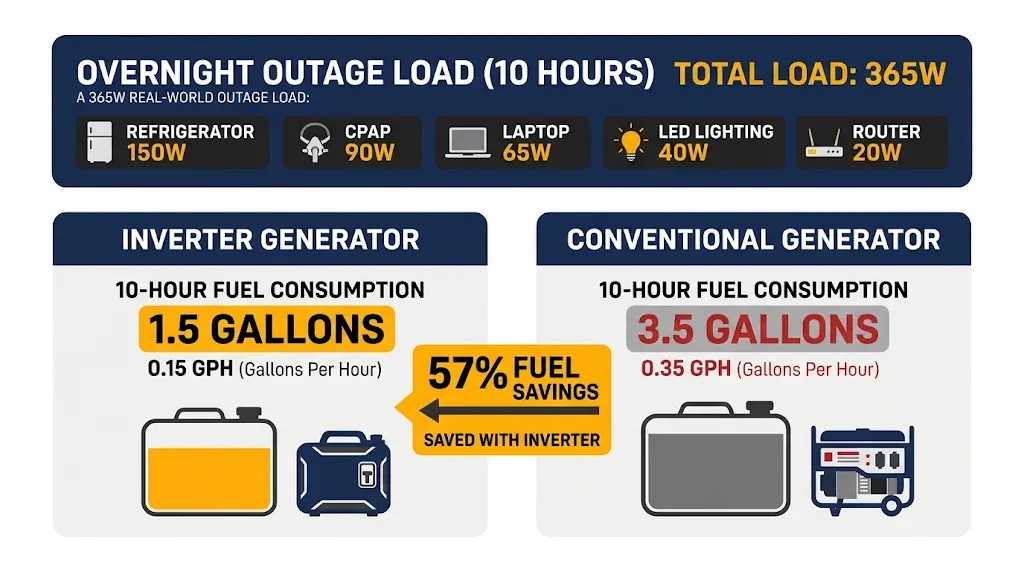
The load list was a fridge at 150 running watts, LED lights at 40 watts, a router at 20 watts, a laptop charger at 65 watts, and a CPAP machine at 90 watts without a heated humidifier. The running total was 365 watts.
That total is a light load for a 2,200-running-watt inverter, about 17% of its rating. It is a very light load for a 3,500-running-watt regular generator, about 10% of its rating.
At that load, an illustrative inverter might burn about 0.15 gallons per hour, while an illustrative regular generator might burn about 0.35 gallons per hour. Over 10 hours, that is about 1.5 gallons against about 3.5 gallons.
The gap shrinks as the load rises. Add a window air conditioner at 800 running watts, and the total jumps to about 1,165 watts.
Now the inverter runs at about half load, and the regular generator runs at about one-third load. Both work harder, and the fuel gap narrows, though the inverter still uses less.
At near-full load, the gap is smallest. Both engines run near their limit, and neither has room to idle down.
Use this simple check before you buy. Find runtime at 25% load on each spec sheet, divide tank size by that runtime, and compare gallons per hour at the same load.
- Step 1, list loads: Write running watts from each device label, then add them.
- Step 2, find 25% runtime: Read runtime at 25% load for each model you compare.
- Step 3, work out gallons per hour: Divide tank size in gallons by runtime in hours.
- Step 4, compare at your load: Pick the model with the lower gallons per hour near your usual load, not the bigger tank.
I learned this check during a multi-day outage, when the fridge and CPAP ran all night and the fuel can had to last until morning. The inverter sipped fuel while the load stayed light, and the morning refill was small enough to skip a trip to the station.
A second lesson from that night: a larger regular generator would have run the same loads, but it would have needed more fuel to do it. Size is part of efficiency, not just engine type.
For the longest-running options in the same cluster, see the best longest-running portable generator guide.
Safety note: Let a generator cool before you refuel it, and store gasoline outdoors in an approved can, away from living spaces. Check your owner’s manual before use.
Section Takeaway: At a 365-watt home load, an illustrative inverter used about half the fuel of a regular generator, and the saving shrinks as load rises.
When Is a Regular Generator More Fuel-Efficient?
A regular generator can win when the load stays high and steady. At full load, fixed speed stops being a penalty.
Think of a job site with saws, compressors, and lights running all day. The load rarely drops, so the inverter has little light-load time to exploit.
A large well pump or a central air conditioner can push the same result. If the load needs 7,000 watts or more for hours, a big open-frame unit may use less fuel per watt than two small inverters linked together.
Price per watt can also tip the choice. A regular generator often costs less per running watt, so the fuel saving from an inverter may take years to pay back if you run it rarely.
Run time matters here. A camper who runs a generator for 20 hours a year will save little fuel in total, while a homeowner who runs one for 200 hours in storm season will save much more.
Oversizing hurts both types, but it hurts the regular type more. A 10,000-watt regular generator running a 300-watt load is the worst case for fuel use.
An oversized inverter still wastes less, because it idles down. An oversized regular generator cannot idle down, so it burns fuel at near full speed for a tiny job.
If you need high watts for a short, heavy job, a regular generator is often the right tool. If you need low watts for a long, light job, an inverter is usually the right tool.
Section Takeaway: A regular generator can win at high, steady load, where fixed speed is no longer a penalty and watts per dollar matter more.
Does Eco Mode Really Save Fuel?
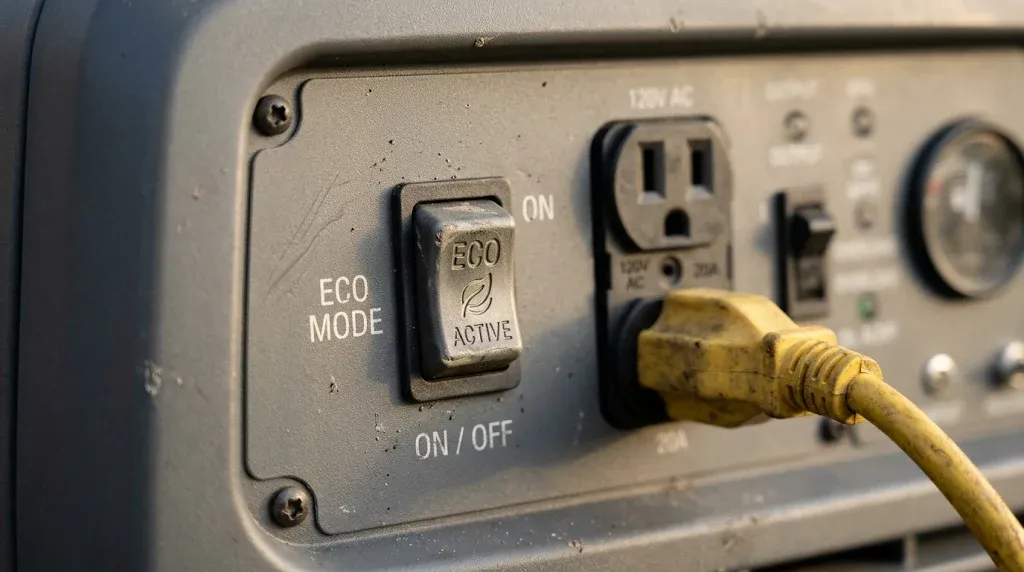
Yes, eco mode saves fuel at light load, when it can let the engine idle down further. It saves little at full load, because the engine must run fast anyway.
Eco mode, sometimes called economy mode or smart throttle, is a switch that lets the inverter engine drop to a lower speed when demand is low. Turn it on for lights, laptops, and a fridge at steady run, and the engine quiets down.
Turn it off before you start a large motor. A fridge compressor, a sump pump, or a window air conditioner can stumble if the engine is idling too low to answer the surge.
I made that mistake once with a window air conditioner on a hot night. Eco mode was on, the compressor tried to start, and the unit surged and tripped.
Turning eco mode off fixed it in one try. The engine was already at a higher speed, so it could meet the starting watts without a dip.
Eco mode also cuts noise at a campsite. A slower engine is a quieter engine, and that matters when neighbours are a few feet away.
Some models call the same feature by a different name, so check your manual for the exact label. The idea is the same: let the engine slow down when the load allows it.
Do not leave eco mode on for a furnace blower that cycles often. The repeated starts can cause the same stumble, and a steady speed may run smoother.
Section Takeaway: Eco mode saves fuel at light load, but turn it off before a large motor starts, so the engine can meet the surge.
How to Get the Best Fuel Efficiency From Any Generator
Size close to your real load, and run only what you need. That habit saves more fuel than any one feature.
Start with a load list, not a headline wattage. Add running watts for must-run devices, add the largest starting watts once, and add about 20% as a margin.
Pick the smallest unit that covers that total with a margin. A 2,000 to 2,500 running-watt inverter often covers a light outage list, while a 3,000 to 4,500 running-watt unit covers a fridge, a furnace blower, and one more large load in turns.
Run large loads in turns, not all at once. A microwave and a window air conditioner together can push a small unit to its limit, while either one alone fits fine.
Keep the engine in good shape, because a dirty air filter or old oil can waste fuel. Change oil per your manual, check the air filter and spark plug, and test the unit monthly under load.
Use fresh fuel, and store it well. Gasoline can go stale in a few months and clog a carburetor, while propane stores for years in a sealed cylinder.
Use a stabilizer for stored gasoline, rotate the can, and run the unit dry for storage if your manual allows it. The EPA publishes general guidance on small-engine fuel care that supports the same habit: fresh fuel, clean air, and regular use.
For house circuits, use a transfer switch or interlock installed by a licensed electrician. See the portable generator with a transfer switch guide for that setup, and never plug a generator into a wall outlet to backfeed a house panel.
Safety note: Run generators outdoors and well away from windows, doors, and vents, and use a transfer switch or interlock installed by a licensed electrician for house circuits. Check your owner’s manual before use.
Carbon monoxide is colorless and odorless, and it can kill. The CDC and the U.S. Consumer Product Safety Commission both warn against running fuel generators indoors or in a garage, and the U.S. Department of Energy publishes general guidance on home energy use.
Section Takeaway: Right-size the unit, run big loads in turns, keep fuel fresh, and maintain the engine, and any generator will use less fuel.
Conclusion
Yes, an inverter generator is usually more fuel-efficient than a regular generator, and the gap is largest at light load. Its engine slows down when demand drops, while a regular generator must hold near full speed to hold 60 hertz.
At full load, the gap narrows, and a regular generator can win for high, steady work.
Size close to your real load, compare runtime at 25% load, and use eco mode wisely. I am Michael Turner, and that 25% runtime check is still the first one I do.
If you want the fuel saving without oversizing, start with your must-run list, then choose the smallest inverter that covers it with a margin. That list, not the headline watts, is the right buying guide.
FAQ
Are inverter generators more fuel-efficient than regular generators?
Yes, in most real-world use. An inverter engine slows down at light load, while a regular generator must hold near full speed to make 60-hertz power. The saving is largest at light load and smallest at full load.
How much fuel does an inverter generator save?
It depends on load and size, so check runtime at 25% load on the spec sheet. At a light 365-watt home load, an illustrative inverter used about half the fuel of a regular generator in the worked example above. At full load, the gap is much smaller.
Does eco mode save fuel on an inverter generator?
Yes, at light load. Eco mode lets the engine idle down further when demand is low, which saves fuel and cuts noise. Turn it off before you start a large motor, such as a fridge compressor or window air conditioner.
Is a regular generator ever more fuel-efficient?
Yes, at high, steady load. A job site or a large well pump that runs near full power for hours gives the inverter little light-load time to exploit. A big open-frame unit can also cost less per running watt.
Does propane change inverter fuel efficiency?
Propane often gives about 10% less running watts than gasoline on the same model, so size on the propane rating if propane will be your main fuel. Propane stores longer than gasoline, which helps for a unit you use rarely.
What size inverter generator is most fuel-efficient for home backup?
The most efficient size is the smallest unit that covers your must-run list with about a 20% margin. A 2,000 to 2,500 running-watt unit often covers a light list, while a 3,000 to 4,500 running-watt unit covers a fridge, a furnace blower, and one more large load in turns.
Do inverter generators use less fuel for camping?
Yes, usually. Camping loads are light, with lights, phones, and a small fridge, so the engine spends most of its time at low speed. That light-load pattern is where the inverter saving is largest, and the lower noise helps at a campsite too.
If you want the fuel saving without oversizing, start with your must-run list, then choose the smallest inverter that covers it with a margin. That list, not the headline watts, is the right buying guide.

Hi, I’m Michael Turner. I own a generator workshop in the United States and founded HomeGeneratorBlog to share practical, hands-on guidance about generator installation, maintenance, troubleshooting, safety, and backup power solutions. My goal is to help homeowners make smarter, more confident decisions through clear and reliable information