What Are the Disadvantages of Inverter Generators?
Quick Answer
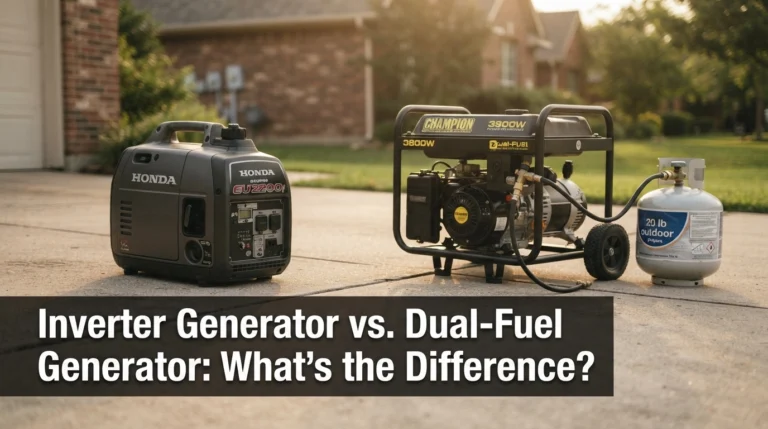
Inverter generators cost more per watt, deliver less peak power, and run for shorter periods than many conventional models. They also need careful load management, and repairs can cost more because the electronics are complex. If you need clean power for phones, laptops, and a CPAP, the trade-offs can still make sense, so start by learning how an inverter generator works before you buy.
The biggest limits at a glance
- Higher price: You pay more for the same running watts than with an open-frame model.
- Lower power: Most portable models top out near 2,000 to 4,500 running watts.
- Shorter runtime: Small tanks mean more refills during a long outage.
- Strict limits: One large motor can trip the overload protection fast.
- Costly repairs: Inverter boards and control modules cost more to replace than simple parts.
- Still fuel-powered: You still need gasoline or propane, safe storage, and outdoor placement.
Who feels these limits most
- Homeowners who want to run a furnace, well pump, and fridge at the same time.
- RV owners who want to run a rooftop air conditioner without a soft start or parallel kit.
- Job-site users who need steady power for saws, compressors, and other high-draw tools.
I like inverter generators a lot, and I use one for camping and light backup power.
I also hit their limits fast when I tried to run too much at once during a storm outage.
This guide covers those limits in plain terms, with real wattage math and honest fixes.
You will learn where an inverter generator shines, where it falls short, and when a different type fits better.
In This Guide
- What Are the Main Disadvantages of Inverter Generators?
- Are Inverter Generators More Expensive Than Conventional Generators?
- Do Inverter Generators Produce Less Power?
- Why Is Runtime Shorter on an Inverter Generator?
- Are Inverter Generators Harder to Maintain and Repair?
- What Limits Do Inverter Generators Have for Home Backup?
- When Is an Inverter Generator the Wrong Choice?
- Frequently Asked Questions
- The Bottom Line
What Are the Main Disadvantages of Inverter Generators?
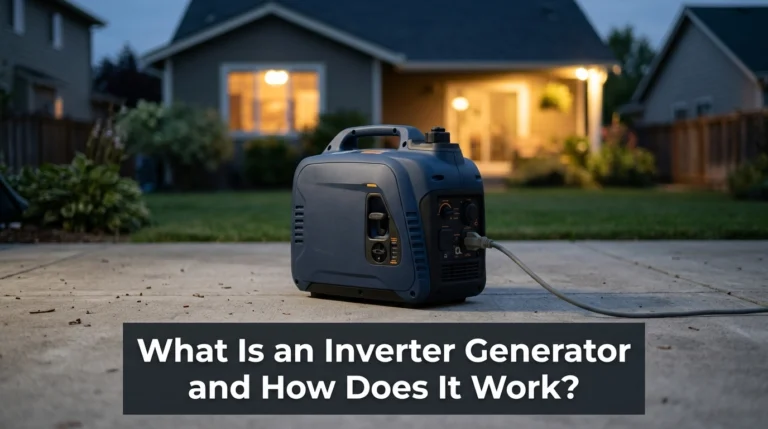
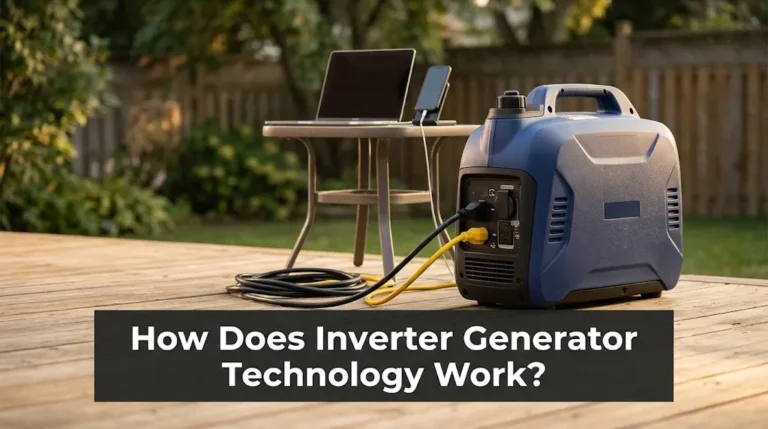
An inverter generator is a portable generator that makes raw AC power, converts it to DC, then rebuilds it as clean, stable AC power.
That clean sine wave protects laptops, phones, and medical devices from voltage swings.
The same design adds cost, adds electronics, and limits peak output.
Think of it as a precise tool, not a brute-force power plant.
The core trade-off in one sentence
You trade raw power and low cost for clean power, quiet operation, and light weight.
That trade works well for camping, tailgating, and charging sensitive gear.
It works less well for whole-home backup or heavy job-site loads.
The main downsides, grouped by impact
- Cost: Inverter models often cost $0.50 to $1.00 or more per running watt, while basic open-frame models cost less per watt.
- Power ceiling: Most popular portable models offer 1,800 to 4,500 running watts.
- Runtime: A 1- to 2-gallon tank can run 4 to 9 hours at 25% load, then needs a refill.
- Overload sensitivity: A fridge compressor plus a microwave can trip the unit in seconds.
- Repair cost: A failed inverter module can cost far more than a carburetor or AVR swap.
- Fuel dependence: Gas models still need fresh fuel, stabilizer, and safe outdoor use.
I learned this during a two-day outage with a 2,200-watt unit.
It ran my fridge, a few lights, and my phone chargers with ease.
It shut down when I added a small window AC on a hot afternoon.
Section takeaway: Inverter generators give you clean, quiet power, but they ask you to plan loads, accept higher cost, and live with a lower power ceiling.
Are Inverter Generators More Expensive Than Conventional Generators?
Yes, inverter generators cost more for the same wattage in most cases.
The inverter module, microprocessor controls, enclosed case, and quiet muffler all add cost.
You pay for clean power and low noise, not just for watts.
How much more should you expect to pay?
A 2,000-watt inverter model often costs $500 to $1,000 as of 2026, depending on brand and features.
A 2,000-watt open-frame conventional model can cost far less, yet it runs louder and delivers dirtier power.
At 3,500 to 4,500 running watts, the price gap can reach several hundred dollars.
Check the spec sheet for running watts, not just the big number on the box.
Where the extra cost pays off
- Electronics: Low THD, often under 3%, suits laptops, TVs, and CPAP machines.
- Noise: Many models run near 50 to 60 dB at 25% load from 23 feet, which suits campsites.
- Fuel use: Eco-throttle slows the engine at light loads, so fuel lasts longer per hour.
- Weight: A 2,000-watt suitcase model often weighs 40 to 55 pounds, so one person can carry it.
Price alone does not tell the full story.
A cheap conventional unit can damage sensitive gear or annoy neighbors at a campground.
A pricey inverter unit can still leave you short on power for a well pump.
If budget is tight, compare affordable inverter generator options by running watts, THD, runtime, and warranty, not by peak watts alone.
Section takeaway: You pay a clear premium for clean, quiet power, so match that premium to loads that need it.
Do Inverter Generators Produce Less Power?
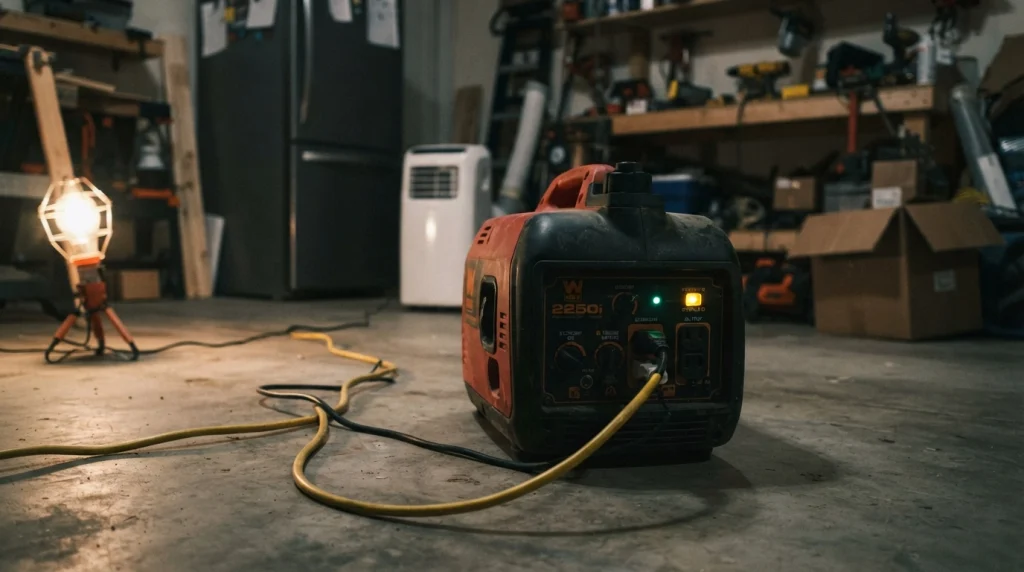
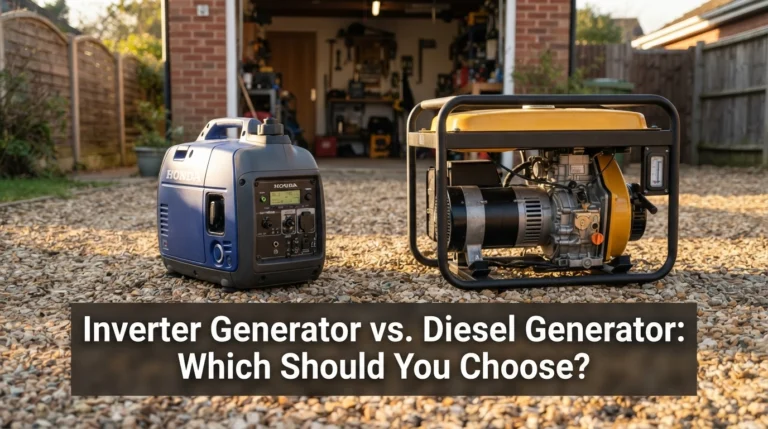
Yes, most portable inverter generators produce less power than similar-size conventional models.
The limit comes from the small engine, the enclosed design, and the inverter module rating.
Heat builds fast in a closed case, so the design caps output to protect the electronics.
Running watts vs. starting watts
Running watts mean the steady power a generator can supply for hours.
Starting watts, also called surge watts, mean the short burst needed to start a motor.
A fridge may need 600 running watts yet 1,200 starting watts for a few seconds.
That gap trips many first-time buyers.
Common loads and what they need
| Load | Typical running watts | Typical starting watts | Fits a 2,200W inverter? |
|---|---|---|---|
| Fridge | 500-800 | 1,000-1,500 | Yes, alone |
| CPAP machine | 30-90 | 30-90 | Yes |
| Window AC, 8,000 BTU | 700-1,000 | 1,800-2,500 | Often no, with other loads |
| Microwave, 1,000W | 1,000-1,300 | 1,000-1,300 | Only alone |
| Sump pump, 1/3 HP | 800-1,000 | 1,500-2,200 | Risky with a fridge |
Use running watts vs. starting watts math before you buy.
Add running watts for all loads you plan to run at once.
Add the largest starting watts once, then keep a 10% to 20% safety margin.
Can you fix low power with parallel operation?
Yes, many inverter models support a parallel kit that links two units.
Two 2,200-watt units can give you near 4,400 watts of combined power.
That fix doubles cost, doubles fuel use, and doubles setup time.
It also needs a matched kit and the same model family in most cases.
Section takeaway: Low power is the most common surprise, so do the wattage math first and treat parallel kits as a costly workaround, not a free upgrade.
Why Is Runtime Shorter on an Inverter Generator?
Small tanks and small engines limit runtime, even with eco-mode.
A suitcase model may hold just 1 gallon of fuel.
A larger open-frame model may hold 4 to 7 gallons and run far longer.
What runtime looks like in real use
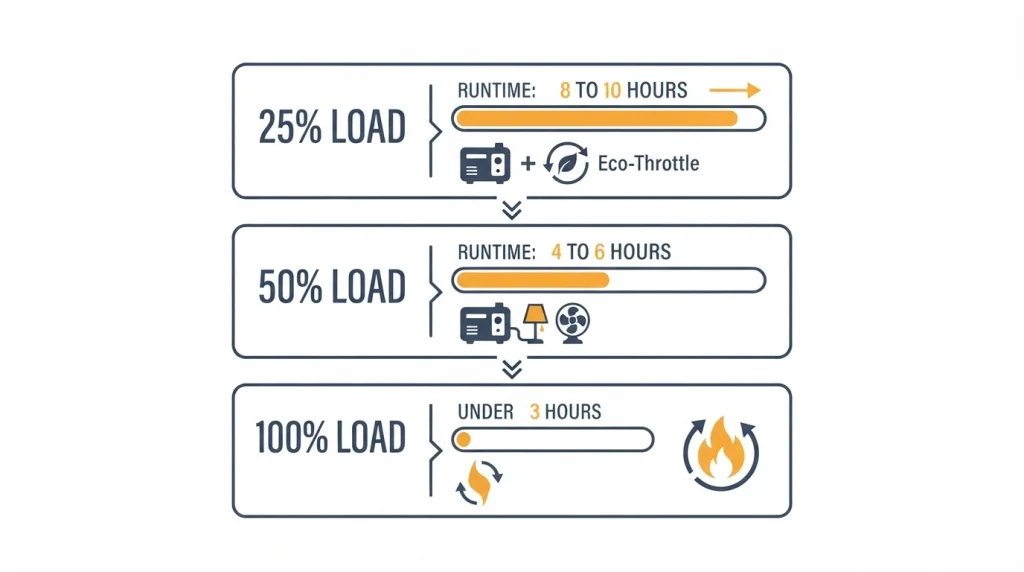
At 25% load, a 2,000-watt inverter may run 7 to 10 hours on one tank.
At 50% load, that same tank may last only 4 to 6 hours.
At full load, runtime can drop to 3 hours or less.
Check the spec sheet for runtime at 25% and 50% load, not just the headline number.
Why eco-mode does not solve everything
Eco-throttle, also called economy mode, slows the engine when loads drop.
It saves fuel for lights, phones, and a fridge at idle.
It can cause a lag when a motor starts, so some users turn it off for fridges and pumps.
That lag can trip overload protection on a tight margin.
Fuel storage adds another limit
- Stale fuel: Gasoline can go stale in 30 days without stabilizer, and it can clog the carburetor.
- Refills: You must shut the unit down, let it cool, and refuel outdoors.
- Night use: A short tank means a 2 a.m. refill during a long outage.
- Propane option: Dual-fuel models run longer on propane, yet propane often cuts running watts by 10% or more.
Compare different types of inverter generators if you need propane, parallel power, or a larger tank.
Safety note: Run generators outdoors and well away from windows, doors, and vents. Store fuel in approved containers, away from living spaces, and never refuel a hot generator.
Section takeaway: Short runtime is a tank-size problem, not a flaw in clean power, so plan refills, fuel storage, and load timing before an outage.
Are Inverter Generators Harder to Maintain and Repair?
Routine care is simple, yet repairs can be harder and costlier than on a conventional unit.
Oil changes, air-filter cleaning, and spark-plug checks follow the same basic steps.
The sealed case and electronic controls make access and diagnosis slower.
Maintenance you cannot skip
- Oil: Change oil after break-in, often near 20 to 25 hours, then per your manual.
- Fuel: Drain old fuel or add stabilizer before storage.
- Air filter: Clean or replace it when dust builds up, since a clogged filter hurts starting.
- Spark plug: Inspect it each season and replace it when the gap or tip shows wear.
- Exercise: Run the unit under load for 20 to 30 minutes every month or two.
Follow a portable generator maintenance schedule and log hours, oil changes, and fuel dates.
A small log saves guesswork when a unit will not start in a storm.
What breaks, and what it costs to fix
Carburetor clogs top the list for gas models left with stale fuel.
Low-oil shutdowns, fouled plugs, and dead starter batteries cause many no-start calls.
Inverter board faults are less common, yet they cost more and often need a dealer or factory part.
Some parts are model-specific, so supply can be slow after a storm season.
I once spent a full evening tracing a surge fault on a friend’s unit.
The carburetor looked clean, the plug looked fine, and the fault stayed.
A shop later traced it to a failing control board, and the repair cost near half the price of a new unit.
Section takeaway: Daily care is easy, but electronic repairs are pricey, so protect the unit with fresh fuel, clean air, and regular exercise runs.
What Limits Do Inverter Generators Have for Home Backup?
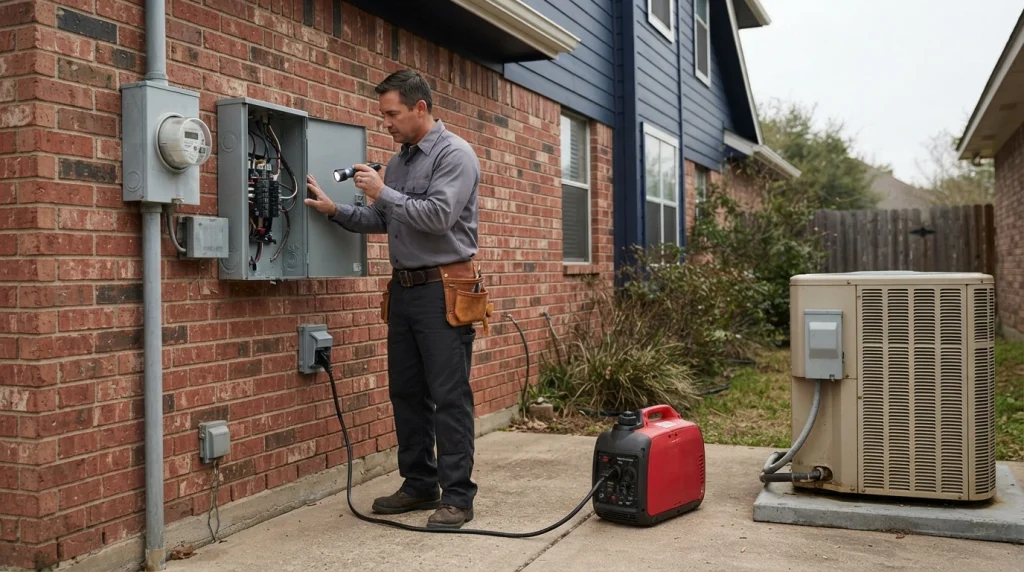
An inverter generator can back up a few key circuits, yet it cannot power a whole home like a standby unit.
The gap shows up with 240-volt loads, hardwired appliances, and simultaneous motors.
Plan for essentials, not for normal life.
Which home loads cause trouble?
- Central AC: Needs far more starting watts than most portable inverters supply.
- Electric water heater: Draws 4,000 watts or more, which exceeds most portable models.
- Well pump: Needs a large surge, and it often needs 240 volts.
- Electric range: Draws too much for a portable unit to run safely.
- Furnace blower: Often fits, yet it must share power with the fridge and lights.
Many small inverter models offer only 120-volt outlets.
That limit rules out 240-volt transfer-switch setups without a larger dual-voltage model.
Check outlet types, not just watts, before you plan a home hookup.
Connection and safety limits
You must never backfeed a home through a wall outlet.
Use a transfer switch, inlet, or interlock kit installed by a licensed electrician.
Use heavy-duty outdoor cords rated for the load, and keep them dry and clear of walkways.
The CPSC generator safety guidance and CDC carbon monoxide guidance both stress outdoor placement, distance from the home, and working CO alarms.
Clean power helps sensitive electronics, yet it does not remove CO risk.
Safety note: Run generators outdoors and well away from windows, doors, and vents. Use a transfer switch or interlock installed by a licensed electrician, and check your owner’s manual before use.
Section takeaway: Home backup with an inverter generator means choosing a few essentials, using safe connections, and accepting that large 240-volt loads stay off.
When Is an Inverter Generator the Wrong Choice?
An inverter generator is the wrong choice when power needs exceed its ceiling or when cost per watt matters most.
It is also the wrong choice when you need long, hands-off runtime without refills.
Match the tool to the job, not to the hype.
Choose a different option when you need
- Whole-home power: A standby generator or a large dual-fuel open-frame model fits better.
- High-draw tools: A conventional portable model gives more watts per dollar for saws and compressors.
- Long runtime: A large-tank conventional model or a propane setup needs fewer refills.
- Zero fuel: A portable power station suits short, indoor-safe use, yet it needs recharging.
- Lowest cost: A basic open-frame model wins when clean power and quiet operation do not matter.
When an inverter generator still wins
Camping, RV trips, tailgating, and light outage backup are its best use cases.
It also wins for CPAP use, laptop charging, and small fridge duty.
It wins when noise rules, weight limits, or fuel savings matter more than peak watts.
Read Energy.gov backup-power guidance and EPA generator resources for safe sizing and placement before you commit.
Check Consumer Reports generator notes for independent test context when you compare models.
Section takeaway: Skip the inverter when you need big, long, or whole-home power, and keep it when clean, quiet, portable power is the real need.
Frequently Asked Questions
Are inverter generators worth it despite the disadvantages?
Yes, for light loads and sensitive electronics, the clean power and low noise often justify the cost.
No, for whole-home backup or heavy tools, a larger conventional or standby model often fits better.
Can an inverter generator run a refrigerator and freezer at the same time?
Often yes, if the combined running watts fit and the starting surges do not overlap.
Start one unit, let it settle, then start the second unit to avoid an overload trip.
Why does my inverter generator shut off under load?
Overload protection trips when total draw exceeds running watts or when a motor surge spikes too high.
Reduce loads, turn off eco-mode for motor starts, and recheck the wattage math.
Do inverter generators use less fuel than conventional generators?
Yes, at light loads, eco-throttle slows the engine and saves fuel.
At full load, the fuel advantage shrinks, and a larger tank may matter more.
Are inverter generators quieter than conventional generators?
Yes, most inverter models run quieter, often near 50 to 60 dB at 25% load from 23 feet.
Noise still rises with load, so check the dB rating at the load you plan to use.
Can I parallel two inverter generators to fix low power?
Yes, many models support a parallel kit that links two matched units for more power.
It doubles cost and setup, so compare it with one larger generator first.
The Bottom Line
Inverter generators are not weak, yet they are not limitless.
They cost more, cap power, and need more refills than larger conventional models.
They also protect your electronics, run quiet, and travel light.
Buy one when clean, quiet, portable power is the goal.
Choose a larger or standby option when you need whole-home power, long runtime, or heavy tool use.
Do the wattage math, plan your fuel, and test your setup before the next outage hits.

Hi, I’m Michael Turner. I own a generator workshop in the United States and founded HomeGeneratorBlog to share practical, hands-on guidance about generator installation, maintenance, troubleshooting, safety, and backup power solutions. My goal is to help homeowners make smarter, more confident decisions through clear and reliable information