Predator 4375 Watt Gas Powered Portable Generator Review: Is It Worth Buying?
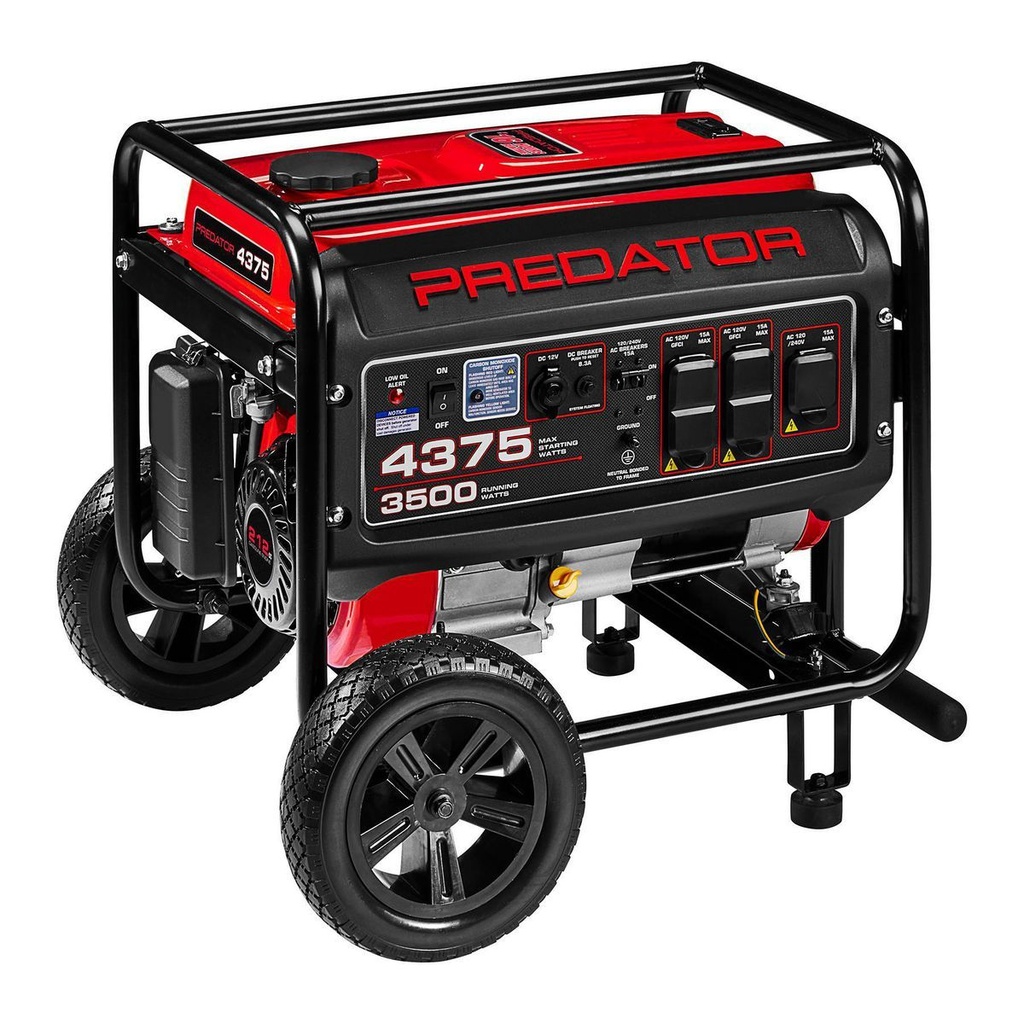
The Predator 4375 Watt Gas Powered Portable Generator is a conventional, gasoline-fueled generator with carbon monoxide shutdown protection. It provides temporary electricity for selected household essentials, outdoor work, and emergency equipment during outages.
This Predator 4375 watt gas powered portable generator review examines the 49-state CO SECURE model identified as item 59207. It is positioned for buyers who value straightforward backup power over inverter-level quietness or electronic power conditioning.
Our assessment uses published manufacturer specifications and operating instructions rather than claimed hands-on testing. Actual results depend on electrical loads, maintenance, and operating conditions.
🏆 My Quick Verdict
💡 Best For: Homeowners needing selected outage essentials and users running moderate loads at outdoor worksites.
⚡ Key Specs:
4,375 starting watts; 3,500 running watts; 212cc engine; 120/240V output; up to 16 hours at 50% load.
✅ Bottom Line: This generator covers a practical range of prioritized loads with useful outlet choices. Recoil starting, substantial weight, and conventional electrical output remain the main compromises.
At a Glance
- 3,500 continuous watts suit a carefully selected collection of essential loads.
- 4,375 starting watts provide limited surge capacity for motor startup.
- The 120/240V twist-lock outlet supports compatible transfer equipment.
- CO SECURE can shut down operation when elevated carbon monoxide is detected.
- Harbor Freight claims up to 16 hours of runtime at half load.
- The wheel kit is separate, and sensitive electronics need special consideration.
Predator 4375 Generator Specifications
| Specification | Verified Detail |
|---|---|
| Model | Predator 4375, item 59207 |
| Starting / running output | 4,375W / 3,500W |
| Engine | 212cc, four-stroke OHV |
| Fuel | Unleaded gasoline, 87 octane or higher |
| Recommended fuel fill | 4 gallons (per manual revision) |
| Runtime | Up to 16 hours at 50% load |
| AC output | 120/240V, 60Hz |
| Receptacles | Two GFCI duplex 5-20 outlets; one L14-30; one 12V DC |
| Listed weight / sound | 105 lb / 72.5 dB(A) |
| Starting method | Manual recoil |
| Safety | CO SECURE shutdown; low-oil protection; breakers |
Design & Build Quality
The Predator 4375 uses an open tubular frame surrounding the engine, tank, and alternator. This arrangement provides accessible controls and exposed service points, though it offers little sound shielding.
Its top-mounted fuel gauge helps owners check fuel without removing the cap. A 105-pound listed weight makes regular lifting inconvenient, especially across uneven ground.
A compatible wheel kit is offered separately rather than as standard equipment. Measure your available storage space and travel path before assuming this is easy to move.
Setup, Installation & Ease of Use
- Inspect the carton, frame, receptacles, and controls for shipping damage before assembly.
- Place the generator on a level outdoor surface at least 20 feet from structures and people.
- Follow the manual’s oil-fill instructions before attempting the first start.
- Add the specified gasoline without filling above the recommended fuel level.
- Check the fuel valve, choke, engine switch, and recoil starter positions.
- Start without connected appliances and allow the engine to warm up.
- Use suitable outdoor-rated cables and match every plug to its correct receptacle.
- Have a licensed electrician install compatible transfer equipment for household circuits.
- Disconnect loads, allow cooling, and follow fuel-storage procedures before putting the unit away.
Core Performance & Feature Breakdown
Its practical output ceiling is 3,500 running watts, not the larger starting-watt figure. That distinction determines how many devices may remain connected continuously.
A refrigerator, selected lighting, networking equipment, and a modest tool may fit together if measured loads allow. A large electric heater or multiple motor-driven appliances can quickly consume the remaining capacity.
Starting surges require separate calculations because compressor and pump motors briefly demand additional electricity. Our portable generator wattage guide explains how to estimate simultaneous demand.
Expert Insight
Add the running watts of every simultaneous load, then account for the largest additional motor-start surge; keep both totals within the generator’s respective ratings. Avoid starting multiple large motors together.
Harbor Freight’s runtime figure is a best-case published claim under its stated half-load condition. Actual hours vary with demand, temperature, fuel quality, and maintenance.
CO SECURE is a valuable secondary precaution, not permission to operate near occupied spaces. The owner’s manual requires outdoor positioning well away from doors, windows, and vents.
Key Features Explained
120/240-Volt Twist-Lock Output
The L14-30 receptacle accommodates suitable four-prong, 120/240-volt connections. It does not authorize a direct connection to a home’s wall outlet or panel without proper transfer equipment.
GFCI-Protected Household Outlets
Two 120-volt duplex GFCI receptacles provide four standard plug positions with ground-fault protection. Total available generator power still limits what can operate simultaneously.
CO SECURE and Low-Oil Protection
The CO sensor can stop operation when harmful carbon monoxide accumulates, while low-oil protection helps protect the engine. Neither replaces safe placement, ventilation, or routine oil checks.
Recoil Starting and Fuel Gauge
The pull-start mechanism avoids reliance on an electric-start battery, while the gauge simplifies fuel checks. Repeated manual pulls may be inconvenient for some operators.
Real-World Usability & Maintenance
For an outage, prioritize refrigeration, communications, medical equipment only where approved, and limited lighting before optional appliances. Make a written load plan and test the setup safely before an emergency.
Check oil before each use, inspect the air filter periodically, and maintain the spark plug according to the manual. Fuel left untreated during storage can lead to starting problems and carburetor service.
Keep the unit dry while stored and protect it from direct rain during operation without enclosing its exhaust. Never refuel a running or hot engine, and keep appropriate fire protection available.
Pros & Cons
Pros
- 3,500 running watts cover prioritized essentials without stepping into a much larger generator class.
- The L14-30 outlet gives qualified installers useful connection flexibility.
- CO SECURE adds an automatic shutdown safeguard for hazardous carbon monoxide buildup.
- GFCI receptacles and a visible fuel gauge simplify routine operation.
Cons
- Its conventional output is not intended for sensitive electronics without appropriate protection.
- The 105-pound weight makes optional wheels especially useful.
- Recoil starting and a 72.5 dB(A) listed sound level may limit convenience.
Common Issues & Fixes
Engine Will Not Start
Stale gasoline, low engine oil, or incorrect choke settings can prevent startup. Check these items using the manufacturer’s troubleshooting procedure before requesting service.
Circuit Breaker Trips
Overloaded receptacles may stop delivering electricity even when the engine continues running. Disconnect loads, reset the appropriate breaker, and reconnect equipment gradually within rated limits.
Unexpected CO Shutdown
A CO SECURE warning may indicate dangerous exhaust accumulation around the machine. Move away, allow fresh air to disperse the gas, and correct the outdoor placement before restarting.
What to Know Before You Buy
First, confirm that your appliances and cables match the generator’s outlet types and power ratings. The 120/240-volt receptacle does not guarantee compatibility with every RV or household inlet.
Second, the manufacturer warns against directly powering sensitive electronics without suitable conditioning and surge protection. Compare inverter versus conventional generators if computers or delicate equipment are priorities.
Third, review the current retail warranty, including its limitations, before purchase. The referenced manual lists a 90-day limited retail warranty and separate emissions coverage.
Finally, the linked Amazon buttons open search results rather than a confirmed listing for this exact model. Verify the seller, item identity, availability, and return terms before paying.
Who Should Buy It / Who Should Skip It
✅ Who Should Buy It
- Households building a modest, essentials-first outage plan.
- DIY users who need portable 120/240-volt output for compatible tools.
- Buyers comfortable with basic gasoline-engine maintenance.
✗ Who Should Skip It
- People expecting silent camping or indoor-safe operation.
- Users needing automatic whole-house backup or electric starting.
- Owners whose primary requirement is clean inverter power.
Alternatives to Consider
Two comparable options answer different priorities: fuel flexibility and cleaner electrical output. Compare exact receptacles and operating conditions before choosing either.
Westinghouse WGen3600DFcv
Best For: Users wanting gasoline or propane fuel choice.
Main Advantage: Dual-fuel capability with CO shutdown and an RV-ready TT-30R outlet.
Trade-off: Lower output on propane than gasoline.
Key Spec: 4,650 starting / 3,600 running watts on gasoline.
Champion 4250W Open Frame Inverter with CO Shield, 201274
Best For: Buyers seeking inverter-style electricity with similar running capacity.
Main Advantage: Inverter output and a published 64 dBA operating sound rating.
Trade-off: A different outlet arrangement requires compatibility checks.
Key Spec: 4,250 starting / 3,500 running watts on gasoline.
Is the Predator 4375 Worth It?
The Predator 4375 is worth considering when the intended task is limited backup electricity rather than convenience-first recreation. Its appeal depends on whether your essential-load calculation stays comfortably below 3,500 running watts.
Overall value also depends on any extra wheel kit, cords, transfer equipment, and service costs. Compare the complete ownership setup, not only the generator’s advertised wattage.
Final Verdict
The Predator 4375 Watt Gas Powered Portable Generator is a sensible conventional option for carefully managed emergency loads. Choose it for basic 120/240-volt utility and CO shutdown protection, while respecting its noise, weight, and electronics limitations.
Frequently Asked Questions
Can the Predator 4375 power a whole house?
No, it is intended for selected electrical loads. Its 3,500 running watts cannot cover an unrestricted whole-house appliance schedule.
Can I connect the Predator 4375 to a transfer switch?
Yes, with correctly matched equipment installed by a qualified electrician. The L14-30 outlet provides 120/240-volt output; confirm the configuration using our portable generator transfer switch guide and professional advice.
How heavy is the Predator 4375, and does it include wheels?
Its listed weight is 105 pounds, and wheels are optional. Allow additional room and assistance for safe transportation and storage.
What is the Predator 4375 warranty?
The referenced owner’s manual lists a 90-day limited retail warranty. Confirm separate emissions coverage and terms applicable to your purchase date and seller.
How should I maintain and store this generator?
Follow the manual’s oil, air-filter, fuel, and storage schedule. Store it cool and dry, away from ignition sources, following the service instructions for prolonged storage.
Can I safely run laptops or a TV from this generator?
The manufacturer advises appropriate power conditioning and surge protection for sensitive electronics. An approved inverter generator is another option when electrical quality matters most.
Affiliate disclosure: HomeGeneratorBlog earns a small commission when you purchase through links on this page — at no extra cost to you. Our editorial process is independent: affiliate relationships never influence which products we recommend or how we rank them.

Hi, I’m Michael Turner. I own a generator workshop in the United States and founded HomeGeneratorBlog to share practical, hands-on guidance about generator installation, maintenance, troubleshooting, safety, and backup power solutions. My goal is to help homeowners make smarter, more confident decisions through clear and reliable information