Can an Inverter Generator Run a Freezer? Sizing, Runtime & Safe Setup
Quick Answer
Yes, an inverter generator can run a freezer, and most freezers need only 100 to 200 running watts once the compressor is going. The hard part is the startup surge, so you need enough starting watts to get the compressor turning. Learn how to calculate the wattage you need before you plug in.
What size do you need?
- Small chest freezer: A 2,000-watt inverter generator usually covers it with room to spare.
- Large chest freezer: Plan for 2,200 to 3,000 watts to handle the higher startup surge.
- Upright freezer: Most need 2,000 to 3,000 watts, especially older models with bigger compressors.
- Freezer plus fridge: Add both starting watts together, then choose a generator above that total.
- Safe margin: Keep at least 20% headroom above your highest starting load.
Do this first
- Check the label on your freezer for running watts and starting watts before you buy or borrow a generator.
- Start the generator first, let it warm up, then plug the freezer in alone.
- Keep the freezer closed as much as you can so it cycles less and stays cold longer.
I’ve run a chest freezer through a three-day outage, and the food stayed frozen the whole time. It worked because I sized the generator for the startup surge, not just the running watts.
This guide walks through real freezer wattage, sizing math, runtime, and safe hookup. You’ll know exactly what size inverter generator you need by the end.
In This Guide
- How Much Power Does a Freezer Use?
- What Size Inverter Generator Do I Need for a Freezer?
- Can a 2000-Watt Inverter Generator Run a Freezer?
- How to Run a Freezer on an Inverter Generator Safely
- How Long Can an Inverter Generator Run a Freezer?
- Freezer vs Refrigerator: Which Needs More Generator Power?
- Common Mistakes When Powering a Freezer With a Generator
- What Is the Best Inverter Generator for a Freezer?
- Frequently Asked Questions
How Much Power Does a Freezer Use?
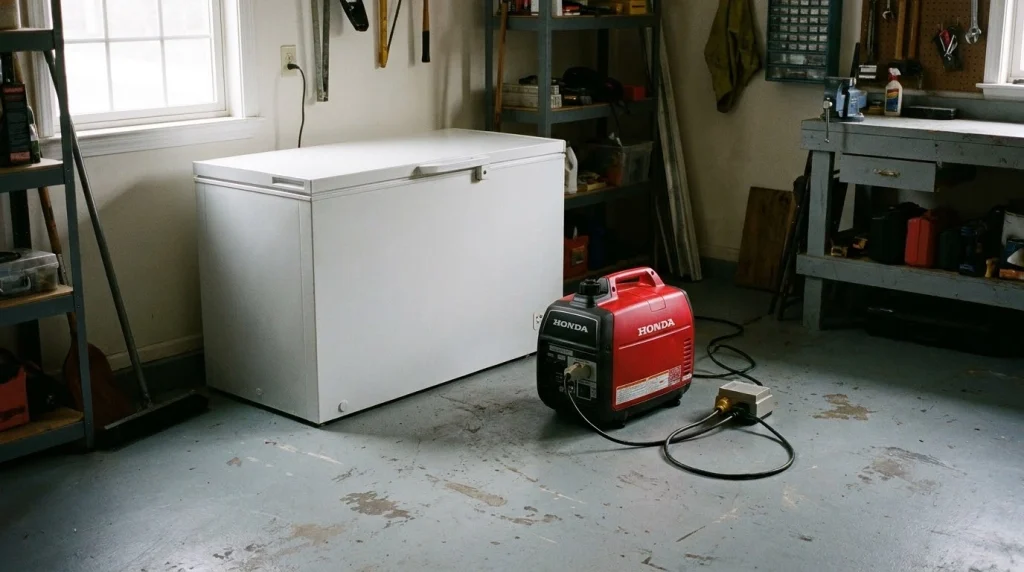
A freezer uses far less power than most people expect once it is running. Most chest and upright freezers draw only 100 to 200 running watts in normal use.
The startup surge is the number that matters. A freezer compressor can pull 800 to 1,200 watts for a few seconds when it kicks on.
An inverter generator is a portable generator that makes clean, stable power by converting raw AC power to DC, then back to clean AC power. That clean sine wave matters for a freezer, because the compressor motor and any electronic controls run smoother on stable voltage and frequency.
Freezer size, age, and type change the numbers. A small 5-cubic-foot chest freezer is the easiest load on this list.
A large 15-cubic-foot chest freezer or an older upright model needs more starting power. Frost-free upright freezers can also draw extra watts during a defrost cycle, so check the label for that figure too.
| Freezer Type | Running Watts | Starting Watts | Typical Generator Size |
|---|---|---|---|
| Small chest freezer, 5 cu. ft. | 80–120 watts | 600–900 watts | 2,000 watts |
| Medium chest freezer, 7–10 cu. ft. | 100–150 watts | 800–1,100 watts | 2,000–2,200 watts |
| Large chest freezer, 14–16 cu. ft. | 130–200 watts | 1,000–1,400 watts | 2,200–3,000 watts |
| Upright freezer, 14–20 cu. ft. | 120–200 watts | 900–1,500 watts | 2,000–3,000 watts |
| Frost-free upright freezer | 150–250 watts | 1,000–1,800 watts | 3,000 watts |
These are typical ranges, not specs for your exact model. Check the spec sheet or the label inside the door for your freezer’s real numbers.
A freezer does not run its compressor all the time. It cycles on and off to hold temperature, so average power use stays low over a full day.
That cycling is why eco mode works so well here. The generator can throttle down between compressor cycles and save fuel.
Section Takeaway: Most freezers need only 100 to 200 running watts, but plan for 800 to 1,500 starting watts so the compressor starts cleanly every time.
What Size Inverter Generator Do I Need for a Freezer?
Size the generator for starting watts, then add your other loads on top. Running watts alone will leave you short at the exact moment the compressor kicks on.
Start with the freezer label. Write down its running watts and its starting watts, or its locked-rotor amps if watts are not listed.
If the label lists amps only, multiply amps by volts to get watts. A freezer that draws 5 amps at 120 volts needs 600 watts to run.
Now add a safety margin. I use 20% headroom as a minimum, and 30% feels better in hot weather or with an older freezer.
Here is the simple math I use in the field. It takes two minutes and it prevents overload shutdowns.
- Step 1: Note the freezer starting watts from the label or manual.
- Step 2: Add the running watts of anything else you will run at the same time.
- Step 3: Add 20% to that total for headroom.
- Step 4: Pick a generator with running watts above that final number.
Take a real example. A medium chest freezer needs 1,000 starting watts and 120 running watts.
Add a few LED lights at 30 watts and a phone charger at 10 watts. Your peak need is about 1,040 watts, and with 20% headroom you want about 1,250 watts of running capacity.
A 2,000-watt inverter generator covers that load with ease. It also leaves room for a second small load later.
Now try a harder case. A large upright freezer needs 1,500 starting watts, and you also want to run a fridge at 1,200 starting watts.
Those two surges rarely hit at the same second, but they can overlap. Plan for the worst case and you will not trip the overload.
The U.S. Department of Energy recommends matching generator capacity to your real loads and avoiding overloads. That advice fits freezers perfectly, because the surge is short but real.
If you want a deeper walkthrough, read our guide on what size inverter generator you need for your whole home setup. It covers the same math for fridges, lights, and other backup loads.
Section Takeaway: Add the freezer’s starting watts to every other running load, add 20% headroom, and choose a generator above that total.
Can a 2000-Watt Inverter Generator Run a Freezer?
Yes, a 2,000-watt inverter generator can run most freezers on its own. It handles small and medium chest freezers, and most standard upright freezers too.
A 2,000-watt unit typically offers 1,600 to 1,800 running watts and 2,000 starting watts. That is enough for a freezer surge of 800 to 1,200 watts, with power left over for lights and charging.
I have run a 7-cubic-foot chest freezer on a 2,000-watt inverter generator during a summer outage. The compressor started cleanly, the generator settled into eco mode, and the freezer held temperature for days.
The setup works best when the freezer is the main load. Add a fridge at the same time and you need to stagger the starts.
Start the freezer first and let it settle. Then plug in the next load only after the compressor has cycled down.
A 2,000-watt generator can struggle with a large frost-free upright freezer plus other loads. The defrost heater can push the total higher than you expect.
Check the label on a frost-free model before you rely on a 2,000-watt unit. If the defrost draw is high, step up to 3,000 watts.
For a full breakdown by load, see how much power a 2000-watt inverter generator provides. It lists what that size can and cannot run at the same time.
Noise is another win here. A 2,000-watt inverter generator in eco mode is far quieter than an open-frame unit at full throttle.
That matters at night, in a neighborhood, or at a campsite. Your freezer stays cold, and your neighbors stay friendly.
Section Takeaway: A 2,000-watt inverter generator runs most freezers well, but step up to 3,000 watts for a large frost-free upright or a freezer-plus-fridge combo.
How to Run a Freezer on an Inverter Generator Safely
Safe setup starts before you pull the starter cord. Place the generator outdoors, at least 20 feet from your home, with the exhaust pointing away from windows, doors, and vents.
Never run a generator in a garage, basement, or enclosed porch. Carbon monoxide is colorless and odorless, and it can build up fast in a closed space.
Safety note: Run generators outdoors and well away from windows, doors, and vents. Use a transfer switch or interlock installed by a licensed electrician for any home hookup, and check your owner’s manual before use.
Use a heavy-duty outdoor extension cord rated for the load. A 12-gauge cord is a good choice for a freezer run of 25 to 50 feet.
A thin indoor cord can overheat and drop voltage. Low voltage makes the compressor work harder and can shorten its life.
Follow these steps in order. They take five minutes and they protect both the generator and the freezer.
- Move it outside: Set the generator on level ground, away from the house, and check the oil and fuel.
- Start it unloaded: Start the generator with nothing plugged in and let it warm up for two to three minutes.
- Turn eco mode off: Turn eco mode off for the first start so the engine can respond fast to the surge.
- Plug in the freezer: Plug the freezer directly into the generator, or through a short heavy-duty cord.
- Watch the first cycle: Listen for a clean compressor start, then turn eco mode back on once it settles.
- Keep it closed: Keep the freezer lid closed for the first hour so it pulls down to temperature fast.
Do not plug the freezer into a power strip with other loads. A direct connection gives the compressor the cleanest power.
Do not use a long, coiled extension cord. Uncoil it fully so heat can escape, and keep connections dry and off the ground.
The CDC stresses keeping generators outdoors and away from occupied spaces because of carbon monoxide risk. A battery CO alarm inside your home adds another layer of protection during an outage.
If you plan to power a freezer through your home wiring, stop and call an electrician. A transfer switch or interlock kit is the safe way to connect a portable generator to a house circuit.
Backfeeding through a dryer outlet is dangerous and illegal in many areas. It can injure utility workers and damage your generator.
Section Takeaway: Start the generator outside and unloaded, plug the freezer in alone, and never connect a generator to home wiring without a proper transfer switch or interlock.
How Long Can an Inverter Generator Run a Freezer?
A freezer does not need nonstop generator power to stay frozen. A full chest freezer can hold safe temperature for 24 to 48 hours if you keep the lid closed and it stays full.
That fact changes your runtime plan. You do not need to run the generator all day and all night.
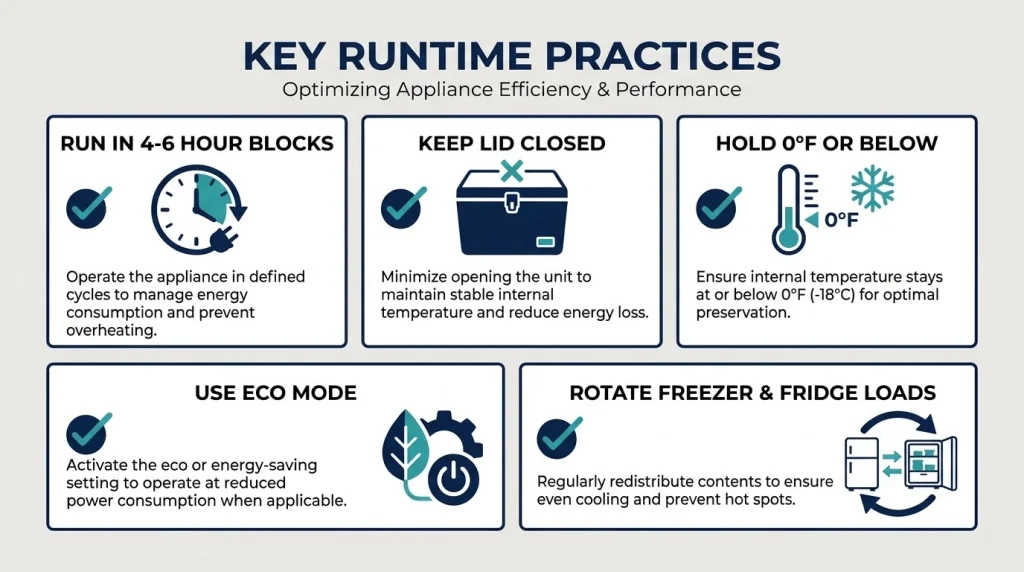
Many owners run the generator in blocks. Four to six hours on, then off for a few hours, works well for a full freezer in a cool room.
Check the temperature with a freezer thermometer before you decide. Food stays safe at 0°F or below, and a full freezer holds cold far longer than a half-empty one.
Runtime depends on tank size, load, and eco mode. A 2,000-watt inverter generator can run 8 to 10 hours on a gallon or so of fuel at light load, but check the spec sheet for your exact model.
Eco mode stretches that runtime. The engine throttles down when the compressor cycles off, so fuel lasts longer.
Turn eco mode off for the first compressor start after a long off period. The surge is bigger when the freezer has warmed up a few degrees.
Fuel storage matters during a multi-day outage. Store gasoline in approved containers, in a ventilated area away from living space, and use fuel stabilizer if it will sit for months.
The EPA offers guidance on safe fuel storage and spill prevention. Keep fuel away from ignition sources, and never refuel a hot generator.
Let the generator cool for a few minutes before you add fuel. Wipe up any spills right away, and keep a fire extinguisher nearby.
For longer outages, rotate your loads. Run the freezer for a few hours, then switch to the fridge, then back to the freezer.
This rotation saves fuel and keeps both appliances safe. It also gives the generator a break between heavy starts.
Section Takeaway: Run the generator in blocks of four to six hours, keep the freezer full and closed, and use eco mode to stretch fuel during a long outage.
Freezer vs Refrigerator: Which Needs More Generator Power?
Freezers and refrigerators look similar on a generator, but they are not identical loads. A fridge usually needs more starting watts than a chest freezer of the same size.
A standard fridge draws 150 to 200 running watts and 1,200 to 1,800 starting watts. A chest freezer often draws less on both counts.
The difference comes from the compressor and the extra parts. A fridge has a freezer compartment, a fresh-food compartment, fans, lights, and sometimes an ice maker.
A chest freezer is simpler. It has one compressor, thick insulation, and no fan in many models.
That simple design helps in an outage. A chest freezer holds cold longer, cycles less, and puts less strain on a small generator.
| Appliance | Running Watts | Starting Watts | Cold Hold Time, Lid Closed |
|---|---|---|---|
| Small chest freezer | 80–120 watts | 600–900 watts | 24–48 hours |
| Large chest freezer | 130–200 watts | 1,000–1,400 watts | 24–48 hours |
| Upright freezer | 120–200 watts | 900–1,500 watts | 12–24 hours |
| Standard refrigerator | 150–200 watts | 1,200–1,800 watts | 4–6 hours |
Running watts and starting watts are the two numbers that decide generator size. Running watts are the steady power an appliance uses, while starting watts are the short surge it needs to start a motor.
That surge is why a 2,000-watt generator can run a freezer alone with ease, yet struggle with a fridge and freezer starting at the same time. Stagger the starts and the same generator often handles both.
Learn the difference in our guide to the difference between running watts and starting watts. It explains why that short surge trips so many small generators.
If you must choose one appliance to protect first, pick the freezer. It holds temperature longer, and the food inside is often worth more than a fridge full of condiments and drinks.
Section Takeaway: A chest freezer usually needs less starting power than a fridge, holds cold longer, and is the easier load for a small inverter generator.
Common Mistakes When Powering a Freezer With a Generator
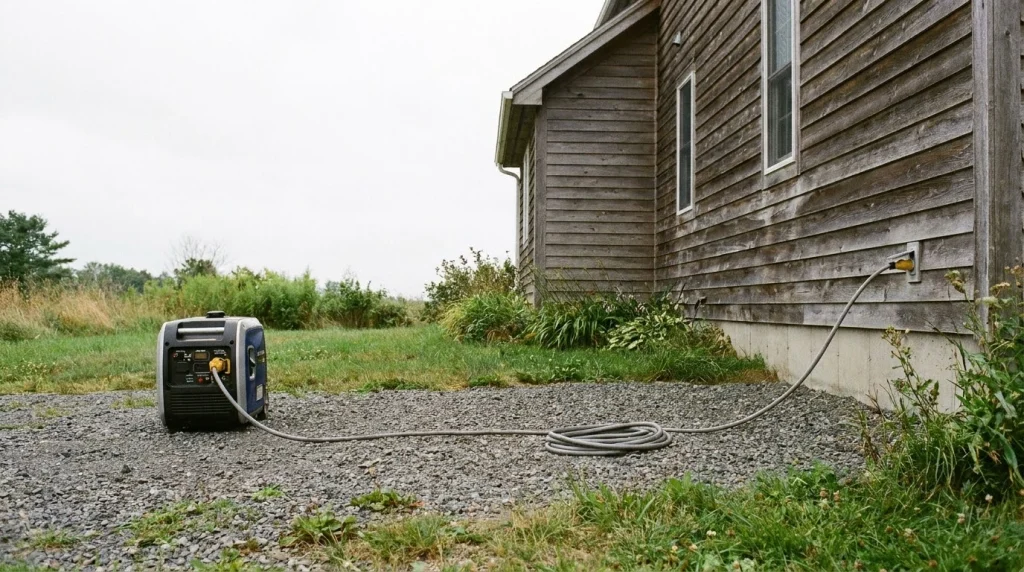
The most common mistake is sizing for running watts only. The freezer runs fine for an hour, then the compressor cycles and the generator overloads.
Check starting watts first. That one step prevents most overload shutdowns I see in outage reports.
The second mistake is plugging in too much at once. A freezer, a fridge, a space heater, and a coffee maker will trip almost any 2,000-watt unit.
Start one motor load at a time. Let each compressor settle before you add the next load.
The third mistake is using a long, thin extension cord. Voltage drops over distance, and the compressor strains to start.
Use a short, heavy-duty cord. Keep the generator close to the freezer, but still outdoors and well away from the house.
The fourth mistake is running the generator indoors or too close to the house. Carbon monoxide deaths during outages are preventable, and placement is the main cause.
The Consumer Product Safety Commission warns against running portable generators indoors or in partially enclosed spaces. Place yours outside, downwind, and far from openings.
The fifth mistake is skipping maintenance. Stale fuel clogs carburetors, and a generator that will not start is useless in an outage.
Run your generator every month for 15 to 20 minutes. Change the oil per your manual, and use fresh fuel with stabilizer.
Learn what starting wattage in an inverter generator really means before you buy. It is the spec that decides whether your freezer starts or stalls.
Section Takeaway: Size for starting watts, start one motor at a time, use a short heavy cord, keep the generator outside, and keep fuel fresh.
What Is the Best Inverter Generator for a Freezer?
The best inverter generator for a freezer is the smallest one that still covers your starting watts with headroom. Bigger is not always better, because it burns more fuel and costs more to run.
For a single small or medium chest freezer, a 2,000-watt inverter generator is the sweet spot. It is quiet, light, fuel-efficient, and easy to store.
For a large chest freezer or a frost-free upright, choose 2,200 to 3,000 watts. That size handles the surge and leaves room for lights and charging.
For a freezer plus a fridge, choose 3,000 to 3,500 watts, or use two parallel-capable 2,000-watt units. Parallel capability lets you link two generators for double the power when you need it.
Look for these features when you shop. They make freezer duty easier and safer.
- Clean sine wave: Look for low THD, or total harmonic distortion, so the compressor and controls get stable power.
- Eco mode: Eco mode throttles the engine down between compressor cycles and saves fuel.
- Parallel capability: Parallel ports let you add a second unit later instead of buying a bigger generator now.
- Fuel gauge: A gauge or low-fuel light helps you plan refueling during a long outage.
- CO shutoff: Many new models include a carbon monoxide sensor that shuts the unit down if CO builds up.
- Electric start: Electric start helps in cold weather, when a pull cord can be hard to use.
Brands like Honda, Yamaha, Champion, Westinghouse, WEN, and DuroMax all make inverter generators in this range. Check the spec sheet for running watts, starting watts, runtime, and noise level before you choose.
Noise matters more than people think. A freezer run can last for days, so a quiet unit at 50 to 60 dB is far easier to live with than a loud open-frame model.
Our roundup of the best portable generator for freezer use compares models by size, runtime, and features. Use it to narrow your shortlist, then confirm the specs on the manufacturer’s page.
Buy before the storm, not during it. Test the generator with your freezer on a calm weekend, so you know it works before you need it.
Section Takeaway: Pick the smallest quiet inverter generator that covers your freezer’s starting watts with 20% headroom, with eco mode and parallel capability for flexibility.
Frequently Asked Questions
Can an inverter generator run a freezer and refrigerator at the same time?
Yes, if the generator is big enough and you stagger the starts. A 3,000-watt inverter generator usually handles both, while a 2,000-watt unit may trip if both compressors start together.
Will a 1000-watt inverter generator run a freezer?
Most small chest freezers need 600 to 900 starting watts, so a 1,000-watt unit can work in some cases. It leaves almost no headroom, so a 2,000-watt generator is the safer choice for most freezers.
How long will a freezer stay cold without power?
A full chest freezer can stay cold for 24 to 48 hours with the lid closed. A half-full freezer warms faster, and an upright freezer usually holds cold for 12 to 24 hours.
Can I plug my freezer directly into an inverter generator?
Yes, plug it directly into the generator or use a short, heavy-duty outdoor cord. Avoid power strips, thin indoor cords, and long coiled cords that drop voltage.
Is it safe to run a freezer on an inverter generator overnight?
Yes, if the generator is outdoors, far from the house, and has enough fuel and oil. Use a CO alarm inside, check the fuel level before bed, and never run it in a garage.
Do I need a transfer switch to run a freezer on a generator?
No, not if you plug the freezer directly into the generator with an extension cord. You do need a transfer switch or interlock, installed by a licensed electrician, if you connect the generator to your home wiring.
What size inverter generator do I need for a deep freezer?
Most deep freezers need a 2,000-watt inverter generator, while large models need 2,200 to 3,000 watts. Check the label for starting watts, add 20% headroom, and choose a generator above that total.
Yes, an inverter generator can run a freezer, and a 2,000-watt unit covers most freezers on its own. Size for the startup surge, start the generator outside and unloaded, and keep the freezer closed to stretch your fuel.
Test your setup before the next outage. Plug in your freezer, run it for an hour, and note the fuel use and noise level, so you know exactly what to expect when the power goes out.

Hi, I’m Michael Turner. I own a generator workshop in the United States and founded HomeGeneratorBlog to share practical, hands-on guidance about generator installation, maintenance, troubleshooting, safety, and backup power solutions. My goal is to help homeowners make smarter, more confident decisions through clear and reliable information