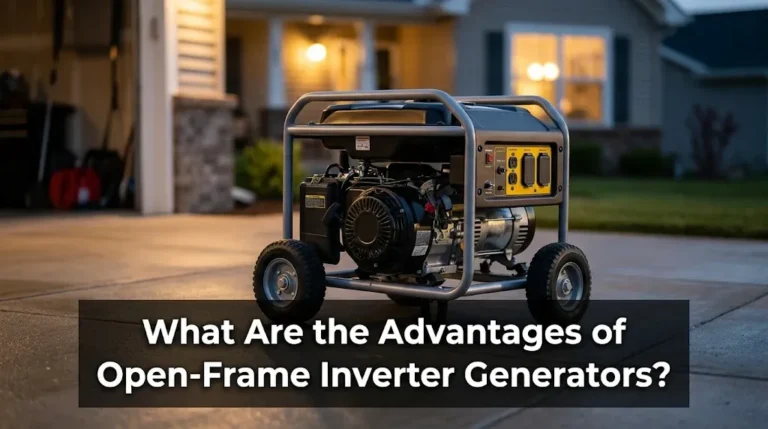
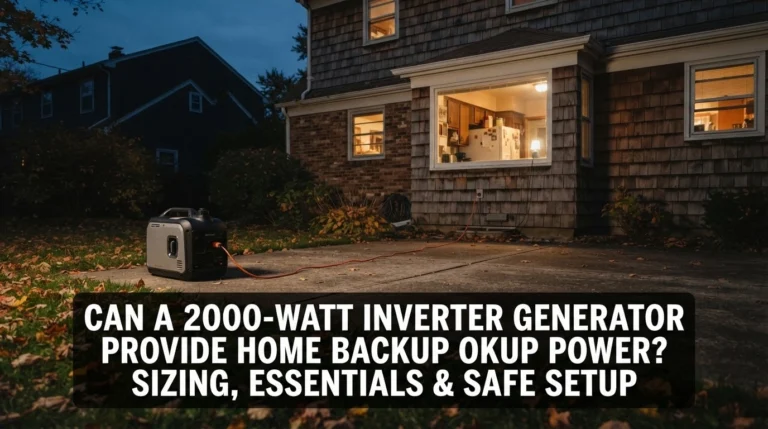
Can an Inverter Generator Run Power Tools? Sizing, Wattage & Safe Job-Site Setup
Quick Answer
Yes, an inverter generator can run most corded power tools, but size matters more than brand. A 3,000 to 4,500-watt inverter handles most drills, circular saws, and sanders, while large table saws and air compressors often need more power. Start with what size inverter generator you need for your hardest tool, then add a safety margin.
The short version
- Best fit: Drills, jigsaws, sanders, chargers, and most 15-amp corded tools run well on a mid-size inverter.
- Watch the surge: Motors pull extra watts at startup, so check starting watts before running watts.
- One hard tool at a time: Run your largest motor tool alone, then add light loads after it starts.
- Clean power helps: Inverter output suits battery chargers and tools with sensitive electronics.
- Know the limit: A 2,000-watt inverter will struggle with a full-size table saw or a large air compressor.
Do this first
- Read the watt or amp label on your hardest tool, then match it to the generator running and starting watts.
- Use a short, heavy-duty outdoor cord and keep the generator outside, away from doors and windows.
I have run drills, saws, and chargers from an inverter generator on remote jobs and during outages. The setup works well when the math lines up, and it fails fast when it does not.
This guide covers real tool wattage, generator sizing, safe cords, and the mistakes that trip overloads. You will leave knowing which tools fit, which size to buy, and how to run them without damage.
In This Guide
- What Is an Inverter Generator?
- Which Power Tools Can an Inverter Generator Run?
- How Many Watts Do Power Tools Need?
- What Size Inverter Generator Do You Need for Power Tools?
- Inverter Generator vs Conventional Generator for Power Tools
- How to Run Power Tools Safely on an Inverter Generator
- Common Problems and Mistakes to Avoid
- How to Choose the Right Inverter Generator for Tools
- Frequently Asked Questions
What Is an Inverter Generator?
An inverter generator is a portable generator that makes clean, stable power by converting raw engine output into steady sine-wave electricity. It adjusts engine speed to match the load, so it runs quieter and uses less fuel at light loads.
That clean sine wave matters for tools with chargers, speed controls, and electronic parts. It also matters for laptops, phones, and other sensitive gear you may charge on the same job.
Total harmonic distortion, or THD, measures how clean that power is. Most inverter generators keep THD low, often under 3 percent, while many open-frame models run much higher.
Low THD does not make a small generator stronger. It makes the power safer for electronics, but wattage still sets the hard limit.
Inverter models also use eco-throttle, or economy mode, to slow the engine when demand drops. That mode saves fuel and cuts noise, yet it can lag when a motor tool starts.
I turn eco mode off before I start a saw or compressor. The engine stays ready, and the tool starts with less strain.
For a plain-language look at portable power basics, Energy.gov is a useful starting point. Check your tool manual and generator spec sheet before you plug in.
Section takeaway: An inverter generator gives you clean, quiet, fuel-smart power, but it still obeys wattage limits, so match the tool first and trust the clean output second.
Which Power Tools Can an Inverter Generator Run?
Most light and mid-size corded tools run well on a 3,000 to 4,500-watt inverter generator. Drills, jigsaws, sanders, routers, and battery chargers sit in that sweet spot.
Cordless tool chargers are the easiest load of all. They draw low, steady power and benefit from the clean output.
Tools that usually run well
- Corded drills and drivers: Most use 500 to 900 running watts and start with ease.
- Circular saws: A 7-1/4 inch saw often needs 1,200 to 1,800 running watts, with a higher startup surge.
- Jigsaws and reciprocating saws: These cut in bursts, so a mid-size inverter handles them well.
- Random orbital sanders: Low, steady draw makes them a safe match for smaller inverters.
- Angle grinders: A 4-1/2 inch grinder often works, while a large 7 inch grinder may push a small unit hard.
- Battery chargers and work lights: Light loads that pair well with a second tool, when wattage allows.
Tools that often need a bigger generator
- Table saws: A 10 inch saw can need 1,800 running watts and far more at startup.
- Large air compressors: The motor surge can trip a mid-size inverter, even when running watts look fine.
- Miter saws: A 12 inch saw may start hard, so test it alone before you add other loads.
- Welders: Most welders need a large conventional generator or a dedicated power source.
- 240-volt tools: Most portable inverters give 120 volts only, so check voltage before you buy.
I once tried a table saw on a 2,200-watt inverter during a small deck repair. It spun up, bogged down on the first cut, and tripped the overload.
The same saw ran fine on a 4,500-watt inverter with eco mode off. The lesson was simple: startup watts decide the job, not the name on the box.
If you want a short list of models built for this work, see our guide to the best portable generator for power tools. Use it to compare size and outlets, not as a replacement for your own wattage math.
Section takeaway: Light and mid-size tools fit most mid-size inverters, while large saws, compressors, and welders need more watts or a different power source.
How Many Watts Do Power Tools Need?
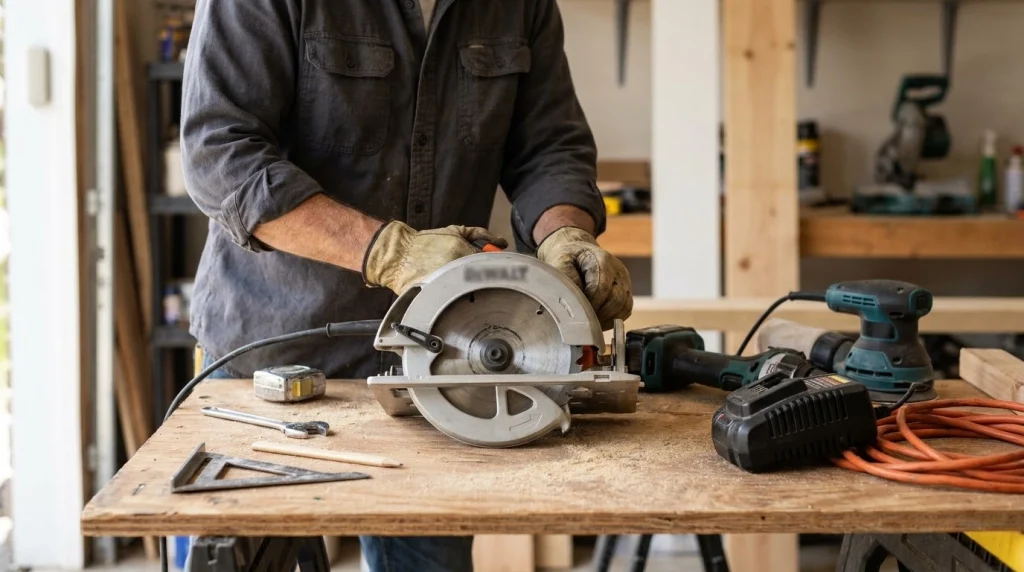
Power tools need two numbers: running watts and starting watts. Running watts keep the tool going, while starting watts cover the brief surge when the motor starts.
A motor can pull two to three times its running watts for a second or two. That surge is why a generator can look big enough on paper and still trip.
Use the label on your tool when you can. If it lists amps only, multiply amps by 120 volts to estimate running watts for a 120-volt tool.
A 15-amp circular saw, for example, draws about 1,800 watts at full load. A 10-amp drill draws about 1,200 watts, though most drills run well below that in normal use.
The table below gives typical ranges, not exact specs for your model. Always check the label or manual, because blade size, motor type, and load change the draw.
| Power tool | Typical running watts | Typical starting watts | Best inverter size |
|---|---|---|---|
| Corded drill | 500–900 | 900–1,500 | 2,000W |
| Circular saw, 7-1/4 inch | 1,200–1,800 | 2,400–3,600 | 3,500–4,500W |
| Jigsaw | 400–800 | 800–1,400 | 2,000W |
| Reciprocating saw | 800–1,200 | 1,600–2,400 | 3,000W |
| Random orbital sander | 200–400 | 400–700 | 2,000W |
| Angle grinder, 4-1/2 inch | 700–1,100 | 1,400–2,200 | 3,000W |
| Table saw, 10 inch | 1,500–2,000 | 3,000–4,500 | 4,500W or larger |
| Small air compressor | 1,000–1,500 | 2,500–4,000 | 4,500W or larger |
| Battery charger | 100–300 | 150–400 | 2,000W |
Add the running watts of every tool you plan to use at the same time. Then add the highest starting watts from that group, and keep the total under the generator running watts.
That last step trips up many first-time buyers. They add running watts only, then wonder why the saw stalls on startup.
For a step-by-step method, use our guide on how to calculate the generator wattage you need. It walks through the same math with home and job-site examples.
To see why the two watt numbers behave so differently, read the difference between running watts and starting watts. That split explains most overload trips in plain terms.
Section takeaway: Size for starting watts, not running watts alone, and add a 20 to 25 percent margin so the tool can start and cut without tripping the generator.
What Size Inverter Generator Do You Need for Power Tools?
The right size depends on your hardest tool, not your lightest one. Pick the tool with the highest starting watts, then build the rest of the load around it.
A 2,000-watt inverter suits drills, sanders, jigsaws, and chargers. It can run one mid-size saw for light cuts, but it leaves little room for a second tool.
A 3,000 to 3,500-watt inverter is the practical middle ground for most home projects. It handles a circular saw, a drill, and a charger in turn, with care.
A 4,500 to 5,000-watt inverter fits heavier work, such as a table saw, a miter saw, or a small compressor. It also gives you room for lights and a second light tool.
A simple 5-step sizing check
- List every tool you will run at the same time, with running watts for each.
- Find the starting watts for the largest motor tool in that list.
- Add running watts for the other tools, then add that one starting-watt figure.
- Add 20 to 25 percent headroom to the total for hard cuts and cold starts.
- Pick a generator whose running watts cover that total, not just its surge rating.
Here is a quick example. A circular saw needs 1,500 running watts and 3,000 starting watts, while a drill charger needs 200 watts.
Add 200 to 3,000, and you get 3,200 watts at startup. Add headroom, and a 3,500-watt running rating becomes the safe pick.
Parallel-capable inverters give you another path. Two 2,000-watt units linked with a parallel kit can share the load, though you must use the kit made for your models.
Parallel power helps when you need more watts but still want quiet, portable units. It does not fix a bad cord, a weak outlet, or a tool that needs 240 volts.
Section takeaway: Choose the generator by your hardest tool plus headroom, and use parallel kits only when the models and kit match.
Inverter Generator vs Conventional Generator for Power Tools

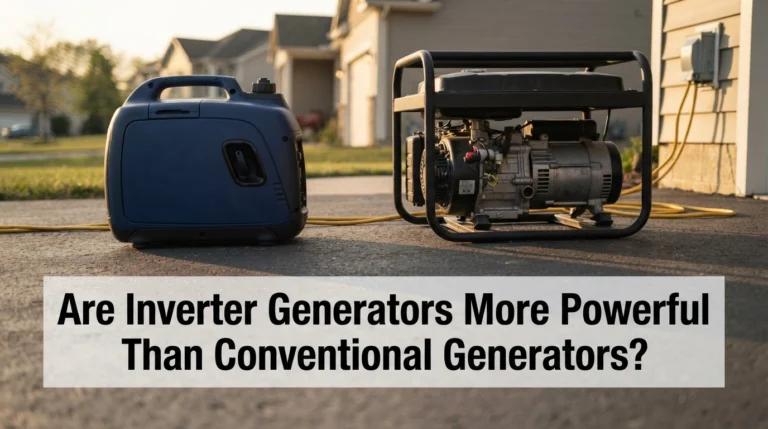
An inverter generator wins on clean power, noise, and fuel use at light loads. A conventional open-frame generator often wins on raw watts per dollar and on heavy, steady loads.
For most corded hand tools, the inverter is the better daily choice. It runs quieter, sips fuel when you pause between cuts, and protects chargers and speed controls.
For a full job site with several large tools, a conventional generator may fit better. It can offer higher running watts and 240-volt outlets at a lower price per watt.
| Feature | Inverter generator | Conventional generator |
|---|---|---|
| Power quality | Clean sine wave, low THD | Rougher output, higher THD |
| Noise | Quieter, often 50–60 dB at light load | Louder, often 70 dB or more |
| Fuel use | Throttles down at light load | Runs near full speed most of the time |
| Watts per dollar | Lower, you pay for clean power | Higher, more watts for the price |
| 240-volt outlets | Rare on small models | Common on larger models |
| Best for | Hand tools, chargers, RV and home backup | Heavy tools, welders, large compressors |
Noise ratings vary by model, load, and distance, so check the spec sheet. A generator that sounds quiet at 25 percent load may sound much louder under a saw.
Dual-fuel inverters add propane as a second fuel choice. Propane stores well and starts clean, though it often gives slightly less power than gasoline on the same unit.
I pick an inverter for weekend builds, repairs, and camping work. I pick a larger conventional unit when I need to run a welder or several big tools at once.
Section takeaway: Use an inverter for clean, quiet hand-tool work, and use a larger conventional generator when raw watts and 240-volt power matter more.
How to Run Power Tools Safely on an Inverter Generator
Safe setup starts before you pull the starter cord. Place the generator outdoors, on level ground, at least 20 feet from your home, garage, or work tent.
Point the exhaust away from people, doors, and windows. Carbon monoxide is colorless and odorless, and it can build up fast in a closed or half-closed space.
Safety note: Run generators outdoors only, well away from windows, doors, and vents, and use a battery-powered CO alarm near your work area.
Set up the power path first
- Start the generator with no load, then let it warm up for a minute.
- Turn eco mode off before you start a motor tool.
- Plug the tool straight into the generator or into one short, heavy-duty cord.
- Start the largest tool first, let it reach full speed, then add light loads.
- Stop the tool before you unplug it, then shut the generator down with no load.
Cord choice matters as much as wattage. A long, thin cord drops voltage, heats up, and makes a motor work harder.
Use a 12-gauge outdoor cord for most saws, and keep it under 50 feet when you can. A 14-gauge cord suits light tools and short runs, but it is a poor pick for a hard-starting saw.
Keep cords dry, clear of foot traffic, and free of kinks. Check the plug and cord for heat, cuts, or damage before each use.
GFCI outlets add shock protection on wet or outdoor job sites. Test the GFCI button before work, and replace a cord or outlet that trips for no clear reason.
For job-site safety rules, OSHA covers safe electrical work and portable generator use. For home CO safety, the Consumer Product Safety Commission shares generator placement and CO alarm guidance.
Never backfeed your home through a wall outlet, and never plug a generator into a dryer outlet. Use a transfer switch or interlock kit installed by a licensed electrician for home circuits.
For job-site picks built around this kind of work, see our guide to the best generator for jobsite use. It helps you compare outlets, wheels, and runtime for real workdays.
Safety note: Let the generator cool before refueling, store fuel away from heat and sparks, and check your owner’s manual before use.
Section takeaway: Place the generator outside, use a short heavy-duty cord, start the largest tool first, and never backfeed a home circuit.
Common Problems and Mistakes to Avoid
Most inverter problems with tools come from sizing, cords, or fuel, not from the tool itself. A short check before work saves a stalled cut and a tripped breaker.
An overload trip often means the startup surge was too high. It can also mean two motor tools started at the same time.
- Overload trips: Turn eco mode off, start one motor tool at a time, and drop light loads until the tool runs.
- Tool bogs down: Check cord gauge and length, then check for a dull blade or a worn bit.
- Generator surges: Stale fuel, a dirty air filter, or a clogged carburetor can cause rough running.
- Hard starting: Old fuel is a common cause, so use fresh fuel and a stabilizer for storage.
- Low-oil shutdown: Check oil on level ground before each workday, per your manual.
- Charger faults: A charger may fault if voltage drops, so shorten the cord and reduce other loads.
Stale fuel causes more job-site trouble than most people expect. Gasoline can go stale in a month or two, and it can clog a small carburetor fast.
I run my generator dry or add stabilizer before storage. I also run it for 15 minutes each month when it sits idle for a long stretch.
Do not stack a saw, a compressor, and a charger on a small inverter and hope for the best. The math will catch up at the worst moment, often mid-cut.
Do not use a damaged cord, a loose plug, or a wet outlet to finish a job. Stop, dry the area, and swap the cord before you keep cutting.
Section takeaway: Size the load, shorten the cord, use fresh fuel, and fix the cause of a trip instead of resetting it again and again.
How to Choose the Right Inverter Generator for Tools

Start with your tool list, then match the generator to it. Brand and color matter less than running watts, starting watts, and outlet type.
Look for a 30-amp RV outlet if you plan to run several tools through one heavy-duty cord. Look for a 20-amp duplex outlet for single hand tools.
Check the fuel tank and runtime at 25 percent and 50 percent load. A small tank may need refills in the middle of a long build day.
Weight and wheels matter on a real job site. A 100-pound unit with wheels beats a lighter unit you must carry over rough ground.
- Running watts: Must cover your total load with headroom.
- Starting watts: Must cover your largest motor surge.
- THD: Look for low THD when you charge batteries or run electronic tools.
- Outlets: Match the plug type, amperage, and GFCI protection to your tools.
- Parallel capability: Useful when you may need more watts later.
- CO shutoff: A CO sensor adds a safety layer, but it never replaces outdoor placement.
- Runtime and tank: Match fuel capacity to your workday, not just the spec sheet.
Honda, Yamaha, Champion, Westinghouse, WEN, Generac, DuroMax, and Predator all make inverter models worth comparing. Compare the spec sheet for your exact size, because the same brand can vary widely across models.
Read independent safety and reliability notes before you buy. Consumer Reports is a useful check for generator safety and performance claims.
If you are torn between two sizes, buy the larger one when your hardest tool sits near the limit. The extra watts cost less than a stalled saw and a lost workday.
For a model shortlist built for this use, compare our guide to the best generator for power tools. Use the wattage math above to test each pick against your own tools.
Section takeaway: Buy for your hardest tool, check outlets and runtime, and size up when the math sits close to the limit.
Frequently Asked Questions
Can a 2000-watt inverter generator run power tools?
Yes, it can run drills, sanders, jigsaws, and battery chargers with ease. It will struggle with a large circular saw, table saw, or air compressor.
Can an inverter generator run a circular saw?
Yes, most 7-1/4 inch circular saws run on a 3,500 to 4,500-watt inverter. Turn eco mode off, use a short 12-gauge cord, and start the saw alone.
Can an inverter generator run a table saw?
Yes, but only a larger inverter, often 4,500 watts or more, handles a 10 inch table saw. Check starting watts first, because the surge decides the result.
Can an inverter generator run an air compressor?
A small compressor may run on a 4,500-watt inverter, while a large one often needs more power. The motor surge is high, so test it alone before adding other loads.
Will an inverter generator damage my power tools?
No, a properly sized inverter is safe for most tools, and its clean power suits chargers and electronics. Damage usually comes from overloads, low voltage, or a long thin cord.
Should I turn eco mode off for power tools?
Yes, turn eco mode off before you start a motor tool. The engine stays at speed, the tool starts faster, and the generator trips less often.
Can I run two power tools at once on an inverter generator?
Yes, when the total running watts fit and the largest starting surge fits too. Start the biggest motor first, then add a light tool such as a charger.
An inverter generator can run most power tools when you size it for starting watts, use a short heavy-duty cord, and keep it outside. Start with your hardest tool, add headroom, and test the setup before the real work begins.
If the math sits close to the limit, size up or split the load. A little extra power now beats a tripped generator and a stalled cut later in 2026.

Hi, I’m Michael Turner. I own a generator workshop in the United States and founded HomeGeneratorBlog to share practical, hands-on guidance about generator installation, maintenance, troubleshooting, safety, and backup power solutions. My goal is to help homeowners make smarter, more confident decisions through clear and reliable information