Can a 2000-Watt Inverter Generator Provide Home Backup Power? Sizing, Essentials & Safe Setup
Quick Answer
Yes, a 2000-watt inverter generator can provide home backup power for essentials, but it cannot power a whole house at once. It works best for a refrigerator, lights, phones, a laptop, a CPAP machine, and a small fan when you run loads in turns. Learn how much power a 2000-watt inverter generator provides before you plug in a second large appliance.
What it handles well
- Core essentials: A modern refrigerator, LED lights, phone chargers, and a laptop usually fit within 1,600 to 1,800 running watts.
- Medical and comfort loads: A CPAP machine, a small fan, and a router can run together if you skip heating and cooling loads.
- Short high-draw jobs: A microwave or coffee maker can work alone, but not with a fridge compressor starting at the same time.
- Clean power: Inverter output suits phones, laptops, and medical devices because it produces a stable, clean sine wave.
What to avoid
- Do not run central air, an electric water heater, a well pump, or an electric stove on a 2000-watt unit.
- Do not use extension cords inside through a door or window that leaves a gap for exhaust.
- Do not backfeed your home wiring with a suicide cord, even for a short outage.
I’ve run a fridge and a CPAP machine through a long night on a 2000-watt inverter generator, and I’ve also watched the same size unit trip when a second appliance joined at the wrong moment.
That split is the whole story. A 2000-watt inverter generator is strong backup power for a small, planned set of essentials, and it is the wrong tool for whole-house power. This guide shows you the math, the safe hookup choices, and the upgrade point in plain terms, so you can decide before the next outage.
In This Guide
- What Does Home Backup Power Mean With a 2000-Watt Generator?
- What Can a 2000-Watt Inverter Generator Run in a House?
- What Can a 2000-Watt Inverter Generator Not Run?
- How Do Running Watts and Starting Watts Decide the Answer?
- How Long Will a 2000-Watt Inverter Generator Run During an Outage?
- How Do You Connect a 2000-Watt Inverter Generator Safely at Home?
- 2000-Watt vs 3000-Watt vs 5000-Watt for Home Backup
- When Should You Upgrade, Parallel, or Choose a Larger Generator?
- Frequently Asked Questions
What Does Home Backup Power Mean With a 2000-Watt Generator?
Home backup power means keeping the loads that matter most running during an outage, not keeping every circuit live. A 2000-watt inverter generator gives you about 1,600 to 1,800 running watts in real use, depending on the model and altitude.
That is a small slice of a typical home. A standard house can draw 5,000 to 10,000 watts when heat, cooling, water heating, and cooking run together.
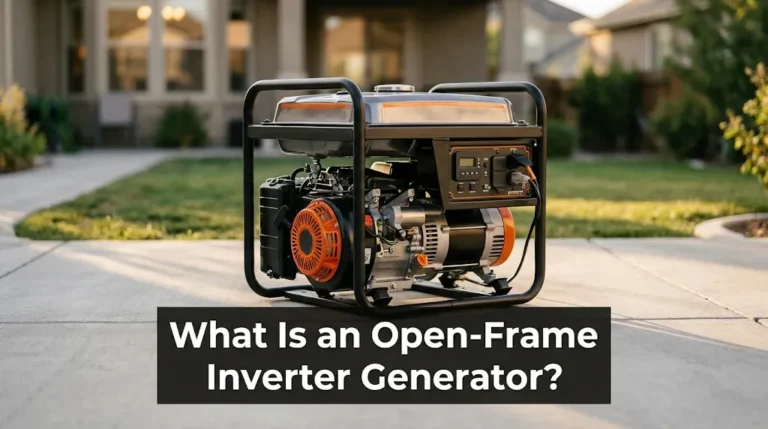
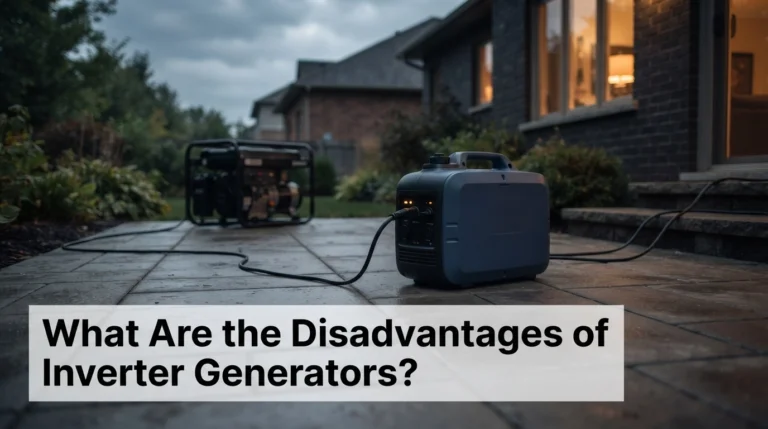
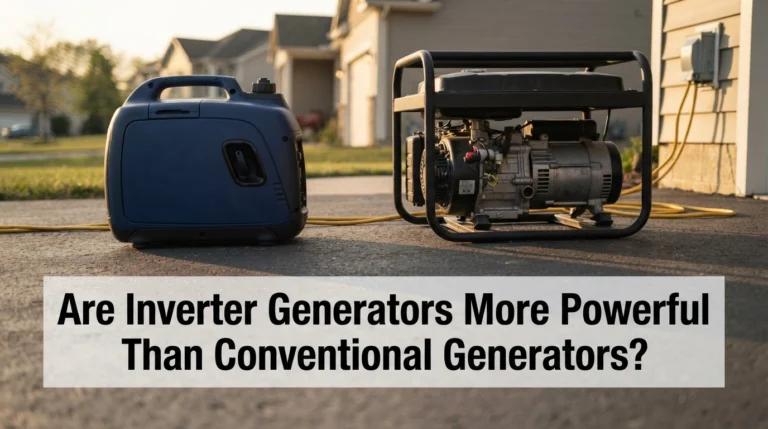
An inverter generator is a portable generator that makes clean, stable power by converting raw engine output into a smooth sine wave. It adjusts engine speed to match the load, so it runs quieter and uses less fuel at light loads than a conventional open-frame generator.
That clean output matters for home backup. Phones, laptops, routers, and CPAP machines need stable voltage and low total harmonic distortion, often called THD.
Think in three backup levels, not one vague idea of “powering the house.”
- Essential backup: Fridge, lights, phones, laptop, router, and CPAP.
- Comfort backup: Essentials plus a small fan, a TV, and a microwave used alone.
- Whole-home backup: Heat, cooling, water heating, well pump, and cooking together.
A 2000-watt unit fits the first level well. It can stretch into the second level with careful load order.
It does not fit the third level. You would need a much larger portable generator or a standby generator for that job.
Your home size matters less than your load list. A small apartment with a fridge and a few lights is a better match than a large house with an electric range, a well pump, and central air.
Start with a written list before you buy or rely on a unit you already own. List each appliance, its running watts, and its starting watts, then add a 20% safety margin.
Section Takeaway: A 2000-watt inverter generator provides essential backup power, not whole-home power, and a clear load list is what turns that limit into a workable outage plan.
What Can a 2000-Watt Inverter Generator Run in a House?
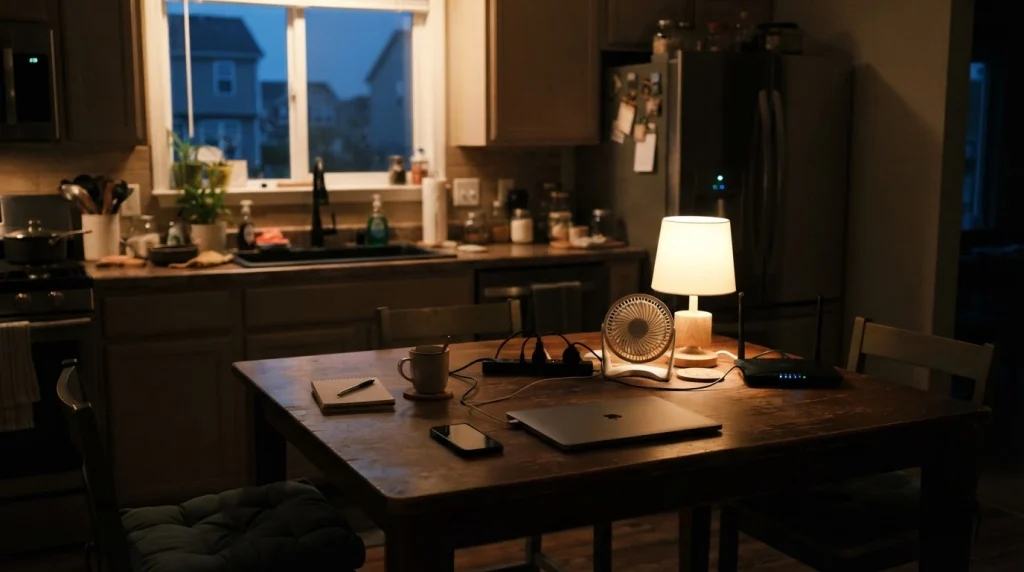
It can run a useful set of home essentials if you choose them on purpose. The trick is to count running watts first, then watch starting watts.
A modern refrigerator often uses 100 to 200 running watts once it is cold. Its compressor can need 600 to 1,200 starting watts for a few seconds.
That start-up spike is why a fridge can trip a small generator even when the steady draw looks low. Give the fridge a clear head start before you add other loads.
Here is a realistic essential combo that often fits a 2000-watt unit.
- Refrigerator: 150 running watts, with a short start-up spike.
- LED lights: 40 to 80 watts for several rooms.
- Wi-Fi router and modem: 10 to 30 watts.
- Phone and laptop charging: 60 to 120 watts combined.
- CPAP machine: 30 to 60 watts without a heated humidifier.
- Small fan: 40 to 75 watts.
That set lands near 400 to 600 running watts. It leaves room for a fridge start-up spike and a short extra load.
You can also run a freezer in place of a fridge, or rotate the two. Run one for two to three hours, then switch to the other and keep both cold.
Rotation is a smart habit on a small generator. It spreads the limited watts across more food safety without overloading the unit.
Small kitchen tools can work one at a time. A coffee maker uses 800 to 1,200 watts, and a microwave often uses 1,000 to 1,500 watts.
Use one, then unplug it before you start the next. Never run a microwave while the fridge compressor is starting.
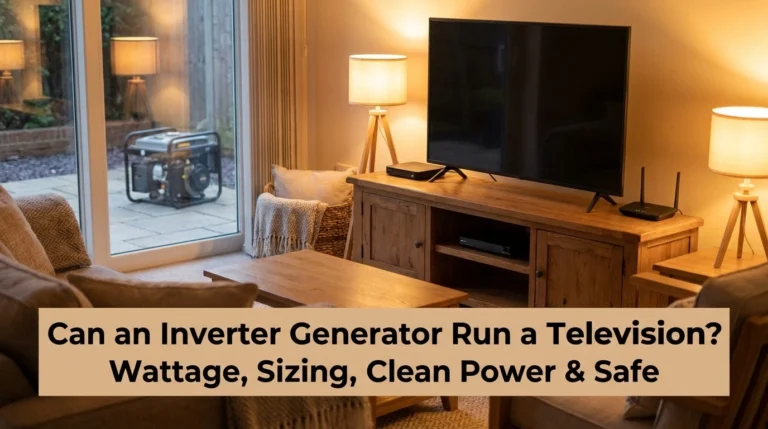
A TV, a small sump pump, and a furnace blower need a closer check. A TV is usually fine at 100 to 200 watts.
A small sump pump can need 800 to 1,200 starting watts. A gas furnace blower often uses 300 to 800 running watts, but it needs a safe hookup and a licensed electrician.
Check the nameplate on each appliance before you trust a general chart. The label beats a guess every time.
For a deeper look at matching loads to your home, see the guide to the best generator for home essentials.
Section Takeaway: A 2000-watt inverter generator can run a fridge, lights, phones, a laptop, a router, and a CPAP machine together, and it can run one larger kitchen load at a time if you plan the order.
What Can a 2000-Watt Inverter Generator Not Run?
It cannot run the big heat and motor loads that define a whole house. Those loads need far more starting watts than a 2000-watt unit can supply.
Central air conditioning is the clearest example. A small window AC may need 1,000 to 2,000 starting watts, and central air often needs 3,000 watts or more to start.
Electric heat is also out of reach. A space heater can draw 1,500 watts alone, and an electric furnace can draw several thousand watts.
Water heating is another hard limit. An electric water heater often draws 3,000 to 4,500 watts, and a tankless unit can draw far more.
Well pumps are a common surprise. A 1/2 HP well pump can need 1,000 running watts and 2,000 to 3,000 starting watts.
That start-up spike alone can overload a 2000-watt generator. A larger generator or a soft-start device may help, but check the pump and generator specs first.
| Appliance | Typical running watts | Typical starting watts | Fits a 2000-watt unit? |
|---|---|---|---|
| Refrigerator | 100-200 | 600-1,200 | Yes, alone first |
| Freezer | 100-200 | 600-1,200 | Yes, rotate with fridge |
| Microwave | 1,000-1,500 | 1,000-1,500 | Yes, alone only |
| Window AC, 5,000 BTU | 500-700 | 1,200-2,000 | Maybe, with nothing else |
| Central air | 2,000-4,000 | 3,000-6,000 | No |
| Electric water heater | 3,000-4,500 | 3,000-4,500 | No |
| Well pump, 1/2 HP | 1,000 | 2,000-3,000 | No, usually |
| Electric stove, one burner | 1,200-2,000 | 1,200-2,000 | No, not safe to rely on |
These are typical ranges, not promises for your exact model. Check the spec sheet for your generator and the nameplate on each appliance.
Overload is not just an annoyance. A repeated overload can shut the generator down, damage sensitive electronics, or shorten the life of the unit.
Watch for warning signs during use.
- Overload light: The generator trips or shows an overload warning.
- Surging: The engine hunts up and down under load.
- Dimming lights: Lights flicker when a motor starts.
- Warm cords: An extension cord feels warm to the touch.
If you see those signs, unplug the newest load first. Let the generator settle before you try a smaller load.
Section Takeaway: A 2000-watt inverter generator cannot run central air, electric heat, electric water heating, a well pump, or an electric stove, and trying those loads risks an overload shutdown.
How Do Running Watts and Starting Watts Decide the Answer?
Running watts are the steady power an appliance uses while it runs. Starting watts are the short burst it needs to start a motor or compressor.
Both numbers matter for home backup. A 2000-watt generator may list 2,000 starting watts and only 1,600 to 1,800 running watts.
That gap is easy to miss. A buyer sees “2000 watts” and plans for 2,000 watts of steady load, then wonders why the unit trips.
Plan for running watts, and keep a reserve for starting watts. Aim to stay near 70 to 80% of the running-watt rating for steady loads.
That leaves room for a fridge compressor to kick on. It also keeps the engine from running at full load all night.
Use this simple sizing method during an outage.
- List each essential appliance and its running watts.
- Add the running watts together.
- Find the largest starting watts in the list.
- Add that start-up spike to the running total for the moment of start-up.
- Keep the total under the generator rating, with a 20% margin if you can.
Here is a quick example. A fridge uses 150 running watts and 900 starting watts, lights use 60 watts, and a laptop uses 65 watts.
The steady total is 275 watts. The start-up moment is about 1,025 watts, which still fits a 2000-watt unit with room to spare.
Add a 1,200-watt microwave to that same moment, and the total jumps past the limit. Run the microwave alone, after the fridge is already cold and steady.
Learn the full method in the guide on how to calculate the generator wattage you need. It walks through the same math with more appliance examples.
The difference between the two watt types also explains why some loads fail. Learn the difference between running watts and starting watts before you size a fridge, sump pump, or furnace blower.
Eco mode, also called economy mode, can stretch fuel but it can also slow the response to a sudden load. Turn eco mode off when you start a motor load, then turn it back on for light, steady loads.
I learned that lesson with a window AC that stalled on eco mode. The unit started cleanly once I switched eco mode off and gave it full engine speed.
Section Takeaway: Size for running watts, reserve room for the largest starting watts, and stay near 70 to 80% of the running rating for a stable, safe outage run.
How Long Will a 2000-Watt Inverter Generator Run During an Outage?
Runtime depends on tank size, load, and eco mode. Most 2000-watt inverter generators hold about 1 gallon of fuel and run 4 to 9 hours on a tank at light to moderate load.
Check your spec sheet for the exact runtime at 25% and 50% load. Those two numbers tell you more than a single marketing claim.
Light loads stretch fuel a long way. A fridge, lights, and phones may use only 25% load for much of the night.
Heavy loads burn fuel fast. A microwave or a small AC can push the unit toward 50% load or more, and runtime drops fast.
Plan fuel for the outage you expect, not the outage you hope for. Store fuel safely in approved containers, and keep it away from heat and living spaces.
Fresh fuel matters more than most owners expect. Stale gasoline can clog a carburetor and make a generator hard to start when you need it most.
Use fuel stabilizer if you store gasoline for months. Run the generator every month or two, and follow the break-in and oil-change schedule in your owner’s manual.
Here is a simple fuel plan for a one-night outage.
- Night one: Keep 5 gallons of fresh fuel on hand for a 2000-watt unit.
- Refuel safely: Turn the generator off and let it cool before you refuel.
- Rotate loads: Run the fridge in blocks, then rest it while you charge phones and run lights.
- Track hours: Note start time and fuel use so you can plan the next refill.
Noise also affects how long you will want to run it. A 2000-watt inverter generator is quiet for a generator, often in the 50 to 60 dB range at rated load, but the exact level depends on load and distance.
Place it outside, at least 20 feet from the house, with exhaust pointed away from windows and doors. That distance also helps with carbon monoxide safety.
Safety note: Run generators outdoors only, well away from windows, doors, and vents, and use a battery-powered CO alarm inside the home.
For longer outages, think about fuel supply and rest breaks. A small generator can run for days with refills, but you still need sleep, fuel, and a safe place to store it.
Section Takeaway: A 2000-watt inverter generator can run essentials for 4 to 9 hours per tank at light to moderate load, and fresh fuel, load rotation, and safe refueling stretch that time further.
How Do You Connect a 2000-Watt Inverter Generator Safely at Home?
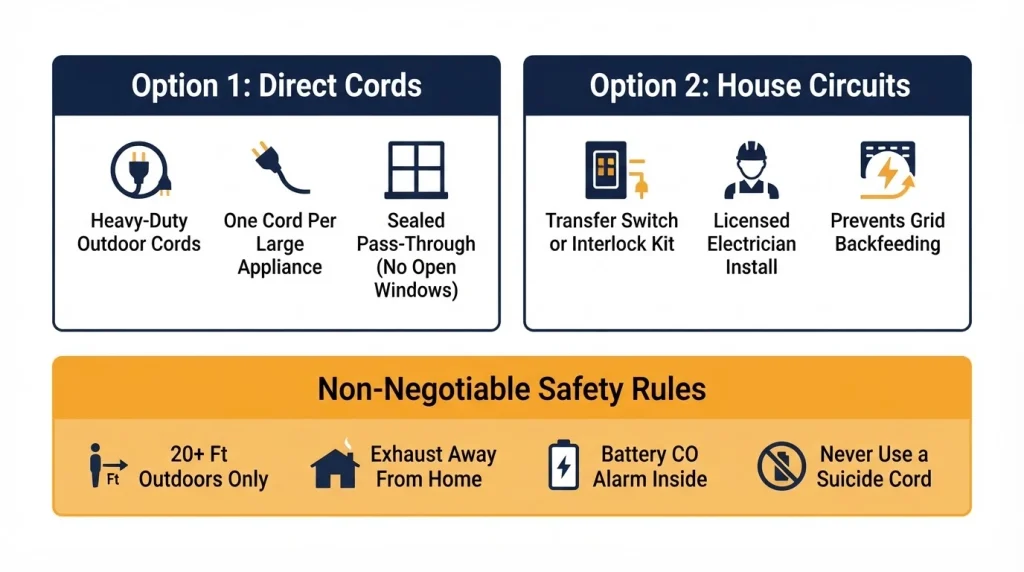
The safest home setup is also the simplest one. Run heavy-duty extension cords from the generator outside to the appliances inside.
Use one cord per large appliance when you can. Use outdoor-rated cords with the right gauge for the load and distance.
Do not run a cord through a window and leave the window open. That gap can let exhaust gas drift inside, and it also lets cold air in.
Use a cord pass-through or a door gap that still seals around the cord. Keep the generator outside and dry, under a canopy that leaves the sides open for airflow.
A transfer switch or interlock kit is the safe way to power house circuits. Both need a licensed electrician to install.
A transfer switch lets you choose a small set of circuits, such as the fridge and a few lights. An interlock kit prevents the main breaker and the generator breaker from being on at the same time.
That protection matters for line workers and for your home. Backfeeding can send power into the grid and put utility workers at risk.
Never use a double-ended male cord, often called a suicide cord. It is dangerous, and it is not a safe shortcut for a 2000-watt unit.
Check your local rules before you install a transfer switch or inlet. Some areas need a permit or an inspection, and your electrician can confirm the local code.
Grounding also matters. Follow the grounding instructions in your owner’s manual, and ask your electrician if your setup needs a separate ground rod.
Keep the generator dry and level. Do not run it in rain without a proper generator canopy, and never cover a running generator with a tarp.
Safety note: Use a transfer switch or interlock installed by a licensed electrician for any house-circuit connection, and check your owner’s manual before use.
For safety guidance, the CDC and the U.S. Consumer Product Safety Commission publish generator carbon monoxide guidance. The U.S. Department of Energy also covers home backup power planning.
Section Takeaway: Use outdoor-rated cords for direct appliance power, and use a transfer switch or interlock installed by a licensed electrician for any house-circuit connection.
2000-Watt vs 3000-Watt vs 5000-Watt for Home Backup
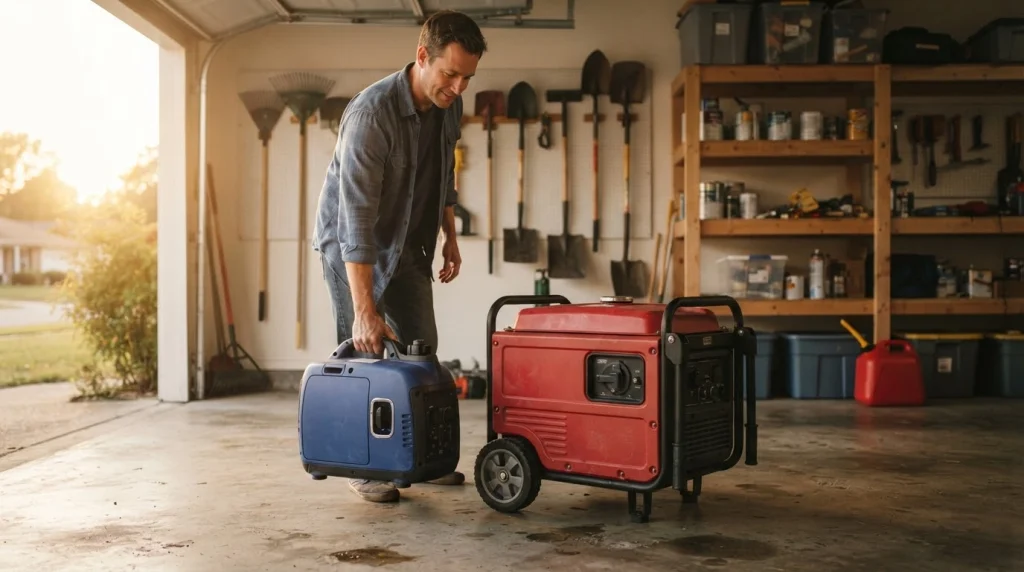
A 2000-watt unit is a good fit for essentials. A 3000-watt unit adds room for a small AC or a sump pump, and a 5000-watt unit adds room for more circuits at once.
The right size depends on your load list, not on the size of your house. A larger unit costs more, uses more fuel, and weighs more, but it also removes the need to rotate loads as often.
| Generator size | Typical running watts | Best home backup use | Main limit |
|---|---|---|---|
| 2000-watt inverter | 1,600-1,800 | Fridge, lights, phones, laptop, CPAP | No central air, heat, or well pump |
| 3000-watt inverter | 2,600-2,800 | Essentials plus small window AC or sump pump | Still no whole-house heat or central air |
| 5000-watt inverter | 4,500-4,800 | More circuits, fridge, freezer, microwave, and small AC | Heavier, louder, and more fuel use |
A 3000-watt unit is a common next step for homeowners who want cooling. It can run a small window AC with a fridge if you start the loads in order and check the start-up watts.
A 5000-watt unit is a better fit for a family that needs a freezer, a fridge, and a microwave without constant rotation. It still cannot replace a standby generator for whole-home power.
Fuel use rises with size. A 5000-watt unit can use more fuel at the same light load than a 2000-watt unit, even with eco mode.
Weight also matters in an outage. A 2000-watt unit often weighs 45 to 55 pounds, while a 5000-watt unit can weigh 100 pounds or more.
If you move the generator alone, that weight is a real factor. A parallel kit can give you more power without one heavy lift.
Section Takeaway: Choose 2000 watts for essentials, 3000 watts for essentials plus small cooling, and 5000 watts for a wider set of circuits, and size from your load list rather than house size.
When Should You Upgrade, Parallel, or Choose a Larger Generator?
Upgrade when your essential list no longer fits with a safe margin. If you need a well pump, central air, or electric heat, a 2000-watt unit is not the right tool.
Parallel capability is a useful middle path. Many 2000-watt inverter generators can link to a second matching unit with a parallel kit.
Two 2000-watt units in parallel can provide about 3,200 to 3,600 running watts. That can run a fridge, a freezer, lights, and a small AC with more room.
Parallel kits add cost and complexity. You need two matching units, the right kit, and a safe outdoor setup for both.
It can still be cheaper than a single large unit, and it gives you a backup if one unit needs service. It also lets you run one unit alone for light loads and save fuel.
Choose a larger single generator when you want one unit, one fuel tank, and one set of controls. A 3000-watt or 5000-watt inverter generator is simpler to run during a stressful outage.
Choose a standby generator when you need automatic power for a whole house. A standby unit starts on its own, runs on natural gas or propane, and can power heat, cooling, and water heating.
That is a different budget and a different install. It needs a licensed electrician and, in many areas, a permit.
Before you decide, check what size inverter generator you need for your exact load list. It helps you compare a single unit, a parallel pair, and a larger generator on the same math.
Also check generator size for a power outage to match your outage length and fuel plan to the size you choose.
As of 2026, the best test is still a real trial run. Set up the generator outside, plug in your essential list, and run it for an hour before an outage hits.
That trial shows you the real start-up order, the real noise, and the real fuel use. It also shows you if a load you counted on does not fit.
Section Takeaway: Parallel two 2000-watt units for more room without one heavy lift, choose a larger inverter generator for simpler whole-circuit backup, and choose a standby generator for automatic whole-home power.
Frequently Asked Questions
Can a 2000-watt inverter generator run a refrigerator and a freezer at the same time?
It can, if both are modern and efficient and you start them one at a time. Add lights and phone charging only after both compressors are running steady, and rotate the freezer if the total load trips the unit.
Can a 2000-watt inverter generator run a furnace?
It can run a gas furnace blower in many cases, but the blower draw and start-up watts vary by model. Use a safe hookup installed by a licensed electrician, and check the furnace nameplate before you rely on it.
Can a 2000-watt inverter generator run a sump pump?
A small sump pump may run, but its starting watts can be 800 to 1,200 watts or more. Start the pump alone, keep other large loads off, and test it before a storm if your basement depends on it.
Can a 2000-watt inverter generator run a window AC unit?
A small 5,000 BTU window AC may run alone on a 2000-watt unit. Turn eco mode off for start-up, keep the fridge and microwave off during that moment, and check the AC starting watts first.
How many watts do I need for home backup power?
Most essential backup plans need 1,500 to 3,000 running watts. Whole-home backup often needs 5,000 to 10,000 running watts or more, depending on heat, cooling, and water heating.
Is a 2000-watt inverter generator enough for a power outage?
Yes, for a short outage and a small essential list. It keeps food cold, lights on, and phones charged, but it cannot power a whole house or run large heating and cooling loads.
Can I connect a 2000-watt inverter generator to my house panel?
Yes, but only through a transfer switch or interlock kit installed by a licensed electrician. Never backfeed with a double-ended cord, and follow local code and your owner’s manual.
Yes, a 2000-watt inverter generator can provide real home backup power when you use it for the right job. It keeps food cold, lights on, and phones charged, and it does that quietly and with clean power for sensitive devices.
It cannot power a whole house, and it should not be pushed to run central air, electric heat, or a well pump. Pick your essential list, test it outside before an outage, and upgrade or parallel when your list outgrows 2000 watts.
For independent safety and buying context, see Consumer Reports and EPA guidance before you buy or install a home backup setup.

Hi, I’m Michael Turner. I own a generator workshop in the United States and founded HomeGeneratorBlog to share practical, hands-on guidance about generator installation, maintenance, troubleshooting, safety, and backup power solutions. My goal is to help homeowners make smarter, more confident decisions through clear and reliable information