What Are the Best Inverter Generator Brands? 2026 Guide
Quick Answer
The best inverter generator brands in 2026 are Honda, Yamaha, Champion, Westinghouse, WEN, Generac, DuroMax, and Predator, with Honda and Yamaha leading on quiet running and clean power while Champion and Westinghouse lead on value — see the best inverter generators for model-level picks. Your best pick depends on what you will run, where you will run it, and how often you will use it.
Top brands at a glance
- Quietest reputation: Honda and Yamaha are the brands campers ask for by name.
- Best value: Champion, Westinghouse, and WEN pack more watts per tier.
- Big power: Generac and DuroMax cover larger home backup loads.
- Budget pick: Predator wins on upfront cost, with shorter support history.
- Clean power: All eight brands above sell inverter models built for sensitive electronics.
Before you buy
- Add up running watts first, then add the largest starting watts, and check the spec sheet before you buy.
I’ve run inverter generators through multi-day outages, quiet campsites, and noisy job sites. The brand on the case mattered less than I expected on day one.
It mattered a lot by year three. That’s when support, parts, and honest specs start to show.
This guide goes deeper than a brand list. You’ll see what each brand does well, where it falls short, and which fits home backup, RV life, camping, or a tight budget.
In This Guide
- What Makes an Inverter Generator Brand Worth Trusting?
- Which Inverter Generator Brands Lead in 2026?
- Honda vs Yamaha vs Champion: How Do the Top Brands Compare?
- What Are the Best Inverter Generator Brands for Home Backup?
- What Are the Best Inverter Generator Brands for RV and Camping?
- What Are the Best Inverter Generator Brands on a Budget?
- How Do You Spot a Weak Brand Before You Buy?
- How Should You Choose Between Brands for Your Needs?
- Frequently Asked Questions
- Closing Takeaway
What Makes an Inverter Generator Brand Worth Trusting?
An inverter generator is a portable power source that makes steady, clean electricity for sensitive electronics. It changes engine speed to match the load, so it runs quieter and uses less fuel at light loads.
That clean power is called a clean sine wave. It matters for laptops, phones, CPAP machines, and modern fridges.
A brand earns trust when its specs hold up in real use. I look for honest watt ratings, low total harmonic distortion, and a noise rating measured at a stated distance.
How do you judge power quality?
Start with running watts and starting watts. Running watts power a load without stopping, while starting watts cover the short surge when a motor starts.
Check total harmonic distortion, or THD, next. Lower THD means cleaner power for electronics.
Ask how the brand states noise. A rating without a distance tells you little, so look for a figure at a stated load and distance.
What else separates a strong brand from a weak one?
- Parts and service: A strong brand stocks parts and answers the phone after the sale.
- Warranty terms: Read what the warranty covers, how long it lasts, and who handles claims.
- Dealer network: Local dealers make repairs faster than shipping a unit away.
Safety note: run generators outdoors and well away from windows, doors, and vents. Never run one in a garage, even with the door open.
Section Takeaway: Trust a brand that states watts, THD, and noise clearly, and that backs the unit with parts, service, and a readable warranty.
Which Inverter Generator Brands Lead in 2026?

Eight brands lead the inverter market as of 2026. Each one wins in a different lane, so the best brand depends on your use case.
- Honda: Quiet, clean power with a long service record and premium tier.
- Yamaha: Quiet and smooth, with strong build quality for camping and RV use.
- Champion: Broad range, dual-fuel choice, and strong value for first-time buyers.
- Westinghouse: Wide watt range, remote start on many models, and solid value.
- WEN: Low upfront cost with a large model range.
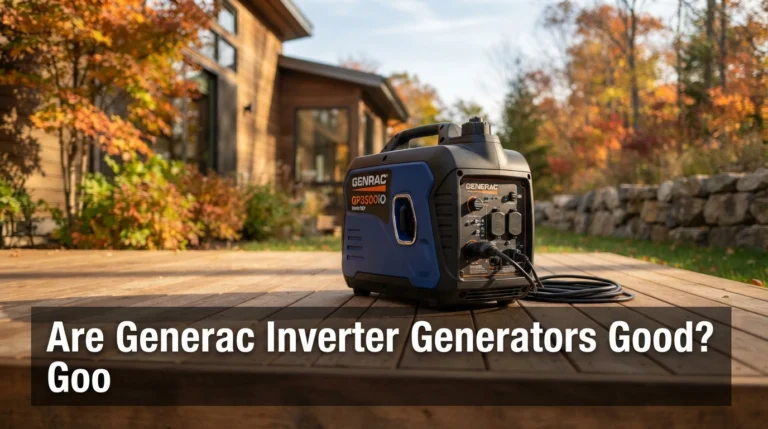
- Generac: Big home backup focus, with larger models and a large dealer network.
- DuroMax: High watts and dual-fuel and tri-fuel choice for larger loads.
- Predator: Lowest upfront cost in this group, for occasional users.
Which brands do owners keep the longest?
Honda and Yamaha owners tend to keep units the longest, helped by parts supply and resale demand.
Champion and Westinghouse owners often praise value and features, accepting a shorter track record for more watts.
Section Takeaway: Honda and Yamaha lead on quiet quality and longevity, while Champion, Westinghouse, and WEN lead on value and features.
Honda vs Yamaha vs Champion: How Do the Top Brands Compare?
Honda, Yamaha, and Champion sit at the top of most buyer shortlists. They cover different priorities, so a direct comparison helps more than a single winner.
Honda leads on quiet running and resale. Yamaha matches Honda on smoothness and build, often at a slightly lower tier.
Champion leads on watts per tier and fuel choice. It gives you dual-fuel models and more outlets for less money.
| Brand | Best for | Standout strength | Watch out for |
|---|---|---|---|
| Honda | Quiet camping, RV use | Quiet, clean power, long parts support | Premium tier, smaller top-end range |
| Yamaha | Quiet camping, RV use | Smooth running, solid build | Fewer models, premium tier |
| Champion | Home backup, first-time buyers | Value, wide range, dual fuel | Noise and weight vary by model |
| Westinghouse | Home backup, RV air conditioning | High watts, remote start | Larger units weigh more |
| WEN | Budget camping, light backup | Low cost, wide range | Support varies by model |
| Generac | Larger home backup | Big watts, large dealer network | Larger and louder than camping inverters |
| DuroMax | High watts, fuel flexibility | Dual-fuel and tri-fuel choice | Heavy units |
| Predator | Occasional use, tight budgets | Lowest upfront cost | Shorter support history |
One campfire night taught me the value of quiet power. My neighbour’s open-frame unit drowned out talk, while my small inverter hummed in the background.
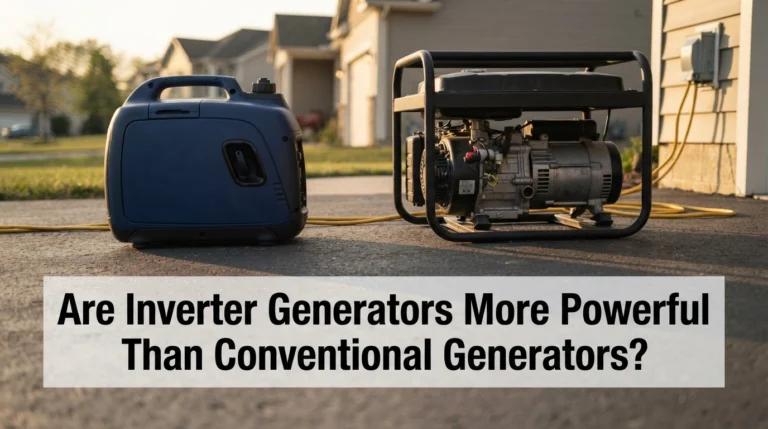
For a closer look at how inverter models differ from open-frame models, see inverter generator vs regular generator. It explains the design gap behind the noise and fuel gap.
Section Takeaway: Honda and Yamaha win on quiet quality, Champion and Westinghouse win on value and watts, and the right pick follows your loudest need.
What Are the Best Inverter Generator Brands for Home Backup?
Home backup needs steady watts for a fridge, a furnace blower, lights, and phones. It also needs long runtime and safe hookup.
Westinghouse, Champion, Generac, and DuroMax lead here. They sell larger inverter models with higher running watts and more outlets.
How many watts do you need at home?
Start with a load list. A fridge needs a few hundred running watts plus a larger starting surge, while a furnace blower and a sump pump add their own surges.
Add running watts first, then add the largest single starting surge.
What about fuel choice and hookup?
- Dual fuel: Champion and DuroMax offer gasoline and propane models, and propane stores longer than gasoline.
- Parallel capability: Many brands let you link two small units for more watts, with a parallel kit sold separately.
- Transfer switch: A transfer switch or interlock kit links a generator to home circuits safely, and a licensed electrician should install it.
- Outlets: Look for a 30-amp RV outlet or a twist-lock outlet if you plan to feed a home inlet.
Fuel goes stale fast, so I drain it or add stabilizer before storage.
Safety note: use a transfer switch or interlock installed by a licensed electrician, and never plug a generator into a wall outlet. Check your owner’s manual before use.
The Consumer Product Safety Commission publishes generator safety guidance, and it is worth reading before your first outage. For fuel and runtime trade-offs, see are inverter generators more fuel-efficient than regular generators.
Section Takeaway: For home backup, pick a larger Champion, Westinghouse, Generac, or DuroMax inverter, size it from a real load list, and connect it through a proper transfer switch.
What Are the Best Inverter Generator Brands for RV and Camping?
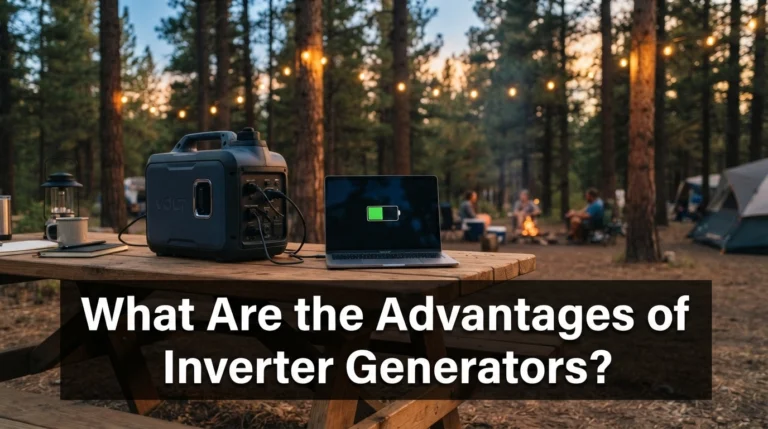
RV and camping use rewards quiet running, light weight, and clean power. Neighbours, park rules, and sleeping kids all punish a loud unit.
Honda and Yamaha lead this lane. Their small inverters are quiet, light, and easy to carry, and they power a CPAP, lights, and laptops without fuss.
Champion and Westinghouse follow close behind. They offer more watts for RV air conditioning, often with remote start and a 30-amp RV outlet.
Can an inverter generator run an RV air conditioner?
Yes, if the watts fit. A small RV air conditioner needs a large starting surge, so many owners use a soft-start kit or a larger inverter.
Check the air conditioner nameplate first, then match its starting watts to the generator’s starting watts.
What should campers check before they buy?
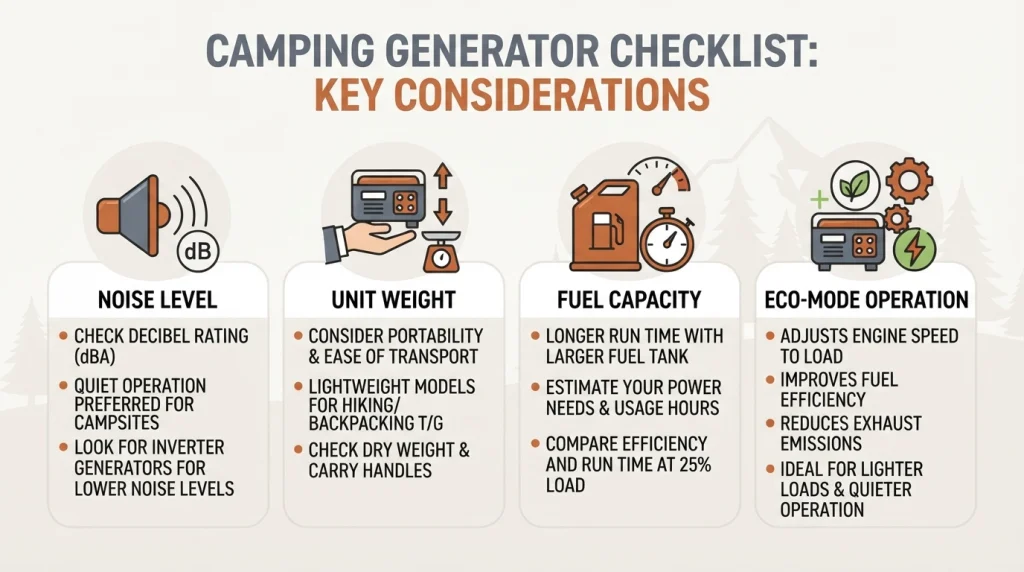
- Noise: Look for a low noise rating at a stated distance, and test it at camp if you can.
- Weight: A unit you cannot lift alone becomes a chore at every stop.
- Fuel: A larger tank means fewer refills, but it also adds weight.
- Eco-mode: Eco-throttle cuts noise and fuel use at light loads, which suits overnight use.
At one campsite I kept my unit behind the RV, away from sleeping areas. The sound dropped fast with distance.
Safety note: run generators outdoors and well away from tents, windows, doors, and vents. Keep a carbon monoxide alarm in the RV when you run a generator.
For noise detail, see are inverter generators quieter than conventional generators. The CDC also explains carbon monoxide risks from portable generators.
Section Takeaway: Honda and Yamaha lead for quiet camping, while Champion and Westinghouse lead when an RV air conditioner needs more watts.
What Are the Best Inverter Generator Brands on a Budget?
Budget brands make sense when use is light and occasional. WEN, Predator, and Champion lead this lane on upfront cost.
Where should you save, and where should you not?
- Save on: Extra outlets you will not use, remote start you do not need, and watts above your real load list.
- Do not save on: Clean power for electronics, CO shutoff, and a warranty you can actually use.
- Check first: Parts stock, service centres, and owner feedback on hard starting after storage.
A cheap unit that will not start is not cheap. Fresh fuel and a short test run each month cost little and save a lot.
Before you buy a budget model, read are inverter generators worth buying. It helps you weigh upfront cost against long-term use.
Section Takeaway: WEN, Predator, and Champion lead on budget, but spend the saving on fresh fuel, oil, and a warranty that covers real use.
How Do You Spot a Weak Brand Before You Buy?
Weak brands hide behind vague specs. They list peak watts in large type and bury running watts in small print.
They also skip THD, skip noise distance, and skip runtime load. Those gaps are a warning, not a detail.
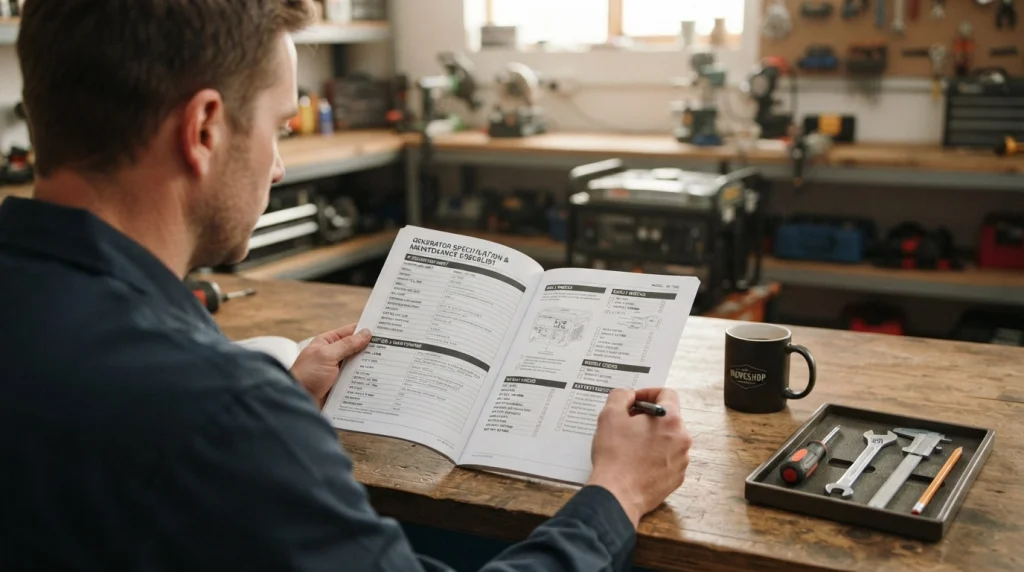
Check the manual before you buy. A thin manual with no maintenance schedule tells you the brand expects little from owners.
Which red flags matter most?
- No running watts: If only peak watts appear, walk away until the brand states both figures.
- No THD figure: Clean power claims mean little without a THD range on the spec sheet.
- No parts list: A brand that cannot name a parts source will struggle to support you later.
- Fake reviews: Look for detailed owner notes on starting, noise, and service, not just star counts.
- Missing safety guidance: A good manual covers CO placement, fuel storage, and grounding in plain terms.
The Department of Energy offers plain guidance on portable power and backup energy. Consumer Reports also tests generators and publishes buying advice.
Section Takeaway: A weak brand hides running watts, THD, and service detail, while a strong brand states them plainly and backs them with parts.
How Should You Choose Between Brands for Your Needs?
Start with your load list, not a brand name. Your fridge, CPAP, sump pump, or RV air conditioner sets the watts, and the brand follows.
Match the brand to your use case with which type of inverter generator is best for different applications. It maps sizes and types to real jobs.
What is a simple 4-step pick?
- List loads: Write running watts for each item, then add the largest starting surge.
- Pick a size: Choose a generator with running watts above that total, with headroom to spare.
- Pick a lane: Choose quiet, value, or big power based on where you will use it most.
- Check support: Confirm parts, warranty, and a dealer or service route before you pay.
Buy once if you can. A unit that fits your real loads and starts after months in storage beats extra watts on paper.
Safety note: check your owner’s manual before use, and follow its break-in, oil, and fuel steps. A short break-in run now prevents a hard start later.
Section Takeaway: List loads first, pick a size second, pick a brand lane third, and confirm parts and warranty before you pay.
Frequently Asked Questions
What is the most reliable inverter generator brand?
Honda and Yamaha hold the strongest reliability reputation among inverter brands. They pair clean power with long parts support, and owners often keep them for many years with regular oil changes and fresh fuel.
Which inverter generator brand is the quietest?
Honda and Yamaha are the quietest brands in most owner and lab comparisons, and their small inverters run at low noise in eco-mode. Exact noise still varies by model, load, and distance, so check the spec sheet.
Are Champion inverter generators good?
Yes, Champion inverter generators are good value for home backup and first-time buyers. They offer dual-fuel choice, a wide watt range, and more features per tier than premium brands for most homes.
Are Predator inverter generators any good?
Predator inverter generators are good for occasional use on a tight budget, including tailgating and short outages. They offer high watts for a low upfront cost, but support history is shorter, so keep the manual.
What size inverter generator do I need for home backup?
Most light home backup needs 2,000 to 4,500 running watts, while larger homes with a sump pump or window AC need more. Add running watts first, then add the largest starting surge, and check the spec sheet.
Do inverter generators need a transfer switch?
Yes, for home circuits, an inverter generator needs a transfer switch or interlock kit installed by a licensed electrician. Extension cords suit single appliances only, and they must never feed a wall outlet.
Closing Takeaway
The best inverter generator brand fits your loads, your setting, and your budget. Honda and Yamaha lead on quiet quality, Champion and Westinghouse on value, and Generac and DuroMax on big power.
List your loads, check running watts and THD, and confirm parts and warranty.

Hi, I’m Michael Turner. I own a generator workshop in the United States and founded HomeGeneratorBlog to share practical, hands-on guidance about generator installation, maintenance, troubleshooting, safety, and backup power solutions. My goal is to help homeowners make smarter, more confident decisions through clear and reliable information