Do You Need an Inverter Generator for Your RV? Honest Answer
Quick Answer
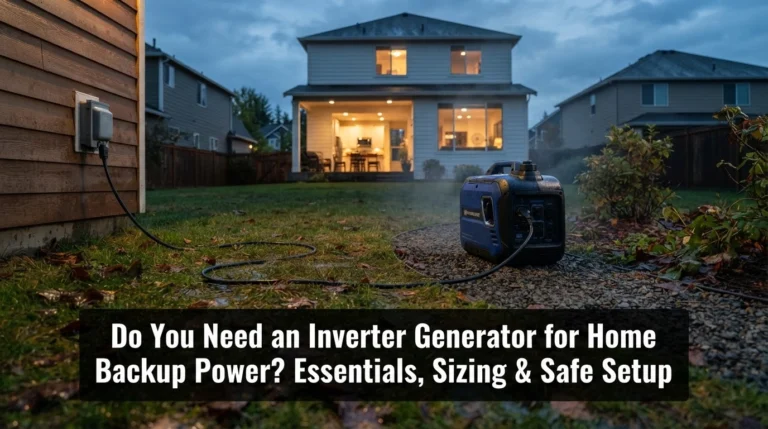
Do you need an inverter generator for your RV? Yes, if you camp off-grid, run air conditioning, or charge batteries away from hookups. If you only stay at full-hookup parks, you can skip it for now and spend that money elsewhere — see the best portable generators for RV camping when your trips change.
You likely need one if:
- Boondocking or dry camping: No hookups means no shore power for lights, fridge, and charging.
- Running RV air conditioning: A rooftop AC needs far more starting watts than batteries alone can give.
- Charging house batteries: A generator tops up batteries faster than a small solar setup on cloudy days.
- Working from the road: Laptops, Starlink, and monitors need clean, steady power for hours.
- Staying in hot or humid places: Fans and AC make the difference between a good night and a miserable one.
You can probably skip one if:
- You always book sites with 30-amp or 50-amp hookups.
- Your trips are short, mild-weather weekends with light power use.
- You already have a large solar and lithium battery setup that covers your loads.
Do you need an inverter generator for your RV? I asked myself the same question before my first long boondocking trip, and I got it wrong the first time.
I packed light, trusted my batteries, and learned fast that a dead battery at 2 a.m. is a hard teacher. This guide gives you the honest answer I wish I had then.
You’ll learn what an inverter generator does in an RV, when it earns its keep, when you can skip it, what size fits your rig, and how to use it safely. No hype, just real camping math.
In This Guide
- What Is an Inverter Generator for RV Use?
- Do You Need One? The Short Answer by Camping Style
- When You Do Need an Inverter Generator for Your RV
- When You Can Skip One and Save the Money
- Inverter vs Conventional Generator vs Solar and Batteries
- What Size Inverter Generator Do You Need for an RV?
- How to Choose the Right Inverter Generator for Your RV
- How to Use an Inverter Generator Safely at a Campsite
- Common Mistakes That Cost RV Owners Time and Money
- Frequently Asked Questions
What Is an Inverter Generator for RV Use?
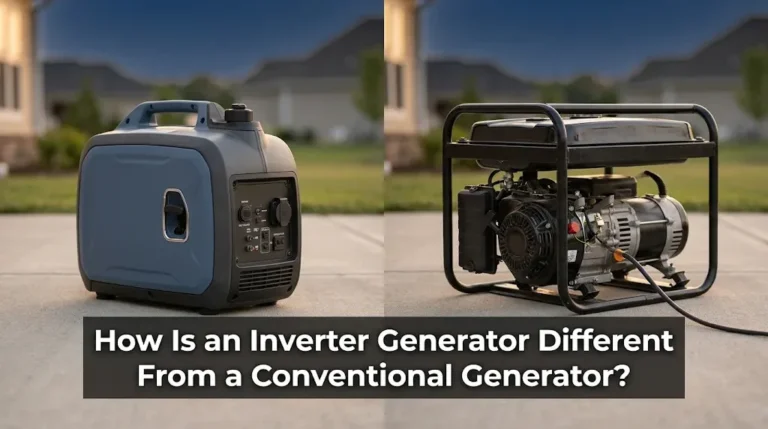
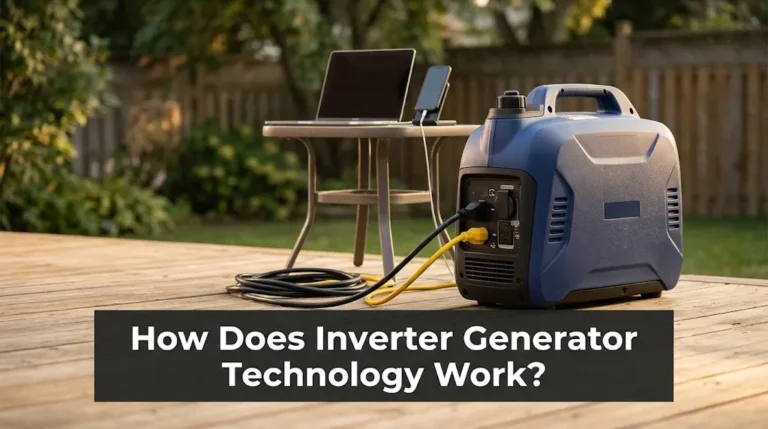
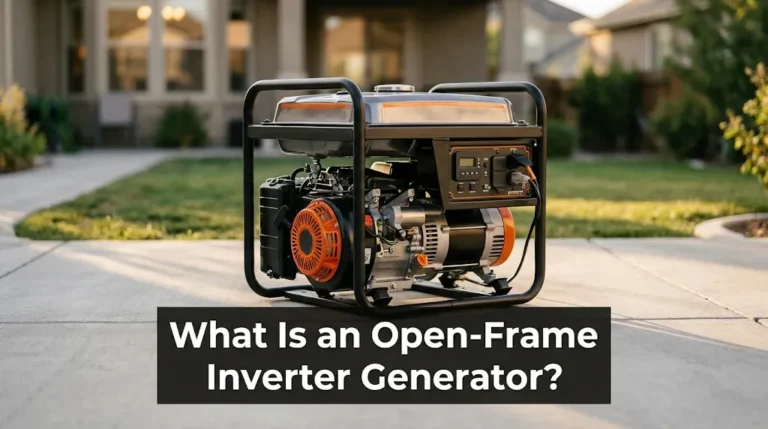
An inverter generator is a portable generator that makes clean, steady power by converting raw engine power to DC, then back to stable AC. That clean output matters for RV electronics.
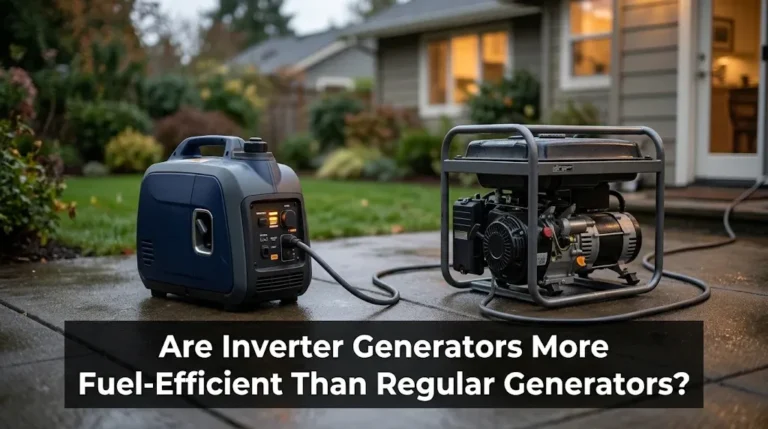
It adjusts engine speed to match the load. A conventional generator often runs at full speed even for a small load, so it wastes fuel and makes more noise.
An inverter generator runs quieter at light loads. It also sips fuel when you only charge phones and run lights.
Why does clean power matter in an RV?
Your RV is full of sensitive gear. Laptops, TVs, microwaves with control boards, CPAP machines, and battery chargers all prefer stable voltage and frequency.
Dirty power can cause flicker, resets, or damage over time. Inverter power, often called pure sine wave power, mimics shore power more closely.
That does not make every inverter generator perfect for every load. Check the spec sheet for total harmonic distortion, or THD, before you buy.
- THD under 3%: Best for laptops, medical gear, and sensitive electronics.
- Parallel-ready: Lets you link two smaller units for more power later.
- Eco mode: Lowers engine speed at light loads to save fuel and cut noise.
- RV-ready outlet: A TT-30R outlet plugs straight into a 30-amp RV cord without a pile of adapters.
Section Takeaway: An inverter generator gives your RV quiet, fuel-efficient, electronics-safe power away from hookups, and that clean output is its main advantage over a conventional generator.
Do You Need One? The Short Answer by Camping Style

The short answer depends on where you camp, not on the RV you own. Your camping style decides the need.
Full-hookup campers rarely need a generator. Boondockers almost always do.
Use this quick check before you spend a dollar. It saves more money than any brand comparison.
If you camp with hookups most nights
You plug into shore power at the pedestal. Your converter charges batteries, your AC runs, and your fridge stays cold without extra gear.
A generator would sit in storage most of the year. That is fine for emergencies, but it is not a must-buy.
Rent or borrow one for a rare off-grid weekend first. You will learn your real power needs without the upfront cost.
If you boondock, dry camp, or chase dispersed sites
You need a power source you control. Batteries drain fast when you run lights, fans, a fridge, and a water pump.
Solar helps in sun, but it fades on cloudy days and in tree cover. A generator fills that gap in an hour or two.
I learned this on a desert trip in Utah. My solar kept up until a cloudy afternoon, then my battery hit 50% by dinner.
A small inverter generator would have topped it up while I cooked. I bought one the next month.
If you mix both styles
Many RVers camp with hookups in summer and boondock in shoulder seasons. A mid-size inverter generator fits that mixed life well.
Pick a unit you can lift alone and store easily. A 2,000 to 3,000-watt model covers most mixed-use needs.
Parallel capability helps here too. Start small now, add a second unit later if your AC needs grow.
Section Takeaway: If you camp off-grid even a few nights a year, an inverter generator is worth it; if you always have hookups, it is a nice-to-have, not a need.
When You Do Need an Inverter Generator for Your RV
Some RV situations make a generator almost essential. Air conditioning tops that list.
A 13,500 BTU rooftop AC can need 2,800 to 3,000 starting watts. A 15,000 BTU unit needs even more on a hot start.
Batteries and a standard inverter cannot sustain that load for long. A generator can.
You run air conditioning off-grid
Heat changes everything. A fan helps, but it does not cool a closed RV in 95-degree weather.
A properly sized inverter generator lets you run AC for a few hours in the afternoon. That break makes summer boondocking livable.
Use a soft-start kit if your AC struggles to start. It lowers the startup surge and lets a smaller generator do the job.
You need to charge batteries fast
Lead-acid batteries charge slowly at the end. Lithium batteries charge faster, but they still need a strong source.
A generator paired with your converter or a dedicated charger can add real amp-hours in 60 to 90 minutes. Solar may take all day to do the same job.
This matters on travel days too. Arrive late, charge fast, sleep well.
You work, cook, or run medical gear from the RV
Remote work needs reliable power. A dead laptop battery in the middle of a call is not a small problem.
Microwaves, coffee makers, and hair dryers also pull high watts for short bursts. A generator handles those spikes without draining your house bank.
For CPAP or other medical gear, clean power and a backup plan matter even more. Test your setup at home before you rely on it in the field.
If you tow a large fifth wheel, power needs climb fast with two AC units and a residential fridge. See the best portable generator for 5th wheel options when you size for that kind of rig.
Section Takeaway: You need an inverter generator when AC, fast battery charging, work gear, or medical gear must run where no hookup exists.
When You Can Skip One and Save the Money
Not every RVer needs a generator. Some setups already cover light power use well.
Skipping one is smart when your trips are short and your loads are small. Spend the savings on better batteries or more solar instead.
You stay at full-hookup parks
Hookups give you 30-amp or 50-amp shore power. That covers AC, charging, cooking, and hot water without extra fuel or noise.
A generator adds weight, maintenance, and storage hassle in this case. Keep your money for campsite fees or a better surge protector.
You have a strong solar and lithium setup
A large solar array plus 200Ah or more of lithium can run lights, fridge, fans, and laptops for days in good sun. Many weekenders never touch a generator.
This works best in mild weather. Skip the AC, manage loads, and solar can carry you.
Test it on a driveway camp first. Run a full night on batteries and see where you land by morning.
Your trips are short and light
A one-night stop with charged batteries needs little power. LED lights, a phone charger, and a water pump sip energy.
Your tow vehicle or motorhome alternator can top up batteries while you drive. That covers many overnight stops.
If you only need power for a weekend festival or a tailgate, a power station may be simpler and quieter than a generator.
Section Takeaway: Skip the generator if you have hookups, strong solar and lithium, or only short, light trips — and revisit the choice when your camping style changes.
Inverter vs Conventional Generator vs Solar and Batteries
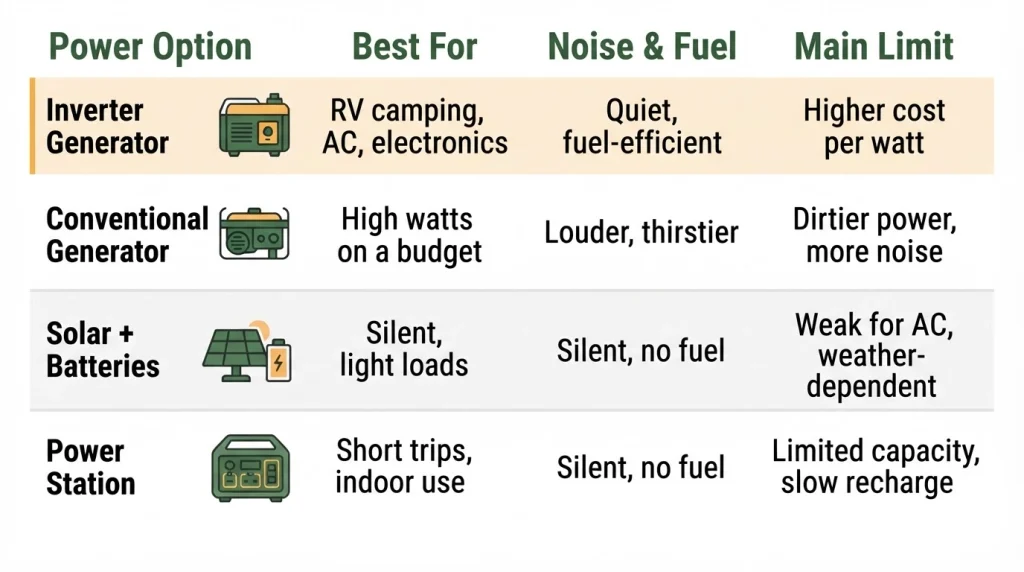
Each power option has a clear strength. None wins for every RVer.
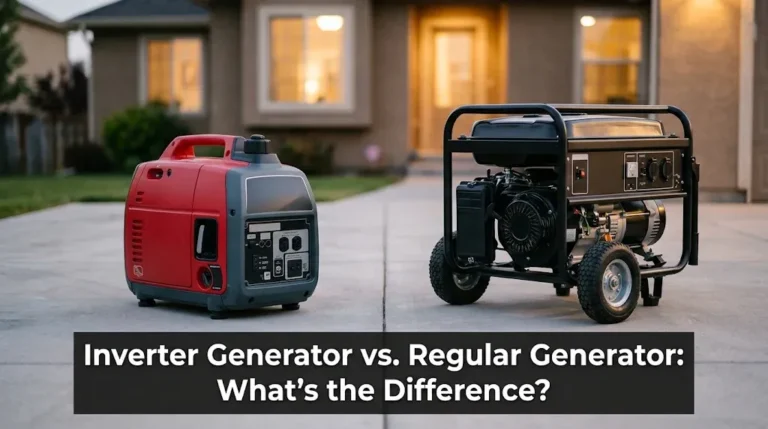
An inverter generator balances noise, fuel use, and clean power. A conventional generator wins on raw watts per dollar.
Solar and batteries win on silence. They lose on AC and cloudy-day output.
| Power option | Best for | Noise and fuel | Main limit |
|---|---|---|---|
| Inverter generator | RV camping, AC, electronics | Quiet, fuel-efficient | Higher cost per watt |
| Conventional generator | High watts on a budget | Louder, thirstier | Dirtier power, more noise |
| Solar + batteries | Silent, light loads | Silent, no fuel | Weak for AC, weather-dependent |
| Power station | Short trips, indoor use | Silent, no fuel | Limited capacity, slow recharge |
Many experienced RVers combine two options. Solar handles daily loads, and a generator handles AC and cloudy stretches.
That hybrid setup gives you quiet mornings and power when you need it. It also cuts generator run time to an hour or two per day.
Do not buy a conventional open-frame generator just to save money if you camp near others. Noise complaints and quiet-hour rules will limit when you can run it.
Section Takeaway: For most RV use, an inverter generator is the best middle ground — quieter and cleaner than conventional, stronger than solar alone for AC and fast charging.
What Size Inverter Generator Do You Need for an RV?
Size follows your biggest load, not your total wish list. Start with AC, then add the next load you will run at the same time.
Running watts keep a device going. Starting watts kick it on, and AC compressors need a big kick.
Check your owner’s manual for exact numbers. Use the ranges below only as a planning guide.
- Light use, no AC: 2,000 watts covers lights, charging, fridge, and a fan.
- One small AC: 3,000 to 3,500 watts handles a 13,500 BTU AC plus light loads.
- One large AC: 3,500 to 4,500 watts fits a 15,000 BTU AC with a soft start.
- Two ACs or 50-amp rig: 5,000 watts or more, or two paralleled units, is the safer pick.
A 3,000-watt class is the sweet spot for many single-AC trailers. It runs the AC and still leaves room for charging and a few lights.
Learn what that size can and cannot run at once in our guide to what appliances a 3000-watt inverter generator can run before you buy.
How do you add up your RV loads?
List each device you will run together. Add running watts, then add the highest starting watts once.
Do not add starting watts for every device. Only the largest motor starting at that moment counts most.
Leave a 20% buffer if you can. A generator running at 80% load lasts longer and runs quieter than one maxed out.
Section Takeaway: Size for your AC first, add one more major load, keep a buffer, and choose 3,000 watts or more if AC is part of your off-grid plan.
How to Choose the Right Inverter Generator for Your RV
Start with outlets, not brand names. Your RV cord must plug in cleanly and safely.
A 30-amp RV needs a TT-30R outlet or a proper adapter. A 50-amp RV needs 240V split-phase power or a parallel setup that provides it.
Check the outlet list before you fall in love with a model. Adapters can work, but they do not add power the generator lacks.
What features matter most for RV use?
Weight matters more than most buyers expect. A 90-pound unit is hard to lift into a truck bed alone after a long drive.
Look for a handle, wheels, and a weight you can manage solo. Test the lift in the store if you can.
Noise rating matters at a campground. Look for models rated around 50 to 60 decibels at quarter load, measured at 23 feet.
- RV-ready outlet: TT-30R for 30-amp rigs, or a 50-amp outlet for larger rigs.
- Parallel ports: Lets you add power later without buying a huge unit now.
- Electric start: Helps if pulling a cord is hard, but adds weight and a battery to maintain.
- Fuel gauge and runtime: A clear gauge prevents surprise shutdowns at night.
- CO shutoff: A carbon monoxide sensor that stops the engine is a key safety feature in 2026 models.
For larger rigs, compare outlet options in our guide to the best portable generator with 50-amp outlet before you commit to a single unit.
Read independent testing notes from Consumer Reports when you compare noise, runtime, and real output. Lab numbers help, but real RV loads tell the fuller story.
Safety note: Never lift a hot generator by its fuel cap, and let it cool before you store it in a compartment. Check your owner’s manual for weight limits and tie-down points.
Section Takeaway: Choose by outlet, weight, noise, and parallel options first — a generator that fits your RV cord and your back will get used far more than a bigger one that stays home.
How to Use an Inverter Generator Safely at a Campsite
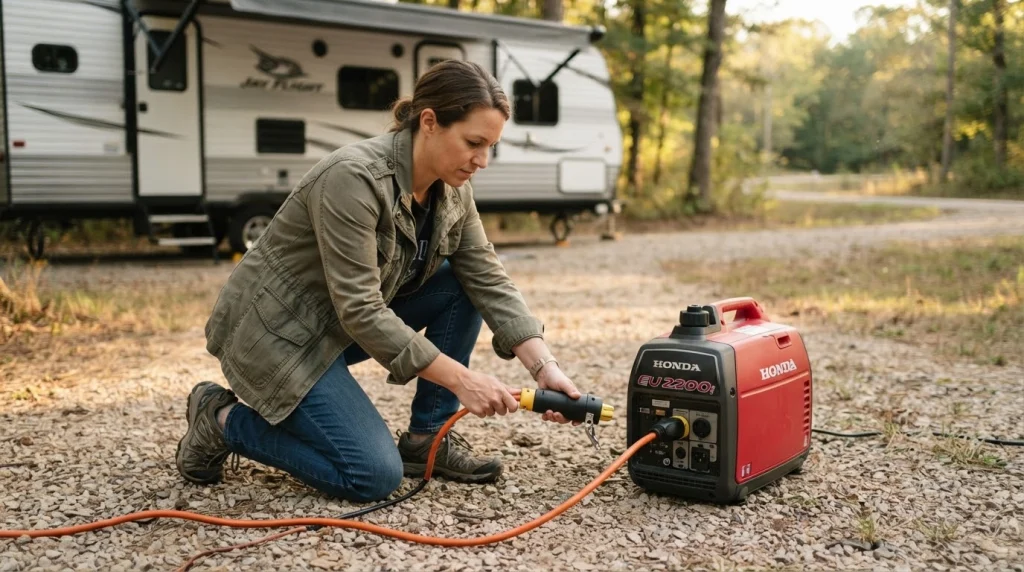
Safe placement comes first. Carbon monoxide is colorless and odorless, and it can build up fast near an RV.
Place the generator outdoors, at least 20 feet from your RV, with exhaust pointing away from doors, windows, and vents. Never run it inside a compartment, tent, or under a slide-out.
Keep it on dry, level ground. Use a generator tent or rain cover made for running use if rain is forecast.
How do you connect it to your RV?
Plug your RV shore cord into the generator’s RV outlet with a proper cord. Use a heavy-duty, outdoor-rated extension cord if you need distance, and keep connections off wet ground.
Turn off large loads before you start the generator. Start it, let it warm up for a minute, then switch on loads one at a time.
That slow start protects the AC compressor and the generator. It also prevents a sudden overload trip.
What about fuel, grounding, and quiet hours?
Let the generator cool before refueling. Store fuel in an approved container away from the unit and living space.
Follow the manual on grounding for your model and use case. Many portable inverter generators have a floating neutral, so check what your RV setup needs.
Respect quiet hours. Most campgrounds limit generator use to daytime hours, often 8 a.m. to 8 p.m., so plan charging around those windows.
Review general safety guidance from the EPA and your generator manual before your first trip. Local rules and park rules can add limits beyond the manual.
Safety note: Install a working CO alarm in your RV, test it before each trip, and never run a generator while you sleep without a clear safety plan. If you feel dizzy or sick, move to fresh air at once and seek help.
Section Takeaway: Place the generator 20 feet out, exhaust away, start loads one at a time, and respect quiet hours — safe habits matter more than any feature list.
Common Mistakes That Cost RV Owners Time and Money
The most common mistake is buying too small. A 2,000-watt unit will not run a 15,000 BTU AC, no matter how good the brand is.
The second mistake is buying too big. A heavy 5,000-watt unit you dread lifting will stay in the garage.
Match the generator to your real loads, not your dream loads.
Running everything at once
AC plus microwave plus water heater on electric will trip most mid-size generators. Stagger high-watt loads instead.
Run the AC, then make coffee after it cycles off. Switch the water heater to propane while the AC runs.
Learn what your rig can run together in our guide on whether an inverter generator can run multiple appliances at once — load planning beats a bigger generator most days.
Skipping break-in and maintenance
New generators need a break-in oil change after the first hours of use. Skipping it shortens engine life.
Change oil on schedule, clean the air filter, and use fresh fuel or stabilizer. Old gas is the top cause of hard starts I see in campgrounds.
Run the generator monthly for 15 to 20 minutes under load. A stored generator that never runs will fail when you need it most.
Check trip-planning and roadside advice from AAA before long routes, especially if you camp far from service. A small tool kit and spare oil beat a tow call.
Section Takeaway: Buy the right size, stagger big loads, and maintain the unit — most RV generator problems come from sizing and upkeep, not the brand on the box.
Frequently Asked Questions
Do I need an inverter generator if my RV already has a built-in generator?
No, not in most cases. A built-in Onan or similar unit already covers AC and charging, so a portable inverter generator would be backup only.
Can a 2000-watt inverter generator run my RV air conditioner?
Usually no. Most rooftop AC units need 2,800 watts or more to start, so a 2,000-watt unit is best for charging, lights, and small loads only.
Is an inverter generator better than solar for RV camping?
It depends on your loads. Solar is silent and free to run, but an inverter generator is stronger for AC, fast charging, and cloudy days.
How long can I run an inverter generator at a campground?
Most campgrounds allow daytime use only, often 8 a.m. to 8 p.m. Check posted quiet hours on arrival and plan charging inside those windows.
Do I need a 50-amp inverter generator for a 50-amp RV?
Not always. Many 50-amp owners run one AC and light loads on a 30-amp-capable generator, but you need 240V power or parallel units for full 50-amp use.
Can I plug my RV directly into an inverter generator?
Yes, if it has the right RV outlet. Use the TT-30R outlet for a 30-amp RV, or the correct 50-amp outlet, and use a proper adapter only when the manual allows it.
How much does an inverter generator for an RV cost in 2026?
Expect a broad range by size and features. Small 2,000-watt models cost less, mid-size 3,000-watt RV-ready models cost more, and large or parallel-ready models cost the most — check current prices before you buy.
So, do you need an inverter generator for your RV? If you camp off-grid, run AC, or need fast, reliable charging, yes — it will change how freely you travel.
If you stick to hookups and light loads, skip it for now. Test your real power use on a driveway camp, add up your loads, and buy the size that fits your trips in 2026.

Hi, I’m Michael Turner. I own a generator workshop in the United States and founded HomeGeneratorBlog to share practical, hands-on guidance about generator installation, maintenance, troubleshooting, safety, and backup power solutions. My goal is to help homeowners make smarter, more confident decisions through clear and reliable information