10 Best Rust Resistant Generator Cover for 2026: Keep Moisture Out
The best rust resistant generator cover right now is GenTent Generator Running Cover – Universal Kit, because it shields the generator while it runs instead of only during storage. We compared 10 generator covers, scoring each on Rust Resistance, Weather Protection, and Ease of Use. Most covers look waterproof on paper but trap damp air underneath, and that trapped moisture is what starts corrosion. Whether you store a generator outside, run one in rain, or protect a large portable unit, this guide gives you one clear answer.
Quick Comparison: All 10 Products Ranked
| # | Product | Best For | Rating | Badge | |
|---|---|---|---|---|---|
| 1 | GenTent Generator Running Cover – Universal Kit | Running in rain | 4.9/5 | Best Overall | Buy → |
| 2 | Classic Accessories StormPro Heavy-Duty Generator Cover | Long-term storage | 4.8/5 | Best for Storage | Buy → |
| 3 | Porch Shield Waterproof Universal Generator Cover | Large generators | 4.7/5 | Best for Large Generators | Buy → |
| 4 | IGAN Generator Tent Running Cover | Running tent setup | 4.7/5 | Best Running Tent | Buy → |
| 5 | GenArmor Heavy-Duty Waterproof Portable Generator Enclosure | Enclosed protection | 4.6/5 | Best Enclosure | Buy → |
| 6 | WLEAFJ Heavy Duty Waterproof Generator Cover | Mid-size units | 4.6/5 | Best Mid-Size Value | Buy → |
| 7 | Zettum Generator Cover | Budget storage | 4.5/5 | Best Budget | Buy → |
| 8 | Duromax DMX-GTX Portable Generator Running Cover | Brand-matched running | 4.5/5 | Best OEM Running Fit | Buy → |
| 9 | Champion Weather-Resistant Storage Cover for 12000-Watt and Higher Portable Generators | Large Champion units | 4.4/5 | Best OEM Storage | Buy → |
| 10 | VEVOR Generator Cover, 36 x 26 x 26 Inch | Simple universal fit | 4.4/5 | Best Simple Universal | Buy → |
How We Chose These Generator Covers
What we compared
This is a specification comparison of 10 covers, not a hands-on test. We compared published material, seam and closure design, ventilation, fit range, and running versus storage use.
Our 3 scoring criteria
Rust Resistance, Weather Protection, and Ease of Use. Rust Resistance weighs moisture shedding, ventilation, and corrosion-resistant hardware or seams most heavily.
What we did not claim
No hands-on testing, test duration, or expert consultation is claimed here, because none was supplied. Scores are editorial judgements from specifications and category fit.
What we cut — and why
We excluded thin dust-only covers, sealed tarps with no airflow, and running covers that do not state exhaust and intake clearance, because each can trap moisture or heat.
What to Look for When Buying a Rust Resistant Generator Cover
Rust starts with water staying in contact with metal. A good cover therefore does two jobs at once: it keeps rain out, and it lets damp air escape.
1. Fit and Measurement
Measure length, width, and height, including wheels, handles, and exhaust position. A cover that is too tight strains seams and pulls water toward openings. A cover that is far too loose flaps in wind, rubs the finish, and lets wind-driven rain underneath.
2. Material and Corrosion Resistance
Look for a heavy coated fabric, sealed or taped seams, and a drawstring or elastic hem that closes at the base. Rust resistance is not one coating: it is the combination of a water-shedding shell, protected seams, and hardware that does not itself corrode. Compare these features across waterproof generator cover options before choosing a fabric weight.
3. Ventilation and Trapped Moisture
Ventilation matters most in humid storage, coastal air, and temperature swings. Vents, mesh panels, and a raised or tented shape help damp air escape instead of condensing on cold metal. Check how generator covers with ventilation balance airflow against rain entry, especially at the base and seams.
4. Running Versus Storage Design
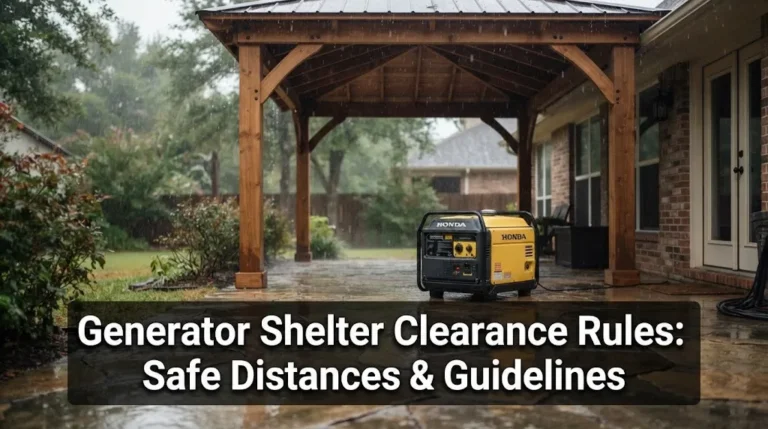
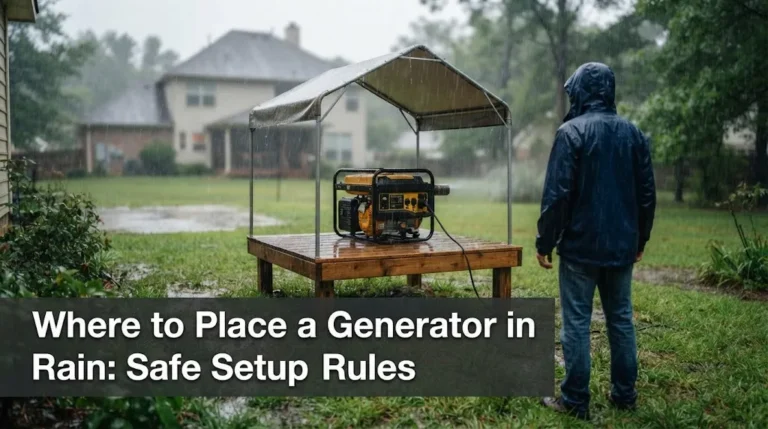
A storage cover must never be used while the generator runs, because heat and exhaust need a clear path. A running cover is designed around intake, exhaust, and access, but it is usually bulkier to fit. Decide which job you need first, then check placement and clearance basics for outdoor use.

GenTent Generator Running Cover – Universal Kit — Best running protection overall
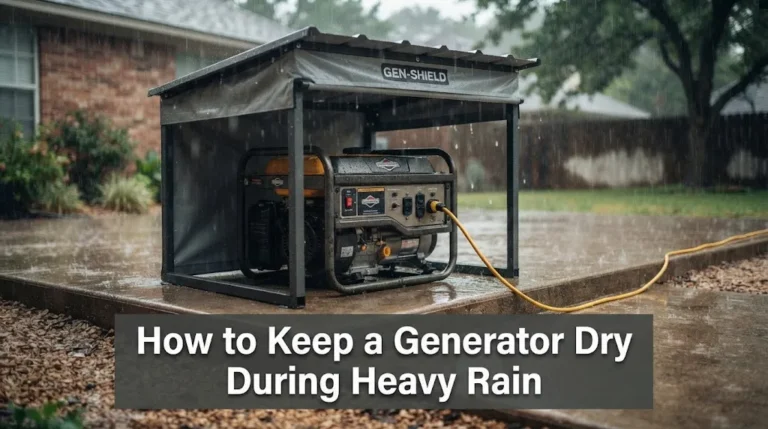
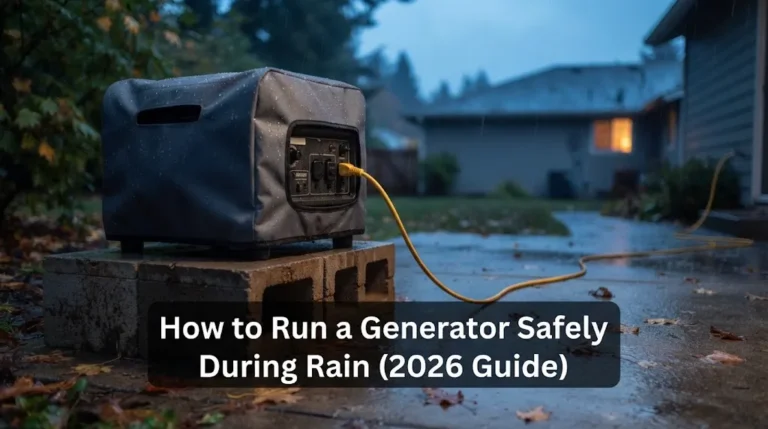
If your generator gets wet mainly while it is working, this is the most direct rust-prevention design in the list. The tented running cover keeps rain off the top and sides while leaving a defined path for intake and exhaust, so you are not forced to choose between power and protection. Its universal clamp and frame approach suits many open-frame portable generators, although exact fit still depends on your model dimensions. The trade-off is bulk and setup time: it is not a quick throw-on storage cover, and it needs correct installation to work safely.
- Rain protection while generator runs
- Defined intake and exhaust clearance
- Universal clamp for open frames
- Slower setup than storage cover
- Bulkier to store when removed
4.9/5
4.9/5
4.8/5

Classic Accessories StormPro Heavy-Duty Generator Cover — Strong storage protection pick
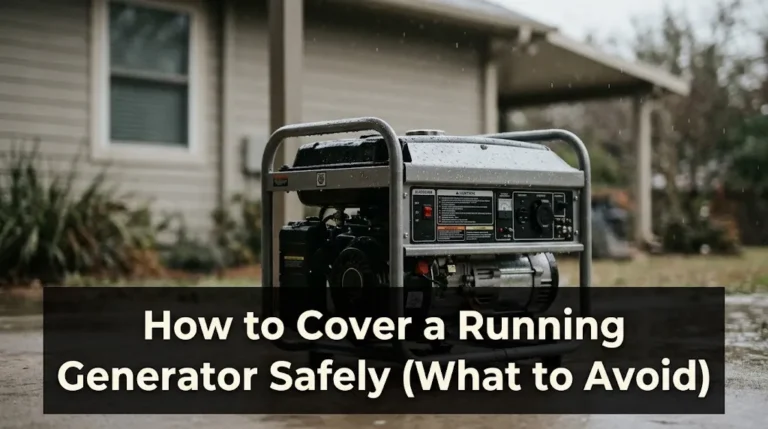
For a generator that sits outside for weeks, a heavy storage cover matters more than a running tent. This StormPro design focuses on a durable shell, protected seams, and a secure base closure, which together reduce the slow water entry that leads to surface rust. It is best for readers who want a simple cover-on, cover-off routine and do not need to run the generator while covered. Its main limit is exactly that boundary: it is a storage cover, so it must come off before operation, and a damp unit should still be dried before it goes back under cover.
- Heavy-duty shell for outdoor storage
- Secure base closure reduces wind lift
- Simple cover-on, cover-off routine
- Not for use while running
- Needs dry unit before covering
4.8/5
4.8/5
4.7/5

Porch Shield Waterproof Universal Generator Cover — Large-unit coverage pick
Large generators expose more frame, more fasteners, and more surface area to rain, so a short cover is a common failure point. This universal Porch Shield design is useful because its larger footprint can cover the whole unit rather than leaving the base or wheels exposed to splashback. It suits readers with a bigger portable generator who want straightforward storage protection without a running tent. The trade-off is fit precision: universal sizing means you must measure carefully, and excess fabric on a smaller unit can pool water or flap in wind.
- Full coverage for larger units
- Waterproof shell for storage
- Simple universal fitting approach
- Excess fabric on smaller units
- Storage only, not running use
4.7/5
4.8/5
4.6/5

IGAN Generator Tent Running Cover — Tent-style running pick
A tent-style running cover is a practical middle ground between a bare generator and a fixed shelter. It creates a rain-shedding roof and side protection while keeping the generator accessible for refuelling and checks, which matters during a long outage. This IGAN design suits readers who want running protection but prefer a tent form over a clamp-on frame kit. The trade-off is space and wind management: it needs a stable setup, secure anchoring, and clear exhaust direction, and it is not the simplest choice for quick, occasional storage.
- Tent roof sheds rain effectively
- Access for refuelling and checks
- Useful during long outages
- Needs stable, anchored setup
- Less compact than storage cover
4.6/5
4.7/5
4.7/5

GenArmor Heavy-Duty Waterproof Portable Generator Enclosure — Enclosed protection pick
An enclosure-style cover wraps the generator more completely than a simple drape cover, which helps in exposed yards, coastal air, and dusty storage areas. This GenArmor enclosure is best for readers who want a defined, heavy-duty barrier around a portable unit and are willing to manage ventilation carefully. The design trade-off is airflow: a more complete enclosure can trap damp air if it is closed over a wet unit or left unvented in humidity. It therefore suits careful owners who dry the unit first and check it after wet weather.
- Complete enclosure-style barrier
- Heavy-duty waterproof construction
- Good for exposed locations
- Ventilation needs careful management
- Heavier to handle than drape cover
4.6/5
4.6/5
4.5/5

WLEAFJ Heavy Duty Waterproof Generator Cover — Mid-size value pick
Mid-size generators are easy to overlook, because they are small enough to move but still have plenty of exposed metal. This WLEAFJ heavy-duty cover gives that size class a straightforward waterproof shell without the bulk of a running tent. It suits readers who mainly need storage protection and want a cover that is easy to put on after use. Its limits are typical for the class: it is not a running cover, and on a larger unit it may leave the base or wheels partly exposed, so measuring remains essential.
- Heavy-duty waterproof shell
- Easy on-and-off routine
- Good mid-size fit range
- Storage only, not running use
- May not suit largest units
4.6/5
4.5/5
4.6/5

Zettum Generator Cover — Budget storage pick
A budget cover is still far better than no cover, provided it actually fits and is used consistently. This Zettum cover is the pick for readers who want basic rain and dust protection for a stored generator without paying for a running tent or heavy enclosure. It works best as a routine habit: cover a dry unit, secure the base, and check it after storms. Its limits are the usual budget trade-offs, with a lighter feel than the heavy-duty options above and less margin for a poor fit, so measuring matters even more here.
- Budget-friendly storage protection
- Simple routine for stored units
- Lightweight handling
- Lighter feel than heavy-duty picks
- Fit errors hurt performance more
4.4/5
4.5/5
4.6/5

Duromax DMX-GTX Portable Generator Running Cover — Brand-matched running pick
A brand-matched running cover removes much of the guesswork around fit, which is valuable when rain is falling and you need power quickly. This Duromax running cover is designed around portable generator operation, so it focuses on keeping rain off while preserving the airflow and access the unit needs. It suits Duromax owners first, and other brands only if dimensions and exhaust layout genuinely match. Its main limit is that brand fit: it is not a universal answer, and a mismatched unit should not be forced into it.
- Brand-matched fit reduces guesswork
- Rain protection while running
- Designed around operation airflow
- Not a universal fit answer
- Check exhaust layout before buying
4.5/5
4.5/5
4.4/5

Champion Weather-Resistant Storage Cover for 12000-Watt and Higher Portable Generators — Large OEM storage pick
For a large Champion unit, a cover made for that size class is safer than stretching a small universal cover over it. This weather-resistant storage cover is aimed at 12000-watt and higher portable generators, so it addresses the full frame and the higher splash zone of a bigger machine. It suits readers who already own a large Champion and want storage protection matched to that class. Its limit is scope: it is not a general-purpose cover for small inverters, and it is still a storage cover that must be removed before running.
- Sized for large portable units
- Weather-resistant storage shell
- Brand-class fit for Champion owners
- Not for small inverters
- Storage only, not running use
4.4/5
4.4/5
4.5/5

VEVOR Generator Cover, 36 x 26 x 26 Inch — Simple universal pick
When you already know your generator fits a 36 x 26 x 26 inch cover, a simple universal design can be the least complicated rust-prevention step. This VEVOR cover focuses on a clear stated size, a waterproof shell, and easy storage use, rather than running features or enclosure hardware. It suits readers who want a direct size match and a low-friction routine. Its limits are clear: it is not a running cover, and it only works well when the stated size genuinely matches your unit, including handles and wheels.
- Clear stated size for matching
- Waterproof shell for storage
- Simple low-friction routine
- Storage only, not running use
- Size match is critical
4.3/5
4.4/5
4.5/5
Top 3 Head-to-Head: GenTent vs Classic Accessories StormPro vs Porch Shield
These three are the common final choices because they cover the three main jobs: running protection, heavy storage, and large-unit storage.
| Feature | #1 GenTent | #2 StormPro | #3 Porch Shield |
|---|---|---|---|
| Rust Resistance | 4.9/5 — Best | 4.8/5 | 4.7/5 |
| Weather Protection | 4.9/5 | 4.8/5 | 4.8/5 — Best |
| Ease of Use | 4.8/5 — Best | 4.7/5 | 4.6/5 |
| Choose if… | You run in rain | You store outside long-term | You have a large unit |
Who These Generator Covers Are NOT For
These covers do not solve every generator problem, and using the wrong type can create a new one.
If you run a generator in an enclosed garage, no cover makes that safe. If your unit is already heavily rusted, a cover slows further exposure but does not repair damaged metal, fuel lines, or electrical parts.
Common Mistakes to Avoid
Most rust problems come from habits, not from choosing the wrong brand.
Frequently Asked Questions About Rust Resistant Generator Covers
Do generator covers actually prevent rust?
Yes, a well-fitted cover reduces rust by keeping rain, splashback, and dust off metal surfaces. It cannot repair existing rust or replace maintenance. For the best result, dry the generator before covering it, secure the base, and inspect fasteners, the frame, and outlets after wet weather.
Should a generator cover be waterproof or breathable?
It should be both in the right places: waterproof on the rain-facing shell and ventilated where damp air can escape. A fully sealed cover can trap condensation, especially in humidity or temperature swings. Look for vents, mesh, or a tented shape, and avoid closing a cover over a wet unit.
Can I leave a generator outside with a cover?
Yes, many owners do, provided the cover fits, the base is secured, and the unit sits on a raised, well-drained surface. A cover is not a substitute for shelter in extreme weather. Check it after storms, and lift it after wet periods to look for trapped dampness.
Can I run a generator under a cover?
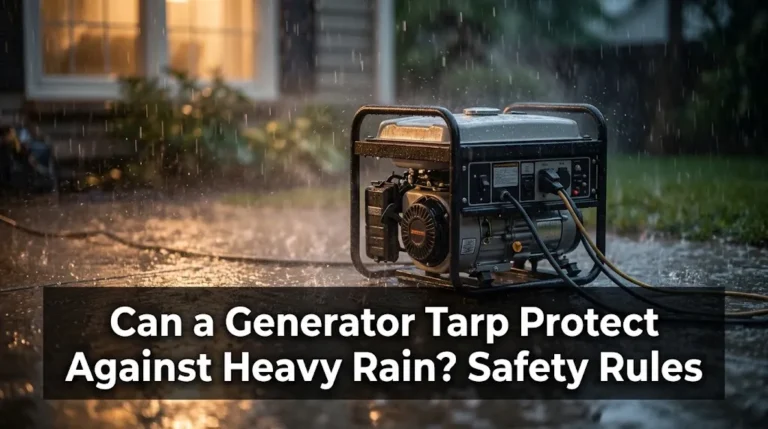
Only under a cover specifically designed for running, with clear intake, exhaust, and heat paths. Never run a generator under an ordinary storage cover. Always follow the cover and generator manuals, keep exhaust pointed away from people and buildings, and never operate a generator indoors or in an enclosed space.
How do I stop condensation under a generator cover?
Start with a dry unit, choose a cover with ventilation, and avoid sealing it tight at ground level in humid air. A raised surface helps, because it reduces splashback and ground moisture. After rain or a cold snap, lift the cover, wipe damp surfaces, and let the unit air out before covering it again.
How do I measure my generator for a cover?
Measure the longest length, widest width, and tallest height, including wheels, handles, and the exhaust outlet. Compare all three numbers to the cover size, not just wattage. If you are between sizes, choose the size that covers the full unit without leaving large loose folds that can pool water.
Our Final Verdict
Rust prevention comes down to fit, moisture control, and using the right cover for running or storage. If you run in rain, start with GenTent. If you mainly store outside, a heavy storage cover is the simpler, safer choice.

Hi, I’m Michael Turner. I own a generator workshop in the United States and founded HomeGeneratorBlog to share practical, hands-on guidance about generator installation, maintenance, troubleshooting, safety, and backup power solutions. My goal is to help homeowners make smarter, more confident decisions through clear and reliable information