Can an Inverter Generator Run a Furnace? Sizing, Wattage, Safe Hookup & Winter Runtime
Quick Answer
Yes, an inverter generator can run most gas furnaces. A typical gas furnace needs 600 to 1,200 running watts, with a higher starting surge when the blower motor starts. See the best generator for a furnace options if you want a shortlist before you size yours.
What works in most homes
- Gas furnace: A 3,000-watt inverter generator usually covers it with room for lights and a fridge.
- Electric furnace: Most portable inverter generators cannot run one, because it often needs 5,000 to 20,000 watts.
- Safe hookup: Use a transfer switch or interlock kit installed by a licensed electrician.
- Clean power matters: Furnace control boards prefer stable, low-distortion power from an inverter generator.
- Check the label: Read your furnace nameplate for amps and watts before you buy.
Do this first
- Find the blower motor amps, multiply by 120 volts, then add the starting surge before you choose a size.
- Test the setup on a calm day, not in the middle of a winter outage.
I’ve sat through a cold January outage with a quiet house and a furnace that would not start. That night taught me more than any spec sheet ever did.
This guide goes deeper than a yes-or-no answer. You’ll learn furnace wattage, generator sizing, safe hookups, runtime, and the mistakes that trip people up in real winter outages.
In This Guide
- What Does a Furnace Actually Need to Run?
- How Many Watts Does a Furnace Use?
- What Size Inverter Generator Do You Need for a Furnace?
- How Do You Connect an Inverter Generator to a Furnace Safely?
- Gas Furnace vs Electric Furnace vs Heat Pump: What Changes?
- How Long Can an Inverter Generator Run a Furnace?
- Common Problems When Running a Furnace on a Generator
- Is an Inverter Generator the Best Choice for Furnace Backup?
- Frequently Asked Questions
What Does a Furnace Actually Need to Run?
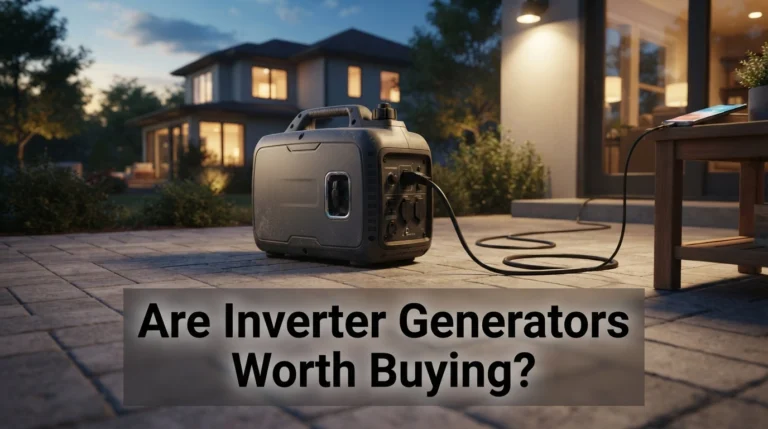
An inverter generator is a portable generator that makes clean, stable power. It converts raw engine power into a smooth sine wave, which suits sensitive electronics and modern furnace controls.
That clean power matters here. A furnace is not just a heater. It is a system with a blower, controls, sensors, and safety switches that all need steady voltage.
What parts use electricity in a gas furnace?
Gas or propane supplies the heat. Electricity runs everything else.
That split is why a modest generator can keep a gas furnace going. You are powering motors and electronics, not heating coils.
- Blower motor: Moves warm air through your ducts and uses the most power.
- Inducer motor: Clears exhaust gases before ignition and runs at startup.
- Control board: Manages ignition, fan speed, and safety checks.
- Igniter: Lights the gas, often with a short, high draw.
- Thermostat and sensors: Use very little power but need clean, steady voltage.
THD stands for total harmonic distortion. It measures how clean the power waveform is.
Lower THD means smoother power. Inverter generators usually stay under 3% THD, while many open-frame conventional generators run higher.
Why do furnace control boards care about power quality?
Modern control boards are picky. Voltage swings and dirty power can cause lockouts, error codes, or a furnace that starts and stops.
I once ran a furnace on a rough open-frame generator during a test. The blower ran, but the board threw a fault code after ten minutes.
Switching to an inverter generator fixed it. The same furnace ran steady for hours, with no codes and no short cycling.
Section Takeaway: A gas furnace needs clean power for its blower and controls, not raw heating power, and that is why an inverter generator fits the job well.
How Many Watts Does a Furnace Use?
A gas furnace usually uses 600 to 1,200 running watts. The exact number depends on blower size, motor type, and furnace age.
Starting watts are higher. A blower motor can draw two to three times its running watts for a few seconds at startup.
Running watts are the steady power a device uses while it runs. Starting watts, also called surge watts, are the short burst needed to start a motor.
That burst is the number people miss. A generator that covers running watts can still trip on the blower surge.
| Furnace type | Typical running watts | Typical starting watts | Generator fit |
|---|---|---|---|
| Small gas furnace, 60,000 BTU | 600-800 | 1,200-1,800 | Good for 2,000-3,000W inverter |
| Mid-size gas furnace, 80,000-100,000 BTU | 800-1,200 | 1,800-2,500 | Best with 3,000-3,500W inverter |
| Large gas furnace, 120,000 BTU | 1,000-1,500 | 2,500-3,500 | Needs 3,500W or larger |
| Oil furnace | 800-1,500 | 2,000-3,000 | Needs 3,000W or larger |
| Electric furnace | 5,000-20,000 | 5,000-20,000 | Not practical for portable inverters |
| Heat pump, 2-3 ton | 2,000-5,000 | 4,000-8,000 | Needs large or standby generator |
Use these numbers as a starting guide only. Check your furnace nameplate and owner’s manual for the exact amps and watts.
Your blower may use less power if it has a variable-speed ECM motor. Older PSC motors often draw more at startup and run less efficiently.
How do you calculate your furnace watts in 2 minutes?
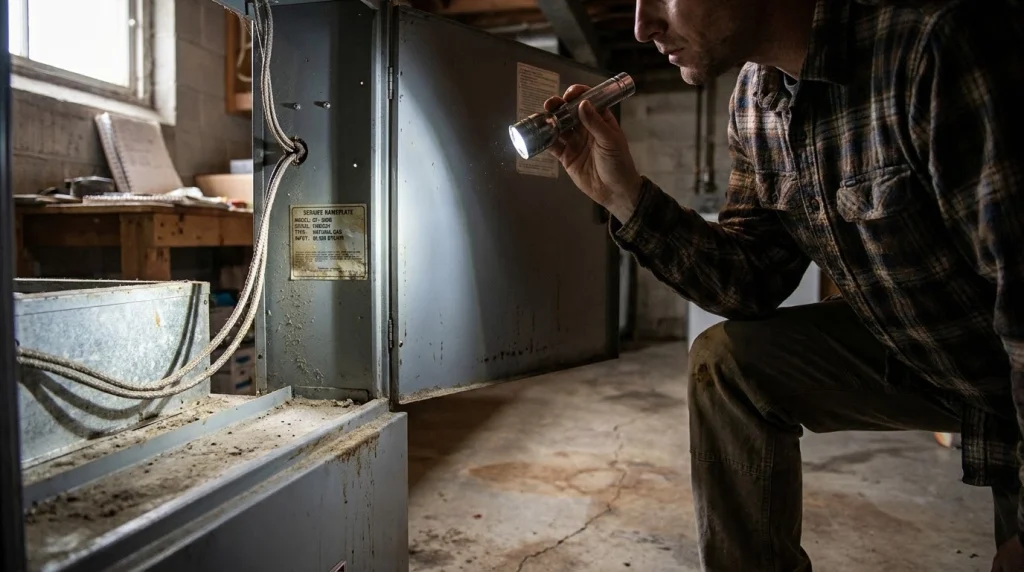
Find the furnace nameplate, usually inside the service panel. Look for full-load amps for the blower motor.
Multiply amps by 120 volts for a standard 120V furnace circuit. That gives you a rough running-watt estimate.
Next, add the inducer and controls. A simple allowance is 100 to 200 watts for those parts.
Then plan for surge. Multiply the blower running watts by 2.5 to estimate the starting burst.
For a deeper walkthrough, use our guide on how to calculate the generator wattage you need. It shows the same math with appliance examples.
Section Takeaway: Most gas furnaces need 600 to 1,200 running watts, but you must size for the blower surge, not just the steady load.
What Size Inverter Generator Do You Need for a Furnace?
For most gas furnaces, a 3,000-watt inverter generator is the sweet spot. It covers the surge, runs the blower, and leaves headroom for a few lights.
A 2,000-watt unit can work for a small, efficient furnace. It leaves almost no margin for anything else.
Size for the worst moment, not the average moment. That moment is a cold start, when the inducer, igniter, and blower all draw power at once.
- 2,000W inverter: Small gas furnace only, no fridge or microwave at the same time.
- 3,000W inverter: Most gas furnaces, plus lights, phone charging, and a small fridge.
- 3,500-4,500W inverter: Larger gas furnace, fridge, freezer, and a few essentials together.
- 5,000W+ inverter: Furnace plus sump pump, well pump, or more home circuits, if the hookup allows it.
- Parallel kit: Two smaller inverters linked together can match one larger unit.
Parallel capability means you can connect two compatible inverter generators. The pair shares the load and gives you more starting watts.
I like that option for winter backup. You can run one unit for light loads, then add the second when the furnace and fridge both need power.
What if you want to run more than the furnace?
Add up every load you plan to run at the same time. Start with the furnace surge, then add running watts for the fridge, lights, and chargers.
Do not add every appliance in the house. Add only the ones that will run together during an outage.
A fridge adds about 150 to 200 running watts, with a 600 to 800 watt startup surge. A sump pump can add 800 to 1,000 running watts and a much higher surge.
Our guide to what size inverter generator you need walks through this load list by use case. Use it to test your own combination before you buy.
Section Takeaway: Choose 3,000 watts for most gas furnaces, go larger if you want heat plus a fridge and lights, and always size for the blower surge.
How Do You Connect an Inverter Generator to a Furnace Safely?
Most furnaces are hardwired, not plugged in. You cannot just run an extension cord to the furnace like you would for a fridge.
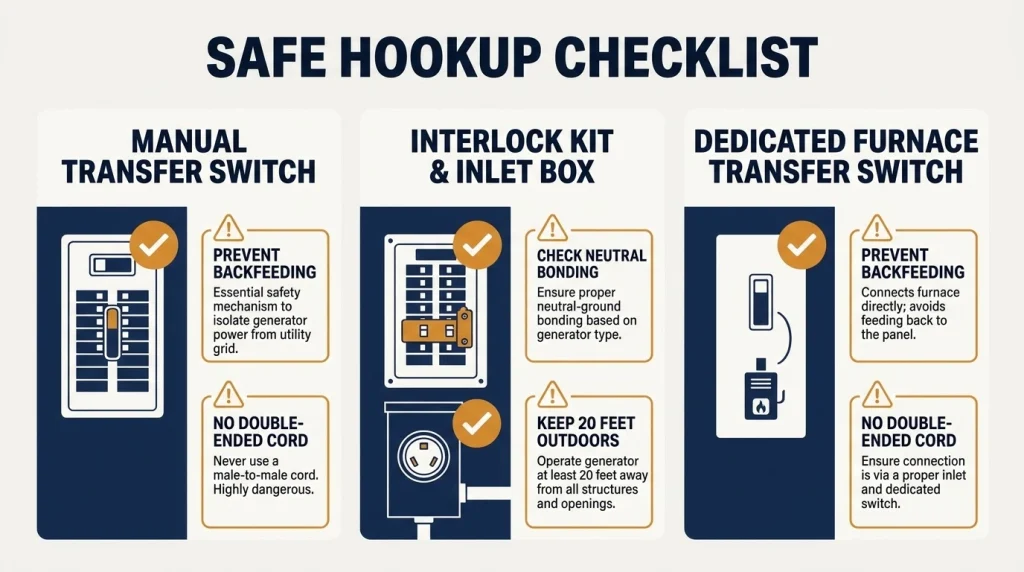
You need a safe, code-compliant way to feed power to the furnace circuit. That usually means a transfer switch, an interlock kit, or a dedicated furnace transfer switch.
A transfer switch lets you switch selected home circuits from grid power to generator power. An interlock kit is a metal plate that stops the main breaker and generator breaker from being on at the same time.
Both methods prevent backfeeding. Backfeeding sends generator power out to the grid, which can injure utility workers and damage your equipment.
What are the three safe hookup options?
- Manual transfer switch: Best for a furnace plus a few circuits, installed by an electrician.
- Interlock kit and inlet box: Good for a breaker panel, with a heavy-duty generator cord outdoors.
- Furnace transfer switch: A small switch wired at the furnace, ideal if heat is your only priority.
Never use a double-ended male cord, often called a suicide cord. It leaves live prongs exposed and can backfeed the grid.
Never plug a generator into a wall outlet. That is backfeeding, even if the main breaker is off, and it is not safe.
If you want the full picture on hookups without a transfer switch, read our guide on a generator without a transfer switch. It explains the safe alternatives and the methods to avoid.
What about neutral bonding and GFCI trips?
Some inverter generators have a floating neutral. Some furnace controls expect a bonded neutral to work correctly.
A bonding plug can fix that issue on some models. Check your generator manual and furnace manual before you use one.
GFCI outlets can also trip when a furnace control board leaks a small current to ground. A transfer switch setup usually avoids that problem.
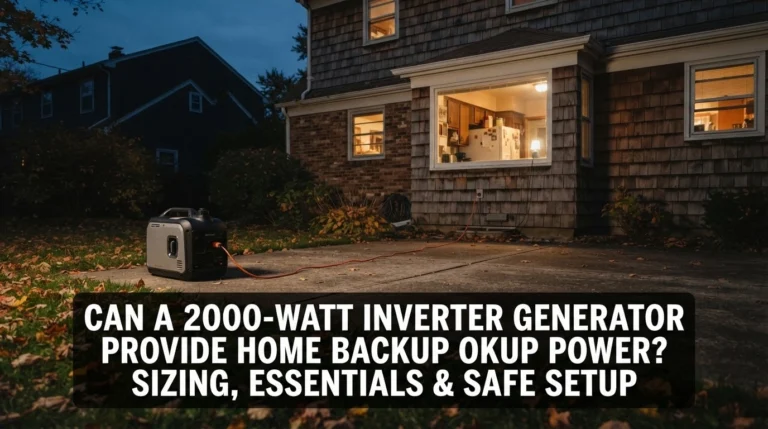
Safety note: Run generators outdoors and well away from windows, doors, and vents. Use a transfer switch or interlock installed by a licensed electrician, and check your owner’s manual before use.
Carbon monoxide is colorless and odorless. Place the generator at least 20 feet from the house, with exhaust pointed away, and keep a working CO alarm inside.
The CDC carbon monoxide guidance explains placement and alarm use in plain language. The CPSC generator safety page also covers safe distance and never running a generator indoors.
Section Takeaway: Use a transfer switch or interlock, never backfeed, and keep the generator outdoors far from the house.
Gas Furnace vs Electric Furnace vs Heat Pump: What Changes?
The fuel source changes everything. A gas furnace uses electricity to move air, while an electric furnace uses electricity to make heat.
That difference decides whether a portable inverter generator is practical. Gas wins by a wide margin.
Can an inverter generator run a gas furnace?
Yes, in most cases. A gas furnace needs 600 to 1,200 running watts, which a 3,000-watt inverter handles with ease.
Propane furnaces work the same way. The burner uses gas, and the generator powers the blower and controls.
Oil furnaces are similar, though they often need a bit more power. Plan for 3,000 to 3,500 watts to be safe.
Can an inverter generator run an electric furnace?
Almost never with a portable unit. An electric furnace can draw 5,000 to 20,000 watts, which is far beyond a typical inverter generator.
Even a large 7,000-watt portable would struggle. You would need a whole-home standby generator or a very large portable with a 240V hookup.
If you have electric heat, plan for a different backup strategy. A small space heater on a generator circuit is often more practical than trying to run the whole furnace.
What about a heat pump?
A heat pump sits in the middle. It needs 2,000 to 5,000 running watts, plus a high starting surge for the compressor.
Some heat pumps work on a large inverter generator with a soft-start kit. Many do not, especially in very cold weather when backup heat strips kick in.
Check your heat pump nameplate and talk to an HVAC tech before you plan around it. The Energy.gov heating guide explains how heat pumps and furnaces differ in cold climates.
Section Takeaway: Gas and oil furnaces are a good match for inverter generators, electric furnaces are not, and heat pumps need careful sizing.
How Long Can an Inverter Generator Run a Furnace?
Runtime depends on tank size, load, and eco mode. A furnace cycles on and off, so the generator does not run at full load all the time.
That cycling helps you. The blower runs hard during a heat call, then the generator idles down between cycles.
Eco mode, also called economy mode, lets the engine slow down at light loads. It saves fuel and cuts noise, but it can lag when a motor starts.
For furnace use, I often turn eco mode off during a cold snap. The engine stays ready for the blower surge, and the furnace starts cleanly every time.
- 3,000W inverter, 3-4 gallon tank: Often 8 to 12 hours at light to moderate load, per the spec sheet.
- 3,500W inverter, larger tank: Often 10 to 14 hours at 25% load, per the spec sheet.
- Dual-fuel on propane: Runtime depends on tank size, with a 20-pound tank often lasting 8 to 12 hours at light load.
- Parallel pair: More power, but fuel use rises when both units run.
Always check the spec sheet for runtime at 25% and 50% load. Those two numbers tell you more than a single marketing claim.
Store enough fuel for at least 24 hours. In a winter storm, gas stations may lose power too, and roads may stay closed.
Use fresh fuel with stabilizer, and rotate it every few months. Stale fuel is the most common reason a generator will not start when you need it.
For winter planning, see our picks for the best portable generator for a winter power outage. It covers cold starts, fuel storage, and long outages.
Safety note: Let the generator cool before refueling, and never refuel indoors or near an open flame. Store fuel outdoors in approved containers, away from the house.
Section Takeaway: A 3,000-watt inverter can often run a gas furnace for 8 to 12 hours on a tank, and fuel storage matters as much as tank size.
Common Problems When Running a Furnace on a Generator
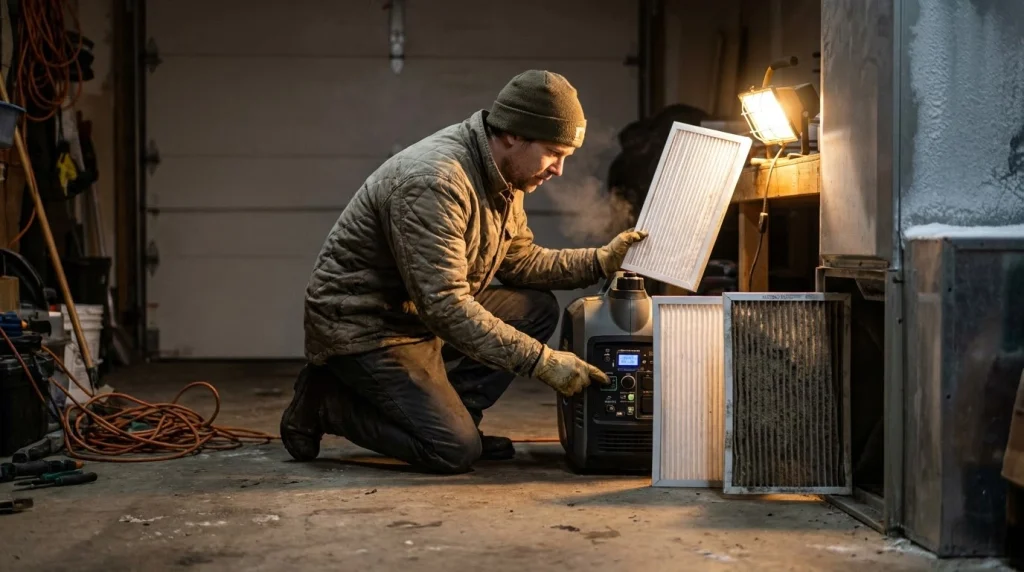
Most furnace problems on generator power come from three causes. The generator is too small, the power is too dirty, or the hookup is wrong.
Fix those three, and most issues disappear. The rest are maintenance problems you can prevent with a test run.
Why does the generator trip when the furnace starts?
The blower surge is the usual cause. The generator sees a short spike and hits overload protection.
Turn off eco mode first. That keeps engine speed up and gives the generator a better chance to handle the surge.
Next, shed other loads before the furnace starts. Unplug the fridge for a minute, then plug it back in after the blower is running.
If it still trips, you need a larger generator or a parallel kit. The difference between running watts and starting watts explains why surge math matters so much here.
Why does the furnace show an error code on generator power?
Dirty power or a floating neutral can confuse the control board. The board sees unstable voltage and locks out for safety.
Use an inverter generator with low THD. Check the neutral bonding setup in your generator manual.
Also check the furnace flame sensor and filter. A dirty filter makes the blower work harder, which raises power draw and heat stress.
Why will the generator not start in cold weather?
Cold oil thickens, batteries weaken, and stale fuel gums up the carburetor. All three hit at once in winter.
Use the oil weight your manual recommends for cold weather. Keep the battery charged, and run the generator monthly for 15 to 20 minutes.
Store the generator in a dry, covered spot, but never run it indoors. Bring it outside well before you need it, so it can warm up safely.
Section Takeaway: Most trips and error codes trace back to surge size, power quality, or stale fuel, and a test run will catch them before an outage.
Is an Inverter Generator the Best Choice for Furnace Backup?
For most homes with a gas furnace, yes. An inverter generator gives you clean power, quiet operation, and good fuel economy in a portable package.
It is not the only option. A conventional generator costs less per watt, but it is louder and rougher on sensitive controls.
A standby generator is the most hands-off option. It starts itself, runs on natural gas or propane, and powers the whole house, but it costs far more to buy and install.
A portable power station, also called a solar generator, is quiet and clean. It cannot run a furnace for long, though, because its battery drains fast under a blower load.
- Inverter generator: Best balance of clean power, noise, fuel use, and price for a gas furnace.
- Conventional generator: Cheaper per watt, louder, and less ideal for furnace control boards.
- Standby generator: Best for whole-home backup, highest cost, needs professional install.
- Power station: Best for short, quiet backup, not for all-night furnace heat.
Noise matters in winter outages. Neighbors are home, windows are closed, and a loud generator carries far at night.
Inverter generators often run at 50 to 60 dB at 25% load, measured at 23 feet, per the spec sheet. That is close to normal conversation, and it makes a real difference over a long night.
The EPA portable generator guidance and Consumer Reports generator testing both stress safe placement and proper sizing. Read them before you finalize your setup.
Section Takeaway: An inverter generator is the best portable choice for most gas furnaces, while standby power wins if you want whole-home automatic backup.
Frequently Asked Questions
Can a 2000-watt inverter generator run a furnace?
Yes, it can run a small, efficient gas furnace with no other large loads. The blower surge leaves little margin, so test it first. A 3,000-watt unit is safer for most homes.
Will an inverter generator damage my furnace?
No, if it is sized correctly and connected safely. Inverter generators make clean, low-THD power that suits control boards. Dirty power or overloads cause most damage, not the inverter design itself.
Do I need a transfer switch to run a furnace on a generator?
Yes, in most homes. A transfer switch or interlock kit is the safe, code-compliant way to feed a hardwired furnace. Never backfeed through an outlet or use a double-ended cord.
Can I run a furnace and a refrigerator on the same generator?
Yes, with a 3,000 to 3,500-watt inverter in most cases. Add the furnace surge plus fridge running watts, then leave 20% headroom. Start the furnace first, then add the fridge.
Should I turn eco mode off for a furnace?
Yes, during cold weather or when the furnace cycles often. Eco mode saves fuel, but it can lag on blower startup. Turning it off keeps the engine ready for the surge.
How long will a 3000-watt inverter generator run a furnace?
Often 8 to 12 hours on a full tank at light to moderate load, per the spec sheet. Runtime drops if you add a fridge, lights, and other loads. Store extra fuel for a full day.
If your furnace is gas, a 3,000-watt inverter generator is a smart, practical backup. Size for the surge, wire it safely, and test it before winter hits.
Your future self will thank you on the coldest night of the year. Warmth, quiet power, and a plan beat a cold house every time.
“`

Hi, I’m Michael Turner. I own a generator workshop in the United States and founded HomeGeneratorBlog to share practical, hands-on guidance about generator installation, maintenance, troubleshooting, safety, and backup power solutions. My goal is to help homeowners make smarter, more confident decisions through clear and reliable information