What Size Inverter Generator Do You Need for an RV or Camper? Sizing, Wattage & Quiet Power
Quick Answer
Most RVs and campers need a 3,000 to 4,500 running-watt inverter generator. That range covers a 13,500 BTU air conditioner, a fridge, lights, and phone charging at the same time. Pick from the best portable generators for RV camping once you know your running watts and your air conditioner’s starting watts.
The fast rule
- Light use, no AC: 2,000 to 2,200 running watts is often enough for charging, lights, and small appliances.
- One 13,500 BTU AC: 3,000 to 3,500 running watts is the sweet spot for most travel trailers.
- One 15,000 BTU AC: 3,500 to 4,500 running watts gives you room for the fridge and converter too.
- Two ACs or 50-amp rigs: 5,000+ running watts, or two paralleled generators, is the safer choice.
- Check starting watts: Your generator must beat the highest starting load, not just the running total.
Do this before you buy
- Add up running watts, add the largest starting watts once, then add 20% headroom.
- Check your RV plug: 30-amp rigs and 50-amp rigs need different outlets and adapters.
- Test the AC start at home before your first hot-weather trip.
I’ve sized generators for small teardrops, big travel trailers, and a fifth wheel that seemed to eat power for fun. The mistake is almost always the same.
People buy for the quiet loads, then the air conditioner kicks on and trips the generator. This guide fixes that with real watt numbers, simple math, and sizing picks by rig type.
In This Guide
- How Much Power Does an RV Actually Use?
- What Size Inverter Generator Do You Need by RV Type?
- How to Calculate Your RV Wattage in 5 Steps
- Can a 2000-Watt Generator Run an RV?
- What Size Generator Do You Need for RV Air Conditioning?
- Parallel Generators vs One Bigger Generator: Which Is Better?
- What Else to Check Before You Buy
- Common Sizing Mistakes That Trip RV Owners
- Frequently Asked Questions
How Much Power Does an RV Actually Use?
An RV uses far less power at night than at midday in July. Lights, phone charging, and a TV sip power.
The air conditioner, microwave, water heater, and hair dryer change the math fast. Those are the loads that decide your generator size.
What are running watts and starting watts?
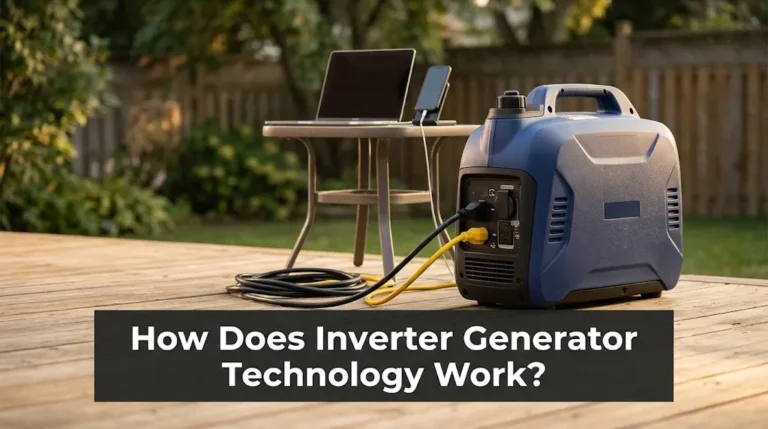
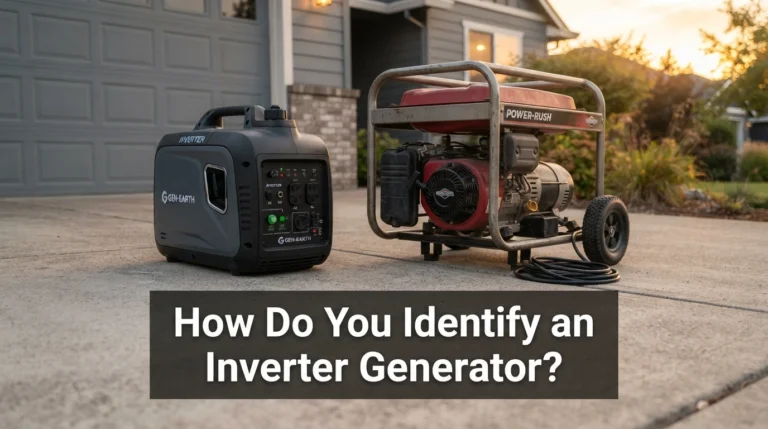
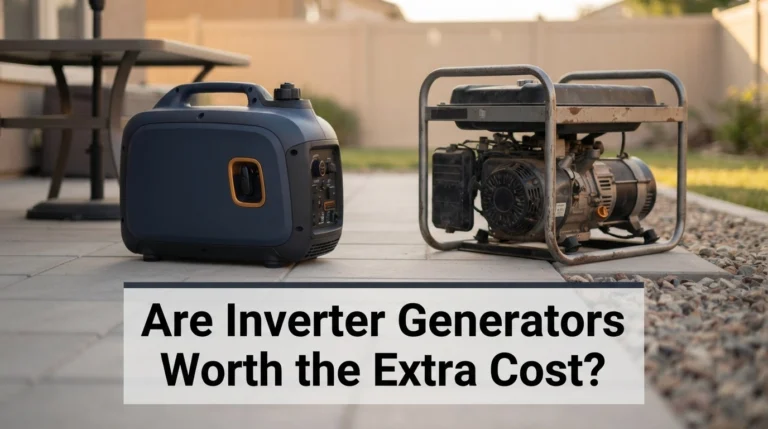
An inverter generator is a portable generator that makes clean, stable power for sensitive electronics. It adjusts engine speed to match the load, so it runs quieter and uses less fuel at light loads.
Running watts are the steady power an appliance uses while it runs. Starting watts are the short surge a motor needs to start, and they can be two to three times higher.
Your generator must handle both numbers. The running total tells you what you can run together.
The starting surge tells you whether the air conditioner or fridge compressor will start at all.
Typical RV appliance watts
Use this table as a starting point, then check your own nameplates. Models vary, and older units often draw more power.
| RV appliance | Running watts | Starting watts |
|---|---|---|
| 13,500 BTU air conditioner | 1,200–1,500 | 2,800–3,000 |
| 15,000 BTU air conditioner | 1,500–1,800 | 3,200–3,500 |
| Microwave | 1,000–1,500 | 1,000–1,500 |
| Absorption fridge on AC | 300–600 | 600–900 |
| Residential fridge | 100–200 | 600–800 |
| Electric water heater | 1,200–1,440 | 1,200–1,440 |
| Converter and battery charger | 300–800 | 300–800 |
| Coffee maker | 800–1,200 | 800–1,200 |
| Hair dryer | 1,200–1,800 | 1,200–1,800 |
| TV, lights, and charging | 150–400 | 150–400 |
Notice how the air conditioner dominates the list. It uses more starting power than almost any other RV load.
That is why a generator that runs your lights with ease can still fail on the first hot afternoon. Learn what a 3000-watt inverter generator can run before you assume that size will cover everything.
Section takeaway: Size for your biggest motor load first, then add the smaller loads you want to run with it.
What Size Inverter Generator Do You Need by RV Type?
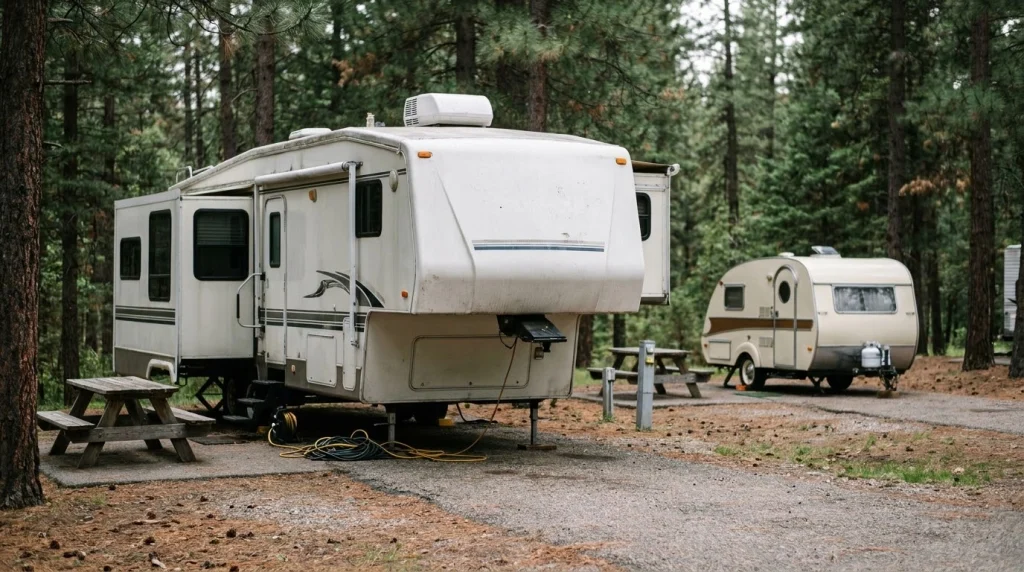
The right size depends on your rig, your AC, and how you camp. A weekend camper without AC has a very different need from a full-time fifth wheel.
Use the ranges below as a guide. Then run the math in the next section for your exact setup.
| RV or camper type | Running watts | Best fit |
|---|---|---|
| Teardrop, pop-up, or small camper | 2,000–2,200 | Lights, charging, small fridge, fan |
| Small travel trailer, no AC | 2,000–2,500 | Microwave or coffee maker, one at a time |
| Travel trailer, one 13,500 BTU AC | 3,000–3,500 | AC plus fridge, lights, and charging |
| Travel trailer, one 15,000 BTU AC | 3,500–4,500 | AC plus microwave in short bursts |
| Class C motorhome, one AC | 3,500–4,500 | AC, fridge, converter, and TV |
| Fifth wheel or Class A, one AC | 4,000–5,000 | Larger fridge, more lights, and outlets |
| Fifth wheel or Class A, two ACs | 5,000–7,500 | Two ACs, or one AC plus heavy loads |
What if you have a 30-amp RV?
Most 30-amp RVs have one air conditioner. A 3,000 to 4,000 running-watt generator usually matches that service well.
That is because 30 amps at 120 volts is 3,600 watts in theory. In practice, you will rarely use all of it at once.
What if you have a 50-amp RV?
A 50-amp RV can draw far more power than a 30-amp rig. It may have two ACs, a residential fridge, and an electric water heater.
Do not try to power the whole 50-amp panel with a small generator. Size for the loads you will actually run, and use a 50-amp adapter only when the generator can support it. For larger rigs, check the best portable generator for a 5th wheel as a starting point.
Section takeaway: Match the generator to your AC size and your amp service, not just to your RV length.
How to Calculate Your RV Wattage in 5 Steps
Guessing leads to tripped breakers and warm nights. A five-minute calculation gives you a number you can trust.
I still do this on paper before a long trip. It takes less time than repacking a storage bay.
- List what runs together: Write down every appliance you want on at the same time.
- Find running watts: Check the nameplate, manual, or maker spec sheet for each item.
- Add running watts: Add all the running watts together for your total load.
- Add the biggest starting watts once: Add only the largest starting surge, not every surge at once.
- Add 20% headroom: Multiply your running total by 1.2 so the generator is not maxed out.
A worked example for a travel trailer
Here is a common setup: a 13,500 BTU AC, a fridge, a converter, lights, and phone charging. The AC runs at 1,400 watts and needs about 2,900 watts to start.
Add the running loads: 1,400 plus 400 for the fridge, 500 for the converter, and 200 for lights and charging. That totals 2,500 running watts.
Now add the AC starting surge once. Your peak need is about 2,500 plus the extra 1,500 watts above running, or roughly 4,000 watts at start.
Add 20% headroom to the running total: 2,500 times 1.2 is 3,000 watts. You need a generator rated for at least 3,000 running watts and about 4,000 starting watts.
That is why a 3,500 running-watt model works well here. It starts the AC and still leaves room for the fridge and charger. If you also want the microwave, you can run multiple appliances at once only if you stagger them and stay under the running limit.
How do you find watts without a nameplate?
Use amps times volts for a rough check. A 12-amp appliance on 120 volts uses about 1,440 watts.
Check your owner’s manual or the maker’s spec sheet when the label is worn or hard to read. Do not use a random online number for your exact model.
Section takeaway: Add running watts, add the biggest start once, then add 20% headroom before you shop.
Can a 2000-Watt Generator Run an RV?
Yes, a 2,000-watt inverter generator can run an RV, but only for light loads. It will not run most rooftop air conditioners on its own.
That limit surprises a lot of new owners. The generator sounds strong, then the AC compressor tries to start and the overload light comes on.
What a 2000-watt generator can run
- Lights and charging: LED lights, phones, laptops, and small fans are easy loads.
- Small fridge: A small 12-volt or efficient fridge can work, especially on propane or DC.
- TV and Starlink: A TV and a small internet setup usually fit within the limit.
- One heat load: A coffee maker or microwave can run alone, but not with much else.
What it usually cannot run
- 13,500 BTU AC: The starting surge is often 2,800 watts or more.
- 15,000 BTU AC: The surge is even higher, and the running load is close to the limit.
- AC plus microwave: Those two together will overload most 2,000-watt models.
- Electric water heater: It can use 1,200 watts or more by itself.
I once tried to help a neighbor run a small AC on a 2,000-watt unit at a hot lakeside site. The fan spun, the compressor clicked, and the generator shut down twice.
We switched the water heater to propane, turned off the microwave, and still needed a soft-start kit to get the AC going. See what a 2000-watt inverter generator can run for a fuller load list before you plan around that size.
Section takeaway: A 2000-watt generator is great for quiet, light camping, but it is not an AC generator by itself.
What Size Generator Do You Need for RV Air Conditioning?
Air conditioning is the sizing question that matters most. Get this right, and the rest of your RV loads usually fit.
Get it wrong, and you will spend hot evenings resetting breakers. The AC size, age, and starting method all change the answer.
How many watts does a 13,500 BTU RV AC need?
A 13,500 BTU RV air conditioner typically needs 1,200 to 1,500 running watts. It needs about 2,800 to 3,000 starting watts.
A 3,000 running-watt generator can work, but it leaves little room for other loads. A 3,500 running-watt model is a safer pick for most owners.
How many watts does a 15,000 BTU RV AC need?
A 15,000 BTU unit typically needs 1,500 to 1,800 running watts. It needs about 3,200 to 3,500 starting watts.
Look for at least 3,500 running watts and 4,500 starting watts. A 4,000 to 4,500 running-watt generator gives you real headroom on hot days.
Can a soft-start kit make a smaller generator work?
Yes, a soft-start kit can cut the AC starting surge by a large amount. It ramps the compressor up slowly instead of hitting it with full power at once.
Many owners use one to run a 13,500 BTU AC on a 2,200-watt generator. That can work, but it is not a magic fix for every setup.
Check the kit’s fit for your exact AC model first. Also test it at home, on a warm day, with your normal loads running. If you want more capacity for other loads too, compare what a 5000-watt inverter generator can run before you decide to upsize instead.
Does altitude and heat change the answer?
Yes, both reduce usable power. Thin air and high heat make the engine work harder and cool less well.
As a rough guide, expect about 3% less power for every 1,000 feet above sea level. At 5,000 feet, that is about a 15% loss.
Hot weather adds to the problem because the AC runs longer and harder. If you camp in the mountains or the desert, size up one step.
Safety note: Never run a generator inside an RV, tent, or enclosed storage bay. Keep it at least 20 feet from doors and windows, point the exhaust away from people, and use a working carbon monoxide alarm inside the RV.
Section takeaway: Plan for the AC starting surge, test it in real heat, and size up if you camp high or hot.
Parallel Generators vs One Bigger Generator: Which Is Better?
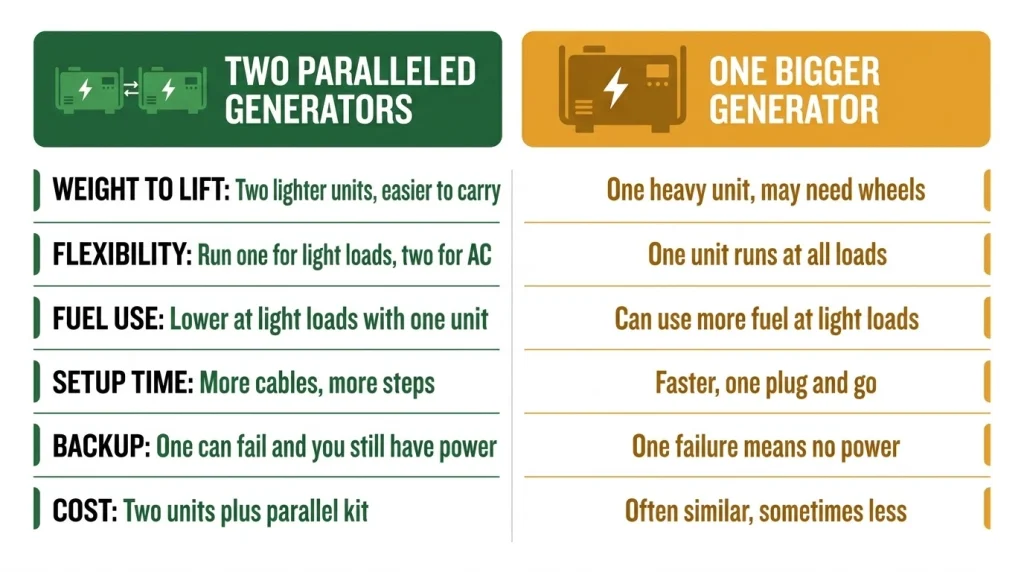
Two small generators linked together can match one big one. That setup is called paralleling, and it is popular with RV owners for good reasons.
It is not always the best choice, though. Weight, cost, fuel, and setup time all matter on a real trip.
| Factor | Two paralleled generators | One bigger generator |
|---|---|---|
| Weight to lift | Two lighter units, easier to carry | One heavy unit, may need wheels |
| Flexibility | Run one for light loads, two for AC | One unit runs at all loads |
| Fuel use | Lower at light loads with one unit | Can use more fuel at light loads |
| Setup time | More cables, more steps | Faster, one plug and go |
| Backup | One can fail and you still have power | One failure means no power |
| Cost | Two units plus a parallel kit | Often similar, sometimes less |
When does paralleling make sense?
Paralleling makes sense if you lift gear alone, camp in quiet sites, and only need AC on some days. You can run one small unit for charging and lights, then add the second for AC.
It also helps if you already own a 2,000-watt unit. A matching second unit and a parallel kit can be cheaper than a whole new generator.
When is one bigger generator better?
One bigger generator is better if you want simple setup, a 30-amp RV outlet, and a long fuel tank. You plug in once and you are done.
It is also better for larger rigs with a 15,000 BTU AC and a residential fridge. Two small units can work, but the wiring and fuel stops get old fast.
Check that both generators are parallel-ready and use the maker’s kit. Do not mix brands or models unless the maker says it is safe.
Section takeaway: Choose paralleling for light weight and flexibility, and choose one bigger unit for simple, heavy AC use.
What Else to Check Before You Buy
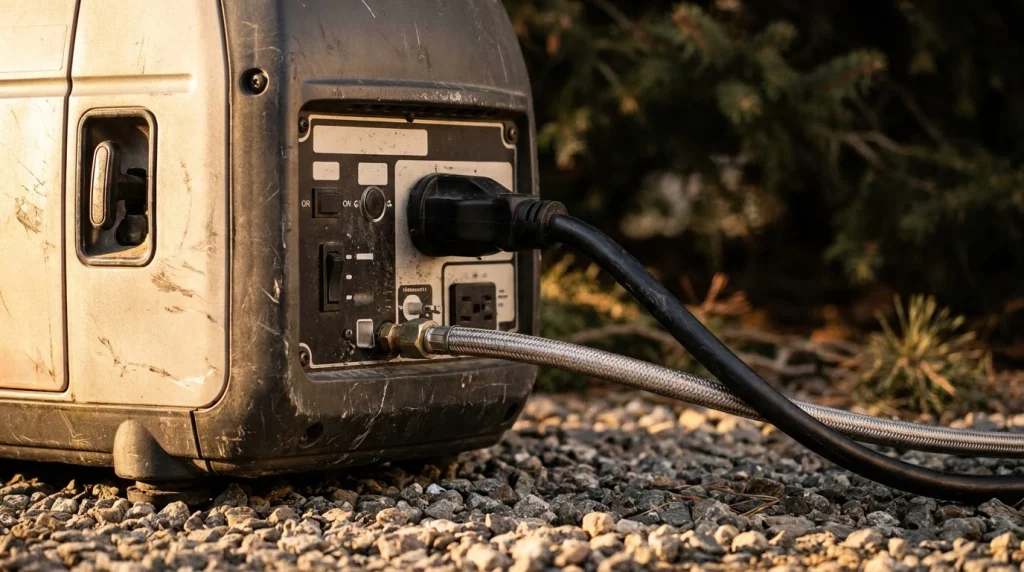
Watts are the headline, but they are not the whole story. Outlets, noise, weight, and runtime decide whether you will enjoy using the generator.
I have seen owners buy the right watts and the wrong outlet. They ended up with adapters, extension cords, and a setup they hated.
Does it have the right RV outlet?
- 30-amp RV outlet: Look for a TT-30R outlet if you have a 30-amp RV.
- 50-amp RV outlet: Most portable inverter generators do not have a true 50-amp outlet.
- Adapters: A 50-to-30-amp adapter works, but it does not add power.
- GFCI outlets: Check that the outlets match your cords and your RV plug.
How loud is it, and how long will it run?
Noise matters in campgrounds, and many sites have quiet hours. Look for a rated noise level under 60 decibels at a quarter load.
Runtime matters too, especially overnight. A larger fuel tank and eco mode can stretch a fill to 8 hours or more at light loads.
Check the runtime at 25% load and at 50% load. The 25% number looks better, but the 50% number is closer to real AC use.
What about weight, fuel, and clean power?
- Weight: A 2,000-watt unit may weigh 45 pounds, while a 4,500-watt unit can weigh 100 pounds or more.
- Fuel type: Gas is common, dual-fuel adds propane, and propane runs cleaner in storage.
- Clean power: Look for low total harmonic distortion, often under 3%, for laptops and TVs.
- Start type: Recoil start is light, electric start is easier, and remote start is handy in bad weather.
Independent testing can help you compare noise and output claims. Consumer Reports publishes generator tests and safety notes that are useful before a big purchase.
For fuel and emissions basics, EPA guidance covers small-engine emissions and safe fuel handling. For road and RV travel planning, AAA offers RV travel and roadside resources that pair well with a generator checklist.
Safety note: Use a heavy-duty, outdoor-rated extension cord made for generator use. Keep cords dry, clear of walkways, and away from hot exhaust parts.
Section takeaway: Buy the watts first, then check the outlet, noise, weight, and runtime before you pay.
Common Sizing Mistakes That Trip RV Owners
Most sizing problems are easy to avoid once you know them. I have made two of these myself, and both cost me a hot night.
Use this list as a final check before you buy or before you leave for a trip.
- Buying peak watts, not running watts: A 4,000-watt peak rating may mean only 3,200 running watts.
- Forgetting starting watts: The AC surge is the load that trips most generators.
- Running everything at once: AC, microwave, water heater, and hair dryer rarely fit together.
- Ignoring altitude: High campsites cut power, so a borderline generator fails there first.
- Using a long, thin extension cord: Voltage drop can hurt motors and cause hard starts.
- Skipping a test run: Test the AC start at home, not at a crowded campground.
- Forgetting the converter: A low battery can pull 500 watts or more while it charges.
One more mistake is easy to miss: buying for summer and camping in winter. Cold starts, thick oil, and a weak battery can make a generator harder to start.
Keep the fuel fresh, check the oil, and run the generator monthly in the off-season. NHTSA also offers vehicle and RV safety resources that are worth a quick check before a long tow.
Section takeaway: Check running watts, starting watts, altitude, cords, and a real test run before you trust a new setup.
Frequently Asked Questions
What size inverter generator do I need for a 30-amp RV?
Most 30-amp RVs need 3,000 to 4,000 running watts. That covers one 13,500 BTU AC, a fridge, lights, and charging. A 15,000 BTU AC may need 3,500 to 4,500 running watts instead.
Can a 3000-watt inverter generator run an RV air conditioner?
Yes, a 3,000 running-watt generator can run many 13,500 BTU air conditioners. It needs enough starting watts, usually about 3,000 to 3,500 watts, and little else running at start. A soft-start kit can help if the start is borderline.
Can a 2200-watt generator run a 13500 BTU AC?
Sometimes, but only with a soft-start kit and careful load control. A stock 13,500 BTU AC often needs about 2,800 starting watts, which is above the peak of many 2,200-watt models. Test it at home before you rely on it in heat.
How many watts do I need to run an RV without AC?
Most RVs without AC need 2,000 to 2,500 running watts for normal use. That covers lights, charging, a small fridge, a TV, and one heat load at a time. A microwave or coffee maker can push you toward the upper end.
Do I need two generators for my RV?
No, you do not need two generators for most single-AC RVs. One 3,500 to 4,500 running-watt generator is often simpler. Two paralleled units help if you want light weight, quiet light-load running, and a backup unit.
Is an inverter generator safe for RV electronics?
Yes, a good inverter generator is made for sensitive electronics. Look for pure sine wave output and low total harmonic distortion, often under 3%. Keep the generator outside, use proper cords, and follow the maker’s grounding and bonding guidance.
Start with your AC size, add your running loads, and add 20% headroom. Then test the setup at home on a warm day before your next trip.
If the AC starts cleanly and the generator runs without strain, you have the right size. If it struggles, size up or add a soft-start kit before you hit the road in 2026.

Hi, I’m Michael Turner. I own a generator workshop in the United States and founded HomeGeneratorBlog to share practical, hands-on guidance about generator installation, maintenance, troubleshooting, safety, and backup power solutions. My goal is to help homeowners make smarter, more confident decisions through clear and reliable information