Powersmart Portable Gas Powered Generator 3600Watt Review: Specs, Pros & Cons
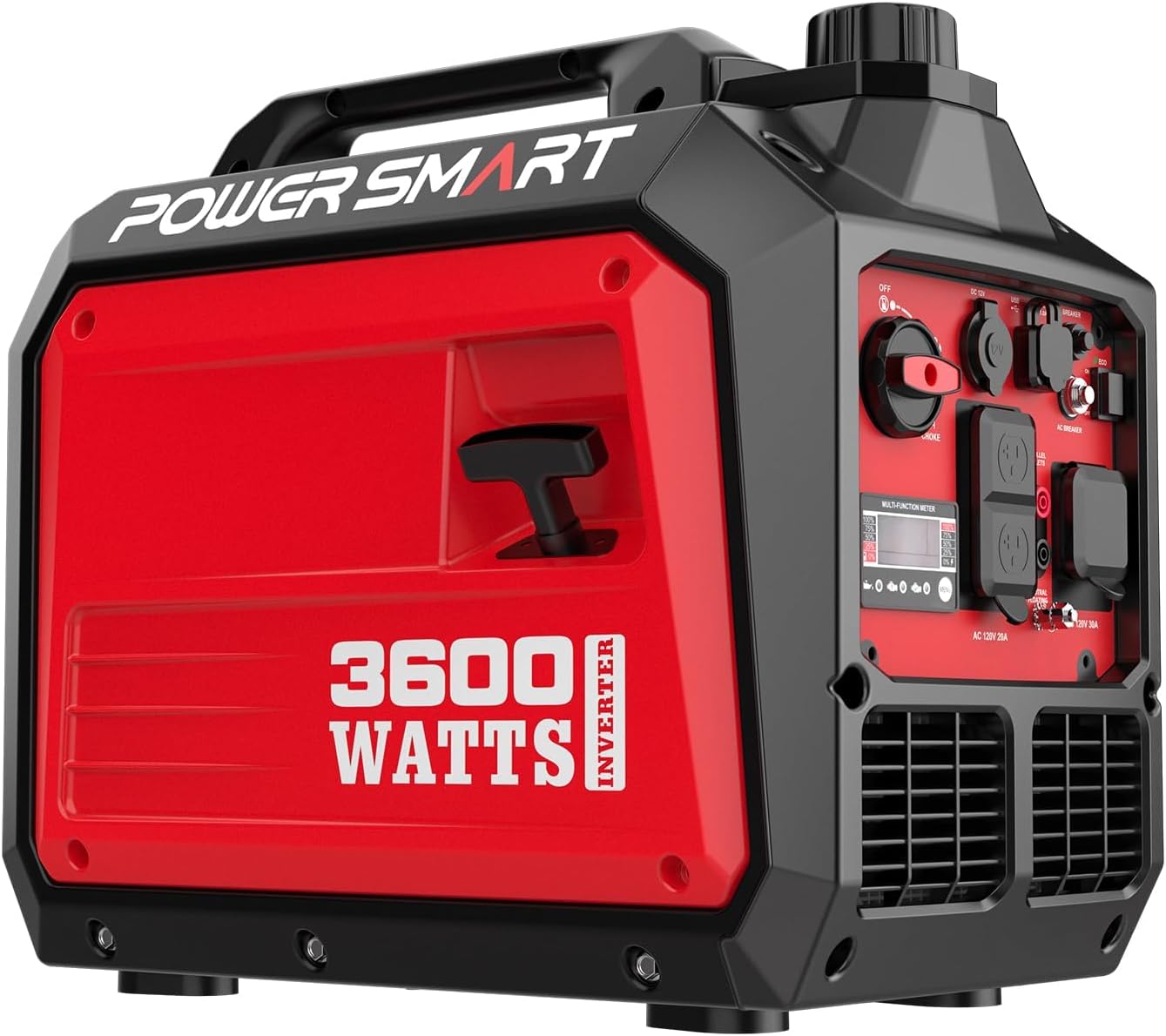
The PowerSmart 3600W Portable Gas-Powered Inverter Generator is a compact gasoline generator with 3,600 starting watts and 3,200 running watts. It is intended for selected home essentials, campsite equipment, and compatible 120-volt RV loads.
This PowerSmart 3600 watt portable generator review evaluates the documented DL5035C configuration rather than assuming every similarly named listing is identical. Its useful output and convenient sockets appeal to practical backup buyers, but the small fuel tank and recoil starting deserve attention.
🏆 My Quick Verdict
💡 Best For: Households seeking limited backup power and campers needing a portable, gasoline-only inverter generator.
⚡ Key Specs:
3,600 peak / 3,200 running watts; 149cc engine; 1.3-gallon tank; 120V output; 50.7 lb net weight.
✅ Bottom Line: This is a capable small inverter generator for disciplined power use. Expect manual starting, periodic refueling, and careful load planning rather than whole-house coverage.
At a Glance
- Rated output is 3,200 watts, while 3,600 watts is temporary starting capacity.
- The documented model uses a four-stroke, 149cc gasoline engine.
- A 120V 30A outlet supports suitable RV connections within the generator’s output limit.
- The manual reports approximately 4.5 hours of runtime at half load.
- Eco mode, USB output, and parallel connection points expand practical flexibility.
- Recoil starting and a modest fuel tank create ownership trade-offs.
PowerSmart 3600W Generator Specifications
| Specification | Verified DL5035C Detail |
|---|---|
| Generator type | Gasoline inverter generator |
| Starting / running power | 3,600W / 3,200W |
| Engine | 149cc, four-stroke |
| Output | 120V, 60Hz |
| Starting method | Manual recoil |
| Fuel capacity | 1.3 gallons |
| Runtime | 4.5 hours at 50% load |
| Noise specification | 70 dB at 23 feet |
| Net weight | 50.7 pounds |
| Warranty | Two-year limited home-use warranty; commercial terms differ |
Design & Build Quality
The DL5035C prioritizes manageable portability over stationary, high-output construction. Its approximately 51-pound net weight suits occasional relocation, although lifting still requires care.
An integrated carrying handle provides a designated grip, while the enclosed inverter layout protects internal components from casual contact. The housing is not permission to run it in rain or store it damp.
Service covers provide access to the oil opening, air filter, and spark plug. That matters because neglected gasoline engines become difficult to start, especially after long storage.
Setup, Installation & Ease of Use
- Unpack the generator and inspect the case, sockets, starter cord, and supplied paperwork.
- Identify the exact model number on its rating label before selecting accessories.
- Place the unit on firm, level ground outdoors, at least 20 feet from buildings.
- Direct the exhaust away from windows, doors, air intakes, and occupied spaces.
- Add the manufacturer-recommended engine oil and fresh gasoline before first starting.
- Disconnect loads, set the controls as directed, and use the recoil handle.
- Connect approved cords and appliances only after stable output is indicated.
- Turn off and disconnect loads before stopping the engine or preparing storage.
- Allow the engine to cool before refueling or moving the unit.
- For seasonal storage, follow the manual’s fuel-system and maintenance instructions.
Core Performance & Feature Breakdown
The central performance number is 3,200 running watts, not the advertised 3,600-watt peak. That sustained ceiling determines which appliances can operate simultaneously during a blackout.
A refrigerator, router, lights, and a modest fan may fit together, provided their actual electrical labels support the calculation. Motor compressors create temporary surges, so aggregate starting demand also matters.
Large electric heaters, multiple cooking appliances, and whole-home air-conditioning can overwhelm this output class. For a fuller sizing explanation, read our guide to inverter generator starting wattage.
Expert Insight
Treat 3,200 watts as the maximum sustained output, not a recommended continuous target. Leaving capacity unused helps accommodate compressor startup and changing appliance demand.
The manufacturer documents 4.5 hours at half load from a 1.3-gallon tank. This is a specific test condition, not a promise that all households will receive identical runtime.
The stated 70 dB at 23 feet also prevents calling it silent. Its actual sound level will change with engine speed, distance, surroundings, and connected demand.
Key Features Explained
Inverter Power Delivery
Inverter technology regulates electrical output for everyday electronics and compatible appliances. It is useful for mixed residential and camping loads, although individual equipment requirements still govern suitability.
RV-Oriented 30-Amp Connection
The panel includes a 120-volt, 30-amp receptacle for compatible RV arrangements. However, that connector does not raise the generator’s total 3,200-watt running capacity.
Eco Mode and Monitoring
The eco switch lowers engine speed when demand is light, and the multifunction display reports operating information. For motor startup or rapidly changing heavy loads, the manual recommends full-speed operation.
Parallel-Ready Connections
Parallel ports allow pairing with another compatible inverter generator using a separately purchased kit. PowerSmart advises matching models, so owners should confirm equipment compatibility before investing in expansion.
Real-World Usability & Maintenance
Regular oil checks are essential for long-term reliability, even with the automatic low-oil shutdown described in the manual. The engine also needs timely air-filter and spark-plug attention.
After extended operation in heat or at high loads, the manual calls for more frequent oil changes. Keep an operating-hours record rather than relying on memory between outages.
Never operate this generator inside a house, garage, tent, or partly enclosed shelter. The US Consumer Product Safety Commission recommends outdoor operation at least 20 feet from buildings, with exhaust directed away.
Pros & Cons
Pros
- 3,200 running watts can support selected essentials without a large generator.
- The 30A receptacle offers a convenient connection for compatible RV equipment.
- Eco mode can reduce fuel consumption during light electrical demand.
- Parallel ports offer a documented expansion option with additional equipment.
Cons
- Recoil starting may frustrate buyers expecting push-button convenience.
- Half-load runtime means longer outages require fuel planning.
- Its 120V-only output cannot directly serve 240V household loads.
Common Issues & Fixes
Engine Refuses to Start
Stale gasoline, insufficient oil, or incorrect starting controls can prevent ignition. Check fuel, dipstick level, choke position, and spark-plug condition against the manual.
Generator Runs but Outlets Lose Power
Excessive connected wattage can trigger inverter overload protection. Disconnect appliances, correct the load, and use the documented reset procedure.
Engine Hunts or Runs Unevenly
A dirty air filter or aging fuel can interrupt smooth operation. Service the filter and fuel system only after shutdown and cooling.
What to Know Before You Buy
PowerSmart has sold similarly named generators with different model identifiers and published peak ratings. Confirm that the listing specifically matches the 3,600-starting-watt configuration before assuming these specifications apply.
Check every planned appliance’s continuous wattage, starting surge, plug shape, and voltage. Our 4,000-watt generator sizing guide offers useful nearby-class comparisons.
For home wiring, consult a qualified electrician about an approved transfer switch or other code-compliant interconnection. Never backfeed through a household wall outlet.
Also budget for outdoor-rated cords, properly stored gasoline, oil, maintenance supplies, and functioning indoor carbon-monoxide alarms. These essentials affect the actual cost of ownership more than a headline wattage number.
Who Should Buy It / Who Should Skip It
✅ Who Should Buy It
- Homeowners who plan carefully selected 120V outage loads.
- Campers seeking inverter power with gasoline availability.
- RV owners whose actual operating needs fit the output limit.
✗ Who Should Skip It
- Households needing central air conditioning or 240V appliances.
- Buyers requiring electric starting or propane flexibility.
- Users who cannot provide a safe outdoor operating location.
Alternatives to Consider
Champion 100809 4000W Inverter
Best For: Campers prioritizing a lighter generator and documented CO shutdown.
Main Advantage: Champion specifies less than 49 pounds and 64 dBA at 23 feet.
Trade-off: Its 3,000 running watts are lower than this PowerSmart model.
Key Spec: 4,000 starting / 3,000 running watts.
Champion 201592 4000W Dual-Fuel Inverter
Best For: Buyers wanting gasoline and propane operating options.
Main Advantage: Dual-fuel capability improves fuel planning flexibility.
Trade-off: Running output depends on the selected fuel and load.
Key Spec: 4,000 starting / 3,300 running watts on gasoline.
Is It Worth It?
The PowerSmart makes sense when the purchase goal is focused: modest portable power, simple gasoline operation, and occasional emergency use. It becomes a weaker choice if you routinely need higher continuous loads.
Compare its selling price with similar generators after adding the costs of fuel, connection hardware, and maintenance. Warranty terms and accessible service support deserve equal weight in that calculation.
Final Verdict
The PowerSmart 3600W inverter generator is a sensible shortlist candidate for buyers who need dependable specifications rather than oversized promises. Choose it for manageable 120V loads, and verify the precise model before ordering.
Frequently Asked Questions
Can a PowerSmart 3600W generator run a refrigerator?
Yes, if the refrigerator’s running and starting requirements fit the available generator capacity. Add the demand of every other connected device before switching it on.
Is this generator suitable for a 30-amp RV?
It can serve compatible 120V RV loads through the documented 30A receptacle. The 3,200-watt continuous ceiling still applies, so verify air-conditioner startup requirements.
What size generator is needed for whole-house backup?
This 3,200-running-watt model is not a whole-house solution for many homes. A qualified electrician can calculate your actual loads and connection requirements.
How long does the warranty last?
The DL5035C manual lists a two-year limited warranty for home use. Commercial-use coverage differs, and claims require documentation of purchase.
How often should I maintain the generator?
Follow the model-specific service schedule and check oil before operation. Hot, heavy, or dusty use can require shorter service intervals.
Can I run the PowerSmart generator in a garage?
No, never operate a gasoline generator inside a garage, even with the door open. Run it outside at least 20 feet from buildings with exhaust directed away.
Affiliate disclosure: HomeGeneratorBlog earns a small commission when you purchase through links on this page — at no extra cost to you. Our editorial process is independent: affiliate relationships never influence which products we recommend or how we rank them.

Hi, I’m Michael Turner. I own a generator workshop in the United States and founded HomeGeneratorBlog to share practical, hands-on guidance about generator installation, maintenance, troubleshooting, safety, and backup power solutions. My goal is to help homeowners make smarter, more confident decisions through clear and reliable information