What Happens If a Generator Runs Out of Gas Overnight?
Quick Answer
If a gasoline generator runs out of gas overnight, the engine usually sputters, loses power, and shuts off. A single fuel-related shutdown normally does not damage a healthy generator, but connected appliances immediately lose electricity. Some conventional generators may produce unstable power as the engine slows. Before restarting, let the unit cool, refill it safely, check the oil, and follow the manufacturer’s generator operating instructions.
What You Should Expect
- Engine stops: Without gasoline, combustion stops and the generator shuts down.
- Power disappears: Refrigerators, lights, pumps, and other connected appliances lose electricity.
- Possible voltage changes: Certain conventional generators may produce unstable output immediately before stopping.
- Usually no engine damage: Running out of gasoline once rarely causes mechanical damage by itself.
- Restart may take longer: Fuel must reach the carburetor or injection system again.
Your First Steps
- Disconnect electrical loads and switch the generator off.
- Let the generator cool before adding fresh gasoline.
- Check the oil, restart according to the manual, and reconnect loads gradually.
Waking up to a silent generator during a power outage can be unsettling. You might wonder whether the engine has been damaged or whether your refrigerator has stopped cooling.
I treat this situation as two separate concerns: the generator itself and everything that lost power when it stopped. Understanding both helps you restart safely and prevent another unexpected shutdown.
What Happens When a Generator Runs Out of Gas While Running?
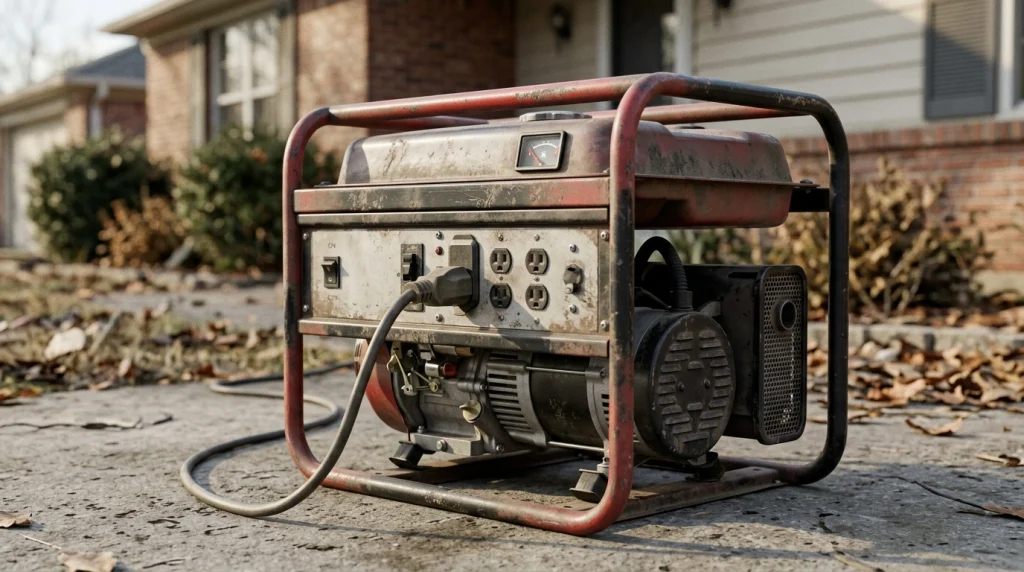
When a gasoline generator runs out of fuel, its engine can no longer maintain combustion. The engine slows, electrical output disappears, and the machine eventually stops.
This process is called fuel starvation. It happens when insufficient fuel reaches the engine to maintain normal operation.
What Happens Inside the Engine?
A gasoline generator depends on a steady supply of fuel, air, and ignition. When the fuel supply disappears, the engine cannot continue producing power.
The shutdown generally follows this sequence:
- Fuel level becomes critically low. The remaining gasoline flows from the tank into the fuel system.
- Fuel delivery becomes insufficient. The carburetor or injection system can no longer supply the required amount.
- Combustion becomes irregular. The engine may hesitate, surge, or sputter.
- Engine speed drops. The generator can no longer maintain normal operation.
- Electrical output stops. Connected equipment loses generator power.
- The engine shuts down. It remains stopped until fuel is restored and the unit is restarted.
Some generators shut down relatively smoothly. Others noticeably sputter before stopping, depending on their fuel systems and connected loads.
Does the Generator Shut Off Automatically?
Yes, the engine normally stops once it can no longer burn enough fuel. However, this is not necessarily a deliberate protective shutdown.
It simply means the engine has stopped producing mechanical power. Low-oil shutdown systems and electronic protection circuits perform different functions.
Will Running Out of Gas Damage a Generator?
Running out of gasoline once normally does not destroy a healthy portable generator. However, repeated rough shutdowns, neglected maintenance, or existing fuel-system problems can create additional risks.
The important distinction is between running out of fuel and operating with inadequate lubrication or another mechanical fault.
Can Running Out of Gas Damage the Engine?
Gasoline supplies energy for combustion, while engine oil lubricates moving parts. Running out of fuel does not automatically mean the engine has lost its oil supply.
A properly maintained four-stroke generator will usually stop without serious internal damage. However, an engine already experiencing overheating, low oil, or other problems needs separate attention.
- Oil level: Check it before restarting, especially after extended operation.
- Engine temperature: Allow sufficient cooling before handling or refueling.
- Unusual noises: Knocking or grinding after restarting requires investigation.
- Repeated stalling: Look for a fuel delivery, ignition, or maintenance problem.
Can Running Out of Gas Damage the Alternator?
The alternator converts mechanical rotation into electricity. As the engine slows, the alternator can no longer maintain its normal output.
A single fuel-related shutdown generally does not damage the alternator itself. The bigger concern is how electrical output behaves while engine speed is falling.
Can Fuel Starvation Damage the Carburetor?
Simply emptying the carburetor of gasoline does not normally damage it. Some manufacturers even recommend draining carburetor fuel during long-term storage.
Problems are more likely when stale gasoline leaves deposits or contamination blocks small passages. A clean, properly maintained fuel system should usually restart after fresh fuel reaches it.
Can Running Out of Gas Damage Appliances Connected to the Generator?
Yes, connected appliances can sometimes be affected, although damage is not inevitable. The main concerns are sudden power loss, possible voltage or frequency instability, and repeated interruptions.
Conventional generators depend heavily on engine speed to maintain electrical frequency. Inverter generators use electronic controls that can provide more stable output until their protection systems disconnect power.
Which Appliances Need the Most Attention?
- Refrigerators and freezers: Cooling stops, and compressors may need a short delay before restarting.
- Desktop computers: Unsaved work disappears without battery backup.
- Internet equipment: Routers and modems shut down immediately.
- Sump pumps: Water removal stops, potentially increasing flooding risk.
- Heating equipment: Furnace blowers or controls may stop working.
- Medical equipment: Devices requiring continuous electricity need an independent emergency backup plan.
I would prioritize restoring critical equipment before worrying about ordinary household conveniences. A stopped sump pump may present a more urgent problem than a television losing power.
For household wiring, proper isolation is equally important. My guide to safe household connections explains why plugging a generator into a normal wall outlet is dangerous.
The Electrical Safety Foundation International also recommends appropriate transfer equipment to prevent dangerous backfeeding.
What Happens to Refrigerator Food Overnight?
The answer depends on how long the electricity was off and whether the refrigerator remained closed. Food safety matters more than whether the generator restarts successfully.
These are the general time guidelines from FoodSafety.gov:
| Appliance | Approximate Safe Time | Condition |
|---|---|---|
| Refrigerator | Up to 4 hours | Door remains closed |
| Full freezer | About 48 hours | Door remains closed |
| Half-full freezer | About 24 hours | Door remains closed |
These estimates assume suitable starting temperatures and closed doors. Actual food safety also depends on temperature history.
Check the official power outage food safety chart before deciding what to keep or discard.
What Should You Do If Your Generator Runs Out of Gas Overnight?
Start by making the generator safe, then restore its fuel supply. Avoid immediately pouring gasoline into an engine that recently stopped while hot.
Here is the sequence I recommend for an ordinary gasoline-powered portable generator.
Step 1: Confirm the Generator Has Stopped
Check whether the engine is completely stopped and the electrical output is off. Move the engine switch to the off position before working around the unit.
If your generator has automatic restart features, follow its specific isolation procedure. Do not assume a stationary or standby generator operates like a portable model.
Step 2: Disconnect Connected Appliances
Switch off connected loads or disconnect appliances according to the manual. This prevents the generator from facing a large electrical demand immediately upon restarting.
Do not disconnect or modify any permanently installed electrical connections while they are energized. Use the approved transfer equipment and operating procedure.
Step 3: Let the Generator Cool
Wait until the engine and exhaust components have cooled sufficiently for safe refueling. Hot mufflers and spilled gasoline are a dangerous combination.
Never refuel a running generator. For more detailed precautions, see my generator fuel safety guide.
Step 4: Add Fresh, Correct Gasoline
Use the gasoline grade and ethanol concentration specified in your owner’s manual. Fill the tank outdoors with an approved fuel container.
- Keep flames, sparks, and cigarettes away.
- Do not overfill the fuel tank.
- Clean up spills before restarting.
- Secure the fuel cap properly.
- Never add gasoline through an improvised container or funnel near hot exhaust parts.
Step 5: Check the Engine Oil
Check the oil level using the manufacturer’s specified procedure. A fuel-related shutdown does not prove the engine has sufficient oil.
Long overnight operation can consume operating hours quickly. This makes routine oil checks particularly important during extended outages.
Step 6: Restore Fuel Flow
Open the fuel valve if your model uses one. Confirm that the fuel-cap vent or primer is positioned as the manufacturer requires.
Some generators take several starting attempts after their fuel systems have emptied. Follow the manual’s cranking limits instead of repeatedly forcing the starter.
Step 7: Start Without Electrical Loads
Start the generator using its normal procedure, with loads disconnected or switched off. Let the engine stabilize before reconnecting electricity.
Listen for steady running and check the control panel for warnings. Stop if you notice smoke, severe vibration, fuel leakage, or unusual mechanical noise.
Step 8: Reconnect Appliances Gradually
Reconnect essential equipment in stages while staying within the generator’s rated running and starting wattage. Large motors may draw considerably more power when starting.
I would restore a refrigerator, essential lighting, and other critical loads before adding optional appliances. This reduces the chance of immediately overloading the generator.
Why Won’t My Generator Start After Running Out of Gas?
A generator that refuses to restart after refueling may still have a simple fuel-delivery problem. However, empty fuel is not the only possible cause of a shutdown.
Check these common causes before assuming the engine is damaged:
- Closed fuel valve: Gasoline cannot reach the carburetor until the valve opens.
- Incorrect choke setting: Starting requirements vary between cold and warm engines.
- Empty carburetor bowl: Fuel may need time to reach the engine again.
- Low-oil warning: A separate protection system may prevent starting.
- Blocked fuel line: Dirt, debris, or deposits can restrict gasoline flow.
- Stale gasoline: Degraded fuel can cause hard starting or rough operation.
- Faulty spark plug: Ignition problems can prevent normal combustion.
One important distinction is fuel age. Gasoline that has deteriorated during storage can cause problems that resemble ordinary fuel starvation.
If the replacement fuel has been stored for a long time, read my guide to older generator gasoline before relying on it.
When Should You Stop Trying to Restart It?
Stop repeated starting attempts if the engine cranks abnormally, leaks fuel, produces unusual smoke, or makes mechanical knocking sounds. Continued attempts may make an existing problem worse.
If normal checks do not restore operation, consult the service manual or a qualified generator technician. Never bypass low-oil, carbon monoxide, or other protective shutdown systems.
Is It Safe to Leave a Generator Running Overnight?
Some portable generators can operate for an extended period, but that does not make unattended overnight operation automatically safe. Runtime limits, fuel supply, ventilation, maintenance, and emergency risks all matter.
I recommend reading the full discussion of overnight generator safety before relying on a portable unit while everyone sleeps.
Carbon Monoxide Is the Biggest Safety Concern
Gasoline engines produce carbon monoxide, an invisible and potentially deadly gas. Dangerous exhaust can enter homes through openings even when the generator is running outdoors.
The Centers for Disease Control and Prevention advises placing portable generators outdoors more than 20 feet from windows, doors, and vents.
- Never run a portable generator inside a home or garage.
- Keep the exhaust directed away from occupied buildings.
- Maintain working battery-powered or battery-backup carbon monoxide alarms.
- Keep the generator dry using only an appropriate outdoor setup.
- Follow the manufacturer’s clearance and operating requirements.
- Do not run it unattended while sleeping without addressing the relevant safety risks.
If a carbon monoxide alarm sounds, get everyone into fresh air immediately and contact emergency services. Do not reenter until responders confirm it is safe.
How Long Will a Generator Run Before It Runs Out of Gas?
Generator runtime depends on fuel capacity, engine efficiency, and electrical demand. There is no universal number of hours for every gasoline generator.
Manufacturers normally publish runtime estimates at specific loads, often 25% or 50% of rated output. Those figures are more useful than guessing from tank size alone.
How Do You Calculate Estimated Runtime?
You can estimate runtime by dividing usable fuel capacity by the generator’s average gasoline consumption. Both figures must use matching units.
Estimated runtime = Usable gasoline (gallons) ÷ Consumption (gallons per hour)
For example, consider a hypothetical generator with 8 usable gallons and an average consumption of 0.8 gallons per hour.
- Usable gasoline: 8 gallons
- Average consumption: 0.8 gallons per hour
- Estimated runtime: 10 hours
This is a calculation example, not a specific generator’s tested performance. Actual consumption changes with load, engine condition, and operating conditions.
Why Does the Same Generator Use Fuel Faster Some Nights?
A generator supplying a few lights uses a different amount of fuel than one operating several motor-driven appliances. Higher electrical demand generally increases fuel consumption.
Common contributors to shorter runtime include:
- Air conditioners or electric heaters operating for extended periods.
- Multiple refrigerators or freezers cycling.
- Well pumps and sump pumps starting frequently.
- Heavy household loads operating simultaneously.
- Different generator efficiency at different load levels.
For overnight planning, I prefer using the manufacturer’s runtime rating at a realistic load. I would also allow a safety margin rather than relying on the final estimated minutes.
How Can You Prevent a Generator From Running Out of Gas Overnight?
The most reliable approach is to plan fuel consumption before starting an overnight run. You should also establish a safe shutdown and backup-power plan.
A few practical habits make a meaningful difference:
- Check fuel before evening: Review the tank level before the generator begins an extended run.
- Know your realistic runtime: Use the manufacturer’s specifications and your typical appliance load.
- Reduce unnecessary loads: Turn off equipment that does not need overnight power.
- Keep approved fuel containers: Store gasoline away from living areas and ignition sources.
- Rotate stored fuel: Replace gasoline before deterioration becomes a concern.
- Maintain the generator: Check oil, air filters, and service intervals.
- Plan for automatic power loss: Use suitable backup batteries where uninterrupted electricity matters.
Should You Store Extra Gasoline?
Keeping an appropriate fuel reserve can help during an extended power outage. However, storage must follow local regulations, fire precautions, and container instructions.
Gasoline does not remain fresh indefinitely. Follow the manufacturer’s maintenance guidance, including when to add stabilizer or drain fuel before storage.
My guide on storing gas in generators explains the difference between short-term use and extended storage.
Honda’s generator fuel recommendations also explain how storage conditions and gasoline deterioration affect reliability.
Do Gasoline, Propane, and Standby Generators Stop the Same Way?
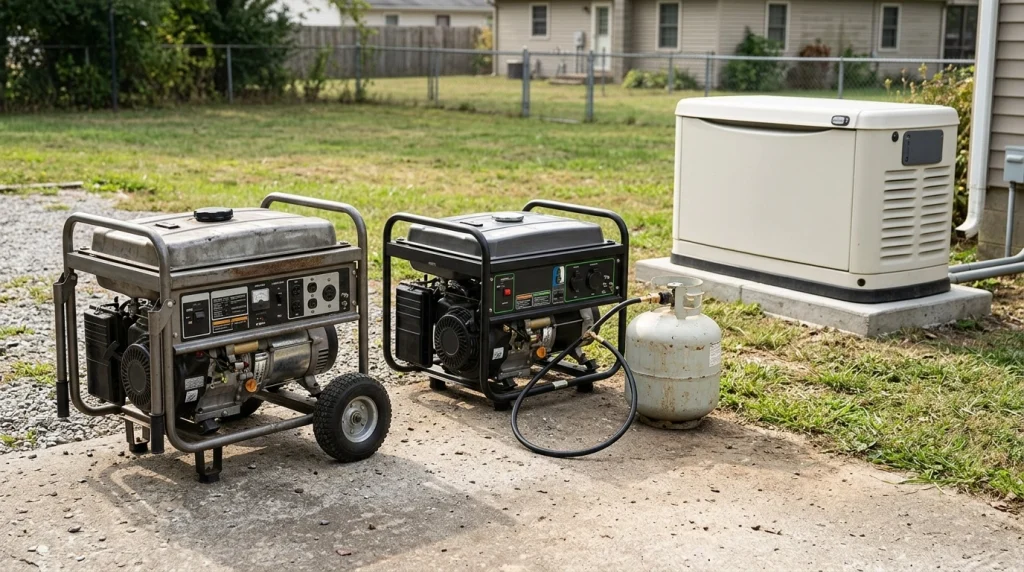
All fuel-burning generators need a dependable energy supply, but their fuel systems operate differently. A gasoline generator running dry is not identical to a propane or natural-gas generator losing fuel pressure.
The table below highlights those differences.
| Generator Type | Fuel Problem | Typical Result |
|---|---|---|
| Gasoline portable | Tank empties | Engine sputters or stops |
| Propane portable | Insufficient propane supply | Fuel-related shutdown |
| Natural-gas standby | Supply interruption or low pressure | Shutdown or controller fault |
| Inverter generator | Gasoline or other supported fuel runs out | Engine stops and output disconnects |
An inverter generator still needs fuel if it uses a combustion engine. Its inverter electronics simply manage electricity differently from a conventional alternator-only arrangement.
For automatic standby generators, follow the controller’s fault and restart instructions. Do not repeatedly reset a fuel-pressure or fuel-supply alarm without identifying the cause.
Useful Products for Generator Fuel and Overnight Safety
If you’re preparing for the next outage, I would prioritize safe refueling, carbon monoxide detection, and gasoline storage. These products address different parts of the problem rather than promising to prevent every shutdown.
The stars below are editorial suitability scores for these uses, not verified customer-review averages or claims of hands-on product testing.
🛡️ Best Safety Priority
Kidde COBD Battery-Powered Carbon Monoxide Alarm
★★★★★ 5/5 editorial fit
This battery-powered alarm includes a digital display and does not require household electricity to operate. I consider dependable CO detection a higher priority than most generator accessories, particularly during power outages.
⛽ Best Refueling Accessory
Scepter SmartControl 5-Gallon Gas Can FSCG571
★★★★☆ 4/5 editorial fit
This five-gallon gasoline container features a controlled-flow spout, rear handle, and integrated flame-mitigation device. I like the practical design for planned refueling, but it never replaces cooling the generator before adding fuel.
🔧 Best for Fuel Storage
STA-BIL Storage Fuel Stabilizer 22214
★★★★☆ 4/5 editorial fit
STA-BIL Storage is formulated to help protect fresh gasoline during storage when used as directed. I consider it useful for emergency fuel planning, although it cannot restore gasoline that has already deteriorated.
Frequently Asked Questions
Is It Bad to Let a Generator Run Completely Out of Gas?
Running a healthy gasoline generator completely out of fuel once generally does not cause serious engine damage. However, it creates an unplanned shutdown and may cause unstable electrical output as the engine slows. For reliable backup power, refuel safely before the tank becomes empty.
Will a Generator Start Again After Running Out of Gas?
Most gasoline generators should restart after receiving fresh fuel, provided their other systems are working correctly. The carburetor or fuel system may need time to refill. Check the fuel valve, oil level, choke position, and owner’s manual before attempting another start.
Can a Generator Running Out of Gas Cause a Power Surge?
Power quality can become unstable as some conventional generators slow down, but a damaging voltage surge is not guaranteed. Inverter generators may electronically disconnect output when operation becomes abnormal. The exact behavior depends on the generator design, protection features, and connected electrical loads.
How Long Should You Wait Before Refueling a Generator?
Turn the generator off and allow the engine and exhaust to cool sufficiently before refueling. The required cooling time depends on the model and operating conditions. Never pour gasoline into a running or hot generator, and always follow the manufacturer’s fuel-handling instructions.
Can a Generator Run All Night Without Damaging It?
Some generators can operate overnight when their manufacturer permits extended use and maintenance requirements are met. However, continuous operation increases fuel consumption and service hours. Safe placement, ventilation, carbon monoxide detection, proper electrical connections, and a realistic fuel plan remain essential.
Final Takeaway: Don’t Panic If Your Generator Ran Out of Gas
If your generator ran out of gasoline overnight, the engine probably stopped because its fuel supply disappeared. A single shutdown rarely means the generator itself is ruined.
The immediate priorities are checking affected appliances, cooling and refueling the machine safely, and confirming normal operation before reconnecting electrical loads.
For your next outage, calculate realistic runtime, maintain fresh fuel, and keep working carbon monoxide alarms. A simple fuel and safety plan can prevent an inconvenient overnight shutdown from becoming a much bigger problem.

Hi, I’m Michael Turner. I own a generator workshop in the United States and founded HomeGeneratorBlog to share practical, hands-on guidance about generator installation, maintenance, troubleshooting, safety, and backup power solutions. My goal is to help homeowners make smarter, more confident decisions through clear and reliable information