What Is the Cheapest Way to Generate Your Own Electricity?
Quick Answer
For most households, solar panels are the cheapest practical way to generate electricity over many years. A small, battery-free solar system usually costs less than an equivalent solar-plus-battery setup, while micro-hydro can be better if you have reliable flowing water. Your actual winner depends on sunlight, electricity rates, permits, and how much power you use; check your location with the PVWatts solar calculator.
Choose the cheapest option for your situation
- Lowest long-term cost: Grid-connected solar in a sunny location with favorable billing rules.
- Smallest starter budget: A modest off-grid solar kit for lights, charging, and other low-power loads.
- Best special location: Micro-hydro where water flow and legal access remain dependable.
- Windy rural property: A properly sited wind turbine may compete, but site assessment matters.
- Occasional emergency power: A fuel generator may cost less upfront, not per unit of energy.
Start here
- Measure daily usage: Size the system around actual kilowatt-hours, not a product’s advertised watts.
Generating your own electricity sounds expensive until you separate equipment cost from electricity cost. I prefer to compare what each system produces over its useful life, not just its sale price.
This guide shows where solar, wind, water, and fuel generators make financial sense. It also covers the expenses that can turn an apparently cheap DIY project into an expensive mistake.
What Does “Cheapest Electricity” Actually Mean?
The cheapest system to buy is not necessarily the cheapest system to operate. A $300 generator and a $3,000 solar installation solve different problems.
Cost per kilowatt-hour (kWh) means the total cost of producing one unit of electricity over time. One kWh can run a 100-watt device for ten hours, ignoring additional system losses.
- Initial cost: Panels or generator, mounting, wiring, permits, and installation.
- Running cost: Fuel, servicing, replacement components, and insurance where applicable.
- Usable output: Electricity you can consume or receive credit for, not theoretical maximum production.
- Lifetime: Years of useful operation, battery replacements, and eventual disposal.
For a fair comparison, divide lifetime spending by lifetime usable kWh. Include financing costs if you borrow money.
Your electricity bill provides the benchmark. The U.S. Energy Information Administration’s electricity update reported a nationwide residential average of 18.31 cents per kWh for July 2026.
That national figure is context, not your personal savings rate. Your utility’s variable charges, fixed fees, and solar-export rules determine what each solar kWh is worth.
Which Home Electricity Method Is Cheapest?
For ordinary grid-connected homes, solar is generally the easiest renewable option to justify. Micro-hydro can deliver excellent output, but only on an unusually suitable property.
| Method | Typical financial advantage | Main cost or limitation | Best application |
|---|---|---|---|
| Grid-tied solar PV | No fuel; long service life | Installation and export rules | Daytime household loads |
| Off-grid solar kit | Scalable entry cost | Battery and inverter losses | Sheds, cabins, basic devices |
| Micro-hydro | Potential day-and-night output | Stream access and permits | Suitable rural waterways |
| Small wind turbine | Generation outside daylight | Tower, turbulence, maintenance | Open, reliably windy land |
| Gasoline generator | Low initial purchase cost | Recurring fuel and service | Short outages and backup |
These are qualitative comparisons, not universal cost rankings. A shaded roof or an unreliable stream can completely change the result.
How Much Does It Cost to Generate Electricity With Solar?
Photovoltaic (PV) panels turn sunlight into direct-current electricity. An inverter can convert that electricity into alternating current for household appliances.
In June 2026, EnergySage’s solar cost analysis reported roughly $2.60 per watt for a typical professionally installed U.S. residential system. Its average quoted 12-kW system cost about $31,135 before available incentives.
Small DIY kits can have a much lower total price, but they power far less. A professionally installed rooftop system also includes safety equipment, labor, and utility approval.
How much electricity can one solar panel produce?
Suppose a 400-watt array receives four equivalent peak-sun hours daily. After assuming 25% combined system losses, estimated output is about 1.2 kWh per day.
- Array rating: 400 watts, or 0.4 kW.
- Sunlight assumption: Four peak-sun hours daily.
- System efficiency: 75% after modeled losses.
- Daily output: 0.4 × 4 × 0.75 = 1.2 kWh.
- Annual output: About 438 kWh if the daily average holds year-round.
This calculation is an illustration, not a measured test or site forecast. Clouds, shade, temperature, orientation, and seasonal daylight can substantially reduce production.
Here’s a useful reality check I make before recommending any kit. If the complete 400-watt setup costs $800, ten years of that modeled output equals about 18 cents per kWh before repairs or battery replacement.
That example assumes every kWh gets used. If half the electricity goes to waste, the effective cost per useful kWh roughly doubles.
Is grid-connected solar cheaper than solar with batteries?
Usually, yes, when the goal is cheaper everyday electricity rather than outage protection. Batteries increase the initial bill and lose some energy during charging and discharge.
Grid-tied solar can directly reduce daytime grid purchases. Whether exporting surplus energy pays well depends on your utility agreement.
However, ordinary grid-tied panels generally shut down during an outage for safety. Backup operation requires specifically designed equipment and appropriate isolation from the grid.
Can a Small DIY Solar System Power a House?
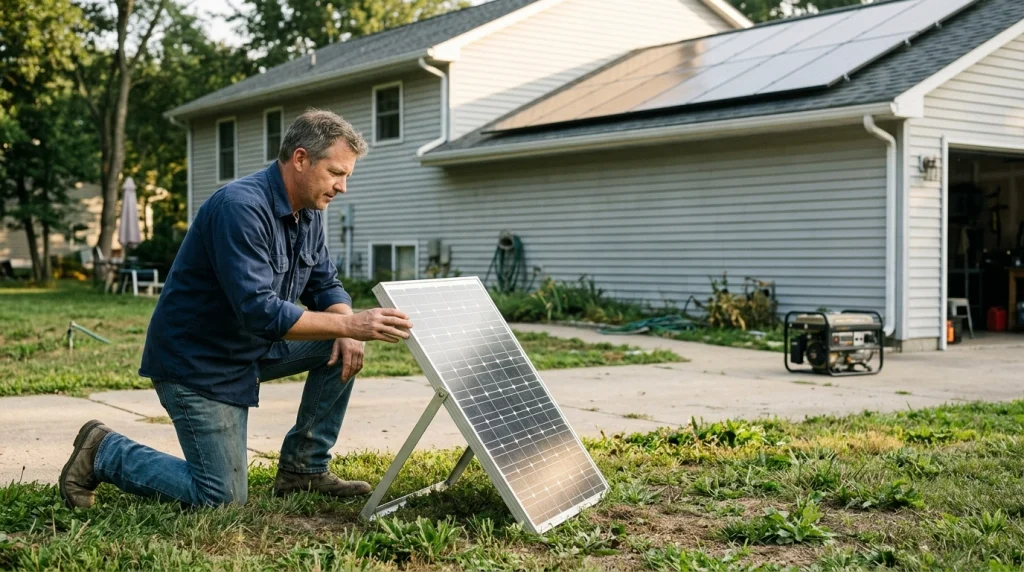
A small kit can power selected devices, but it usually cannot replace the household supply. Space heaters, ovens, air conditioners, and electric water heaters consume energy quickly.
Start by choosing one useful task, such as charging electronics or supporting low-wattage lighting. Then expand only after your actual usage confirms the sizing.
What do you need for a basic off-grid solar setup?
- Solar panels: Produce DC electricity when adequate sunlight reaches them.
- Charge controller: Manages battery charging and matches the panel and battery specifications.
- Deep-cycle battery: Stores energy for use outside sunny hours; optional for suitable direct-daylight loads.
- Inverter: Runs compatible AC devices from the DC system when needed.
- Protection hardware: Correctly sized wiring, fuses or breakers, connectors, mounting, and grounding as required.
For example, a 20-watt router running eight hours consumes 160 watt-hours, or 0.16 kWh. A 50-watt fan running six hours adds 0.30 kWh.
Together, those loads require 0.46 kWh before inverter or storage losses. This is a sensible starting point for estimating panel and battery capacity.
Use compatible components and follow manufacturer instructions. For household wiring, roof installations, or grid connections, hire a qualified professional and obtain required permits.
Is Micro-Hydro Cheaper Than Solar Power?
It can be, especially if water flows reliably through your property all year. A small hydro turbine may generate electricity both day and night.
A steady 100-watt output would yield 2.4 kWh in 24 hours. That’s 876 kWh annually if flow and operation remain constant.
That consistency is the attraction. A solar system with the same nameplate wattage cannot deliver its rated output around the clock.
- Flow: The volume of water available, including dry-season conditions.
- Head: The vertical height water falls through the system.
- Water rights: Legal permission to divert or use stream flow.
- Environmental requirements: Protection of aquatic habitat and local waterways.
- Maintenance: Debris screens, intake cleaning, pipes, and turbine servicing.
Micro-hydro isn’t an option for most suburban properties. Even with a stream, construction and environmental approvals may outweigh the savings.
Is a Home Wind Turbine Worth the Money?
Small wind can work on open rural land with dependable wind at turbine height. It is rarely a bargain in cramped neighborhoods or behind buildings.
Wind output responds strongly to wind speed. A turbine’s advertised wattage tells you little about annual generation without site-specific wind data.
- Good site: Open terrain with limited obstacles and verified wind resources.
- Added costs: Tower, foundation, permits, wiring, and professional installation.
- Maintenance: Mechanical parts need periodic inspection and eventual repair.
- Hybrid benefit: Wind may complement solar during cloudy or nighttime periods.
I would not purchase a rooftop mini turbine based only on its rated power. Turbulent roof-level airflow often disappoints, and structural vibration adds complications.
For rural sites, measure or model the wind resource first. Compare the forecast annual kWh against an equally priced solar alternative.
Is a Gas Generator the Cheapest Way to Make Electricity?
A portable gasoline generator can be relatively inexpensive to buy. It usually costs more to operate regularly because every kWh requires fuel.
Fuel use varies with generator efficiency and electrical load. The machine may burn substantial gasoline even when powering only a few small devices.
How do you calculate generator fuel cost?
Divide the fuel cost per operating hour by the kWh produced during that hour. Then add maintenance, oil, and equipment depreciation.
- Example fuel use: 0.25 gallon per hour, purely hypothetical.
- Example gas price: $3.50 per gallon, also hypothetical.
- Example output: 1 kWh delivered during that hour.
- Fuel-only cost: 0.25 × $3.50 ÷ 1 = $0.875 per kWh.
That’s 87.5 cents per kWh for fuel alone in this example. Actual generator specifications, usage, and local fuel prices will change the result.
A portable generator still makes sense when you need backup power for a few days each year. Low purchase cost can matter more than fuel economy in that situation.
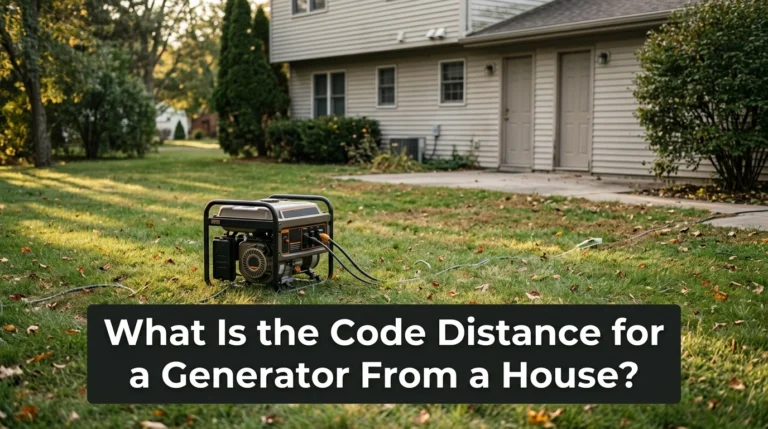
Safety matters more than savings. The Consumer Product Safety Commission’s generator guidance says to operate fuel generators outdoors, at least 20 feet from the home, with exhaust directed away.
Never run a fuel generator in a garage, shed, or home, even with doors open. Never backfeed a wall outlet; use a professionally installed, code-compliant transfer arrangement for household circuits.
What Hidden Costs Can Make Home Electricity Expensive?
Low sticker prices can hide the most important expenses. I would request an itemized budget before calling any system a bargain.
- Battery replacement: Storage has a finite cycle and calendar life.
- Installation: Mounting, electrical labor, roof work, and structural checks.
- Local permits: Electrical inspection and utility interconnection charges.
- Export compensation: Excess solar electricity may earn less than retail electricity costs.
- Financing: Loan interest can erase an apparent equipment discount.
- Long-term service: Inverters, controllers, pumps, and turbines can require repair.
In the United States, don’t assume an older federal solar incentive still applies. The IRS residential clean energy credit guidance says the federal credit is unavailable for property placed in service after December 31, 2025.
State, municipal, and utility programs may still exist. Verify eligibility and current terms before using any incentive in your payback calculation.
How Can You Start Generating Electricity on a Tight Budget?
The smartest small system begins with a small, accurately measured load. Buying extra generating capacity before understanding demand often wastes money.
- Read your bill. Note monthly kWh, variable electricity price, and fixed service fees.
- Measure devices. Use a plug-in energy meter for suitable plug-connected appliances.
- Pick one goal. Choose bill savings, a cabin system, or emergency backup.
- Check the resource. Estimate usable sunlight, wind, or water rather than trusting peak ratings.
- Price the complete system. Include wiring, protection, storage, permits, and installation.
- Calculate useful output. Compare lifetime cost per usable kWh with your avoided utility rate.
- Install safely. Keep off-grid gear isolated from household wiring unless a qualified installer handles the connection.
Consider energy efficiency before adding more panels. An efficient fan or reduced standby consumption can lower the system size you actually need.
If your goal is saving money rather than owning equipment, lowering demand might be the cheapest first move. It simply isn’t the same as generating electricity.
Useful Starter Equipment for Small-Scale Electricity
If you’re ready to try a small system, I would focus on equipment that serves a clear purpose. These are specification-based editorial fit scores, not verified customer ratings or claims of hands-on testing.
☀️ Best solar starting point
Renogy 200W 12V Solar Starter Kit
★★★★☆ 4.4/5 editorial fit
Includes two 100W panels and a 30A PWM charge controller. I’d shortlist it for learning off-grid solar basics, but budget separately for a compatible battery and any necessary inverter.
🔋 Best compact backup
EcoFlow RIVER 3 Plus
★★★★☆ 4.2/5 editorial fit
A 286Wh LiFePO4 battery with 600W rated AC output and compatible solar-charging input. I’d consider it for modest electronics backup, not as a substitute for full-house power.
📏 Best budgeting tool
P3 International P4400 Kill A Watt
★★★★★ 4.7/5 editorial fit
Measures watts and accumulated kWh on compatible 120V plug-in appliances. This is the tool I’d buy first to avoid oversizing a solar kit; it does not generate or store electricity.
Frequently Asked Questions
Can I generate electricity at home for free?
Sunshine, wind, and naturally flowing water don’t require fuel purchases, but the generating equipment isn’t free. You still pay for panels, controllers, wiring, possibly batteries, and maintenance; a paid-off system can produce additional electricity at very low ongoing cost.
What is the cheapest way to generate electricity without solar panels?
Micro-hydro may be economical where a legally usable, dependable stream has enough flow and height difference, while wind may work on exposed rural properties. Without either resource, a fuel generator could have the lowest purchase price but is usually expensive for frequent generation.
Can a 500-watt solar system run a refrigerator?
Possibly, but panel wattage alone cannot answer the question because refrigerators cycle and demand extra power at startup. Check measured daily kWh, inverter surge output, battery capacity, and sunlight before deciding whether a 500-watt array can reliably handle the appliance.
Is making your own electricity cheaper than buying it from the grid?
Sometimes, especially with strong sunlight, high utility rates, and a well-priced solar installation, but inexpensive grid power can be hard to beat. Compare lifetime cost per usable kWh with the portion of your electricity bill the system would actually offset.
Can I connect DIY solar panels directly to a wall outlet?
No: never plug ordinary DIY solar equipment directly into household outlets or wiring, because unsafe connections can injure workers and damage equipment. Grid-interactive systems need approved equipment, local permits, utility authorization, and professionally designed protection; ask a licensed electrician about legal options in your area.
The Bottom Line: Start With Your Energy Bill
For most homeowners, properly designed solar offers the most practical route to low-cost self-generated electricity. Micro-hydro is worth exploring on suitable properties, while gasoline generators are better treated as backup tools.
Before spending money, measure your loads and calculate how much of the generated power you’ll actually use. That’s how you find the cheapest electricity for your home, not just the cheapest product on a shelf.

Hi, I’m Michael Turner. I own a generator workshop in the United States and founded HomeGeneratorBlog to share practical, hands-on guidance about generator installation, maintenance, troubleshooting, safety, and backup power solutions. My goal is to help homeowners make smarter, more confident decisions through clear and reliable information