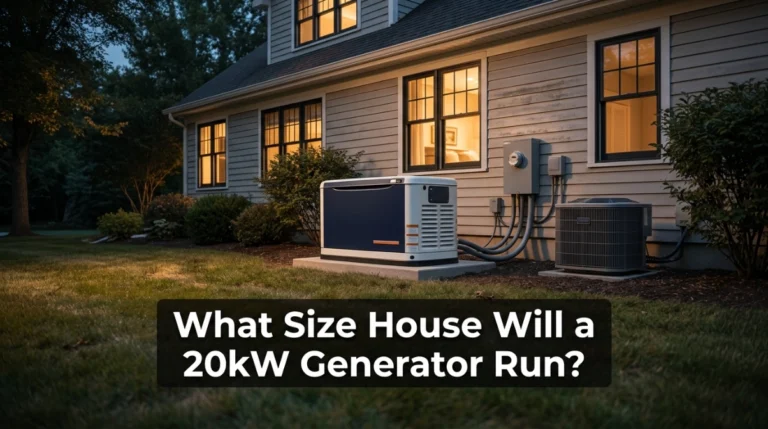
What Is the Best Emergency Generator for My Home?
Quick Answer
For most homeowners, I recommend a 7,500- to 10,000-running-watt dual-fuel portable generator for emergency backup, with the Westinghouse WGen9500DFc being a strong all-around choice. It provides enough power for many essential household circuits while giving you gasoline and propane flexibility. Before choosing any model, calculate what size generator your house needs based on actual appliance loads.
What I Look for in an Emergency Generator
- Enough running power: Most practical home-backup setups need more than a small 2,000-watt camping generator.
- Starting-watt headroom: Refrigerators, pumps, and air conditioners can demand much more power during startup.
- Fuel flexibility: Dual-fuel operation lets you switch between gasoline and propane during a long outage.
- Home connection: A 120/240V transfer-switch-ready outlet makes a large portable generator more useful for household circuits.
- Carbon monoxide protection: I prefer modern models with automatic CO shutoff technology whenever possible.
When someone asks me for the best emergency generator, I don’t start with a brand name. I start by asking what absolutely has to keep running when the grid goes down.
A refrigerator and a few lights require one kind of setup. Central air, a well pump, and electric water heating can push you into a completely different generator class.
What Is an Emergency Generator for a Home?
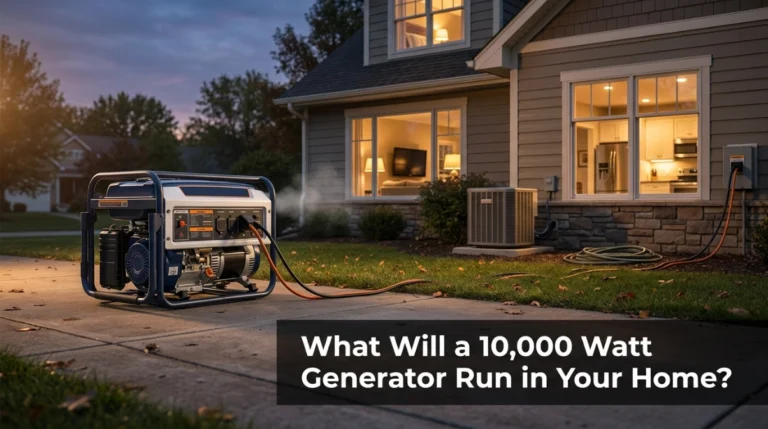
An emergency home generator is a backup power source used when utility electricity becomes unavailable. It can power selected appliances, essential circuits, or nearly the entire house depending on its output and installation.
Emergency generator definition: A generator converts mechanical energy from an engine into electrical power so essential equipment can continue operating during an outage.
Portable generators are moved into position when needed. Standby generators remain permanently installed and can start automatically after utility power fails.
Inverter generators are another portable option. They usually prioritize quieter operation and cleaner electrical output over maximum home-backup capacity.
What Is the Best Emergency Generator for Most Homes?
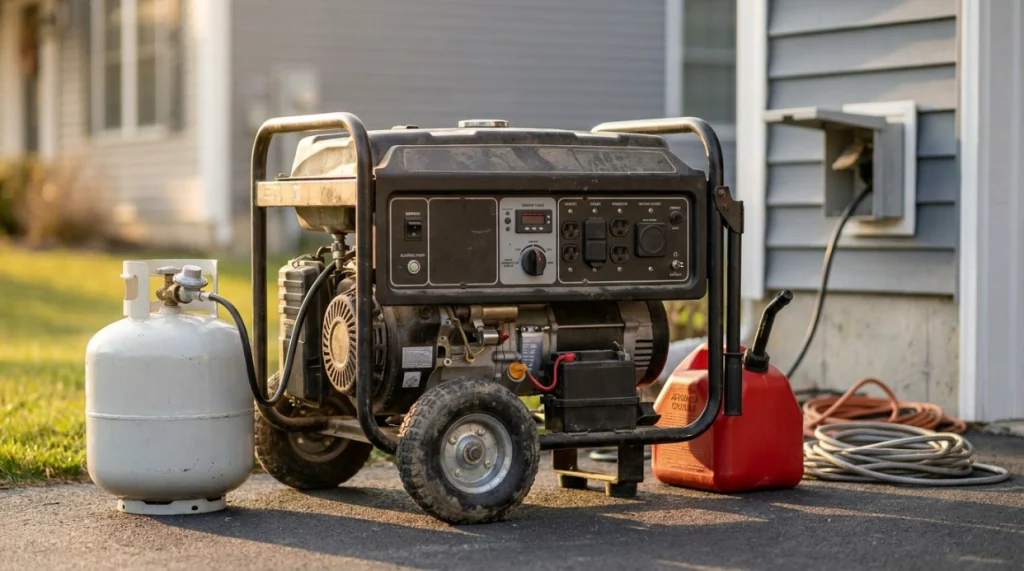
For many homeowners, my first choice is the Westinghouse WGen9500DFc. It combines substantial 120/240V output, dual-fuel operation, electric starting, transfer-switch compatibility, and a carbon monoxide sensor.
On gasoline, Westinghouse rates it at 9,500 running watts and 12,500 peak watts. Propane output is rated at 8,500 running watts and 11,200 peak watts.
- Gasoline output: 9,500 running watts / 12,500 peak watts
- Propane output: 8,500 running watts / 11,200 peak watts
- Fuel system: Gasoline or propane
- Starting system: Electric and remote start
- Home backup: 120/240V transfer-switch-ready connections
- Runtime: Up to 12 hours at 25% load on its gasoline tank, according to Westinghouse
I like this power class because it sits between a small essentials-only generator and a permanently installed standby system. You can run substantial household loads without automatically jumping into a 20-plus-kilowatt installation.
That doesn’t mean it will run every appliance in every house simultaneously. Load management still matters.
How Much Generator Capacity Do I Need?
Your generator should cover the combined running watts of the equipment you want operating, plus enough surge capacity for motor-driven appliances. This calculation matters more than your home’s square footage.
I recommend using actual appliance nameplates whenever possible instead of depending on generic online wattage charts. You can follow this detailed generator power capacity guide to work through the numbers.
| Backup Goal | Useful Generator Range | Typical Loads |
|---|---|---|
| Basic essentials | 3,000–5,000W | Refrigerator, lights, router, chargers, small electronics |
| Typical emergency backup | 5,000–7,500W | Essentials plus furnace blower, sump pump, or selected larger loads |
| Comfortable portable backup | 7,500–10,000W | Several essential circuits, pumps, refrigeration, microwave, selected cooling |
| Heavy managed backup | 10,000–14,000W | More circuits and selected high-demand 240V equipment |
| Broad whole-home backup | 14–24kW+ | Central HVAC and many household circuits through a standby system |
The biggest sizing mistake is looking only at running watts. Motors can require a short burst of additional power when they start.
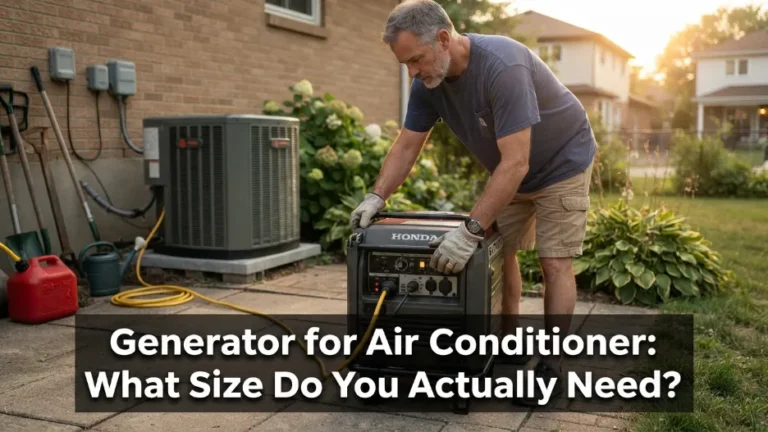
Air conditioning deserves special attention because compressor startup can be demanding. Check your equipment before sizing, especially if cooling is essential during an outage; my generator sizing guide for air conditioners explains that calculation in more detail.
Should I Buy a Portable, Inverter, or Standby Generator?
A portable generator gives most homeowners the best balance of cost, output, and flexibility. A standby generator becomes more attractive when you want automatic operation and broad whole-house coverage.
| Type | Best For | Main Advantage | Main Limitation |
|---|---|---|---|
| Portable | Most emergency home backup | High output without permanent installation | Manual setup and refueling |
| Inverter | Electronics and lighter essential loads | Quieter, efficient operation | Lower output for the money |
| Standby | Frequent outages and whole-home backup | Automatic startup and permanent connection | Higher purchase and installation cost |
A large portable unit makes sense if you can bring it outside, connect it safely, and manage fuel during an outage. See my guide to what portable generators are used for if you’re deciding whether that setup fits your household.
Is Gasoline, Propane, or Dual Fuel Better for Emergencies?
I generally prefer dual fuel for emergency preparedness because it gives you another option when one fuel becomes difficult to obtain. Gasoline provides strong output, while propane is convenient to store in approved cylinders.
- Gasoline: Widely available and usually gives the generator its highest rated output.
- Propane: Avoids some of the storage problems associated with old gasoline and works well for preparedness.
- Dual fuel: Lets you switch between gasoline and propane depending on supply and circumstances.
- Natural gas: Common on permanently installed standby generators connected to the home’s gas service.
The downside of propane is reduced output on many portable generators. Check both gasoline and propane ratings instead of assuming they are identical.
How Do I Connect an Emergency Generator to My House Safely?
If you want a portable generator to power household circuits, use an approved transfer switch or other code-compliant generator connection installed for that purpose. Never improvise by plugging a generator into a household receptacle.
The Electrical Safety Foundation International warns that transfer switches prevent dangerous backfeeding into utility lines. A qualified electrician should handle permanent home electrical connections.
- Use proper transfer equipment: Isolate generator power from utility power.
- Use correctly rated cords: Undersized or damaged extension cords create electrical and fire hazards.
- Keep the unit dry: Don’t operate portable electrical equipment in standing water or exposed unsafe conditions.
- Manage the load: Don’t exceed the generator’s continuous or surge ratings.
How Far Should a Generator Be From the House?
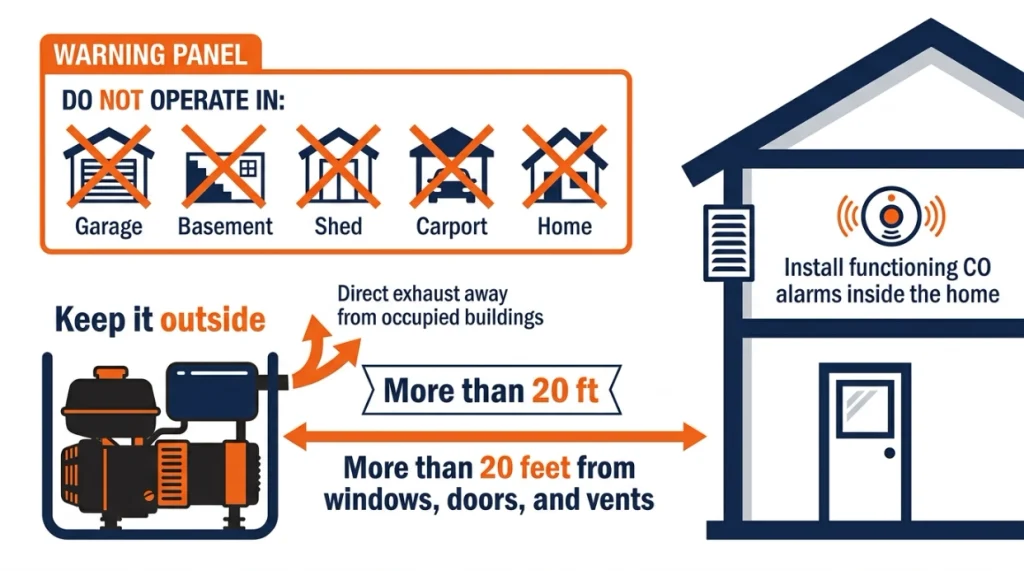
Portable fuel-burning generators must operate outdoors because their exhaust contains deadly carbon monoxide. The CDC recommends placing a portable generator more than 20 feet from windows, doors, and vents.
Never run one in a garage, basement, shed, carport, or other enclosed area. An open garage door does not make indoor generator operation safe.
- Keep it outside: Never operate a portable generator inside a home or garage.
- Maintain distance: Keep it more than 20 feet from building openings.
- Direct exhaust away: Point engine exhaust away from occupied buildings.
- Install CO alarms: Use functioning carbon monoxide alarms inside the home.
The Consumer Product Safety Commission’s generator guidance also stresses outdoor operation away from doors, windows, and vents. A built-in CO shutoff sensor is useful, but it does not replace safe placement.
What Generator Features Matter Most During an Outage?
The best emergency features are the ones that make a generator easier to start, connect, monitor, and refuel when conditions are bad. I put practical usability ahead of flashy controls.
- Electric start: Helpful when pull-starting a large engine becomes difficult.
- CO shutoff: Adds another layer of carbon monoxide protection.
- 120/240V output: Important for many transfer-switch and higher-load home setups.
- Fuel gauge: Makes fuel planning easier during long outages.
- Low-oil shutdown: Helps protect the engine if oil reaches an unsafe level.
- Long runtime: Reduces how frequently you need to stop and refuel.
- Wheel kit: Matters because high-output portable generators can be heavy.
As of 2026, I also give preference to generators with automatic carbon monoxide shutdown systems. I still operate them using the same outdoor safety rules as generators without that feature.
Is a Bigger Generator Always Better?
No. Oversizing can mean extra purchase cost, weight, noise, and fuel consumption without giving you a meaningful advantage.
The better approach is to calculate your emergency loads and leave reasonable capacity for startup surges. Then choose the smallest generator that comfortably meets those requirements.
- Essentials only: Don’t buy 12,000 watts if your real emergency load is 3,000 watts.
- Pumps and motors: Leave enough surge capacity for startup.
- Central air: Check compressor requirements before assuming a portable generator can start it.
- Future loads: Leave some headroom if your backup plan may expand.
In practical generator sizing, I prefer comfortable headroom over running a machine continuously near its limit. That gives pumps and compressors room to cycle without constantly testing the generator’s maximum output.
My Emergency Generator Recommendations
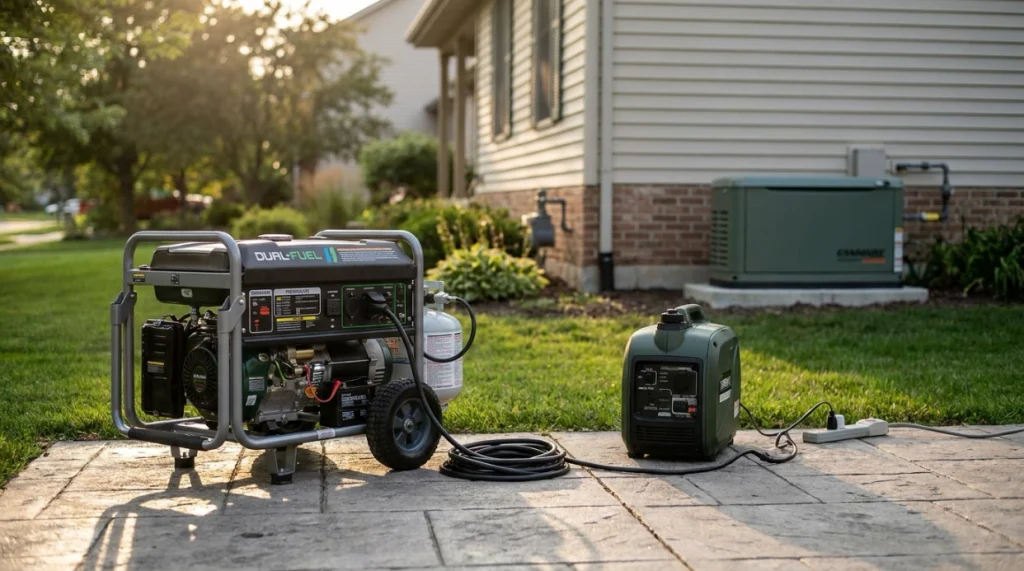
If you’re ready to pick one, these are the three generator types I would consider first based on how much of the home you need to protect.
🏆 Best Overall Portable
Westinghouse WGen9500DFc
★★★★½ 4.5/5
Rated for 9,500 running watts on gasoline and 8,500 on propane, with electric start, 120/240V connections, and a CO sensor. I like it for homeowners who want substantial emergency capacity without installing a permanent standby system.
🔇 Best Quiet Essentials Pick
Champion 4500W Dual Fuel Inverter Model 201319
★★★★☆ 4.2/5
This inverter supplies 3,500 running watts on gasoline and 3,150 on propane, with CO Shield and electric start. I prefer this class for refrigerators, electronics, lights, and lighter emergency loads where noise and clean inverter power matter more than whole-home capacity.
🏠 Best Automatic Backup
Generac Guardian 22kW Standby Generator
★★★★½ 4.6/5
A 22kW Guardian system is designed for automatic standby service and can provide broad whole-home backup when correctly sized and installed. I would choose this route when outages are frequent and manual generator setup is not acceptable.
Frequently Asked Questions
What size emergency generator is best for a typical house?
Many homes can cover essential outage loads with roughly 5,000 to 8,500 running watts. A 7,500- to 10,000-watt portable generator gives more flexibility for pumps, refrigeration, heating blowers, and selected larger appliances, but your actual load calculation should determine the final size.
Can a portable generator power my whole house?
A large portable generator can power many household circuits through a properly installed transfer system. However, running central air, electric water heating, cooking equipment, dryers, and other major loads together can exceed portable-generator capacity, making a standby system more practical.
Is a dual-fuel generator better for emergencies?
Dual fuel is one of my preferred features for emergency use because you aren’t dependent on one fuel source. Gasoline usually provides maximum rated output, while propane gives you a useful alternative when gasoline supply or long-term storage becomes a concern.
Can I run my emergency generator in the garage with the door open?
No. Portable fuel-burning generators produce carbon monoxide and should never operate inside a garage, basement, shed, carport, or home. Place the generator outside more than 20 feet from windows, doors, and vents, and keep functioning CO alarms inside the house.
Is an inverter generator better than a regular generator for home backup?
An inverter generator is excellent when quiet operation, fuel efficiency, and sensitive electronics are priorities. A conventional high-output portable generator is often more economical when your main goal is powering multiple household circuits, pumps, refrigeration, and larger emergency loads.
Which Emergency Generator Would I Choose?
For a typical homeowner who wants strong emergency backup without permanently installing a standby system, I’d start with the Westinghouse WGen9500DFc. Its 9,500-watt gasoline rating, dual-fuel capability, 120/240V connections, and CO sensor make it a versatile home-outage package.
If you only need essential appliances and electronics, the Champion 4500W dual-fuel inverter is easier to live with. If you want the system to start automatically and power most of the house, move up to a professionally sized standby generator instead.
Most importantly, buy for your actual electrical loads rather than a marketing label such as “whole house.” Calculate the watts first, plan a safe connection, store fuel properly, and have the generator ready before the next outage begins.

Hi, I’m Michael Turner. I own a generator workshop in the United States and founded HomeGeneratorBlog to share practical, hands-on guidance about generator installation, maintenance, troubleshooting, safety, and backup power solutions. My goal is to help homeowners make smarter, more confident decisions through clear and reliable information