How Long Can You Leave Gas in a Generator Without Running It?
Quick Answer
Untreated gasoline should generally not sit in a generator for more than about 30 days without a storage plan. Gas can begin degrading during that period, while longer storage may leave deposits in the carburetor and make starting difficult. For longer storage, use fresh stabilized fuel or drain the fuel system as your owner’s manual directs; my portable generator storage guide explains the full process.
Generator gas storage at a glance
- Under 30 days: Fresh gasoline is usually less troublesome, but always follow the generator manufacturer’s instructions.
- Over 30 days: Treat the gasoline with an appropriate stabilizer or prepare the fuel system for storage.
- Several months: Many manufacturers recommend extra steps such as draining the carburetor bowl.
- Unknown fuel age: Don’t assume old gasoline is safe simply because the generator still starts.
- Long-term storage: Your exact owner’s manual should override any general storage rule.
My simple rule
- If I know a gasoline generator may sit longer than a month, I prepare the fuel before putting it away instead of waiting for starting problems.
A backup generator can sit quietly for months, which makes old gasoline surprisingly easy to forget. Then an outage arrives, and that forgotten fuel becomes the first thing standing between you and a reliable start.
I’ve found that generator storage is much easier when you treat 30 days as a decision point. Here’s what happens to the gas, what to do at different storage lengths, and how I prepare a generator before it sits.
How Long Can Gas Sit in a Generator Before It Goes Bad?
Untreated gasoline can begin degrading in as little as 30 days. That doesn’t mean every tank becomes unusable on day 31, but it means fuel freshness should no longer be taken for granted.
Briggs & Stratton advises using fresh gasoline and notes that gasoline may start degrading within about 30 days. Honda also tells owners planning more than 30 days of storage to follow model-specific storage procedures.
- 0–30 days: Fresh gasoline normally needs the least storage preparation.
- 1–2 months: Stabilized fresh fuel may be appropriate, depending on the manufacturer’s instructions.
- 2–12 months: Additional steps such as draining the carburetor may be recommended.
- One year or longer: Expect a more complete storage procedure and fresh fuel before returning the generator to service.
Those ranges aren’t universal deadlines. Generator design, gasoline formulation, temperature, humidity, container sealing, and the manufacturer’s storage instructions all matter.
What Happens If You Leave Gas in a Generator Too Long?
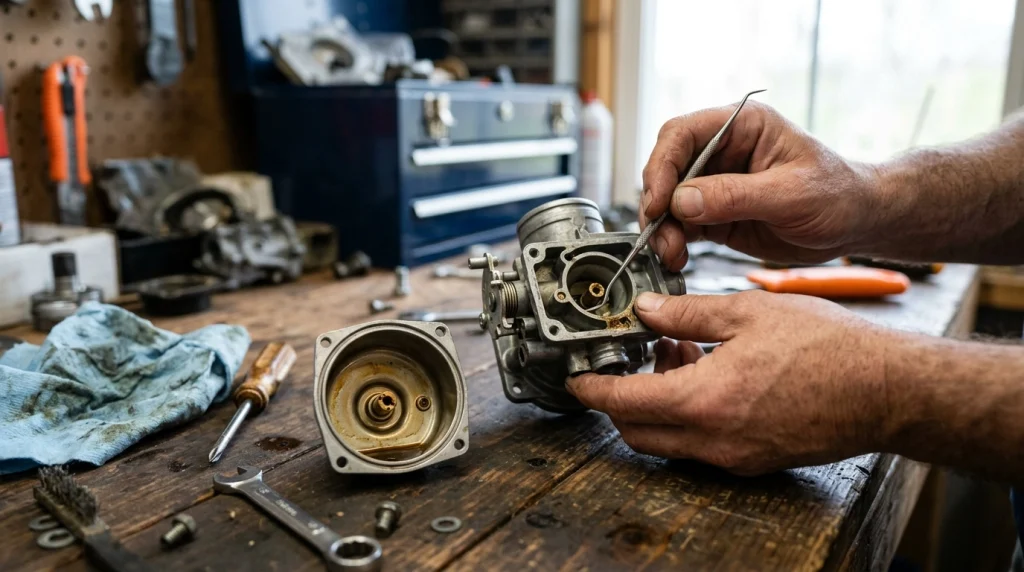
Aging gasoline can lose the qualities the engine needs for clean, reliable combustion. It can also contribute to gum and deposits inside small fuel passages.
The carburetor is where I pay the most attention. Its small jets and passages don’t tolerate contaminated or deteriorated fuel well.
Definition: Stale gasoline is fuel that has changed during storage enough to reduce its usefulness or create fuel-system problems. It may contribute to hard starting, poor running, deposits, or other fuel-related symptoms.
Possible signs after a generator has sat with old gasoline include:
- Hard starting: The engine takes more pulls or cranking than normal.
- Surging: Engine speed repeatedly rises and falls.
- Rough operation: The engine runs unevenly after starting.
- Stalling: The engine starts but won’t continue running properly.
- Carburetor deposits: Old fuel can leave residue in small passages.
These symptoms can have other causes, so I don’t automatically blame the gasoline. Airflow, ignition, oil level, load, and mechanical problems can produce similar behavior.
Is Gas Still Good After Sitting in a Generator for 30 Days?
It may still work, but 30 days is a sensible point to stop treating gasoline as unquestionably fresh. Briggs & Stratton specifically warns that gasoline can begin degrading in as little as 30 days.
I wouldn’t judge generator fuel by age alone. Storage conditions and whether the gasoline was stabilized from the beginning matter too.
| Storage Period | Fuel Concern | What I Would Check |
|---|---|---|
| Less than 1 month | Usually the lowest storage concern | Fuel freshness and owner’s manual |
| 1–2 months | Untreated fuel may be degrading | Whether stabilizer was added while fuel was fresh |
| 2–12 months | Greater risk of fuel-system deposits | Manual instructions for tank and carburetor storage |
| 1 year or more | Old fuel shouldn’t be assumed ready for use | Complete long-term storage and return-to-service procedure |
Honda’s current generator guidance illustrates why one rule doesn’t fit every storage period. One Honda manual requires no special preparation for less than one month but specifies stabilizer and additional fuel-system steps as storage becomes longer.
Should You Drain Gas From a Generator Before Storage?
Sometimes, but not automatically. Some manufacturers permit storage with fresh stabilized gasoline, while longer storage may require draining parts of the fuel system.
Start with your owner’s manual instead of copying another generator owner’s routine. Fuel valves, carburetor drains, fuel injection, and storage procedures differ between models.
My two common approaches are:
- Store with stabilized fresh fuel. Add the correct stabilizer amount to fresh gasoline and circulate it through the system as directed.
- Prepare the system for dry storage. Drain the fuel or carburetor only when your manufacturer’s procedure calls for it.
The key word is fresh. Fuel stabilizer is intended to slow deterioration; I wouldn’t treat it as a way to restore gasoline that has already gone stale.
For a complete seasonal routine, see my portable generator fuel stabilizer guide. It covers when and how stabilizer fits into generator storage.
How Do You Store a Gas Generator for Several Months?
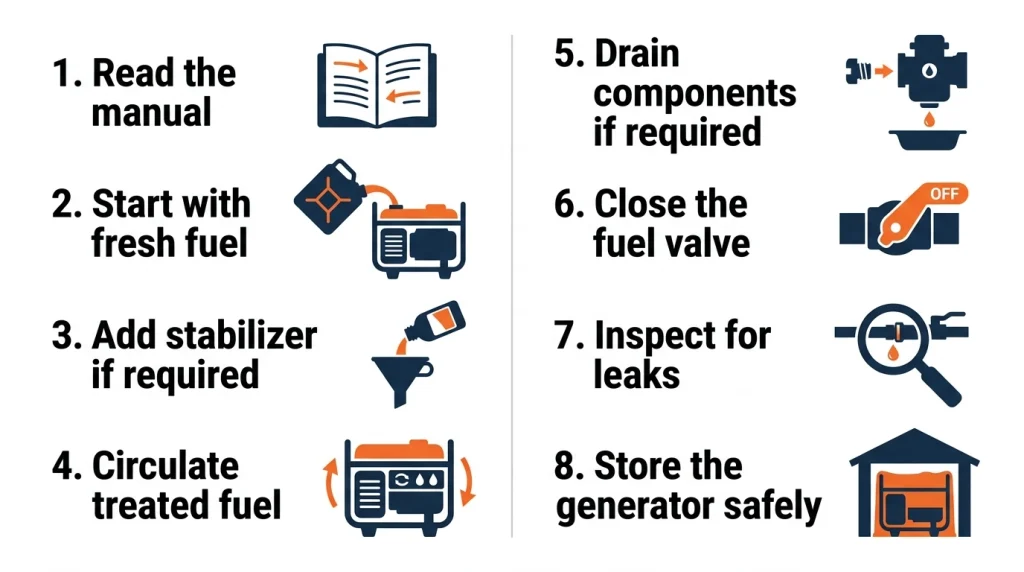
Prepare the fuel system before the generator disappears into storage. I also handle oil, battery condition, cleanliness, and the storage location at the same time.
My basic checklist looks like this:
- Read the manual. Find the manufacturer’s storage procedure for your expected storage period.
- Start with fresh fuel. Don’t begin a long storage cycle with gasoline that’s already questionable.
- Add stabilizer if required. Measure it according to the product directions.
- Circulate treated fuel. Run the generator outdoors for the period specified by the product or equipment manufacturer.
- Drain components if required. Some manuals call for draining the carburetor during longer storage.
- Close the fuel valve. Follow your generator’s normal shutdown and storage instructions.
- Inspect for leaks. Look around hoses, fittings, the tank, and carburetor before storage.
- Store the generator safely. Keep it upright in an appropriate dry, ventilated location.
I also put the fuel purchase date on my gasoline container. That one habit removes the guesswork when I prepare for the next outage.
Should You Run a Generator Every Month?
Don’t invent an exercise schedule if the manufacturer specifies one. Maintenance and exercising requirements vary by generator type and model.
If your manual calls for periodic operation, follow its interval and load instructions. Simply starting an engine for a random few minutes isn’t a substitute for the manufacturer’s maintenance schedule.
Understanding the portable generator fuel system also makes these storage instructions easier to understand. The tank is only one part of the system where gasoline can remain.
Does Fuel Stabilizer Let You Leave Gas in a Generator Longer?
Yes, a suitable stabilizer can extend the useful storage period of fresh gasoline when used correctly. The actual storage duration depends on the stabilizer and generator manufacturer’s instructions.
Don’t assume every stabilizer offers the same treatment ratio or storage claim. Read the bottle and your generator manual together.
- Add it early: Treat fresh gasoline rather than waiting until fuel has already deteriorated.
- Measure it: More stabilizer isn’t automatically better.
- Circulate it: Treated fuel needs to reach the parts of the fuel system being stored.
- Respect manual limits: Stabilizer doesn’t cancel a manufacturer requirement to drain the carburetor.
If long fuel storage is a constant headache, it may be worth comparing gasoline, propane, diesel, and natural gas for generators. Different fuels have very different storage characteristics.
Can Old Gas Damage a Generator?
Old gasoline can contribute to fuel-system deposits and operating problems. Small carburetor passages are particularly vulnerable when deteriorated fuel is left in them during storage.
That doesn’t mean every generator containing month-old gasoline needs repair. It means prevention is easier than cleaning a neglected fuel system during an outage.
My rule is simple:
- If I know the gasoline is fresh, I follow the normal operating procedure.
- If I know it will sit, I prepare it for storage immediately.
- If I don’t know how old it is, I don’t assume it’s fresh.
- If the generator runs poorly, I troubleshoot rather than endlessly pulling the starter cord.
If you’re unsure what gasoline the engine requires, my guide to whether generators can run on 87-octane gas explains octane, ethanol content, and fuel freshness.
How Should Generator Gas Be Stored Safely?
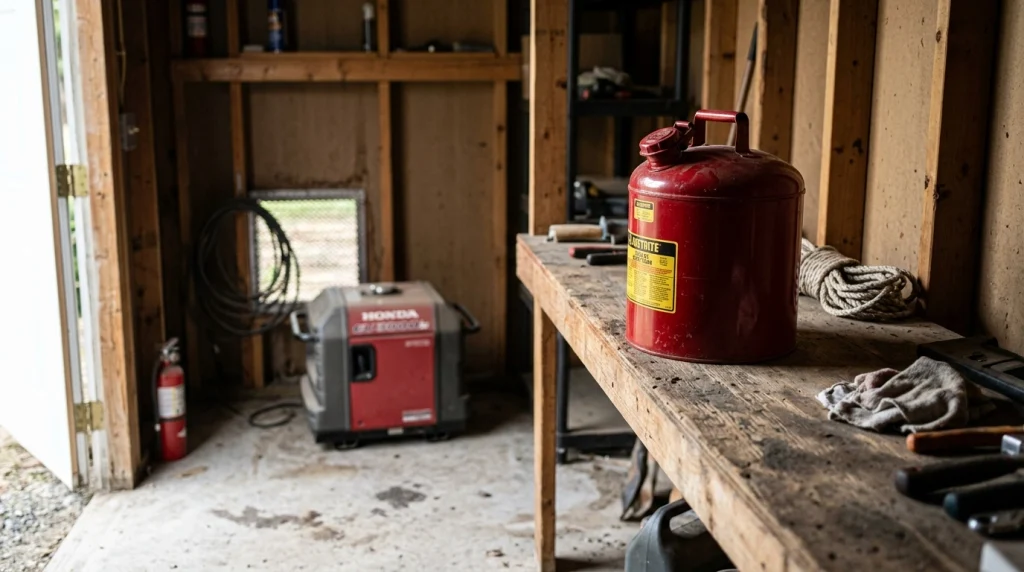
Gasoline storage is also a fire-safety issue. Never store spare generator fuel inside your home or near an ignition source.
The U.S. Consumer Product Safety Commission recommends approved fuel containers kept tightly closed in cool, well-ventilated locations. Its fuel-container safety guidance also warns against keeping gasoline in a house or basement.
- Use an approved container: Don’t improvise with drink bottles, jugs, or other unsuitable containers.
- Keep it cool: Store fuel away from excessive heat and direct ignition hazards.
- Close the cap: Don’t leave portable fuel containers open.
- Separate ignition sources: Keep gasoline away from flames, pilot lights, heaters, sparks, and hot equipment.
- Check local rules: Storage quantity limits and fire codes can vary by location.
Refueling deserves the same care. The U.S. Consumer Product Safety Commission says to shut a generator off and let it cool before refueling.
Honda likewise warns against refueling a hot engine and recommends following the owner’s manual for operation and storage. You can review Honda’s generator operating guidance for an example of manufacturer-specific instructions.
Don’t Forget Carbon Monoxide Safety
Fuel age isn’t the most dangerous generator issue. A running gasoline generator produces carbon monoxide, an odorless and potentially deadly gas.
CPSC currently advises operating portable generators outdoors, at least 20 feet from the home, with exhaust directed away from buildings. Never run one inside a house, basement, shed, or garage.
- Move it outside: A garage with the door open is still not a safe operating location.
- Keep your distance: CPSC recommends at least 20 feet from the home.
- Point exhaust away: Keep exhaust directed away from nearby buildings.
- Use CO alarms: Maintain working carbon monoxide alarms inside the home.
The National Fire Protection Association also emphasizes outdoor generator operation and safe fuel handling. These precautions matter every time you test a stored generator.
Generator Fuel Products I Keep in Mind
If you’re preparing a gasoline generator for storage, these are the types of products I find most useful. Always confirm compatibility and follow both the product label and generator manual.
🏆 Storage Pick
STA-BIL 360 Protection Fuel Stabilizer
★★★★☆
Designed for gasoline storage and fuel-system protection when used according to its label. I prefer treating fresh fuel before storage instead of trying to rescue neglected gasoline later.
🔧 Small-Engine Pick
Briggs & Stratton Fuel Treatment & Stabilizer
★★★★☆
A small-engine-focused fuel treatment is useful when gasoline must remain stored. I still follow the generator manufacturer’s carburetor-draining instructions when longer storage calls for them.
⛽ Fuel-Storage Pick
No-Spill 1450 5-Gallon Fuel Can
★★★★☆
A purpose-built gasoline container is safer than improvising with household containers. I like having a dedicated can that makes fuel dating and rotation easier to manage.
Frequently Asked Questions
Can I leave gas in my generator for three months?
You shouldn’t leave untreated gasoline sitting for three months without checking your manufacturer’s storage instructions. Gasoline can begin degrading much sooner. For multi-month storage, your manual may call for fresh stabilized fuel, draining the carburetor, or both.
Is two-year-old gas safe to use in a generator?
I wouldn’t assume two-year-old gasoline is suitable simply because it was stored. Stabilizer type, storage conditions, container sealing, and manufacturer instructions all matter. When returning a generator from long storage, use the procedure in its manual and replace old fuel when required.
Can I just add fuel stabilizer to old gas?
Fuel stabilizer works best when added to fresh gasoline before storage. It isn’t a reliable way to reverse deterioration that has already occurred. If the fuel’s age or condition is questionable, follow the generator manufacturer’s instructions for safely removing and replacing it.
Should I run my generator until it runs out of gas?
Only use that storage method when your generator or engine manufacturer recommends it. Some equipment should be stored with stabilized fuel, while other procedures call for draining the carburetor or fuel system. Always follow the model-specific manual rather than a universal rule.
How long does stabilized gas last in a generator?
There isn’t one universal lifespan. Stabilizer products have different storage claims, and generator manufacturers may still require carburetor draining after a certain period. Use fresh gasoline, follow the stabilizer dosage, and follow your generator’s storage schedule.
Final Takeaway
For practical purposes, I treat 30 days as the point when gasoline storage needs attention. Untreated fuel can begin degrading by then, and leaving it in a carburetor for months increases the chance of trouble when you need the generator most.
Prepare the fuel before storage, not after the outage starts. Fresh gasoline, the correct stabilizer when appropriate, model-specific storage procedures, and safe fuel handling give your generator a much better chance of starting when the lights go out.
“`

Hi, I’m Michael Turner. I own a generator workshop in the United States and founded HomeGeneratorBlog to share practical, hands-on guidance about generator installation, maintenance, troubleshooting, safety, and backup power solutions. My goal is to help homeowners make smarter, more confident decisions through clear and reliable information