How Long Can a Generator Sit Without Being Used?
Quick Answer
A generator can sit unused for months or even years if it is prepared and stored correctly. The bigger concern is not the calendar itself, but stale gasoline, battery discharge, moisture, corrosion, and skipped maintenance. If yours will sit for more than a month or two, follow a proper portable generator storage routine before putting it away.
What matters most while it sits
- Gasoline condition: Untreated fuel can deteriorate and leave deposits inside a carburetor.
- Starting battery: Electric-start batteries gradually lose charge during storage.
- Moisture exposure: Damp storage can promote corrosion on frames, fasteners, wiring, and electrical connections.
- Engine oil: Oil level and condition still need checking even when operating hours remain low.
- Storage preparation: Manufacturer instructions should determine whether you stabilize fuel, drain fuel, or exercise the generator periodically.
Before you depend on it again
- Inspect the fuel, oil, air filter, battery, wiring, and leaks, then test the generator outdoors before an emergency.
Generators spend most of their lives waiting. That is completely normal for equipment bought mainly for power outages.
The trouble begins when “unused” turns into “forgotten.” As of 2026, I treat storage condition as more important than the simple number of months on the calendar.
How Long Can a Generator Safely Sit Without Running?
There is no universal maximum time. A properly prepared generator can remain unused for an extended period, but a gasoline generator left unprepared may develop fuel-system trouble within a much shorter window.
Honda, for example, provides additional storage steps when a generator will be stored for more than two months. Yamaha recommends periodically running emergency generators when practical, or using its long-term storage procedure when they will remain unused for months.
| Time Sitting Unused | Main Concern | What I Would Do |
|---|---|---|
| A few days to 1 month | Usually minimal if stored correctly | Keep it dry, close the fuel valve where applicable, and follow the owner’s manual. |
| 1–2 months | Fuel aging and battery discharge | Check whether your manufacturer calls for stabilizer, fuel draining, or periodic exercise. |
| More than 2 months | Carburetor deposits, stale fuel, battery loss | Use the manufacturer’s long-term storage procedure. Honda specifically adds storage steps beyond two months. |
| 6–12+ months | Fuel, corrosion, rodents, battery, neglected service | Inspect thoroughly before starting and replace questionable fuel rather than hoping it is still usable. |
The exact procedure depends on your model. I would always put the owner’s manual ahead of a generic schedule because manufacturers do not all specify the same fuel and maintenance procedures.
What Happens When a Generator Sits Too Long?
A generator does not wear internally at the same rate while parked as it does while running. Instead, storage creates a different set of problems.
Fuel deterioration is usually the first thing I check. After that, I look at the battery, moisture, corrosion, oil, air intake, and evidence of insects or rodents.
- Fuel can deteriorate: Gasoline may oxidize and form deposits that interfere with small carburetor passages.
- The battery can discharge: Electric-start generators may crank slowly or not crank at all after long storage.
- Metal can corrode: Humidity and condensation can attack connectors, frame hardware, and exposed components.
- Rubber components age: Fuel hoses, seals, and other rubber parts should be inspected before returning an older stored machine to service.
- Air passages can become blocked: Dust, leaves, insects, and nesting material may restrict cooling or intake areas.
That is why a sensible portable generator maintenance schedule includes calendar-based checks as well as operating-hour service.
Does Gas Go Bad in a Generator That Isn’t Being Used?
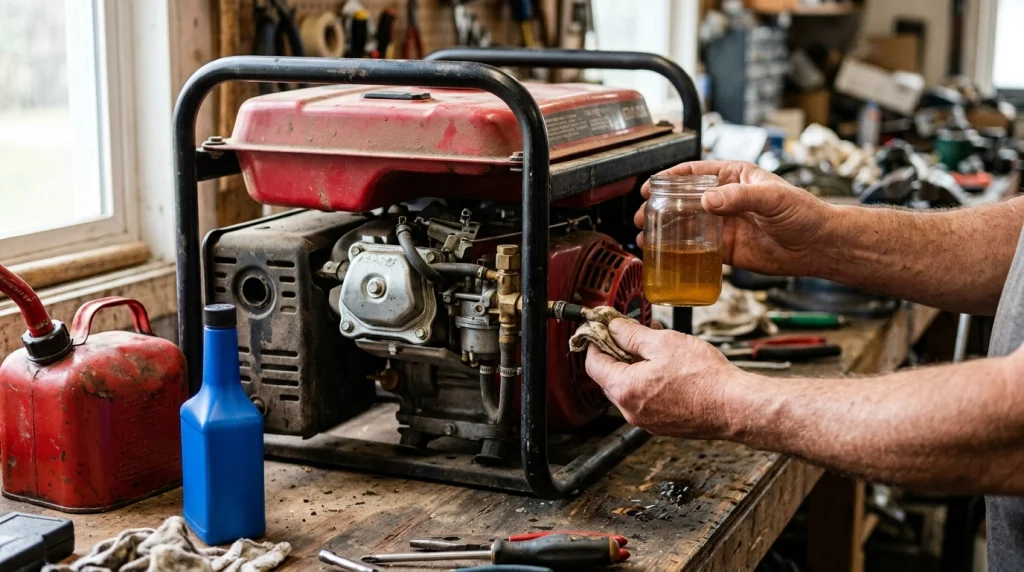
Yes, gasoline can deteriorate while a generator sits. How quickly that becomes a practical problem depends on the fuel, storage conditions, tank, carburetor design, and manufacturer instructions.
Fuel inside a carburetor deserves special attention. The small amount remaining in the bowl and passages can leave deposits as volatile components evaporate.
Should you drain the gas or use fuel stabilizer?
Either approach can be appropriate when the manufacturer permits it. I would not choose one method for every generator.
- Stabilized fuel: Start with fresh gasoline, measure stabilizer correctly, and run the engine as directed so treated fuel reaches the system.
- Drained system: Follow the manual’s procedure for draining the tank, carburetor, or sediment cup where required.
- Never guess: Some manufacturers give model-specific instructions that differ from general small-engine advice.
Honda’s generator operating and storage guidance says generators stored for more than two months need additional fuel-system preparation, including attention to the carburetor.
If you want to understand what is happening between the tank and engine, my portable generator fuel system guide explains the main components and storage trouble spots.
Should You Start a Generator Every Month?
Monthly exercise can be useful when your manufacturer recommends it. It confirms that the engine starts and can reveal battery, fuel, or electrical problems before an outage.
Yamaha’s generator maintenance and long-term storage guidance, for example, recommends starting certain emergency-use generators at least monthly when practical.
That does not mean every generator should automatically follow the same monthly routine. Your manual may specify a different test interval, load requirement, fuel procedure, or storage method.
Don’t perform a useless two-minute start
Starting a generator briefly and immediately shutting it down may tell you that it starts, but it does not necessarily prove that it will perform properly under load. Follow the manufacturer’s exercise procedure instead.
- Move the generator to its proper outdoor operating location.
- Check oil and fuel before starting.
- Inspect for leaks or damaged wiring.
- Follow the specified warm-up procedure.
- Apply a load only as recommended by the manufacturer.
- Shut down using the correct sequence.
Never exercise a gasoline generator inside a garage just because the garage is its storage location. Storage and operation are two completely different situations.
How Should You Prepare a Generator to Sit for Several Months?
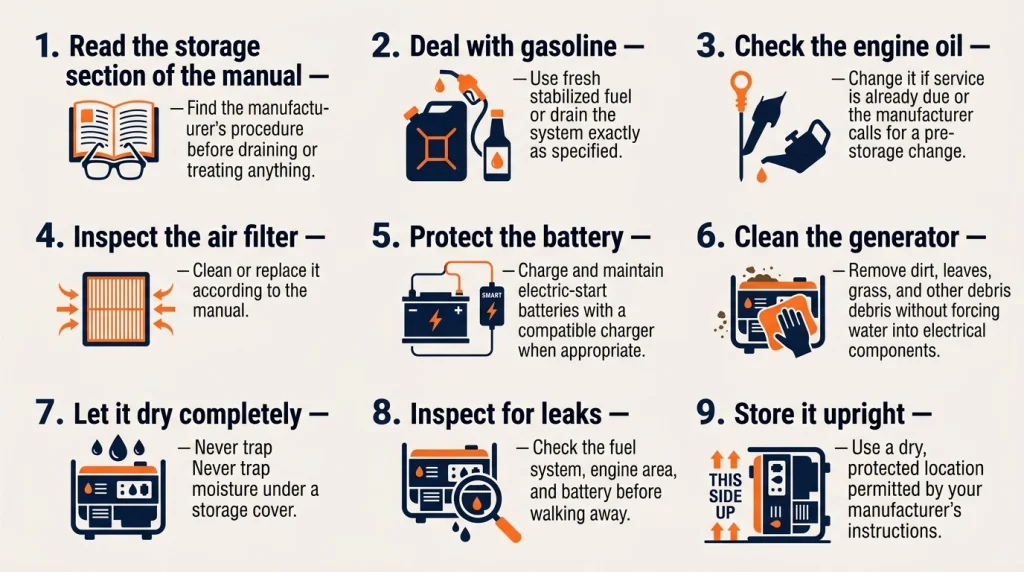
Prepare the fuel system first, then handle the engine, battery, cleaning, and storage environment. Ten minutes of preparation can prevent a frustrating no-start situation later.
Here is the sequence I use as a practical checklist.
- Read the storage section of the manual. Find the manufacturer’s procedure before draining or treating anything.
- Deal with gasoline. Use fresh stabilized fuel or drain the system exactly as specified.
- Check the engine oil. Change it if service is already due or the manufacturer calls for a pre-storage change.
- Inspect the air filter. Clean or replace it according to the manual.
- Protect the battery. Charge and maintain electric-start batteries with a compatible charger when appropriate.
- Clean the generator. Remove dirt, leaves, grass, and other debris without forcing water into electrical components.
- Let it dry completely. Never trap moisture under a storage cover.
- Inspect for leaks. Check the fuel system, engine area, and battery before walking away.
- Store it upright. Use a dry, protected location permitted by your manufacturer’s instructions.
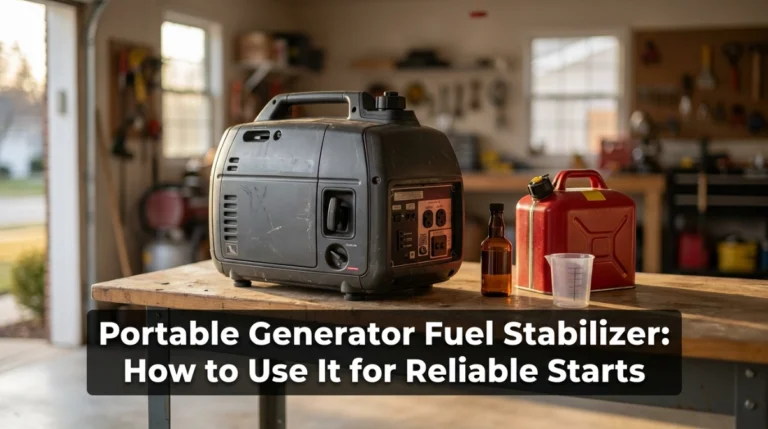
If you decide to keep gasoline in the machine, read my generator fuel stabilizer guide before treating the tank. Stabilizer is meant for fresh fuel and should be measured according to its label.
Can a Generator Sit for a Year Without Being Used?
Yes, a generator can sit for a year if it was properly prepared for long-term storage. I would not expect a gasoline unit abandoned with untreated fuel and a neglected battery to be equally dependable.
After a year, I treat the first start as a recommissioning inspection rather than simply pulling the cord.
- Check the oil level and condition.
- Inspect the air filter.
- Check gasoline condition and smell.
- Inspect hoses and fittings for leaks or cracking.
- Charge and test the starting battery if equipped.
- Look for corrosion on terminals and electrical connections.
- Check cooling openings for nests or debris.
- Confirm the fuel valve and controls move normally.
When I am uncertain about stored gasoline, I would rather replace it correctly than gamble an emergency start on questionable fuel.
What About a Generator That Has Sat for Several Years?
A generator that has been unused for several years deserves a deeper inspection before starting. The engine itself may still be fine, while the fuel system, battery, hoses, wiring, or seals may need attention.
Do not immediately pour fresh fuel into an old machine and start pulling. Look for evidence that storage conditions have created another problem first.
- Old gasoline: Drain and dispose of unusable fuel according to local requirements.
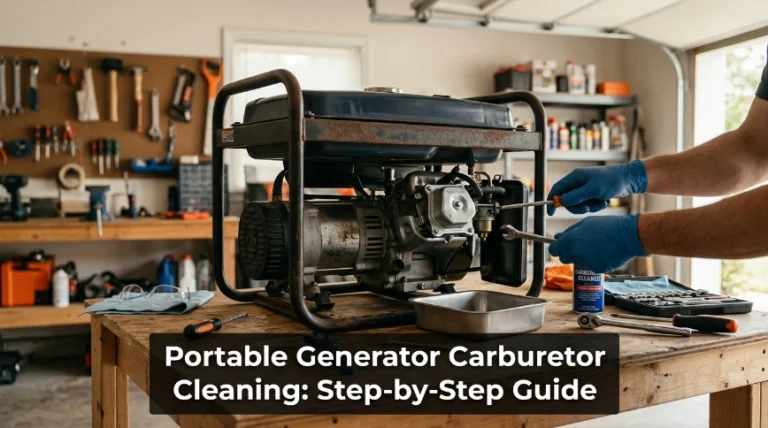
- Carburetor deposits: A badly contaminated carburetor may require cleaning or service.
- Dead battery: Test it before assuming a charger will restore it.
- Animal damage: Inspect wiring, insulation, air passages, and the muffler area.
- Corrosion: Look at outlets, terminals, fasteners, frame welds, and grounding points.
- Oil deterioration or leakage: Verify level and condition before cranking the engine.
If the generator was stored through freezing weather, my portable generator winterizing guide covers the extra checks I would make.
Where Should a Generator Be Stored Between Uses?
Choose a dry, protected, ventilated storage area allowed by the manufacturer. Keep it away from ignition sources and do not allow water to collect around or underneath it.
Honda recommends storing its generators upright and in a well-ventilated area. I also prefer a location where I can reach the generator quickly without moving stacks of boxes during a blackout.
Storage location does not equal operating location
A garage or similar protected area may be suitable for storing some generators, but that does not make it safe for operation. Combustion generators produce carbon monoxide.
The U.S. Consumer Product Safety Commission says portable generators should be operated outdoors at least 20 feet from the home, with exhaust directed away from the building.
Never run one inside a house, garage, basement, crawlspace, or shed, even with doors open.
Definition: What Does Long-Term Generator Storage Mean?
Long-term generator storage is the preparation and protection of a generator during an extended period when it will not operate. It usually includes fuel-system care, engine inspection, battery protection, cleaning, moisture control, and a pre-use inspection.
The exact point at which storage becomes “long term” varies by manufacturer. Honda, for example, introduces additional procedures beyond two months.
Signs Your Generator Sat Too Long Without Proper Preparation
A hard start after storage does not automatically mean the generator is ruined. It does mean you should diagnose the problem before relying on it.
- Engine will not start: Check fuel condition, battery charge, oil level, choke position, and fuel flow.
- Engine starts then dies: Restricted fuel delivery or carburetor deposits may be involved.
- Engine surges: Fuel-system restriction or deteriorated gasoline deserves investigation.
- Starter barely turns: Test the starting battery and connections.
- Strong old-fuel odor: Do not simply top off questionable gasoline with fresh fuel.
- Visible corrosion: Inspect affected electrical and structural components before operation.
Fix the cause before connecting appliances. An outage is the worst time to discover that an unresolved storage problem becomes worse under load.
What I Do Before Relying on a Stored Generator
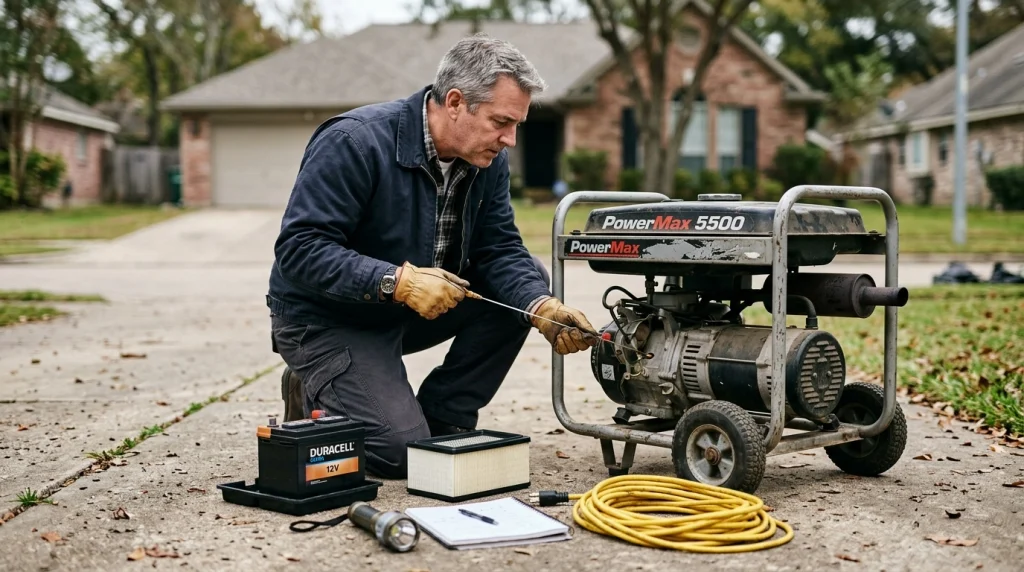
My priority is simple: prove that the generator is ready before the weather forecast becomes serious. I do not want the first test of the season happening in darkness or heavy rain.
- Review the service record and operating hours.
- Check engine oil and fuel.
- Inspect the air filter and cooling openings.
- Look for fuel or oil leaks.
- Check electric-start battery condition.
- Inspect extension cords or transfer equipment separately.
- Test-start the generator outdoors.
- Verify stable operation according to the manufacturer’s procedure.
A generator that starts easily today gives me far more confidence than one I have not touched since the previous storm season.
If you’re preparing a generator for months of downtime, these are three products I would consider for the jobs that commonly cause storage trouble:
🏆 Best for Fuel Storage
STA-BIL Storage Fuel Stabilizer
★★★★★
Designed for gasoline equipment that will sit unused and available in several bottle sizes. I like it when a generator manufacturer permits stabilized fuel because dosing fresh gasoline is straightforward.
🔋 Best for Electric Start
NOCO GENIUS1 Battery Maintainer
★★★★☆
This 1-amp charger and maintainer supports common 6-volt and 12-volt battery types. I would consider it for compatible electric-start generator batteries that need maintenance during storage.
🌧️ Best for Storage Protection
Classic Accessories StormPro Generator Cover
★★★★☆
The StormPro uses protective fabric, taped seams, adjustable panels, and ventilation features. I would use a fitted cover only after the generator is completely cool and dry.
Frequently Asked Questions
How long can gasoline stay in a generator?
There is no single safe storage period for every gasoline and generator. Fuel age, ethanol content, temperature, humidity, and the manufacturer’s storage procedure all matter. For extended storage, follow the manual and either stabilize fresh fuel or drain the system when instructed.
Will a generator go bad if you don’t use it?
A generator does not automatically go bad simply because it sits unused. Problems usually come from stale fuel, discharged batteries, moisture, corrosion, blocked air passages, and neglected maintenance. Properly prepared equipment can remain stored for long periods and still return to service reliably.
Should I run my generator once a month?
Run it periodically if your manufacturer recommends an exercise schedule. Some manufacturers recommend monthly checks for emergency generators, while others provide different storage procedures. Follow your model’s manual rather than assuming one interval applies to every generator.
Should I drain gasoline before storing my generator?
Sometimes. Certain manufacturers recommend draining parts of the fuel system for extended storage, while others allow fresh gasoline treated with the correct stabilizer. Check your owner’s manual before choosing either method because carburetor and fuel-system procedures differ between models.
Can I leave a generator in the garage for a year?
A garage may be an acceptable storage location when the manufacturer permits it and the generator is cool, dry, upright, and safely prepared. Never operate a portable generator inside a garage. Move it outdoors to the required safe operating location before starting it.
Final Takeaway
A generator can sit unused for a long time. What determines whether it starts later is how well you prepared it before storage.
Pay closest attention to gasoline, the carburetor, battery charge, moisture, oil, and the manufacturer’s maintenance schedule. Then test the generator before storm season instead of discovering a problem during the outage.
If yours has already been sitting for months, inspect it now. A calm afternoon is a much better time to find stale fuel or a weak battery than the night your utility power disappears.

Hi, I’m Michael Turner. I own a generator workshop in the United States and founded HomeGeneratorBlog to share practical, hands-on guidance about generator installation, maintenance, troubleshooting, safety, and backup power solutions. My goal is to help homeowners make smarter, more confident decisions through clear and reliable information