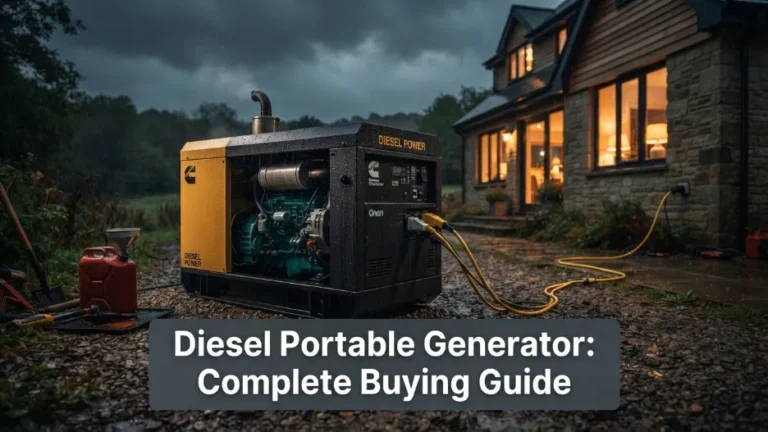
Can I Plug a Generator Into an Outlet? Safe Options Explained
Quick Answer
No, you should never plug a generator into a regular household wall outlet. This dangerous practice, called backfeeding, can cause electrocution, electrical fires, and damage to equipment. To power household circuits, use a professionally installed transfer switch or an approved generator interlock system. The generator safety guidelines explain why keeping utility power separate from generator power is essential.
Safe Generator Connection Options
- Regular wall outlet: Never connect a generator to an ordinary household receptacle.
- Transfer switch: Allows selected household circuits to receive generator power while isolating utility power.
- Approved interlock: Can provide safe isolation when compatible, professionally installed, and permitted locally.
- Direct appliance connection: Use properly rated extension cords connected to the generator’s outlets.
- Generator inlet box: Provides a dedicated connection to properly installed transfer equipment.
Important Safety Reminder
- Never use a male-to-male power cord. It can expose energized metal prongs and create a potentially fatal shock hazard.
If your power goes out, plugging a generator into the nearest wall outlet might seem convenient. However, a normal household outlet was never designed to receive backup power that way.
The important distinction is between a regular outlet and a dedicated generator inlet. I’ll explain why that difference matters and which connection options can safely keep essential appliances running.
What Happens If You Plug a Generator Into a Wall Outlet?
Plugging a generator into a household wall outlet can push electricity backward through your home’s wiring. This process is commonly called generator backfeeding.
Generator backfeeding occurs when electrical power flows into a building’s wiring through an improper connection rather than through approved transfer equipment.
During an outage, that electricity may travel beyond your electrical panel and toward the utility distribution system. The consequences can extend far beyond your own house.
Electricity Can Reach Utility Power Lines
Your home’s electrical service connects to the wider utility network. Without proper isolation, generator power can energize conductors that workers believe are disconnected.
Utility transformers can also raise backfed voltage to dangerous levels. That creates a potentially fatal electrical hazard for lineworkers and nearby people.
Electrical Equipment Can Be Damaged
An improper connection can expose wiring and equipment to unsafe electrical conditions. Overloaded circuits, unsuitable cords, and unexpected power restoration can cause serious damage.
The generator itself may also suffer damage if utility power returns while an unsafe connection remains in place. Simply hoping the outage continues is not protection.
Your Household Wiring May Overheat
Ordinary wall receptacles and branch circuits have specific current ratings. Feeding generator output backward through them can create overloads and bypass intended protections.
Possible results include:
- Overheated receptacles and wiring
- Damaged plugs and electrical connections
- Tripped breakers or equipment failure
- Electric shock or electrocution
- Fire hazards inside the electrical system
The Missouri Public Service Commission’s generator safety guidance specifically warns against connecting generators directly to household wiring.
Can You Plug a Generator Into a 220V or 240V Outlet?
No. A regular 220V or 240V household receptacle is not a safe substitute for a dedicated generator inlet.
Some homeowners consider using a dryer outlet, range outlet, or another high-voltage receptacle. Those receptacles are intended to supply appliances, not accept generator power.
A higher voltage rating does not solve the backfeeding problem. It also does not provide the required separation between generator and utility power.
Why a Dryer Outlet Is Not a Generator Inlet
A dryer circuit is designed around the dryer’s electrical requirements. It may have different wiring, overcurrent protection, and connector configurations from your generator.
Trying to adapt these connections introduces additional hazards. An electrical connection that physically fits is not necessarily compatible or safe.
Never use improvised adapters to make two incompatible connections work together. A licensed electrician can identify the correct equipment for your installation.
Why Turning Off the Main Breaker Is Not Enough
Some people assume backfeeding becomes safe if they manually switch off the main breaker. That assumption ignores the possibility of human error or accidental switching.
An approved interlock physically prevents the utility main breaker and generator supply breaker from being engaged simultaneously. Merely remembering to turn one breaker off does not provide equivalent protection.
A dedicated transfer switch offers another approved isolation method. Both approaches require proper equipment selection and installation.
What Is the Safe Way to Connect a Generator to Your House?
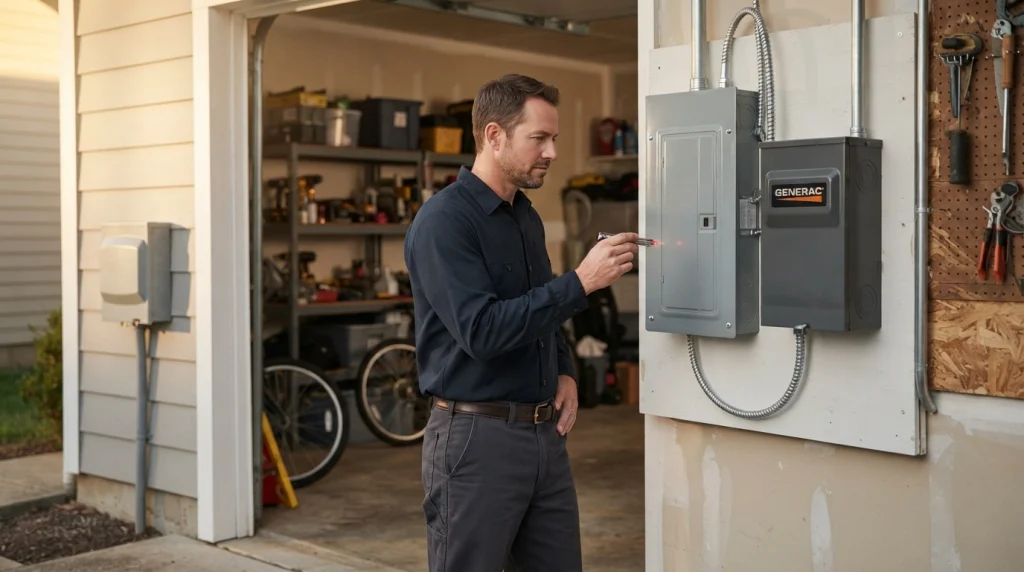
The correct method depends on whether you want to power individual appliances or your home’s installed electrical circuits. There are several legitimate approaches.
Option 1: Install a Manual Transfer Switch
A manual transfer switch allows selected household circuits to operate using generator power. It separates those circuits from their normal utility supply during generator operation.
This is a practical option when you mainly need essentials such as refrigeration, lighting, or a furnace blower.
A typical installation includes:
- A compatible manual transfer switch
- A dedicated outdoor generator inlet
- A properly rated generator power cord
- Professional electrical installation
- Clearly identified backup circuits
The electrical contractor should verify generator capacity, circuit compatibility, grounding, and neutral-bonding requirements. These details vary between generators and installations.
Option 2: Use an Approved Generator Interlock System
A generator interlock is a mechanical safety arrangement installed at a compatible electrical panel. It prevents the utility main and generator supply breakers from being on together.
It may allow more flexibility in choosing which household circuits to operate. However, the generator still has a limited power capacity.
Not every electrical panel supports an approved interlock kit. Local electrical codes and utility requirements also determine whether an installation is acceptable.
I recommend treating interlock compatibility as an electrician’s verification task, not a guessing exercise based on appearance.
Option 3: Plug Appliances Directly Into the Generator
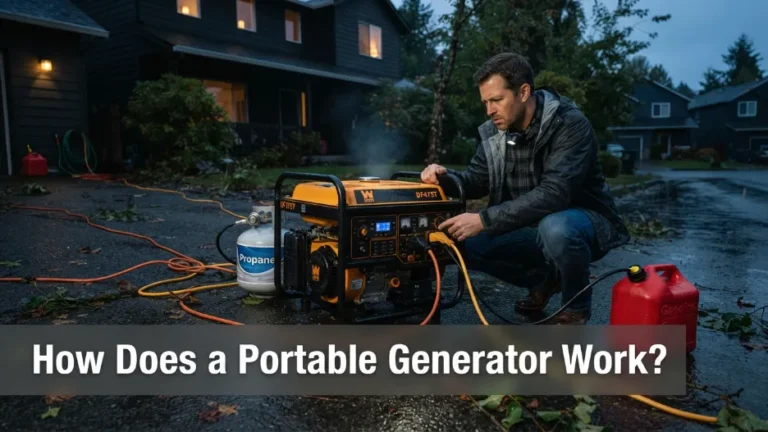
You can operate compatible appliances directly from a portable generator without connecting it to household wiring. This is often the simplest temporary solution.
For example, a refrigerator may be powered using a suitable outdoor-rated extension cord. The total electrical load must remain within the generator’s capacity.
Follow these basic precautions:
- Position the generator outdoors in a safe location.
- Choose undamaged, grounded, outdoor-rated extension cords.
- Verify each cord’s current rating and suitability for its length.
- Connect compatible appliances directly to generator receptacles.
- Monitor the combined electrical load and avoid overloading.
This method does not power hardwired household circuits. Appliances with hardwired connections need an appropriately installed backup-power system.
Generator Connection Methods Compared
The comparison below highlights which methods can safely deliver backup electricity. Installation requirements and compatibility should always be verified locally.
| Connection | Safe? | Professional Setup | Best Use |
|---|---|---|---|
| Wall outlet | No | Not permitted | Never use |
| Transfer switch | Yes | Required | Selected circuits |
| Approved interlock | Yes* | Required | Panel circuits |
| Direct cords | Yes* | Usually no | Individual appliances |
*Only when equipment is suitable, properly used, and compliant with applicable safety requirements.
Can You Use a Generator Without a Transfer Switch?
Yes, but that does not mean you can feed power into household outlets. Without approved transfer equipment, use the generator as a standalone power source for compatible plug-in appliances.
A generator supplying a refrigerator and a few portable devices is different from one supplying your home’s electrical panel. The latter needs proper electrical isolation.
Which Appliances Can Run Directly?
Possible loads include appliances that have suitable plugs and operate within the generator’s output limits.
- Refrigerator: Helps preserve food during a power outage.
- Freezer: Can help keep frozen food cold during extended outages.
- Portable lighting: Provides essential visibility.
- Phone chargers: Keep communication devices powered.
- Selected electronics: Can operate when generator output meets their requirements.
Check appliance labels and the generator manual before connecting anything. Some motors need significantly more power when starting than while running.
Which Appliances Need Extra Planning?
Central air conditioners, electric water heaters, well pumps, and larger heating equipment can impose substantial electrical demands. Some are also permanently connected to household wiring.
These loads may need larger generators, compatible transfer equipment, or specialized starting arrangements. Avoid assuming that a generator’s advertised peak wattage represents its continuous capacity.
How Much Power Can a Generator Safely Supply?
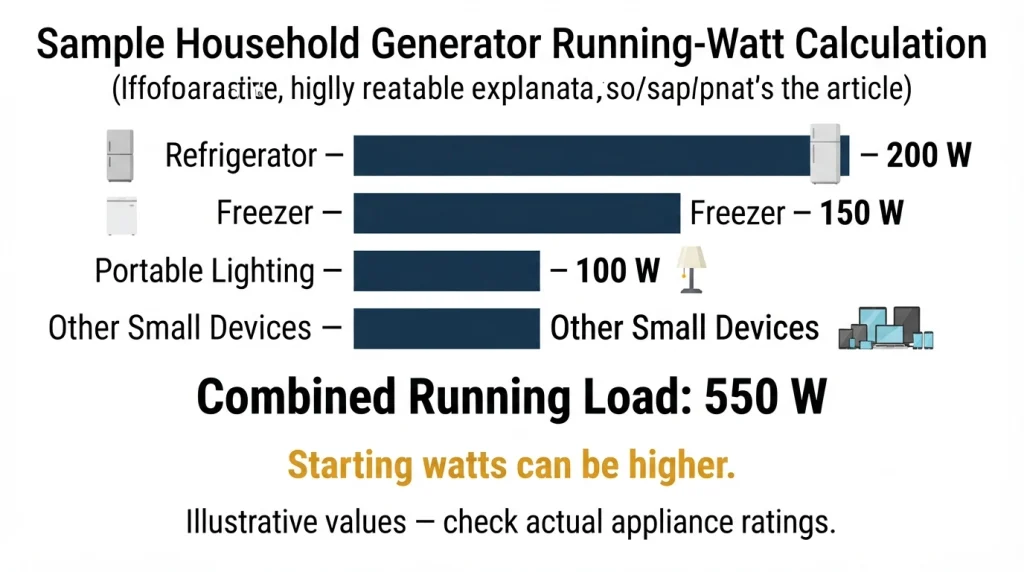
Your generator’s running-watt rating helps determine which appliances can operate together. Starting wattage matters when equipment contains electric motors or compressors.
Consider this simple example:
- Refrigerator running demand: 200 watts
- Freezer running demand: 150 watts
- Portable lighting: 100 watts
- Other small devices: 100 watts
- Example combined running load: 550 watts
These figures are illustrations, not guaranteed appliance specifications. Actual power consumption and motor-starting demand can be much higher.
Check the equipment nameplates or manufacturer documentation for accurate values. Then account for simultaneous loads and the largest relevant starting surge.
Running Watts vs. Starting Watts
Running watts describe the power required during normal operation. Starting watts describe a temporary increase when certain appliances switch on.
A refrigerator compressor may briefly draw substantially more current during startup. A generator that handles its normal running demand might still struggle with the starting surge.
My preferred planning approach is to prioritize essential loads before considering convenience appliances. That makes backup-power sizing easier to understand and less likely to become overloaded.
What Other Generator Safety Precautions Matter?
Even with a correctly installed electrical connection, generator operation presents additional risks. Carbon monoxide, moisture, electrical shock, and fuel handling deserve attention.
Keep the Generator Outside
Gasoline, diesel, and propane generators produce carbon monoxide during operation. This invisible gas can enter buildings and become fatal.
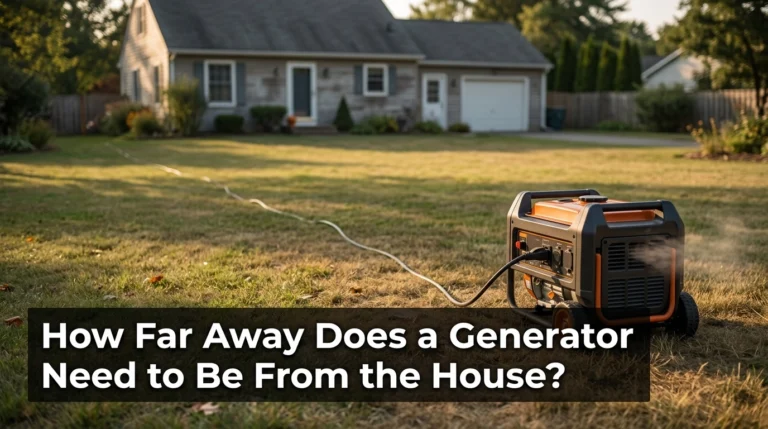
The Consumer Product Safety Commission advises operating portable generators outdoors at least 20 feet from the home, with exhaust directed away.
Never operate a combustion generator in a garage, basement, shed, or enclosed porch. Opening doors or windows does not make these locations safe.
Install Carbon Monoxide Alarms
Working carbon monoxide alarms are essential whenever combustion-powered equipment is used near occupied buildings. Place them according to their manufacturer’s instructions and applicable requirements.
Test alarms regularly and maintain their batteries. An alarm provides warning, but it never replaces correct generator placement.
Protect Electrical Connections From Water
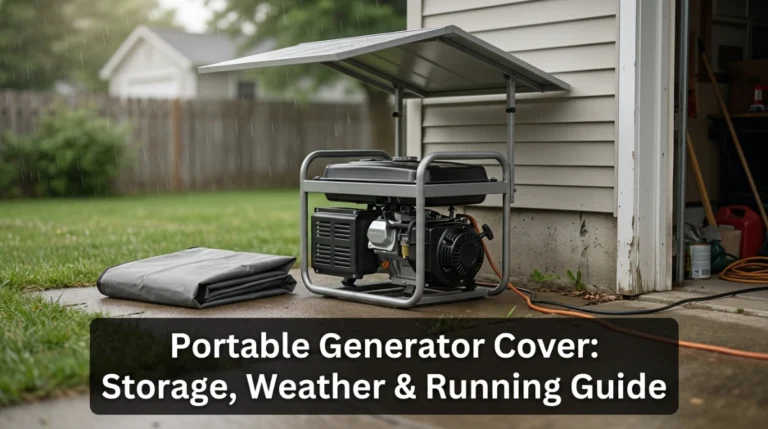
Rain and wet electrical connections increase shock risks. Follow the manufacturer’s operating instructions and use appropriate weather protection that does not obstruct ventilation.
Never operate or handle electrical equipment while standing in water. Keep cord connections dry and inspect them for damage before use.
Follow Proper Grounding Requirements
Generator grounding and neutral-bonding requirements depend on how the generator supplies power. A standalone cord-connected generator may have different requirements from a generator connected to household wiring.
Do not add a grounding rod or alter neutral connections based on generic internet instructions. Have an electrician verify the configuration using applicable codes and equipment manuals.
For broader precautions, review the Electrical Safety Foundation International’s portable generator guidance.
What Are the Most Common Generator Connection Mistakes?
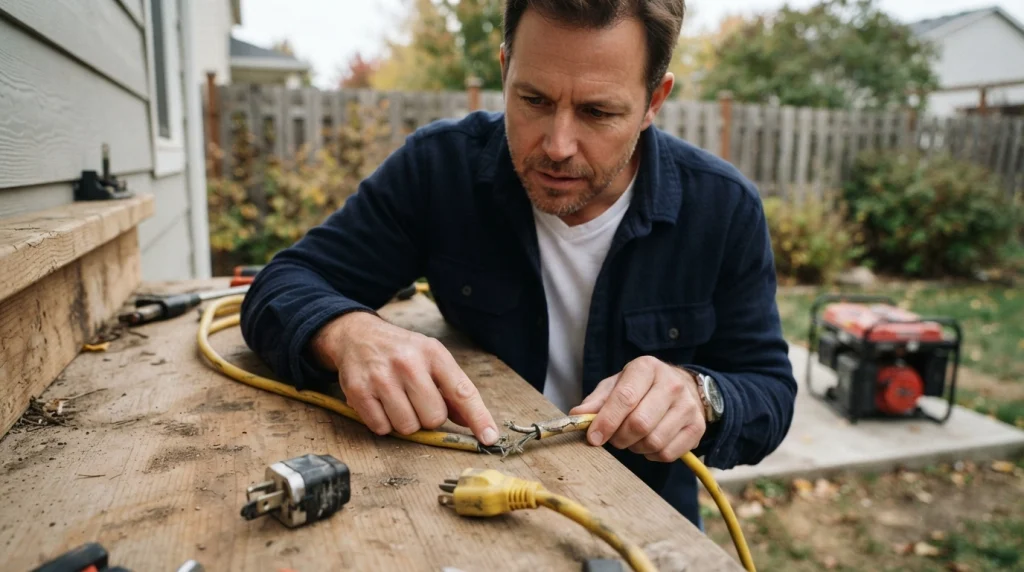
Unsafe generator installations often begin with a misunderstanding about how electricity enters a home. The following mistakes are worth recognizing before an outage occurs.
- Backfeeding a wall outlet: This can energize utility wiring and create lethal shock hazards.
- Using a male-to-male cord: Exposed energized prongs can cause severe injury or death.
- Relying only on a breaker: Manually turning off the main breaker does not replace approved isolation equipment.
- Buying the wrong inlet: Voltage, current rating, connector configuration, and transfer equipment must match.
- Ignoring starting loads: Motor surges can overload an otherwise adequate-looking generator.
- Running indoors: Carbon monoxide can accumulate rapidly, even with windows open.
- Using damaged cords: Frayed insulation and loose connectors increase fire and shock risks.
One mistake can create multiple hazards at once. Correct connection equipment matters just as much as generator capacity.
Recommended Generator Connection Equipment
If you’re planning a safer backup-power setup, these are practical equipment categories to investigate. Final compatibility and installation must be confirmed by a qualified electrician.
🏆 Best for Essential Circuits
Reliance Controls 306CRK Transfer Switch Kit
★★★★☆ 4/5 — Editorial suitability
This 30-amp, six-circuit kit includes a manual transfer switch, outdoor inlet box, and 10-foot generator cord. I consider this configuration a sensible starting point for homeowners focused on a few essential circuits, provided the generator and home wiring are compatible.
⚡ Best for More Circuits
Reliance Controls 310CRK Transfer Switch Kit
★★★★☆ 4/5 — Editorial suitability
The 310CRK provides ten selectable circuits with a 30-amp connection, outdoor inlet, and 10-foot cord. I’d consider it when more circuit flexibility is needed, although additional circuits do not increase the generator’s available power.
🔌 Best for Direct Appliance Power
Southwire 12/3 SJTW 50-Foot Outdoor Extension Cord
★★★★☆ 4/5 — Editorial suitability
This grounded, outdoor-rated cord uses 12-gauge conductors and has a 15-amp, 125-volt rating. It’s a useful category to consider for direct appliance connections when the load, distance, and generator receptacle are compatible; it is not for backfeeding household wiring.
Frequently Asked Questions
Can a generator power a house through a normal outlet?
No. Connecting a generator to a standard wall outlet can backfeed household and utility wiring, putting people at risk of electrocution. A properly installed transfer switch or locally approved interlock arrangement is necessary when connecting generator power to your home’s electrical system.
Can I connect my generator to a dryer outlet?
No. A dryer receptacle is designed to supply a dryer, not receive power from a generator. Even if an adapter appears to fit, it does not provide safe utility isolation, appropriate protection, or guaranteed wiring compatibility. Use a dedicated generator inlet connected to approved transfer equipment.
Do I need a transfer switch for a portable generator?
Not when supplying compatible individual appliances directly through properly rated cords. However, supplying your household wiring requires approved transfer or isolation equipment. A licensed electrician can determine whether a transfer switch or an approved, panel-specific interlock system is appropriate for your home.
Can I use an extension cord with a generator?
Yes, provided the cord is grounded, undamaged, rated for outdoor use, and suitable for the connected load and distance. Connect appliances directly to the generator’s receptacles. Never use extension cords to feed power into household outlets or replace an approved generator connection system.
Is it safe to run a generator on the porch?
A covered or enclosed porch may trap exhaust or allow carbon monoxide to enter the house, making it unsafe. Combustion generators should operate outside, at least 20 feet from the home, with exhaust directed away from openings, following CPSC and manufacturer guidance.
Final Takeaway: Use the Right Generator Connection
Never plug a generator into a normal household wall outlet, dryer receptacle, or improvised adapter. These shortcuts can endanger your family, utility workers, and electrical equipment.
For household circuits, arrange a professionally installed transfer switch or approved interlock system. For limited temporary power, use suitable cords connected directly to the generator’s receptacles.
Before the next outage, have a qualified electrician review your generator model, electrical panel, and essential loads. A properly planned connection makes backup power safer and much easier to manage.

Hi, I’m Michael Turner. I own a generator workshop in the United States and founded HomeGeneratorBlog to share practical, hands-on guidance about generator installation, maintenance, troubleshooting, safety, and backup power solutions. My goal is to help homeowners make smarter, more confident decisions through clear and reliable information