Can I Cover My Generator With a Tarp? Safety Tips
Quick Answer
Yes, you can use a tarp to protect a portable generator after it is switched off and completely cool, provided the cover stays dry and does not trap moisture. Never drape an ordinary tarp over a running generator. For rain protection during operation, follow your exact model’s manual and use only an approved, properly ventilated outdoor canopy or running cover.
Why Is a Tarp Dangerous on a Running Generator?
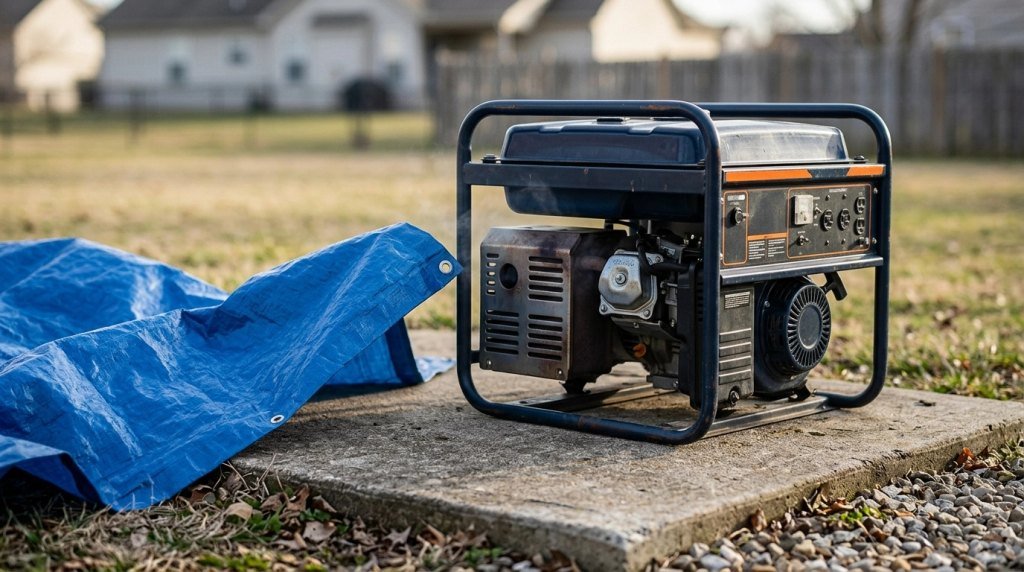
A running generator needs air for combustion and for cooling its engine and electrical components. A loose tarp can collapse over vents or the exhaust outlet, especially when wind or heavy rain pushes the fabric against the machine.
The muffler and exhaust stream can become extremely hot. If fabric or plastic contacts those parts, it may melt or ignite. Even a tarp that never touches the muffler can hold heated air around the machine, increasing the possibility of overheating or protective shutdown.
Exhaust brings another danger: carbon monoxide (CO). This invisible, odorless gas can be fatal. A cover that forms sides or pockets can interfere with the escape of exhaust, and poor placement can allow fumes to enter a nearby building. A tarp is not a substitute for correct outdoor placement.
If your generator shuts down, smells burnt, or behaves unusually under a cover, do not assume the engine is merely working hard. The guide to portable generator overheating explains the warning signs and appropriate checks.
Warning
Do not start or operate a portable generator with a storage tarp, fitted dust cover, blanket, plastic bag, or other material wrapped around it. Remove ordinary storage coverings before starting the engine.
When Can You Cover a Generator With a Tarp?
The answer depends first on whether the generator is running, cooling down, or sitting unused. Those are three different situations, even if you are using the same piece of fabric.
| Situation | Ordinary tarp? | Better decision |
|---|---|---|
| Generator running | No, not draped over it | Use an approved operating shelter if allowed |
| Recently switched off | Not yet | Wait until engine and exhaust are completely cool |
| Cool and stored | Sometimes | Use breathable, secure storage protection that will not hold moisture |
This distinction matters because many products marketed as generator covers are intended only for storage. An engineered running canopy has a different purpose and must maintain the clearances and airflow required by its compatible generator.
For the broader differences between fitted covers and operating shelters, see the portable generator cover guide.
Can a Tarp Held Above the Generator Work in Rain?
An elevated, open-sided canopy is not the same as wrapping a generator. The American Red Cross generator guidance describes keeping a generator dry beneath an open canopy, including a tarp held up on poles. That advice depends on a true overhead shelter, not material resting on the machine.
There is an important qualification. The U.S. Consumer Product Safety Commission says to follow the generator manufacturer’s wet-weather instructions. Those may call for an NFPA-rated noncombustible generator tent or may advise waiting until rain or snow has passed.
So, do not assume that any household tarp on four poles is suitable for your machine. To assess a proposed shelter, check all of these conditions:
- Manufacturer permission: The generator’s operating instructions allow the intended type of weather protection.
- Clearance: Fabric, poles, and fasteners stay outside the specified hot-surface and airflow clearances.
- Open airflow: No walls or sagging flaps channel exhaust back toward the engine or people.
- Stability: Wind cannot pull the shelter down onto the muffler or electrical panel.
- Dry electrics: Rainwater cannot run onto receptacles, plugs, connections, or controls.
A purpose-designed running cover that the generator manufacturer permits is usually easier to evaluate than an improvised setup. If the instructions do not permit the arrangement, or you cannot keep it secure and dry, do not operate the generator until conditions are suitable.
Where Should a Covered Generator Be Placed?
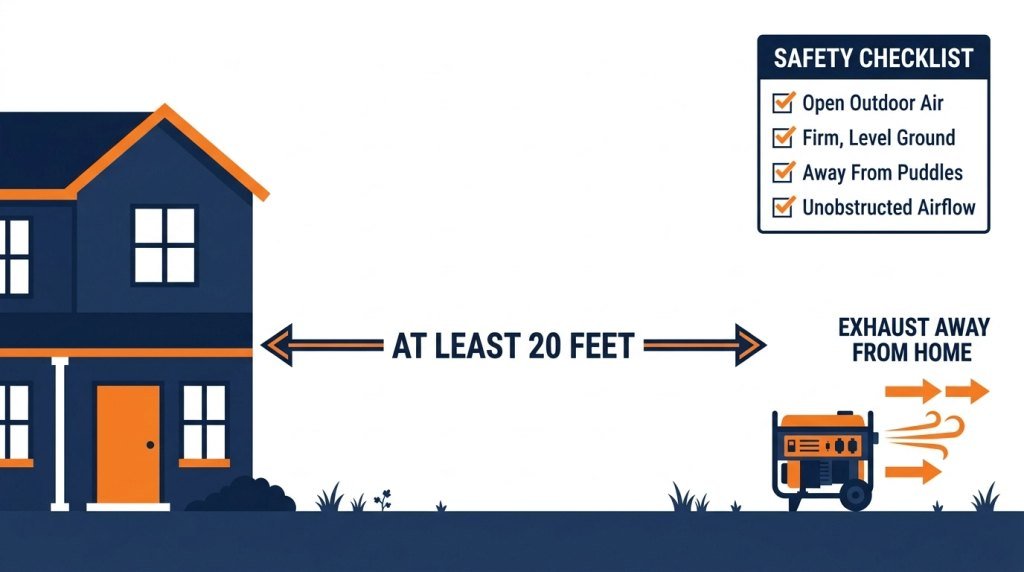
A shelter does not change where a fuel-burning portable generator may safely run. It must remain outside in genuinely open air, not inside a garage, shed, enclosed tent, basement, covered porch, or carport.
The CPSC recommends at least 20 feet between a running portable generator and the house, with its exhaust directed away from buildings, doors, windows, and vents. Consider neighboring buildings and the direction exhaust can travel, too. Keep working battery-operated or battery-backup CO alarms inside the home.
Choose firm, level ground above puddles and drainage routes. Keep the air intake and exhaust unobstructed, and follow your generator manual’s required space around the unit. Some manuals require substantially more clearance around particular hot surfaces than a general checklist suggests.
Before using any tarp or canopy, review the generator placement guide to confirm the location itself is appropriate. A rain shelter cannot make an unsafe location safe.
What Should You Do if Rain Starts While It Is Running?
Do not rush outside and throw a tarp over the hot generator. That introduces a new hazard at the moment when surfaces are hot, outlets may be wet, and wind may be moving the fabric.
If rain threatens a generator that is not set up for wet-weather operation, follow the manufacturer’s shutdown directions when you can reach the controls safely from a dry position. Never touch cords, receptacles, or electrical controls with wet hands or while standing in water. If the area has flooded, keep away from the equipment and seek qualified assistance before reuse.
Once the engine has stopped and fully cooled, move or protect the machine only when conditions are safe. If water has entered electrical areas, do not simply restart it when the rain stops; have the equipment checked as appropriate under its manual.
Plan the weather shelter before the next power outage. If your manual does not approve a workable setup for heavy rain, the correct decision may be to wait rather than improvise.
How to Put a Tarp on a Generator for Storage
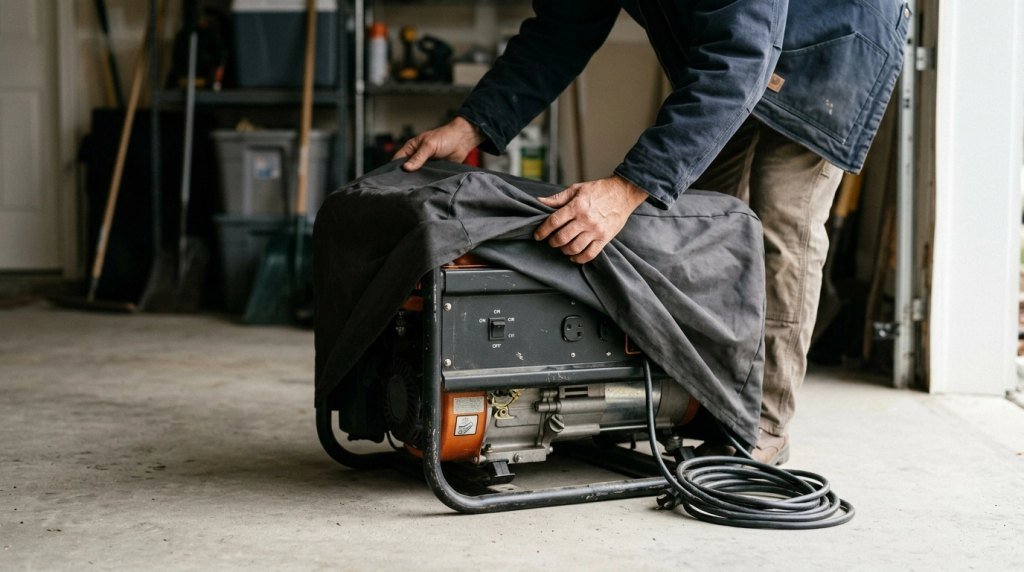
For a shut-down generator, a tarp can be a temporary way to shield dust and falling debris. The main concerns are residual heat, trapped moisture, wind, and the manufacturer’s fuel-storage instructions.
- Switch it off properly. Disconnect the electrical load using the shutdown sequence in the owner’s manual.
- Let it cool completely. The engine and muffler must no longer be hot enough to melt or ignite covering material. Do not rely on a fixed number of minutes for every model.
- Check for moisture. Let rainwater and surface condensation dry before covering; avoid sealing a wet machine beneath plastic.
- Choose suitable material. Prefer a properly fitted, breathable storage cover where the manufacturer recommends one. A household plastic tarp is better treated as short-term, not automatically ideal for long-term storage.
- Secure it without sealing it tight. Prevent the tarp from blowing away or rubbing against delicate controls, while avoiding moisture-trapping wraps.
- Remove it before the next start. Make that part of the pre-start routine, even if the cover appears loose enough to let air through.
For long-term storage, covering is only one task. Fuel treatment, battery care, and ventilation may also matter. The generator winterization guide covers those separate steps without confusing storage protection with running protection.
What Can Go Wrong With a Tarp During Storage?
Condensation is the commonly missed problem. A waterproof sheet keeps direct rainfall off, but it may also hold humidity against metal and electrical parts. If water forms beneath the covering, a generator that looks protected can still develop corrosion.
Heat is another issue after shutdown. The engine can be off while the exhaust remains dangerously hot. Covering too soon can damage both the tarp and the generator’s finish.
Wind can make a loosely secured sheet rub against connectors or snag controls. A tightly bound sheet creates the opposite problem: poor drying. Use storage protection appropriate to the climate, inspect periodically, and keep the generator in the dry, ventilated location specified by its manufacturer.
Key Insight
Waterproof does not mean suitable for storage. A cover must protect against rain without keeping the generator damp underneath.
A Practical Tarp Decision Checklist
Before choosing any cover, ask what job it is supposed to do. If the generator is operating, the job is safe weather protection with unobstructed exhaust and cooling. If it is stored, the job is preventing dirt and water exposure without trapping heat or dampness.
- Need to operate now? Check the generator manual and use an approved running shelter, never a draped tarp.
- Need temporary storage protection? Switch off, cool, dry, and cover with suitable ventilation.
- Expect heavy wind? Avoid a shelter that can fall, shift, or blow into the exhaust.
- Expect flooding? Move the equipment to a safe dry location when off; do not operate in standing water.
- Unsure about compatibility? Ask the manufacturer or use no improvised cover while the generator runs.
In short, judge the entire arrangement rather than the fabric alone: material, distance, exhaust direction, airflow, stability, and operating instructions all matter.
Related Product
Purpose-Built Generator Running Cover
Compare weather shelters specifically designed for operation, and verify model compatibility and manufacturer approval before using any cover.
As an Amazon Associate, we earn from qualifying purchases.
Frequently Asked Questions
Can I leave a tarp over my generator overnight?
Yes, if the generator is shut off, fully cool, dry, and being stored. Use a cover that will not trap condensation, and secure it so wind cannot damage the machine. Remove it before starting the generator.
Is a blue plastic tarp suitable as a permanent generator cover?
Usually not the best choice. Plastic can shed rain but may also trap moisture underneath. For long-term storage, follow the manual and consider a fitted, breathable cover made for your generator.
Can I use an ordinary pop-up canopy above a running generator?
Only if the generator manufacturer permits that arrangement and the canopy meets its material, clearance, ventilation, and weather requirements. A typical fabric canopy is not automatically noncombustible or safe around exhaust heat.
Does an inverter generator need the same precautions?
Yes. A portable inverter generator still produces hot exhaust and, when fuel-powered, carbon monoxide. Its enclosed case does not make it safe to wrap with a tarp while running. Follow its model-specific instructions.
What if a tarp blows onto a running generator?
If you can do so without approaching hot parts, wet electricity, or smoke, shut the generator down following its controls. Keep others clear, let the unit cool, and inspect for melted material or damage before restarting. Seek help if fire or electrical damage is suspected.
Can I cover a permanent standby generator with a tarp?
Do not cover an operating standby generator or obstruct its factory enclosure vents and exhaust. Standby units are designed with their own weather enclosures and installation clearances; consult the manufacturer’s service guidance before adding any cover during storage or maintenance.
Conclusion
You can cover a generator with a tarp while it is stored, provided the engine is off and completely cool, the machine is dry, and the cover does not trap moisture. That is very different from running a generator beneath fabric.
Never drape a household tarp over a running generator. If weather protection is needed during operation, check the manufacturer’s instructions, use a permitted open-air shelter with appropriate materials and clearances, and keep the generator outdoors away from buildings. When those conditions cannot be met, waiting for safe weather is better than improvising a risky cover.

Hi, I’m Michael Turner. I own a generator workshop in the United States and founded HomeGeneratorBlog to share practical, hands-on guidance about generator installation, maintenance, troubleshooting, safety, and backup power solutions. My goal is to help homeowners make smarter, more confident decisions through clear and reliable information