What Happens If Power Comes On While the Generator Is Running?
Quick Answer
If utility power comes back while your generator is running, what happens depends on how it’s connected. A properly installed generator transfer switch keeps the two power sources separate, preventing dangerous electrical backfeeding. An automatic standby system normally switches back to utility power and shuts down after cooling. A portable generator usually requires manual action.
What happens in each situation?
- Automatic transfer switch: Restored utility power is detected, and the system transfers safely after its programmed delay.
- Manual transfer switch: The generator continues operating until you perform the prescribed changeover.
- Approved panel interlock: The interlock prevents the generator breaker and utility main breaker from being on together.
- Direct appliance connections: Equipment plugged into the generator keeps using generator power until safely disconnected.
- Unsafe household connection: Utility restoration can cause severe electrical damage, fire, shock, or electrocution.
The safest immediate response
- Check your connection: Confirm that properly installed transfer equipment isolates the generator from the utility.
- Follow the shutdown procedure: Restore normal service using your equipment’s operating instructions.
- Never improvise: If the generator was connected through a household outlet, stay clear and seek qualified emergency assistance.
Power returning during generator operation can feel alarming, especially when your generator has been running for hours. Fortunately, a correctly installed backup system is designed for this situation.
I’ll explain how utility restoration affects portable and standby generators, what can go wrong, and how to return to normal power safely.
What Actually Happens When Utility Power Returns?
When electricity returns, the utility grid begins supplying power to your property’s service connection again. Your generator may still be producing electricity independently.
These two events can happen at the same time without causing damage, provided the electrical sources remain properly isolated.
How a transfer switch protects your electrical system
A transfer switch selects which source supplies designated household circuits. It prevents an ordinary backup generator from feeding those circuits simultaneously with utility power.
Definition: An electrical transfer switch is a device that changes the supply of an electrical load between utility power and an alternate source, such as a generator, while maintaining the required separation between sources.
The critical protection is electrical isolation. Without it, generator output can enter wiring that should receive power only from the utility.
The Federal Emergency Management Agency explains that manual transfer switches prevent generator electricity from reaching utility lines. They also help protect connected equipment when grid power returns.
See the FEMA emergency power guidance for additional information about transfer equipment and backfeeding.
Does a Generator Automatically Turn Off When Power Comes Back?
A permanently installed standby generator usually shuts down automatically after utility power returns. A conventional portable generator generally keeps running until someone turns it off.
The difference comes from the generator’s controls and transfer equipment, not simply its engine size.
Automatic standby generators
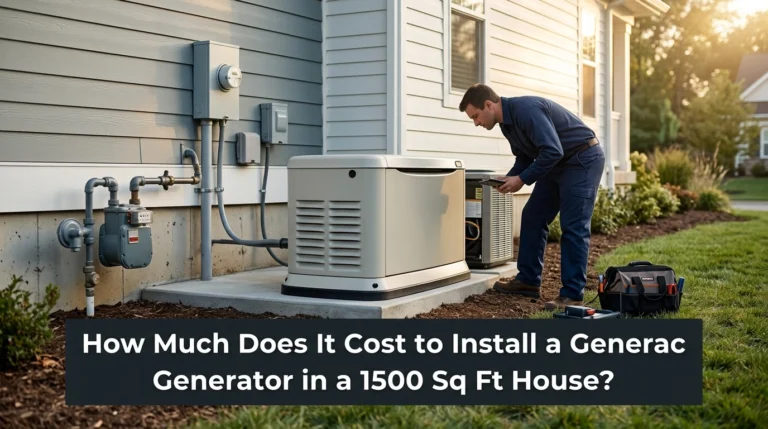
A home standby generator commonly uses an automatic transfer switch, or ATS. This device monitors the utility supply and coordinates the change between utility and generator power.
The typical restoration sequence follows these stages:
- Utility power returns: The controller detects that voltage has recovered.
- Power is checked: The system waits for acceptable utility conditions according to its programmed settings.
- Household load transfers: The ATS disconnects the generator supply and reconnects the utility source.
- Generator cools down: The engine may continue running without supplying household loads.
- Automatic shutdown: The generator stops and returns to standby readiness.
Specific timings vary by manufacturer and model. Some systems also enforce a minimum engine runtime before completing the sequence.
Generac’s transfer-switch guidance describes how its standby controls respond to restored voltage and manage engine cooldown.
Portable generators with manual transfer equipment
A portable generator normally has no way to detect that neighborhood electricity has returned. Its engine continues running until you stop it or another shutdown condition occurs.
With a correctly installed manual transfer switch, utility power can return while selected circuits remain on generator power. The switch keeps the sources isolated until you change their supply.
Portable generators powering appliances directly
When a refrigerator or lamp is plugged directly into a generator, it receives electricity from that generator. Utility restoration does not automatically change where that appliance gets power.
Other household circuits may already have normal electricity again. The generator-connected appliances remain separate until you disconnect them safely.
Can Power Coming Back Damage a Running Generator?
Yes, restored utility power can damage a generator if the electrical sources become improperly connected. With correctly installed and functioning transfer equipment, this dangerous connection should be prevented.
The severity depends on the wiring arrangement, generator design, protective devices, and electrical conditions when restoration occurs.
Why connecting two unsynchronized sources is dangerous
Most residential generators produce alternating current at approximately 60 hertz in the United States. Utility power also operates at a nominal frequency of 60 hertz.
However, matching nominal frequency does not mean the electrical waveforms are synchronized. Their instantaneous voltages and phase angles can differ.
Connecting unsynchronized power sources can create severe electrical and mechanical stress.
- High fault current: Large electrical currents may flow when the sources conflict.
- Alternator damage: Generator windings and connected components may suffer electrical damage.
- Breaker operation: Protective devices may trip, although protection is not guaranteed.
- Arc and fire hazards: Faults can create dangerous heat, electrical arcs, or damaged equipment.
- Appliance damage: Connected electronics and motors may also be affected.
A circuit breaker is not a substitute for a transfer switch. It cannot make an improper household connection safe.
What Is Generator Backfeeding, and Why Is It Dangerous?
Generator backfeeding occurs when electricity from a generator flows backward into wiring or utility infrastructure that it was not intended to energize. It can endanger people even before normal utility power returns.
The danger is not limited to damaging your own generator.
How unsafe connections cause backfeeding
One dangerous example is connecting a portable generator to a normal wall receptacle using an improvised male-to-male power cord. This can energize household circuits and potentially feed electricity toward utility lines.
Utility transformers can increase the voltage of backfed electricity, creating deadly conditions for lineworkers repairing damaged infrastructure.
OSHA’s generator safety guidance warns against directly connecting a generator to a building’s electrical system without properly installed transfer equipment.
What if utility power returns during backfeeding?
If utility power returns while an improperly connected generator energizes the same wiring, the two sources can conflict. Equipment damage, electrical faults, and serious injury are possible.
There is no reliable way to predict whether a breaker will trip quickly enough to prevent harm.
If you discover an improper connection, do not handle exposed connectors or attempt improvised breaker operations. Keep others away and contact your utility or a qualified electrician immediately.
If there is smoke, sparking, fire, or an immediate electrical danger, move to safety and contact emergency services.
What Should You Do When Power Returns While Using a Portable Generator?
First, identify how your portable generator supplies electricity. The correct shutdown procedure depends on whether you use direct appliance cords, a manual transfer switch, or a panel interlock.
Do not assume the procedures are interchangeable.
If you use a manual transfer switch
When normal electricity returns, you can generally return the selected circuits to utility power through the installed transfer system. Follow the switch manufacturer’s documented operating sequence.
- Confirm restoration: Look for reliable indications that utility power has returned and stabilized.
- Review the switch: Identify the labeled generator and utility positions without opening electrical enclosures.
- Manage connected loads: Reduce or disconnect loads when required by the manufacturer’s changeover instructions.
- Transfer the circuits: Follow the exact operating procedure for switching selected circuits back to utility power.
- Stop the generator: Complete the manufacturer’s unloaded cooldown and shutdown procedure.
- Disconnect safely: Remove the generator cord only when the instructions permit and the equipment is no longer energized.
Some transfer switches require each selected circuit to return to its LINE position. Other systems use a different switching mechanism.
I recommend keeping the manufacturer’s instructions beside the transfer equipment. That removes guesswork during a stressful outage.
If you use an approved generator interlock
A generator interlock is a mechanical device that prevents an electrical panel’s utility main breaker and generator backfeed breaker from being on simultaneously. It must match the specific panel and comply with applicable requirements.
A properly fitted interlock does not automatically perform the changeover. The homeowner must use the approved operating sequence.
- Never defeat the interlock: Its purpose is to keep incompatible sources separated.
- Follow the labeled sequence: Use the panel-specific instructions for transferring back to utility power.
- Manage loads carefully: Avoid sudden large loads while changing sources.
- Get professional help: Stop if breakers, labels, or interlock operation are unclear.
An electrician should demonstrate the correct sequence after installation. Practice only under appropriate, controlled conditions.
If appliances plug directly into the generator
Direct appliance connections are simpler because they do not connect generator output to household wiring. Still, disconnecting powered equipment requires care.
- Confirm that ordinary household power has returned.
- Switch off connected appliances and reduce the generator load as instructed.
- Shut down the generator following its operating manual.
- Disconnect extension cords safely after power output has stopped.
- Reconnect appliances to normal household receptacles, avoiding overloaded circuits.
Never handle wet or damaged plugs. For additional precautions, review this portable generator electrical safety guide.
Manual vs. Automatic Transfer Switch: What Happens When Power Returns?
The main difference is who controls the transition back to utility power. Automatic systems manage it through electrical controls, while manual arrangements require an operator.
This comparison shows how common residential setups respond.
| Generator Connection | When Utility Returns | Required Action | Safety Assessment |
|---|---|---|---|
| Automatic transfer switch | Monitors utility restoration and performs an automatic return transfer. | Normally monitor system status. | Designed for safe source isolation. |
| Manual transfer switch | Generator may continue supplying selected circuits. | Perform the prescribed manual changeover. | Safe when correctly installed and operated. |
| Approved panel interlock | Utility becomes available while the main remains isolated. | Follow panel-specific breaker and interlock procedures. | Safe with approved, correctly fitted equipment. |
| Direct extension cords | Generator-powered appliances remain on the generator. | Shut down and reconnect appliances safely. | Appropriate with correctly rated cords. |
| Improvised wall-outlet backfeed | Electrical sources may conflict or energize utility wiring. | Keep clear and obtain qualified emergency assistance. | Dangerous; never use. |
For perspective, I use a simple example: a 30-amp generator connection can support up to 7,200 watts at 240 volts in ideal electrical terms. That does not mean every connected appliance can operate simultaneously.
Actual capacity depends on the generator’s running-watt rating, circuit limits, and motor starting loads. Understanding running and starting watts helps prevent overloads during a power transition.
Why Is My Generator Still Running After Electricity Returns?
A running generator does not necessarily indicate a fault after utility restoration. Many standby systems intentionally continue operating briefly to complete their cooldown sequence.
However, persistent operation or failure to transfer back can indicate a problem requiring professional attention.
Possible reasons for continued operation
- Normal cooldown: The engine is running without load before automatic shutdown.
- Utility stability delay: The transfer controller is waiting for acceptable, sustained voltage.
- Minimum runtime: The controller requires the engine to complete a programmed operating interval.
- Manual operating mode: The system may not be configured for automatic shutdown.
- Transfer equipment fault: A sensor, controller, wiring connection, or switching component may require service.
Begin with the generator’s status display and owner’s manual. Do not open transfer-switch covers or probe energized connections.
If the unit exceeds its documented operating sequence or displays an alarm, contact an authorized generator technician.
Can a Generator and Utility Power Run at the Same Time?
Yes, a generator can physically operate while utility power is available. What matters is whether their electrical outputs remain properly separated.
For example, a standby generator may run unloaded after its transfer switch has already restored utility service.
Similarly, a portable generator can power a separate outdoor appliance while the rest of your house uses grid electricity.
Why ordinary residential generators should not be paralleled with the grid
Connecting two power sources electrically is different from operating them at the same time. Grid-parallel operation requires specialized synchronization, protection, and utility-approved equipment.
Ordinary portable generators and household transfer arrangements are not intended for that operation.
My practical rule is simple: unless the system was specifically engineered and approved for grid-parallel use, keep the generator and utility electrically isolated.
What Safety Checks Matter After Power Is Restored?
After the changeover, inspect the system from a safe position for signs of abnormal operation. Most problems can be identified without touching electrical components.
Pay attention to the following:
- Generator indicators: Check for warning lights, fault messages, or unexpected continued operation.
- Unusual smells: Burning insulation or hot electrical components require immediate professional attention.
- Electrical sounds: Buzzing, popping, or arcing around a panel or switch can indicate danger.
- Repeated breaker trips: Do not repeatedly reset a breaker without identifying the cause.
- Household voltage problems: Persistent flickering or unusually bright or dim lights require investigation.
- Damaged cords: Check disconnected, de-energized equipment for heat damage or deteriorated insulation.
A failed transfer or fault can also leave parts of the house without power after the utility returns. Do not assume every outage-related symptom originates inside the generator.
Don’t forget carbon monoxide safety
Electrical safety is only one part of generator operation. Portable generators also produce deadly carbon monoxide, which can enter buildings through openings.
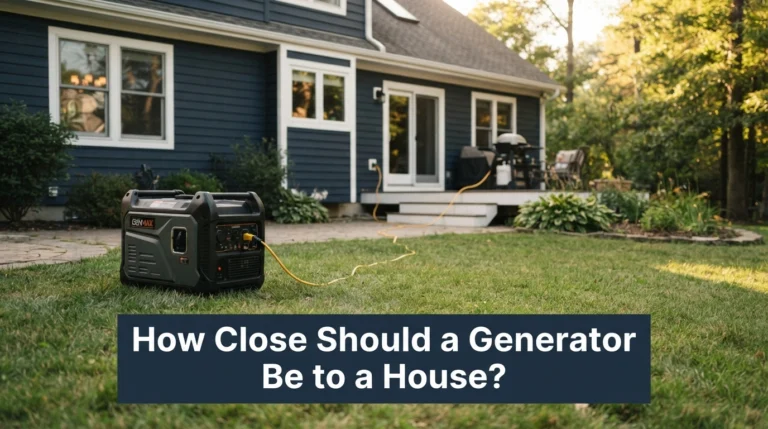
The U.S. Consumer Product Safety Commission recommends keeping portable generators outdoors at least 20 feet from buildings, with exhaust directed away from openings.
Review the CPSC generator safety recommendations before the next outage.
Keep working carbon monoxide alarms installed in appropriate locations. Never operate a portable generator inside a garage, basement, or enclosed porch.
For more placement considerations, see the guide on safe generator placement.
How Can You Prevent Problems When Utility Power Comes Back?
The best protection is a properly designed electrical connection installed before an outage occurs. An improvised connection cannot provide the same predictable safety.
I would prioritize these precautions over adding optional generator accessories.
Use compatible transfer equipment
Choose a transfer switch or approved interlock arrangement that fits your electrical panel, generator output, and household requirements. A qualified electrician should verify the entire installation.
Important compatibility checks include:
- Voltage: Match the generator and transfer system’s required electrical ratings.
- Current capacity: Size the switch, conductors, inlet, and cord correctly.
- Neutral configuration: Confirm grounding and bonding requirements for the actual generator system.
- Panel compatibility: Use equipment approved for the specific installation.
- Load management: Identify which circuits can operate without overloading the generator.
- Operating instructions: Keep clearly labeled changeover procedures available.
Prepare a simple outage checklist
A written checklist makes generator operation more consistent for everyone in the household. It should match the installed equipment instead of relying on generic breaker instructions.
Include these reminders:
- Confirm the generator is outdoors in a safe operating location.
- Use only approved wiring, inlets, cords, and transfer equipment.
- Know how to recognize restored utility power.
- Understand the correct return-to-utility procedure.
- Allow the generator to cool as directed before storage or refueling.
- Call a qualified professional when equipment behaves unexpectedly.
As of 2026, the basic safety principle remains unchanged: backup power must not unintentionally energize the utility grid. Proper source isolation protects homeowners, equipment, and electrical workers.
Which Generator Transfer Switches Are Worth Considering?
If you’re setting up a portable generator for home backup, I’d start with a professionally installed transfer system. The following models offer different options for selected-circuit household power.
These are product-fit recommendations based on published specifications, not hands-on testing. The editorial star ratings indicate suitability for the stated use cases, not customer-review averages.
🏆 Best for Essential Circuits
Reliance Controls 306CRK Transfer Switch Kit
★★★★☆ Editorial fit: 4/5
This 30-amp, six-circuit manual transfer kit includes a power inlet box and generator cord. I’d consider it for homeowners who need a straightforward way to supply a few essential circuits without managing a large backup electrical system.
⚡ Best for More Circuits
Reliance Controls 310CRK Transfer Switch Kit
★★★★★ Editorial fit: 5/5
The 310CRK offers ten selectable circuits with a 30-amp generator connection, plus an inlet and cord. I prefer this configuration when a household needs more circuit choices, provided the generator has enough capacity for the actual loads.
🏠 Best Upgrade Potential
Generac HomeLink 6852 Manual Transfer Switch
★★★★☆ Editorial fit: 4/5
This 30-amp HomeLink switch supports eight circuits initially and up to ten in compatible configurations. Its potential conversion to automatic operation makes it interesting for homeowners considering a future compatible standby generator.
Before buying, have an electrician confirm compatibility with your generator, electrical panel, circuit loads, and local requirements. A transfer switch rated for 30 amps does not increase the generator’s available power.
Frequently Asked Questions
Will a generator shut off by itself when the electricity comes back?
A permanently installed standby generator usually shuts down automatically after its transfer switch restores utility service and its cooldown sequence finishes. Most conventional portable generators do not detect grid restoration or shut down automatically. They require manual operation unless equipped with a compatible automatic control system.
Can power coming back destroy my generator?
It can damage a generator if utility electricity becomes improperly connected to the generator’s output. Unsynchronized electrical sources can create severe faults and equipment damage. A correctly installed and functioning transfer switch or approved interlock prevents the unintended connection that creates this danger.
Should I turn off the generator before switching back to utility power?
Follow the specific manufacturer’s operating sequence. Many manual transfer systems require returning loads to utility power before stopping the generator, while other arrangements have different procedures. Never switch electrical sources through an improvised connection or operate unfamiliar equipment without qualified guidance.
What happens if the power flickers while a generator is running?
A properly configured automatic transfer system may delay switching until utility voltage becomes stable. This helps prevent repeated transfers during unstable restoration. A manually connected portable generator generally continues operating until someone changes its connection, provided its circuits remain isolated from utility power.
Is it safe to leave a portable generator running after power returns?
A portable generator can continue operating independently of restored utility power when its electrical setup is safe. However, unnecessary operation wastes fuel and creates ongoing exhaust, noise, and maintenance risks. Return to normal power and shut down according to the manufacturer once backup electricity is no longer needed.
Final Takeaway: Keep Generator and Utility Power Separate
If utility power comes back while your generator is running, there is usually no reason to panic when you have correctly installed transfer equipment. The generator and grid can remain safely separated until the system transfers automatically or you complete the manual changeover.
The dangerous situation is an improper connection that allows electricity to flow between the generator and utility infrastructure.
Before your next outage, verify your connection method, review the shutdown instructions, and have any questionable wiring inspected by a qualified electrician. A little preparation can prevent a serious electrical emergency.

Hi, I’m Michael Turner. I own a generator workshop in the United States and founded HomeGeneratorBlog to share practical, hands-on guidance about generator installation, maintenance, troubleshooting, safety, and backup power solutions. My goal is to help homeowners make smarter, more confident decisions through clear and reliable information