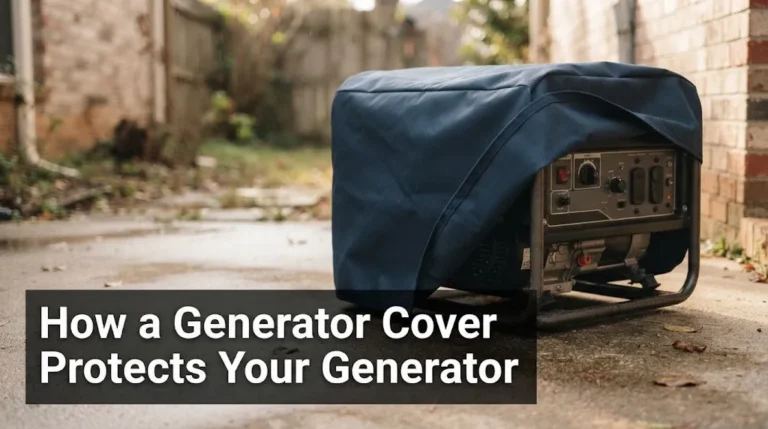
How to Build a Generator Shelter with Proper Ventilation
Quick Answer
To build a safe generator shelter, you must prioritize two conflicting needs: rigid weather protection and massive, unrestricted airflow. The shelter requires permanent, louvered intake and exhaust vents sized significantly larger than the generator’s exhaust port, combined with a sloped roof, heavy-duty anchoring, and a carbon monoxide detector installed in your home nearby. Never run a generator inside a fully enclosed shed or garage.
Operating a portable generator during a storm or extended power outage requires balancing two critical priorities: protecting expensive equipment from rain, snow, and debris, and preventing the deadly accumulation of carbon monoxide and engine heat. Many homeowners attempt to solve weather exposure by placing a generator inside a standard garden shed or enclosing it tightly on all sides. This approach creates an immediate fire hazard and a severe carbon monoxide poisoning risk.
Building a functional generator shelter demands careful planning around airflow dynamics, thermal management, exhaust direction, and physical security. Understanding the engineering requirements of small engines ensures your backup power source remains dependable and safe during emergencies.
Why Generator Ventilation Is a Critical Safety Priority
Portable generators produce immense amounts of carbon monoxide (CO), an odorless, colorless gas that can incapacitate and kill within minutes in enclosed or semi-enclosed spaces. Beyond exhaust toxicity, internal combustion engines generate intense heat and require a constant supply of fresh ambient air for combustion and cooling.
When a generator operates in an oxygen-depleted or poorly ventilated enclosure, engine temperatures rise rapidly. Excessive heat can degrade the alternator winding insulation, warp plastic components, cause vapor lock in the fuel system, or trigger thermal shutdown mechanisms precisely when you need power the most.
Warning
Never operate a portable generator inside an attached garage, crawlspace, basement, or enclosed shed—even with doors or windows open. A generator shelter must always be an outdoor, detached structure positioned at least 15 to 20 feet away from windows, doors, and fresh air intakes.
Core Design Requirements for a Generator Enclosure
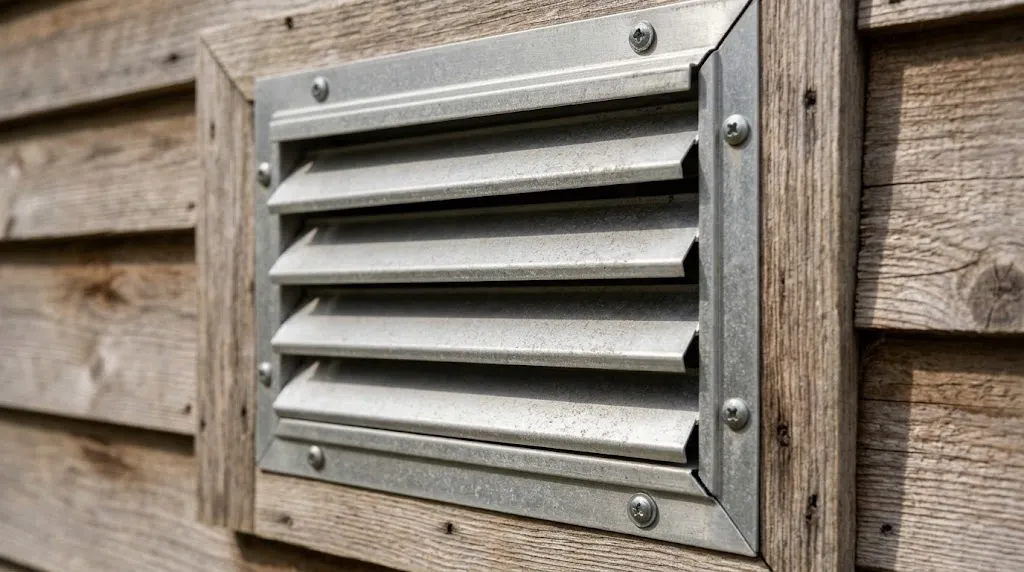
A properly engineered generator shelter differs substantially from a typical storage box. It must accommodate vibration, sound management, refueling access, and extreme weather loads without compromising airflow.
Airflow and Louver Sizing
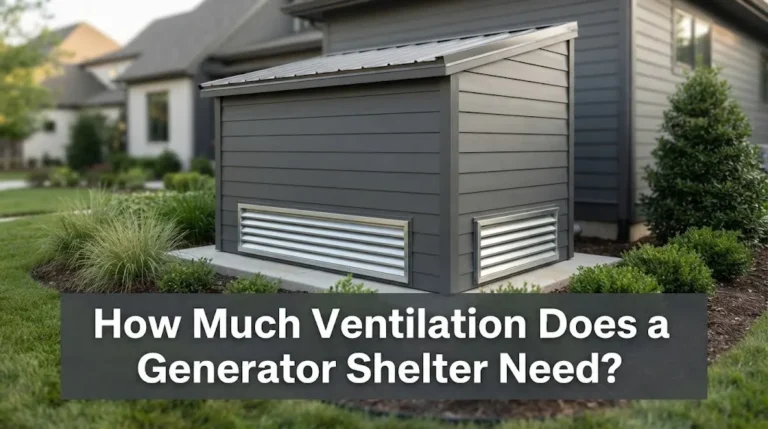
The shelter must feature permanent, non-closable intake and exhaust openings. A general engineering guideline is that the total net free area of the intake and exhaust vents should be at least double the cross-sectional area of the generator’s physical footprint, ensuring uninhibited convection and cooling fan displacement.
Exhaust Alignment
The engine exhaust must point directly outward through a dedicated, weather-shielded exhaust port or louver. Directing exhaust into the interior of the shelter—even with general room ventilation—causes heat pooling and dangerous gas recirculation.
Elevation and Moisture Control
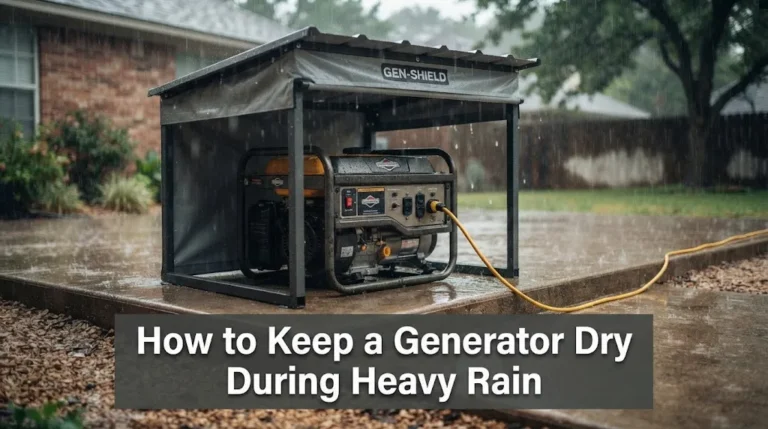
The structure should sit on a raised concrete pad, gravel bed, or treated timber platform. Elevating the generator prevents pooling water during heavy rainstorms from reaching electrical components or creating shock hazards.
Step-by-Step Guide to Building a Weather-Resistant Generator Shelter
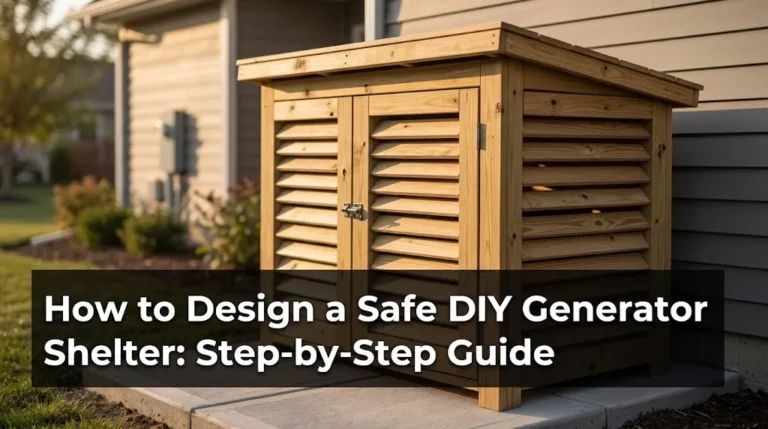
Constructing a durable, ventilated enclosure requires standard framing techniques, exterior-grade materials, and careful positioning of ventilation louvers. This walkthrough outlines building a rugged, shed-style lean-to enclosure designed for standard portable generators up to 10,000 watts.
Step 1: Choose and Prepare the Site
Select an outdoor location on level ground at least 15 feet away from your home’s exterior walls, windows, and vents. Clear away organic debris, topsoil, and grass. Lay down a compacted gravel base or pour a small concrete slab measuring roughly 4 feet by 4 feet to provide a stable, non-flammable foundation.
Step 2: Build the Base Frame
Construct a floor frame using pressure-treated 2×4 lumber. Secure the perimeter joists with exterior screws. If using a wooden floor, cover the framing with exterior-grade pressure-treated plywood or cement backer board to resist moisture and provide a fire-resistant surface underneath the hot engine.
Step 3: Frame the Walls and Sloped Roof
Erect vertical 2×4 wall studs spaced 24 inches on center. Design the structure with a sloped roof (lean-to style) to shed rain and heavy snow effectively. Ensure the ceiling height clears the top of the generator and any fuel filler necks by at least 18 to 24 inches to allow safe refueling and heat dissipation.
Step 4: Install High-Capacity Intake and Exhaust Louvers
Cut large openings into opposite walls of the frame. Mount heavy-duty aluminum or galvanized steel louvered vent grilles designed for exterior shed ventilation. Position the air intake low on the wall facing the alternator side of the generator, and position the exhaust vent high on the opposite wall aligned with the engine muffler and exhaust stream.
Tip
Install corrosion-resistant fine mesh hardware cloth behind your exterior louvers to prevent rodents, wasps, and blowing debris from entering the enclosure while the generator is stored.
Step 5: Add Access Doors and Weatherproofing
Build a large front-facing access door or removable front panel hinged with heavy-duty exterior hardware. You must be able to open the entire front or side of the shelter easily to pull the generator out for maintenance, check oil levels, connect heavy-duty power cords, and refuel safely. Finish the exterior walls with weather-resistant siding or exterior-grade plywood sealed with outdoor paint or stain.
Managing Heat Buildup and Exhaust Backpressure
A common mistake in generator enclosure construction is creating restrictive vent openings or routing exhaust through flexible automotive tubing. Small engine exhaust systems rely on precise backpressure dynamics. Modifying or extending the factory exhaust pipe with restrictive elbows or long runs can cause engine overheating, carbon buildup, and loss of power.
Instead of plumbing exhaust tubing out of a sealed box, design the shelter wall so the factory muffler points directly through a wide, fire-rated thimble or an oversized louvered opening with a minimum 3-inch air gap all around the exhaust tip. This prevents hot exhaust gases from melting surrounding wood or siding while allowing ambient air to sweep freely past the muffler.
Common Mistakes to Avoid When Building a Generator Enclosure
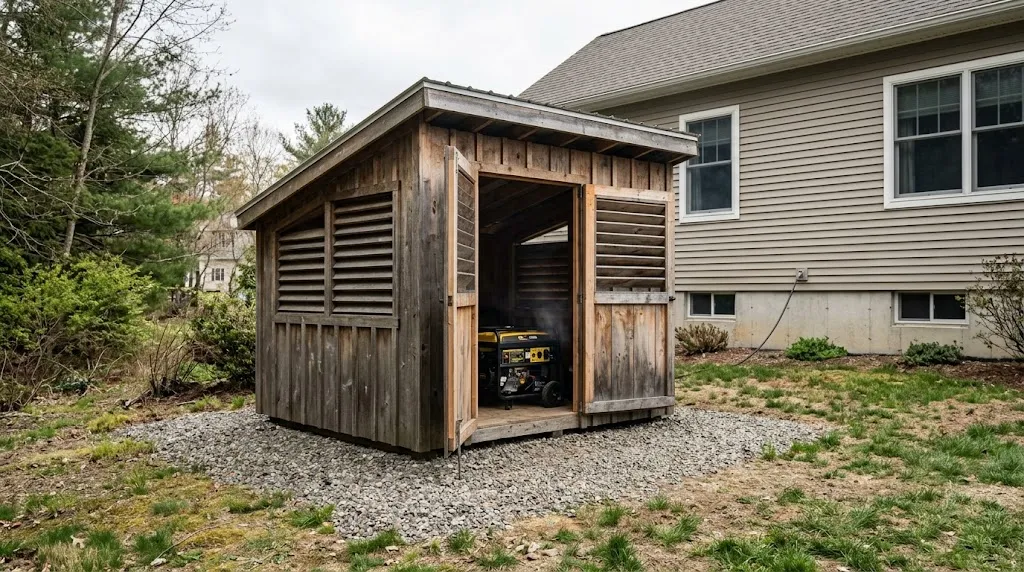
Failing to account for operational variables can lead to equipment failure or safety hazards during extended power outages. Avoid these frequent pitfalls:
- Using airtight construction: Treating a generator shelter like a standard tool shed traps heat and exhaust gases. Airflow must be continuous and unobstructed on at least two opposing sides.
- Ignoring vibration isolation: Running a generator directly on thin plywood amplifies noise. Mount the generator on heavy rubber vibration-isolation pads to dampen structural resonance.
- Neglecting refueling clearance: Building the roof too low makes pouring gasoline from a heavy fuel can awkward and dangerous, increasing the risk of spilling fuel onto a hot engine block.
- Placing the shelter too close to structures: Even with proper ventilation, wind shifts can push carbon monoxide toward your home if the shelter is positioned too close to doors or operable windows.
Essential Safety Monitoring for Generator Setups
Physical enclosures do not eliminate the need for diligent monitoring. Whenever your generator is running inside a protective shelter, ensure you adhere to strict operational safeguards.
Install hardwired or battery-operated carbon monoxide detectors on every level of your home, particularly in rooms nearest to where the generator is operating outside. Test the detector batteries prior to storm season. Additionally, never refuel a generator while it is running or while the engine is excessively hot; allow the unit to cool for at least ten minutes before adding fuel to prevent accidental ignition.
Related Product
Heavy-Duty Generator Running Covers and Ventilation Tents
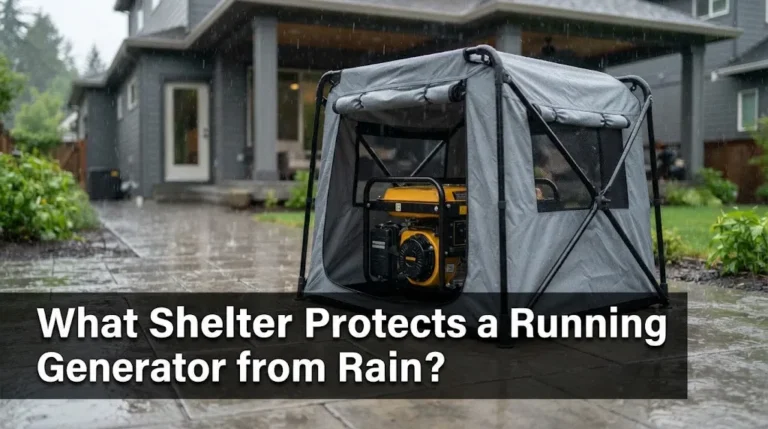
If a permanent wooden shelter is impractical for your space, a weatherproof running tent protects your generator during wet weather while maintaining open, unobstructed airflow on all sides.
As an Amazon Associate, we earn from qualifying purchases.
Frequently Asked Questions
Can I build a generator shelter out of regular plywood?
Yes, exterior-grade plywood works well for the walls and roof when properly sealed with outdoor paint or weatherproofing sealant. However, ensure the interior base underneath the generator is protected with cement board, metal flashing, or treated lumber to minimize fire risks from hot engine components.
Do I need to run an electric cooling fan inside the shelter?
Most portable generator shelters do not require powered fans if passive louvered vents are properly sized on opposing walls. Natural convection and the generator’s own cooling fan are usually sufficient to cycle air, provided the vent openings offer enough net free area.
How far away from the house should the generator shelter be placed?
Safety authorities recommend placing portable generators and their enclosures at least 15 to 20 feet away from your home, with the exhaust pointing strictly away from all doors, windows, and crawlspace vents.
Should the generator be locked inside the shelter while running?
Never lock the shelter doors shut while the generator is operating. You must maintain immediate access to the control panel for emergency shutoffs, oil checks, and breaker resets. If security is a concern during operation, use a supervising latch that allows quick manual opening.
How do I keep rain from blowing through the ventilation louvers?
Use louvered vents with downward-slanted slats or install exterior rain hoods over the vent openings. This blocks driving rain and snow from entering the enclosure directly while maintaining unrestricted airflow.
Can I soundproof a generator shelter to reduce noise?
You can add exterior-grade fire-resistant acoustic insulation or mineral wool board to the interior walls. However, never block the intake and exhaust vent openings with soundproofing material, as restricting airflow will quickly cause the engine to overheat.
Conclusion
Building a generator shelter requires careful attention to thermal management, weather resistance, and uncompromising ventilation. By incorporating large louvered intake and exhaust vents, elevating the structure above standing water, and maintaining adequate clearance around the engine, you protect your investment from storm damage while eliminating the severe hazards associated with carbon monoxide accumulation and engine overheating. Always prioritize safety clearances and active monitoring to ensure reliable backup power when emergencies strike.

Hi, I’m Michael Turner. I own a generator workshop in the United States and founded HomeGeneratorBlog to share practical, hands-on guidance about generator installation, maintenance, troubleshooting, safety, and backup power solutions. My goal is to help homeowners make smarter, more confident decisions through clear and reliable information