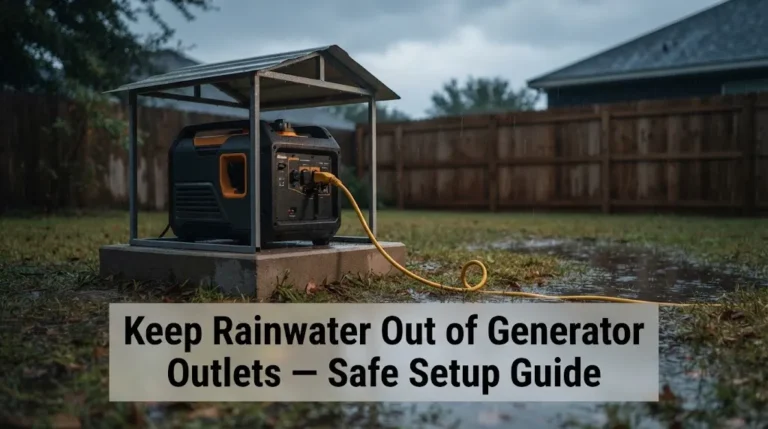
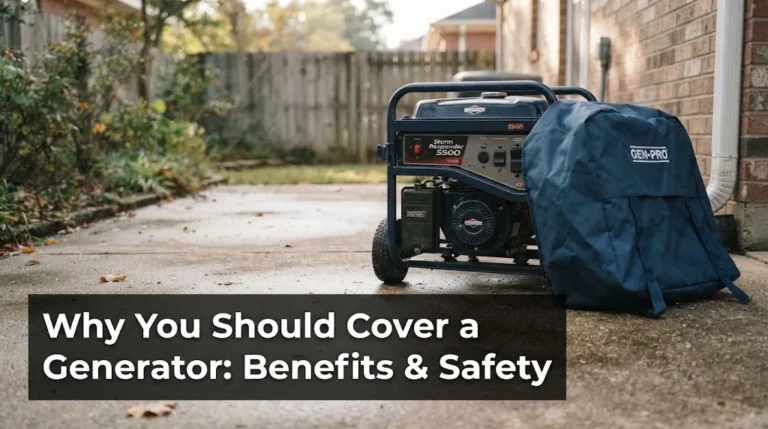
Why a Tarp Should Never Fully Enclose a Running Generator
Quick Answer
A tarp should never fully enclose a running generator because doing so traps deadly carbon monoxide exhaust gases and blocks critical airflow, creating extreme risks of lethal poisoning, engine overheating, and electrical fire.
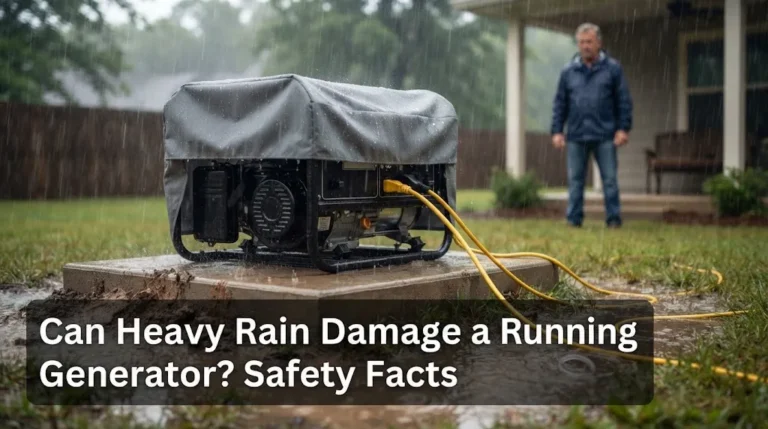
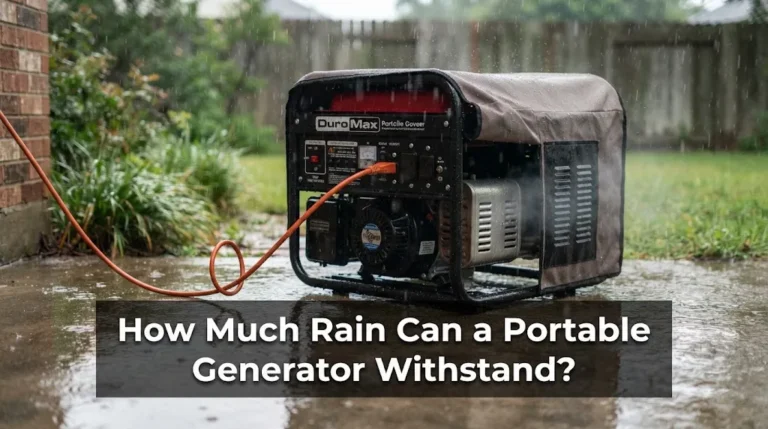
When bad weather strikes, keeping your backup power source dry is a natural priority. However, wrapping a portable generator entirely in a tarp or placing it inside a tight enclosure creates an immediate, life-threatening hazard. While protection from rain and snow is necessary, airflow and ventilation are non-negotiable for safe generator operation.
The Deadly Threat of Carbon Monoxide Accumulation
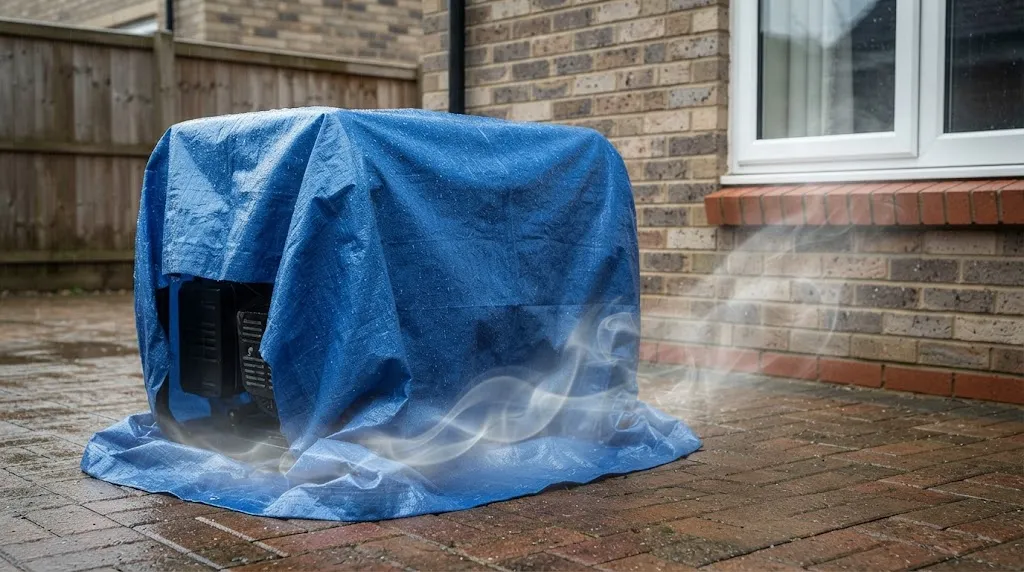
The single most dangerous reason to avoid fully enclosing a generator is the production of carbon monoxide (CO). Carbon monoxide is an invisible, odorless, and tasteless gas produced by the incomplete combustion of fuel in small gasoline engines.
When a generator runs inside a sealed or heavily restricted tarp enclosure, toxic exhaust fumes accumulate rapidly. Instead of dissipating into the open atmosphere, the gas builds up beneath the fabric. If any gaps exist near doors, windows, or foundation vents, this concentrated plume of carbon monoxide can easily migrate into a nearby home or workspace, leading to severe poisoning or fatalities within minutes.
Warning
Portable generators emit high concentrations of carbon monoxide. They must always be operated outdoors, far away from occupied structures, with the exhaust pointing away from doors and windows.
Engine Overheating and Thermal Damage
Beyond toxic exhaust, a fully wrapped tarp restricts the massive volume of air a generator requires to stay cool. Internal combustion engines generate immense heat during standard operation.
Air-cooled portable generators rely on ambient air circulating freely around the alternator and engine block to maintain safe operating temperatures. When a tarp traps this heat:
- Engine oil breaks down prematurely due to excessive thermal stress.
- Plastic components, fuel lines, and wiring insulation can melt or degrade.
- The alternator windings can overheat, leading to catastrophic electrical failure or permanent unit damage.
Fire Hazards and Fuel Ignition Risks
Restricting airflow also creates a significant fire hazard. Portable generators feature hot exhaust components—such as the muffler and engine block—that regularly reach temperatures exceeding several hundred degrees.
If a loose tarp sags, blows in the wind, or makes direct contact with the hot muffler, the fabric can rapidly ignite. Furthermore, trapped gasoline vapors from refueling or minor fuel leaks can accumulate inside a sealed enclosure, creating a volatile environment where a single engine spark could trigger an explosion.
Moisture Condensation and Electrical Shock
Ironically, trying to protect a generator from moisture with a poorly fitted tarp can actually increase internal moisture problems.
When a generator runs under a completely sealed, non-breathable plastic cover, hot engine exhaust and cooling air create heavy condensation. Moisture builds up on the electrical outlets, control panel, and alternator windings. This trapped humidity significantly raises the risk of short circuits, ground faults, and dangerous electrical shocks when plugging in cords.
How to Safely Protect a Generator in Bad Weather
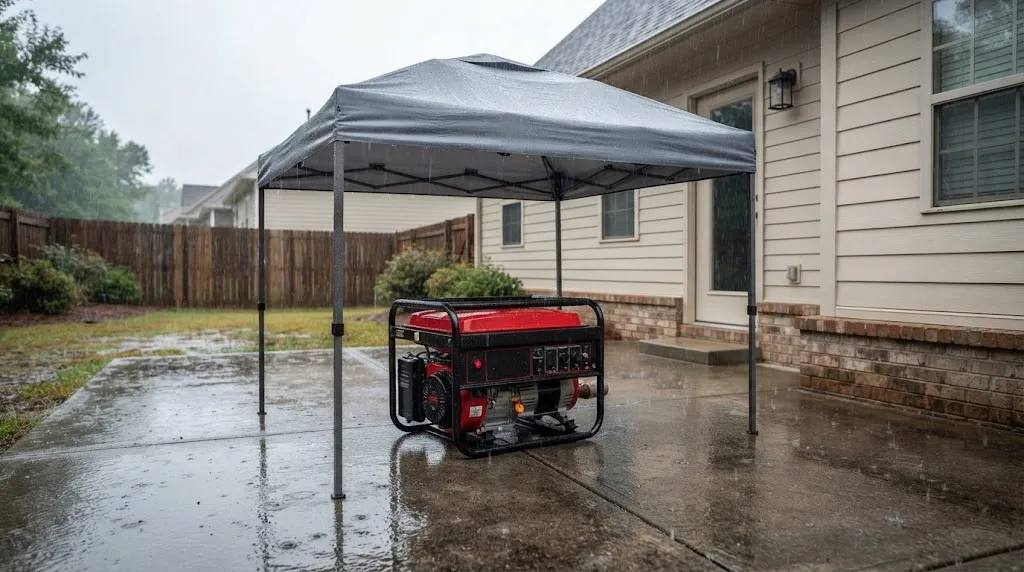
Protecting your equipment from rain or snow without sacrificing safety requires maintaining strict clearance and cross-ventilation. Instead of a homemade plastic wrap job, follow industry-recommended guidelines:
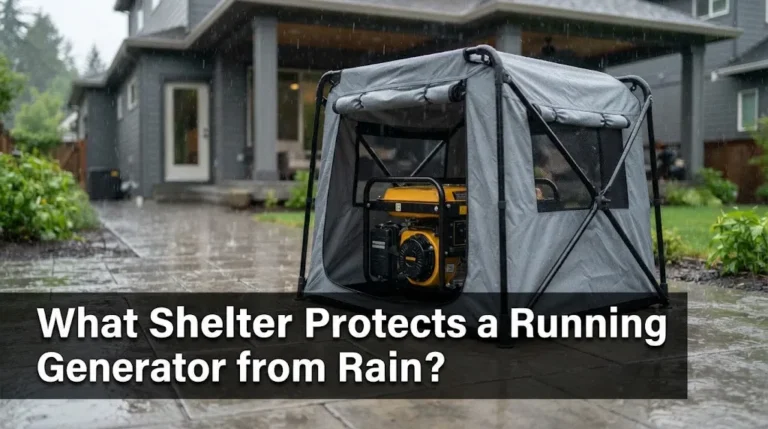
- Use a dedicated generator tent: Specially engineered canopies feature open sides and high-temperature-resistant fabrics designed to shield the engine while leaving the sides completely open for exhaust dispersal and airflow.
- Maintain ample distance: Keep the generator at least 15 to 20 feet away from your home, with the exhaust pointing away from living areas.
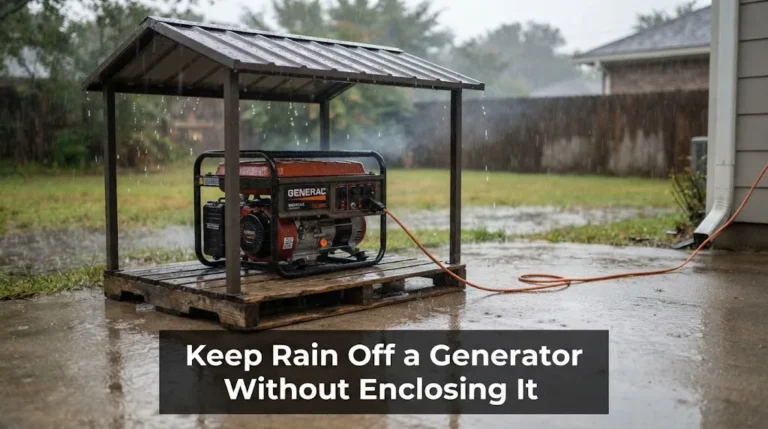
- Build an open-sided shelter: If constructing a permanent or semi-permanent cover, ensure at least three sides remain completely open to allow cross-winds to clear exhaust gases instantly.
Tip
Always install battery-operated carbon monoxide detectors on every level of your home and test them before running backup power during an outage.
Related Product
Weatherproof Generator Tent and Canopy Cover
A breathable, open-frame canopy shields your generator from direct rain and snow while maintaining the essential ventilation required for safe operation.
As an Amazon Associate, we earn from qualifying purchases.
Frequently Asked Questions
Can I run a generator under a standard patio umbrella or overhang?
Running a generator under a low overhang or solid patio umbrella can still trap exhaust gases and heat close to your structure. Ensure there is substantial vertical clearance and open cross-ventilation in all directions.
What should I do if my generator gets wet in the rain?
If your generator gets directly soaked while running, safely shut it down immediately if you can do so without risking electric shock. Allow the unit to dry completely and inspect the electrical outlets for moisture before attempting to restart it.
Is it safe to run a generator in an open garage with the door up?
No. An open garage still restricts natural airflow significantly. Carbon monoxide can easily pool inside the garage structure and drift into adjoining living spaces. Portable generators should always operate entirely outdoors in open air.
Can high humidity damage a running generator?
Normal atmospheric humidity does not harm a running generator, as engine heat quickly evaporates minor moisture. However, standing water, heavy pooling rain, and unshielded direct splashes pose severe electrical shock and short-circuit risks.
How much clearance does a generator need around it?
Most manufacturers recommend maintaining a minimum clearance of at least 3 to 5 feet on all sides of the generator—and completely open space above—to ensure unobstructed cooling airflow and safe exhaust dispersal.
Will a mesh tarp provide enough ventilation for a generator?
While mesh allows more airflow than solid plastic, it still restricts the massive volume of air required by a combustion engine and fails to guarantee safe exhaust dissipation. Specially rated open-frame tents remain the safest protective option.
Conclusion
Protecting your backup power equipment from wet weather is important, but safety must always take precedence over convenience. Fully enclosing a running generator with a tarp creates severe, life-threatening risks including carbon monoxide poisoning, engine overheating, and fire hazards. By utilizing open-frame generator canopies and maintaining proper outdoor clearance, you can safely power your home while keeping your equipment protected.

Hi, I’m Michael Turner. I own a generator workshop in the United States and founded HomeGeneratorBlog to share practical, hands-on guidance about generator installation, maintenance, troubleshooting, safety, and backup power solutions. My goal is to help homeowners make smarter, more confident decisions through clear and reliable information