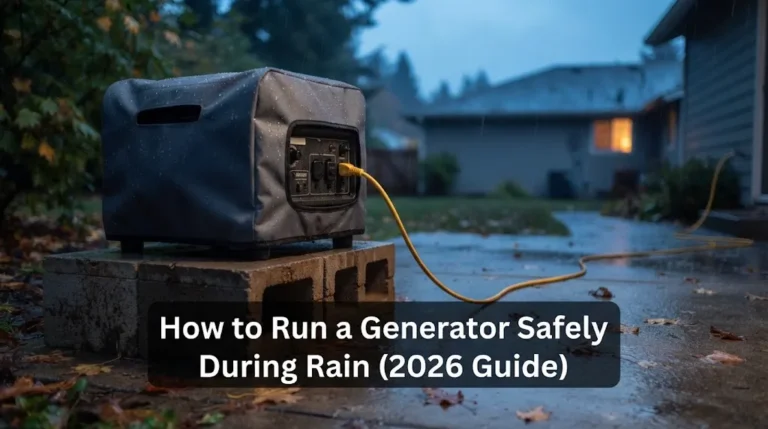
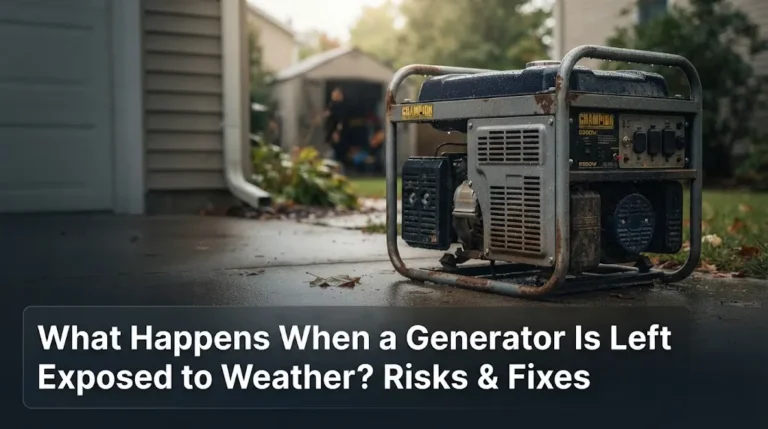
Protect Generator Connections from Rain: Safe Setup Guide
Quick Answer
Protect generator electrical connections from rain by keeping the generator itself dry and elevated, using only outdoor-rated cords, forming drip loops so water cannot run into the plug, and shielding the plug-and-receptacle connection with a weather-resistant enclosure. Never wrap a running generator in a tarp or plastic sheet, and never move it indoors or into a garage to keep it dry.
Why Generator Connections Fail in Rain
Water reaching a live outlet or plug connection creates a path for current to escape the intended circuit. That can cause a shock when someone handles the cord, trip a GFCI or breaker, or damage the generator’s outlets and wiring. The risk is not limited to direct rainfall. Water running along a cord, splashing up from a puddle, or collecting in a low spot around the plug can all reach the connection.
Portable generators are not waterproof. Their outlets, control panels, and wiring are exposed by design for airflow and access. A generator may tolerate light moisture in good conditions, but it is not built for sustained rain without protection.
The other half of the problem is placement. A generator must stay outdoors because of carbon monoxide, but “outdoors” during a storm means wind-driven rain can reach the unit from the side, not just from above. That is why connection protection and generator protection have to work together.
Keep the Generator Itself Dry Without Trapping Heat
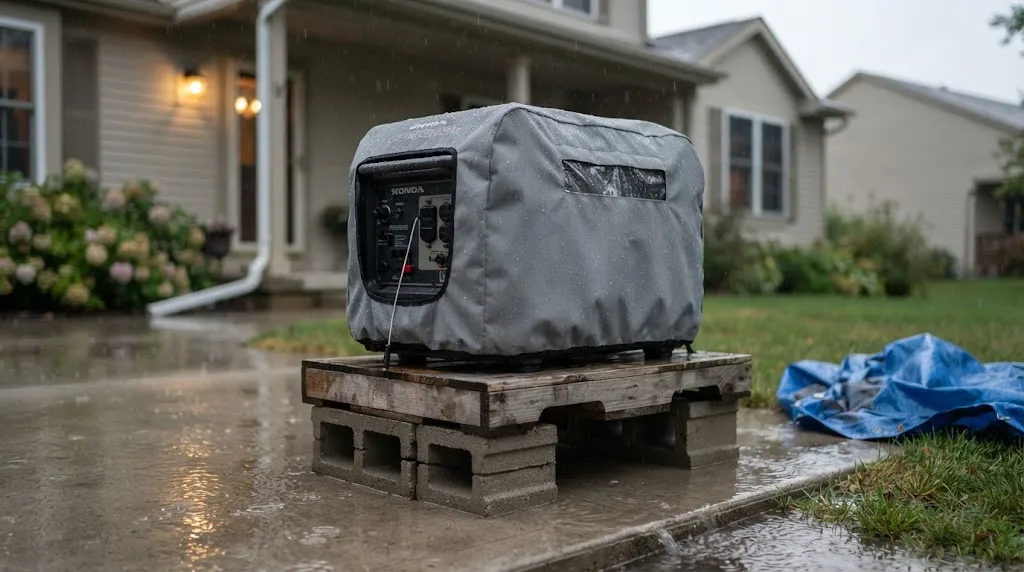
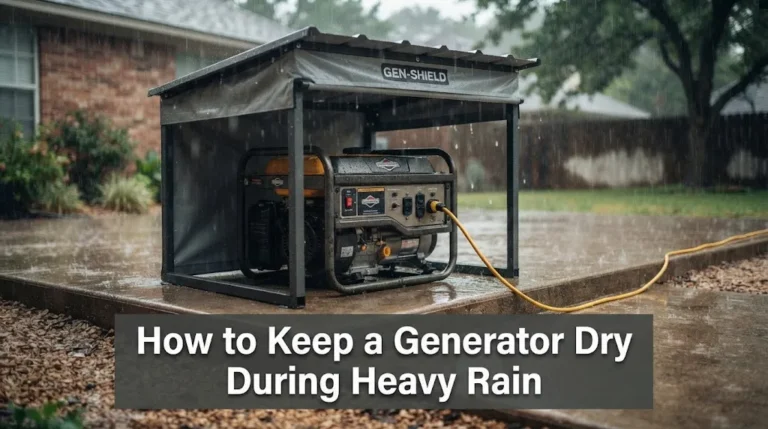
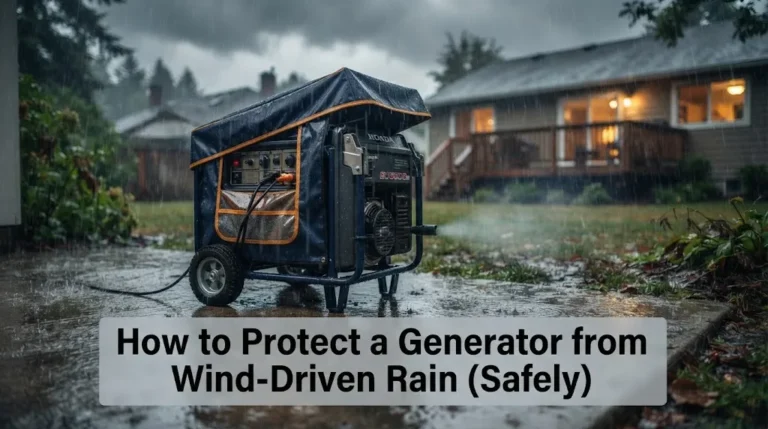
The generator body and the cord connections face different risks, and they need different solutions. A running cover designed for generators can shed rain while allowing heat and exhaust to escape. Champion Power Equipment, for example, recommends manufacturer-approved Storm Shields for wet-weather operation and warns against improvised covers that block airflow.
A tarp, plastic sheet, or storage cover is not a running cover. Draping plastic over a running generator traps heat around the engine and exhaust, which can melt the cover or create a fire risk. It can also allow exhaust fumes to accumulate in unexpected ways.
Elevate the generator on a stable, fire-safe surface such as concrete blocks or a wooden pallet. This keeps the underside and outlets above puddled water and reduces splashback during heavy rain. Keep the unit level so water drains away rather than pooling around the base.
The Drip Loop Is the Simplest Connection Protection
A drip loop is a deliberate sag in the cord before it reaches the generator outlet or the plug connection. Water running down the cord follows gravity to the lowest point and drips off there instead of continuing into the socket.
To form one, leave a short length of cord hanging below the level of the outlet before plugging it in. The loop should be deep enough that water clearly drips from the bottom, not at the plug. This matters most when the cord runs from the generator toward a house or load, because rain can travel a long distance along an outdoor cord.
A drip loop is not a substitute for a dry connection. It is a backup measure that reduces how much water reaches the plug in the first place. Pair it with an elevated connection and a physical cover.
Use Outdoor-Rated Cords and Check Them Before Use
The cord itself is part of the protection system. Use only heavy-duty, outdoor-rated extension cords with intact grounding, sized to the load the generator is supplying. Indoor cords, damaged jackets, and undersized wire increase resistance and heat, and they offer less resistance to moisture.
Before connecting anything in wet weather, inspect the cord for cracks, exposed wire, or soft spots. A damaged jacket lets water reach the conductors directly. If a cord feels warm under load, it is either undersized or failing, and it should be replaced rather than used “just this once.”
GFCI protection adds another layer. A GFCI outlet or an in-line GFCI cord trips quickly when current leaks to ground, which can happen when moisture bridges the wrong parts of a connection. GFCI protection does not make wet connections safe, but it reduces the chance that a moisture-related fault becomes a serious shock.
Shield the Plug Connection with a Weather-Resistant Enclosure
The plug-and-receptacle connection is the most vulnerable point in the whole setup because it is where two metal surfaces meet and where water can collect. Commercial connection protectors enclose the joined plugs in a hinged, weather-resistant housing. Products like CordSafe are designed to surround the connection, reduce nuisance GFCI trips caused by moisture around the plug blades, and keep the plugs off wet ground.
These enclosures are weather-resistant, not submersible. They help with rain, splashes, and damp conditions, but they are not intended for direct burial or standing water. The connection should still be elevated and positioned so water drains away from the enclosure rather than into it.
If you use a plug protector, check that it fits your cord gauge. Some models require removing internal inserts for heavier 12-gauge cords, and a poor fit around the cord entry can let water in. A protector that is difficult to close or leaves gaps at the cord entry is not providing the protection you need.
A simple DIY enclosure is possible with a plastic container, but it has to be arranged carefully. Cut entry holes only large enough for the cords, place the joined plugs inside, and keep the whole container elevated so water cannot pool around it. The container must not sit over the generator’s cooling vents or exhaust, and it should not trap heat. If the arrangement requires tape or sealant to stay closed, it is probably less reliable than a purpose-made protector.
Keep Connections Off the Ground and Away from Puddles
Water on the ground is as much a problem as rain from above. A plug lying in a puddle, or a connection sitting in a low spot that fills during the storm, gives water direct access to the connection from below. Elevate the connection on a dry block, a brick, or a stable platform that will not absorb water or tip over.
Route cords so they do not cross wet grass or lie in the path of runoff. If the cord must run across a wet area, keep the connection itself out of that area and let the cord approach from above rather than from a puddle. The goal is to make water work against gravity to reach the plug, not flow downhill into it.
Also check where water drips from the generator cover or canopy. A running cover sheds rain, but that water has to go somewhere. If the runoff lands directly on the cord connection, the cover is not solving the connection problem. Adjust the setup so runoff falls away from the plugs and cords.
What to Do If a Connection Gets Wet
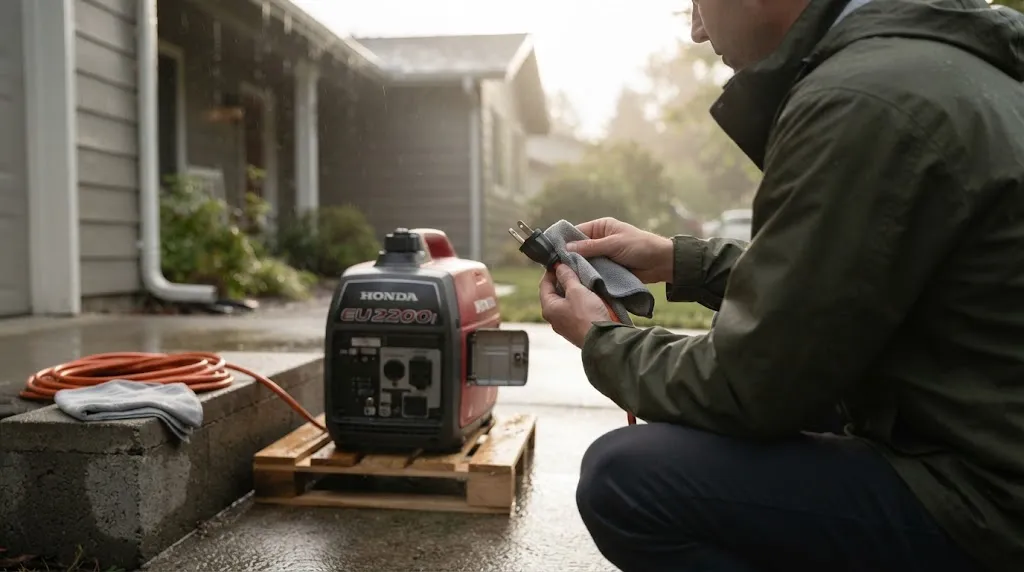
If a plug, outlet, or cord end gets wet, do not dry it off and immediately reconnect it while the generator is running. Shut down the generator first, disconnect the cord, and dry the connection fully before restarting. Moisture inside a plug or outlet can cause a fault as soon as power returns.
Inspect the outlet and plug for signs of water intrusion, discoloration, or corrosion. If the generator’s outlet has been exposed to water, let it dry completely before using it again. If the unit was submerged or water entered the control panel, do not start it. Have it inspected before returning it to service.
A Practical Setup Order for a Rainy Outage
- Place the generator outdoors on a level, elevated surface at least 20 feet from doors, windows, and vents, with the exhaust pointed away from the house.
- Install a manufacturer-approved running cover if the generator will operate in rain. Never use a tarp or plastic sheet.
- Use outdoor-rated, heavy-duty cords with intact grounding and GFCI protection where possible.
- Form a drip loop before the generator outlet and before any plug connection.
- Enclose the plug connection in a weather-resistant protector and elevate it off the ground.
- Route cords so water cannot run downhill into the connection and runoff from the cover falls away from the plugs.
- Check the setup during the storm. If water is reaching the connection or the cover is not shedding rain as intended, shut down and adjust rather than hoping it holds.
When the Weather Is Too Severe for the Setup
There is a point where the safest option is to wait. If the rain is driving sideways, if water is pooling faster than you can elevate the connection, or if the generator’s cover is being pushed into contact with hot surfaces, shut the generator down until conditions improve. A generator that stays dry and starts later is more useful than one that fails during the storm or creates a shock hazard.
The same rule applies to handling. Do not adjust cords, plugs, or connections with wet hands, and do not stand in water while touching the generator or its cords. Dry hands and dry footing are part of connection protection, not a separate concern.
Related Product
Weather-Resistant Extension Cord Connection Protector
A weather-resistant enclosure keeps the joined plugs dry, elevated, and shielded from rain and splashes during a storm.
As an Amazon Associate, we earn from qualifying purchases.
Frequently Asked Questions
Can I just put a plastic bag over the generator outlets?
A plastic bag is not a reliable connection protector. It can trap moisture inside, blow loose in wind, or contact hot surfaces. A purpose-made weather-resistant connection enclosure or a properly arranged elevated container is a better choice.
Are “weather-resistant” generator outlets safe in rain?
Weather-resistant covers on outlets help, but they do not make a connection safe for direct rain or standing water. They reduce exposure, but the plug and cord still need drip loops and elevation.
Do I need a special cord for rain?
Use an outdoor-rated, heavy-duty extension cord with intact grounding, sized for the load. Indoor cords and damaged cords are not appropriate for wet-weather generator use.
Can I run the generator under a carport or porch to keep the connections dry?
No. Carports, porches, garages, and sheds are enclosed or partially enclosed spaces where carbon monoxide can accumulate. The generator must stay outdoors with clear ventilation, even if that means the connections need extra rain protection.
What if the plug connection is under a running cover but still gets wet?
Runoff from the cover may be landing on the connection, or wind-driven rain may be reaching it from the side. Adjust the cover, move the connection, deepen the drip loop, and add a weather-resistant enclosure. If water is still reaching the plug, shut down until the setup can be corrected.
How do I know if water got into the generator outlet?
Look for droplets, dampness, discoloration, or corrosion inside the outlet. If the generator was running when water reached the outlet, shut it down and let it dry fully before restarting. If water entered the control panel or the unit was submerged, do not restart it without inspection.
Conclusion
Rain protection for generator connections comes down to three things: keep water from running into the plug, keep the plug off wet ground, and keep the generator itself dry without trapping heat or exhaust. A drip loop, an elevated connection, an outdoor-rated cord, and a weather-resistant enclosure handle the connection side. A manufacturer-approved running cover and correct outdoor placement handle the generator side. Check the setup during the storm, and shut down if water is winning.

Hi, I’m Michael Turner. I own a generator workshop in the United States and founded HomeGeneratorBlog to share practical, hands-on guidance about generator installation, maintenance, troubleshooting, safety, and backup power solutions. My goal is to help homeowners make smarter, more confident decisions through clear and reliable information