How to Reduce Generator Noise: Practical Steps & Muffler Tips
Quick Answer
To reduce noise in a portable or standby generator, isolate vibrations using anti-vibration mats, build or install a proper acoustic enclosure with high-density mineral wool insulation, extend and angle the exhaust away using a compatible muffler or resonator box, and maintain routine engine health such as clean air filters and fresh oil.
Understanding Why Generators Are Loud
Portable and standby generators produce significant sound primarily due to three mechanical sources: the internal combustion engine firing, the rapid expulsion of exhaust gases, and mechanical vibrations transferring directly into the ground or surrounding surfaces.
A standard portable generator often operates between 65 and 85 decibels at a distance of twenty feet, which is comparable to heavy traffic or a loud vacuum cleaner. Addressing generator noise requires diagnosing which of these three sources contributes most to the disturbance.
Key Insight
Exhaust sound waves account for a large portion of overall generator noise. Muffling mechanical vibration alone will not yield a quiet unit if the exhaust is left unrestricted.
Isolating Ground and Surface Vibrations
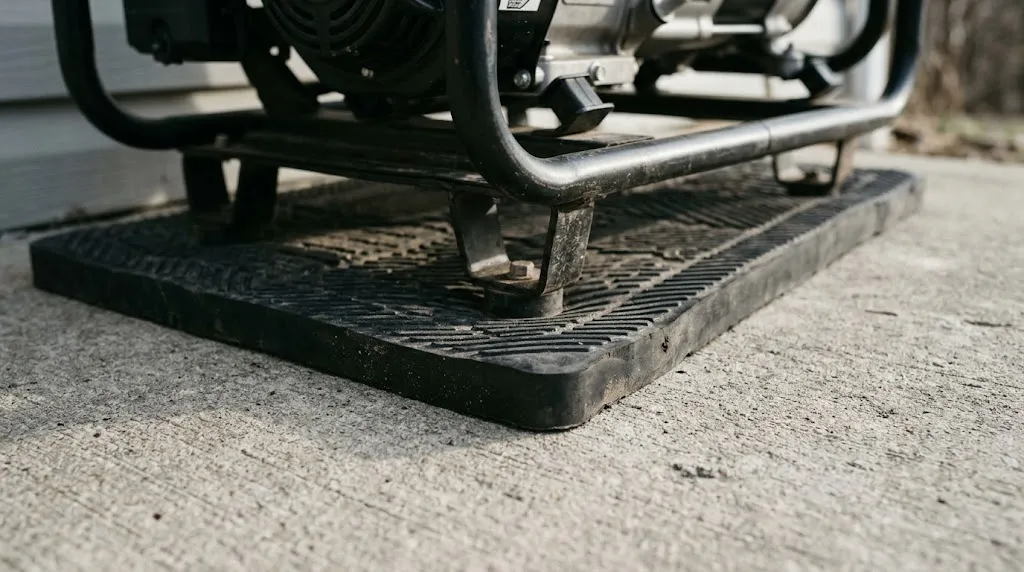
When a generator sits directly on concrete, a wooden deck, or the ground, its internal engine vibrations turn the mounting surface into an amplifier. Resonance makes the entire area hum or vibrate loudly.
Placing thick, dense isolation materials beneath the frame absorbs kinetic energy before it radiates outward.
- Anti-Vibration Mats: Heavy-duty rubber mats or interlocking gym flooring squares placed under the wheels or feet dampen low-frequency ground hum.
- Rubber Isolation Mounts: Bolting rubber pucks or spring-loaded isolators between the generator frame and its feet decouples the engine vibration from rigid surfaces.
- Placement Strategy: Move the unit away from hollow walls, patio tables, or metal fences that easily bounce sound waves toward living areas.
Managing Exhaust Noise Safely
The factory muffler handles basic sound suppression, but additional modifications can lower decibel output further. However, altering an exhaust system carries strict safety considerations regarding backpressure and carbon monoxide accumulation.
Never restrict exhaust flow with undersized piping, as excessive backpressure can overheat the engine or cause internal damage.
Warning
Never run a generator inside an enclosed garage, shed, or home addition to muffle sound. Accumulated carbon monoxide can be fatal within minutes.
To manage exhaust safely, direct the exhaust pipe away from outdoor seating areas or windows using heavy-duty, rated flexible steel extension kits designed specifically for your generator model. Pointing the exhaust outlet upward or away from reflective surfaces like brick walls also helps disperse acoustic energy.
Building or Using an Acoustic Enclosure
An acoustic baffle box or generator tent creates a physical barrier that traps and absorbs sound waves. If you construct or purchase an enclosure, thermal management remains the most critical engineering factor.
Air-cooled engines require constant airflow to prevent overheating, oil breakdown, and permanent internal damage.
- Inbound and Outbound Vents: Design baffled intake and exhaust channels that allow air to circulate freely while forcing sound waves to bounce against sound-absorbing surfaces rather than escaping in a straight line.
- Fire-Resistant Insulation: Line interior walls with high-density rockwool or mineral wool insulation rather than standard flammable foam. Rockwool withstands high temperatures and possesses superior acoustic absorption properties.
- Clearance Gaps: Maintain at least two to three feet of clearance around all sides of the generator inside any structure to allow proper heat dissipation.
Routine Maintenance for Quieter Operation

A poorly maintained engine runs rougher, vibrates harder, and generates more mechanical noise than a freshly tuned unit. Simple upkeep keeps decibels closer to factory specifications.
Tip
Check valve clearances and replace fouled spark plugs according to the manufacturer schedule. A misfiring or starved engine experiences combustion inconsistencies that increase vibration and harsh metallic noise.
Additionally, keep oil levels topped off with the correct viscosity specified in your manual. Fresh oil reduces friction between moving metal components, lowering the high-pitched mechanical whir associated with overworked small engines.
Relevant Product
Generator Anti-Vibration Mats and Isolation Pads
Heavy rubber isolation pads reduce structural resonance and ground vibration transfer when placed beneath portable generator frames.
As an Amazon Associate, we earn from qualifying purchases.
Frequently Asked Questions
Can I build a wooden box around my generator to block the sound?
You can build an acoustic enclosure out of wood or exterior-grade materials, provided you incorporate large baffled intake and exhaust vents. Without active or passive airflow channels to dissipate heat, the engine will overheat, risk seizing, or melt internal plastic components.
Does eco-mode or variable idle reduce generator noise?
Yes. Inverters equipped with variable speed or eco-mode throttles automatically drop engine RPMs down to match the exact electrical load required. When fewer appliances are plugged in, the engine runs much slower and quieter than an older open-frame generator locked at a constant 3,600 RPM.
Will adding an automotive muffler to a portable generator damage it?
Adding an incompatible or restrictive aftermarket muffler can disrupt exhaust scavenging and increase backpressure. Excessive backpressure forces heat back into the combustion chamber, leading to burnt valves, reduced power output, and potential engine failure.
How many decibels can I realistically reduce generator noise?
Implementing proper vibration isolation, a remote exhaust extension, and an outdoor acoustic baffle wall can typically reduce perceived sound by 5 to 10 decibels. Because the decibel scale is logarithmic, a 10-decibel reduction cuts the perceived volume in half.
Does generator placement distance make a big difference?
Sound pressure levels decrease significantly over distance according to the inverse-square law. Moving a generator an additional 10 to 15 feet away from your home or patio can dramatically lower the sound level reaching your ears without requiring any mechanical modifications.
Why is my generator suddenly getting louder over time?
A sudden increase in volume usually indicates a mechanical issue, such as an exhaust gasket leak, a loose muffler bolt, worn engine mounts, or a cracked muffler housing. Inspect the exhaust manifold and frame bolts immediately if the acoustic tone shifts or sharpens.
Conclusion
Reducing generator noise requires a balanced approach focused on surface isolation, safe exhaust management, and proper airflow-managed enclosures. By identifying whether engine vibration, exhaust pressure, or acoustic resonance is the primary culprit, you can apply targeted solutions that quiet the unit without compromising engine safety or performance.

Hi, I’m Michael Turner. I own a generator workshop in the United States and founded HomeGeneratorBlog to share practical, hands-on guidance about generator installation, maintenance, troubleshooting, safety, and backup power solutions. My goal is to help homeowners make smarter, more confident decisions through clear and reliable information