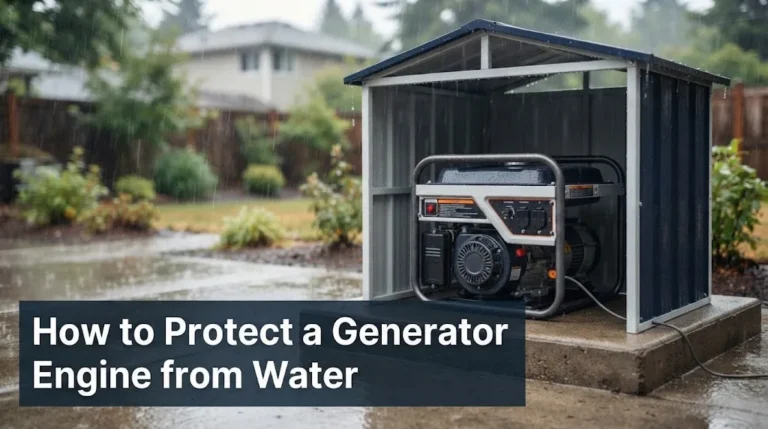
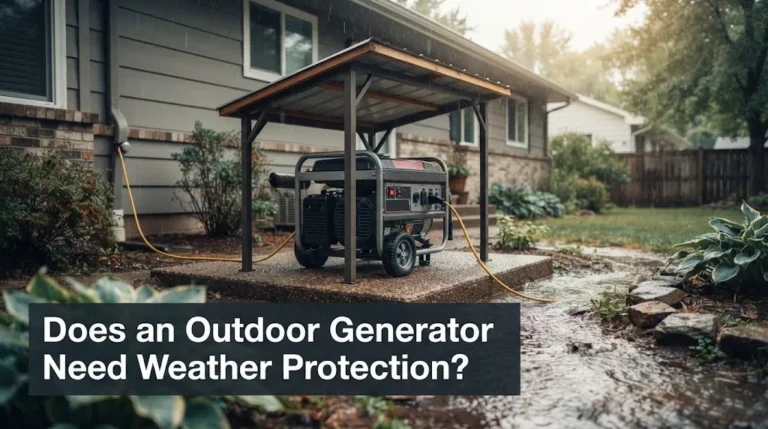
When Should a Generator Be Covered? Safety Guide
Quick Answer
Cover a generator with a suitable storage cover only after it has been switched off, cooled completely, and dried. During operation, use only a compatible running cover or weather shelter permitted by the manufacturer. Never wrap a running generator in an ordinary tarp, and never operate it where rainwater or flooding can reach its electrical components.
When Should You Cover a Generator?
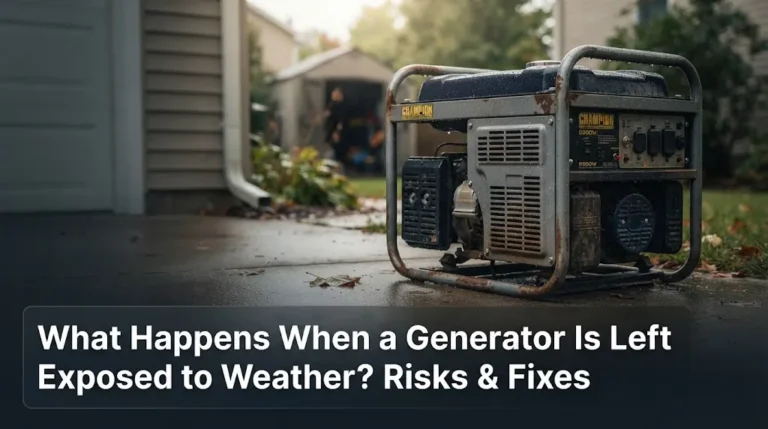
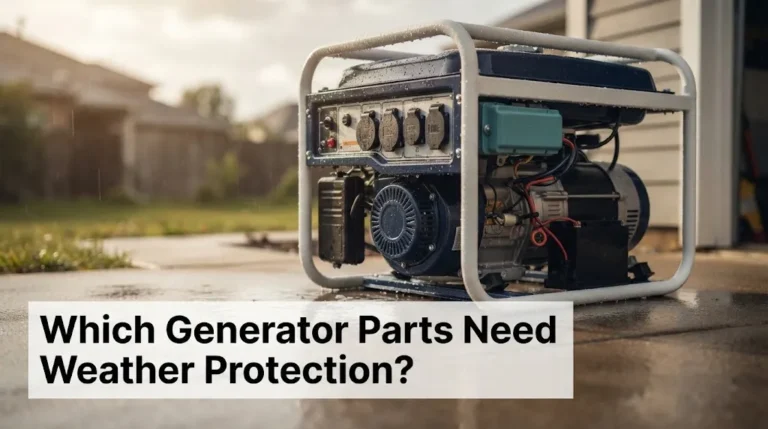
Covering a generator is appropriate when it is shut down and ready for storage, but the rules change when the engine is running or still hot. The right decision depends on the generator’s condition, the weather, and the type of cover.
Use these basic rules:
- During storage: Use a suitable storage cover after the generator has cooled and dried completely.
- During operation: Use a purpose-designed running cover only when the manufacturer permits it and the shelter preserves cooling airflow and exhaust clearance.
- Immediately after shutdown: Leave the generator uncovered until the engine and exhaust have cooled completely.
- During heavy rain or flooding: Do not operate the generator if safe weather protection and dry electrical connections cannot be maintained.
- During snow or high winds: Follow the model-specific weather instructions. Do not assume a cover makes every weather condition safe.
The key distinction is that a storage cover protects an inactive machine, while a running cover must protect against weather without creating new electrical, overheating, fire, or exhaust hazards.
Should You Cover a Generator While It Is Running?
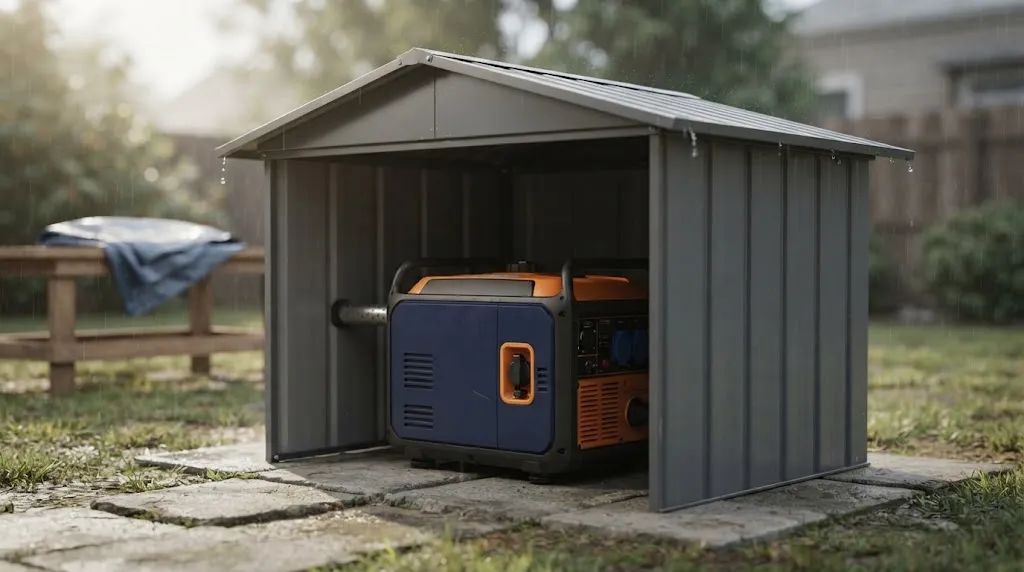
Yes, in some circumstances, but only with weather protection specifically suitable for operation and permitted by the generator manufacturer. A normal fitted storage cover, plastic sheet, blanket, or tarp draped over a running generator is unsafe.
A running generator needs continuous airflow to support combustion and remove heat. It also releases hot exhaust through components that can damage or ignite nearby material.
An ordinary cover can cause several problems:
- Restricted cooling: Fabric may obstruct air intakes or cooling openings, allowing heat to build up.
- Fire or melting: Loose material can contact a hot muffler or exhaust component.
- Electrical hazards: Water can reach outlets, plugs, wiring, or other electrical parts despite the presence of a cover.
- Exhaust problems: Poorly designed shelters can interfere with exhaust dispersal or direct fumes toward people and buildings.
A purpose-built running cover or suitable open-sided canopy may provide weather protection for a compatible model. However, a product advertised as waterproof is not automatically safe for generator operation.
Check the owner’s manual before installing any shelter. If the manufacturer prohibits operation in rain or snow, a generic canopy does not override that restriction.
The guide to covering a generator with a tarp explains why ordinary tarps and purpose-built operating shelters should not be treated as interchangeable.
When Should You Leave a Generator Uncovered?
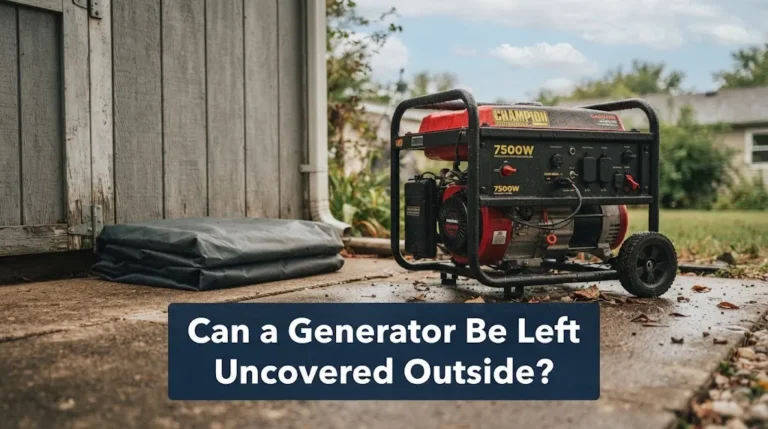
Leave a generator uncovered whenever a cover could trap heat, restrict ventilation, conceal a problem, or expose you to an electrical hazard. That includes several situations that owners sometimes overlook.
While the engine and exhaust are still hot
Do not install a storage cover immediately after shutdown. The engine may have stopped, but the muffler and other components can remain hot enough to melt or ignite covering material.
Wait until the generator has cooled completely. There is no single cooling time that applies to every model, so follow the manufacturer’s instructions rather than relying on a fixed number of minutes.
When the generator or cover is wet
Avoid sealing a damp generator beneath a waterproof storage cover. Trapped moisture can encourage corrosion on the frame, fasteners, and other metal components.
Let the machine dry in a safe, ventilated location before covering it. If water has entered electrical components, do not assume the generator is safe to restart once its exterior looks dry.
When a cover blocks vents or exhaust
Never use a storage cover while the engine is running, even if it appears loose enough to leave gaps. Wind can move fabric over ventilation openings, and the cover may shift toward hot components.
Do not modify a cover or enclosure in a way that compromises the generator’s specified clearances or ventilation.
When flooding or severe weather makes operation unsafe
A canopy cannot make standing water, flooded ground, or dangerously unstable weather safe. Do not touch electrical equipment or connectors while standing in water, and do not attempt to secure a shelter in conditions that put you at risk.
The safest choice may be to shut down the generator according to its manual when this can be done safely, then wait until conditions improve.
Can You Cover a Generator During Rain or Snow?
Sometimes, but the answer depends on the generator model and the type of weather protection. Some manufacturers permit operation under an appropriate shelter, while others instruct owners not to operate in wet conditions.
The U.S. Consumer Product Safety Commission’s generator safety guidance advises users to follow manufacturer instructions for inclement weather. Those instructions may permit a suitable noncombustible generator tent or require users to wait until rain or snow passes.
Use the following decision guide before running a generator in bad weather.
| Situation | Safer decision |
|---|---|
| Light rain and approved running cover | Operation may be possible if the manual allows it and all safety conditions are met. |
| Heavy rain or water reaching electrical connections | Do not operate under those conditions. |
| Snow accumulating around the generator | Follow the manual and prevent snow from obstructing ventilation or exhaust. |
| Strong winds moving the shelter | Do not use an unstable canopy or attempt unsafe adjustments. |
| Manufacturer prohibits wet-weather operation | Wait for suitable conditions; do not override the restriction with an improvised cover. |
A cover is only one part of a safe setup. The generator must remain outdoors in an appropriate location, with adequate ventilation, protected electrical connections, and stable, dry ground.
How Should You Cover a Generator for Storage?
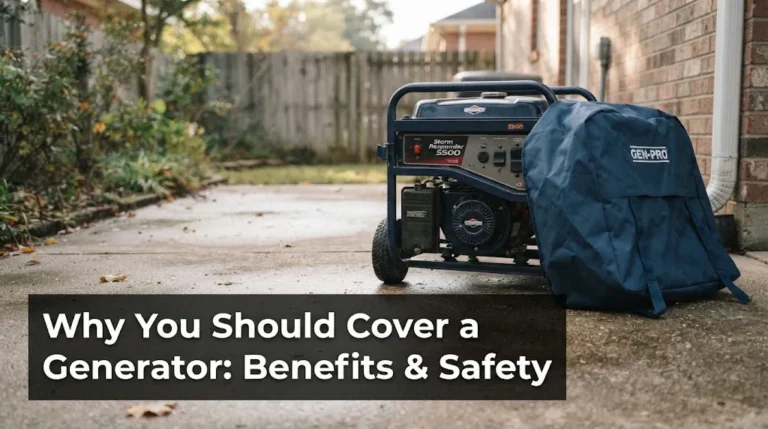
Cover a generator for storage only after it has been switched off, cooled completely, and dried. A well-fitted storage cover helps protect against dust, dirt, leaves, and direct weather exposure, but it cannot compensate for poor storage conditions.
Follow these steps:
- Shut it down correctly. Disconnect electrical loads and switch off the generator according to the owner’s manual.
- Allow complete cooling. Keep the cover away until the engine, muffler, and other hot components have cooled.
- Inspect for moisture. Dry the exterior and allow trapped moisture to dissipate. Never cover a machine that is visibly wet.
- Check for damage or leaks. Look for damaged cables, loose components, corrosion, and fuel or oil leaks. A cover should not conceal an existing fault.
- Choose the right storage cover. Use a cover compatible with the generator’s shape and storage requirements. Follow the manufacturer’s recommendations.
- Secure the cover without trapping moisture. Prevent it from blowing away or rubbing excessively against controls, while avoiding a tight wrap that prevents drying.
- Remove the cover before starting. Make this part of every pre-start inspection.
For extended storage, follow the manual’s guidance on fuel, batteries, and maintenance. A cover protects the exterior; it does not prevent stale fuel, battery discharge, or every form of corrosion.
Where Should a Covered Running Generator Be Placed?
A running cover does not make an unsafe location acceptable. Fuel-burning portable generators must remain outdoors, away from occupied buildings, with exhaust directed away from doors, windows, vents, and other openings.
The CPSC recommends placing portable generators at least 20 feet from the home. Check the manufacturer’s instructions and relevant local requirements as well, and consider neighboring buildings and the direction exhaust may travel.
Carbon monoxide is colorless and odorless. A shelter must never trap exhaust or encourage you to move the generator into a garage, shed, basement, enclosed tent, or covered porch.
The American Red Cross generator safety guidance also explains the importance of keeping the equipment dry while maintaining an open, canopy-like shelter when appropriate.
Before starting, check that:
- The generator sits on firm, level ground away from puddles and drainage paths.
- The shelter is stable and does not obstruct air intake, cooling airflow, or exhaust.
- Rainwater cannot run onto outlets, plugs, or cord connections.
- Outdoor-rated extension cords are undamaged and suitable for the connected electrical load.
- Working carbon monoxide alarms are installed inside the home, following their instructions.
If you cannot meet these conditions, do not improvise an enclosure simply to keep the generator running.
What Should You Do if Rain Starts While the Generator Is Running?
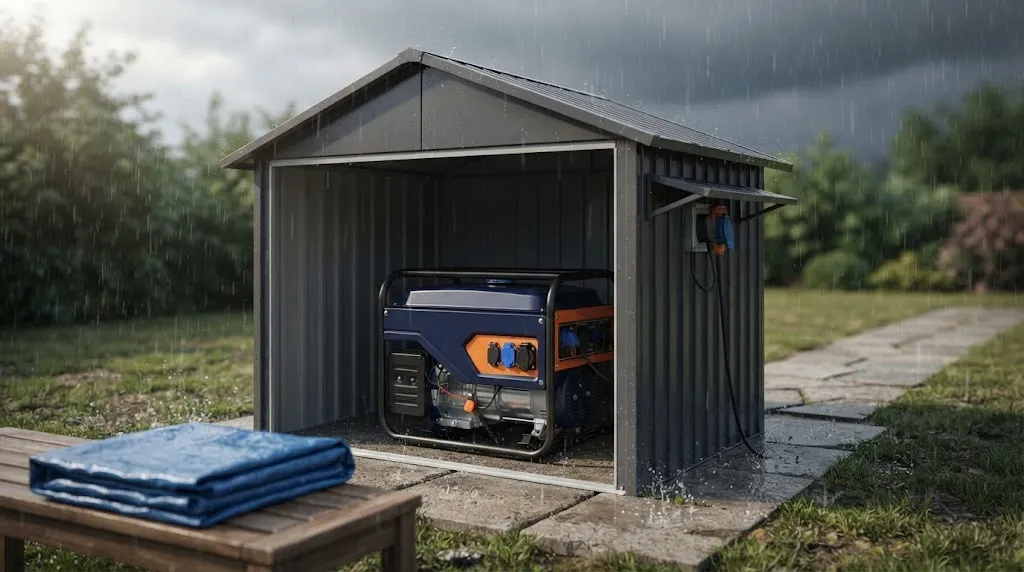
Do not rush outside and throw a tarp over a hot generator. Instead, assess whether the existing setup remains safe and follow the manufacturer’s shutdown instructions if weather protection is inadequate.
If the generator is exposed to rain, water is reaching electrical connections, or the shelter has become unstable, stop using it when you can do so safely. Do not touch wet electrical components, stand in water to reach controls, or attempt repairs while the equipment is energized.
If flooding occurs, keep away from the generator. Do not restart equipment that may have been submerged or had water enter its electrical components until it has been appropriately inspected.
After conditions improve, check the equipment and its connections for water intrusion or damage before reuse. If you are unsure whether electrical components have been affected, arrange a qualified inspection rather than testing the generator by switching it on.
Related Product
Related Product
Portable Generator Running Cover
A compatible running cover may help protect a generator during permitted outdoor operation. Verify model compatibility, ventilation, and the manufacturer’s wet-weather instructions before choosing one.
As an Amazon Associate, we earn from qualifying purchases.
Frequently Asked Questions
Can I leave a generator covered outside all year?
Yes, if it is switched off, completely cool, and protected with a suitable storage cover. Inspect the area beneath the cover periodically for trapped moisture, corrosion, and damage, and follow the manufacturer’s storage instructions.
Should I cover a generator immediately after using it?
No. Wait until the engine and exhaust have cooled completely. Covering a hot generator can melt or ignite the material and may trap unwanted heat.
Can I use a waterproof tarp over a running generator?
Do not drape an ordinary tarp directly over a running generator. It can restrict airflow, contact hot components, and interfere with safe exhaust dispersal. Use only weather protection permitted by the manufacturer.
Can an inverter generator run in the rain?
Not automatically. An inverter generator’s enclosed design does not guarantee that its outlets, controls, or ventilation openings are rainproof. Follow the exact model’s operating instructions for wet weather.
Should I cover a generator when snow is falling?
Only use a suitable operating shelter if the manufacturer permits it. Prevent snow from obstructing cooling airflow or exhaust, and do not operate the generator if conditions make the equipment or electrical connections unsafe.
What should I do if water gets inside my generator?
Stop using it if you can do so safely, and do not touch wet electrical components. Do not restart the machine until the affected equipment has been checked and cleared for use according to the manufacturer’s instructions.
Conclusion
Cover a generator according to its condition and intended use. A suitable storage cover belongs on a cool, dry, switched-off generator, while a running cover is appropriate only when it is compatible with the machine and permitted by the manufacturer.
Never use an ordinary tarp as a wrap around a running generator, and never sacrifice ventilation or electrical safety to keep equipment dry. During rain, snow, or flooding, follow the owner’s manual and stop operating the generator if safe conditions cannot be maintained. Keeping the machine outdoors, away from building openings, and protected from water without restricting exhaust is more important than keeping it running through every storm.

Hi, I’m Michael Turner. I own a generator workshop in the United States and founded HomeGeneratorBlog to share practical, hands-on guidance about generator installation, maintenance, troubleshooting, safety, and backup power solutions. My goal is to help homeowners make smarter, more confident decisions through clear and reliable information