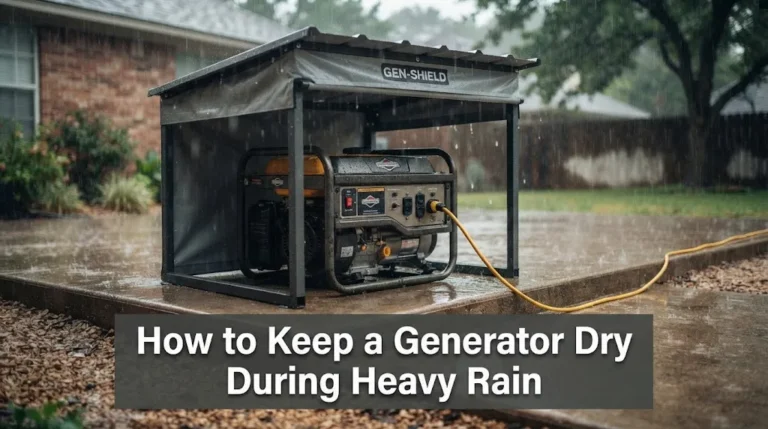
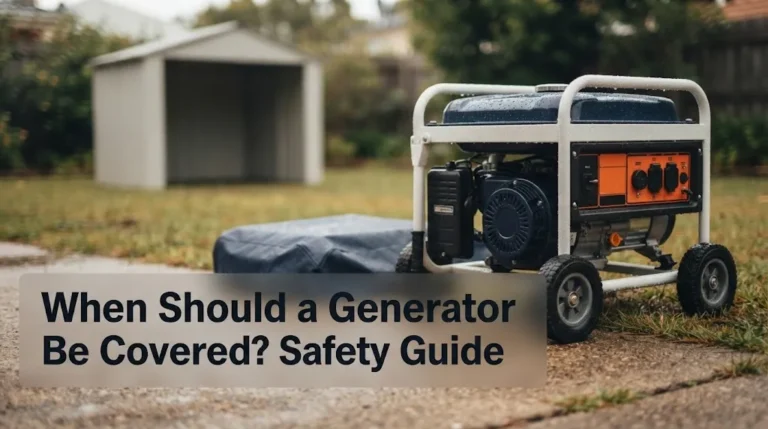
Why You Should Cover a Generator: Benefits & Safety
Quick Answer
You should cover a generator when it is switched off and completely cool to protect it from dust, moisture, sunlight, and debris. A suitable cover can help preserve the machine between uses. If the generator must operate outdoors during bad weather, use only a compatible running shelter permitted by the manufacturer. Never wrap a running generator in an ordinary storage cover or tarp.
Generators often sit unused for weeks or months before a power outage makes them essential. Leaving one exposed to rain, dust, falling leaves, and direct sunlight can gradually affect its condition and create extra maintenance work.
However, covering a generator is not simply a matter of putting waterproof fabric over it. The correct approach depends on whether the machine is running, cooling down, or being stored. Understanding that difference helps protect the equipment without introducing unnecessary fire, electrical, or exhaust hazards.
1. A Cover Helps Protect Against Weather Damage
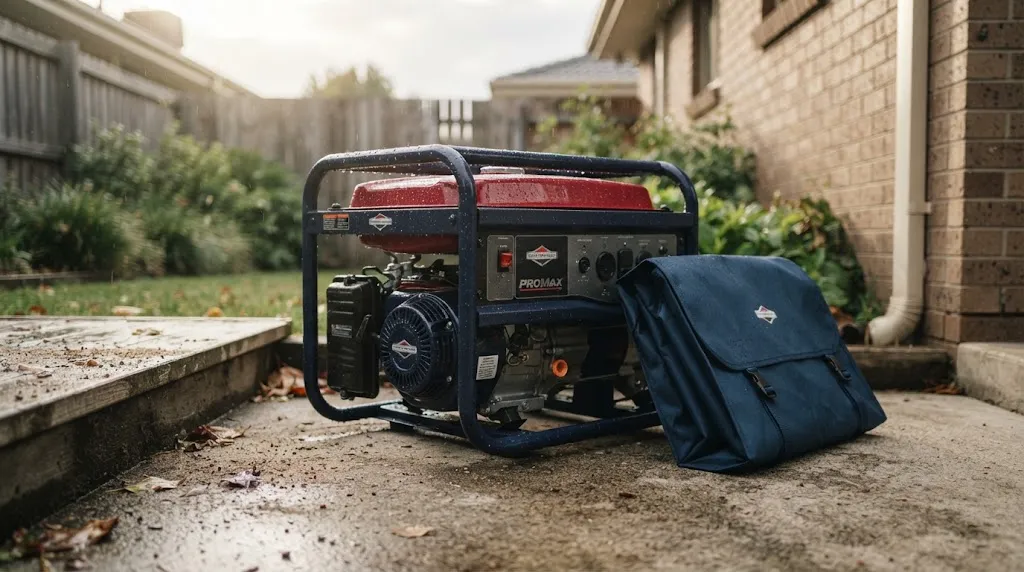
One of the main reasons to cover a generator is to reduce its exposure to environmental conditions that can damage components over time. This is especially useful when the generator must remain outdoors between outages.
Rain and moisture
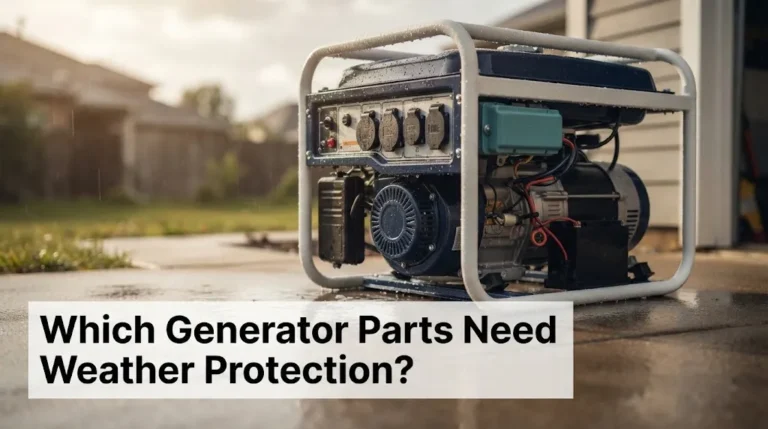
Water can reach electrical outlets, control panels, wiring, and other sensitive areas. Wet conditions can increase the risk of electric shock and damage electrical components, particularly if connections are exposed or insulation is deteriorating.
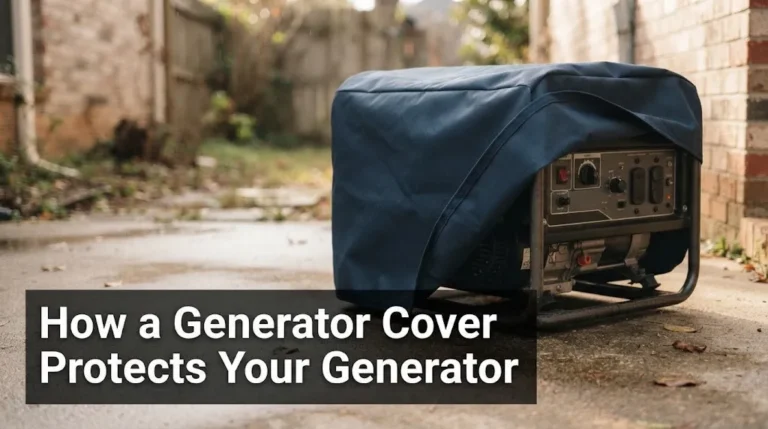
A properly fitted storage cover helps shield a switched-off generator from rain and moisture. Nevertheless, a cover is not a guarantee against water intrusion, and it cannot make a flooded generator safe to operate.
For guidance on wet-weather operation, follow the U.S. Consumer Product Safety Commission’s generator safety guidance. If the manual prohibits operation in wet conditions, do not assume an aftermarket cover overrides that restriction.
Sunlight, dust, and debris
Extended sunlight can age some exterior materials, while dust, leaves, grass, and other debris can accumulate around air openings, controls, and engine components. A suitable storage cover reduces this exposure and makes the generator easier to keep clean.
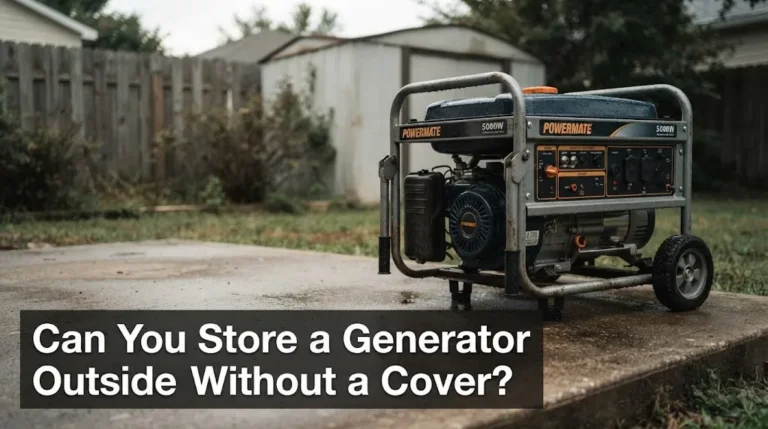
These benefits are particularly relevant to generators stored in open yards, outdoor utility areas, or other locations where there is no permanent roof. A cover works best alongside a dry, stable storage location rather than as a substitute for one.
2. Covering a Generator Can Help Reduce Corrosion
Moisture and dirt can contribute to corrosion on exposed metal frames, fasteners, and other components. Keeping a generator reasonably dry between uses helps reduce unnecessary exposure, particularly in humid environments or locations that receive frequent rainfall.
Corrosion is not only a cosmetic concern. If it affects electrical connections, mounting hardware, or other functional parts, inspection and repair may become necessary.
A cover will not prevent every form of corrosion. Condensation can collect underneath poorly ventilated or tightly fitted material, especially when a damp generator is covered before it has dried.
- Let the generator cool completely after use.
- Allow rainwater and surface moisture to dry before installing the storage cover.
- Choose a cover that fits without creating unnecessary pockets where water can collect.
- Inspect the machine periodically for rust, damaged wiring, leaks, and trapped moisture.
The practical goal is to reduce exposure while keeping the generator dry, rather than sealing moisture inside the cover.
3. A Cover Keeps Dust and Debris Away Between Outages
Generators that remain unused for long periods can accumulate dirt, cobwebs, leaves, and other debris. Depending on where the machine is stored, small animals may also enter accessible areas or damage wiring.
A properly fitted cover adds a barrier against ordinary environmental debris. That can make pre-use inspections and routine cleaning easier when the next outage occurs.
However, a cover does not replace maintenance. Before starting a generator, inspect its air openings, wiring, fuel system, and surrounding area. Remove any cover completely if it is a storage-only model, and follow the manufacturer’s pre-start checklist.
If you need to clean accumulated dirt safely, the guide to cleaning a portable generator explains why electrical receptacles, control switches, and ventilation openings require particular care.
4. Covering a Generator Makes Long-Term Storage Easier
A generator used only during emergencies may spend more time stored than operating. Covering it correctly helps maintain a cleaner exterior and reduces exposure to weather while the machine sits idle.
Before installing a storage cover, complete these basic steps:
- Shut the generator down. Follow the normal shutdown procedure in the owner’s manual.
- Allow it to cool. The engine and exhaust components can remain hot after shutdown. Do not cover them while they are hot.
- Check for moisture and leaks. Let wet surfaces dry, and address fuel or oil leaks rather than concealing them.
- Prepare the generator for storage. Follow the manufacturer’s instructions for fuel, oil, and battery care, where applicable.
- Install the correct cover. Secure it against wind without wrapping the machine so tightly that moisture becomes trapped.
Gasoline-powered generators need particular attention to fuel condition during extended storage. A cover cannot prevent stale fuel, battery discharge, or other mechanical problems. See the guide to portable generator storage for the additional steps involved.
5. Should You Cover a Generator While It Is Running?
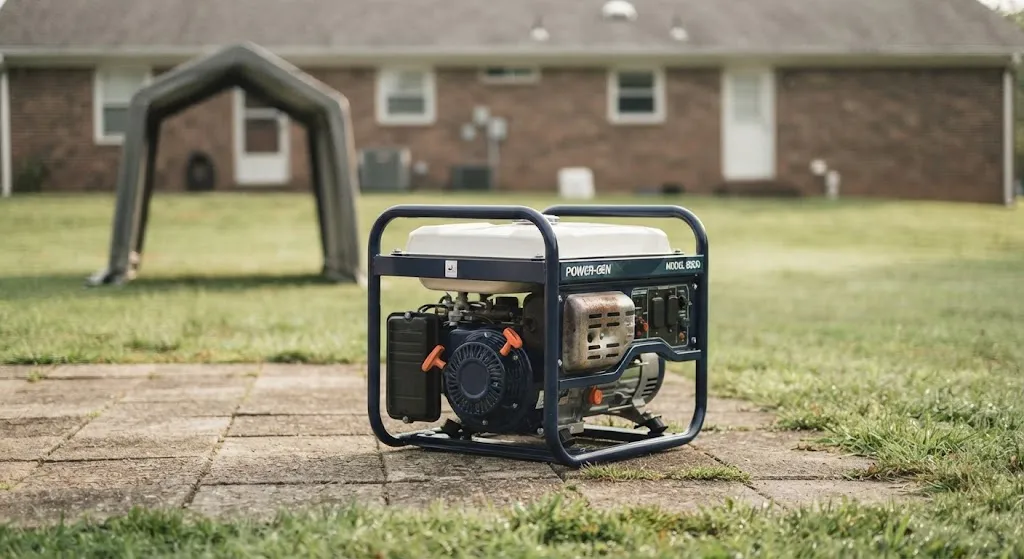
Only use a running cover when it is specifically designed for operation with your generator and the generator manufacturer permits it. A normal fitted storage cover is intended for a shut-down, cool machine, not for use while the engine is operating.
A running generator produces heat and exhaust and needs adequate cooling air. Ordinary tarps, plastic sheets, blankets, and storage covers can restrict airflow, contact hot components, or interfere with exhaust dispersal.
Fuel-burning generators also produce carbon monoxide (CO), a poisonous gas that has no color or smell. Covering a generator must never mean enclosing it in a garage, shed, basement, or other occupied or enclosed space.
The Centers for Disease Control and Prevention’s generator safety guidance advises operating generators outdoors at least 20 feet from doors, windows, and vents. Direct the exhaust away from buildings, and keep working carbon monoxide alarms inside the home.
Warning
Never move a running generator indoors or into an enclosed shelter to keep it dry. If the weather makes safe operation impossible, shut the generator down according to its manual and wait until conditions are safe.
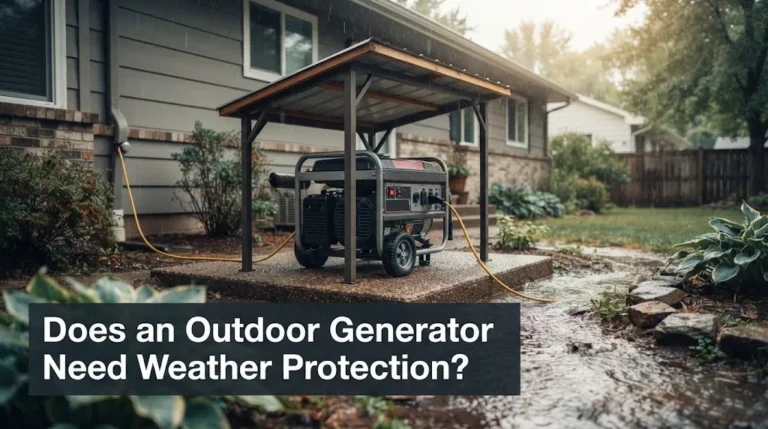
Some purpose-built outdoor running shelters protect designated parts of a generator while preserving the airflow and clearances needed for operation. Their suitability depends on the exact generator, the shelter’s instructions, local requirements, and weather conditions. A waterproof label alone does not establish that a cover is safe to use while running.
6. How Do You Choose the Right Generator Cover?
Choose a cover based on the generator’s intended use, dimensions, storage location, and manufacturer instructions. The most important distinction is whether you need protection while the generator is off or shelter during permitted outdoor operation.
| Cover type | Best use | Main limitation |
|---|---|---|
| Fitted storage cover | Protecting a cool, switched-off generator | Must be removed before starting |
| Purpose-built running shelter | Permitted outdoor operation in suitable weather | Must meet model-specific safety requirements |
| Ordinary tarp or plastic sheet | Limited temporary protection for a cool, inactive machine, when appropriate | Can trap moisture and must never be draped over a running generator |
Use this comparison as a starting point, then check your owner’s manual before choosing a cover. For storage, measure the generator’s length, width, and height, including permanent handles, wheels, and frame projections. Do not rely on wattage alone to determine fit.
For a running shelter, verify compatibility and operating clearances rather than assuming that a larger cover is automatically safer. If the manufacturer’s instructions prohibit the setup, do not use it.
7. Common Generator Covering Mistakes to Avoid
A cover can help protect equipment, but using the wrong one or installing it at the wrong time can create new problems.
- Covering a hot generator: Let the engine and exhaust cool completely before fitting storage protection.
- Covering a wet generator: Allow moisture to dry rather than trapping it against the frame and electrical components.
- Leaving a storage cover on during operation: Remove it completely before starting the machine.
- Assuming waterproof means safe: Water resistance does not prove that a cover permits sufficient cooling airflow or safe exhaust dispersal.
- Ignoring the storage location: A cover cannot protect a generator from flooding or make an unstable, waterlogged surface suitable.
- Skipping inspections: Check for corrosion, animal damage, leaks, and blocked air openings before use.
Remember that a generator cover is only one part of a safe maintenance routine. It cannot compensate for damaged electrical components, poor placement, incorrect fuel storage, or neglected servicing.
Frequently Asked Questions
Does covering a generator make it last longer?
A suitable storage cover can reduce exposure to moisture, dust, sunlight, and debris, which may help preserve the generator’s exterior and accessible components. Its lifespan still depends on maintenance, storage conditions, fuel care, and how the machine is operated.
Can I leave my generator outside with a cover on?
Yes, if the generator is switched off, completely cool, and stored according to the manufacturer’s instructions. Use a suitable weather-resistant cover, secure it properly, and inspect underneath it periodically for moisture or corrosion.
Can a waterproof cover prevent generator rust?
It can reduce direct exposure to rain, but it cannot guarantee rust prevention. Condensation or trapped moisture beneath a poorly fitted cover can contribute to corrosion, so the generator should be dry before covering.
Should a generator cover have ventilation holes?
A storage cover and a running shelter have different requirements. A storage cover should be used only when the generator is off and cool. A running shelter must provide the airflow and clearances required by the generator manufacturer; ventilation holes alone do not prove that it is safe.
Can I use a tarp instead of a generator cover?
A tarp may offer temporary protection for a cool, switched-off generator if it is secured appropriately and does not trap moisture. Never drape an ordinary tarp over a running generator. Use only a suitable, permitted running shelter for operation in wet weather.
Should I cover a generator immediately after shutting it off?
No. Wait until the engine and exhaust have cooled completely, then make sure the generator is dry before fitting its storage cover. Follow the owner’s manual for shutdown and storage procedures.
Conclusion
Covering a generator is a practical way to reduce exposure to rain, dust, sunlight, and debris while the machine is stored. The benefits depend on using the right cover, allowing moisture to dry, and keeping up with routine inspections and maintenance.
The most important distinction is between storage protection and a shelter designed for a running generator. Never cover a hot machine, operate it under an ordinary tarp, or move it into an enclosed space to escape bad weather. Follow the owner’s manual and keep carbon monoxide and electrical safety at the center of every setup decision.

Hi, I’m Michael Turner. I own a generator workshop in the United States and founded HomeGeneratorBlog to share practical, hands-on guidance about generator installation, maintenance, troubleshooting, safety, and backup power solutions. My goal is to help homeowners make smarter, more confident decisions through clear and reliable information