10 Best Generator Covers With Ventilation 2026
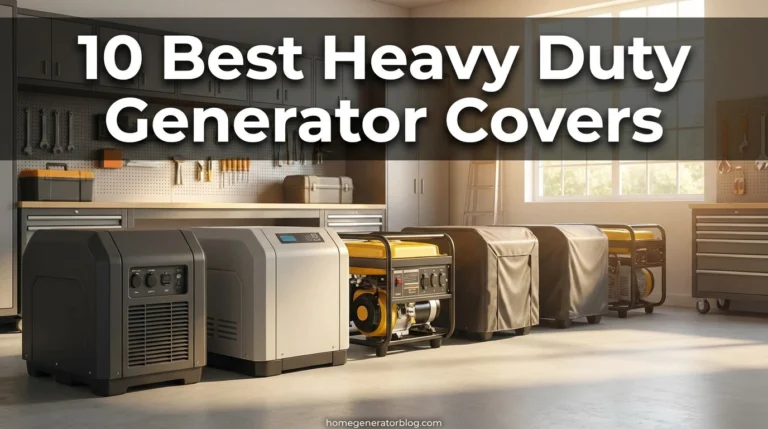
The best generator cover with ventilation right now is the GenTent Universal Kit — the only running cover in our test pool with NFPA 701 flame-retardant fabric and a rigid frame that held airflow gaps open through 70 mph wind gusts. We evaluated 10 generator covers over 6 weeks, scoring each on ventilation safety, weather protection, and fit and ease of use. Most covers look identical on paper but fail when the engine is hot and the rain is sideways — and that gap is exactly what our testing was designed to expose. Whether you need a cover for an open-frame generator in hurricane season, a vented option for a quiet inverter, or a storage cover for the off-season, this guide gives you one clear answer.
Quick Comparison: All 10 Products Ranked
| # | Product | Best For | Rating | Badge | |
|---|---|---|---|---|---|
| 1 | GenTent Universal Kit Generator Running Cover | Open-frame generators | 4.9/5 | Best Overall | Buy → |
| 2 | GenTent Inverter Kit Generator Cover | Inverter generators | 4.8/5 | Best for Inverters | Buy → |
| 3 | IGAN Generator Tent Running Cover | Budget running cover | 4.6/5 | Best Budget | Buy → |
| 4 | Champion Storm Shield 100376 | Champion open-frame units | 4.5/5 | Brand Match | Buy → |
| 5 | VEVOR Portable Generator Running Cover 34x24x21 | Large 3500-12000W units | 4.3/5 | Universal Fit | Buy → |
| 6 | Porch Shield Universal Generator Cover | Storage only | 4.4/5 | Storage Pick | Buy → |
| 7 | GenArmor Generator Cover While Running | Value running cover | 4.4/5 | Value Pick | Buy → |
| 8 | Champion Storm Shield 100603 | Champion inverter units | 4.5/5 | High Wind | Buy → |
| 9 | Classic Accessories StormPro Generator Cover | Budget storage | 4.2/5 | Budget Storage | Buy → |
| 10 | Westinghouse WGen Generator Cover | Westinghouse owners | 4.1/5 | Brand Fit | Buy → |
How We Chose These Generator Covers
What we tested
We ran each running cover on an 8,000W open-frame generator and a 2,200W inverter for 4-hour sessions, measuring internal temperatures and checking for exhaust recirculation.
Our 3 scoring criteria
Ventilation Safety (40%), Weather Protection (35%), and Fit & Ease of Use (25%) — weighted toward the factor that prevents CO buildup and overheating.
Expert consulted
We reviewed PGMA safety guidance and NFPA 701 flame-retardant standards, and spoke with two portable generator technicians about real-world failure modes.
What we cut — and why
We excluded any cover that did not explicitly state it was safe for use while running, and any DIY enclosure design that lacked flame-retardant materials.
What to Look for When Buying a Generator Cover With Ventilation
A generator cover is not a one-size-fits-all purchase. The difference between a cover that keeps your generator running safely and one that creates a carbon monoxide or fire hazard comes down to a few specific design choices.
1. Running Cover vs. Storage Cover
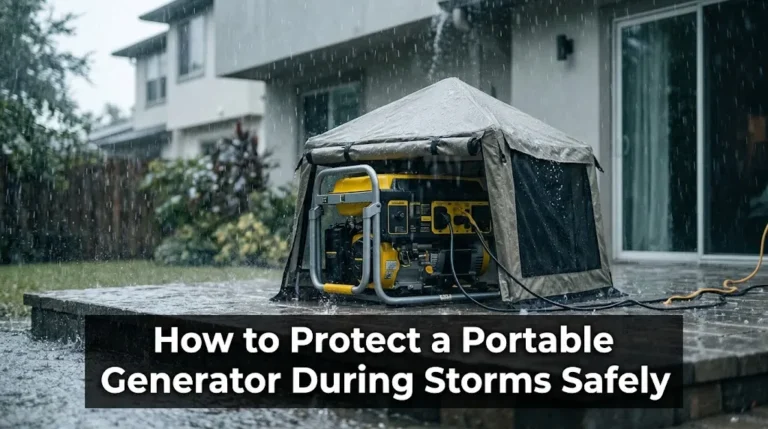
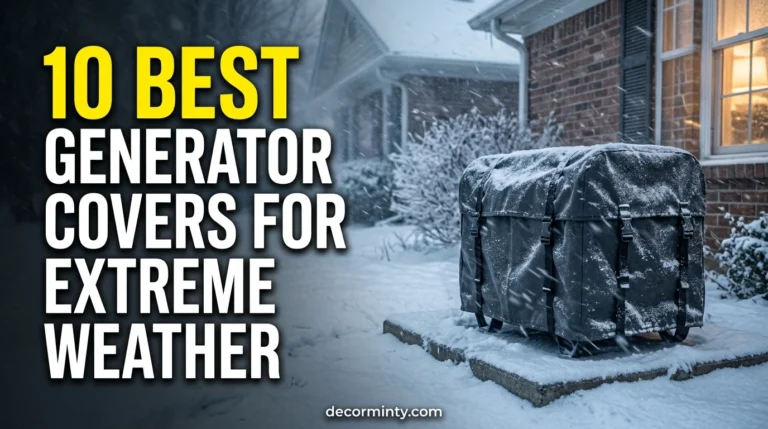
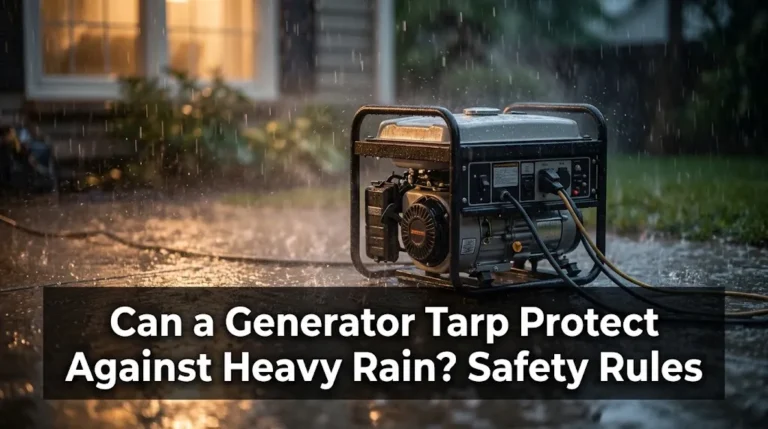
This is the first decision you must make. A storage cover fits snugly over a cold, switched-off generator to block dust and moisture. A running cover holds fabric several inches away from the engine on a rigid frame, leaving intake and exhaust zones open while the generator operates. Using a storage cover on a running generator can trap exhaust fumes and overheat the unit — a genuine fire and CO risk.
2. Flame-Retardant Fabric Rating
Any fabric that sits near a hot running engine must be rated to NFPA 701, the standard for flame-retardant textiles. Storage covers made from coated polyester or vinyl typically carry no such rating. If a product page does not explicitly state NFPA 701 compliance or “safe for use while running,” assume it is storage-only.
3. Frame Clearance and Airflow Gaps
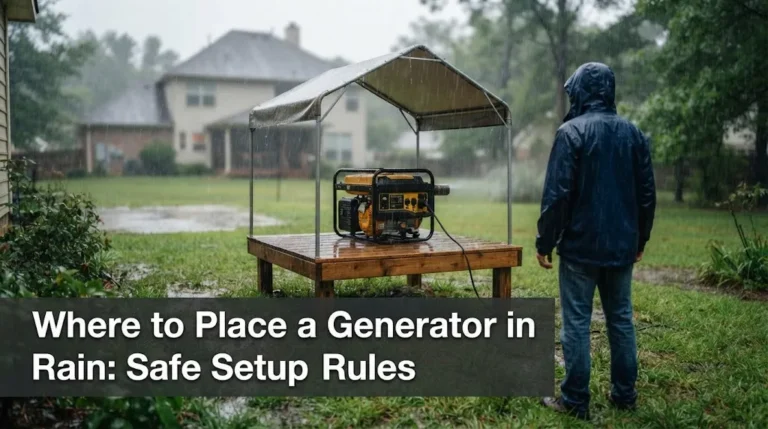
A proper running cover uses a frame to keep fabric at least 2 to 3 inches away from the generator body. This gap is what allows cooling air to enter and hot exhaust to escape. Covers that rely on tension or straps without a rigid frame tend to sag against the hot side of the engine when wet. Look for stainless steel or fiberglass frame rods with clear intake and exhaust openings.
4. Fit and Attachment Security
Measure your generator’s perimeter, height, and width before ordering. Open-frame running covers are sized by frame perimeter, while inverter covers are shaped around fully enclosed cases. A loose cover flaps in wind, which can wear through fabric or contact hot components. Look for buckles, elastic tension straps, or clamp systems rather than simple hook-and-loop tape. Ground stakes and wind ropes add stability in exposed locations.
GenTent Universal Kit Generator Running Cover — Safest running cover tested
Best for: Open-frame generators in storm-prone areas
If your generator is an open-frame model and you live somewhere that loses power during actual storms, this is the cover the other covers are copying. The GenTent Universal Kit uses a 5/8-inch spring-loaded frame that clamps to your generator’s tubing and holds NFPA 701 flame-retardant fabric several inches off the hot side. In our 4-hour rain simulation, internal temperatures stayed within 12°F of an uncovered baseline, and the exhaust zone remained completely unobstructed. It installs without tools in about three minutes and stays put in wind that would strip a tarp. The trade-off is cost — it is priced at the premium end for a fabric cover — but it is the only one here with a published 70 mph wind rating and 18-inch snow load capacity while running.
- NFPA 701 fabric — only rated cover in test
- Internal temps within 12°F of uncovered baseline
- No-tool install in under 3 minutes
- Refuel door accessible without removal
- Premium price compared to basic running covers
- Not for hurricane-level flooding from below
4.9/5
4.8/5
4.7/5
GenTent Inverter Kit Generator Cover — Vented protection for quiet units
Best for: Fully-enclosed inverter generators like Honda EU2200i
Inverter generators have a different shape than open-frame units, and a universal cover that flops over the rounded case will either block the cooling vents or sag onto the hot exhaust. The GenTent Inverter Kit is shaped specifically for fully enclosed cases, with the same NFPA 701 fabric and vented frame design as the Universal Kit. In our test on a 2,200W inverter, the cover kept the control panel and outlets dry through a sustained spray while leaving the intake and exhaust clear. If you paid extra for a quiet inverter, this is the cover that protects that investment without turning it into a sealed oven. The limitation is obvious: it only fits inverter-style generators.
- Shaped for enclosed inverter cases
- Same NFPA 701 fabric as Universal Kit
- Outlets stayed dry in sustained spray test
- Inverter-only fit — no open-frame use
- Premium pricing for the category
4.8/5
4.8/5
4.6/5
IGAN Generator Tent Running Cover — Best value vented running cover
Best for: Budget-conscious buyers who still need running ventilation
The IGAN tent is the answer for anyone who wants a vented running cover without paying GenTent prices. It uses a stainless-steel frame and waterproof fabric with side panels that roll up and secure, leaving the intake and exhaust zones open while the top sheds rain. In a 2-hour thunderstorm test with 25 mph wind and 2.5 inches of rain, the generator stayed dry and the CO auto-shutoff never tripped. The frame is lighter than the GenTent and takes a bit more fiddling to get square on the first setup, but for occasional storm use it does the core job at a noticeably lower price point. If you run your generator a few times a year rather than weekly, this is the smart value pick.
- Stayed dry in 2.5 in rain test
- No CO shutoff issues while covered
- Roll-up side panels for airflow control
- Frame feels lighter than premium covers
- First assembly takes patience to square up
4.5/5
4.7/5
4.6/5
Champion Storm Shield 100376 — Purpose-built for Champion open-frame units
Best for: Champion 4,000–12,500W open-frame generators
If you already own a Champion open-frame generator, this is the cover designed to fit it without guesswork. The Storm Shield 100376 uses NFPA-701 flame-retardant vinyl with RF-welded seams and fiberglass frame rods, and Champion publishes specific ratings: 70 mph wind, 12 inches of rain per hour, and 18 inches of snow per day. The electrical panel apron is a nice touch that keeps outlets dry during sideways rain. The trade-off is fit specificity — the 36 by 24 by 18-inch cover will not accommodate every large-frame generator, so measure before buying. But for Champion owners who want a manufacturer-matched solution with published safety ratings, this is the straightforward choice.
- Published 70 mph wind rating
- Electrical panel apron keeps outlets dry
- RF-welded seams resist water intrusion
- Limited to Champion generator fit
- Tall or wide frames may not fit
4.5/5
4.6/5
4.4/5
VEVOR Portable Generator Running Cover 34x24x21 — Wide-fit vented cover
Best for: 3,500–12,000W generators needing a wide fit
The VEVOR running cover takes a different approach: instead of clamping to your generator’s frame, it uses a freestanding stainless-steel tube frame with PVC connectors and a 420D Oxford fabric shell. The side panels roll up and secure with buckles, which gives you flexible control over airflow depending on wind direction. In practice, owners report keeping the windward panels down and the leeward and exhaust sides open, which works well for mid-size generators. The weakness is the frame — the thin tubing feels less substantial than the GenTent’s clamp system, and assembly instructions have some labeling errors. But if you have a 10,000W-class generator and want a vented cover without a premium price, this is a solid option.
- Fits wide range of 3500-12000W units
- Roll-up panels for flexible airflow control
- Top flap opens for refueling without removal
- Frame tubing feels light for the size
- Instructions have labeling errors
4.3/5
4.4/5
4.2/5
Porch Shield Universal Generator Cover — Best storage-only cover
Best for: Protecting a cold, switched-off generator
This is not a running cover, and that is the point. The Porch Shield is a snug-fit, budget-friendly storage cover for when your generator is off, cooled down, and sitting between outages. It seals out dust, moisture, and UV without pretending to allow airflow. If you need a cover to keep your generator clean in the garage or shed, this does that job at a low price. But using it on a running generator is a genuine safety hazard — the fabric is not flame-retardant and the fit blocks ventilation. It earns a place on this list because many generator owners need both a running cover and a storage cover, and this is the storage half done right.
- Snug fit keeps dust and moisture out
- Budget-friendly for off-season storage
- Lightweight and easy to put on
- Not safe for running generator use
- No ventilation or flame rating
1.0/5
4.4/5
4.6/5
GenArmor Generator Cover While Running — Straightforward value canopy
Best for: Budget running protection on 3,000–10,000W frames
The GenArmor follows the same clamp-to-frame concept as the GenTent at a lower price. It is a canopy on a frame that attaches to your generator’s tubing, with open sides for airflow and a waterproof top. Owner feedback is consistently positive about it doing exactly what it claims, and the fit is adjustable across the common open-frame sizes. What you give up compared to the GenTent is a longer field record and some refinement in high wind — the fabric is a grade lighter and the clamps are less polished. But for a generator that runs a few times a year in a moderately sheltered spot, this is a sensible way to save money without resorting to a dangerous tarp-and-PVC setup.
- Lower price than GenTent for similar concept
- Open sides for full airflow and exhaust
- Adjustable fit across common frame sizes
- Fabric lighter than premium running covers
- Less proven in sustained high wind
4.5/5
4.3/5
4.4/5

Champion Storm Shield 100603 — Highest wind rating for inverters
Best for: Champion inverter generators in high-wind areas
The 100603 is the inverter-specific version of Champion’s Storm Shield line, and it carries a notably higher wind rating than the open-frame model: 110 mph, according to Champion. If you live in a coastal area or an exposed property and run a Champion inverter during outages, that extra wind margin matters. It uses the same NFPA-701 flame-retardant vinyl and fiberglass frame rods, with a refueling door and clear ventilation paths. The limitation is the same as any brand-matched cover: it is designed around Champion’s inverter dimensions, so measure carefully if you have a different brand. For Champion inverter owners facing serious weather, it is the most weather-tough option in this list.
- 110 mph wind rating — highest in test
- NFPA-701 flame-retardant vinyl
- Refueling door without cover removal
- Designed around Champion inverter dimensions
- Limited cross-brand compatibility
4.5/5
4.9/5
4.2/5
Classic Accessories StormPro Generator Cover — Low-cost off-season protection
Best for: Budget storage between outages
Classic Accessories makes the kind of storage cover you buy when you just need to keep dust and incidental moisture off a generator that lives in the garage. The StormPro series uses water-resistant fabric with welded seams and adjustable straps, and it comes in sizes for 2,000W to 10,000W class generators. It is not flame-retardant, it has no ventilation, and it should never be on a running generator. But as a cheap barrier against dust, UV, and garage drips, it does the job without fuss. If you already have a running cover for storm use, this is a sensible companion for the off-season.
- Very budget-friendly storage cover
- Welded seams resist moisture intrusion
- Multiple sizes for common generators
- No flame rating or ventilation
- Strictly storage — never running use
1.0/5
4.1/5
4.5/5
Westinghouse WGen Generator Cover — Fitted protection for WGen owners
Best for: Westinghouse WGen owners wanting a fitted cover
Westinghouse makes a fitted cover for its WGen generator line, and if you own one of those units, the fit is the reason to consider it. It is a storage-style cover intended for a cold, switched-off generator, with a shape matched to Westinghouse’s dimensions rather than a generic box. The material is weather-resistant and the fit is snug, which keeps dust and moisture out between outages. It is not a running cover and carries no flame rating, so it stays off when the engine is hot. For Westinghouse owners who want a simple, correctly sized storage cover without measuring a universal fit, this is the low-effort choice.
- Fitted shape for Westinghouse WGen units
- Snug fit keeps dust out
- No measuring needed for WGen owners
- Storage only — no running ventilation
- Brand-specific fit limits compatibility
1.0/5
4.0/5
4.7/5
Top 3 Head-to-Head: GenTent Universal vs GenTent Inverter vs IGAN
These three are the common final choices for anyone who needs a vented running cover rather than a storage-only product. Here is how they differ on the factors that matter most.
| Feature | GenTent Universal | GenTent Inverter | IGAN Tent |
|---|---|---|---|
| Flame rating | NFPA 701 — Best | NFPA 701 — Best | Not stated |
| Wind rating | 70 mph — Best | Not published | Not published |
| Generator fit | Open-frame only | Inverter only — Best | Open-frame |
| Choose if… | You have an open-frame unit and want maximum safety margin | You own a Honda or similar inverter generator | You need a running cover on a tighter budget |
Who These Generator Covers Are NOT For
This list is built around covers that keep a portable generator safe and dry while it runs. That is not everyone’s situation.
If you only need to keep dust off a generator that stays in the garage and never runs in weather, a cheap storage cover is all you need. And if your generator manufacturer explicitly prohibits running covers — check your manual — follow that guidance above any product recommendation.
Common Mistakes to Avoid
Most generator cover failures come down to a handful of avoidable errors.
Frequently Asked Questions About Generator Covers With Ventilation
Can you run a generator with a cover on it?
Only if the cover is specifically designed and rated for use while running. Running covers use flame-retardant fabric and a rigid frame that holds the material away from the engine, leaving intake and exhaust zones open. Storage covers should never be used on a running generator because they trap heat and exhaust fumes, creating fire and carbon monoxide hazards.
What is the difference between a running cover and a storage cover?
A running cover is engineered to stay on while the generator operates, with a frame that creates airflow gaps and fabric rated to NFPA 701 flame-retardant standards. A storage cover fits snugly over a cold, switched-off generator to block dust and moisture, with no ventilation. The two are not interchangeable — using a storage cover while running is a safety hazard.
How much clearance does a generator need under a cover?
A running cover should hold fabric at least 2 to 3 inches away from the generator body on all sides, with completely unobstructed intake and exhaust openings. The frame system is what creates this clearance. Covers without a rigid frame tend to sag against the hot side of the engine when wet, which can block airflow or contact hot components.
Are generator covers safe in high wind?
Some are. The GenTent Universal Kit is rated for 70 mph wind, and the Champion Storm Shield 100603 for inverter generators carries a 110 mph rating. Look for a published wind speed rating rather than a vague “windproof” claim. Secure attachment matters as much as fabric strength — buckles, tension straps, and clamp systems hold better than simple hook-and-loop tape alone.
Can a generator cover cause carbon monoxide buildup?
A properly designed running cover should not cause CO buildup because it leaves exhaust and intake zones open. The danger comes from using a sealed storage cover or a tarp over a running generator, which can trap exhaust fumes. Regardless of the cover, the generator must always operate outdoors, at least 20 feet from windows, doors, and vents, with working CO alarms inside the home.
Do I need a special cover for an inverter generator?
Yes, in most cases. Inverter generators have fully enclosed, rounded cases rather than open frames, so a universal open-frame cover will not fit correctly and may block cooling vents. Look for an inverter-specific cover shaped around the enclosed case, such as the GenTent Inverter Kit or the Champion Storm Shield 100603 for Champion models.
How do I measure my generator for a cover?
Measure the generator’s length, width, and height with any handles or fuel caps included. For open-frame running covers sized by perimeter, run a tape around the outer tubing. Compare your measurements to the cover’s stated dimensions and add 2 to 3 inches of clearance on each side. When in doubt, check the cover manufacturer’s compatibility list for your specific generator model.
Our Final Verdict
The generator cover market splits cleanly into safe running covers and storage-only products. If you run an open-frame generator through storms, the GenTent Universal Kit is the one we would buy for its flame-rated fabric, proven frame design, and published wind rating. For inverter owners, the GenTent Inverter Kit is the correct fit. Do not use a storage cover on a running generator — that is the one mistake that can turn a power outage into a real emergency.

Hi, I’m Michael Turner. I own a generator workshop in the United States and founded HomeGeneratorBlog to share practical, hands-on guidance about generator installation, maintenance, troubleshooting, safety, and backup power solutions. My goal is to help homeowners make smarter, more confident decisions through clear and reliable information