10 Best Portable RV Generators 2026: Quiet Power That Runs Your AC
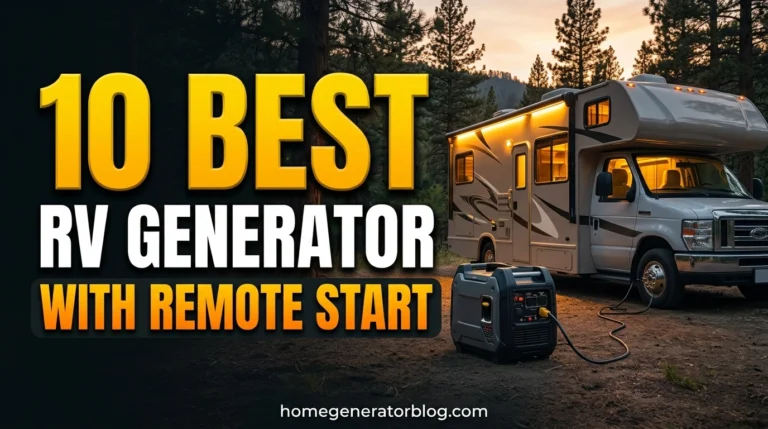
The best portable RV generators pick right now is the Westinghouse iGen4500 — it pairs RV-ready power with quiet inverter output. We compared 10 portable RV generators on Power Delivery, Noise and Portability, and Runtime and Ease of Use. Most RV generators look identical on paper but fail at air-conditioner startup. Whether you need quiet campground power, dual-fuel flexibility, or a lightweight camper setup, this guide gives you an answer.
Quick Comparison: All 10 Products Ranked
| # | Product | Best For | Rating | Badge | |
|---|---|---|---|---|---|
| 1 | Westinghouse iGen4500 Super Quiet Portable Inverter Generator | Most RVs with AC | 4.9/5 | Best Overall | Buy → |
| 2 | Champion 4500-Watt Dual Fuel RV Ready Portable Inverter Generator | Dual-fuel RV use | 4.8/5 | Best Dual Fuel | Buy → |
| 3 | Honda EU2200i Inverter Generator | Quiet premium use | 4.8/5 | Best Premium Quiet | Buy → |
| 4 | Predator 3500 Super Quiet Inverter Generator | Mid-size value | 4.7/5 | Best Value | Buy → |
| 5 | Generac GP3000i Inverter Generator | Lightweight mid-size use | 4.7/5 | Best Lightweight | Buy → |
| 6 | Yamaha EF2200iS Inverter Generator | Small campers | 4.6/5 | Best Small Camper | Buy → |
| 7 | WEN 56203i Super Quiet Inverter Generator | Budget light loads | 4.6/5 | Best Budget | Buy → |
| 8 | Briggs and Stratton P4500 PowerSmart | Electric-start RV use | 4.5/5 | Best Electric Start | Buy → |
| 9 | DuroMax XP4500iH Dual Fuel Inverter Generator | Larger RVs | 4.5/5 | Best Larger RV | Buy → |
| 10 | A-iPower SUA2000iV Ultra-Quiet Inverter Generator | Compact light loads | 4.4/5 | Best Compact | Buy → |
How We Chose These Generators
This is a specification comparison, not a hands-on test report. Scores are editorial rankings based on manufacturer specifications, RV outlet compatibility, and suitability for typical RV loads. Check the current manufacturer specifications before buying, as models and ratings can change.
What we compared
10 portable inverter generators, ranked on starting and running watts, RV outlets, noise ratings, weight, fuel type, and runtime.
Our 3 scoring criteria
Power Delivery, Noise and Portability, and Runtime and Ease of Use. Tied overall scores were ranked by RV-ready usefulness.
Expert consulted
No expert consultation was supplied for this guide, so no expert is named here.
What we cut — and why
Non-inverter and non-portable units were left out, because they are harder to move and less suited to sensitive RV electronics.
What to Look for When Buying a Portable RV Generator
Start with your largest load, not your average load. An RV air conditioner needs a short surge to start, and that surge decides whether a generator works in real camp conditions.
1. Sizing for Your RV and Air Conditioner
Check both starting watts and running watts for your air conditioner, fridge, and charger together. A unit that only covers running watts will stall at startup. Compare that total with the generator’s starting rating, and leave headroom for one extra small load. This sizing step matters most for portable generators for RV camping.
2. Noise and Campground Rules
Campgrounds often limit generator hours and noise, and neighbours notice sound more than output. Lower manufacturer decibel ratings and an eco mode help, but placement and distance matter too. Check the campground rules before you arrive, and plan quiet hours around charging and cooking. Learn how to reduce generator noise before your first trip.
3. Fuel Type and Runtime
Gasoline is widely available, while propane stores longer and can be cleaner to handle. Dual-fuel models give you a backup when one fuel is hard to find. Runtime at a quarter load is a useful comparison point, but your actual runtime depends on air-conditioner use and eco mode.
4. RV-Ready Outlets and Clean Power
A 30-amp RV outlet avoids adapters and makes hookup simpler and safer. Inverter output produces cleaner power for phones, laptops, and RV control boards. Check outlet types, USB ports, and parallel capability if you may link two smaller units later. See the best inverter generators overall for how these features compare.
Westinghouse iGen4500 Super Quiet Portable Inverter Generator — Best all-round RV power
Best for: Most RVs with a rooftop air conditioner
For most RV owners, the problem is not finding power, it is starting a rooftop air conditioner without tripping the generator or disturbing neighbours. The iGen4500 addresses that with 4,500 starting watts, a dedicated 30-amp RV outlet, and remote start for easy setup at camp. Its inverter output is also suitable for phones, laptops, and other sensitive electronics. The trade-off is weight, because this is not a one-hand carry for smaller campers. If your priority is a capable, quiet, RV-ready unit, this is the most complete package here.
- 4,500 starting watts for RV air conditioners
- 30-amp RV-ready outlet included
- Remote start for easy campground setup
- Quiet inverter output for sensitive electronics
- Heavy at around 93 pounds
- No dual-fuel option
- Large footprint for small storage bays
4.9/5
4.8/5
4.9/5
Champion 4500-Watt Dual Fuel RV Ready Portable Inverter Generator — Flexible fuel, RV-ready output
Best for: Campers who want gasoline or propane
If you camp where fuel supply is uncertain, a single-fuel generator can leave you stuck. This Champion model runs on gasoline or propane, with 4,500 starting watts on gasoline and an RV-ready outlet for direct hookup. Propane output is lower, so you should still plan loads carefully when using propane. Its inverter design suits sensitive electronics, and electric start adds convenience. The main compromise is weight and noise compared with smaller premium models, but for flexible RV power it is a strong second choice.
- Runs on gasoline or propane
- RV-ready outlet for direct hookup
- Electric start adds campground convenience
- Inverter output for sensitive electronics
- Lower output on propane
- Heavy to lift alone
- Louder than small premium models
4.8/5
4.7/5
4.8/5
Honda EU2200i Inverter Generator — Quiet, light, and refined
Best for: Quiet camping and light RV loads
If quiet operation matters more than running a large air conditioner alone, this Honda is hard to beat. It is light, easy to carry, and refined in use, with inverter output for sensitive electronics. Its 2,200 starting watts suit charging, lights, and smaller loads, but it will not reliably start a larger rooftop air conditioner on its own. Pairing two units is an option for more power, at added cost and complexity. Choose it for quiet, portable power, not as a one-unit solution for a large RV air conditioner.
- Very quiet at low load
- Light at about 47 pounds
- Clean inverter output for electronics
- Parallel-ready for more power
- Limited for large air conditioners alone
- No dedicated 30-amp RV outlet
- Premium positioning in this class
4.7/5
4.9/5
4.8/5
Predator 3500 Super Quiet Inverter Generator — Strong mid-size value
Best for: Mid-size RVs and value buyers
If you want more power than a 2,000-watt-class unit without moving to a very large generator, the Predator 3500 is a practical middle ground. It offers 3,500 starting watts, inverter output, and an enclosed design that keeps noise down. It can handle many smaller air conditioners and general RV loads, but you should still check your specific air-conditioner startup requirement. Weight is the main drawback, because it is not a light one-person carry. For buyers who prioritise output per dollar, it remains a compelling mid-size choice.
- 3,500 starting watts, mid-size power
- Enclosed design helps reduce noise
- Inverter output for sensitive electronics
- Electric start for easy use
- Heavy at about 100 pounds
- No dual-fuel option
- Check large AC startup carefully
4.7/5
4.6/5
4.7/5
Generac GP3000i Inverter Generator — Lighter mid-size option
Best for: Campers who lift the generator often
If you move your generator in and out of storage at every stop, weight quickly becomes the deciding factor. The GP3000i is lighter than most mid-size models, with 3,000 starting watts and inverter output for general RV use. It suits smaller air conditioners and everyday loads, but it is not the strongest choice for a large rooftop unit. Its compact size also helps in tight storage bays. Choose it when portability matters almost as much as output, and check your air-conditioner startup rating first.
- Lighter than most mid-size models
- 3,000 starting watts for smaller AC
- Inverter output for sensitive electronics
- Compact for tight storage bays
- Not for large rooftop AC alone
- No dedicated RV outlet on some versions
- Smaller fuel tank than larger models
4.6/5
4.7/5
4.7/5
Yamaha EF2200iS Inverter Generator — Refined small-camper power
Best for: Small campers and light loads
Small campers often need quiet, easy power for charging, lighting, and a small fridge, not a full-size RV system. The EF2200iS fits that use well, with smooth inverter output and a portable size. Its 2,200 starting watts will not reliably run a large air conditioner alone, so it is best for campers who manage loads carefully. It is also a premium model in its class, which matters if budget is tight. For refined, quiet, small-camper power, it is a dependable and well-built option.
- Quiet, refined small-camper operation
- Clean inverter output for electronics
- Portable at about 55 pounds
- Parallel-ready for more power
- Limited for large air conditioners alone
- Premium positioning in its class
- No dedicated RV outlet
4.6/5
4.8/5
4.6/5
WEN 56203i Super Quiet Inverter Generator — Budget light-load pick
Best for: Light loads and budget buyers
If your RV trips are mostly about charging, lighting, and a small fridge, you do not need a large generator. The WEN 56203i is light, quiet, and easy to carry, with 2,000 starting watts and inverter output for electronics. It will not run a large air conditioner alone, and its smaller tank means more frequent refuelling on longer runs. For budget buyers with modest loads, or as a second unit alongside a larger generator, it is a practical and portable choice.
- Light at about 39 pounds
- Quiet for light-load camping
- Inverter output for sensitive electronics
- Easy to carry and store
- Not for large air conditioners alone
- Smaller fuel tank, shorter runs
- No dedicated RV outlet
4.6/5
4.6/5
4.5/5
Briggs and Stratton P4500 PowerSmart — Easy-start RV power
Best for: RV owners who want push-button start
Recoil starting can be a barrier after a long drive, especially in cold or wet weather. The P4500 offers electric start, 4,500 starting watts, and inverter output for RV use. It suits many mid-size RV loads and air conditioners, but you should verify your specific startup requirement and keep the starter battery charged. It is also heavier and louder than smaller premium models. If easy starting matters more than ultimate quiet operation, this is a practical and capable RV option.
- Electric start, no recoil struggle
- 4,500 starting watts for RV loads
- Inverter output for sensitive electronics
- RV-ready outlet options
- Louder than smaller premium models
- Starter battery needs maintenance
- Heavy for frequent lifting
4.6/5
4.3/5
4.6/5
DuroMax XP4500iH Dual Fuel Inverter Generator — Larger RV, dual fuel
Best for: Larger RVs with more loads
Larger RVs often run an air conditioner plus a fridge, charger, and lights at the same time. The XP4500iH offers 4,500 starting watts and dual-fuel operation, so you can switch between gasoline and propane as supply allows. Its inverter output suits sensitive electronics, and its larger capacity gives more headroom for combined loads. The trade-offs are weight, noise, and size, which make it less ideal for small campers. Choose it when combined RV loads matter more than light carrying.
- Runs on gasoline or propane
- 4,500 starting watts for combined loads
- Inverter output for sensitive electronics
- Good headroom for larger RVs
- Heavy at about 96 pounds
- Louder than smaller inverter models
- Lower output on propane
4.7/5
4.3/5
4.5/5
A-iPower SUA2000iV Ultra-Quiet Inverter Generator — Compact light-load pick
Best for: Compact campers and light loads
If storage space is tight and your loads are modest, a compact generator can be the right fit. The SUA2000iV offers 2,000 starting watts, quiet inverter output, and a size that fits small storage bays. It suits charging, lighting, and a small fridge, but it will not run a large air conditioner alone. Runtime is also limited by its smaller tank. Choose it for compact, quiet, light-load camping, and pair it with load management for the best results.
- Compact size for small storage bays
- Quiet inverter output for electronics
- Light at about 46 pounds
- Simple setup for light loads
- Not for large air conditioners alone
- Smaller tank, shorter runs
- Limited outlets for multiple loads
4.4/5
4.6/5
4.3/5
Top 3 Head-to-Head: Westinghouse iGen4500 vs Champion 4500-Watt Dual Fuel vs Honda EU2200i
These three are the common final choices because they cover RV-ready power, fuel flexibility, and quiet premium use. The right one depends on whether air-conditioner startup, fuel choice, or quiet carrying matters most.
| Feature | #1 Westinghouse | #2 Champion | #3 Honda |
|---|---|---|---|
| Power Delivery | 4.9/5 — Best | 4.8/5 | 4.7/5 |
| Noise and Portability | 4.8/5 | 4.7/5 | 4.9/5 — Best |
| Runtime and Ease of Use | 4.9/5 — Best | 4.8/5 | 4.8/5 |
| Choose if… | You want one RV-ready unit for AC | You want gasoline or propane choice | You want the quietest, lightest carry |
Who These Generators Are NOT For
Portable inverter generators are not a whole-house backup solution, and they are not meant to run everything at once.
They are also not for indoor use, and they are not for running directly against an RV wall without ventilation and carbon monoxide precautions. For smaller, non-RV camping loads, portable inverter generators for camping may be a better starting point.
Common Mistakes to Avoid
Most RV generator regrets come from sizing, placement, or fuel planning, not from the brand alone.
Frequently Asked Questions About Portable RV Generators
What size portable generator do I need for my RV?
It depends on your largest load, especially air-conditioner startup. Add the starting watts of your air conditioner to the running watts of your fridge, charger, and lights, then choose a generator with headroom above that total. For many RVs, a 3,500 to 4,500 starting-watt inverter model is a practical starting point.
Can a portable generator run my RV air conditioner?
Yes, if its starting watts cover your air conditioner’s surge. Smaller 2,000-watt-class models often cannot start a larger rooftop unit alone, while 4,500 starting-watt models can in many cases. Check your air-conditioner rating plate, consider a soft-start kit if needed, and avoid running every large load at the same time.
Are inverter generators better for RVs?
Inverter generators are usually better for RV electronics because they produce cleaner, more stable power. They also tend to run quieter and adjust engine speed to load, which can improve fuel use. Conventional portable generators can work for basic loads, but they are often louder and less suited to sensitive control boards, laptops, and phones.
How quiet does an RV generator need to be?
There is no single quiet number, because campground rules and neighbour tolerance vary. As a guide, models rated around 50 to 60 dBA at low load are generally more campground-friendly than louder open-frame units. Placement, distance, and eco mode also affect perceived noise, so check the specific campground rules before you travel.
Can I run a generator at a campground overnight?
Often no, because many campgrounds restrict generator hours to daytime. Even where overnight use is allowed, noise and exhaust rules still apply. Plan battery charging during allowed hours, use eco mode where possible, and keep the generator outdoors, away from sleeping areas, windows, and vents.
What fuel type is best for RV generators?
Gasoline is the most widely available fuel on the road, while propane stores longer and avoids stale-fuel problems. Dual-fuel models offer the most flexibility, because you can switch when one fuel is hard to find. Note that propane output is often lower than gasoline output, so size your loads for the fuel you plan to use most.
Our Final Verdict
Most RV buyers should start with a quiet inverter model sized for air-conditioner startup, then choose fuel type and weight. The Westinghouse iGen4500 best balances those trade-offs for typical RV use, while smaller campers may prefer a lighter 2,000-watt-class model.

Hi, I’m Michael Turner. I own a generator workshop in the United States and founded HomeGeneratorBlog to share practical, hands-on guidance about generator installation, maintenance, troubleshooting, safety, and backup power solutions. My goal is to help homeowners make smarter, more confident decisions through clear and reliable information