
How to Protect a Portable Generator Outdoors Safely
Quick Answer
Protect a portable generator outdoors by placing it on level, firm ground at least 20 feet from your home with the exhaust pointed away, keeping rain off it without enclosing it, and covering it only when it is off and cool. Shade, airflow, dry connections, and a secure spot matter just as much as a cover.
Outdoor protection is not one purchase. It is a small system: safe placement, a roof rather than a box while the generator runs, dry connections, and a different cover for storage. A tight cover can trap heat and exhaust, and a dry machine in a hollow can still end up standing in water. Always check your manual first, since clearance and cover rules can vary by model.
Start With Placement, Not the Cover
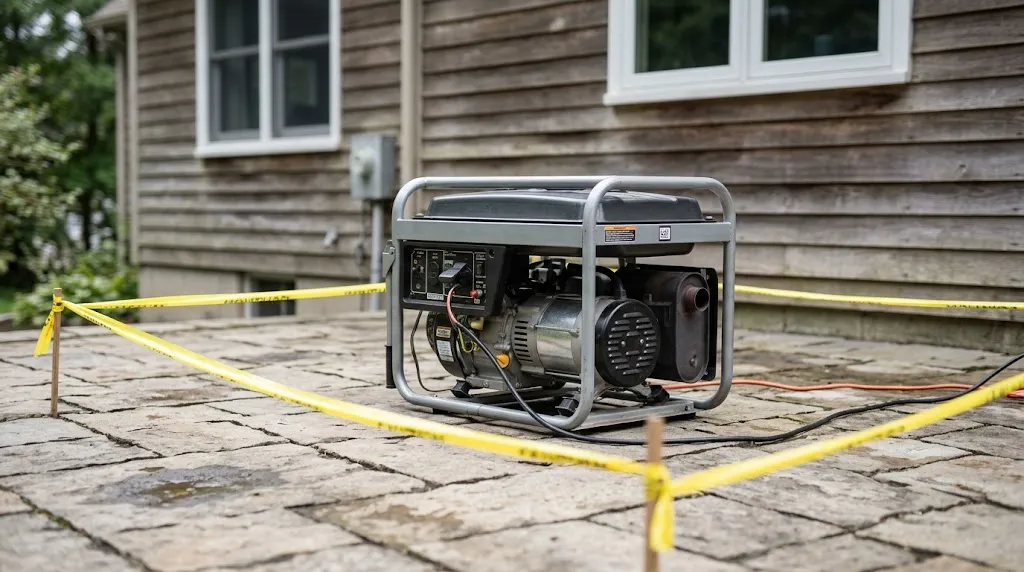
Placement affects safety, not just the life of the machine. Run a fuel-powered portable generator outdoors only, at least 20 feet from your home, with the exhaust pointed away from windows, doors, vents, and other openings. That baseline comes from the Centers for Disease Control and Prevention, and it also applies to neighboring buildings.
Never move the problem indoors to solve a weather problem. A garage, basement, shed, crawlspace, porch, or partly enclosed carport is not safe, even with a door or window open. Carbon monoxide cannot be seen or smelled, so fit battery-powered or battery-backup alarms in the home, test them, and treat any alarm as a reason to get outside and call for help.
Watch the wind as well as the tape measure. A spot that is 20 feet away on a calm day can still send exhaust toward an intake when the wind shifts, so choose a place where the breeze carries exhaust away from occupied spaces. Keep children and pets away while it runs.
Keep Rain Off Without Trapping Heat or Exhaust
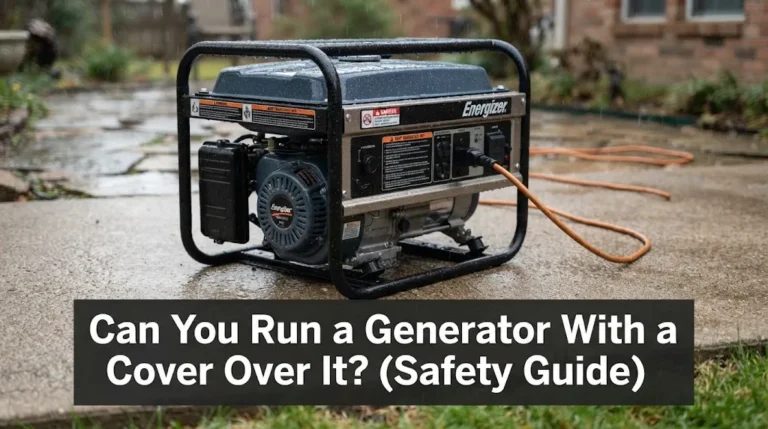
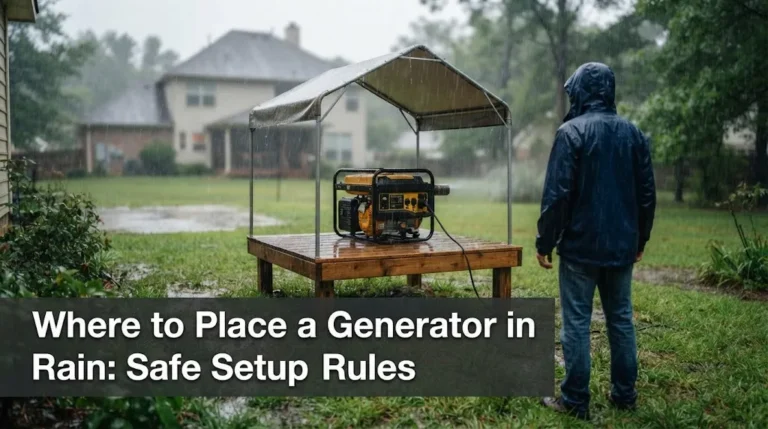
Rain is the most common outdoor threat, and the wrong fix can be worse than the rain itself. A standard storage cover, tarp, or closed tent should not be draped over a running generator, because it can trap heat, block cooling air, and restrict exhaust. The safe shape while running is a roof with open sides: an open-sided canopy or manufacturer-approved running cover that keeps rain off the top and outlets while leaving air free to move.
For rain-specific detail, see our guide to how to protect a generator from rain. The core test is simple: if rain can no longer reach the outlets and controls, but exhaust and cooling air still have a clear path out, the setup is on the right track. If any side is closed off, or the cover touches hot parts, stop and rethink it.
Also protect the connections, not just the machine. Keep plugs, cord joints, and power strips off wet ground and out of puddles, and use outdoor-rated cords in good condition. Route cords away from drainage paths and walkways. If a connection gets soaked, let it dry fully and inspect it before use.
Warning
Never refuel a hot or running generator, and never bring a running generator into a garage, shed, or enclosed shelter because it is raining. Stop it, let it cool, and refuel outdoors away from ignition sources.
Sun, Heat, and Dust Need Airflow Too
Sun damage is slower than rain damage, but it still matters. Direct sun heats the fuel tank and controls and weakens covers. Shade helps, provided it does not become an enclosure. A high, open canopy is useful; a low, tight cover is not.
Keep the cooling path clear. Leave open space around the generator as your manual requires, and do not stack fuel, tools, or spare covers against it. Hot exhaust parts can ignite nearby material, and blocked intakes can push temperatures up. Check before each run for leaves and debris that may have blown against the machine.
Dust and grit deserve the same attention on dry, windy, or unpaved sites. Move to firmer, cleaner ground when you can, and check the air filter on the schedule in your manual. After dusty work, wipe the outside down once the machine is off and cool, rather than blasting water into vents, outlets, or the intake.
Choose Ground That Stays Level, Firm, and Dry
A portable generator should sit level on firm ground. Level placement helps oil circulate as designed and reduces vibration and spill risk, while firm ground stops the feet from sinking after rain and tilting the machine.
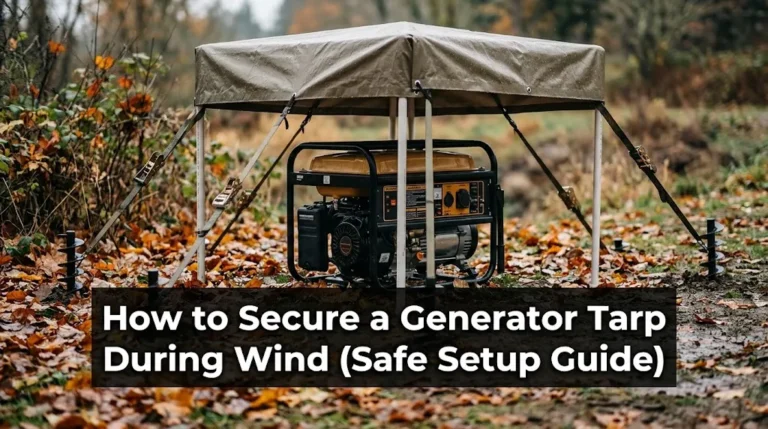
Think about where water will go, not just where it is now. Avoid hollows, drainage channels, low spots near downspouts, and ground that floods first. A raised, well-drained pad or paved area can help. In high wind, anchor a canopy separately from the generator so a gust cannot drag it onto the machine or across the exhaust.
Clear the immediate area before starting. Remove dry leaves and combustible material, keep fuel containers at the distance your manual requires, and leave a clear path to the controls and shutoff. Protection should never make the generator harder to stop in an emergency.
Running Protection Is Different From Storage Protection
Many outdoor problems come from using the wrong protection at the wrong time. A storage cover can be dangerous while running, and a running canopy offers little protection once the machine is parked for weeks. Keep the two jobs separate.
| Situation | Use | Avoid |
|---|---|---|
| Running outdoors | Open-sided roof or running-rated cover | Storage cover, tarp, or closed tent |
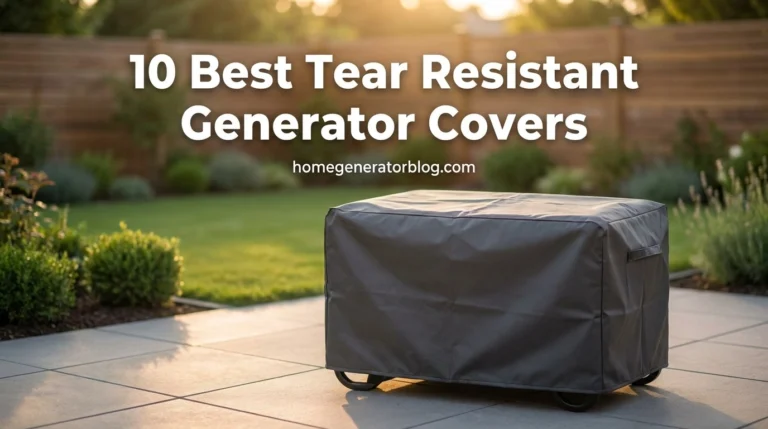
| Parked between uses | Breathable storage cover, once cool | Covering a hot or damp machine tightly |
| Long-term outdoor parking | Sheltered, ventilated storage or indoors | Leaving it exposed with no checks |
That distinction explains why whether a generator needs to be covered has no single yes-or-no answer. When it is off, a cover guards against rain, sun, and dust. When it is running, airflow and exhaust clearance come first, and only a running-rated design should stay in place.
Protect It Between Uses, Not Just During Outages
Most outdoor wear happens quietly between runs. After use, let the generator cool completely, then clean off dirt, moisture, and debris before covering it. A cover over a damp machine can trap moisture and encourage rust. If it got wet, dry it first and check outlets and cords for damage.
For longer outdoor parking, a cover alone is not a storage plan. Check it after storms, clear leaves and snow from the top, and inspect underneath for trapped dampness, insects, and rodents. Fuel and oil care still follow the manual, and stale fuel can cause starting problems even when the outside looks clean. See our guide to whether a generator can be left outside if covered for the limits of long-term outdoor parking.
Theft is part of outdoor protection too. Use a lock or cable through a fixed point when practical, without blocking vents, controls, or exhaust, and record the model and serial number somewhere safe.
Build a Shelter the Safe Way, or Skip It
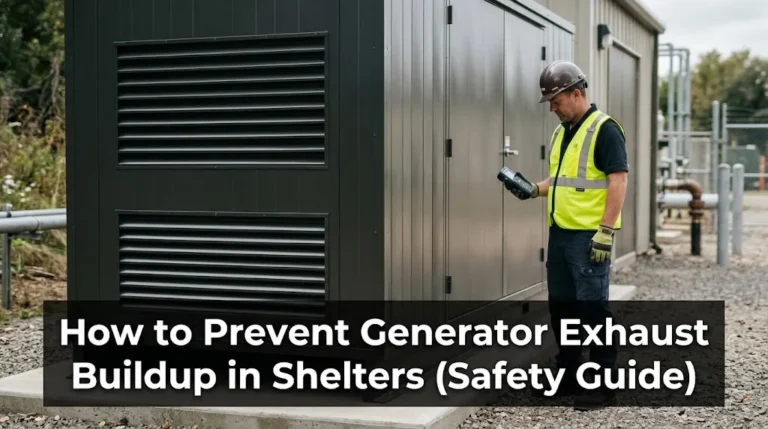
A permanent shelter can be the best outdoor solution, but only when ventilation is designed in from the start. It needs a clear exhaust path, open area for cooling air, safe clearance from combustible material, and a roof that sheds water away from the machine and cords. A box with a door that can be closed while running is not a shelter; it is an enclosure.
Before building or buying, read our guides to sheltering a portable generator from bad weather safely and how to ventilate a generator shelter. For most occasional users, a portable open-sided canopy is simpler and safer than a DIY enclosure.
Tip
Decide the outdoor spot before an outage. Mark a level, drained location at least 20 feet out, confirm a cord can reach it, and store the canopy, cords, and cover where you can reach them in the dark.
Mistakes That Undo Good Outdoor Protection
- Moving a running generator into a garage or under a porch roof to keep it dry.
- Using a storage cover or tarp while the engine is running.
- Pointing the exhaust at the house, a neighbor’s window, or an air intake.
- Placing the generator in a hollow, on soft ground, or in a flood path.
- Covering a hot or damp generator tightly for storage.
- Blocking vents or stacking fuel and gear against the machine.
- Skipping carbon monoxide alarms because the generator is outside.
Each mistake is easy to make under pressure, especially during a storm or at night. A short, practiced routine beats rules you have to recall for the first time in bad weather.
A Simple Outdoor Setup Routine
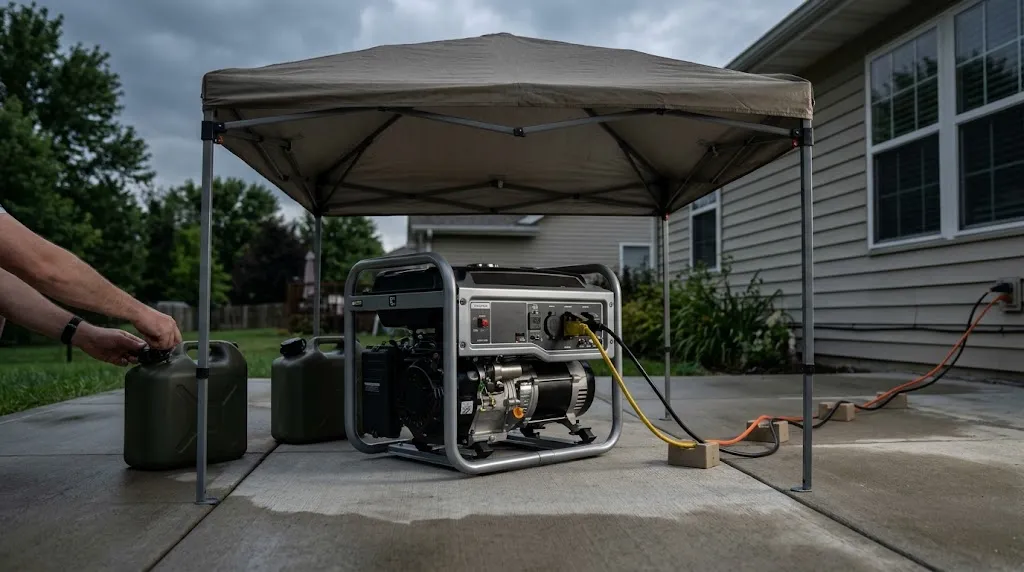
- Choose level, firm, drained ground at least 20 feet from openings, exhaust pointed away.
- Clear leaves, debris, and combustible material from around the machine.
- Set up an open-sided roof or running-rated cover, keeping vents and exhaust clear.
- Route outdoor-rated cords away from water, doors, and walkways, connections raised and dry.
- Check oil, fuel, air filter, and carbon monoxide alarms before starting.
- After use, cool, clean, and dry the generator before fitting its storage cover, and recheck the spot after wind or heavy rain.
When conditions become unsafe — flooding, wind that threatens the canopy, lightning nearby, or a carbon monoxide alarm sounding — stop, move people to safety, and deal with the machine only when it is safe to do so. The U.S. Consumer Product Safety Commission gives the same core warning for storm use: outdoors only, at least 20 feet away, exhaust directed away, and never refuel while running.
Related Product
Running Generator Cover
A running-rated cover or open-sided canopy helps keep rain off a working generator without sealing in heat and exhaust, unlike a standard storage cover.
As an Amazon Associate, we earn from qualifying purchases.
Frequently Asked Questions
Can a portable generator stay outside all the time?
It can for short periods with a good storage cover and regular checks, but permanent outdoor parking is harder on it than sheltered storage. Check it after storms, keep it dry underneath, and move it under cover for long idle periods when you can.
Can I run a portable generator under a canopy?
Yes, if the canopy is open-sided, high enough to clear heat and exhaust, and anchored so wind cannot push it onto the machine. A closed tent or low tarp is not the same thing, because it can trap heat and exhaust.
How far should a portable generator be from my house and my neighbors?
At least 20 feet from your home, with exhaust pointed away from windows, doors, vents, and air intakes. Apply the same care to neighboring homes, since wind can carry exhaust toward their openings.
Is a normal storage cover safe while the generator is running?
No. A normal storage cover is made for a cool, switched-off machine. While running, use only a cover or canopy specifically rated for running use, with vents and exhaust left clear, and follow your manual.
What should I do if my generator gets wet outdoors?
Stop using it if it is safe to do so, disconnect loads, and let it dry fully before restarting. Inspect outlets, cords, and connections for damage, and do not handle it with wet hands or while standing in water. If it was submerged or shows electrical damage, have it checked before use.
How do I protect a generator from sun and dust without overheating it?
Use open shade rather than a tight cover, keep cooling vents clear, and follow the manual for air-filter checks. After dusty use, clean the outside once it is off and cool, and do not force water into vents or outlets.
Conclusion
Protecting a portable generator outdoors comes down to a clear order: place it safely first, give it a roof instead of a box while it runs, keep its connections dry, and use a proper storage cover only when it is off and cool. Add level, drained ground, open airflow, and regular checks after storms. Set that spot up before you need it.

Hi, I’m Michael Turner. I own a generator workshop in the United States and founded HomeGeneratorBlog to share practical, hands-on guidance about generator installation, maintenance, troubleshooting, safety, and backup power solutions. My goal is to help homeowners make smarter, more confident decisions through clear and reliable information

3 Comments