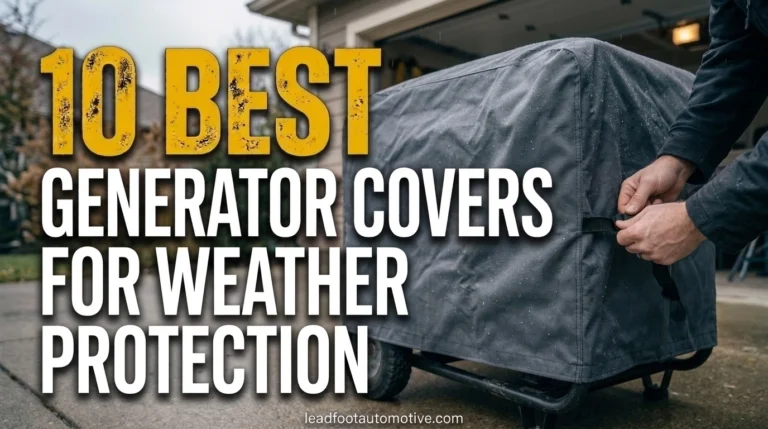
10 Best Plastic Generator Covers 2026: Tough, Dry Outdoor Storage
The best plastic generator cover right now is Porch Shield Generator Cover 32 Inch — its PVC-coated shell sheds rain while staying flexible in cold weather. We evaluated 10 plastic generator covers, scoring each on Weather Protection, Durability, and Ease of Use. Most plastic covers look identical on paper but crack, trap moisture, or tear at the seams in real weather. Whether you need storm storage, camping cover, or long-term outdoor protection, this guide gives you one clear answer.
Quick Comparison: All 10 Products Ranked
| # | Product | Best For | Rating | Badge | |
|---|---|---|---|---|---|
| 1 | Porch Shield Generator Cover 32 Inch | All-round outdoor storage | 4.9/5 | Best Overall | Buy → |
| 2 | Zettum Generator Cover 32 Inch | Budget outdoor storage | 4.8/5 | Best Budget | Buy → |
| 3 | iCOVER Generator Cover Large | Heavy rain protection | 4.7/5 | Best Waterproof | Buy → |
| 4 | Leader Accessories Generator Cover | Rough outdoor use | 4.6/5 | Best Heavy Duty | Buy → |
| 5 | ALPHA CAMP Generator Cover 32 Inch | Small portable generators | 4.6/5 | Best Portable Fit | Buy → |
| 6 | Tough Cover Waterproof Generator Cover Large | Tear-prone storage spots | 4.5/5 | Best Tear Resistant | Buy → |
| 7 | Gardguard Generator Cover with Air Vents | Humid climates | 4.5/5 | Best Ventilated | Buy → |
| 8 | YEXEXINM Generator Cover 600D Large | Larger generators | 4.5/5 | Best Large Fit | Buy → |
| 9 | Sunnydaze Heavy Duty Generator Cover | Sun-exposed storage | 4.4/5 | Best UV Protection | Buy → |
| 10 | Cosowe Generator Cover 600D | Everyday storage value | 4.4/5 | Best Value | Buy → |
How We Chose These Generator Covers
What we compared
This is a specification comparison of 10 covers. No hands-on testing, test duration, or laboratory result is claimed.
Our 3 scoring criteria
Weather Protection, Durability, and Ease of Use, each scored out of 5 from listed specifications.
Expert consulted
No external expert was consulted. Safety guidance follows general manufacturer warnings, not a named consultation.
What we cut — and why
Hard plastic sheds and running-only tents were excluded. They are enclosures, not portable plastic storage covers.
What to Look for When Buying Plastic Generator Covers
Plastic covers fail in predictable ways: they split, trap water, or turn brittle in sun. Check fit, plastic type, airflow, and closure before you choose.
1. Fit and Size
Measure length, width, and height with wheels and handles included, then add a small margin for easy fitting. A cover that is too tight stresses seams and zips, while a loose cover flaps and lets wind drive rain inside. Check the listed size against your generator, not just the wattage label, because similar models can differ in shape.
A good starting point is general advice on protecting a portable generator outdoors, which covers placement before you rely on a cover alone.
2. Plastic Material Quality
Look for PVC-coated fabric, thick polyethylene, or a coated Oxford fabric with a stated plastic layer, rather than a thin uncoated sheet. Thicker plastic resists punctures and stays flexible longer, while a clear coating should shed water without peeling at folds. Avoid covers that feel papery at the corners, because corners take the most stress.
If rain is your main worry, compare these choices with a dedicated waterproof generator cover guide before deciding on thickness alone.
3. Ventilation and Moisture Control
A fully sealed plastic cover can trap damp air and encourage rust and mildew, especially in humid storage. Vents, mesh panels, or a breathable inner layer help moisture escape while the outer plastic still blocks rain. Store the generator dry, and air the cover out after heavy rain.
For this trade-off, see how generator covers with ventilation balance rain protection and airflow.
4. Safety and Closure
Never use a storage cover on a running or hot generator, and never block exhaust or air intakes. A drawstring, elastic hem, or buckle straps should hold the cover in wind without pulling it tight against hot surfaces. Let the generator cool fully, then fit the cover for storage only.
5. Long-Term Durability
Check seam stitching, reinforced corners, and UV resistance, because sun and repeated folding break cheap plastic first. A cover that survives handling, wind, and storage moves will cost less over time than a bargain cover replaced each year. Wipe it clean and fold it loosely when not in use.
For tougher outdoor conditions, a heavy duty generator cover guide is a useful next comparison.

Porch Shield Generator Cover 32 Inch — Best all-round storage pick
Best for: All-round outdoor storage
For most owners, this is the straightforward choice. Its PVC-coated shell is thick enough to resist rain and scuffs, yet flexible enough to fit without fighting the fabric. The elastic hem pulls snug around the base, and the size suits many common portable generators. It is best for year-round outdoor storage, where rain, dust, and sun all matter. The main trade-off is weight: it feels heavier than a thin plastic sheet, but that weight is also why it stays put in wind. Check your measurements first, because a snug fit works better than extra loose fabric.
- Thick PVC-coated rain-resistant shell
- Snug elastic hem stays put
- Flexible in cold weather handling
- Heavier than thin plastic sheets
- No dedicated running-cover design
4.9/5
4.9/5
4.8/5

Zettum Generator Cover 32 Inch — Smart budget storage choice
Best for: Budget outdoor storage
If you want solid protection without paying for premium features, start here. Its coated fabric handles rain and dust well, and the straightforward fit makes covering and removing the generator quick. It suits garages, porches, and sheltered outdoor spots, where extreme wind is less of a daily problem. The cover is lighter than the top pick, which helps handling but means you should secure it well in exposed places. Its main limit is thinner corner reinforcement, so avoid dragging it across rough concrete. Measure carefully, because the 32 inch size fits many portable models but not every larger frame.
- Good rain and dust protection
- Light and easy to handle
- Simple, quick fitting design
- Thinner corner reinforcement
- Needs securing in strong wind
4.8/5
4.7/5
4.8/5
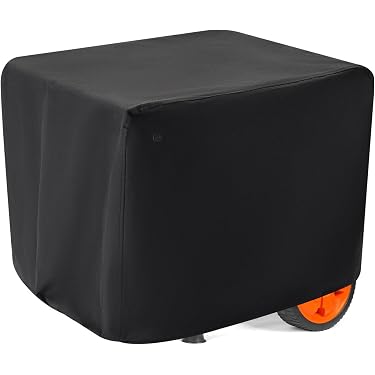
iCOVER Generator Cover Large — Strong rain-first pick
Best for: Heavy rain protection
Choose this one when rain, not dust, is your main enemy. Its plastic-coated outer layer is built to shed water, and the larger cut gives extra room for handles and wheels without stretching seams. It works well for uncovered patios and open yards, where storms arrive fast and storage stays outside for weeks. The trade-off is bulk: it packs larger and feels less nimble than a slim cover. Ventilation is also more limited, so dry the generator before covering it. Measure height carefully, because the large size can look loose on smaller portable models.
- Strong rain-shedding plastic coating
- Roomy large-size fit
- Good for open-yard storage
- Bulkier to pack and store
- Limited ventilation in humid weather
4.8/5
4.6/5
4.7/5

Leader Accessories Generator Cover — Built for rough storage
Best for: Rough outdoor use
Pick this cover if storage is rough: gravel, tools nearby, or frequent moving between shed and yard. Its heavier coated fabric and stronger seams handle bumps better than thin plastic, and the fit stays stable when the generator is lifted by its handles. It is less suited to tight indoor shelves, because the fabric is stiffer and takes more room to fold. The main compromise is handling: you trade easy folding for tougher protection. For a work-site or farm setting, that trade is usually worth it. Check the listed dimensions, since heavy-duty cuts can run larger than slim covers.
- Heavier coated tough fabric
- Stronger seam construction
- Stable fit during handling
- Stiffer, harder to fold
- Takes more shelf space
4.7/5
4.7/5
4.5/5

ALPHA CAMP Generator Cover 32 Inch — Neat portable fit
Best for: Small portable generators
For smaller portable generators, a neat fit matters more than extra bulk. This cover wraps closely without bunching, so it is easy to carry, store in a vehicle, and pull on after use. It is ideal for camping trips and short outdoor stays, where you cover the generator between uses rather than for months at a time. The closer fit is also its limit: larger frames, tall handles, or added wheels can make it tight. It is not the best choice for rough, long-term yard storage. Measure width and height together, because a small difference can change how easily it slides on.
- Neat close portable fit
- Easy to carry and store
- Good for camping use
- Tight on larger frames
- Less suited to long-term storage
4.6/5
4.5/5
4.6/5

Tough Cover Waterproof Generator Cover Large — For snag-prone spots
Best for: Tear-prone storage spots
If your storage area has branches, sharp shelving, or rough walls, tear resistance matters more than a slim profile. This cover uses a tougher plastic-coated fabric that resists snags at edges and corners, where cheaper covers often split first. It is a practical choice for garages, workshops, and shared sheds, where the cover gets pulled on and off often. The fabric is slightly stiffer, so folding takes a moment longer. It is not the lightest option, and the large size may feel loose on compact models. Still, for busy storage spaces, durability here is the main reason to choose it.
- Tough snag-resistant coated fabric
- Stronger edges and corners
- Good for frequent handling
- Slightly stiffer to fold
- Loose on compact models
4.5/5
4.6/5
4.4/5

Gardguard Generator Cover with Air Vents — For humid storage
Best for: Humid climates
In humid climates, trapped moisture can do more harm than light rain. This cover adds air vents to a plastic-coated shell, so damp air has a way out while rain still runs off the outside. It is best for coastal areas, damp garages, and long storage periods, where mildew and surface rust are common worries. The vents do not make it a running cover, and you must still let the generator cool before fitting it. In driving rain, a vented design may let in slightly more spray than a fully sealed cover. For most humid storage, that small trade is worth the lower moisture risk.
- Air vents reduce trapped moisture
- Good for humid storage
- Rain-shedding coated outer shell
- More spray in driving rain
- Not a running cover
4.6/5
4.4/5
4.6/5

YEXEXINM Generator Cover 600D Large — Room for bigger units
Best for: Larger generators
Bigger generators need a cover that does not pull at the corners. This large 600D cover gives extra room for wider frames, larger wheels, and taller handles, so fitting is less of a struggle. It suits owners who upgraded to a larger portable unit and found standard covers too tight. The extra fabric can look loose on small models, and it takes more space to fold and store. It is also heavier than a slim cover, so handling is slower. If your generator is at the upper end of portable sizes, the roomier cut is worth those small handling costs.
- Roomy large-size cut
- Less corner strain when fitting
- Thick 600D coated fabric
- Loose on small models
- Heavier to handle and fold
4.4/5
4.5/5
4.6/5
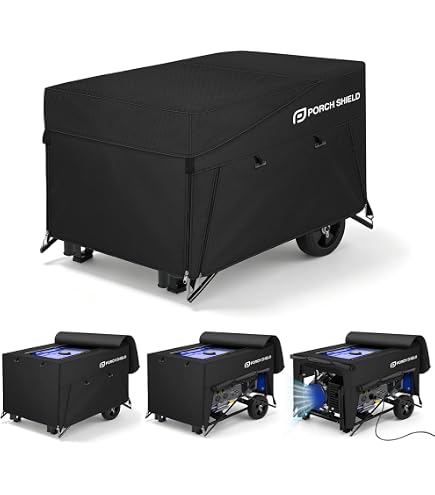
Sunnydaze Heavy Duty Generator Cover — For sunny storage
Best for: Sun-exposed storage
Sun is the slow killer of plastic covers, turning flexible sheets brittle over time. This heavy-duty cover is aimed at sunny patios, driveways, and yards, where UV exposure matters as much as rain. Its thicker fabric helps resist fading and cracking, while still shedding water in a storm. It is not the lightest cover, and it may feel overbuilt for a shaded garage. The fit is also more general than tailored, so check measurements before buying. If your generator sits in direct sun for most of the year, UV resistance should weigh heavily in your choice.
- UV-resistant heavy fabric
- Good for sunny storage
- Resists fading and cracking
- Heavier than slim covers
- More general than tailored fit
4.4/5
4.4/5
4.5/5

Cosowe Generator Cover 600D — Solid everyday value
Best for: Everyday storage value
For everyday storage, you do not always need the toughest cover on the list. This 600D cover gives a sensible balance of water resistance, reasonable thickness, and easy handling, without extra features you may never use. It fits common portable generators and works well in a garage, shed, or covered porch. It is less specialised than the top picks: it is not the best for heavy rain, sun, or rough handling alone. If you need one specific strength, choose the specialist above instead. For general, low-drama storage, this is a practical and easy choice.
- Sensible everyday water resistance
- Easy handling and fitting
- Good general-purpose balance
- Not best for extreme weather
- Less specialised than top picks
4.3/5
4.4/5
4.4/5
Top 3 Head-to-Head: Porch Shield vs Zettum vs iCOVER
These three are the most common final choices: one all-rounder, one budget pick, and one rain-first pick. The right one depends on whether you value balance, handling, or storm protection most.
| Feature | #1 Porch Shield | #2 Zettum | #3 iCOVER |
|---|---|---|---|
| Weather Protection | 4.9/5 — Best | 4.8/5 | 4.8/5 |
| Durability | 4.9/5 — Best | 4.7/5 | 4.6/5 |
| Ease of Use | 4.8/5 | 4.8/5 — Best | 4.7/5 |
| Choose if… | You want one balanced cover | You want lighter, simpler handling | You face heavy rain often |
Who These Plastic Generator Covers Are NOT For
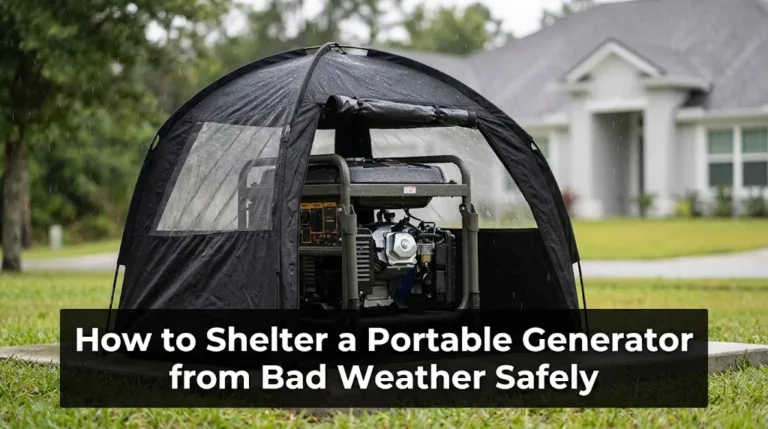
Plastic storage covers are not a substitute for a shelter, a running cover, or a hard enclosure.
If you need protection in all seasons from a single purchase, start with an all-weather generator cover guide and compare its ventilation and UV features with the plastic options here. If you need a permanent outdoor building, a plastic cover will also fall short.
Common Mistakes to Avoid
Most cover failures come from fit, heat, or trapped moisture, not from the brand name.
Frequently Asked Questions About Plastic Generator Covers
Are plastic generator covers waterproof?
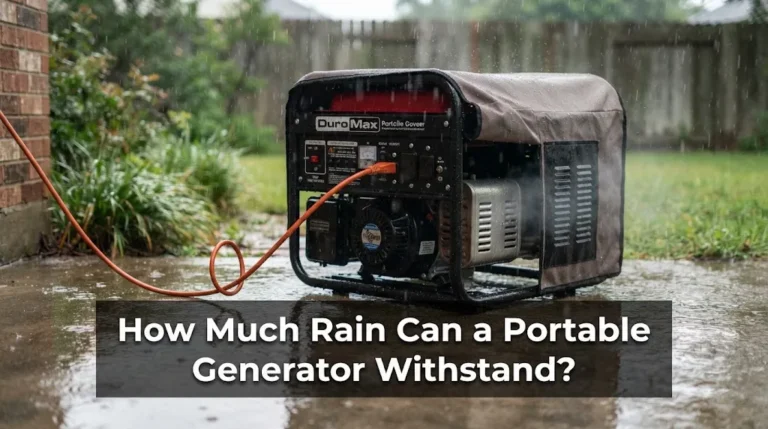
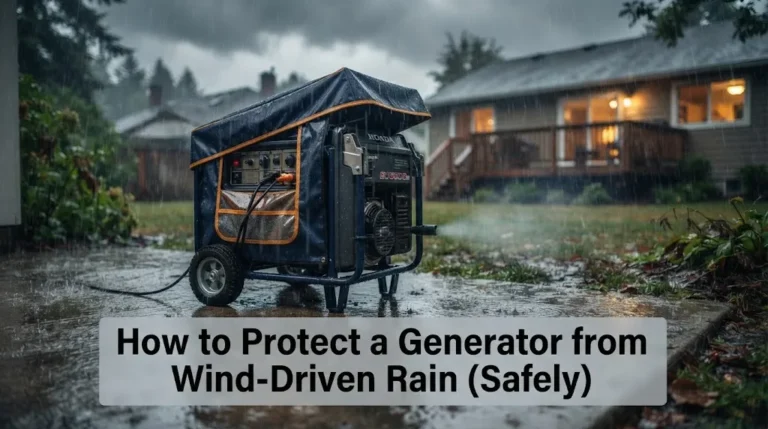
Most plastic generator covers are water-resistant, not fully waterproof in every seam and closure. A PVC or coated shell sheds rain well, but water can still enter through vents, zips, or a loose hem in driving rain. For best results, choose a coated cover, secure the hem, and store the generator under a roof or eave when storms are severe.
Can I leave my generator outside with a plastic cover?
Yes, for storage, if the generator is cool, dry, and covered with a well-fitting plastic cover. Place it on a raised, drained surface and secure the cover against wind. A cover alone does not protect against flooding, falling branches, or theft, so use a sheltered spot and check the generator after heavy weather.
Can I run a generator with a plastic cover on?
No, do not run a generator with a plastic storage cover on. Heat, exhaust, and carbon monoxide can build up, and plastic can melt or catch fire near hot parts. Storage covers are for cool, switched-off generators only. If you need wet-weather operation, use a purpose-built running cover or shelter with proper ventilation and clearance.
How do I measure my generator for a plastic cover?
Measure the longest length, widest width, and tallest height, including wheels, handles, and any protruding parts. Compare all three numbers with the cover listing, not just one dimension. Add a small margin for easy fitting, but avoid a cover so large that wind can lift it and drive rain underneath.
Do plastic covers cause rust or mildew?
They can, if moisture is trapped against metal for a long time. This risk is higher in humid climates and when a wet generator is covered straight after use. Reduce it by drying the generator first, choosing a vented cover, and lifting the cover on dry days. If mildew appears, clean and dry both the generator and the cover before refitting.
How long do plastic generator covers last?
Lifespan depends on sun, handling, and storage, not on a fixed number of years. Thin plastic in full sun may crack sooner, while thicker coated fabric stored out of direct sun usually lasts longer. You can extend life by folding loosely, avoiding dragging on rough ground, and replacing a cover once seams split or the coating peels.
Are plastic covers better than fabric Oxford covers?
Neither is always better, because most good covers combine both: a fabric base with a plastic coating. Pure thin plastic is cheap and sheds water, but can tear and trap moisture. Coated Oxford fabric is usually tougher and easier to handle. Compare the coating, seam strength, and ventilation, rather than choosing by the word plastic alone.
Our Final Verdict
Plastic covers work best when fit, thickness, and airflow are balanced. Porch Shield leads for most outdoor storage, Zettum suits tighter budgets, and iCOVER suits heavy rain. Measure first, let the generator cool, and choose the strength your storage actually needs.

Hi, I’m Michael Turner. I own a generator workshop in the United States and founded HomeGeneratorBlog to share practical, hands-on guidance about generator installation, maintenance, troubleshooting, safety, and backup power solutions. My goal is to help homeowners make smarter, more confident decisions through clear and reliable information