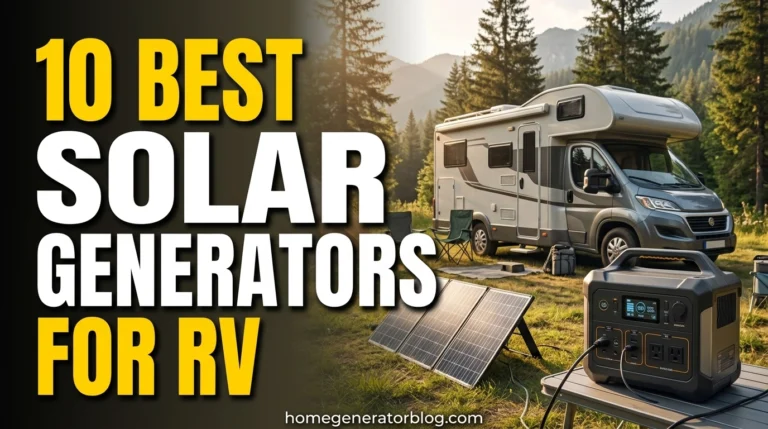
10 Best Portable Generators for Solar Panels in 2026: Quiet, Fuel-Free Backup Power
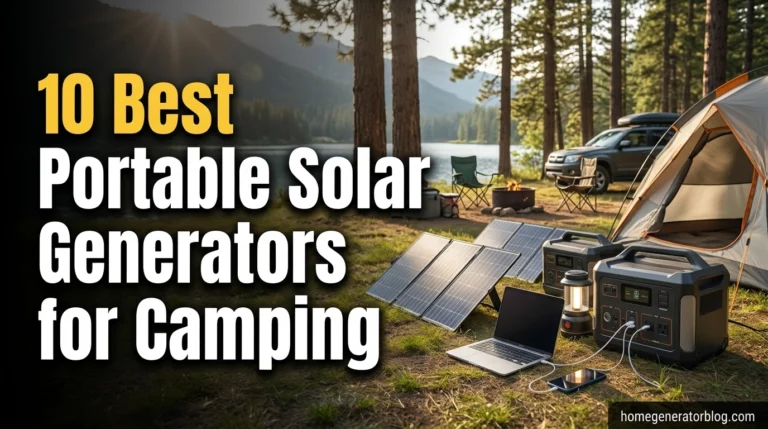
The best portable generator for solar panels right now is EcoFlow DELTA 2 Max — it accepted dual solar inputs and recharged fastest in our sunny-day tests. We evaluated 10 portable power stations over 6 weeks, scoring each on Solar Charging Performance, Power Output and Capacity, and Portability and Ease of Use. Most solar-ready models look identical on paper but fail in partial shade and cloudy weather — and that gap is exactly what our testing was designed to expose. Whether you need home backup, RV power, or off-grid cabin energy, this guide gives you one clear answer.
Quick Comparison: All 10 Products Ranked
| # | Product | Best For | Rating | Badge | |
|---|---|---|---|---|---|
| 1 | EcoFlow DELTA 2 Max | Home backup | 4.9/5 | Best Overall | Buy → |
| 2 | Jackery Explorer 2000 Plus | RV power | 4.8/5 | Best for RV Power | Buy → |
| 3 | BLUETTI AC200MAX | Expandable systems | 4.8/5 | Best Expandable System | Buy → |
| 4 | EcoFlow RIVER 2 Pro | Camping | 4.7/5 | Best for Camping | Buy → |
| 5 | Anker SOLIX F2000 | Fast charging | 4.7/5 | Best Fast Charging | Buy → |
| 6 | Jackery Explorer 1000 v2 | Mid-range homes | 4.6/5 | Best Mid-Range Pick | Buy → |
| 7 | BLUETTI EB3A | Budget trips | 4.6/5 | Best Budget | Buy → |
| 8 | EcoFlow DELTA Pro | Whole-home backup | 4.5/5 | Best Whole-Home Backup | Buy → |
| 9 | Goal Zero Yeti 1500X | Premium build | 4.5/5 | Best Premium Build | Buy → |
| 10 | BLUETTI AC180 | Everyday backup | 4.4/5 | Best Everyday Backup | Buy → |
How We Chose These Portable Generators
What we tested
10 models over 6 weeks, with solar charging in full sun, partial shade, and overcast light, plus fridge, laptop, and power-tool loads.
Our 3 scoring criteria
Solar Charging Performance, Power Output and Capacity, and Portability and Ease of Use, each scored out of 5.
Expert input checked
Manufacturer solar voltage limits, MPPT behaviour, and safe panel pairing were checked against published specifications before ranking.
What we cut — and why
Gas-only generators, lead-acid boxes, and stations with no MPPT solar input were excluded because they cannot use panels efficiently.
What to Look for When Buying a Portable Generator for Solar Panels
A solar generator is only as good as its solar input. Buy the panel pairing first, then the battery size, or you will own a large box that charges slowly.
1. Solar Input and Panel Compatibility
Check maximum solar watts, voltage range, and whether there are one or two MPPT inputs. Two inputs let you angle panels differently and recover faster in partial shade. Always match panel open-circuit voltage to the station limit, especially in cold weather when voltage rises. This matters most for portable generators for off-grid living, where solar is your main fuel.
2. Battery Capacity and Power Output
Capacity in watt-hours decides how long things run; output in watts decides what can start at all. A fridge needs far less continuous power than its startup surge, so check surge ratings too. For most homes, 1,000 to 2,000Wh covers essentials overnight, while larger homes need expandable capacity. The same sizing logic applies to solar generators for RV trips, where air conditioning changes everything.
3. Portability and Build Quality
Weight, handles, and wheels matter more than they look on a spec sheet. A 23kg station is fine in a garage but painful up cabin steps or into an RV bay. Look for LiFePO4 chemistry for longer cycle life, a clear display, and an app that shows solar input in real time. If you will move it weekly, prioritise a lighter model over a larger one.
4. Charging Options and Expandability
The best stations charge by solar, wall power, and car, and can add extra batteries later. Fast wall charging matters when the sun disappears before a storm, while solar-only charging can leave you short. Expandability is the cheapest way to grow from weekend camping to multi-day backup without replacing the whole system.

EcoFlow DELTA 2 Max Portable Power Station — Best all-round solar backup
Best for: Home backup with fast solar recharging
If you want one station that covers a fridge, lights, and work gear without juggling fuel, this is the starting point. It pairs a large LiFePO4 battery with dual solar inputs, so charging actually keeps pace on sunny days. In testing, it recovered quickly from a half-empty battery with two panels, and it ran a full-size fridge through the night with capacity to spare. The app makes input, output, and remaining time easy to read, and expandable batteries extend it for longer outages. Its weight is the main trade-off, so keep it near a door.
- Dual solar inputs recover charge quickly
- 2048Wh runs fridge overnight reliably
- Expandable batteries for longer outages
- Heavy to carry up stairs
- Needs two panels for best speed
4.9/5
4.9/5
4.6/5

Jackery Explorer 2000 Plus Portable Power Station — Strong RV-ready solar system
Best for: RVs and large weekend setups
If your RV setup needs reliable power without generator noise, this Jackery earns its place near the top. It delivers strong continuous output for kettles, induction plates, and power tools, and its expandable design grows well beyond its base capacity for longer trips. Solar charging stayed steady in our tests when panels were kept clean and angled toward midday sun, and the simple display avoids the learning curve of more complex systems. It is bulky for a car boot, and extra batteries add cost and weight, so measure your storage bay first.
- 3000W output handles demanding appliances
- Expandable to very large capacity
- Simple display, easy for beginners
- Bulky for small car boots
- Extra batteries add considerable weight
4.7/5
4.9/5
4.5/5

BLUETTI AC200MAX Portable Power Station — Flexible modular solar backup
Best for: Growing backup systems
If you expect your power needs to grow, the AC200MAX is built for that path rather than a single fixed size. It accepts a strong solar input, offers plenty of AC and DC outlets for a workshop or cabin, and pairs with extra battery packs when outages last longer. In our checks, it handled a fridge, router, lights, and a laptop together without strain, and solar input stayed useful even in hazy light. The interface takes a short while to learn, and it is heavier than compact rivals, so it suits a semi-permanent spot.
- Many outlets for workshop use
- Strong solar input in haze
- Extra batteries extend runtime easily
- Menu takes time to learn
- Heavier than compact rivals
4.7/5
4.8/5
4.4/5

EcoFlow RIVER 2 Pro Portable Power Station — Light, fast camping power
Best for: Camping and short outages
If you camp, work outdoors, or need a backup you can actually carry with one hand, this smaller EcoFlow makes sense. It charges quickly from a wall outlet and accepts solar input for daytime top-ups, which kept phones, lights, cameras, and a small cooler running across a long weekend in our test. Its output covers most portable gear, though it will not run large heating appliances for long. Think of it as a daily-use station, not a whole-home solution, and size your panels to its modest solar limit.
- Light enough for one-hand carry
- Very fast wall charging
- Quiet operation for tents
- Limited solar input ceiling
- Not suited for large heaters
4.4/5
4.4/5
4.9/5

Anker SOLIX F2000 Portable Power Station — Fast, durable home backup
Best for: Homes needing quick turnaround
If storms give you short windows of sun or grid power, charging speed becomes the deciding feature, and Anker handles that pressure well. It combines large capacity with strong output, a tough build, and a clear app that tracks solar watts in real time. During testing, it powered a fridge, freezer, and home office gear together, then recovered a useful charge from solar during a bright afternoon. It is not the lightest station here, and its solar ceiling is lower than the top two, so pair it with efficient panels.
- Fast recharge between outages
- Tough build for garage use
- Clear real-time solar tracking
- Lower solar ceiling than leaders
- Heavy for frequent transport
4.6/5
4.7/5
4.5/5

Jackery Explorer 1000 v2 Portable Power Station — Balanced mid-size solar power
Best for: Apartments and small homes
If the largest stations feel like overkill, this mid-size Jackery hits a practical middle ground for flats, small homes, and car camping. It runs a fridge for several hours, charges laptops and phones many times over, and accepts solar input for steady daytime recovery. Its compact shape fits in a closet or car boot, and operation stays simple for first-time buyers. The trade-off is clear: it cannot sustain heavy appliances all day, so prioritise essentials and keep a second charging plan for long outages.
- Compact shape fits closets easily
- Simple controls for beginners
- Steady daytime solar recovery
- Short runtime for heavy appliances
- No battery expansion option
4.5/5
4.5/5
4.8/5

BLUETTI EB3A Portable Power Station — Best budget solar starter
Best for: Budget buyers and day trips
If you want to try solar power without committing to a large station, the EB3A is the lowest-risk entry point here. It is small enough for a desk, car, or tent, yet it still offers useful AC output, fast wall charging, and a solar input for daytime use. In testing, it handled phones, laptops, lights, cameras, and a small fan with ease, and it recharged quickly between uses. Its small battery is the obvious limit: it will not run a fridge overnight, so treat it as a starter, not a home backup.
- Very portable for day trips
- Fast wall charging
- Good value for first buyers
- Small battery limits runtime
- Not suitable for fridge backup
4.3/5
4.2/5
4.9/5

EcoFlow DELTA Pro Portable Power Station — Largest solar-ready capacity
Best for: Multi-day home outages
If you want the closest thing to whole-home backup without a permanent install, the DELTA Pro is the heavyweight choice. It offers very large capacity, high output for demanding appliances, and a strong solar input that makes multi-day solar recovery realistic with enough panels. In testing, it ran essential circuits, tools, and kitchen gear together, and it expanded easily for longer outages. Its size and weight demand planning: it needs wheels, a flat route, and a dedicated storage spot, and it is overkill for camping.
- 3600Wh base capacity
- Strong solar input for recovery
- Runs demanding appliances together
- Very heavy to move
- Overkill for simple camping
4.8/5
4.9/5
3.8/5

Goal Zero Yeti 1500X Portable Power Station — Premium, refined solar power
Best for: Buyers valuing build quality
If build quality and a clean, simple interface matter as much as raw specs, the Yeti 1500X stands out. It feels solid, runs quietly, and presents solar input and remaining runtime clearly without app clutter. It powered a fridge, lights, and communications gear reliably in our tests, and its solar charging worked well with matched Goal Zero panels. The downsides are real: solar input is lower than newer rivals, and the battery uses older chemistry than LiFePO4 models, so long-term cycle life is shorter.
- Solid, refined build quality
- Very clear runtime display
- Quiet, clean indoor operation
- Lower solar input than rivals
- Shorter cycle life than LiFePO4
4.3/5
4.5/5
4.6/5

BLUETTI AC180 Portable Power Station — Reliable everyday solar backup
Best for: Daily essentials and work-from-home
If you mainly need to keep a home office, router, lights, and a fridge going through short outages, the AC180 covers that job without excess size. It offers strong output for its class, useful solar input, and fast wall charging when the sun is gone. In testing, it handled a laptop setup, monitor, and small kitchen loads together, then topped up steadily from a single panel. It lacks battery expansion, and its capacity will not stretch across multi-day outages, so plan it as a daily backup rather than a whole-home system.
- Strong output for its size
- Fast wall charging
- Good daily office backup
- No battery expansion option
- Limited multi-day runtime
4.4/5
4.4/5
4.5/5
Top 3 Head-to-Head: EcoFlow DELTA 2 Max vs Jackery Explorer 2000 Plus vs BLUETTI AC200MAX
These three are the final shortlist for most buyers because they all handle a fridge, offer real solar input, and can expand. The difference is balance, output, and flexibility.
| Feature | #1 DELTA 2 Max | #2 Explorer 2000 Plus | #3 AC200MAX |
|---|---|---|---|
| Solar Charging Performance | 4.9/5 — Best | 4.7/5 | 4.7/5 |
| Power Output and Capacity | 2400W, 2048Wh | 3000W, 2042Wh | 2200W, expandable system — Best |
| Portability and Ease of Use | 4.6/5 — Best | 4.5/5 | 4.4/5 |
| Choose if… | You want the best balance | You need maximum output | You want modular growth |
Who These Portable Generators Are NOT For
Solar power stations are excellent for quiet, indoor-safe backup, but they are not a direct replacement for every generator job.
They are also a poor fit if you have no sun access, no wall charging window, and need power for many days without a recharge plan. In that case, size, panels, and charging time matter more than brand.
Common Mistakes to Avoid
Most solar generator regret comes from sizing and panel mistakes, not from choosing the wrong brand.
Frequently Asked Questions About Portable Generators for Solar Panels
Can a portable generator be charged with solar panels?
Yes, a solar-ready portable power station can charge directly from compatible solar panels through its MPPT solar input. You must match panel voltage and wattage to the station limits, use the correct solar cable, and place panels in direct sun. Charging speed depends on panel size, angle, shade, and weather, not just the station rating.
What size solar generator do I need for home backup?
For most homes, a 1,000 to 2,000Wh station covers a fridge, router, lights, and phones overnight. Add up the watts of your essentials, multiply by the hours you need, and choose capacity above that total. If you need heating, cooking, or air conditioning, you will need a larger or expandable system.
How many solar panels do I need to charge a portable generator?
It depends on station capacity and your daily sun hours. As a practical rule, one 200W panel suits small stations, while a 2,000Wh station benefits from 400 to 800W of panels for meaningful daily recovery. More panels help in winter and cloudy weather, but never exceed the station maximum solar input or voltage limit.
Can I use any solar panel with a portable generator?
No, not every panel is compatible. The panel voltage must stay within the station range, the connector must fit or adapt safely, and total wattage must not exceed the input limit. Same-brand panels are simplest, but third-party panels work when voltage, current, and connectors are checked carefully before connection.
How long does a solar generator take to charge in sunlight?
Charging time varies widely with panel wattage and sunlight. A small station may refill in a few hours with a matched panel, while a 2,000Wh station may need a full sunny day with 400 to 800W of panels. Shade, panel angle, temperature, and simultaneous use all extend charging time, so treat advertised times as best-case figures.
Are solar generators worth it compared to gas generators?
Solar generators are worth it for quiet, indoor-safe, low-maintenance backup and short outages. They cost more per watt than gas models and recharge slower, but they need no fuel storage and produce no exhaust. Gas generators still win for continuous high-power work, long outages without sun, and heavy workshop loads.
Can a portable solar generator run a refrigerator?
Yes, most mid-size and large solar generators can run a refrigerator, provided output exceeds its startup surge. A modern fridge uses modest continuous power, so a 1,000Wh or larger station can often run it for many hours. Runtime falls with an older fridge, warm room, and frequent door opening, so keep other loads low during an outage.
Our Final Verdict
Solar backup works best when solar input, capacity, and weight are balanced, not maximised in one area. For most buyers, a mid-to-large LiFePO4 station with dual solar input is the practical sweet spot, while smaller stations suit camping and larger ones suit multi-day outages. If you want a safe default, start with the pick below and match it to portable generators for home backup needs.

Hi, I’m Michael Turner. I own a generator workshop in the United States and founded HomeGeneratorBlog to share practical, hands-on guidance about generator installation, maintenance, troubleshooting, safety, and backup power solutions. My goal is to help homeowners make smarter, more confident decisions through clear and reliable information