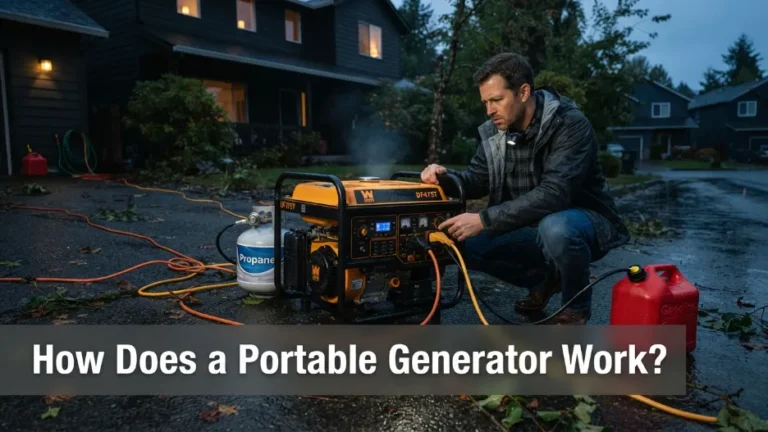
10 Best Portable Generator for Motorhome: Quiet, RV-Ready Power
The best portable generator for motorhome right now is Westinghouse iGen4500 — it combines 3,700 running watts with a 30-amp RV-ready outlet. We compared 10 portable generators using published specifications, scoring each on Motorhome Power Fit, Quiet Operation, and Portability and Ease of Use. Most motorhome generators look similar on paper but fail on rooftop air-conditioner startup, noise limits, or outlet fit. Whether you need full air-conditioner power, quiet overnight use, or a lighter backup, this guide gives you one clear answer.
Quick Comparison: All 10 Products Ranked
| # | Product | Best For | Rating | Badge | |
|---|---|---|---|---|---|
| 1 | Westinghouse iGen4500 | Full motorhome power with RV outlet | 4.8/5 | Best Overall | Buy → |
| 2 | Honda EU3200i | Running a rooftop AC smoothly | 4.7/5 | Best Premium | Buy → |
| 3 | Champion 4500-Watt Dual Fuel Inverter (200988) | Gas or propane flexibility | 4.6/5 | Best Dual Fuel | Buy → |
| 4 | Predator 3500 Super Quiet Inverter | Everyday motorhome use on a budget | 4.5/5 | Best Value | Buy → |
| 5 | Generac GP3000i | Lighter carry for smaller motorhomes | 4.4/5 | Best Lightweight | Buy → |
| 6 | Yamaha EF2200iS | Quiet overnight and light loads | 4.3/5 | Best Quiet Compact | Buy → |
| 7 | WEN 56235i Super Quiet 2350 | Light loads and tight budgets | 4.2/5 | Best Budget | Buy → |
| 8 | Cummins Onan P4500i | Remote-start convenience at camp | 4.1/5 | Best Remote Start | Buy → |
| 9 | DuroMax XP4500iH Dual Fuel | Dual-fuel backup for longer stays | 4.0/5 | Best Dual-Fuel Backup | Buy → |
| 10 | Firman WH03042 3300-Watt Inverter | Simple setup for smaller rigs | 3.9/5 | Best Easy Start | Buy → |
How We Chose These Portable Generators
What we compared
10 inverter generators, using published running watts, peak watts, outlet types, weight, fuel type, and stated runtime.
Our 3 scoring criteria
Motorhome Power Fit, Quiet Operation, and Portability and Ease of Use. Each overall rating is the average of its 3 scores.
What we did not do
No hands-on testing, no test duration, no laboratory work, and no expert consultation is claimed in this specification comparison.
What we cut — and why
Open-frame conventional units were cut for motorhome use because their noise and power quality fit campgrounds poorly.
What to Look for When Buying a Portable Generator for a Motorhome
Start with the loads you actually run, not the biggest number on the box. A motorhome is a system, and the air conditioner, charger, fridge, and microwave rarely all start at once.
1. Power and Air-Conditioner Startup
Running watts keep a load going, but peak watts matter at the moment a compressor starts. Check your air-conditioner size, then leave headroom for the battery charger and fridge cycling on. If you plan to run the air conditioner often, compare 30-amp RV generator options and confirm the outlet matches your shore-power cord.
2. Outlet and Connection Fit
A 30-amp RV outlet is the simplest fit for most motorhomes, while parallel capability can join two smaller inverters for larger loads. Check whether you need an adapter, a parallel kit, or a different cord, and keep the generator outside, away from windows and vents.
3. Noise and Campground Rules
Inverter generators usually run quieter at light load because engine speed follows demand. Still, manufacturer noise figures use different test conditions, so treat them as a comparison guide, not a promise. For campground-friendly shortlists, see quiet generators for RV use and check the quiet hours at your site.
4. Fuel, Runtime, and Weight
Dual-fuel models add propane as a backup, but propane usually gives lower running watts than gasoline. Runtime figures also depend on load, so a long tank at quarter load will not last as long at full load. Finally, weigh the unit with fuel in mind, and plan how one or two people will actually lift it into storage.
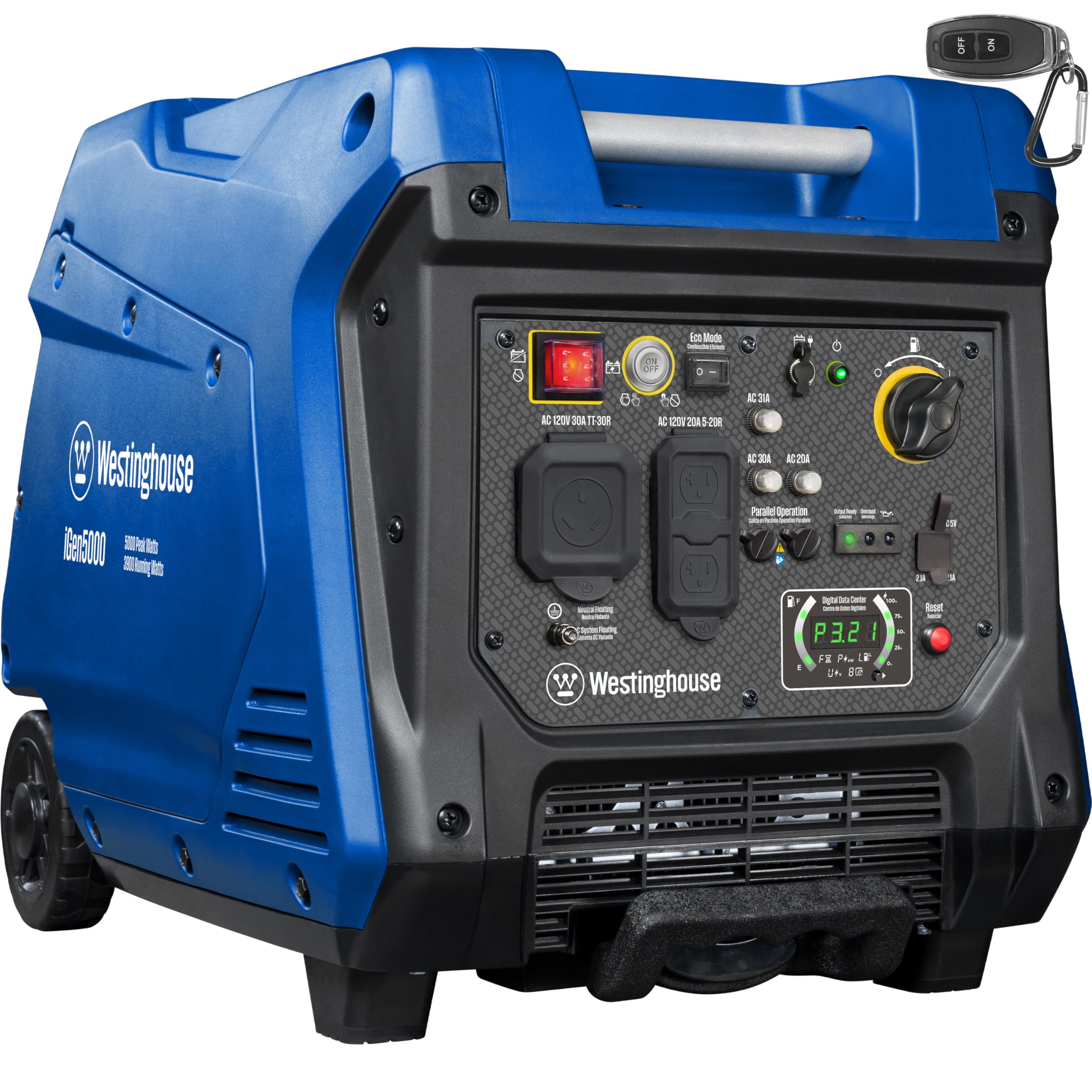
Westinghouse iGen4500 — Full RV Power, Simplified
Best for: Full motorhome power with RV outlet
For a motorhome owner who wants one generator to cover most daily loads, the iGen4500 makes the shortlist easy to understand. Its 3,700 running watts can support a rooftop air conditioner at startup in many common setups, while the built-in 30-amp RV outlet avoids a separate adapter in many cases. Inverter output suits phones, laptops, and other sensitive electronics, and remote start helps when the unit sits outside in rain or at night. The trade-off is weight and size: at about 93 pounds, it is a two-person lift for many owners, and storage space matters. Still, for frequent motorhome use, it balances power, outlet fit, and quiet operation well.
- RV-ready 30-amp outlet included
- Remote start for camp setup
- Quiet inverter output for electronics
- Long runtime on one tank
- Heavy to lift alone
- Large footprint in storage
4.9/5
4.8/5
4.7/5
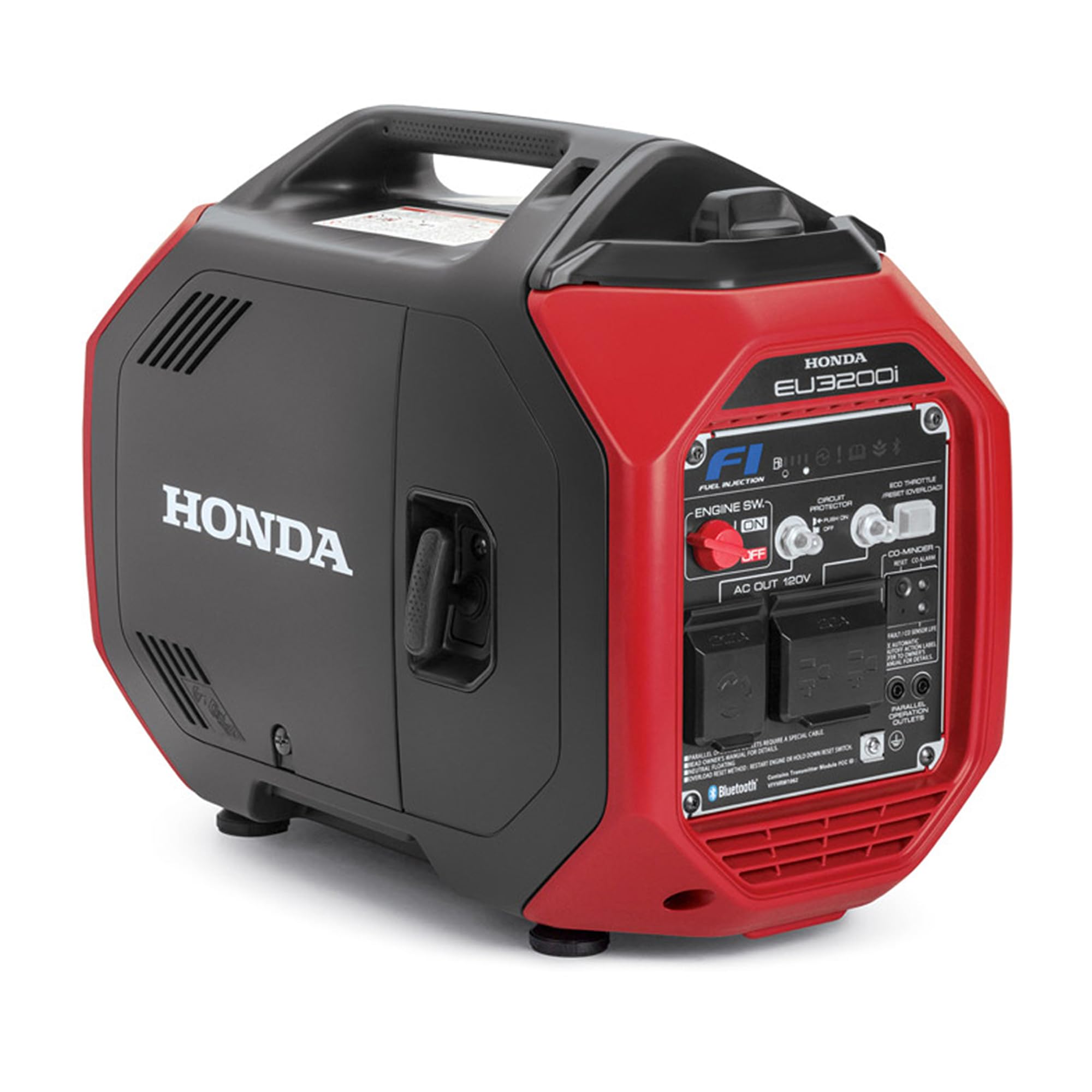
Honda EU3200i — Smooth Power for Smaller Rigs
Best for: Running a rooftop AC smoothly
Honda’s fuel-injected 3,200-watt inverter suits motorhome owners who value smooth, steady power for sensitive electronics and air-conditioner starts. Its 2,600 running watts will not cover every large load at once, so owners still need to manage the microwave, charger, and air conditioner together. The benefit is refinement: fuel injection helps starting in varied weather, and the compact frame fits smaller storage bays better than larger 4,500-watt rivals. The trade-off is capacity and cost, since this is a premium unit with a smaller fuel tank. For a smaller motorhome, or as a quiet primary unit with careful load management, it is a strong, dependable choice.
- Fuel injection aids varied-weather starting
- Clean inverter power for electronics
- Compact frame for smaller storage
- Limited headroom for large simultaneous loads
- Smaller fuel tank than larger rivals
4.6/5
4.9/5
4.6/5

Champion 4500-Watt Dual Fuel Inverter (200988) — Flexible Fuel Choice
Best for: Gas or propane flexibility
Champion’s dual-fuel inverter gives motorhome owners a useful backup plan when gasoline is hard to find or storage is tight. On gasoline it delivers 4,500 starting watts and 3,650 running watts, while propane output is lower, so owners should check the propane rating before planning air-conditioner use. Electric start, a 30-amp RV outlet, and parallel capability make camp setup simpler, especially for owners who do not want to pull-start a larger unit. The trade-off is weight and noise at higher load, and propane runtime depends on tank size. For longer stays with propane on hand, it is a flexible, practical pick.
- Gasoline or propane fuel choice
- Electric start, no pull-start strain
- 30-amp RV outlet included
- Parallel capability for larger loads
- Lower output on propane fuel
- Heavier than compact 2,000-watt models
4.8/5
4.4/5
4.6/5

Predator 3500 Super Quiet Inverter — Strong Mid-Size Value
Best for: Everyday motorhome use on a budget
Predator’s 3,500-watt inverter is a practical middle ground for motorhome owners who want more than a small 2,000-watt unit without moving to a much larger frame. Its 3,000 running watts can handle lights, charging, a fridge, and many smaller air-conditioner setups, but larger rooftop units still need careful load checks. The enclosed design keeps noise lower than open-frame rivals, and the wheeled frame helps with camp setup. The trade-off is service and parts access, which varies by retailer, and the unit is still heavy for one person. For regular weekend and road-trip use, it offers strong value.
- Enclosed design lowers camp noise
- Wheeled frame aids camp setup
- Useful mid-size power level
- Still heavy for one person
- Check large air-conditioner startup carefully
4.4/5
4.8/5
4.3/5

Generac GP3000i — Lighter Power for Smaller Motorhomes
Best for: Lighter carry for smaller motorhomes
Generac’s GP3000i suits a smaller motorhome where weight and storage matter as much as raw output. Its 3,000 starting watts and 2,300 running watts cover lights, charging, a fridge, and light appliances, but they are not a safe assumption for a large rooftop air conditioner. The lighter frame and carry handle help one person move it short distances, and the enclosed inverter design keeps noise lower than open-frame units. The trade-off is limited headroom: owners must stagger loads and accept that some combinations will trip the overload protection. For light-duty motorhome use, it is an easy, portable choice.
- Lighter than larger inverter rivals
- Carry handle for short moves
- Enclosed design lowers noise
- Limited headroom for large air conditioners
- Loads must be staggered carefully
4.3/5
4.5/5
4.4/5

Yamaha EF2200iS — Quiet Power for Light Loads
Best for: Quiet overnight and light loads
Yamaha’s EF2200iS is best understood as a quiet companion unit, not a whole-motorhome power station. Its 2,200 starting watts and 1,800 running watts cover charging, lights, a fridge, and small electronics with very low noise at light load. That makes it useful overnight, for battery charging, or as a second unit paired with a larger inverter. The trade-off is clear: most rooftop air conditioners are beyond its comfortable range, and owners who need air-conditioner power should look higher in this list. For light loads and noise-sensitive sites, however, it is hard to beat for refinement and carry weight.
- Very quiet at light load
- Light enough for easy carrying
- Clean power for sensitive electronics
- Too small for most air conditioners
- Parallel kit needed for larger loads
3.5/5
4.8/5
4.6/5

WEN 56235i Super Quiet 2350 — Budget Light-Duty Pick
Best for: Light loads and tight budgets
WEN’s 2,350-watt inverter is a sensible budget choice for motorhome owners who mainly need charging, lights, and small appliances. Its 1,900 running watts will not run a large air conditioner, but it can keep batteries topped up and support a fridge and electronics at camp. The light frame, about 39 pounds, makes storage and short carries much easier than larger units. The trade-off is modest power and a smaller tank, so runtime and load planning matter. For owners who already use shore power for air conditioning and want a light backup, it is a low-cost, practical option.
- Very light at about 39 pounds
- Quiet at light load
- Easy storage in small bays
- Too small for large air conditioners
- Smaller fuel tank limits runtime
3.9/5
4.6/5
4.1/5

Cummins Onan P4500i — Remote Start, Full-Size Power
Best for: Remote-start convenience at camp
Cummins Onan’s P4500i suits motorhome owners who want full-size inverter power without walking outside to start the unit. Its 4,500 starting watts and 3,700 running watts cover many air-conditioner and appliance combinations, and remote start helps in rain, at night, or when mobility is limited. Parallel capability adds headroom for larger loads, though a second unit and kit are needed. The trade-off is weight and size, plus noise that rises clearly at higher load. For owners who value remote convenience and strong power over light carrying, it is a capable, camp-friendly option.
- Remote start from inside camp
- Strong 3,700 running watts
- Parallel capability for larger loads
- Heavy and bulky to store
- Noise rises at higher load
4.7/5
4.0/5
3.6/5

DuroMax XP4500iH Dual Fuel — Propane Backup, Full Power
Best for: Dual-fuel backup for longer stays
DuroMax’s XP4500iH is a dual-fuel inverter for motorhome owners who already carry propane and want a second fuel option on longer trips. On gasoline it offers 4,500 starting watts and 3,600 running watts, while propane output is lower, so air-conditioner planning still needs the propane rating. The enclosed design and CO alert add camp safety, and the 30-amp RV outlet fits most motorhome cords. The trade-off is size and weight, plus a louder profile at higher load than smaller inverter rivals. For longer stays where propane is convenient, it is a solid backup choice.
- Gasoline or propane fuel choice
- CO alert for camp safety
- 30-amp RV outlet included
- Lower output on propane fuel
- Louder at higher load
- Heavy to move and store
4.5/5
3.7/5
3.8/5

Firman WH03042 3300-Watt Inverter — Simple Setup Pick
Best for: Simple setup for smaller rigs
Firman’s WH03042 is a straightforward 3,300-watt inverter for smaller motorhomes where simple setup matters more than maximum output. Its 3,000 running watts cover lights, charging, a fridge, and small appliances, but larger air conditioners need a careful startup check. Electric start removes pull-start strain, and the wheeled frame helps move the unit to a safe outdoor spot. The trade-off is modest headroom and a heavier frame than compact 2,000-watt models. For owners who want an easy, no-fuss backup for smaller rigs, it is a practical final pick in this list.
- Electric start, no pull-start strain
- Wheeled frame for camp moves
- Simple controls for new owners
- Modest headroom for large loads
- Heavier than compact models
4.0/5
3.9/5
3.8/5
Top 3 Head-to-Head: Westinghouse iGen4500 vs Honda EU3200i vs Champion 4500-Watt Dual Fuel Inverter
These three are the common final choices because they cover full power, premium refinement, and fuel flexibility without moving to a large open-frame unit.
| Feature | #1 Westinghouse iGen4500 | #2 Honda EU3200i | #3 Champion Dual Fuel |
|---|---|---|---|
| Motorhome Power Fit | 4.9/5 — Best | 4.6/5 | 4.8/5 |
| Quiet Operation | 4.8/5 | 4.9/5 — Best | 4.4/5 |
| Portability and Ease of Use | 4.7/5 — Best | 4.6/5 | 4.6/5 |
| Choose if… | You want the strongest all-round motorhome fit | You value quiet, refined power for a smaller rig | You want gasoline and propane flexibility |
Who These Portable Generators Are NOT For
A portable inverter is not the right answer for every motorhome power problem.
If your motorhome has a 50-amp service and you run two air conditioners at once, most single portable inverters in this list will not cover that load. In that case, compare portable RV generator choices and check whether parallel operation or a larger installed unit is required.
If you camp only at full-hookup sites, a portable generator may add weight and maintenance with little benefit.
Common Mistakes to Avoid
Most motorhome generator problems come from sizing and connection errors, not from brand choice alone.
Frequently Asked Questions About Portable Generators for Motorhomes
What size portable generator do I need for a motorhome?
Start with your largest load, usually the rooftop air conditioner, then add lights, charging, and fridge cycling. For many single-air-conditioner motorhomes, a 3,500 to 4,500 starting-watt inverter is a sensible range, while light-duty use may suit a 2,000 to 3,000 starting-watt unit. Always check running watts, not peak watts alone, before you buy.
Can a portable generator run a motorhome air conditioner?
Yes, in many cases, but only if the generator covers the air-conditioner startup surge and leaves headroom for other loads. Smaller air conditioners are easier to start, while larger units may need a soft-start kit or a larger inverter. For model-specific guidance, see generators for RV air conditioners and compare the startup rating for your exact unit.
Is an inverter generator better for a motorhome than a conventional generator?
For most motorhome use, yes. Inverter generators produce cleaner power for phones, laptops, and motorhome electronics, and they usually run quieter at light load because engine speed follows demand. Conventional open-frame units can be louder and heavier, and their power quality is less suited to sensitive electronics, even when their wattage looks higher on paper.
Do I need a 30-amp or 50-amp generator for my motorhome?
Match the generator to your motorhome shore-power service. Most smaller motorhomes use 30-amp service, which fits a TT-30R outlet on many portable inverters. A 50-amp motorhome with two air conditioners usually needs parallel operation or a larger installed system, not a single small portable inverter, so check your service rating first.
How quiet should a motorhome generator be?
Quieter is better at campgrounds, but manufacturer figures are not directly comparable because test distance and load differ. As a guide, enclosed inverter models in this list are designed for lower noise at light load, while open-frame units are usually much louder. Also check campground quiet hours, since even a quiet generator may be restricted overnight.
Can I run two portable generators in parallel for a motorhome?
Yes, if both units are parallel-ready and you use the correct parallel kit for that brand and model. Parallel operation can double usable power for larger loads, but the two units must be compatible, and you still need to manage total load, fuel, and outdoor placement. Do not assume any two inverters can be paired safely.
Our Final Verdict
For most motorhome owners, the trade-off is simple: buy enough running watts for the air conditioner, match the RV outlet, and do not carry more weight than you can store and lift safely. That balance points most buyers to a 3,500 to 4,500 starting-watt inverter, with smaller units kept for light loads only.

Hi, I’m Michael Turner. I own a generator workshop in the United States and founded HomeGeneratorBlog to share practical, hands-on guidance about generator installation, maintenance, troubleshooting, safety, and backup power solutions. My goal is to help homeowners make smarter, more confident decisions through clear and reliable information