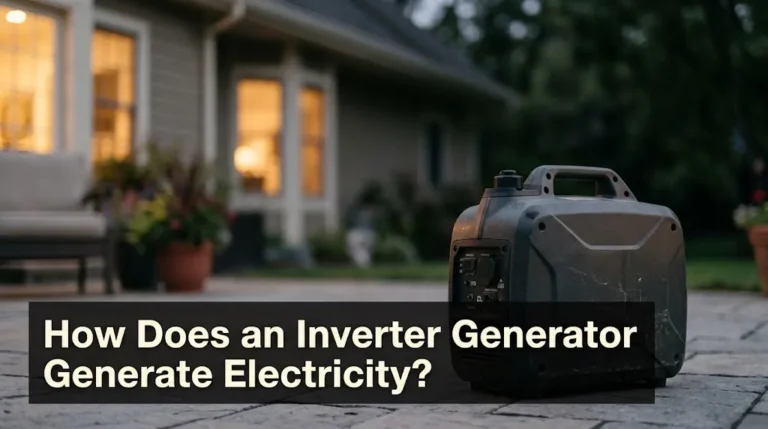
How Do Inverter Generators Regulate Voltage and Frequency?
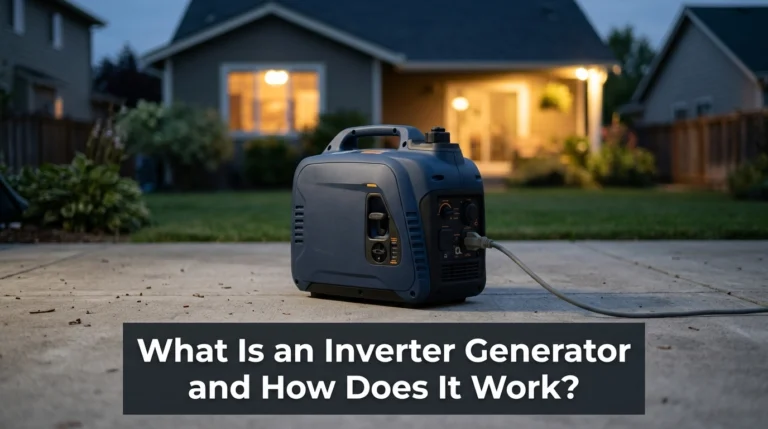
An inverter generator regulates voltage and frequency electronically, not by holding its engine at one fixed speed. It makes raw power, converts it to direct current, then rebuilds it as 120-volt, 60-hertz alternating current. A feedback loop constantly measures the output and adjusts the rebuilt wave, so a change in engine speed or load does not directly change what reaches your appliances.
The Short Version: Engine Speed Stops Deciding the Output
On a conventional portable generator, engine speed and electrical output are tied together. The engine must spin at about 3,600 revolutions per minute to produce 60-hertz power in the United States. If the engine slows under load, voltage and frequency sag with it.
An inverter generator breaks that link. The engine can speed up or slow down as demand changes, while the inverter module still aims for the same output. That separation is the whole trick. It is also why an inverter unit can run quietly at low load and still deliver stable power when you plug something in.
The first time I watched this on a meter, the lesson stuck. A refrigerator compressor kicked on, the engine note rose a fraction of a second later, and the meter barely moved. The engine was reacting. The output was not waiting for it.
What Voltage and Frequency Actually Mean
Voltage is electrical pressure. In most American homes, that pressure is 120 volts at a standard wall outlet. Frequency is how often the alternating current changes direction each second, measured in hertz. Here, that number is 60 hertz, or 60 cycles per second.
Think of voltage as how hard the power pushes, and frequency as the rhythm it pushes to. Most appliances tolerate a small wobble in either. Sensitive electronics, motors, and clocks tolerate much less. A large swing can cause a device to shut down, run hot, buzz, or fail early.
If you want the basics in one place, start with generator voltage and generator frequency. Those two ideas explain most of what can go wrong with bad power, and most of what an inverter is trying to prevent.
The Three-Stage Path Inside an Inverter Generator
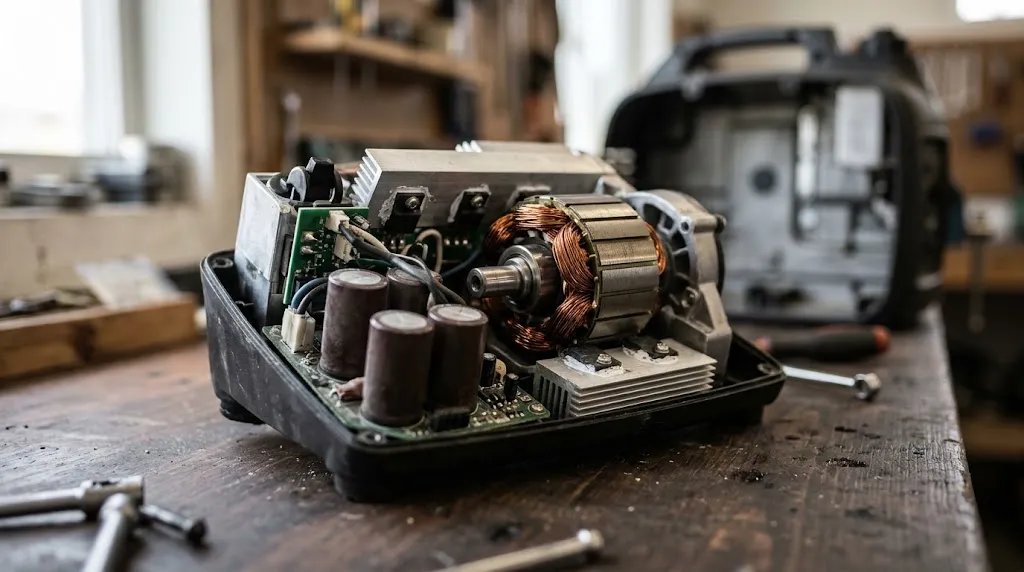
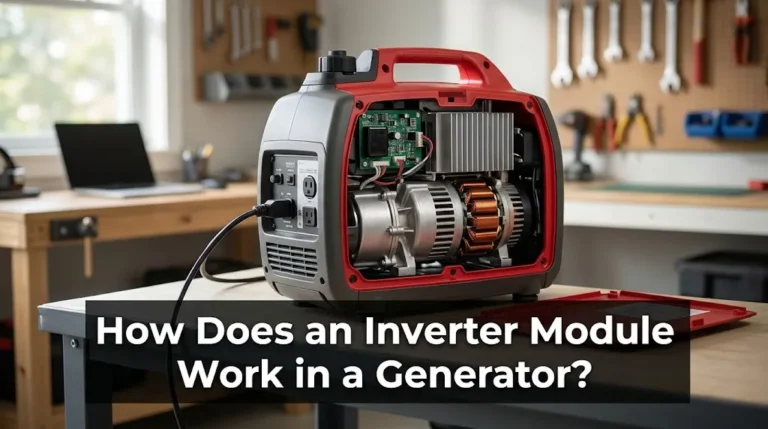
Every inverter generator follows the same broad path, even though brands package the parts differently. Raw power is made, cleaned up into direct current, and then rebuilt. Skipping any stage would hand the rough power straight to your equipment.
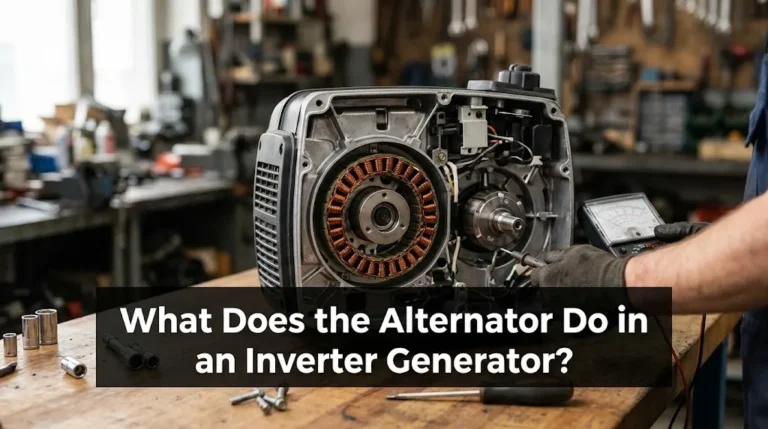
Stage 1: The alternator makes raw alternating current
The engine spins an alternator, which is a set of magnets and copper windings that generate electricity as they move past each other. On many inverter models, this alternator is smaller and lighter than a conventional one, and it often produces high-frequency alternating current rather than finished 60-hertz power.
At this stage, the power is rough. Its voltage and frequency rise and fall with engine speed. It is not yet suitable for a laptop, a television, or a modern furnace control board. It is simply the raw material.
Stage 2: The rectifier and DC bus smooth it into direct current
Next, a rectifier converts that raw alternating current into direct current, or DC. Direct current flows in one direction only, which makes it easier to store and control for a brief moment. Capacitors on the DC bus act like a small reservoir, smoothing out ripples before the next stage.
This DC bus matters more than it first appears. It isolates the final output from the engine. The engine can be spinning fast, slow, or somewhere in between, and the DC bus still gives the inverter module a workable starting point. Without that buffer, every engine hiccup would show up at the outlet.
Stage 3: The inverter module rebuilds clean alternating current
Finally, the inverter module converts DC back into alternating current. It does this with fast electronic switches, usually transistors, that turn the DC supply on and off thousands of times per second. A filter then smooths those rapid pulses into a wave that closely matches a pure sine wave.
A pure sine wave is a smooth, even curve. It is the shape of power from a good utility supply, and it is what most modern electronics expect. When people say an inverter generator makes clean power, this rebuilt sine wave is what they mean.
How Voltage Is Controlled
Voltage control starts with measurement. Sensors sample the output voltage continuously and compare it with a target, usually 120 volts. If the measured voltage is low, the controller corrects. If it is high, the controller pulls back.
The main correction tool is pulse width modulation, often shortened to PWM. In plain terms, PWM changes how long each electronic pulse stays on. Wider pulses deliver more average power and raise the output voltage. Narrower pulses deliver less and lower it. The pulses themselves switch far too fast for an appliance to notice as separate on-off bursts, because the output filter blends them into a smooth wave.
That feedback loop runs constantly, not once per second or once per load change. It is adjusting while a refrigerator cycles, while a phone charger draws a trickle, and while a power tool starts. The result, on a well-designed unit, is output that stays close to its rated voltage across a wide range of loads, rather than drifting up at light load and sagging at heavy load.
Manufacturers publish different tolerances, so check the spec sheet for the model you own or are considering. Many quality inverter models claim voltage regulation within about 1 to 3 percent of nominal, but that figure is a manufacturer claim for that model, not a promise that every inverter generator will hit it. A portable inverter generator with a published regulation figure and a low distortion figure is easier to judge than one that only says clean power in its marketing copy.
How Frequency Is Controlled
Frequency control works differently from voltage control, and the difference is easy to miss. The inverter does not count engine revolutions to set frequency. It creates frequency from an electronic timing reference.
Inside the controller, a reference signal defines the desired wave: 60 cycles per second in the United States, 50 cycles in many other countries. The switching pattern follows that reference. Each full sine wave takes one-sixtieth of a second to complete, regardless of whether the engine is idling along or working hard.
This is why eco mode, or a similar low-speed setting, does not change the frequency of the power at your outlets. The engine slows to save fuel and reduce noise, but the inverter still rebuilds each wave on the same 60-hertz schedule. If the engine slows too far to supply enough power, the problem shows up as a voltage drop, an overload shutdown, or a stalled engine, not as a slow drift to 50 hertz.
Frequency stability matters most for devices that use the timing of the power itself. Some older clocks, certain motors, and some medical or laboratory equipment are sensitive to it. Most modern chargers and switching power supplies are more forgiving, but they still benefit from a steady rhythm because it keeps their own internal regulation from working overtime.
What the Engine Throttle Actually Does
If the inverter controls voltage and frequency, what is the engine throttle for? It controls how much power is available, not the shape of the power itself.
When load rises, the controller tells the engine to speed up so the alternator can feed more energy into the DC bus. When load falls, the engine slows to save fuel. This is sometimes called electronic throttle control, and it is one reason inverter generators are quieter at light load than conventional units running flat out for a small phone charger.
The gap between those two jobs explains a common confusion. A slow engine does not mean slow power. A fast engine does not mean high voltage. The inverter sits between them and holds the output steady, while the engine simply tries to keep up with demand. Honda describes a similar division of labor in its iAVR voltage regulation explanation, where fast engine speed control works alongside electronic regulation rather than replacing it.
Inverter Regulation Compared With a Conventional Generator
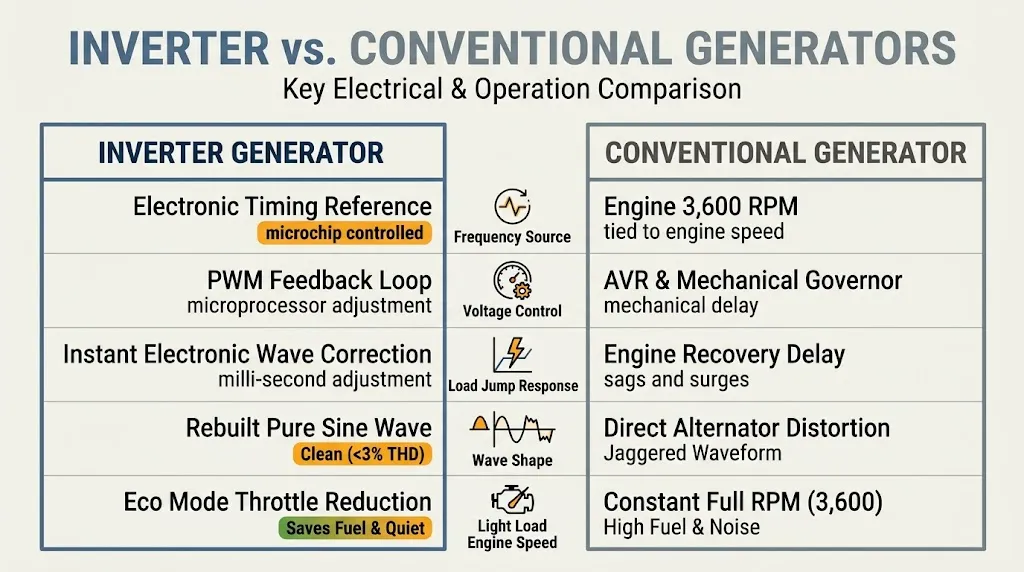
The table below puts the contrast in one place. A conventional generator is not useless, and for simple resistive loads such as an old heater or an incandescent work light, it can be perfectly adequate. The difference shows up when the load is sensitive, variable, or electronic.
| What is controlled | Inverter generator | Conventional generator |
|---|---|---|
| Frequency source | Electronic timing reference, typically 60 hertz | Engine speed, typically 3,600 rpm for 60 hertz |
| Voltage control | Feedback loop plus pulse width modulation | Automatic voltage regulator and engine governor |
| Response to a load jump | Inverter corrects the wave while the engine catches up | Engine and governor must recover before output steadies |
| Output wave shape | Rebuilt pure sine wave, usually low distortion | Direct alternator output, distortion varies more with load |
| Engine speed at light load | Can slow down to save fuel and reduce noise | Must stay near full speed to hold frequency |
What Happens When a Big Load Switches On
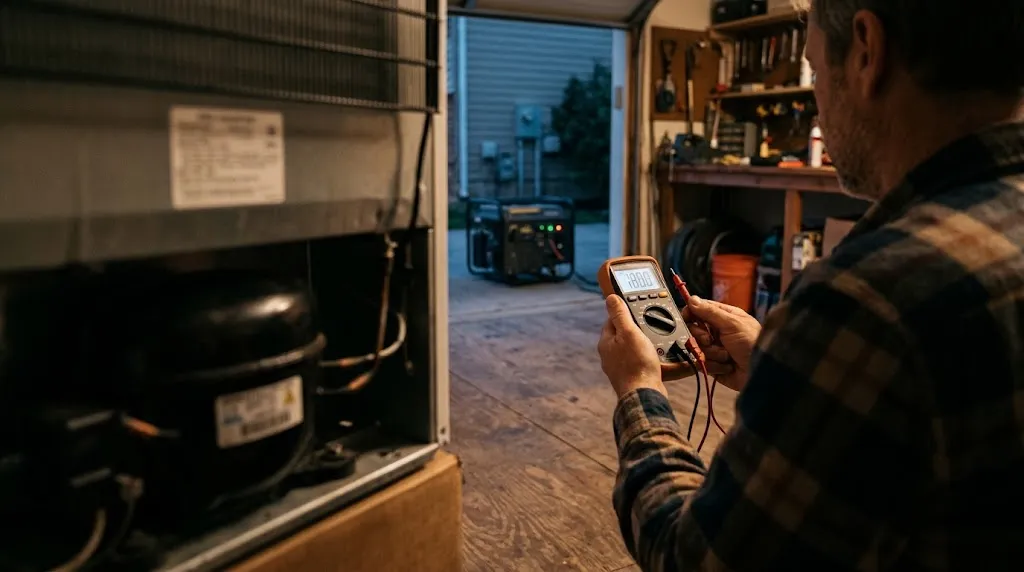
A load jump is the hardest test of regulation, and it is the test most homeowners actually experience. A refrigerator compressor, a well pump, or an air conditioner does not draw its running power at startup. It draws a surge, often two to three times its running watts, for a brief moment.
Here is the sequence on an inverter generator. The surge pulls energy from the DC bus. The inverter senses the voltage beginning to dip and widens its pulses to compensate. At the same time, the engine controller opens the throttle to replenish the bus. If the surge is within the generator’s starting watts, the outlet voltage dips briefly and recovers. If it is beyond that rating, the generator may trip its overload protection, even though its steady voltage looked fine a moment earlier.
That distinction matters when sizing a unit. Good regulation does not create extra watts. A 2,000-watt inverter generator cannot safely start a load that needs 3,500 starting watts just because its output is clean. Clean power and enough power are two separate checks, and both have to pass.
For a worked example, take a small setup: a refrigerator drawing about 150 running watts but needing roughly 600 starting watts, plus a few lights and a phone charger at about 100 watts combined. The steady load is only about 250 watts, so the engine can stay quiet. The startup moment is the real test, because the total briefly approaches 700 watts. A generator rated well above that startup figure will handle the moment with a smaller dip than one running near its limit.
Why Clean Power Matters: THD in Plain Terms
Total harmonic distortion, or THD, measures how far a wave strays from a perfect sine wave. It is expressed as a percentage. A lower percentage means a smoother wave. A higher percentage means more jagged, unwanted harmonics riding on top of the main wave.
Many quality inverter generators publish THD below 3 percent, which is close to typical utility power. That figure is worth checking on the spec sheet rather than assuming it, because not every model that uses the word inverter achieves the same result. Conventional generators often publish higher figures, or publish none at all, and their distortion can climb under heavy or uneven load.
High distortion does not always cause an instant failure. More often, it causes heat, buzzing, flickering lights, glitchy chargers, or shortened life in power supplies that must filter the mess themselves. Laptops, televisions, CPAP machines, modern furnaces, and anything with a microprocessor are the usual victims. Simple heating elements and old-style power tools are far more tolerant, which is why an older generator can seem fine until you plug in the wrong device.
For more detail on what the finished power should look like, see the guide to AC power output. It helps to separate the question of how much power you have from the question of how clean that power is.
What Regulation Cannot Fix
Regulation has limits, and knowing them prevents the most common disappointment with an inverter generator.
- Overload: Exceeding running watts or starting watts will trip protection or stall the unit, no matter how good the inverter is.
- Uneven load on a 120/240-volt unit: Heavily loading one leg while the other sits idle can still cause problems, depending on the design. Balance the load where the manual tells you to.
- A failing inverter module: Erratic voltage, frequent overload trips at modest loads, or no output at all can point to electronics trouble, not to a fuel or spark plug issue. That is a repair-shop problem, not a settings tweak.
- Bad connections: A long, thin extension cord can drop voltage before power ever reaches the appliance. Regulation at the generator cannot fix a drop in the cord.
- The wrong device: Some equipment simply should not run on a small portable unit, however clean its output is. Check what not to plug into an inverter before assuming a clean sine wave makes every load safe.
How to Check Regulation at Home
You do not need a laboratory to spot a regulation problem. A basic plug-in meter that shows voltage and frequency, or a decent multimeter used carefully at an outlet, will tell you most of what you need.
Check at no load first, then with a steady load such as a heater or a set of lights, then again when a motor starts. Note the numbers rather than relying on whether a light looks bright. A brief dip when a compressor starts is normal. A voltage that stays low, climbs high, or wanders while the load is steady is not.
Do not open the generator or adjust internal voltage controls unless the manual specifically tells you to and you are qualified to do it. Most inverter models have no user voltage adjustment, because the controller is supposed to handle it. If the output is wrong and the load is within rating, the fault is usually a failing part, a bad cord, or an overloaded unit, in that order.
Safety Notes That Still Apply
Stable power does not make a generator safe indoors. Carbon monoxide is colorless and odorless, and it can build up fast in a garage, even with a door open. Run any generator outdoors, at least 20 feet from the house, with exhaust pointed away from doors, windows, and vents, and with a working carbon monoxide alarm inside.
Never backfeed a house through a wall outlet. That practice can energise utility lines and endanger line workers, and it can damage your generator when utility power returns. If you want to power house circuits, use a transfer switch or interlock kit installed by a licensed electrician, and check local code before you start.
Choosing a Unit With Regulation in Mind
When you compare models, look past the headline wattage. Read the spec sheet for output voltage, frequency, THD, and any published voltage regulation figure. Look for a pure sine wave claim backed by a number, not just the words clean power. Check whether the unit has parallel capability if you may need more power later, and whether it has a 30-amp outlet if an RV or transfer switch is in your plans.
The inverter generator buying guide walks through those trade-offs in more depth, including noise, runtime, and portability. Regulation is only one factor, but for electronics-heavy use, it is the factor that decides whether a cheaper unit is actually a bargain.
A dual-fuel inverter generator can add fuel flexibility without changing how regulation works, since the inverter stage is the same whether the engine burns gasoline or propane. Fuel choice affects runtime and storage, not the rebuilt sine wave.
Conclusion
An inverter generator holds voltage and frequency steady by rebuilding power electronically, measuring the result, and correcting it many times per second. Engine speed supplies energy. It does not set the rhythm or the pressure of the power at your outlets.
If your electronics matter during an outage, that separation is the feature to shop for, alongside enough starting watts for your largest motor. I am Michael Turner, and that is the check I use before I recommend any portable unit for a home full of modern appliances.
If you run laptops, a CPAP machine, or a modern furnace board during an outage, a quiet inverter generator with a published low-distortion output is the practical way to get steady 120-volt, 60-hertz power without running an engine at full speed all night.
FAQ
Does an inverter generator always output exactly 120 volts and 60 hertz?
No, it aims for those targets and stays close to them under normal loads, but a brief dip during a large motor startup is normal. A voltage that stays far from 120 volts, or a frequency that wanders while the load is steady, points to overload, a bad cord, or a fault rather than normal regulation.
Why does my inverter generator slow down in eco mode without changing the power?
Eco mode slows the engine to save fuel, but the inverter still rebuilds each wave on a 60-hertz timing reference. Engine speed controls how much energy is available, while the inverter controls the voltage and frequency of the finished power.
Is low THD the same thing as good voltage regulation?
No, they are related but different. Voltage regulation is how close the output stays to 120 volts. THD measures how smooth the wave shape is. A generator can hold voltage reasonably well while still producing a jagged wave, which is why both figures matter for sensitive electronics.
Can an inverter generator fix voltage drop from a long extension cord?
No. Regulation happens at the generator’s outlets, and voltage can still drop along a long or undersized cord before it reaches your appliance. Use a shorter, heavier-gauge cord rated for the load, and keep the total load within the generator’s rating.
Does a conventional generator with an automatic voltage regulator work the same way?
Not quite. A conventional automatic voltage regulator adjusts the alternator field to steady voltage, but frequency still depends on engine speed. An inverter generator separates both jobs from the engine by rebuilding the output electronically, which is why it can hold frequency steady while the engine slows down.

Hi, I’m Michael Turner. I own a generator workshop in the United States and founded HomeGeneratorBlog to share practical, hands-on guidance about generator installation, maintenance, troubleshooting, safety, and backup power solutions. My goal is to help homeowners make smarter, more confident decisions through clear and reliable information