Can You Convert a Conventional Generator Into an Inverter Generator?
Quick Answer
No, you cannot turn a conventional generator into a true inverter generator with a bolt-on kit or a simple add-on part. An inverter generator is built around a different alternator, a different engine control system, and an inverter module that works as one matched set.
Why a simple conversion does not work
- Different power path: A conventional generator makes AC power straight from the alternator, while an inverter generator makes AC power, changes it to DC power, then rebuilds it as clean AC power.
- Different alternator: The inverter design uses a compact, high-frequency alternator that feeds the inverter module, not the standard 60 Hz alternator in most open-frame units.
- Different engine control: An inverter generator changes engine speed with the load, while a conventional generator must hold a fixed speed to hold frequency.
- No matched kit exists: Major brands do not sell a factory conversion kit, and a mismatched inverter board can overheat, shut down, or damage the loads it should protect.
- Cleaner power needs a new system: If you need low-distortion power for laptops, a CPAP machine, or a modern furnace board, a purpose-built inverter generator is the reliable route.
What to do instead
- Keep the conventional unit for high-wattage, motor-driven loads that tolerate rougher power.
- Add a small inverter generator or a portable power station for phones, laptops, routers, and medical devices.
- Size the new unit from running watts plus the highest starting watts, with a safety margin.
I’m Michael Turner, and I’ve spent years running both kinds of portable power through outages, campsites, and job sites. This question comes up every storm season, usually from someone who already owns a solid conventional generator and wants cleaner, quieter power without buying a second machine.
I understand that urge. A good open-frame generator is a big purchase, and it feels wasteful to replace it. This guide goes deeper than a yes-or-no answer, so you’ll see what changes inside the machine, what a real conversion would take, and which cheaper workaround actually protects your electronics.
In This Guide
- What Does It Mean to Convert a Conventional Generator Into an Inverter Generator?
- How Is a Conventional Generator Different From an Inverter Generator?
- Why Can You Not Simply Add an Inverter to a Conventional Generator?
- What Would a Real Conversion Actually Require?
- Can an External Inverter, UPS, or Power Station Give You Clean Power Instead?
- What Should You Buy Instead of Converting Your Generator?
- How Can You Get Cleaner, Quieter Power From the Generator You Already Own?
- Is Converting a Generator Safe, Legal, and Worth It?
- Frequently Asked Questions
- The Bottom Line
What Does It Mean to Convert a Conventional Generator Into an Inverter Generator?
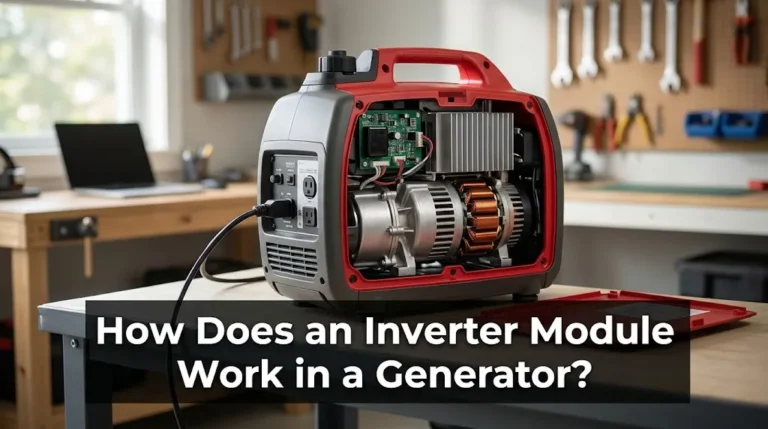
An inverter generator is a portable generator that creates AC power, converts it to DC power, then uses an inverter module to rebuild it as stable, clean AC power. That three-step path is the core idea. It lets the engine speed rise and fall with the load, and it keeps voltage and frequency steady.
A conventional generator skips those middle steps. Its engine spins an alternator at a fixed speed, usually 3,600 RPM, and the alternator makes AC power directly. That design is simple, tough, and cheap to build at high wattage.
When people ask about conversion, they usually mean one of three different things. Each one points to a different fix, so it helps to name the goal first.
- Cleaner power: You want low-distortion power for laptops, routers, televisions, or a CPAP machine.
- Quieter running: You want the engine to slow down at light loads instead of roaring at full speed all day.
- Better fuel use: You want longer runtime from the same tank when the load is small.
Those goals are reasonable. They are also tied to the whole machine design, not to one missing part. You cannot buy clean power, quiet running, and variable speed as a single bolt-on accessory.
I learned this the practical way during a two-day outage. My open-frame unit ran the fridge and a window fan without complaint, but the lights flickered when the fridge compressor kicked on. The laptop charger stayed warm, and I kept unplugging it. That was the moment I stopped treating power quality as a small detail.
Section Takeaway: Conversion means changing the power path, the alternator, and the engine control together, not adding one part to a conventional generator.
How Is a Conventional Generator Different From an Inverter Generator?
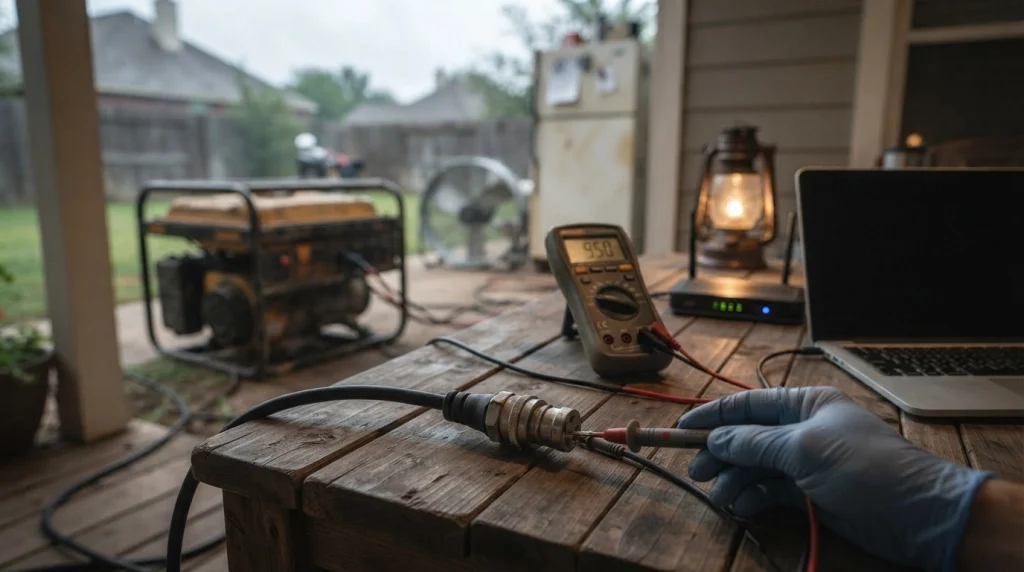
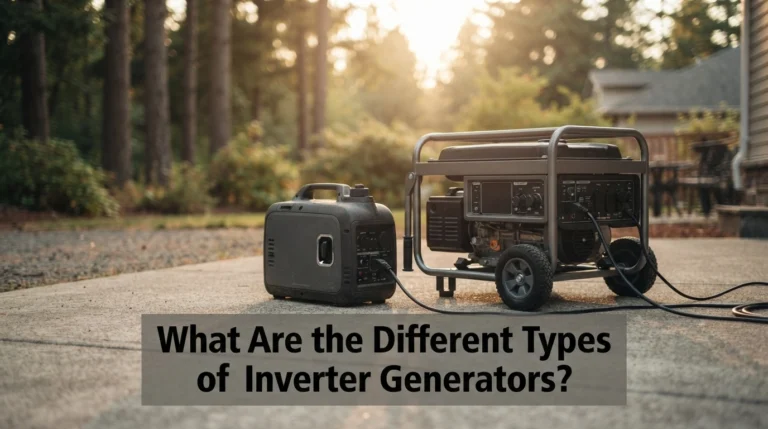
The two designs start from the same fuel and the same basic engine idea. They part ways at the alternator, and every difference after that follows from that choice. Once you see the path, the conversion problem becomes clear.
A conventional generator holds frequency by holding engine speed. If the load jumps, the governor opens the throttle to keep the speed steady. If the load drops, it backs off, but the engine still spins fast enough to hold 60 Hz.
An inverter generator breaks that link. Its alternator makes high-frequency AC power, the rectifier turns it into DC power, and the inverter module rebuilds clean 60 Hz AC power. The engine can then slow down at light loads because the inverter, not the engine speed, sets the output frequency.
| Feature | Conventional generator | Inverter generator |
|---|---|---|
| Power path | Engine to alternator to AC outlets | Engine to alternator to DC to inverter to AC outlets |
| THD, or total harmonic distortion | Often 10 to 25 percent, with a rough waveform under load changes | Often under 3 percent, with a clean sine wave |
| Engine speed | Fixed speed to hold 60 Hz | Variable speed, matched to the load |
| Noise at light load | Loud, because the engine stays at full speed | Quieter, because the engine slows down |
| Fuel use at light load | Higher, with little saving at low demand | Lower, thanks to eco-throttle or economy mode |
| Best for | Power tools, pumps, heaters, and large motor loads | Laptops, phones, routers, CPAP machines, and modern furnace boards |
| Size and weight | Larger and heavier at the same wattage | Smaller and lighter, especially under 4,000 watts |
What is THD, and why does it matter?
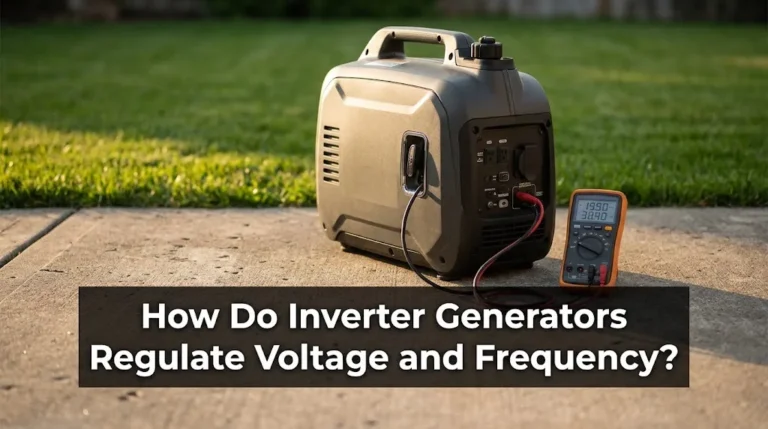
THD stands for total harmonic distortion, and it measures how far a power waveform strays from a smooth sine wave. A low THD number means cleaner power, while a high number means a rougher, more distorted waveform.
Most sensitive electronics want low THD power, often under 3 percent for inverter generators. That is why a true inverter generator is the safer pick for a laptop, a smart television, or a CPAP machine. Check the spec sheet for the exact THD figure, because it varies by model and load.
If you want a deeper look at low-distortion models, start with our guide to low-THD portable generators. It focuses on the same clean-power question from the buying side.
Why does engine speed matter so much?
Engine speed controls noise and fuel use in a direct way. A conventional unit must spin fast even when you only charge a phone, so it burns fuel and makes noise for a tiny load. An inverter unit can idle down, sip fuel, and stay quiet until the load grows.
That difference shows up most at a campsite or during a long, light-load outage. I once ran a small inverter unit overnight for a CPAP machine and a phone charger, and the fuel gauge barely moved. My open-frame unit would have burned through far more fuel for the same small job.
Section Takeaway: A conventional generator and an inverter generator differ in power path, THD, engine speed, noise, and fuel use, so one cannot become the other by swapping a single part.
Why Can You Not Simply Add an Inverter to a Conventional Generator?
The idea sounds simple at first. You buy an inverter box, wire it between the generator and your appliances, and you get clean power. The problem is that the box still receives the wrong kind of input for a true inverter-generator design.
A factory inverter module expects DC power from a matched high-frequency alternator. A conventional alternator sends it 120-volt AC power at 60 Hz, with voltage and frequency that sag and surge as loads switch on and off. The module would need a rectifier, a DC bus, cooling, and control logic that were never designed for that frame.
Even if you built that front end, the engine would still run at fixed speed. You would gain some power conditioning, but you would not gain variable engine speed, quiet light-load running, or the fuel savings that make inverter generators attractive. You would have added cost and complexity without getting the full benefit.
- Alternator mismatch: The stock alternator is wound for direct AC output, not for feeding an inverter module.
- Governor mismatch: The mechanical governor holds fixed speed, while an inverter system needs electronic throttle control tied to load.
- Cooling mismatch: Inverter modules make heat, and an open-frame housing often lacks the airflow path and heat sink space they need.
- Control mismatch: Overload protection, low-oil shutdown, and eco-mode logic must talk to the inverter board, not just to the engine.
- Frame and outlet mismatch: The panel, wiring, breakers, and grounding were sized for direct AC output, not for a rebuilt DC-to-AC stage.
I have seen aftermarket “inverter” boxes sold online for this job. Most are really voltage regulators, surge protectors, or small DC-to-AC inverters meant for a battery. None of them rewires the alternator or reprograms the governor, and none turns the host machine into an inverter generator.
A line conditioner or a good UPS can help in a narrow case, and I cover those below. They are accessories, though, not a conversion. They protect one load at a time, and they do not change what the generator itself produces.
Section Takeaway: A bolt-on inverter cannot fix the alternator, governor, cooling, and controls at the same time, so the result is not a true inverter generator.
What Would a Real Conversion Actually Require?
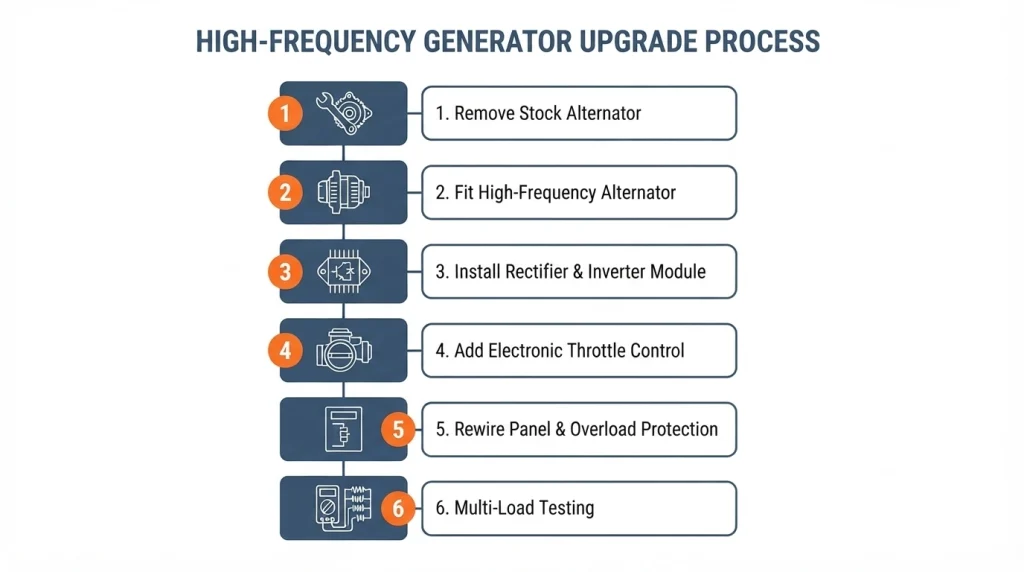
A real conversion would mean rebuilding the generator from the crankshaft outward. You would keep the engine block and the fuel tank, and you would replace almost everything that makes power. That is why no major brand sells a kit for it.
Start with the alternator. You would need a high-frequency, permanent-magnet alternator matched to the engine’s power curve. The old alternator would come out, along with its voltage regulator and its mounting hardware.
Next comes the power electronics. You would need a rectifier, a DC bus with capacitors, an inverter module rated for your peak load, and a control board that manages voltage, frequency, overload, and thermal shutdown. Each part must match the others, or the system will trip, overheat, or send dirty power to your loads.
Then comes the engine control. You would need an electronic throttle, a load sensor, and a control unit that can slow the engine at light loads and ramp it up fast when a motor starts. A mechanical governor cannot do that job on its own.
- Remove the stock alternator and regulator: Take out the direct-AC alternator, its wiring, and its voltage control.
- Fit a matched high-frequency alternator: Mount a new alternator that feeds DC power to the inverter stage at the right voltage and current.
- Add the rectifier and inverter module: Install the DC bus, the inverter board, heat sinks, and cooling airflow for the new electronics.
- Replace the governor with electronic throttle control: Add sensors and a control unit that ties engine speed to real load.
- Rewire the panel and protection: Resize breakers, outlets, grounding, and overload protection for the new power path.
- Test under real loads: Check THD, voltage, frequency, and temperature across light, medium, and starting loads before you trust it with electronics.
That parts list explains the cost problem. By the time you buy a matched alternator, inverter module, control board, throttle system, and cooling hardware, you have spent close to the price of a new inverter generator. You also lose the factory warranty, and you take on the risk if the build fails during an outage.
A shop could do this as a one-off project, and an engineer could make it work on a bench. For a homeowner, it is not a practical upgrade. The parts are hard to source as a matched set, the testing takes real instruments, and a mistake can damage both the generator and the appliances plugged into it.
Safety note: Never open a generator’s alternator housing or rewire its panel while fuel is in the tank or the unit is hot. Let it cool, disconnect the spark plug wire, and follow your owner’s manual before any inspection.
Section Takeaway: A true conversion is a full rebuild of the alternator, inverter stage, throttle control, and panel, and it usually costs as much as a new inverter generator.
Can an External Inverter, UPS, or Power Station Give You Clean Power Instead?
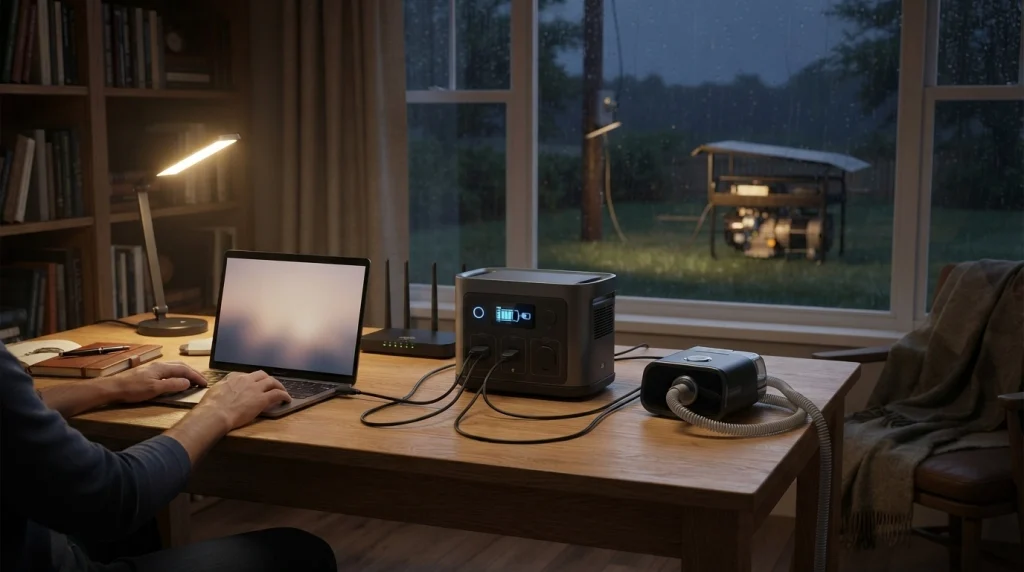
Yes, in a limited way, and this is where most owners should focus. You do not need to change the generator to protect a laptop or a CPAP machine. You need a clean-power buffer between the generator and that one sensitive load.
Think of it as two power systems, not one converted machine. The conventional generator handles the big, tough loads, and a second device handles the clean, low-wattage loads. That split is cheaper, safer, and easier to test than a rebuild.
Can you run a battery inverter off a conventional generator?
You can charge a battery bank or a portable power station from a conventional generator, then run sensitive loads from the station’s clean inverter output. The generator charges the battery when it runs, and the station powers your electronics with a stable sine wave.
This setup works well for phones, laptops, routers, lights, and a CPAP machine. It works less well as a whole-house fix, because the station’s wattage and battery capacity are limited. Size the station for the loads you actually need to protect, not for the whole house.
Can a UPS clean up generator power?
A UPS, or uninterruptible power supply, can help for a single computer or router. A line-interactive or online UPS will switch to battery power when the generator output sags or surges, and it will smooth the power it passes through.
Watch the UPS type, though. A basic standby UPS may switch back and forth too often on rough generator power, and it may drain its battery fast. An online double-conversion UPS gives cleaner output, but it costs more and wastes some power in the conversion. Check the UPS manual for generator use before you rely on it.
Can a power conditioner fix THD?
A power conditioner can filter noise and clamp surges, but it cannot turn high-THD power into low-THD power on its own. It helps with spikes and line noise, not with the basic waveform shape. Use it as a supplement, not as a conversion.
- Best buffer for small electronics: A portable power station charged by the generator, then used to run laptops and routers.
- Best buffer for one computer: A line-interactive or online UPS, sized above the computer’s running watts.
- Best buffer for a CPAP machine: A power station or a battery setup approved in the CPAP manual, tested before an outage.
- Not a buffer: A cheap car inverter plugged into a generator outlet, with no battery and no load rating for the job.
My own setup now follows this split. The open-frame unit runs the fridge, the freezer, and a sump pump during an outage. A small power station runs the router, two laptops, and a phone charger. Each machine does the job it was built for, and neither one is pushed past its limits.
If you want to compare models built for this kind of load, see our guide to generators for sensitive electronics. It focuses on the low-THD question from the start, not as an afterthought.
Section Takeaway: An external inverter, UPS, or power station can protect one sensitive load at a time, but it does not convert the generator itself.
What Should You Buy Instead of Converting Your Generator?
The right replacement depends on what you need to power. A small inverter generator is the best pick for most clean-power jobs, while a larger inverter or a parallel pair fits bigger loads. Start with wattage math, not with brand names.
Add up the running watts of everything you want to run at once. Then add the highest starting watts from any one motor load, such as a fridge compressor or a window AC unit. That total is your minimum running-watts target, before any safety margin.
- Home office and phones: A 2,000-watt-class inverter generator often covers laptops, a router, lights, and phone charging, with room to spare.
- RV and camping: A 3,000 to 4,500-watt inverter generator often covers a small RV air conditioner, a fridge, and lights, but check the AC starting watts first.
- Home backup for essentials: A 5,000 to 7,500-watt inverter generator, or two smaller units in parallel, often covers a fridge, freezer, sump pump, and a few lights.
- Whole-home backup: A large inverter generator or a standby unit may fit, but get a licensed electrician to size the transfer switch and the load panel.
Check the spec sheet for THD, running watts, starting watts, runtime at 25 percent load, and noise at a stated distance. Do not trust a single marketing claim for any of those numbers. Compare the same spec across models, and look for a clean sine wave rating under 3 percent THD for sensitive loads.
Parallel capability is worth a look if your needs may grow. Two smaller inverter generators linked with a parallel kit can share a larger load, and one unit alone can handle a light-load trip. That flexibility is hard to get from a single large conventional unit.
For a shortlist, see our picks for the best portable inverter generator. For the full buying checklist, use our inverter generator buying guide before you compare prices.
Keep your conventional generator if it still runs well. Use it for power tools, heaters, well pumps, and other tough loads that do not need clean power. Sell it only if you need the space or the money for the replacement, and be honest about its age and condition.
Section Takeaway: Buy a purpose-built inverter generator sized from running watts plus the highest starting watts, and keep the conventional unit for tough, high-wattage loads.
How Can You Get Cleaner, Quieter Power From the Generator You Already Own?
You cannot turn a conventional generator into an inverter generator, but you can make it run better. Maintenance, load management, and placement all affect voltage stability, noise, and fuel use. Small fixes add up over a long outage.
Start with the basics. Change the oil on schedule, clean or replace the air filter, and use fresh fuel with stabilizer if the unit will sit for weeks. Stale fuel is the most common cause of surging I see, and surging makes power quality worse.
Load management matters just as much. Do not start a fridge, a freezer, and a window AC unit at the same moment. Stagger motor starts by a minute or two, and keep the total load under 80 percent of the running-watts rating when you can. A steady load is easier for the governor to hold than a load that jumps up and down.
- Service the fuel system: Drain old fuel, clean the carburetor if the manual allows it, and use fresh gasoline or propane as the manual specifies.
- Check the spark plug and air filter: A fouled plug or a clogged filter can cause hunting, surging, and voltage swings.
- Stagger motor starts: Start one large motor at a time, and let the engine settle before you add the next load.
- Use a heavy-duty extension cord: Use the shortest, thickest cord that fits the load, and never daisy-chain light-duty cords.
- Place it for airflow and distance: Put the unit outdoors, on level ground, with clear airflow and the exhaust pointed away from the house.
- Consider an AVR check: Some conventional units have an automatic voltage regulator, or AVR, that helps hold voltage steady. It helps voltage, but it does not lower THD to inverter levels.
Noise is a separate problem, and placement helps more than any add-on muffler tip. Move the unit farther from sleeping areas, point the exhaust away from neighbours, and use a proper generator shelter that keeps airflow open. Never enclose a running generator in a box, a garage, or a shed.
I test my conventional unit every few months with a known load, usually a space heater on a low setting plus a work light. I watch for surging, listen for hunting, and check that the voltage stays steady. That five-minute test has caught a clogged filter and a stale-fuel problem before an outage did.
Safety note: Run generators outdoors only, at least 20 feet from your home, with the exhaust pointed away from windows, doors, and vents. Never run one in a garage, basement, or enclosed porch, even with the door open.
Section Takeaway: Fresh fuel, a clean filter, staggered motor starts, and good placement will steady a conventional generator, but they will not give it inverter-level THD.
Is Converting a Generator Safe, Legal, and Worth It?
A home-built conversion raises three separate risks: safety, warranty, and code compliance. Each one is enough to pause the project on its own, and together they make the case against it. A factory inverter generator avoids all three.
Safety comes first. A mismatched inverter board can overheat, short, or send unstable voltage to a load. A rewired panel can lose proper grounding or overload protection. Those faults are hard to spot until a load fails or a breaker should have tripped and did not.
Warranty is the next loss. Opening the alternator housing, replacing the governor, or rewiring the panel will void most factory warranties. If the engine fails later for an unrelated reason, the maker can still point to the modification as the cause. Keep the manual and the warranty terms in mind before you cut any wire.
Code and insurance are the third risk. A home backup hookup must use a transfer switch or an interlock kit installed by a licensed electrician, and it must follow local code. A modified generator that feeds a house panel through a non-approved path can create a backfeed risk for utility workers. That risk is not theoretical, and it is not worth taking to save the cost of a new unit.
Carbon monoxide is the risk that does not change with a conversion. Any fuel-burning generator makes CO, and CO is colourless and odourless. Place the unit outdoors, at least 20 feet from the home, and use battery-powered CO alarms inside. The CDC and the CPSC both publish generator CO safety guidance, and the U.S. Department of Energy and the EPA publish broader backup-power and emissions information.
For placement and CO alarm details, see our carbon monoxide safety guide. Read it before your next outage, not during one.
Safety note: Use a transfer switch or interlock kit installed by a licensed electrician for any home hookup. Never backfeed a house panel through a dryer outlet or a suicide cord.
Section Takeaway: A conversion voids the warranty, adds electrical and CO risks, and can break code compliance, so a factory inverter generator is the safer and cheaper route in the end.
Frequently Asked Questions
Can you convert a conventional generator into an inverter generator?
No, not in a practical sense. A true conversion needs a new alternator, inverter module, electronic throttle, and rewired panel. No major brand sells a kit for it, and the parts usually cost as much as a new inverter generator.
Can I add an inverter to my existing generator for clean power?
You can add a power station, UPS, or battery inverter as a buffer for one sensitive load. That setup protects a laptop or CPAP machine, but it does not change the generator’s own THD, noise, or fuel use.
Will a voltage regulator or AVR make my generator safe for electronics?
An AVR helps hold voltage steady, but it does not lower THD to inverter levels. It can reduce voltage swings, yet the waveform stays rougher than a clean sine wave from a true inverter generator.
Is it cheaper to convert a generator or buy an inverter generator?
Buying is cheaper in almost every case. A matched alternator, inverter board, throttle control, and cooling hardware add up fast, and you still lose the warranty. A small inverter generator often costs less than the conversion parts alone.
Can I run a laptop or CPAP machine on a conventional generator?
You can, but use a buffer for safety. Charge a portable power station from the generator, then run the laptop or CPAP machine from the station. Check the device manual first, and test the setup before you need it in an outage.
What THD level is safe for sensitive electronics?
Most sensitive electronics do best with THD under 3 percent, which is the range many inverter generators list. Conventional generators often run at 10 to 25 percent THD. Check the spec sheet for the exact figure, and do not rely on a marketing claim alone.
The Bottom Line
You cannot convert a conventional generator into an inverter generator with a kit, a box, or a single part swap. The two machines differ in their alternator, power path, engine control, cooling, and protection, and a real change means rebuilding all of them.
The better plan is simpler. Keep the conventional unit for tough, high-wattage loads, and add a purpose-built inverter generator or a power station for clean, quiet, low-wattage power. Size the new unit from running watts plus the highest starting watts, check THD on the spec sheet, and test the setup before the next outage.
As of 2026, that split setup is still the most practical answer I have found. It protects your electronics, saves fuel at light loads, and keeps a good conventional generator in service for the jobs it does best.

Hi, I’m Michael Turner. I own a generator workshop in the United States and founded HomeGeneratorBlog to share practical, hands-on guidance about generator installation, maintenance, troubleshooting, safety, and backup power solutions. My goal is to help homeowners make smarter, more confident decisions through clear and reliable information