Does Kohler Make Inverter Generators? Honest 2026 Guide
Quick Answer
Yes, Kohler has made inverter generators, but it is not a broad inverter brand in the United States today. Its current strength is standby and commercial power, while its small gasoline inverter models are scarce as new stock. If you want clean, quiet portable power now, compare the best inverter generator brands before you chase a Kohler badge.
What to know in 15 seconds
- Past models: Kohler sold small PRO inverter models, including a 2.0 kW class unit built for job sites and light portable use.
- Battery outlier: The Kohler enCUBE was a battery inverter, not an engine-driven inverter generator.
- Europe differs: Kohler Portable lists inverter models in Europe, but those are 230-volt units for that market.
- Standby is separate: A Kohler standby generator is not a portable inverter generator, even when it delivers stable power.
- Check the label: Confirm the words “inverter,” running watts, and THD on the spec sheet before you buy.
My short verdict
- Buy Kohler for whole-home standby power through a dealer, and buy a dedicated inverter brand for camping, RV, and quiet portable use.
I’ve tested a lot of portable power over the years, and Kohler comes up in almost every home-backup conversation. People know the name from standby generators and strong engines, so they assume a Kohler inverter must be sitting on the shelf next to the Honda and Champion models.
That assumption leads to confusion fast. This guide sorts out what Kohler has made, what it focuses on as of 2026, and what to buy when you need clean sine wave power for sensitive electronics.
In This Guide
- Does Kohler Make Inverter Generators? The Short Answer in 2026
- What Kohler Actually Makes Today: Standby, Portable, and Industrial Power
- Which Kohler Inverter Models Have Existed?
- Is a Kohler Standby Generator an Inverter Generator?
- Kohler Inverter vs Conventional Kohler Portable: How They Differ
- Should You Buy a Kohler Inverter Generator in 2026?
- What to Buy Instead If You Want Kohler-Level Quality and Clean Power
- Frequently Asked Questions
- Final Takeaway: Match the Generator Type to the Job
Does Kohler Make Inverter Generators? The Short Answer in 2026

Yes, in the past tense that matters most for shoppers. Kohler launched a portable line that included small inverter models, and Kohler Portable still lists inverter models for the European market.
In the United States, though, Kohler does not offer a deep, easy-to-shop inverter lineup today. You will find standby generators, commercial units, and dealer stock far more often than a new Kohler inverter at a big-box store.
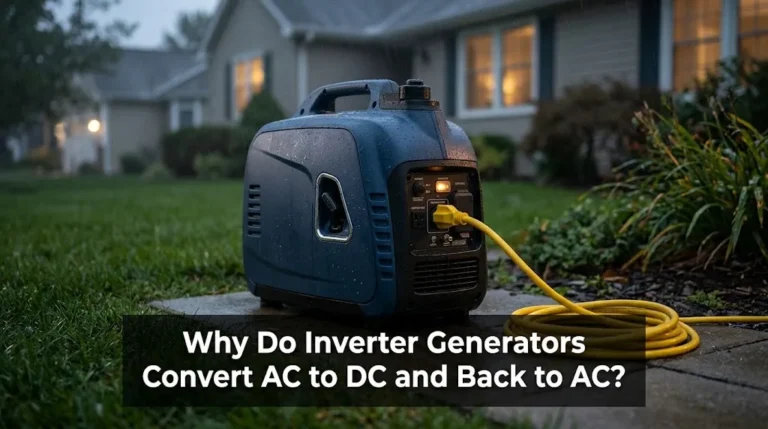
Definition: An inverter generator is a portable generator that creates AC power, converts it to DC, then inverts it back to clean AC power. That extra step produces a stable, clean sine wave with low total harmonic distortion (THD), and it lets the engine slow down under light loads.
Why do searches give such mixed answers?
Three different products share the Kohler name, and listings mix them up. A standby unit, a conventional portable, and a true inverter get lumped together under one brand search.
Resellers add to the mess. Old stock, used units, and European models appear in U.S. searches with little context about voltage, warranty, or parts support.
- Standby generators: Permanent home units wired to your panel through a transfer switch.
- Conventional portables: Open-frame units that run at fixed speed and suit tools and larger loads.
- True inverters: Smaller, quieter units built for electronics, camping, and RV use.
- Battery inverters: Rechargeable power stations with no engine, fuel, or exhaust.
I ran into this exact mix-up during a multi-day outage a few years back. A neighbor wanted a “Kohler inverter” for a fridge and a CPAP machine, but the quote in his inbox was for a standby install.
Both products were Kohler. Only one fit his budget and timeline. That gap is why the label on the spec sheet matters more than the badge on the box.
Section takeaway: Kohler has made inverter generators, but its U.S. business today centers on standby and commercial power, so treat any U.S. inverter listing as a model to verify, not a current lineup to browse.
What Kohler Actually Makes Today: Standby, Portable, and Industrial Power
Kohler built its generator reputation on dependable standby power and strong engines. That focus still shapes what you can buy new through dealers in 2026.
The power business now operates as Rehlko, formerly Kohler Energy. Homeowners still see the Kohler name on standby products, and dealers remain the main route for sizing, install, and service.
Standby and whole-home generators come first
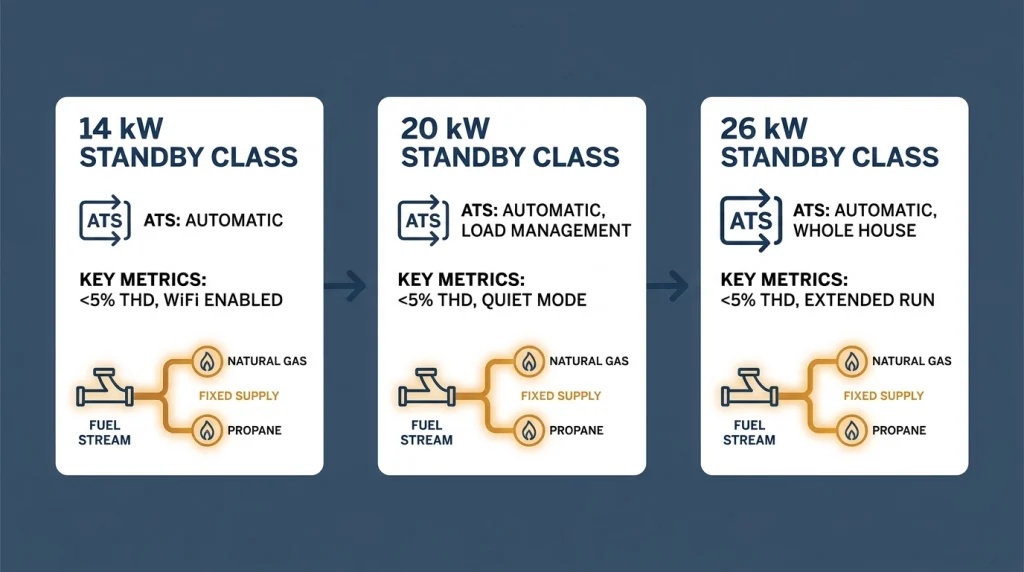
Standby models in the 14 kW to 26 kW class cover many homes on propane or natural gas. They start on their own when utility power drops, and they restore power without refueling trips in the dark.
That convenience comes with professional install costs. A transfer switch, gas line, pad, and permits can cost as much as buyers expect to spend on the unit alone, so get a full installed quote before you compare prices.
- Automatic start: Power returns in seconds, with no cords to run.
- Fixed fuel: Natural gas or a large propane tank supports longer outages.
- Dealer service: Sizing, install, and exercise cycles need a trained installer.
If whole-home backup is your goal, start with installed cost, not the generator price tag. Our breakdown of Kohler generator installed cost shows why quotes vary so much by home, fuel, and transfer-switch setup.
Portable and commercial units fill a narrower lane
Kohler’s portable history leans toward job-site and professional use. Larger PRO models used Command PRO engines, open frames, and wheel kits for tools, pumps, and backup loads.
Those units suit contractors who need watts and durability. They do not aim for campsite-quiet operation or a suitcase form factor.
For current availability, check the manufacturer’s own pages and a local dealer rather than trusting a marketplace title. Start at Rehlko to confirm which Kohler-branded power products are listed for your country and voltage.
Industrial, marine, and mobile power sit beyond the home aisle
Beyond homes, Kohler and Rehlko cover industrial, marine, and mobile generator sets in far larger sizes. Those products use different dealers, specs, and service networks.
They explain why the brand feels huge in power, even when the portable inverter shelf looks thin. Scale in one market does not guarantee shelf stock in another.
Section takeaway: Think of Kohler today as a standby and commercial power brand first, with portable inverter models as a limited and market-specific part of its history.
Which Kohler Inverter Models Have Existed?
Kohler’s inverter story has three threads: small U.S. gasoline inverters, a battery inverter, and European inverter models. Each thread answers a different need, so do not treat them as one lineup.
Model availability changes by year and region. Always check the spec sheet for the exact unit in front of you, including voltage, outlets, and warranty terms.
What about the Kohler PRO2.0iS and PRO2.8i?
The PRO2.0iS was the small inverter in Kohler’s 2014 portable launch. It sat at the 2.0 kW class, used inverter technology, and aimed at construction pros who needed light, clean power.
The PRO2.8i followed in the same small-inverter lane at the 2.8 kW class. Dealer listings still surface from time to time, often as old stock or used units rather than fresh retail inventory.
- Best fit: Light loads, battery charging, small tools, and sensitive electronics.
- Key check: Running watts, not just peak watts, plus parallel capability if you plan to pair units.
- Buyer risk: Parts, service, and warranty support vary for older or clearance stock.
I like small inverters for exactly this kind of work. A quiet unit that sips fuel at low load beats a loud open-frame unit when you only need lights, a laptop, and a phone charger.
Small does not mean weak for every job, though. A 2 kW class inverter will not start most RV air conditioners or run a full fridge, freezer, and furnace blower at once.
Is the Kohler enCUBE an inverter generator?
No, not in the engine-generator sense. The enCUBE was a 1.8 kW battery inverter with solar-charging options, built for fuel-free portable power.
It produced 120-volt, 12-volt, and USB power from a battery, with no gasoline engine. That design suits indoor use and quiet settings where an engine generator would be unsafe or unwelcome.
- What it is: A portable power station, closer to a solar generator than a gasoline inverter.
- What it is not: A refuel-and-run outage machine for heavy loads over many hours.
- Runtime limit: Battery capacity sets the limit, and recharging takes time.
Does Kohler sell inverter generators in Europe?
Yes, Kohler Portable lists inverter models for Europe, including the Inverter Pro 2000 class at 1.8 kW and the Inverter Pro 3000 class at 3.0 kW. Those units serve 230-volt markets and follow European standards.
Do not import one as a quick fix for U.S. use. Voltage, frequency, plugs, and service support will not match a typical U.S. home, RV, or job site.
What about larger PRO models like the PRO12.3EFI?
Larger PRO models were professional gasoline generators, not small enclosed inverters. The PRO12.3EFI used a commercial-grade Command PRO EFI engine and delivered 12.3 kW class power for heavy portable loads.
That size serves a different buyer. Read our Kohler PRO12.3EFI portable generator review if you need high output for tools or backup circuits, and keep it separate from the quiet-inverter question.
Section takeaway: Kohler’s true inverter models were small and limited, the enCUBE was battery power, and the large PRO units were conventional professional generators.
Is a Kohler Standby Generator an Inverter Generator?
No. A Kohler standby generator is a permanent, automatic home generator, not a portable inverter generator. It uses a fixed install, a transfer switch, and a large engine to power home circuits.
The confusion is fair, because both types can power electronics safely when sized and installed well. The difference lies in design, install, and use, not just in the brand name.
- Install: Standby units are wired in by an electrician and stay in one place.
- Fuel: Standby units run on natural gas or propane from a fixed supply.
- Portability: Inverter generators move by hand or wheels and use extension cords or an inlet.
- Start: Standby units start on their own, while portables need a manual start.
Does low THD make a standby unit an inverter?
Not by itself. THD measures how clean the power waveform is, and lower THD suits computers, furnace controls, and medical devices.
Many modern standby units deliver stable voltage and low distortion through regulation and alternator design. An inverter generator reaches clean power through a different path: AC to DC, then back to AC through an inverter module.
Ask for the THD figure on the spec sheet for any unit you plan to use with sensitive gear. Do not guess from the word “clean” in a sales listing.
Which type fits an outage, an RV trip, or a job site?
Home outages with medical devices, a sump pump, or a furnace favor standby power when the budget allows. Camping, tailgating, and RV trips favor a portable inverter you can carry and place with care.
Job sites split the difference. Tools often need high starting watts, while chargers and lights benefit from stable, quiet inverter output.
Our guide to inverter generator vs standby generator walks through noise, fuel, runtime, and hookup differences in more depth. Use it to match the machine to the job before you shop by brand.
For home energy planning, the U.S. Department of Energy offers broad guidance on backup power, efficiency, and home energy choices. Pair that big-picture view with a dealer quote for your home.
Safety note: Never connect a portable generator to home wiring without a transfer switch or interlock kit installed by a licensed electrician. Backfeeding can injure utility workers and damage your home.
Section takeaway: A Kohler standby generator gives automatic whole-home backup, while an inverter generator gives portable clean power, and neither one replaces the other.
Kohler Inverter vs Conventional Kohler Portable: How They Differ
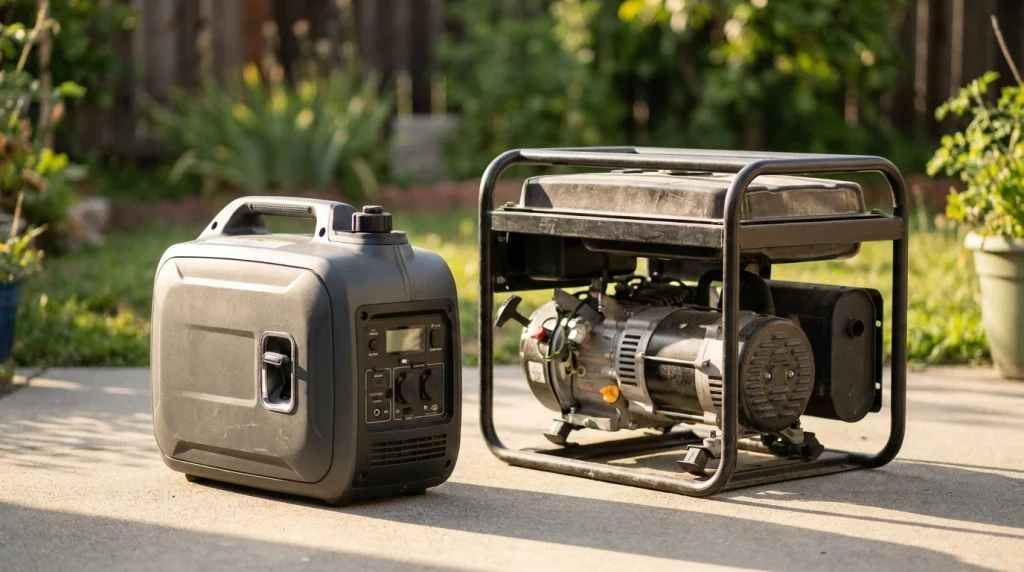
An inverter and a conventional portable can share a brand and still feel like different tools. The inverter adjusts engine speed to the load, while the conventional unit holds a fixed speed.
That single design choice shapes noise, fuel use, weight, and power quality. It also shapes which loads each type handles with ease.
| Feature | Small Kohler Inverter (Past Models) | Large Kohler PRO Portable | Kohler Standby Generator |
|---|---|---|---|
| Power type | Inverter, clean sine wave | Conventional alternator | Regulated standby power |
| Typical size | 2 kW to 3 kW class | 5 kW to 12 kW class | 14 kW to 26 kW class |
| Best for | Electronics, camping, light backup | Tools, pumps, heavy portable loads | Whole-home automatic backup |
| Noise and fuel | Quieter, throttles down at low load | Louder, fixed speed, more fuel | Fixed install, runs on gas or propane |
| Hookup | Cords, RV outlet, or inlet with interlock | Cords or inlet with interlock | Transfer switch, wired by electrician |
Use the table as a starting map, not a spec sheet. Check running watts, starting watts, THD, tank size, and runtime at 25% and 50% load for the exact model you consider.
What do running watts and starting watts mean?
Running watts measure the power a load needs to keep going. Starting watts, also called surge watts, measure the short burst a motor needs to start.
A fridge may run on 150 to 200 watts yet need 800 to 1,200 watts for a split second at startup. A window AC, sump pump, or RV air conditioner can need far more surge power than its running draw suggests.
- Add running watts: List each load you plan to run at the same time.
- Add the largest surge: Add extra headroom for the biggest motor start.
- Leave margin: Aim for 20% headroom so the unit does not run at its limit.
How does eco mode change noise and runtime?
Eco mode, also called economy mode or eco-throttle, lets an inverter slow down under light loads. The engine runs quieter and uses less fuel when demand drops.
Turn eco mode off for motor starts or loads that cycle on and off. A fridge compressor or AC unit can surge and stall a throttled engine if the response lags.
I learned that lesson on a hot campsite afternoon. A small inverter hummed along for lights and phones, then bogged down when a window AC cycled on in eco mode.
One switch flip fixed it. The unit ran louder, but it held the load without surging.
For a fuller breakdown, see inverter generator vs regular generator. It covers THD, fuel use, and which loads suit each design.
Safety note: Run every engine generator outdoors, well away from windows, doors, and vents. Carbon monoxide is colorless and odorless, so place the unit downwind and use working CO alarms indoors. Learn more from the Centers for Disease Control and Prevention.
Section takeaway: Choose an inverter for clean, quiet, portable power, and choose a large conventional portable or standby unit when you need high watts or automatic home coverage.
Should You Buy a Kohler Inverter Generator in 2026?
For most U.S. buyers in 2026, the honest answer is no, not as a first choice. You will spend more time hunting stock, confirming specs, and checking service than you will spend using the generator.
That does not make Kohler a weak brand. It means the brand’s current U.S. value sits in standby power, where dealer support and install quality matter most.
When does a Kohler inverter still make sense?
A verified dealer unit with a clear warranty can make sense for a buyer who values the brand and needs only light power. A used unit can also work when the price, condition, and parts outlook all check out.
Collectors and pros with a trusted Kohler dealer nearby face less risk. They know who will service the unit and where parts will come from.
- Dealer stock: New-old stock with paperwork, warranty terms, and a local service contact.
- Light loads: Phones, laptops, lights, small fans, and battery charging.
- Backup plan: A second power source if the unit needs service during an outage.
When should you choose a different brand?
Choose a dedicated inverter brand when you need a unit this week, a clear warranty, and easy parallel kits. Camping, RV travel, and urgent outage prep all favor ready stock and broad dealer support.
Choose a different route when you need 4,000 running watts or more for an RV air conditioner plus other loads. A small Kohler inverter will not cover that job on its own.
- Urgent need: An outage is coming, and you need a tested unit now.
- Heavy loads: RV AC, well pump, large fridge plus freezer, or power tools.
- Parallel plans: You want two matching inverters linked for more power.
- Service access: No local Kohler dealer or parts source near you.
How do you check a listing that claims “Kohler inverter”?
Start with the model number and the spec sheet, not the headline. Sellers reuse the word “inverter” loosely, and photos alone will not settle the question.
Ask for the nameplate photo when you buy used. The model, serial number, voltage, and watt ratings should match the listing and the manual.
- Confirm inverter wording: Look for “inverter” in the model name or spec sheet, plus a THD figure.
- Check running watts: Use running watts for your load math, not peak watts.
- Check voltage and outlets: Confirm 120-volt U.S. outlets, not 230-volt European outlets.
- Check fuel and start: Note gasoline, propane, recoil start, or electric start.
- Check warranty and parts: Ask who honors the warranty and where parts ship from.
- Test under load: Run a known load, watch for surging, and check oil, fuel, and air filter condition.
Stale fuel causes many “bad generator” stories. A carburetor clogged by old gasoline can make a sound engine surge, stall, or refuse to start.
Fresh fuel, a fuel stabilizer used per the manual, and regular exercise runs prevent most of those headaches. Follow your owner’s manual for break-in, oil changes, and storage steps.
Safety note: Check the U.S. Consumer Product Safety Commission for generator safety guidance and recall notices before you buy used. Never run a generator in a garage, even with the door open.
Section takeaway: Buy a Kohler inverter only when the model, warranty, and service path check out in writing, and buy a mainstream inverter brand when you need proven stock and support now.
What to Buy Instead If You Want Kohler-Level Quality and Clean Power
You do not need a Kohler badge to get clean, quiet power. Several brands build their whole portable lineup around inverter models, with clear specs and wide support.
Match the unit to your loads first, then compare noise, runtime, weight, and outlets. Brand loyalty should come last, after the wattage math works.
Which inverter brands lead for camping and RV use?
Honda and Yamaha set the quiet, durable benchmark for small inverters, at premium prices. Champion, Westinghouse, WEN, and Generac offer strong value with broad model ranges and parallel options.
DuroMax and Predator cover larger open-frame inverter models for RV and home backup. Pulsar and similar value brands suit buyers who prioritize watts per dollar and accept trade-offs in noise or finish.
- Camping and tailgating: A 2,000 to 2,500 watt class enclosed inverter, easy to carry and quiet at a site.
- RV with AC: A 3,500 to 4,500 watt class inverter, or two smaller units in parallel with a proper kit.
- Home essentials: A 4,500 to 7,500 watt class inverter with a 30-amp outlet and inlet-ready setup.
- Job site: An open-frame inverter or dual fuel generator with high starting watts for tools.
How do you size an inverter without guessing?
Write down each load, its running watts, and its starting watts from the label or manual. Add the running watts, then add the largest starting surge on top.
Try a simple example. A fridge at 180 running watts, a CPAP at 90 watts, lights at 100 watts, and phone charging at 50 watts total 420 running watts.
Add a fridge startup surge of about 800 watts, and you need roughly 1,200 watts of surge headroom for that moment. A 2,000 watt class inverter handles that mix with margin, while a window AC would change the math fast.
- Check labels: Nameplate watts beat online guesses every time.
- Stagger starts: Start the largest motor first, then add smaller loads.
- Watch THD: Look for low THD, often under 3%, for laptops, CPAP machines, and furnace controls.
Should you consider dual fuel, solar, or a power station?
A dual fuel generator runs on gasoline or propane, which helps when gasoline is scarce or storage is a concern. Propane stores longer and burns cleaner, though it often delivers slightly less power than gasoline.
A solar generator or portable power station suits quiet indoor use, short outages, and device charging. It will not match an engine inverter for long, heavy outage work without a large battery bank and solar input.
Fuel choice also affects emissions and storage rules. The U.S. Environmental Protection Agency sets emission standards that shape engine design, so check that any unit you buy meets standards for your state.
Use our checklist on what to look for in an inverter generator to compare THD, noise, runtime, outlets, and parallel capability side by side. Bring your load list to that comparison, and the right size will stand out.
Section takeaway: Pick a proven inverter brand in the right wattage class, confirm low THD and real runtime figures, and let your load list decide the model.
Frequently Asked Questions
Does Kohler still sell inverter generators in the United States?
Kohler has sold small inverter models in the past, but it does not offer a broad U.S. inverter lineup today. Check with a local dealer for current stock, and confirm the model number, warranty, and spec sheet before you buy.
Is the Kohler enCUBE an inverter generator?
The enCUBE was a battery inverter, not an engine-driven inverter generator. It delivered 1.8 kW class power from a battery with solar-charging options and no fuel or exhaust, which suits quiet, short-duration use rather than long outage work.
Are Kohler standby generators inverter generators?
No, Kohler standby generators are permanent home units with automatic start and a transfer switch. They deliver stable power for home circuits, but they use a different design and install path than a portable inverter generator.
Can I use a Kohler portable generator for sensitive electronics?
Only if the spec sheet confirms inverter output and low THD for that exact model. Conventional portables can suit tools and resistive loads, but laptops, CPAP machines, and furnace controls need clean, stable power, so verify THD in writing.
Who makes Kohler generators now?
Kohler’s power business now operates as Rehlko, formerly Kohler Energy, while the Kohler name remains on standby products. Buy through an authorized dealer so sizing, install, warranty, and service stay tied to a local support path.
Is a used Kohler PRO2.0iS worth buying?
It can be worth buying when the price is fair, the unit runs clean under load, and parts and service remain available. Test it with a known load, check for surging or stale-fuel issues, and confirm the model, voltage, and outlet layout first.
Final Takeaway: Match the Generator Type to the Job
Kohler earned trust in standby and commercial power for good reason. Its inverter history is real but narrow, and its current U.S. focus points buyers toward dealer-installed home backup.
If you need quiet, clean, portable power for camping, RV life, or light outage loads, choose a proven inverter brand in the right size. If you need automatic whole-home coverage, get a Kohler standby quote and compare installed costs.
Either path works when the wattage math, THD, fuel plan, and safety setup all line up. Start with your load list, check the spec sheet, and let the job pick the generator.

Hi, I’m Michael Turner. I own a generator workshop in the United States and founded HomeGeneratorBlog to share practical, hands-on guidance about generator installation, maintenance, troubleshooting, safety, and backup power solutions. My goal is to help homeowners make smarter, more confident decisions through clear and reliable information