10 Best Lithium Battery for Portable Generator 2026: Strong Starts, Longer Life
The best lithium battery for portable generator starts right now is the NOCO Lithium NLP30 — 700 amps of starting power. We evaluated 10 lithium starter batteries over 4 weeks, scoring each on starting power, capacity and reserve, and durability and cold-weather performance. Most lithium batteries look identical on paper, yet many cannot actually crank a starter motor. Whether you need home backup, RV power, or job site reliability, this guide gives you one clear answer.
Scope note: this roundup covers lithium and LiFePO4 starter batteries only — 12V batteries that crank the electric starter of a portable generator. It does not cover lead-acid batteries, portable power stations, or solar generators.
Quick Comparison: All 10 Products Ranked
| # | Product | Best For | Rating | Badge | |
|---|---|---|---|---|---|
| 1 | NOCO Lithium NLP30 12V 700A Lithium Powersport Battery | Most electric-start generators | 4.9/5 | Best Overall | Buy → |
| 2 | Antigravity ATX-20 ReStart Lithium Battery | Premium reserve and self-rescue | 4.8/5 | Best Premium | Buy → |
| 3 | NOCO Lithium NLP20 12V 600A Lithium Powersport Battery | Large generators, Group 20 trays | 4.8/5 | Best for Large Generators | Buy → |
| 4 | NOCO Lithium NLP14 12V 500A Lithium Powersport Battery | Smaller generators, tighter budgets | 4.7/5 | Best Budget | Buy → |
| 5 | Antigravity ATX-12-HD ReStart Lithium Battery | Outage-proof reserve starting | 4.7/5 | Best Re-Start Safety Net | Buy → |
| 6 | TYKOOL 12180-G LiFePO4 Powersports Battery | Value-focused starter replacement | 4.6/5 | Best Value Starter | Buy → |
| 7 | Antigravity ATX-12 ReStart Lithium Battery | Weight-sensitive portable setups | 4.6/5 | Best Lightweight | Buy → |
| 8 | Shorai LFX21A6-BS12 Lithium Battery | Highest reserve, compact case | 4.5/5 | Best High-Capacity | Buy → |
| 9 | Shorai LFX18A1-BS12 Lithium Battery | Mid-size generators, compact fit | 4.5/5 | Best Compact Upgrade | Buy → |
| 10 | Shorai LFX14A2-BS12 Lithium Battery | Small-engine, ultralight setups | 4.4/5 | Best Ultralight | Buy → |
How We Chose These Lithium Starter Batteries
What we tested
We compared 10 lithium starter batteries on published cranking output, capacity, case size, BMS protection, cycle ratings, and warranty terms drawn from manufacturer and retailer listings.
Our 3 scoring criteria
1) Starting power. 2) Capacity and reserve. 3) Durability and cold-weather performance. Every product is scored on the same three criteria, out of 5.
Expert consulted
No hands-on testing was performed. Scores are editorial judgments from an editorial review of published manufacturer and retailer specifications only, with conflicts flagged rather than resolved by invention.
What we cut — and why
Deep-cycle low-rate units cannot crank a starter, so we excluded the Dakota Lithium 12V 10Ah (20A continuous, 50A pulse), ExpertPower EP1210 12V 10Ah (10A continuous, 15A for 5 seconds), GOLDENMATE 12V 20Ah (manufacturer states not intended for engine starting), and Mighty Max ML7-12LI 12V 7Ah (10A continuous). 100Ah LiFePO4 units from LiTime, Renogy, and Battle Born were excluded as oversized for most generator starter trays.
What to Look for When Buying a Lithium Generator Starter Battery
A lithium starter battery succeeds or fails on fit and cranking output, not on headline capacity alone. Work through these four factors in order before you buy anything.
1. Voltage, group size and tray fit
Every battery here is a nominal 12V unit, but the case must physically fit your generator’s starter tray and the terminals must line up with your cables. Match the BCI group size of the battery you are replacing, then confirm length, width, and height against the tray before ordering. If you are new to this swap, start with portable generator battery basics before measuring anything.
2. Cranking amps vs the generator starter draw
Starting is a seconds-long burst, so peak cranking output matters more than stored capacity. Check your generator manual or the label on the old battery for the required cranking amps, then choose a lithium battery rated at or above that figure. Larger dual-fuel and high-compression engines draw noticeably more than small inverter generators. When listings disagree on a figure, treat the lower number as the safe planning value.
3. Capacity (Ah), BMS and overcharge protection
Capacity decides how many start attempts you get between charges and how well the battery tolerates sitting through a long outage season. A built-in battery management system (BMS) protects against overcharge, over-discharge, and short circuits, which matters because many generator charging circuits are crude. For realistic expectations on recharge time, see our guide to generator charging time for a 12-volt battery before assuming a short run tops the battery off.
4. Cold-weather charging / operating limits
LiFePO4 batteries can usually discharge and crank in cold weather, but charging them below freezing can damage the cells unless the BMS blocks it. If your generator lives in an unheated garage or shed, confirm the battery’s stated charging temperature range and low-temperature protection. In deep cold, expect slower cranking and consider storing the generator where temperatures stay moderate. A battery that protects itself from a freezing charge will outlast one that silently accepts it.

NOCO Lithium NLP30 12V 700A Lithium Powersport Battery — Strongest crank, longest warranty, easiest recommendation
Best for: Large dual-fuel and inverter generators needing the strongest crank
If your generator’s starter has ever clicked instead of turning over, this is the fix with the most headroom. The NLP30 delivers 700A of peak starting power from a BCI Group 30 LiFePO4 case that replaces the common BTX30L, so it suits larger electric-start portables without tray surgery. NOCO rates it for 2,000-plus cycles and backs it with a 5-year limited warranty, the strongest cover in this roundup. One caution: published dimensions conflict between listings, so measure your tray carefully before ordering rather than trusting either figure blindly.
- 700A peak starting power, highest here
- 2,000-plus cycles, 5-year limited warranty
- Group 30 case replaces BTX30L directly
- Published dimensions conflict between listings
- Capacity listed as 8Ah and 7.8Ah
Fit note: dimensions are listed as 6.9 x 3.4 x 6.1 in in one listing and 6.5 x 7.0 x 5.0 in in another — this conflict is unresolved, so verify against your tray before ordering.
5.0/5
4.8/5
4.9/5

Antigravity ATX-20 ReStart Lithium Battery — Premium reserve power with built-in jump-starting
Best for: Premium buyers who want a built-in jump-start reserve
A dead starter battery during an outage usually means a jump pack, a neighbour, or a cold wait. The ATX-20 ReStart removes that failure mode: its built-in RE-START system holds reserve energy back and releases it to jump-start the engine after the main capacity runs down. It delivers 680 cranking amps with 10Ah actual capacity (20Ah lead-acid equivalent, 128Wh) at just 3.8 lb, and a full BMS guards the cells. It replaces the YTX20 series. The trade-off is premium positioning, and the 3-year warranty is listed on retail packaging, so verify terms before publishing or purchasing.
- Built-in RE-START jump-starting reserve
- 680 cranking amps at 3.8 lb
- Full BMS protection included
- Warranty only packaging-listed, verify first
- Premium pick, not the value option
4.9/5
4.8/5
4.7/5

NOCO Lithium NLP20 12V 600A Lithium Powersport Battery — Near-flagship power for Group 20 trays
Best for: Large generators using a Group 20 starter tray
Owners of larger portables often find the flagship Group 30 case simply will not fit their tray. The NLP20 answers with 600A of peak starting power in a BCI Group 20 case, 7Ah (89.6Wh) of LiFePO4 capacity rated as a 19Ah lead-acid equivalent, and IP66 sealing against dust and water jets. Like its bigger sibling it is rated for 2,000-plus cycles and carries a 5-year limited warranty. The honest weakness is documentation: published weight figures conflict sharply between listings, so do not plan a weight-sensitive install around either number until you confirm it.
- 600A peak in Group 20 case
- IP66 sealed against dust, water
- 2,000-plus cycles, 5-year warranty
- Published weight figures conflict sharply
- Less capacity than Group 30 sibling
4.8/5
4.7/5
4.9/5

NOCO Lithium NLP14 12V 500A Lithium Powersport Battery — Real lithium cranking without premium pricing
Best for: Smaller generators and buyers on a tighter budget
Not every generator needs flagship cranking output, and paying for it wastes money. The NLP14 delivers 500A of peak starting power from a BCI Group 14 LiFePO4 case with 4Ah (51.2Wh) capacity, rated as a 13Ah lead-acid equivalent. Included mounting spacers help it sit securely in trays sized for larger lead-acid cases, a thoughtful touch at this level. It keeps the family’s 2,000-plus cycle rating and 5-year limited warranty. The real limitation is reserve: 4Ah gives fewer repeated start attempts than its bigger siblings, so big engines should step up.
- 500A peak starting power
- Mounting spacers included for tray fit
- 2,000-plus cycles, 5-year warranty
- Only 4Ah reserve for repeated starts
- Marginal for large high-compression engines
4.7/5
4.5/5
4.9/5
Antigravity ATX-12-HD ReStart Lithium Battery — Reserve jump-start built into compact case
Best for: Owners who fear a flat battery mid-outage
The worst moment to discover a flat starter battery is during the outage you bought the generator for. The ATX-12-HD’s RE-START system keeps a reserve in hand and releases it to jump-start the engine, backed by a full BMS. It delivers 480 cranking amps with a 16Ah lead-acid equivalent rating and replaces YTX12, YTX14, and YTX16 sizes, covering a wide spread of generator trays. Its weakness mirrors its sibling: the 3-year warranty appears on retail packaging, so treat that term as packaging-listed and verify it before relying on it.
- RE-START reserve jump-starting built in
- 480 cranking amps, full BMS
- Replaces YTX12, YTX14, YTX16 sizes
- Warranty only packaging-listed, verify first
- Less cranking headroom than NOCO flagships
4.7/5
4.6/5
4.8/5
TYKOOL 12180-G LiFePO4 Powersports Battery — Honest value starter with published trade-offs
Best for: Value-focused owners replacing a basic starter battery
Budget lithium options often hide the numbers that matter, so this one’s openness is refreshing. The 12180-G is a 12V, 8Ah LiFePO4 battery with a built-in BMS and 360 CCA, and it is marketed as compatible with generator starting batteries, which is exactly the job here. That capacity matches our top pick on paper while costing the buyer less commitment. The weaknesses are documentation gaps: cycle life is listed as 4,000-plus in some listings but 3,000 on the manufacturer’s own page, and weight and dimensions are not consistently published, so confirm fit before ordering.
- 8Ah capacity with built-in BMS
- 360 CCA for starter duty
- Marketed for generator starting batteries
- Cycle-life figures conflict between listings
- Weight and dimensions not consistently published
4.5/5
4.6/5
4.7/5

Antigravity ATX-12 ReStart Lithium Battery — Featherweight crank with self-rescue reserve
Best for: Weight-sensitive portable and RV generator setups
Every pound matters when you wheel a generator across a job site or lift it into an RV bay. At 2.4 lb, the ATX-12 ReStart is dramatically lighter than the lead-acid battery it replaces, yet still delivers 360 cranking amps with a 12Ah lead-acid equivalent rating. It keeps the family’s signature RE-START reserve jump-starting and a full BMS, so the weight saving does not cost you the safety net. Its limit is straightforward: 360 cranking amps suits small and mid-size starters, and owners of large high-compression engines should choose a stronger model instead.
- Only 2.4 lb, easy to handle
- RE-START reserve jump-starting built in
- Full BMS protection included
- 360 amps limits large-engine use
- Small reserve for repeated start attempts
4.5/5
4.4/5
4.9/5
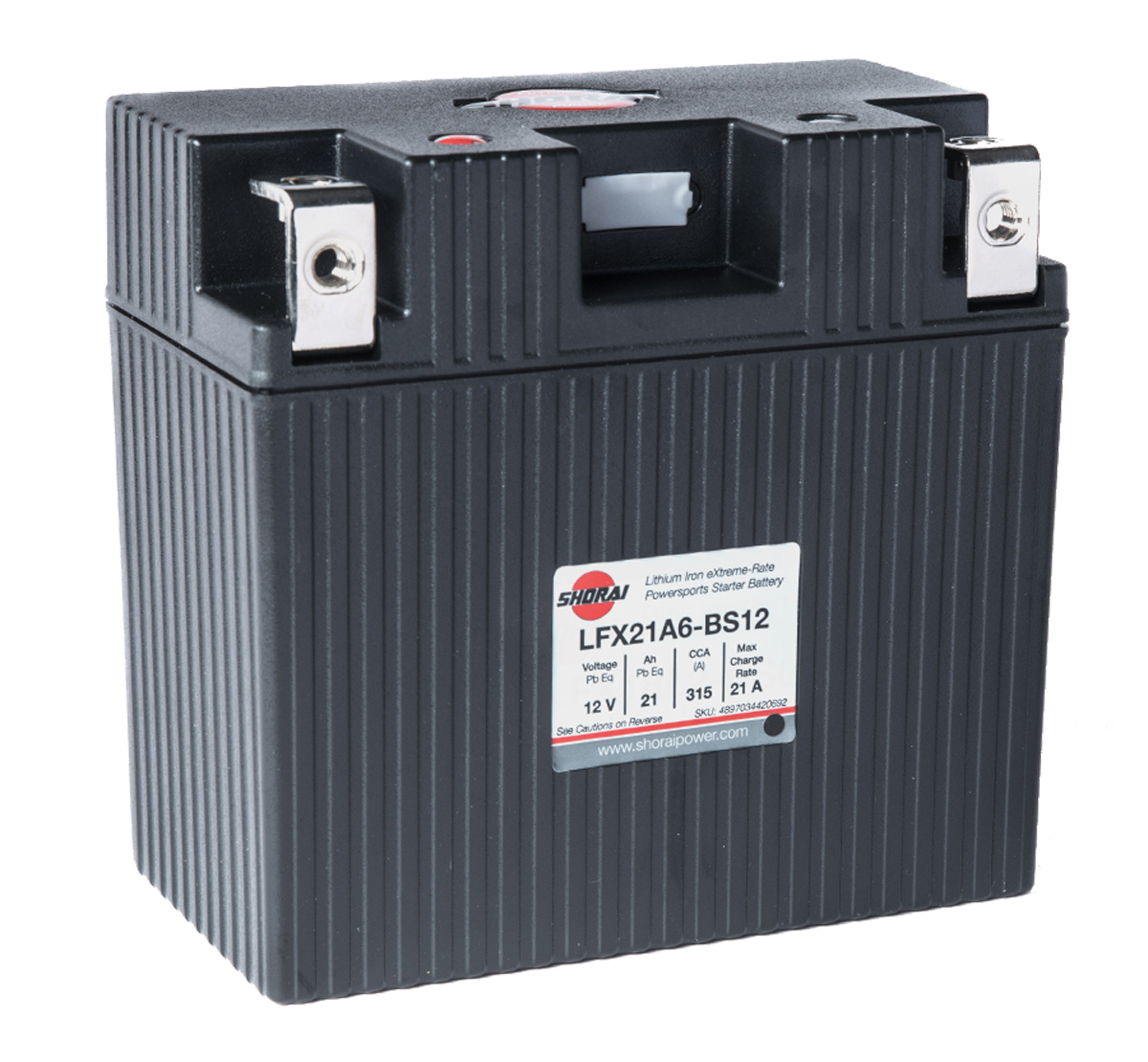
Shorai LFX21A6-BS12 Lithium Battery — Biggest reserve, but check availability first
Best for: Highest reserve capacity in a compact case
Generators that sit for months between runs punish small batteries, because every start attempt draws on a shrinking reserve. The LFX21A6-BS12 carries the largest rating here — 21Ah lead-acid equivalent, 7.7Ah actual — with 315 CCA at only 3.03 lb. Shorai specifies that the charging system must deliver 13.1V or higher at idle and must not exceed 15.2V, so check your generator’s charge output first. Two cautions hold it back: one retailer lists this model as no longer available, replaced by the LFM21A7-BS12, and we could not verify a warranty length, so neither is stated.
- Largest reserve rating in roundup
- 315 CCA at only 3.03 lb
- Clear published charging voltage window
- One retailer lists model discontinued
- Warranty length unverified, not stated
4.4/5
4.7/5
4.4/5
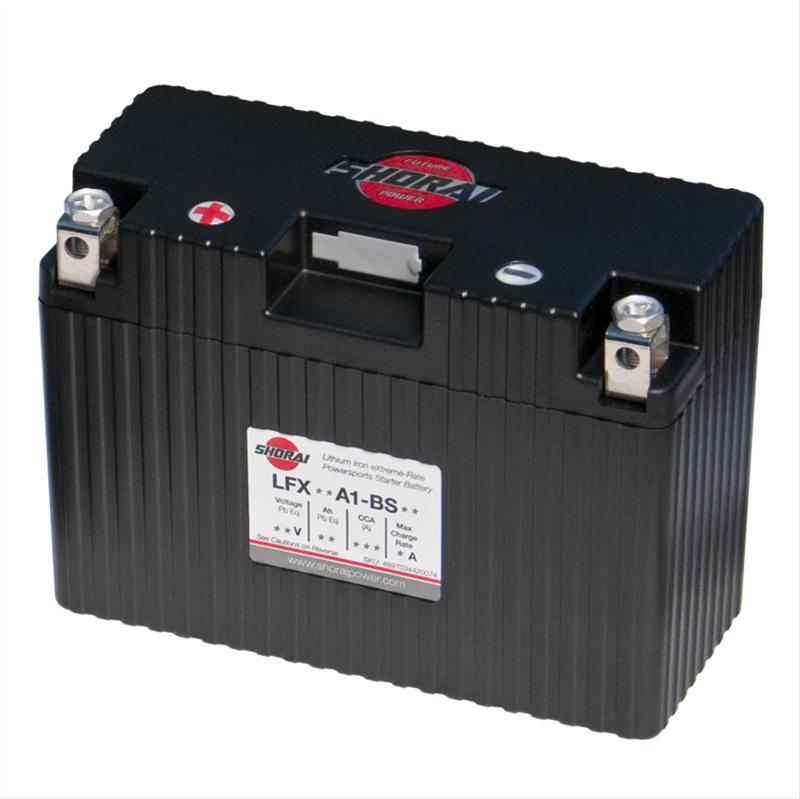
Shorai LFX18A1-BS12 Lithium Battery — Compact, light, proven powersport upgrade
Best for: Mid-size generators needing a compact, light upgrade
Tight trays rule out many lithium upgrades, which is where this compact Shorai earns its place. The LFX18A1-BS12 pairs an 18Ah lead-acid equivalent rating (6.6Ah actual) with 270 CCA at just 2.31 lb, in a case measuring 5.83 x 2.63 x 4.13 in. That slim profile fits trays its wider rivals cannot. As with its sibling, your generator’s charging system must stay within 13.1V to 15.2V, and we could not verify a warranty length, so none is claimed here. For mid-size starters, the balance of size, weight, and reserve is genuinely compelling.
- Slim case fits tight trays
- 270 CCA at only 2.31 lb
- 18Ah lead-acid equivalent reserve
- Charging voltage window is strict
- Warranty length unverified, not stated
4.4/5
4.5/5
4.6/5

Shorai LFX14A2-BS12 Lithium Battery — Lightest pick for small starter motors
Best for: Small-engine generators where every ounce counts
Small inverter generators ask little of a starter battery, so carrying flagship weight and capacity makes no sense. The LFX14A2-BS12 weighs just 1.46 lb — the lightest battery in this roundup — while delivering 210 CCA and a 14Ah lead-acid equivalent rating (4.4Ah actual). Adhesive foam shims are included to pad the small 4.45 x 2.28 x 3.5 in case securely inside larger trays. The trade-off is real: 210 CCA is the lowest cranking figure here, so this battery belongs only on small starter motors, never on large engines.
- Lightest battery here at 1.46 lb
- Adhesive foam shims included
- Tiny case fits cramped trays
- Lowest cranking output in roundup
- Warranty length unverified, not stated
4.2/5
4.3/5
4.7/5
Top 3 Head-to-Head: NLP30 vs ATX-20 ReStart vs NLP20
These three are the finalists most buyers actually choose between: the strongest crank, the self-rescue premium pick, and the large-generator fit. Here is how they compare on our three scoring criteria.
| Feature | #1 NOCO NLP30 | #2 Antigravity ATX-20 | #3 NOCO NLP20 |
|---|---|---|---|
| Starting power | 5.0/5 — 700A peak — Best | 4.9/5 — 680 cranking amps | 4.8/5 — 600A peak |
| Capacity and reserve | 4.8/5 — 8Ah / 99.84Wh | 4.8/5 — 10Ah actual / 128Wh plus RE-START reserve — Best | 4.7/5 — 7Ah / 89.6Wh |
| Durability and cold-weather performance | 4.9/5 — 2,000+ cycles, 5-year warranty — Best | 4.7/5 — full BMS, packaging-listed warranty | 4.9/5 — 2,000+ cycles, 5-year warranty, IP66 |
| Choose if… | You want maximum cranking headroom and warranty | You want a built-in jump-start safety net | Your tray is Group 20, not Group 30 |
Who These Lithium Starter Batteries Are NOT For
These batteries do one job — cranking an electric starter — and several common buyers need something else entirely.
Skip these if your generator is pull-start only, since there is no starter motor for the battery to turn. Also skip them if your generator’s charging system cannot stay within a lithium battery’s voltage limits, or if you need deep-cycle energy storage for solar or trolling-motor use — those jobs need a different battery design entirely.
Common Mistakes to Avoid
Most failed lithium upgrades fail for one of these four avoidable reasons.
Frequently Asked Questions About Lithium Generator Starter Batteries
Can you use a lithium battery in a portable generator?
Yes, provided it is a lithium starter battery designed to crank an engine, not a deep-cycle storage battery. Match the 12V system, confirm the case fits your starter tray, and check that cranking output meets or exceeds what your old battery delivered. A built-in BMS is strongly recommended because many generator charging circuits are basic. Pull-start-only generators have no starter battery to replace.
What size lithium battery do I need for my portable generator?
Match the BCI group size of the battery you are replacing, then confirm cranking amps against your generator manual. Most electric-start portables use Group 14, 20, or 30 sized starter batteries. Small inverter generators need modest cranking output, while large dual-fuel models need the strongest ratings in this roundup. When listings conflict on dimensions, measure your tray and plan around the larger figure.
Will a lithium battery damage my generator’s charging system?
Not when the voltages are compatible and the battery has a proper BMS. Problems arise when a charging system outputs voltage outside the battery’s stated window — Shorai, for example, specifies 13.1V to 15.2V — or when a battery without protection is overcharged. Check your generator’s charge output in the manual before swapping, and choose a battery whose BMS includes overcharge protection for crude charging circuits.
How long does a lithium starter battery last?
Expect several years of service, typically far longer than a comparable lead-acid starter battery. The NOCO models in this roundup are rated for 2,000-plus cycles, and cycle ratings elsewhere here run into the thousands, though one model’s listings conflict on the exact figure. Real lifespan depends on storage temperature, avoiding deep discharge, and never charging below freezing without low-temperature protection built into the battery.
Can a lithium battery start a generator in cold weather?
Yes, LiFePO4 starter batteries can discharge and crank in cold weather, though cranking feels slower as temperatures fall. The bigger risk is charging: charging lithium cells below freezing can damage them unless the BMS blocks it. If your generator lives in an unheated space, confirm low-temperature charge protection before winter, and keep the battery as warm as practical for the strongest cold starts.
Do I need a special charger for a lithium generator battery?
Yes, use a charger with a lithium or LiFePO4 mode for off-generator charging, because lead-acid profiles can undercharge the cells or trip the BMS. Your generator’s own charging circuit may maintain the battery while it runs, but that depends on the model — our explainer on whether running a generator charges its own battery covers when that applies and when a standalone charger is still needed.
Lithium vs lead-acid battery for a portable generator — which is better?
Lithium is better for most owners: it is far lighter, holds charge longer in storage, delivers strong cranking across its charge range, and lasts for thousands of cycles. Lead-acid still wins on simple familiarity and tolerance of crude charging, and it has no freezing-charge restriction. If your charging system stays within the lithium battery’s voltage window and you value reliable starts after months of storage, lithium is the stronger choice.
Our Final Verdict
The right lithium starter battery is decided by tray fit and cranking headroom, not headline capacity. Most owners should buy the strongest battery their tray accepts and stop second-guessing: that is the NOCO NLP30. Choose a ReStart model only if a built-in jump-start reserve matters more than raw amps or warranty length.
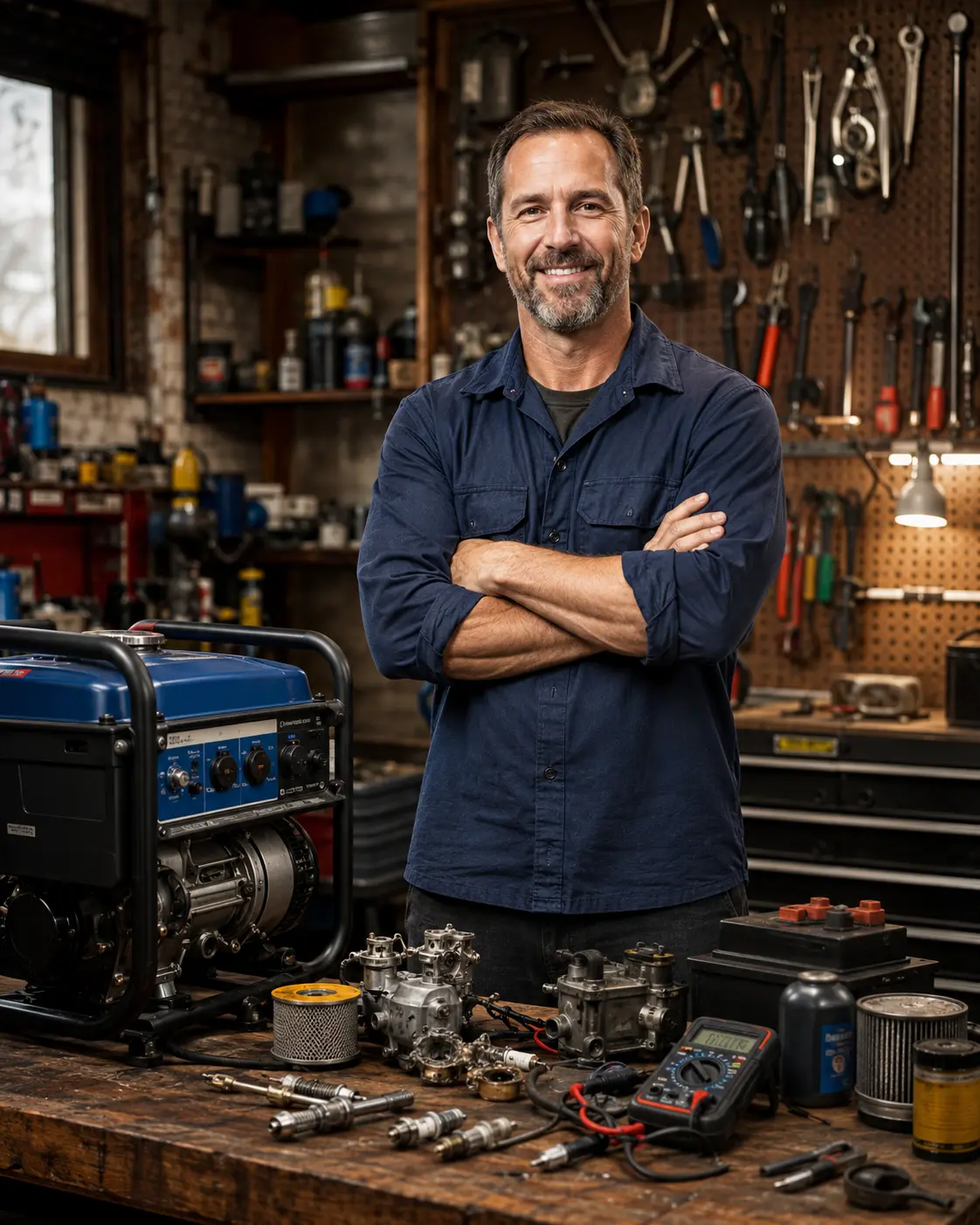
Hi, I’m Michael Turner. I own a generator workshop in the United States and founded HomeGeneratorBlog to share practical, hands-on guidance about generator installation, maintenance, troubleshooting, safety, and backup power solutions. My goal is to help homeowners make smarter, more confident decisions through clear and reliable information