Cummins Onan P11000iTF Review: Tri-Fuel Inverter Power
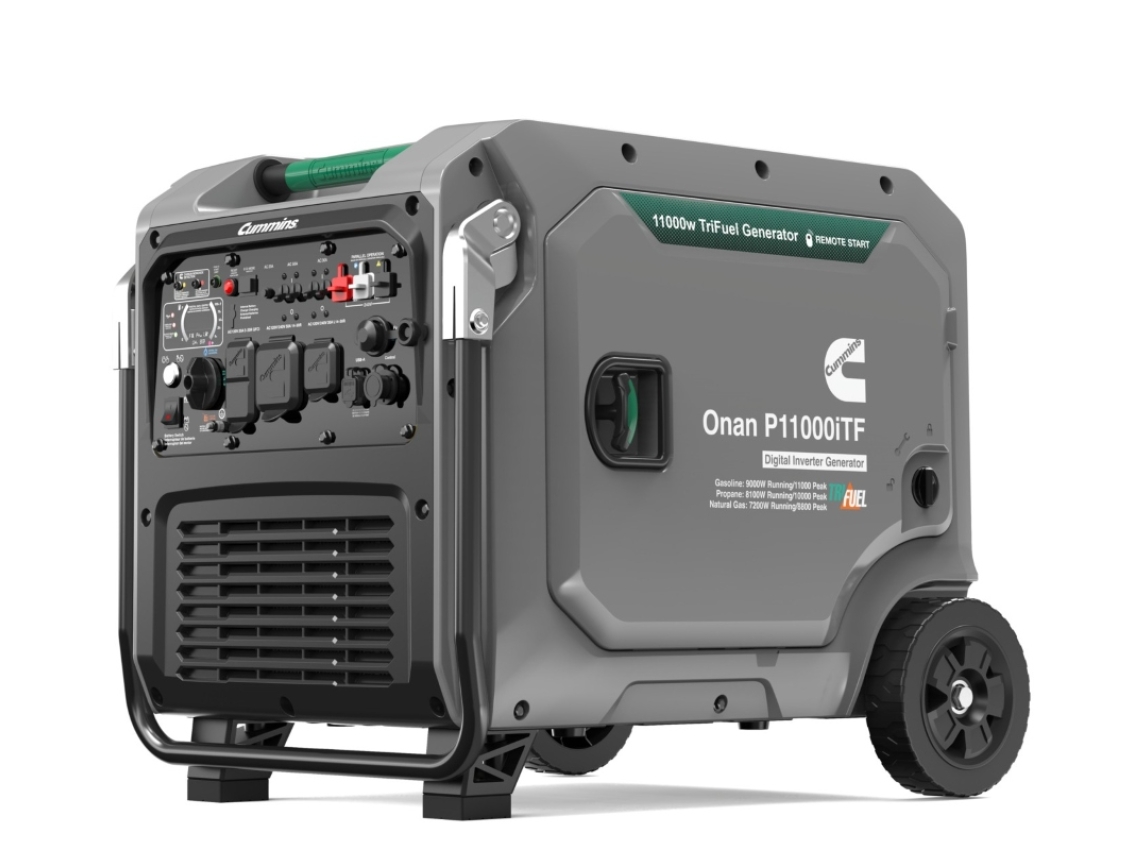
The Cummins Onan P11000iTF is a tri-fuel portable inverter generator built for demanding backup and mobile power needs.
It supplies electricity for essential home circuits, large RV equipment, and jobsite tools during outages or off-grid operation.
This Cummins portable generator targets buyers needing 120/240-volt output and three fuel options rather than a compact camping unit. This review evaluates published manufacturer specifications, not firsthand testing.
🏆 My Quick Verdict
💡 Best For: Homeowners and RV owners who need substantial inverter power with gasoline, propane, or natural gas flexibility.
⚡ Key Specs:
11,000 peak/9,000 running watts on gasoline; 120/240V; 457cc engine; 219 lb dry weight; THD of 3% or less.
✅ Bottom Line: Strong fuel flexibility and useful electrical connections make this a capable backup option. Its weight, California sales restriction, and reduced output on gaseous fuels deserve attention.
At a Glance
- Three fuel choices help owners adapt when gasoline or gas supplies become limited.
- Gasoline delivers the highest continuous output at 9,000 watts.
- Inverter technology provides power with total harmonic distortion at or below 3%.
- Remote, push-button, and recoil starting offer useful operating flexibility.
- The built-in carbon monoxide sensor can automatically shut down the engine.
- Its substantial weight makes wheeled movement preferable to lifting.
Cummins Onan P11000iTF Specifications
| Specification | Verified Detail |
|---|---|
| Fuel | Gasoline, propane, natural gas |
| Gasoline power | 11,000 peak / 9,000 running watts |
| Propane power | 10,000 peak / 8,100 running watts |
| Natural gas power | 8,800 peak / 7,200 running watts |
| Engine and voltage | 457cc four-stroke; 120/240V, 60Hz |
| Gasoline tank and runtime | 7.4 gallons; 16.5 hours at 25% load |
| Propane runtime | 6.7 hours at 25% load on a 20-lb tank |
| Noise and weight | Published 64 dBA; 219 lb dry |
| Dimensions | 30.3 x 25.0 x 27.0 inches |
| Warranty | 3-year limited residential; 1-year commercial |
Design & Build Quality
The P11000iTF uses a compact enclosed layout for its power class, with a foldable locking handle and included wheel kit. That equipment helps on firm ground.
At 219 pounds dry, it is not a carry-by-hand camping generator. Plan for two-person handling when loading it into a vehicle.
- The assembled footprint requires dedicated garage storage space.
- The front control panel groups several outlet types for different loads.
- Covered receptacles help keep dirt away while the unit is stored.
Its handle extends the overall length during movement, so storage dimensions alone do not describe maneuvering clearance. Check doorways and ramps before delivery.
Setup, Installation & Ease of Use
- Inspect the carton and generator for shipping damage before assembly.
- Fit the supplied wheel kit and handle according to the owner’s manual.
- Fill with the specified SAE 10W-30 oil before the first start.
- Charge or connect the supplied starting battery as instructed.
- Position the generator outdoors, far from doors, windows, and vents.
- Select the correct fuel and use properly rated, approved connections.
- Check appliance starting watts before connecting multiple loads.
- Store the generator dry and service fuel systems per the manual.
Core Performance & Feature Breakdown
The main performance advantage is substantial continuous inverter output with three possible fuels. Gasoline provides 9,000 running watts, while propane and natural gas reduce available capacity.
That distinction matters when starting compressors or several appliances together. Always size equipment against the rating for the fuel actually being used.
Home Backup and Heavy Loads
A 120/240-volt output and 30-amp and 50-amp receptacles suit many transfer-switch and RV arrangements. A licensed electrician should confirm correct transfer equipment and neutral configuration.
Never connect the generator directly to a household outlet or bypass a transfer switch. Unsafe backfeeding can endanger utility workers and occupants.
Runtime and Noise Expectations
Cummins specifies up to 16.5 hours of gasoline operation at a 25% load. The equivalent published propane figure is 6.7 hours with a standard 20-pound cylinder.
These are light-load figures rather than promises during sustained high demand. Operating time shortens as connected consumption rises.
Its published operating sound level is 64 dBA, but actual perceived noise depends on distance and loading. It should not be treated as silent.
Expert Insight
Build your backup-load list using running watts, compressor startup requirements, and the lowest-output fuel you expect to use; inverter power quality cannot compensate for insufficient wattage.
The inverter is specified for total harmonic distortion no greater than 3%. That is a meaningful advantage for modern electronics, though each device’s compatibility requirements still apply.
For a deeper explanation of electrical stability, see how inverter generators regulate voltage and frequency. It clarifies why engine speed and output quality are not identical.
Key Features Explained
Tri-Fuel Selector
The fuel selector supports gasoline, propane, and natural gas, reducing dependence on one stored fuel. Fuel availability and proper hose compatibility remain essential.
Remote and Electric Starting
An included remote key fob works at a published range up to 98 feet, with push-button and recoil alternatives. Battery charge and safe generator placement still matter.
Digital Data Center
The display reports runtime, power, voltage, frequency, fuel level, and accumulated operating hours. Those readings help plan refueling and routine service.
Carbon Monoxide Auto-Shutoff
The built-in sensor can shut down the engine when hazardous carbon monoxide is detected. It does not make indoor operation safe or replace home CO alarms.
Real-World Usability & Maintenance
Routine ownership involves checking engine oil, cleaning air-filter components, and following the scheduled service intervals. The unit has automatic low-oil shutdown, but preventive checks remain necessary.
Its natural gas runtime is described as maintenance-based, not a fixed fuel-tank duration. Continuous supply still requires approved plumbing, correct pressure, and periodic servicing.
When stored for long periods, follow the manual’s fuel and battery guidance. For general operating principles, explore how inverter generator technology works.
Pros & Cons
Pros
- Three fuel types create flexible emergency supply options.
- 9,000 gasoline running watts support substantial planned loads.
- Low-distortion inverter output suits many sensitive electronics.
- Multiple start methods and a digital display improve usability.
Cons
- 219-pound dry weight complicates lifting and transport.
- Natural gas operation drops continuous output to 7,200 watts.
- Cummins says this US model is not sold in California.
Common Issues & Fixes
- Failure to start: An empty fuel source or weak battery can prevent startup; check fuel selection and battery charge against the manual.
- Overload shutdown: Too many simultaneous appliances can exceed available output; disconnect loads and restart using the prescribed procedure.
- Unexpected CO shutdown: Exhaust accumulation can trigger protection; stop operating and relocate the unit farther outdoors before investigating.
What to Know Before You Buy
Check local availability first: Cummins identifies this model as US-only and not for sale in California. It also requires substantial outdoor operating clearance.
For home backup, compare the generator’s 120/240-volt receptacles with your approved inlet and transfer equipment. The bonded-neutral arrangement deserves professional review.
- Verify required propane or natural gas hose kits and fittings.
- Above 2,000 feet, Cummins specifies relevant carburetor or fuel-switch kits.
- Allow room for wheels, handle deployment, service, and safe transportation.
- Confirm actual retailer stock before assuming an Amazon search has a listing.
Who Should Buy It / Who Should Skip It
✅ Who Should Buy It
- Homeowners planning professionally connected emergency circuits.
- RV owners needing considerable 120/240V generator capacity.
- Users with reliable access to more than one fuel.
✗ Who Should Skip It
- Campers needing a lightweight, carryable power source.
- Buyers without a safe outdoor operating location.
- California purchasers seeking this exact US model.
Alternatives to Consider
Westinghouse iGen11000TFc
Best For: Buyers wanting similar tri-fuel inverter performance with less weight.
Main Advantage: Manufacturer-listed dry weight is 191 pounds.
Trade-off: Warranty and service coverage should be compared locally.
Key Spec: 9,000 gasoline running watts; 7,200 natural gas running watts.
Champion 201423 Tri-Fuel Inverter
Best For: Buyers seeking included gas hoses and another 11,000-watt-class option.
Main Advantage: Champion lists propane and natural gas hoses in the box.
Trade-off: Its published gasoline runtime is 15 hours at quarter load.
Key Spec: 9,000 gasoline running watts and 212.3-pound weight.
Is It Worth It?
The P11000iTF is worth considering when fuel resilience and inverter output matter more than easy transport. Its value depends on the loads you must protect and local purchase options.
Compare total ownership costs, including transfer equipment, fuel hoses, service supplies, and storage. The generator alone is not a complete home-backup installation.
Final Verdict
The Cummins Onan P11000iTF is a compelling tri-fuel inverter option for carefully planned home and RV backup loads. Choose it for verified electrical capability and fuel versatility, provided its size and regional restrictions fit your needs.
Frequently Asked Questions
Can the Cummins P11000iTF power a house?
Yes, it can run selected home loads within its fuel-specific running and starting limits. Use properly installed transfer equipment instead of attempting to energize the entire home through an ordinary outlet.
Does it support 120/240-volt appliances?
Yes, it has 120/240V 30-amp and 50-amp receptacles. Confirm your equipment’s plug type, current demand, and correct electrical connections.
How big and heavy is the generator?
It measures 30.3 by 25.0 by 27.0 inches and weighs 219 pounds dry. The supplied wheels help move it, but vehicle loading requires care.
What warranty does Cummins provide?
Cummins lists a three-year limited residential warranty and one-year commercial warranty. Confirm the current terms and service requirements before purchase.
What maintenance does the generator need?
It requires scheduled oil, air-filter, and engine maintenance according to the owner’s manual. Cummins specifies SAE 10W-30 oil and a 1.16-quart oil capacity.
Can it operate safely inside a garage?
No, it must operate outdoors away from occupied buildings and openings. The automatic carbon monoxide shutdown is supplementary protection, not permission for enclosed use.
Affiliate disclosure: HomeGeneratorBlog earns a small commission when you purchase through links on this page — at no extra cost to you. Our editorial process is independent: affiliate relationships never influence which products we recommend or how we rank them.

Hi, I’m Michael Turner. I own a generator workshop in the United States and founded HomeGeneratorBlog to share practical, hands-on guidance about generator installation, maintenance, troubleshooting, safety, and backup power solutions. My goal is to help homeowners make smarter, more confident decisions through clear and reliable information