Hart 3600 Watt Portable Gas Generator Review: Is It Worth It?
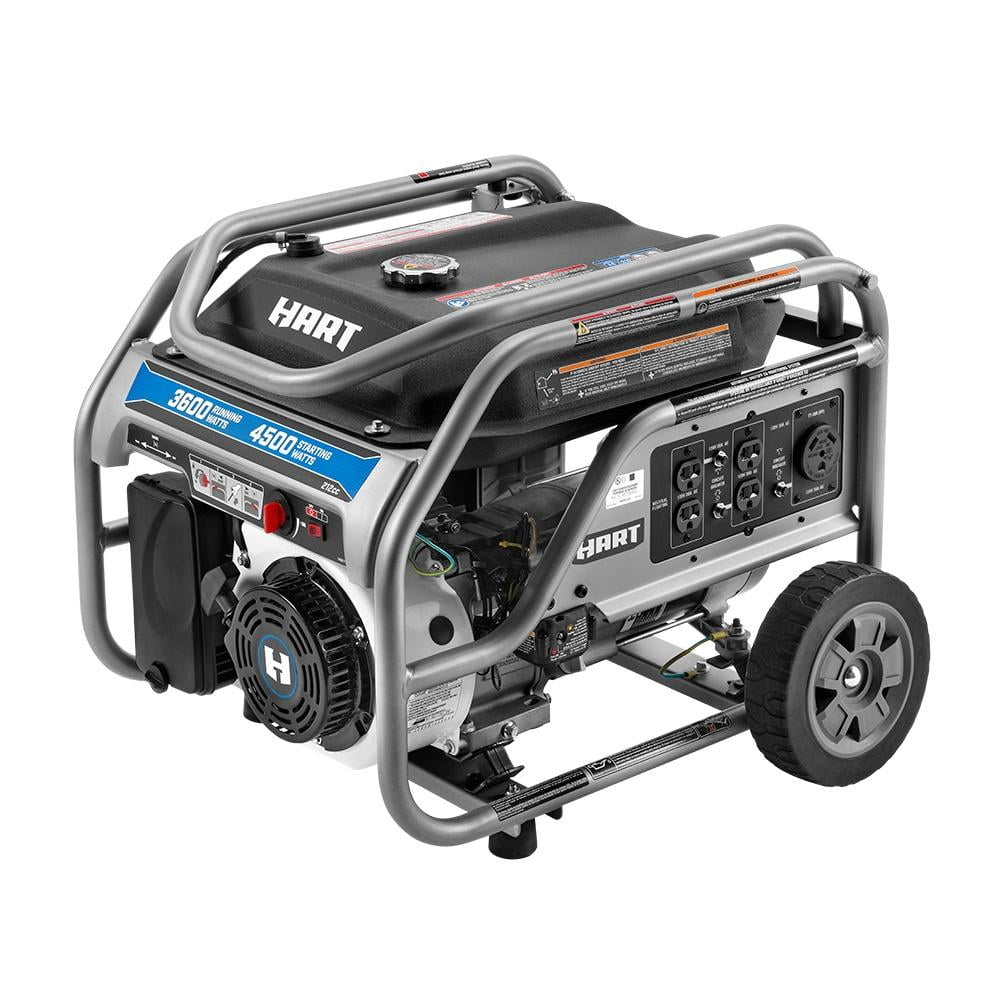
The HART 3600 Watt Portable Gas Generator is a gasoline-powered, open-frame generator rated for 3,600 running watts and 4,500 starting watts. It is designed to supply temporary electricity for household essentials, outdoor projects, and selected equipment during outages.
This HART 3600 Watt Portable Gas Generator review examines its advertised capabilities, operating compromises, and purchase checks. It suits buyers prioritizing practical backup power over a compact, battery-powered or enclosed inverter design.
🏆 My Quick Verdict
💡 Best For: Households needing essential-circuit backup and owners comfortable with manual starting and gasoline maintenance.
⚡ Key Specs:
3,600 running watts; 4,500 starting watts; 212cc engine; advertised 10 hours at 50% load; recoil start.
✅ Bottom Line: Its power output and automatic CO shutoff make a credible case for emergency use. The conventional format, pull cord, and uncertain retail availability demand realistic expectations.
At a Glance
- 3,600 running watts support a planned group of essential appliances.
- 4,500 starting watts provide temporary capacity for motor startup.
- The advertised 10-hour runtime applies at 50% load.
- A CO-related automatic shutoff adds a safety safeguard, not indoor permission.
- The pull-cord starter requires physical effort and correct engine preparation.
- Verify warranty eligibility and included accessories when purchasing open-box stock.
HART 3600 Watt Generator Specifications
| Specification | Verified listing detail |
|---|---|
| Model | HRT903622 |
| Running / starting output | 3,600 W / 4,500 W |
| Engine | 212cc gasoline engine |
| Advertised runtime | 10 hours at 50% load |
| Starting method | Manual recoil / pull cord |
| Safety feature | CO protection with automatic shutoff |
| Voltage management | Automatic voltage regulator |
| Listed warranty | 3 years, subject to terms and purchase condition |
Design & Build Quality
The HART uses a traditional exposed-engine frame instead of the enclosed housing found on many inverter generators. That layout provides accessible service areas but exposes users to engine noise and hot components.
Its published package includes wheels, feet, handle hardware, engine lubricant, and an operator’s manual. Confirm every part is present before assembly, especially with previously opened merchandise.
The frame and rolling hardware are useful because moving a fueled generator requires care. A flat, level operating surface also matters for lubrication, stability, and safe cord routing.
The product is better treated as transportable equipment than something to carry regularly. Measure your storage opening and operating site rather than assuming a portable label means lightweight.
Setup, Installation & Ease of Use
- Inspect the carton and check all supplied parts against the operator’s manual.
- Fit the supplied wheels, support feet, and handle using the provided hardware.
- Tighten fasteners securely and keep the generator stable on level ground.
- Add the specified engine oil before the first start.
- Fill with the gasoline grade approved in the exact HART manual.
- Place the machine outdoors at least 20 feet from doors, windows, and vents.
- Keep electrical loads disconnected while following the manual’s starting procedure.
- Pull the recoil starter as directed, then connect compatible loads gradually.
- Use outdoor-rated cords appropriate for both load current and cord length.
- After cooling, store the machine dry and follow fuel-storage instructions.
Core Performance & Feature Breakdown
Running Watts Versus Starting Watts
The important performance figure is 3,600 watts of continuous rated output. The 4,500-watt figure describes brief starting demand, not a higher continuous operating limit.
A refrigerator, freezer, or pump may draw extra power when its motor starts. Add actual nameplate running loads and check the largest surge before plugging in multiple devices.
Emergency Backup Capability
This generator can be a practical source for selected appliances, lights, and charging equipment. It should not be treated as automatic whole-house backup or as a substitute for proper electrical planning.
Stagger motor startups instead of energizing every appliance at once. For additional sizing help, review our portable generator wattage guide.
Runtime and Fuel Planning
The published 10-hour claim is based on a 50% load, equivalent to roughly 1,800 watts of output. A different electrical demand, altitude, temperature, or maintenance condition can change actual runtime.
A fuel plan matters as much as a wattage plan during an extended outage. Store gasoline in approved containers and refuel only after shutting down and cooling the engine.
Expert Insight
A 3,600-watt rating is only useful when individual outlet limits and motor surges also fit the load plan; never assume total generator capacity is available from one receptacle.
Carbon Monoxide Protection
The advertised CO shutoff can stop the engine when hazardous exhaust conditions are detected. It does not make operation in a garage, porch enclosure, tent, or home safe.
Follow the CDC’s outdoor placement guidance and maintain working household CO alarms. Our generator CO safety guide explains additional precautions.
Key Features Explained
Automatic Voltage Regulator
The listed automatic voltage regulator helps manage output voltage as electrical demand changes. It is not proof of inverter-grade power quality, so check sensitive-device requirements separately.
Recoil Starting System
The pull-cord mechanism avoids reliance on an electric-start battery. However, it requires manual effort and correct choke, fuel, and maintenance procedures.
Rolling Transport Hardware
The supplied wheel-and-handle assembly helps move the generator over reasonably firm ground. Its usefulness is reduced on stairs, steep slopes, or unstable terrain.
CO-Triggered Engine Shutdown
The protective shutdown system gives owners an additional warning through engine stoppage. Repeated activation calls for correcting placement, never bypassing the safety feature.
Real-World Usability & Maintenance
Gasoline ownership requires checking oil, inspecting filters, maintaining the spark plug, and managing stored fuel. Write service dates and running hours in a log even if the unit is used infrequently.
During long outages, keep the machine accessible for inspections without bringing it indoors. Our generator maintenance schedule offers a useful checklist.
Keep cords and connection points dry, and never backfeed a household receptacle. A qualified electrician should install any approved transfer equipment needed for home circuits.
Pros & Cons
Pros
- 3,600 running watts provide useful capacity for selected backup essentials.
- 4,500 starting watts accommodate some short motor-starting surges.
- Automatic CO shutdown adds protection against dangerous operating conditions.
- Included transport components make repositioning more manageable.
Cons
- Pull-cord starting will not suit everyone.
- A traditional open-frame design is less discreet than enclosed alternatives.
- Open-box listings may complicate condition and warranty expectations.
Common Issues & Fixes
The Engine Does Not Start
Old gasoline, an incorrect control setting, or insufficient oil can prevent starting. Check the manufacturer’s starting sequence and basic service items before seeking repair.
A Breaker Trips Under Load
Connected equipment may exceed a receptacle rating or create an excessive startup surge. Disconnect loads, inspect the cause, and restart within documented limits.
The Engine Stops Unexpectedly
An automatic safety system or operating fault may have triggered shutdown. Move clear of any suspected CO exposure and consult the manual before attempting a restart.
What to Know Before You Buy
Start with your actual appliance wattages, not the number printed largest on the carton. Check continuous load, brief starting demand, plug configuration, and any equipment that requires particularly clean electricity.
Confirm the exact HRT903622 identification and included accessories with the seller. Current online results prominently show open-box units, so product condition should be established before payment.
Ask whether original warranty coverage applies to your purchase and retain dated proof. A listed three-year warranty does not automatically establish identical protection for every resale channel.
Check fuel storage rules, weather protection, extension-cord requirements, and permitted generator placement at your property. The exhaust and hot muffler require separation from people and combustibles.
If you plan to connect household circuits, have an electrician evaluate a code-compliant transfer arrangement. Plugging a generator into a wall outlet creates dangerous backfeed risks.
Who Should Buy It / Who Should Skip It
✅ Who Should Buy It
- Homeowners who have calculated a modest emergency power load.
- DIY users wanting portable electricity for suitable tools.
- Buyers comfortable with recoil starting and engine upkeep.
✗ Who Should Skip It
- People expecting whole-home automatic backup.
- Shoppers needing quiet, enclosed inverter-style operation.
- Users unable to provide safe outdoor placement and maintenance.
Alternatives to Consider
Westinghouse WGen3600c
Best For: Buyers wanting published outlet details and a fuel gauge.
Main Advantage: The manufacturer lists CO shutdown and RV-ready connections.
Trade-off: It remains a gasoline-powered recoil-start unit.
Key Spec: 3,600 running / 4,650 peak watts.
Champion 201267
Best For: RV owners seeking clearly documented receptacles.
Main Advantage: CO Shield and a listed RV outlet.
Trade-off: Slightly lower continuous output than the HART.
Key Spec: 3,550 running / 4,450 starting watts.
Is It Worth It?
The HART makes sense when its verified wattage matches your needs and the seller offers clear terms. Value depends on condition, support, and the total cost of safe operation.
Compare a confirmed new-unit price with established alternatives before choosing open-box inventory. Uncertain accessories or warranty eligibility can outweigh an apparently attractive discount.
Final Verdict
The HART 3600 Watt Portable Gas Generator is a reasonable candidate for planned, limited backup power. Choose it for its practical output and CO shutoff, provided you accept recoil starting, routine maintenance, and careful retailer verification.
Frequently Asked Questions
Can the HART 3600 watt generator run a refrigerator?
Yes, if the refrigerator’s running and starting demands fit the available capacity. Check its nameplate and account for other connected equipment.
Can it power an RV?
Potentially, but outlet compatibility and total RV load must be confirmed. Check the generator’s actual outlet panel and the RV’s connection requirements.
Is it safe to operate in a garage with the door open?
No, never operate a gasoline generator in a garage. Use it outdoors at least 20 feet from building openings, with exhaust directed away.
How much space does the generator need?
Allow a stable outdoor operating area plus the clearances specified in the manual. Measure the unit and storage access before purchase.
Does the HART generator include a warranty?
Retail specifications list a three-year warranty. Confirm coverage, exclusions, and eligibility for the specific new or open-box unit.
What maintenance does this gasoline generator require?
Follow the HART manual for oil, air-filter, spark-plug, and fuel-system service. Inspect before each use and prepare the fuel system for extended storage.
Affiliate disclosure: HomeGeneratorBlog earns a small commission when you purchase through links on this page — at no extra cost to you. Our editorial process is independent: affiliate relationships never influence which products we recommend or how we rank them.

Hi, I’m Michael Turner. I own a generator workshop in the United States and founded HomeGeneratorBlog to share practical, hands-on guidance about generator installation, maintenance, troubleshooting, safety, and backup power solutions. My goal is to help homeowners make smarter, more confident decisions through clear and reliable information