What Will a 10,000 Watt Generator Run in Your Home?
Quick Answer
A 10,000-watt generator can run most home essentials together, including a refrigerator, freezer, furnace blower, sump pump, well pump, lights, electronics, microwave, and often a window or central air conditioner if startup loads are managed. However, you need to know whether your generator provides 10,000 running watts or only 10,000 peak watts, and you should calculate the actual loads before connecting appliances. For appliance estimates, see this generator wattage chart.
What a 10,000-watt generator can usually handle
- Refrigeration: A refrigerator and separate freezer normally use only a fraction of the available running capacity.
- Heating equipment: A gas or oil furnace blower can usually operate along with several other essentials.
- Water pumps: Most residential sump and well pumps can fit within the load when their startup surge is considered.
- Kitchen loads: A microwave, coffee maker, or one electric cooking element can usually be used when other heavy loads are managed.
- Cooling: Many window air conditioners and some central air systems may work, but compressor startup demand can become the limiting factor.
- Everyday electronics: Lights, televisions, routers, computers, chargers, and security equipment consume relatively little power.
Before you connect everything
- Add the running watts of everything you want operating together, then allow for the largest motor startup surge.
A 10,000-watt generator sits in a useful range for serious home backup. It gives you much more flexibility than a small emergency generator without automatically moving into permanent whole-house standby territory.
The catch is that “10,000 watts” doesn’t always mean what shoppers think. Here’s how I determine what you can realistically run without constantly tripping breakers or shutting the generator down.
What does a 10,000-watt generator actually mean?
A 10,000-watt generator may provide either 10,000 continuous running watts or 10,000 watts only during short startup surges. Those are two different capabilities.
Generator running watts are the continuous electrical power the generator can supply. Starting watts, also called surge or peak watts, are the extra short-term capacity available when motors and compressors start.
This distinction matters because many generators advertised with a large number use their peak rating in the product name. A generator labeled “10,000 watt” might provide only 7,500 to 8,500 running watts.
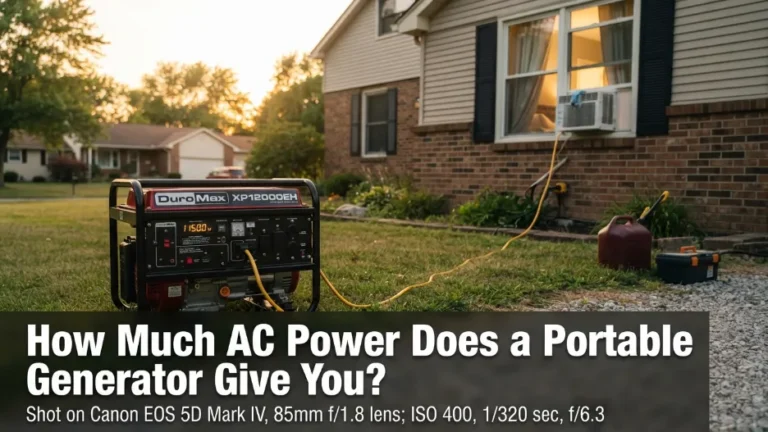
For example, the DuroMax XP10000X is rated for 10,000 peak watts but 8,500 running watts on gasoline. You would therefore plan your continuous load around 8,500 watts, not 10,000.
What appliances can a 10,000-watt generator run?
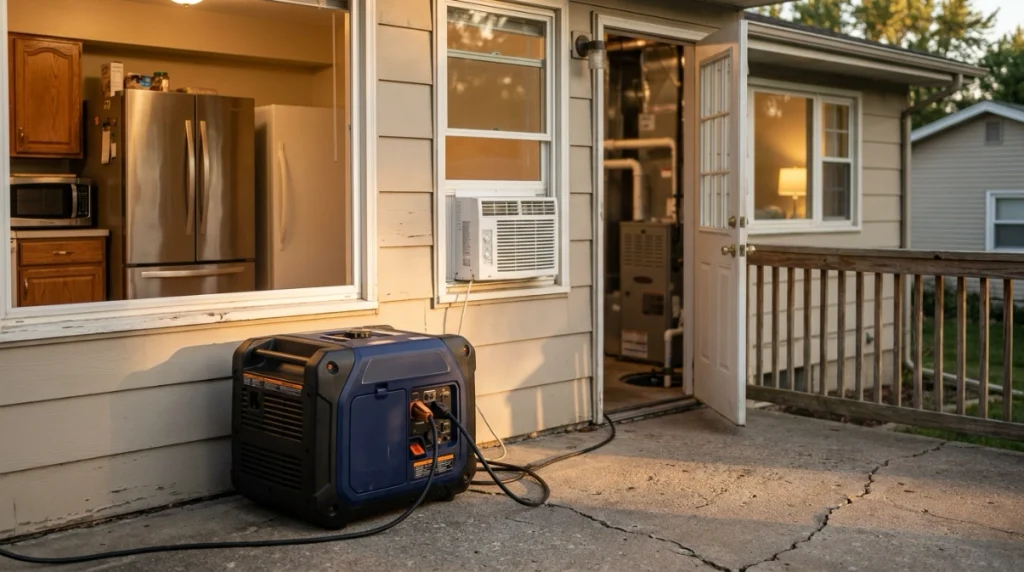
With 10,000 true running watts available, you can power a substantial collection of household equipment simultaneously. The exact answer depends on each appliance’s nameplate rating.
These figures are useful planning estimates rather than guaranteed consumption numbers.
| Appliance | Typical Running Watts | Typical Startup Demand | 10,000 W Generator? |
|---|---|---|---|
| Refrigerator | 150–400 W | 800–1,200 W | Yes |
| Freezer | 100–500 W | 500–1,000 W | Yes |
| 10,000 BTU window AC | 900–1,200 W | 1,800–2,400 W | Yes |
| 3-ton central AC | 3,000–3,500 W | 5,000–6,000 W | Often, with load management |
| 1/2 HP furnace fan | 300–800 W | 800–1,600 W | Yes |
| 1/2 HP sump pump | 800–1,050 W | 1,300–2,150 W | Yes |
| 1/2 HP well pump | 750–1,000 W | 1,500–2,000 W | Yes |
| Electric water heater | 3,000–4,500 W | Little or no extra surge | Yes, but it’s a heavy load |
| Microwave | 600–1,200 W | Minimal | Yes |
| Television | 80–400 W | Minimal | Yes |
As of 2026, manufacturer wattage tables still emphasize the same point: these figures are estimates. Always check the actual appliance label or owner’s manual before sizing your backup system.
Can a 10,000-watt generator run most of a house at once?
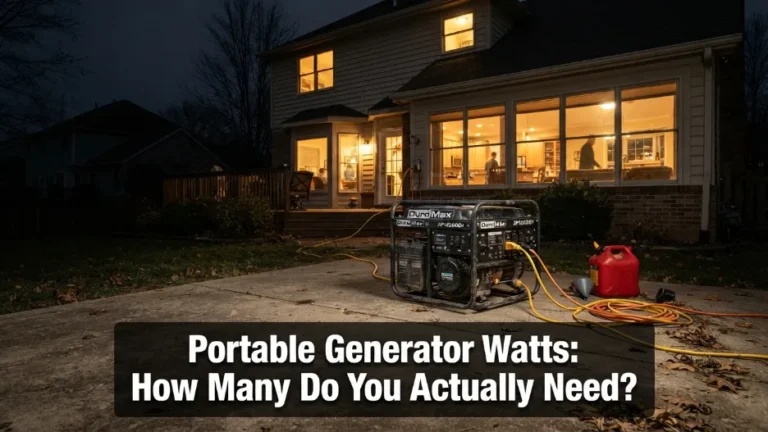
Yes, a true 10,000-running-watt generator can operate most emergency household loads at the same time. It may even provide a fairly normal outage experience in a home with gas heating and modest electrical demand.
A realistic outage load might include:
- Refrigerator and freezer for food preservation
- Furnace blower for a gas or oil heating system
- Sump pump for basement protection
- Well pump for household water
- Several LED lights throughout the home
- Internet router and modem
- Television and computers
- Microwave for short cooking periods
- Window AC when cooling is necessary
My rule is simple: I treat the generator rating as a ceiling, not a target. Leaving spare capacity makes startup surges much easier to handle.
Example: a comfortable emergency setup
Suppose your essential appliances consume around 5,000 watts while running. If your largest motor needs another 1,500 to 2,000 watts during startup, your short-term requirement remains comfortably below 10,000 watts.
That leaves room for small electronics and temporary loads without operating continuously at maximum capacity.
Will a 10,000-watt generator run central air conditioning?
A 10,000-watt generator can run some central air conditioners, but you cannot answer this safely from tonnage alone. Compressor startup demand and the generator’s actual surge rating matter.
Current manufacturer reference figures put a typical 3-ton central AC around 3,000–3,500 running watts and roughly 5,000–6,000 watts during startup. A 4-ton unit may require around 4,000–5,000 running watts and 6,500–8,000 watts to start.
- Small central AC: Often practical on a 10 kW generator with other loads managed.
- 3-ton system: Often possible if startup capacity is sufficient.
- 4-ton system: May work, but available capacity becomes much tighter.
- Larger systems: Check the compressor nameplate and generator specifications before assuming compatibility.
Don’t start the AC while the water heater, electric range, well pump, and other major loads are all demanding power. Staggering large appliances reduces the chance of an overload.
What can’t you comfortably run on a 10,000-watt generator?
The biggest problems usually come from electric resistance heating and combinations of several high-demand appliances. Each item might fit by itself while the combination exceeds available power.
- Large electric furnace: Electric heating elements can demand far more capacity than a typical portable generator provides.
- Electric clothes dryer: Many dryers consume roughly 4,000–6,000 watts before other household loads are counted.
- Electric water heater: A 3,000–4,500-watt heater takes a large portion of a 10 kW generator’s output.
- Multiple electric range elements: Cooking loads can quickly consume several thousand watts.
- Large central HVAC: Compressor startup may leave too little capacity for other appliances.
- Several heavy loads together: Water heating, cooking, drying, and cooling simultaneously can exceed 10,000 watts.
This is why a 10 kW portable generator isn’t automatically the same thing as a whole-house standby generator. Load management remains important.
How do you calculate whether everything will fit?
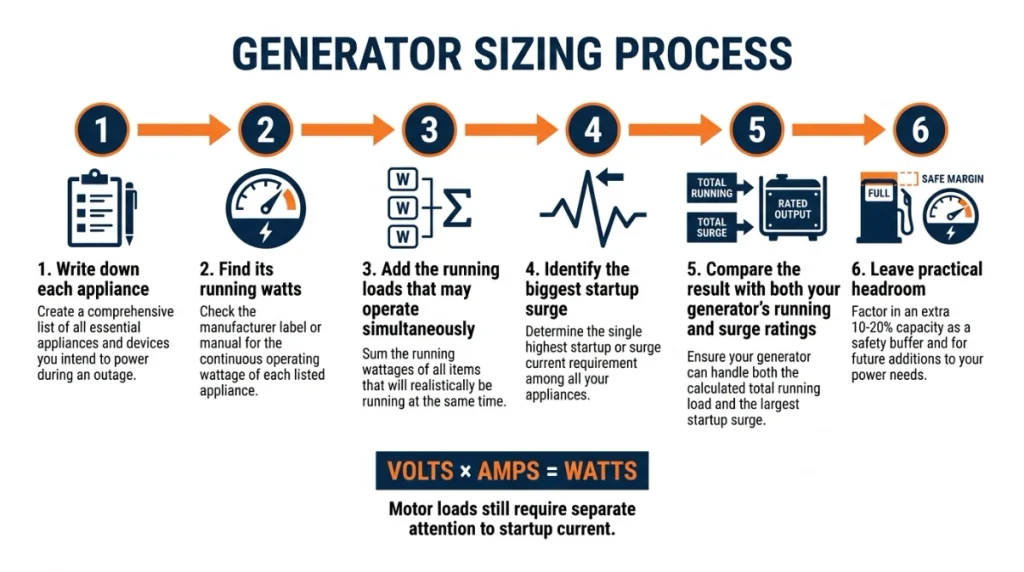
Start with the running watts for every appliance you expect to operate simultaneously. Then account for the largest startup demand among your motor-driven equipment.
- Write down each appliance you want available during an outage.
- Find its running watts from the nameplate or owner’s manual.
- Add the running loads that may operate simultaneously.
- Identify the biggest startup surge from your refrigerator, pump, furnace blower, or air conditioner.
- Compare the result with both your generator’s running and surge ratings.
- Leave practical headroom instead of planning to operate at the absolute limit continuously.
If an appliance only lists volts and amps, multiply them to estimate watts: volts × amps = watts. Motor loads still require separate attention to startup current.
Does fuel type change how much your generator can run?
Yes. A multi-fuel generator may have different power ratings for gasoline, propane, and natural gas.
For example, Champion’s model 201438 is rated at 10,000 running watts on gasoline, 9,000 on propane, and 8,000 on natural gas. That difference can change which large appliances you can operate together.
| Fuel | Champion 201438 Running Output | Practical Effect |
|---|---|---|
| Gasoline | 10,000 W | Maximum available running capacity |
| Propane | 9,000 W | Slightly more load management required |
| Natural gas | 8,000 W | Heavy simultaneous loads need closer management |
Always calculate from the rating for the fuel you’re actually using. Don’t assume the gasoline number applies when you switch fuels.
How should you connect a 10,000-watt generator to your home?
If you’re powering selected household circuits, use an approved transfer switch or another code-compliant generator connection installed for that purpose. Never energize household wiring by plugging the generator into a wall receptacle.
The Electrical Safety Foundation International generator safety guidance explains that transfer switches isolate utility and generator power. This prevents dangerous backfeeding into utility lines.
- Have permanent generator connections installed by a qualified electrician.
- Use cords rated for the intended electrical load when powering appliances directly.
- Never exceed the generator’s rated output.
- Follow the manufacturer’s grounding and GFCI instructions.
Where should you operate a portable generator?
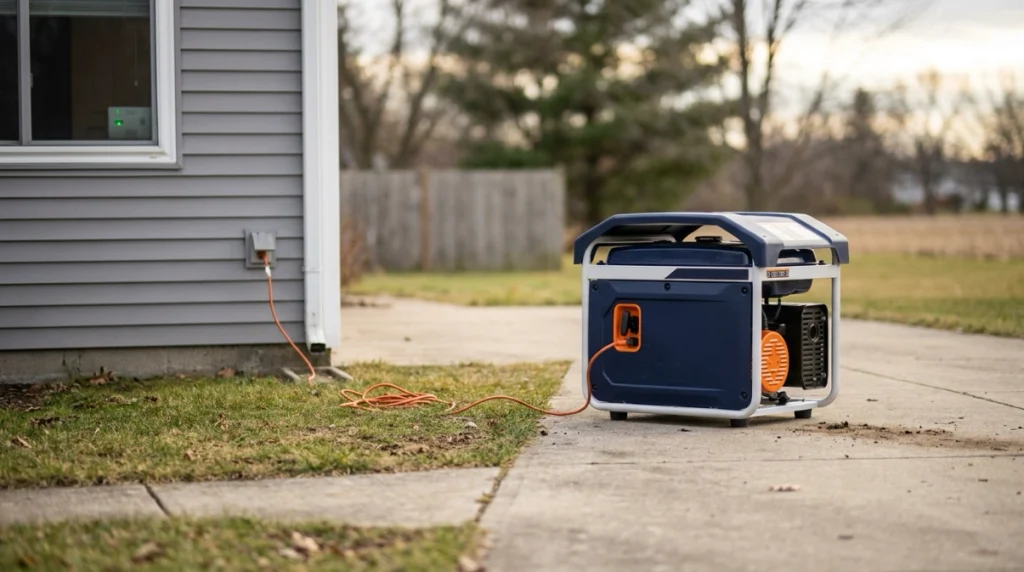
Portable generators must stay outdoors because their engines produce carbon monoxide. Never operate one inside a house, basement, garage, shed, or other enclosed area.
Current CDC carbon monoxide guidance says portable generators should operate outdoors more than 20 feet from windows, doors, and vents. Use a battery-powered or battery-backup carbon monoxide detector inside the home.
The U.S. Consumer Product Safety Commission also warns never to operate portable generators inside garages, basements, sheds, or homes.
- Keep it outside: Never rely on an open garage door for ventilation.
- Maintain distance: Keep exhaust well away from doors, windows, and vents.
- Use CO alarms: Install functioning alarms inside the house.
- Protect against moisture: Follow the manufacturer’s wet-weather operating instructions.
- Refuel safely: Shut the generator down and allow it to cool before adding fuel.
Which generators should you consider around the 10,000-watt class?
If you’re ready to shop in this power range, I would focus on the running-watt rating, fuel-specific output, 120/240-volt capability, transfer-switch-ready outlets, and carbon monoxide safety features.
🏆 Best for true 10 kW gasoline output
Champion 201438 Tri-Fuel Generator
★★★★★
It delivers 12,500 starting and 10,000 running watts on gasoline, plus propane and natural-gas operation. I like it for homeowners who want true 10 kW gasoline capacity without giving up fuel flexibility.
⛽ Best fuel flexibility
Westinghouse WGen10500TFc
★★★★☆
This tri-fuel model provides 10,500 running watts on gasoline, 9,500 on propane, and 8,500 on natural gas. The combination of 120/240-volt outlets, remote electric start, and a CO sensor makes it practical for managed home backup.
🔌 Best inverter option
DuroMax XP13500iHT Tri-Fuel Inverter
★★★★☆
It produces 10,500 running watts on gasoline, 10,000 on propane, and 9,000 on natural gas. I would consider this one when high output, fuel flexibility, and inverter operation all matter.
FAQ
Will a 10,000-watt generator run a refrigerator and air conditioner?
Yes. A 10,000-watt generator can normally run a refrigerator and a window air conditioner together with plenty of capacity remaining. Many central air conditioners may also work, but you must verify compressor startup demand and account for every other appliance operating at the same time.
Will a 10,000-watt generator run a 2,000-square-foot house?
It can provide substantial backup power to a 2,000-square-foot house, but square footage doesn’t determine electrical demand. A home with gas heat may run comfortably, while an all-electric home with central HVAC, water heating, cooking, and clothes drying can require much more capacity.
Can a 10,000-watt generator run a well pump?
Yes. Many residential well pumps fall comfortably within a 10 kW generator’s capability. A 1/2 HP well pump commonly uses around 750–1,000 running watts, with higher power required during startup, so include that surge when calculating the rest of your household load.
Can I run an electric water heater on a 10,000-watt generator?
Usually, but it consumes a large portion of the available power. A typical electric water heater may require roughly 3,000–4,500 watts, so turn off or reduce other major loads while the heater is operating if your total demand approaches the generator’s limit.
Is a 10,000-watt generator enough for whole-house backup?
It can provide near-whole-house backup in some homes when loads are carefully managed. It is less likely to operate every circuit simultaneously in an all-electric home with large HVAC, electric water heating, an electric dryer, and electric cooking appliances.
Bottom line: how much can 10,000 watts really run?
A true 10,000-running-watt generator is powerful enough to keep most household essentials operating during an outage. Refrigeration, pumps, a furnace blower, lighting, electronics, kitchen appliances, and selected air conditioning can often run together.
The safest approach is to calculate your real running loads, identify motor startup demand, and keep some capacity in reserve. Do that before the outage, and a 10 kW generator can make losing utility power far less disruptive.

Hi, I’m Michael Turner. I own a generator workshop in the United States and founded HomeGeneratorBlog to share practical, hands-on guidance about generator installation, maintenance, troubleshooting, safety, and backup power solutions. My goal is to help homeowners make smarter, more confident decisions through clear and reliable information