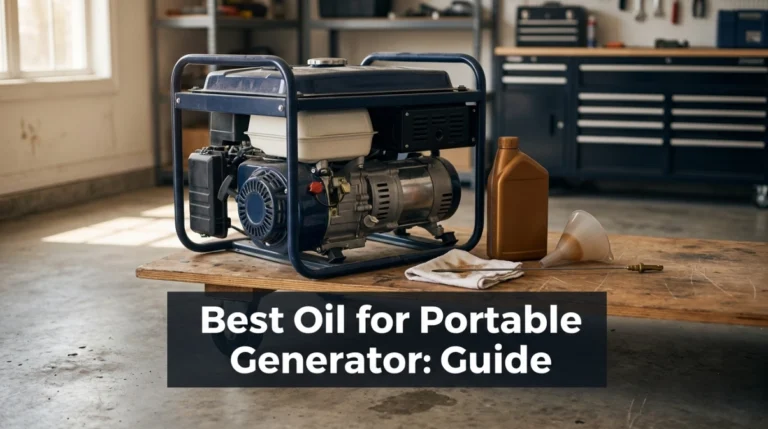
What Is the Most Common Problem of Generators?
Quick Answer
For gasoline-powered portable generators, the most common problem is usually fuel-related trouble, especially stale gasoline and a dirty or clogged carburetor. These problems often cause hard starting, surging, stalling, or a generator that refuses to run at all; if yours will not start, follow this portable generator troubleshooting guide before replacing parts.
Common generator trouble signs
- Won’t start: Old fuel, incorrect choke position, low oil, or ignition trouble may prevent combustion.
- Starts then dies: Restricted fuel flow, a blocked tank vent, or low-oil protection can shut the engine down.
- Engine surges: A partially clogged carburetor jet commonly creates an uneven fuel mixture.
- Loses power: Excessive electrical load can pull engine speed and voltage down.
- Runs but no electricity: Check breakers and GFCI outlets before suspecting the AVR or alternator.
Best first check
- Disconnect all loads, check the oil, confirm fresh fuel, and start the generator outdoors according to its owner’s manual.
When someone brings me a portable generator that suddenly stopped behaving, I usually start with the fuel system. It solves far more problems than randomly replacing electrical parts.
That doesn’t mean every generator failure comes from gasoline. Battery, overload, ignition, voltage-regulation, and maintenance problems also deserve attention.
What Is the Most Common Generator Problem?
Stale fuel and carburetor contamination are among the most frequent problems with gasoline portable generators. Fuel left sitting can degrade and leave deposits in the small passages that control the engine’s fuel mixture.
The result may be a generator that won’t start, only runs with the choke partly closed, surges repeatedly, or stops after several minutes.
Definition: A generator fuel-system problem is any restriction, contamination, venting fault, or fuel-quality issue that prevents the engine from receiving the correct amount of usable fuel.
The exact weak point changes with generator type. A gasoline portable unit has different failure patterns from a permanently installed standby generator.
For portable gasoline machines, however, fuel condition is one of the first things I inspect when an engine has starting or running complaints.
Why Does Old Gasoline Cause So Many Generator Problems?
Generators often sit unused for long periods, which makes fuel deterioration especially troublesome. A lawn mower may run every week, while a backup generator can remain parked between outages.
That storage pattern gives gasoline time to change before the next emergency.
- Deposits can form: Residue may restrict the carburetor’s main jet and other tiny passages.
- Moisture can become a problem: Water contamination can produce poor combustion and corrosion.
- Fuel flow can become restricted: A dirty filter, hose, valve, or tank vent can starve the engine.
- The mixture can run lean: The engine may hunt, surge, or only stay running with added choke.
If the generator has been stored and now surges, my next step is usually to inspect the fuel system rather than touch the voltage regulator. This generator surging guide explains how those symptoms differ from electrical-output problems.
What Are the Most Common Generator Problems and Symptoms?
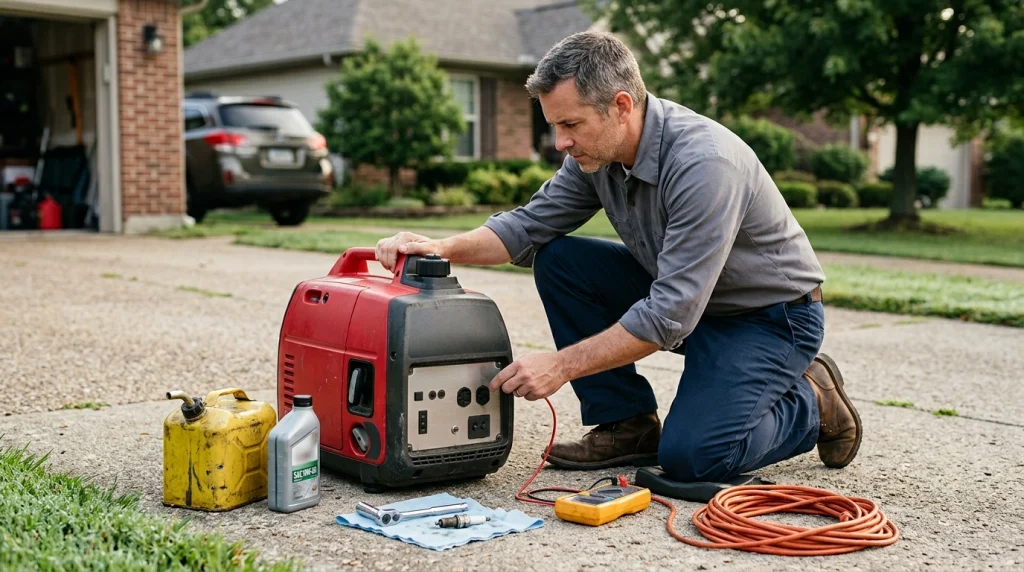
The symptom usually tells you which system to inspect first. I prefer symptom-based diagnosis because it reduces unnecessary disassembly.
| Symptom | Common Direction | First Check | Typical Next Step |
|---|---|---|---|
| Cranks but won’t start | Fuel, choke, oil, spark | Fresh fuel and oil level | Inspect plug and fuel delivery |
| Starts then stalls | Fuel restriction or shutdown system | Run unloaded | Check vent, carburetor, and oil |
| Engine surges | Lean mixture or governor response | Fuel quality | Inspect carburetor and fuel flow |
| Dies when load connects | Overload or weak engine output | Disconnect appliances | Reconnect loads individually |
| Engine runs, outlets dead | Breaker, GFCI, AVR, or alternator | Reset protection devices | Test output safely |
How Do I Diagnose a Generator That Won’t Run Correctly?
Start with safe, simple checks before opening the carburetor or electrical system. This order catches common problems while reducing unnecessary parts replacement.
- Move it outdoors. Never troubleshoot a running portable generator inside a home, garage, shed, basement, or other enclosed area.
- Disconnect electrical loads. Determine whether the engine can run normally with nothing plugged in.
- Check the engine oil. Low-oil protection may stop or prevent operation on many generators.
- Inspect the fuel. Confirm the fuel valve is open and the gasoline is suitable for use.
- Check the choke. A cold engine may need choke during starting, but a warm engine normally should not require full choke.
- Inspect the air filter. Heavy dirt can restrict airflow and affect engine performance.
- Check the spark plug. Look for fouling, damage, wear, or a loose plug wire.
- Add loads gradually. If the engine only struggles under load, investigate overload and starting-watt demand.
If it runs for several minutes and then quits, use my generator stalling diagnosis. The timing of the shutdown can narrow the problem considerably.
How Can You Tell If the Carburetor Is the Problem?
A generator that improves when you partially close the choke often points toward insufficient fuel delivery. A clogged carburetor jet is one possible cause, although restricted fuel flow or an air leak can produce similar behavior.
Don’t assume the carburetor needs replacement immediately. Check the easy fuel-flow items first.
- Confirm the tank contains usable fuel.
- Make sure the fuel shutoff valve is fully open.
- Check whether the tank vent can breathe normally.
- Inspect accessible fuel hoses and filters.
- Look for water, dirt, or sediment in drained fuel.
- Follow the owner’s manual before removing carburetor parts.
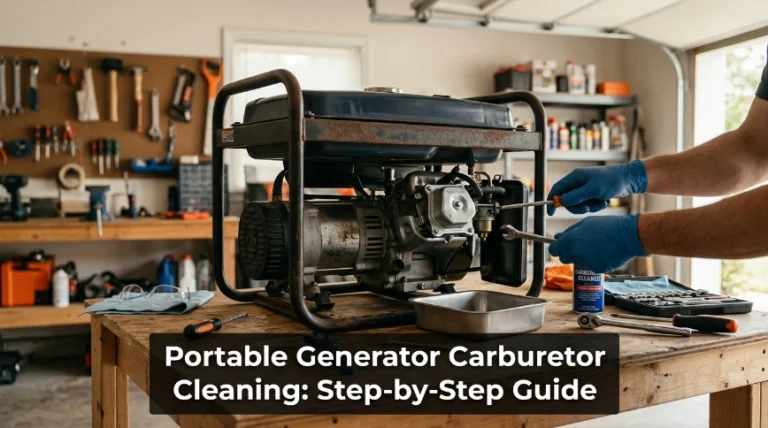
When deposits are visible or the engine still behaves lean, careful cleaning may restore normal operation. My portable generator carburetor cleaning guide covers the process in more detail.
What If the Generator Runs but Produces No Electricity?
A running engine with dead outlets is a different problem from a fuel-related no-start. Begin with circuit breakers, GFCI protection, connected loads, and the generator’s control-panel indicators.
Don’t jump straight to buying an alternator.
- Unplug everything: Troubleshoot the generator with no connected load.
- Reset the breaker: A tripped AC breaker can leave the engine running normally.
- Reset the GFCI: Protected receptacles may require a manual reset.
- Test carefully: Use a known-good appliance or properly rated meter if you’re trained to do so.
- Escalate if needed: AVR, brush, wiring, rotor, stator, or inverter faults may require professional diagnosis.
For that specific symptom, see the detailed guide to a generator running with no power output.
Can Overloading Damage or Shut Down a Generator?
Yes. Too much electrical demand can trip protection, reduce engine speed, cause voltage or frequency problems, or shut the generator down. Motor-driven appliances can also demand much more power during startup than while running.
A refrigerator, well pump, air conditioner, or compressor can therefore create a brief but significant starting surge.
- Find the generator’s rated running watts.
- List the running watts of connected equipment.
- Account for starting watts on motor-driven loads.
- Disconnect nonessential appliances before adding a heavy load.
- Reconnect equipment one item at a time during diagnosis.
If the engine becomes unstable only when appliances are connected, load management should be checked before changing fuel-system or electrical components.
How Do You Prevent the Most Common Generator Problems?
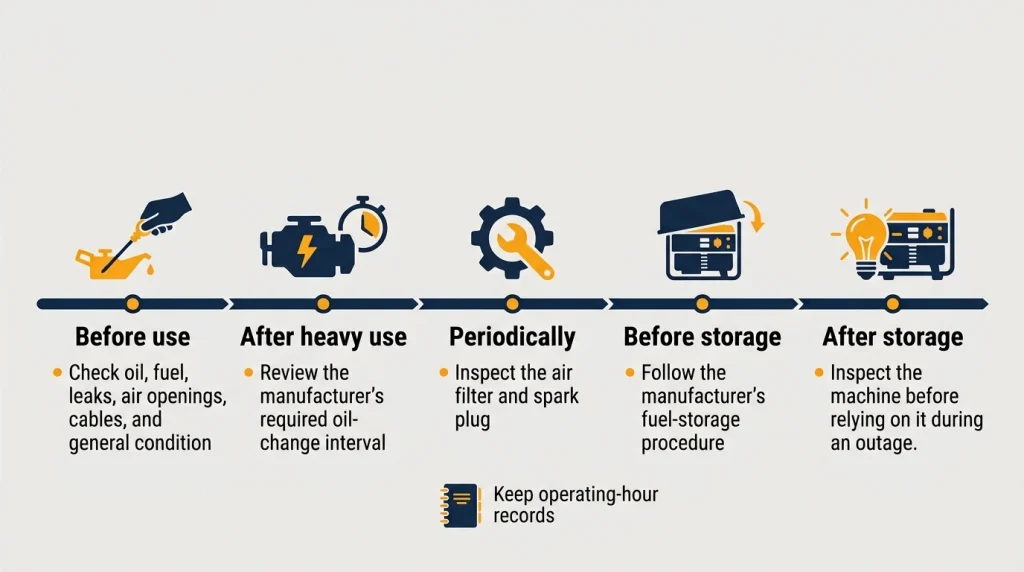
Preventive maintenance is easier than outage-day troubleshooting. Fuel care, oil checks, airflow inspection, and periodic service prevent many of the failures I see repeatedly.
As of 2026, exact service intervals still vary between manufacturers and models. Your owner’s manual should always override a generic schedule.
- Before use: Check oil, fuel, leaks, air openings, cables, and general condition.
- After heavy use: Review the manufacturer’s required oil-change interval.
- Periodically: Inspect the air filter and spark plug.
- Before storage: Follow the manufacturer’s fuel-storage procedure.
- After storage: Inspect the machine before relying on it during an outage.
I keep maintenance records because operating hours are easy to forget after several outages. This portable generator maintenance schedule gives you a practical checklist.
Generator Safety Matters More Than the Repair
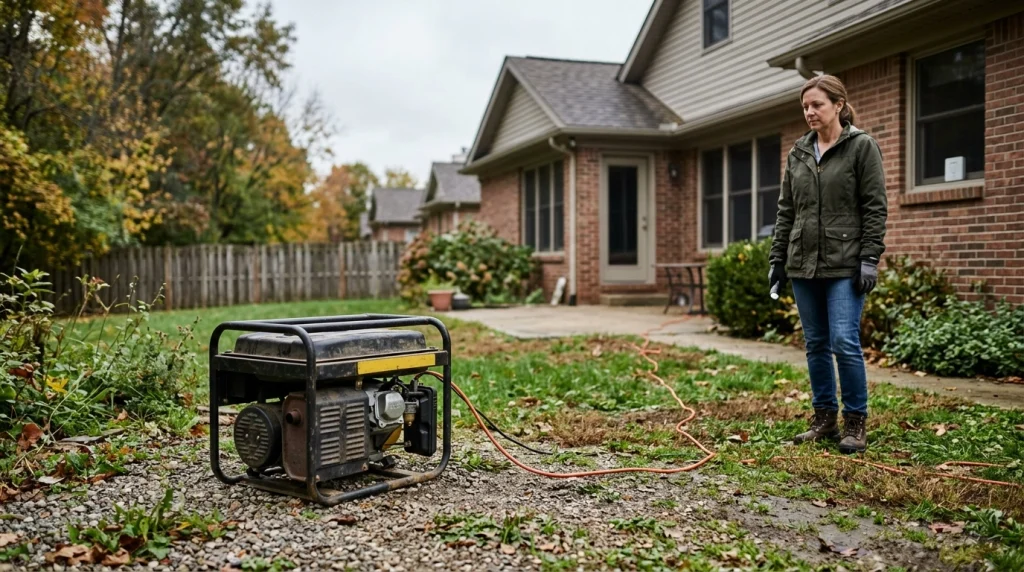
Never let troubleshooting turn into a carbon-monoxide hazard. The CDC says portable generators should be operated outdoors, more than 20 feet from windows, doors, and vents, with a battery-powered or battery-backup CO detector in the home.
You can review the CDC’s carbon monoxide safety guidance before operating a portable generator.
The U.S. Consumer Product Safety Commission also warns against using generators in homes, garages, basements, crawlspaces, sheds, or similar enclosed spaces. Its Carbon Monoxide Information Center provides additional generator-safety information.
Electrical hazards matter too. OSHA maintains portable generator safety publications covering safe operation and grounding considerations.
If a repair requires opening electrical windings, defeating a safety device, or working beyond your training, stop. A qualified generator technician is the safer choice.
Useful Products for Preventing Generator Trouble
If you’re building a basic generator-maintenance kit, these are the types of products I would keep close to the machine.
🏆 Fuel Storage Pick
STA-BIL Storage Fuel Stabilizer
★★★★☆
A practical option for gasoline storage when the generator manufacturer allows fuel stabilizer. I like prevention here because carburetor cleanup during an outage is the wrong time to discover neglected fuel.
🔧 Diagnostic Pick
Klein Tools MM325 Multimeter
★★★★☆
A multimeter can help with basic voltage and continuity checks when used correctly. I consider it more useful than guessing at electrical parts, but inexperienced users should leave internal generator testing to a technician.
🏠 Home Safety Pick
First Alert CO400 Carbon Monoxide Alarm
★★★★☆
A battery-powered CO alarm adds an important layer of protection during generator use. I would never treat an alarm as permission to run a generator too close to a building; safe outdoor placement still comes first.
Frequently Asked Questions
Why is my generator not starting?
A portable generator may not start because of stale fuel, an incorrect choke setting, a closed fuel valve, low oil, a fouled spark plug, a weak starting battery, or restricted fuel flow. Start with the simple checks in the owner’s manual before removing parts.
Why does my generator start and then shut off?
A generator that starts and shuts off may have low oil, restricted fuel flow, a blocked fuel-tank vent, incorrect choke operation, overload, or an active safety shutdown. Run it outdoors with all appliances disconnected to separate engine problems from load-related problems.
Why does my generator keep surging?
Repeated rising and falling engine speed often points toward inconsistent fuel delivery, a dirty carburetor, stale gasoline, a venting problem, or governor trouble. If partially closing the choke improves operation, restricted fuel delivery deserves close attention.
Can bad gasoline damage a generator?
Old or contaminated gasoline can cause deposits, poor combustion, corrosion, and carburetor restrictions. Follow the generator manufacturer’s storage instructions and avoid leaving untreated fuel in the machine longer than the manual recommends.
Should I repair a generator myself?
Basic maintenance such as checking oil, inspecting filters, replacing a spark plug, or draining approved fuel-system components may be suitable for experienced owners. Internal electrical repairs, safety-system bypasses, major engine work, and transfer-switch problems are better handled by qualified technicians.
Final Takeaway
For gasoline-powered portable generators, I would investigate fuel quality and the carburetor first when the machine won’t start, surges, or repeatedly stalls. Long periods of storage make fuel-system trouble especially common.
Start with fresh fuel, correct oil level, proper choke operation, and an unloaded test. Then move toward filters, spark, carburetor, overload, and electrical-output diagnosis based on the symptom.
Most importantly, troubleshoot the generator outdoors and follow its owner’s manual. A well-maintained generator is far more likely to be ready when the next outage arrives.

Hi, I’m Michael Turner. I own a generator workshop in the United States and founded HomeGeneratorBlog to share practical, hands-on guidance about generator installation, maintenance, troubleshooting, safety, and backup power solutions. My goal is to help homeowners make smarter, more confident decisions through clear and reliable information