How Long Can a Generator Sit Without Use?
Quick Answer
A generator can sit unused for several months or even longer if it is prepared and stored correctly. The biggest concerns are stale gasoline, a discharged starter battery, corrosion, moisture, and neglected engine oil, so proper portable generator storage matters more than simply counting months.
What matters most while it sits
- Gasoline condition: Untreated gasoline can deteriorate during storage and create starting or carburetor problems.
- Starter battery: Electric-start batteries slowly discharge even when the generator never runs.
- Moisture control: Damp storage can encourage corrosion on electrical connections, fasteners, and engine parts.
- Oil condition: Old or contaminated oil should not be ignored simply because the engine has been sitting.
- Storage preparation: Manufacturer instructions for fuel, batteries, and long-term engine storage should always take priority.
Before depending on it again
- Inspect the generator, check its fluids and fuel, verify the battery, then test-run it outdoors before an emergency.
I see plenty of generators that spend far more time sitting than running. That isn’t automatically harmful, but a generator parked carelessly for a year can be less dependable than one stored correctly for several years.
As of 2026, I still treat storage as part of generator maintenance. Here’s how I decide whether a generator that’s been sitting is ready to use.
How Long Can a Generator Safely Sit Without Running?
A generator can sit for months between uses when its fuel system, battery, engine, and storage environment are properly managed. There is no universal expiration date that makes a generator unsafe just because it wasn’t started.
The condition of the machine matters more than the calendar. A clean generator stored dry with properly managed fuel can remain ready far longer than a neglected machine exposed to moisture and old gasoline.
Generator storage is the process of preparing the engine, fuel system, battery, electrical components, and frame for a period when the machine will not operate.
| Time Sitting | Main Concern | What I Check |
|---|---|---|
| A few weeks | Usually minor | Oil level, fuel condition, leaks, battery |
| 1–3 months | Gasoline deterioration and battery discharge | Fuel system, carburetor, battery charge, corrosion |
| 3–12 months | Fuel deposits, moisture, weak battery | Full storage inspection before starting |
| 1 year or longer | Multiple storage-related problems | Fuel, oil, battery, wiring, air filter, rodents, corrosion, hoses |
These are inspection points rather than hard failure deadlines. Your generator’s manual should decide the exact storage procedure.
What Happens When a Generator Sits Too Long?
The engine does not normally wear out simply from being switched off. Most storage problems develop in the fuel system, battery, electrical connections, and exposed metal.
- Gasoline ages: Old fuel can lose desirable properties and leave deposits inside a carburetor.
- Batteries discharge: An electric-start battery can become too weak to crank the engine.
- Moisture causes corrosion: Condensation can affect terminals, fasteners, frames, and electrical components.
- Rubber parts age: Fuel hoses, seals, and other rubber components can harden or crack over time.
- Rodents move in: Stored machines sometimes attract nesting animals that damage insulation or wiring.
- Dirt blocks airflow: Dust, leaves, and insects can collect around cooling passages.
In my experience, old gasoline deserves the first inspection on a gasoline generator that suddenly refuses to start after storage. It is one of the easiest storage problems to prevent.
For routine service planning, I also use a written portable generator maintenance schedule instead of trusting memory.
How Long Can Gas Sit in a Generator?
Gasoline should not be treated as an indefinite storage fluid. Generac currently advises owners that fuel stored for more than about 30 days can deteriorate and damage fuel-system components.
Generac’s current portable-generator guidance recommends draining fuel for storage beyond 30 days in certain models and situations. Other manufacturer procedures allow properly treated fresh fuel to remain during storage, so follow your specific manual.
- Untreated fuel: Don’t assume gasoline left from the previous season is still suitable.
- Stabilized fuel: Use only a compatible stabilizer and follow its dosing instructions.
- Carburetor fuel: Remember that draining the tank may not automatically empty the carburetor bowl.
- Approved containers: Store removed gasoline only in containers designed for fuel.
Generac’s portable-generator FAQ provides manufacturer-specific information about storage and fuel preparation at Generac’s portable power guidance.
Should you drain the gas before storage?
Sometimes. Draining may be appropriate when your manufacturer specifies it, particularly for longer storage periods.
Other manuals describe using fresh, properly stabilized gasoline and circulating it through the fuel system before storage. Don’t combine procedures from different generators unless your manual supports them.
Workshop tip: Write the storage date and fuel treatment on a tag attached near the handle. Months later, you won’t have to guess what is inside the tank.
Should You Start a Generator That Has Been Sitting?
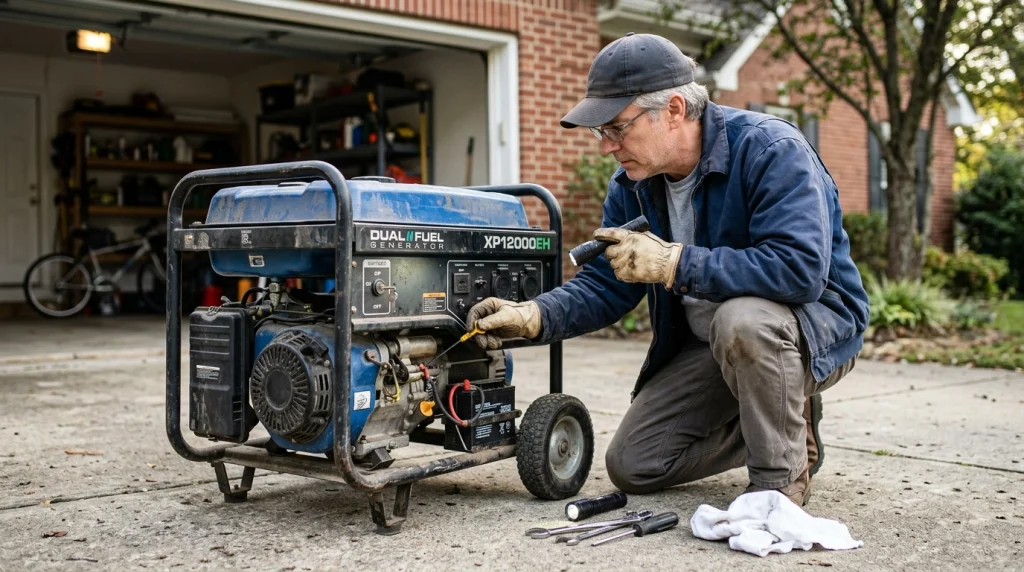
Yes, but inspect it first. Starting a neglected generator immediately can turn a small leak, low-oil condition, damaged wire, or contaminated fuel problem into a larger one.
I use the same basic pre-start routine whenever a machine comes into the workshop after a long idle period.
- Move it outdoors. Never test a fuel-burning portable generator inside a garage, shed, basement, or home.
- Inspect for leaks. Look underneath and around the carburetor, tank, fuel hose, and engine.
- Check the oil. Verify the level and condition according to the owner’s manual.
- Inspect the fuel. Question gasoline that smells unusual, looks contaminated, or has sat beyond the manufacturer’s storage guidance.
- Check the air filter. Look for dirt, nesting material, and deterioration.
- Inspect wiring. Watch for rodent damage, loose terminals, corrosion, or cracked insulation.
- Check the battery. Recharge or service electric-start batteries according to the battery and generator instructions.
- Start without loads. Let the engine stabilize before connecting equipment.
The U.S. Consumer Product Safety Commission says portable generators should operate outdoors only, at least 20 feet from a home, with exhaust directed away from doors, windows, and vents. Review the CPSC carbon monoxide safety guidance before test-running one.
Do You Need to Run a Generator Every Month?
Not every generator has the same exercise requirement. Some manufacturers recommend periodic running, while others give different long-term storage instructions.
For example, some Generac manuals recommend running certain portable generators for about 30 minutes every 30 days when practical. Your own model’s manual remains the deciding source.
A periodic test can reveal several problems before an outage:
- Hard starting: You discover the problem while utility power is still available.
- Battery weakness: Slow electric cranking becomes obvious.
- Fuel problems: Rough running or surging may appear during testing.
- Leaks: Fuel and oil seepage can be spotted early.
- Electrical issues: A controlled load test can confirm that the generator still produces usable power.
Don’t invent an exercise routine based only on something another generator owner does. Follow the procedure and service intervals specified for your model.
Can a Generator Sit for a Year Without Use?
Yes, a generator can sit for a year and still be serviceable. The question is whether it was prepared for that year before storage.
A generator properly stored with its fuel system protected, battery maintained, engine serviced, and frame kept dry can fare well. A unit left with old gasoline in a damp shed can develop problems much sooner.
| Well-Prepared Storage | Neglected Storage |
|---|---|
| Fuel handled according to the manual | Old untreated gasoline left indefinitely |
| Battery maintained or stored correctly | Battery allowed to deeply discharge |
| Clean, dry storage area | Damp floor or weather exposure |
| Cooling openings kept clean | Dust, leaves, insects, or nests ignored |
| Inspected before returning to service | Started immediately without checks |
Age alone also doesn’t tell you how much useful life remains. My guide to portable generator lifespan explains why engine hours, maintenance, loading, and storage all matter.
How Should You Store a Generator for Several Months?
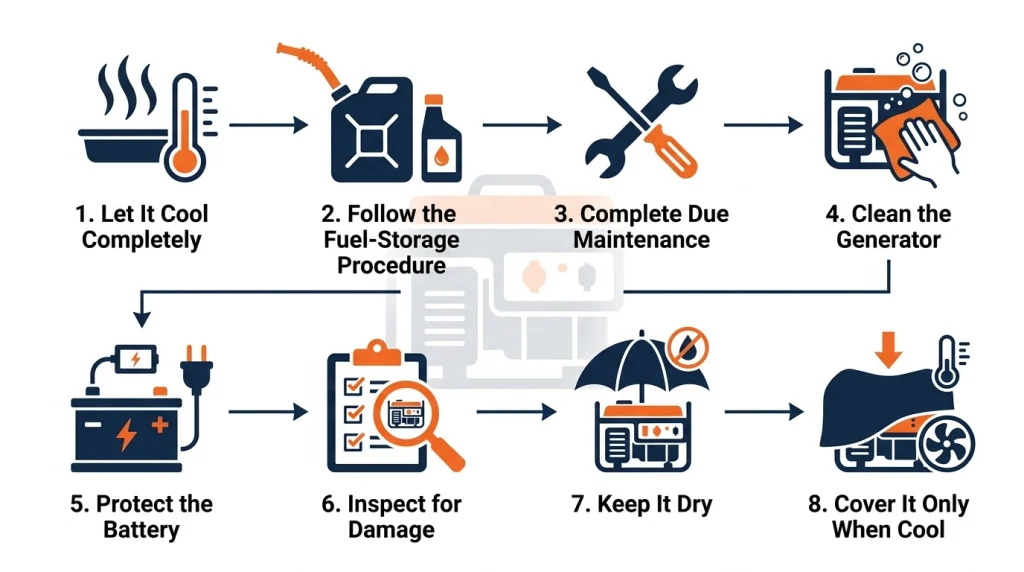
Prepare the generator before parking it. I focus on fuel, oil, the battery, cleanliness, moisture, and the storage location.
- Let it cool completely. Never cover or service a hot generator.
- Follow the fuel-storage procedure. Drain or stabilize gasoline exactly as your manual directs.
- Complete due maintenance. Don’t postpone an already-due oil change simply because the unit will sit.
- Clean the generator. Remove dust, leaves, mud, and debris without forcing water into electrical components.
- Protect the battery. Follow the recommended charging, disconnecting, or maintaining procedure.
- Inspect for damage. Deal with fuel leaks, loose hardware, damaged wires, and cracked hoses before storage.
- Keep it dry. Choose a clean location protected from rain and excessive moisture.
- Cover it only when cool. Use a properly fitting storage cover rather than trapping moisture beneath plastic.
If cold weather is approaching, use the more detailed steps in my guide on how to winterize a portable generator.
A storage cover is useful only after the generator has cooled and dried. See the separate portable generator cover guide if you need help choosing between storage and running covers.
What Safety Checks Matter After Long Storage?
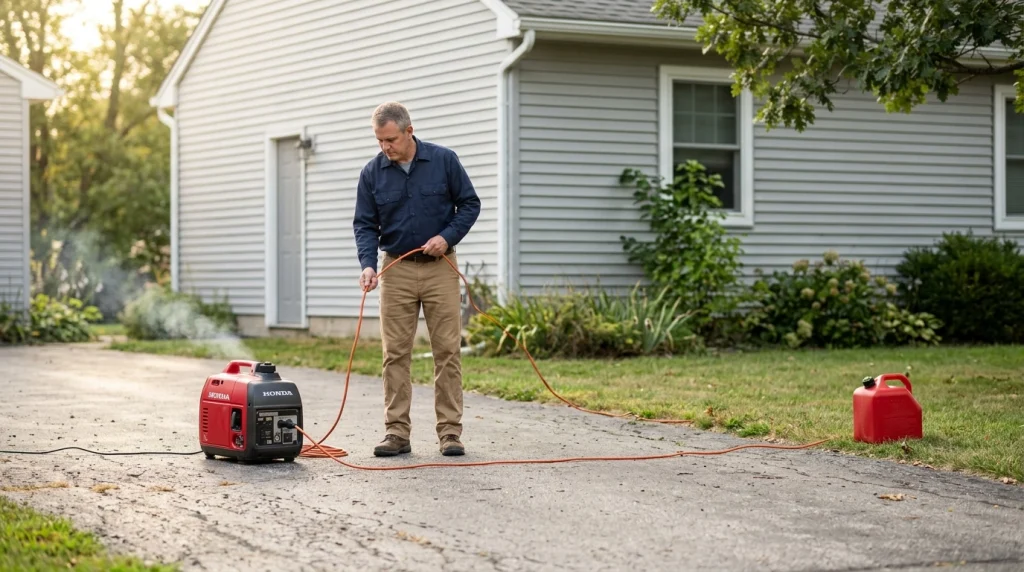
Carbon monoxide, fire, shock, and fuel hazards still matter even when the generator starts perfectly. Never confuse mechanical readiness with safe operation.
- Operate outdoors: Never run a portable generator inside an enclosed or partly enclosed living space.
- Keep exhaust away: Position exhaust so fumes cannot enter doors, windows, or vents.
- Inspect fuel lines: Don’t start the engine if gasoline is leaking.
- Keep electrical parts dry: Follow the manufacturer’s wet-weather instructions.
- Use safe cords: Replace damaged cords and use equipment properly rated for the intended load.
- Refuel safely: Shut the generator down and follow the manufacturer’s cooling procedure before adding gasoline.
OSHA’s portable generator safety resources cover carbon monoxide, electrical shock, grounding, and fire hazards.
Storage Products I Actually Find Useful
You don’t need a shelf full of accessories. For many generators, a fuel-storage product, a correctly sized cover, or a battery maintainer can solve a specific storage problem.
⛽ Best for Fuel Storage
STA-BIL Storage Fuel Stabilizer
★★★★☆
Designed for gasoline equipment placed into storage and intended to help protect stored fuel. I consider it only when the generator manufacturer permits stabilized fuel storage, since the owner’s manual should decide the method.
🔋 Best for Electric Start
NOCO GENIUS1 Battery Maintainer
★★★★☆
The GENIUS1 is a 1-amp charger and maintainer that supports several 6-volt and 12-volt battery types. I like a maintainer for compatible electric-start generators that spend months parked between outages.
🛡️ Best for Dust Protection
Classic Accessories Generator Cover
★★★★☆
This storage-cover line is available in multiple generator sizes and uses weather-resistant fabric. I would measure the generator first and only install a storage cover after the engine and exhaust are completely cool.
Frequently Asked Questions
Can a generator go bad from sitting?
Yes, components can deteriorate while a generator sits even though the engine isn’t accumulating operating hours. Stale fuel, battery discharge, corrosion, moisture, damaged wiring, and aging rubber components can all cause trouble after long storage.
Is a generator still good after sitting for two years?
Possibly. Inspect the fuel system, oil, battery, air filter, wiring, hoses, spark plug area, and signs of corrosion or pests before attempting to start a generator that has sat for two years.
Should I leave fuel in my generator during storage?
Follow the storage procedure in your owner’s manual. Some generators can be stored with fresh fuel treated using a compatible stabilizer, while other procedures call for draining gasoline and removing remaining fuel from the carburetor.
How often should I test my generator?
Use the exercise schedule specified by the manufacturer rather than assuming every model needs the same monthly routine. Periodic testing can expose starting, battery, fuel, and electrical problems before the next outage.
What should I do before starting a generator after six months?
Inspect for fuel or oil leaks, check the oil, evaluate the gasoline, inspect the air filter and wiring, and verify the starter battery if equipped. Move the unit outdoors before starting it and initially run it without connected loads.
Keep a Stored Generator Ready for the Next Outage
A generator can sit unused for a long time without being ruined. Poor preparation is what usually turns storage into a starting or reliability problem.
Manage the fuel correctly, protect the battery, keep the machine dry, follow its maintenance schedule, and inspect it before returning it to service. Those simple habits give you a much better chance of hearing the engine start when the lights go out.

Hi, I’m Michael Turner. I own a generator workshop in the United States and founded HomeGeneratorBlog to share practical, hands-on guidance about generator installation, maintenance, troubleshooting, safety, and backup power solutions. My goal is to help homeowners make smarter, more confident decisions through clear and reliable information