How Big of a Generator Do You Need to Run a 2,500 Square Foot House?
Quick Answer
A 2,500-square-foot house may need about 7,500–10,000 watts for essential circuits, roughly 12,000–15,000 watts when central air is included, or around 18,000–24,000+ watts for broad whole-house backup. Square footage alone does not determine generator size, so use your actual appliance loads and starting surges; this home generator sizing guide explains the broader calculation.
Typical sizing targets
- Essentials only: Look around the 7,500–10,000-watt class for refrigerators, lights, furnace blowers, pumps, and basic outlets.
- Central air: A typical central AC can push the requirement into the 12,000–15,000-watt range or higher.
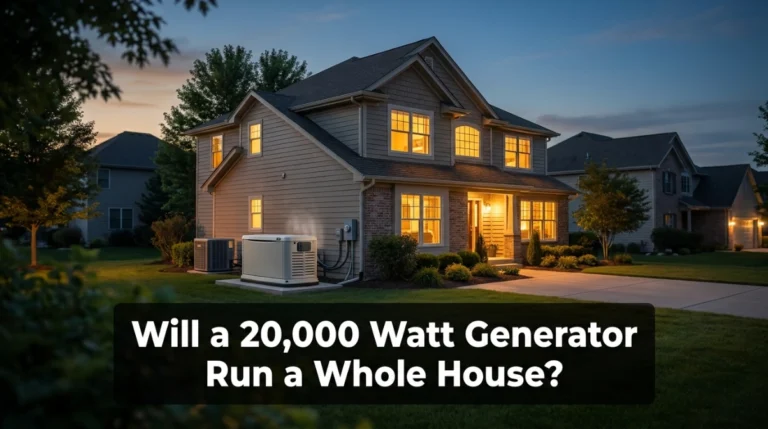
- Whole-house use: An 18–24 kW standby generator is a more realistic starting range when you want many circuits available automatically.
- All-electric homes: Electric water heating, cooking, clothes drying, and HVAC can push demand beyond 20 kW.
- Starting surge: Pumps, refrigerators, and air conditioners briefly need more power when their motors start.
Best next step
- Write down the running and starting wattage of every appliance you expect to operate during an outage, then size above the calculated peak.
I see homeowners focus on square footage because it feels like the obvious way to compare houses. With generators, electrical load matters much more than whether the home is 1,800 or 2,500 square feet.
A 2,500-square-foot home with natural-gas appliances can have modest backup needs. An all-electric house of the same size can require more than twice as much generator capacity.
Does Square Footage Determine What Size Generator You Need?
No. Square footage does not directly determine generator wattage. The generator has to supply the electrical equipment you choose to operate, not the empty floor area inside the house.
Generator sizing is the process of matching a generator’s continuous and surge output to the electrical loads that must operate during an outage. Those loads vary dramatically between otherwise similar houses.
- Heating fuel: A gas furnace may only require electricity for the blower and controls, while electric resistance heat can consume several kilowatts.
- Water heating: A gas water heater usually has little electrical demand, while a conventional electric tank can add roughly 4,000–5,000 watts.
- Cooling: Central air conditioning is often one of the largest motor loads in a house.
- Water supply: Homes on wells must account for pump running and starting power.
- Cooking: Electric ranges and ovens can consume significant power when several elements operate.
- Laundry: Electric dryers are another major 240-volt load.
This is why I don’t size generators from a home’s square footage alone. I start by asking what the homeowner considers essential during a long outage.
What Size Generator Do I Need for a 2,500 Sq Ft House?
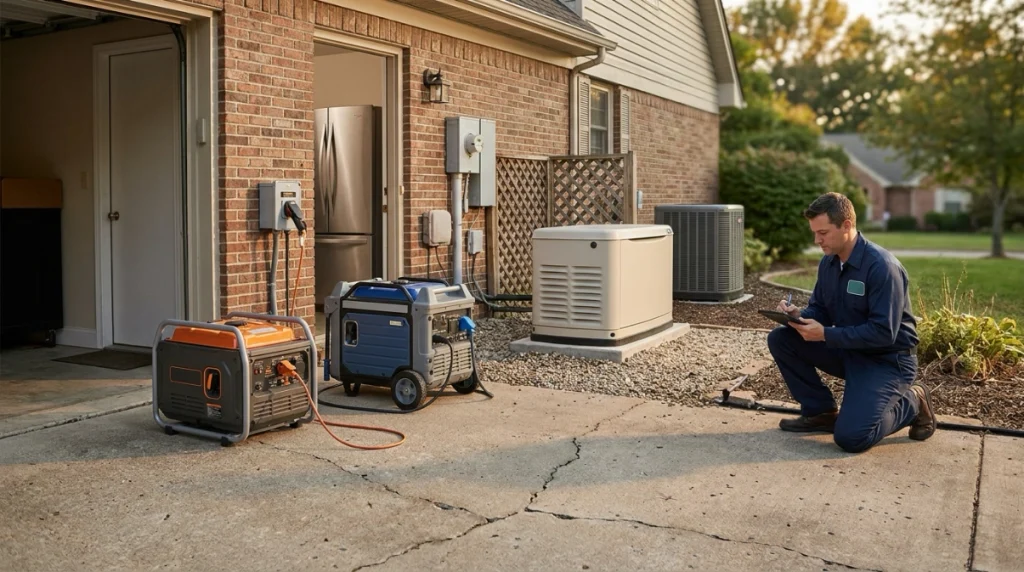
For many 2,500-square-foot homes, 7,500–10,000 watts is a useful range for selected essential circuits. If you want central air and more household equipment operating normally, expect the requirement to move toward 12,000–18,000 watts or higher.
For automatic whole-home backup, an 18–24 kW standby generator is a more realistic range to investigate. Large all-electric homes can require even more capacity.
| Backup Goal | Likely Loads | Generator Range to Consider |
|---|---|---|
| Basic essentials | Fridge, freezer, lights, internet, furnace blower | 5,000–7,500 W |
| Comfortable essentials | Above loads plus well/sump pump, microwave, more circuits | 7,500–10,000 W |
| Central AC plus essentials | Typical central AC, fridge, lighting, selected outlets and pumps | 12,000–15,000+ W |
| Broad whole-house backup | HVAC and most normal household circuits with load management | 18–24 kW standby |
| High-load all-electric home | Electric HVAC, water heater, range, dryer and normal circuits | 20–26+ kW or professionally calculated |
These ranges are planning estimates, not substitutes for reading your equipment nameplates. Your exact loads should always determine the final choice.
How Do I Calculate Generator Size for My House?
The safest calculation starts with running watts and starting watts. Running watts represent continuous demand, while starting watts cover the temporary surge from motors and compressors.
I recommend reading the equipment labels first instead of relying entirely on generic charts. You can also review this explanation of running watts versus starting watts before doing your calculation.
- List the appliances and circuits you need. Don’t include equipment you can comfortably leave off during an outage.
- Find each item’s running watts. Check the equipment label, owner’s manual, or manufacturer specifications.
- Add the running watts. Count equipment that could operate simultaneously.
- Identify the largest motor-starting surge. Central AC systems, pumps, and compressors deserve special attention.
- Check generator running and peak ratings. The generator must handle both continuous demand and temporary startup demand.
- Add practical headroom. Avoid planning to operate a generator at its absolute maximum every minute of an outage.
For a deeper explanation of how these numbers affect generator capacity, see the guide to generator power capacity.
A sample 2,500-square-foot outage load
Imagine a house that needs a refrigerator, freezer, gas furnace blower, well pump, microwave, internet equipment, television, and several lights. That can fit comfortably below the electrical demand of a house attempting to operate central AC, an electric water heater, dryer, and range at the same time.
- Refrigerator and freezer
- Gas furnace blower
- Well or sump pump
- Kitchen microwave
- LED lighting
- Router and communications equipment
- Television and charging equipment
A portable generator in roughly the 7,500–10,000-watt class can make sense for this type of prioritized load. You still need to verify the pump and compressor startup requirements.
How Much Generator Power Does Central Air Conditioning Add?
Central air conditioning can become the deciding factor in generator sizing. Its compressor requires continuous power while running and a much larger brief surge when starting.
A house that comfortably operates its basic essentials from a 7,500-watt generator may need a significantly larger unit once central AC enters the plan. Our generator sizing guide for air conditioners breaks down this issue by AC type and capacity.
- Window AC: Often practical with a medium portable generator when other loads are controlled.
- Mini-split: Efficient models can be easier to support than conventional central systems.
- Central AC: Compressor startup can push the required generator class upward quickly.
- Soft-start equipment: A compatible professionally installed soft-start device may reduce compressor starting demand.
Don’t estimate central AC demand from tonnage alone when buying equipment. Check the unit’s electrical data and have a qualified electrician or HVAC professional review the starting requirement when necessary.
Can a 10,000-Watt Generator Run a 2,500 Sq Ft House?
Yes, a 10,000-watt generator can run many important loads in a 2,500-square-foot house. It does not automatically mean it can run every appliance in that house at once.
A 10 kW-class unit is often better viewed as an essential-circuit solution. The homeowner manages high-demand appliances instead of treating the generator like normal utility service.
- Run the refrigerator and freezer continuously.
- Keep the furnace blower or selected cooling equipment available.
- Operate a well or sump pump while watching other large loads.
- Use lighting, internet, television, and chargers normally.
- Run a microwave or coffee maker without simultaneously switching on several heavy loads.
- Leave electric dryers, electric ranges, and large resistance heaters off unless the system was specifically sized for them.
This type of load management makes a mid-size generator far more useful. It also reduces the temptation to buy a huge portable generator simply because the house is large.
Should I Choose a Portable or Standby Generator for a 2,500 Sq Ft Home?
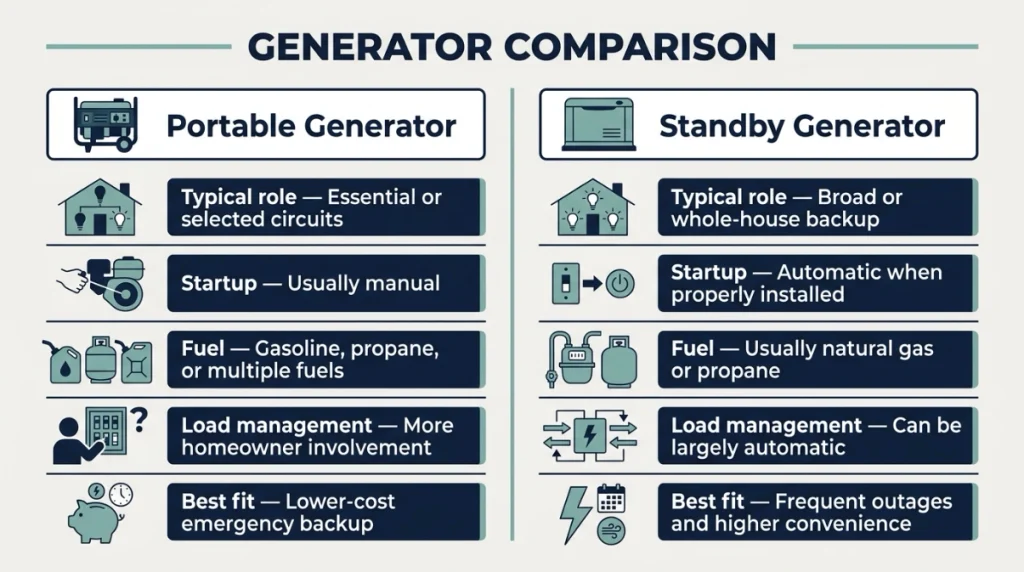
Choose a portable generator when you are comfortable powering selected circuits and managing loads manually. Choose a standby system when automatic operation and broader household coverage are priorities.
| Feature | Portable Generator | Standby Generator |
|---|---|---|
| Typical role | Essential or selected circuits | Broad or whole-house backup |
| Startup | Usually manual | Automatic when properly installed |
| Fuel | Gasoline, propane, or multiple fuels | Usually natural gas or propane |
| Load management | More homeowner involvement | Can be largely automatic |
| Best fit | Lower-cost emergency backup | Frequent outages and higher convenience |
If a portable generator will feed household circuits, use proper transfer equipment rather than improvised connections. This guide explains how a portable generator transfer switch isolates generator power from utility power.
What Generator Connection Size Should I Consider?
A generator’s wattage and its connection equipment have to work together. A high-output generator cannot deliver its full potential through undersized transfer equipment or cabling.
- 30 amps at 240 volts: About 7,200 watts of theoretical electrical capacity.
- 50 amps at 240 volts: About 12,000 watts of theoretical electrical capacity.
- Large standby systems: These use permanently installed equipment designed around the generator and home’s electrical service.
The exact installation depends on the generator, neutral configuration, transfer equipment, conductors, service panel, and local requirements. Have a qualified electrician determine the correct setup.
Generator Safety Matters More Than Extra Wattage
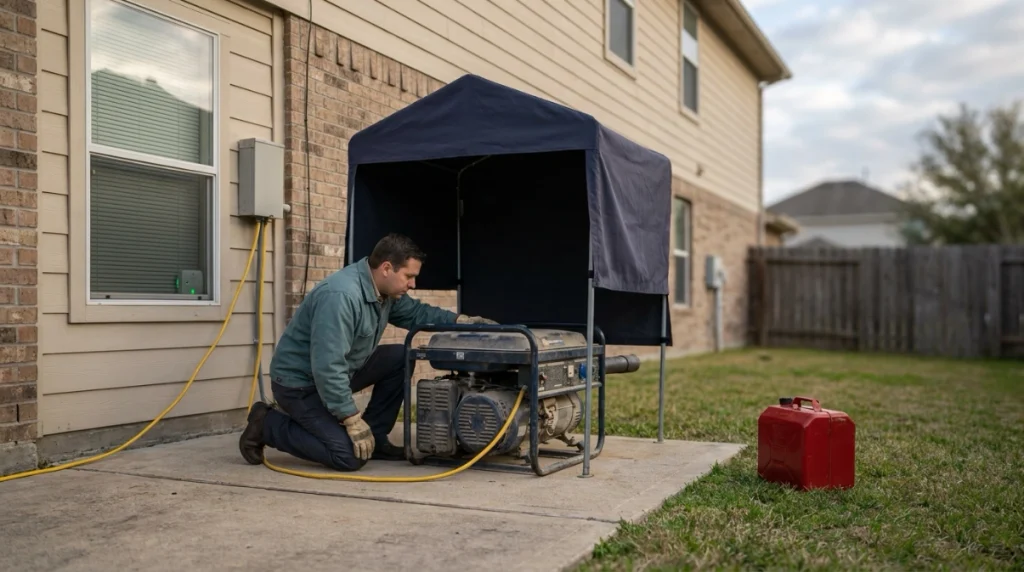
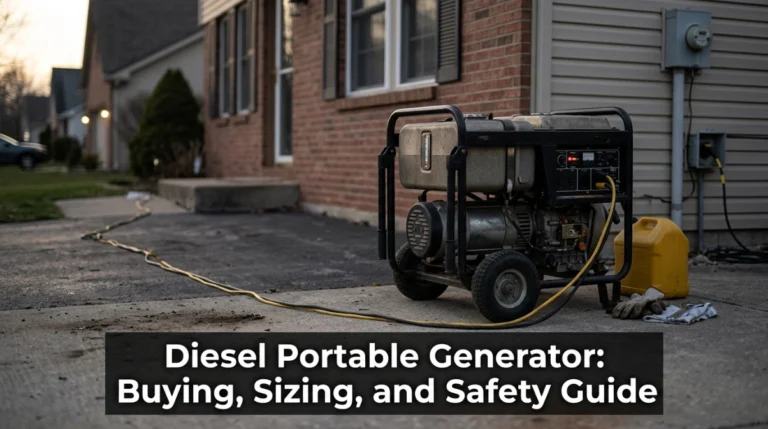
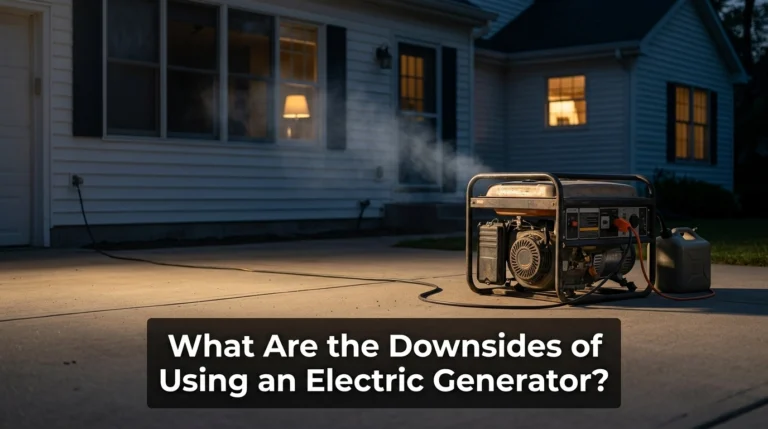
A correctly sized portable generator can still be dangerous when operated in the wrong location. The U.S. Consumer Product Safety Commission generator guidance says portable generators must be used outdoors and away from doors, windows, and vents.
CPSC guidance recommends operating portable generators at least 20 feet from the home with exhaust directed away from the building. Working carbon monoxide alarms should also be installed inside the home.
- Never run one indoors: That includes garages, sheds, crawlspaces, and basements.
- Avoid backfeeding: Never energize house wiring through an improvised outlet connection.
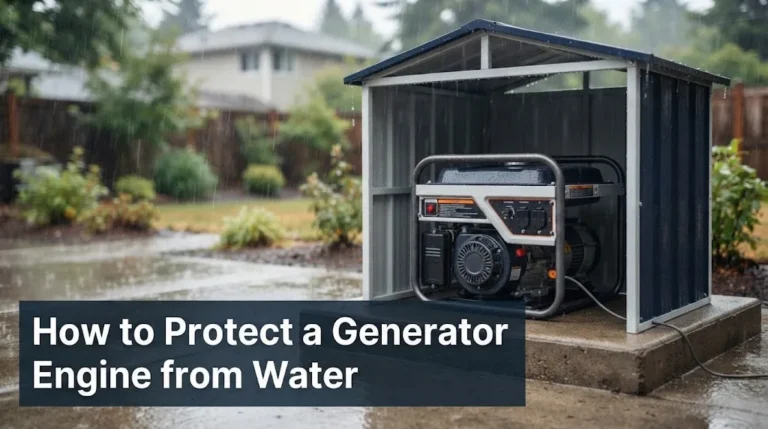
- Keep equipment dry: Generator electricity creates the same shock hazards as utility power.
- Refuel safely: Shut the generator down and allow hot surfaces to cool before adding fuel.
- Use proper cords: Extension cords must be suitable for the electrical load and operating environment.
The OSHA portable generator safety guidance also covers shock, grounding, carbon monoxide, fire, and refueling hazards. The U.S. Fire Administration generator safety guide provides another useful homeowner checklist.
My Practical Recommendation for a 2,500-Square-Foot Home
As of 2026, I would not start by asking for the home’s floor area. I would separate the decision into essential backup, central-AC backup, or full automatic backup.
- Essentials only: Start your comparison around 7,500–10,000 watts.
- Essentials plus typical central AC: Investigate roughly 12,000–15,000 watts or higher after checking the compressor surge.
- Automatic whole-house backup: Look closely at 18–24 kW standby systems.
- All-electric house: Get a professional load calculation before buying, especially if you expect normal use of water heating, cooking, clothes drying, and HVAC.
The goal isn’t to buy the largest generator you can afford. It’s to buy enough capacity to start and run the loads that matter without constantly operating at the edge of the machine’s rating.
If you’re ready to pick equipment, these are three generator classes I’d consider for different 2,500-square-foot backup strategies:
💡 Best for Essentials
Westinghouse WGen9500DFc
★★★★☆ 4.4/5 editorial fit
It provides 9,500 running watts and 12,500 peak watts on gasoline, with lower output on propane. I like this class when the goal is selected essential circuits rather than pretending a portable unit will run every large appliance at once.
⚡ Best High-Output Portable
DuroMax XP13000HX
★★★★☆ 4.6/5 editorial fit
This dual-fuel model is rated for 10,500 running and 13,000 peak watts on gasoline, or 10,000 running and 12,500 peak watts on propane. It’s the portable class I’d examine when a homeowner needs more circuits but still plans to manage heavy loads.
🏠 Best Automatic Backup
Generac Guardian 18 kW Standby Generator
★★★★★ 4.8/5 editorial fit
The 18 kW Guardian supplies up to 18,000 watts on liquid propane and 17,000 watts on natural gas. For a 2,500-square-foot home where automatic backup and central AC matter, this is much closer to the system type I’d investigate before moving into larger 22–24 kW models.
Frequently Asked Questions
Will a 7,500-watt generator run a 2,500-square-foot house?
A 7,500-watt generator can run many essential loads in a 2,500-square-foot house, including refrigeration, lights, communications equipment, and selected pumps or heating equipment. It usually won’t support unrestricted use of central AC, electric water heating, an electric dryer, and an electric range simultaneously.
Is a 12,000-watt generator enough for a 2,500 sq ft house?
A 12,000-watt generator can provide strong emergency coverage for many 2,500-square-foot homes, especially when heavy loads are managed. Whether it can start central air while other appliances operate depends on the AC compressor’s starting demand and the generator’s surge rating.
What size standby generator is best for a 2,500-square-foot house?
An 18–24 kW standby generator is a reasonable range to investigate for many 2,500-square-foot homes seeking broad automatic backup. The correct size may be lower or higher depending on HVAC, water heating, cooking equipment, well pumps, and load-management controls.
Can a 20 kW generator run a whole house?
A 20 kW generator can provide whole-house or near-whole-house backup for many homes, but it cannot guarantee unlimited simultaneous use of every electrical appliance. Large electric heating, water heating, cooking, drying, pumps, and air conditioning can push combined demand above 20 kW.
Do I need an electrician to connect a whole-house generator?
Permanent standby generators and transfer equipment involve service-level electrical work that should be handled according to manufacturer instructions and local requirements. For portable generators feeding household circuits, a qualified electrician can correctly match the inlet, transfer equipment, breaker capacity, wiring, grounding, and generator configuration.
Bottom Line
For a 2,500-square-foot house, think 7,500–10,000 watts for selected essentials, roughly 12,000–15,000+ watts when central AC matters, and around 18–24 kW for broad automatic whole-house backup. Treat those numbers as starting ranges rather than a substitute for calculating your actual electrical loads.
Make a list of what must stay powered, check its running and startup requirements, and choose a generator with comfortable capacity above that demand. That approach gives you a system that’s safer, easier to operate, and far more useful when the utility power goes out.

Hi, I’m Michael Turner. I own a generator workshop in the United States and founded HomeGeneratorBlog to share practical, hands-on guidance about generator installation, maintenance, troubleshooting, safety, and backup power solutions. My goal is to help homeowners make smarter, more confident decisions through clear and reliable information