What Is the Average Cost of a Kohler Generator Installed? (2026 Guide)
Quick Answer
The average cost of a Kohler generator installed is best budgeted at $10,000 to $20,000 for a typical residential standby system in 2026. Many straightforward 20 kW installations may cost around $12,000 to $16,000, while smaller systems can cost less and complex projects can exceed $25,000. Kohler’s published equipment prices start at $5,098 for the 14RCA, $6,016 for the 20RCA, and $7,546 for the 26RCA. You can compare models through the official Kohler generator lineup.
What Affects Your Installed Price?
- Generator size: Larger units generally cost more and may require stronger fuel connections.
- Transfer switch: Equipment type, amperage, and installation affect the total.
- Electrical work: Panel upgrades, wiring, and longer cable runs increase labor costs.
- Fuel connection: Natural gas upgrades or propane tank installation can add substantial expense.
- Site preparation: Concrete pads, permits, inspections, and difficult access affect the final quote.
Before You Buy
- Compare complete quotes: Get three written estimates showing equipment, labor, permits, and fuel work separately.
- Confirm your power needs: Ask for an electrical load calculation before choosing a generator size.
If you’re considering a Kohler standby generator, the equipment price is only part of your investment. The installation details often explain why two homeowners receive very different estimates.
I prefer looking at a complete project budget rather than a generator’s advertised starting price. Below, I’ll break down the 2026 numbers and show how to compare quotes without overlooking important costs.
How Much Does a Kohler Generator Cost With Installation?
A professionally installed Kohler residential generator will often fall between $10,000 and $20,000. That range covers many common air-cooled systems, but it isn’t a published national average specific to Kohler.
The broader standby-generator market also supports this budget. A 2026 generator installation cost guide places many complete whole-home installations between $10,000 and $25,000.
Typical installed budgets by generator size
- 10–14 kW: Approximately $8,000–$13,000 for an uncomplicated project.
- 18–20 kW: Approximately $11,000–$17,000 for broader household coverage.
- 24–26 kW: Approximately $13,000–$20,000 or more for higher electrical demand.
- Large liquid-cooled systems: Often $25,000 or more, especially when extensive electrical and fuel work is required.
These are practical budgeting estimates, not guaranteed dealer prices. Your location, generator package, and installation requirements determine the actual total.
Why does installation make such a difference?
A standby generator needs a permanent electrical connection, a suitable fuel supply, and safe outdoor placement. Each part involves materials, skilled labor, and potentially local inspections.
My first question about a surprisingly low quote is simple: What work isn’t included? A low starting price means little if the homeowner must arrange several expensive items separately.
Kohler Generator Prices by Model: 2026 Comparison
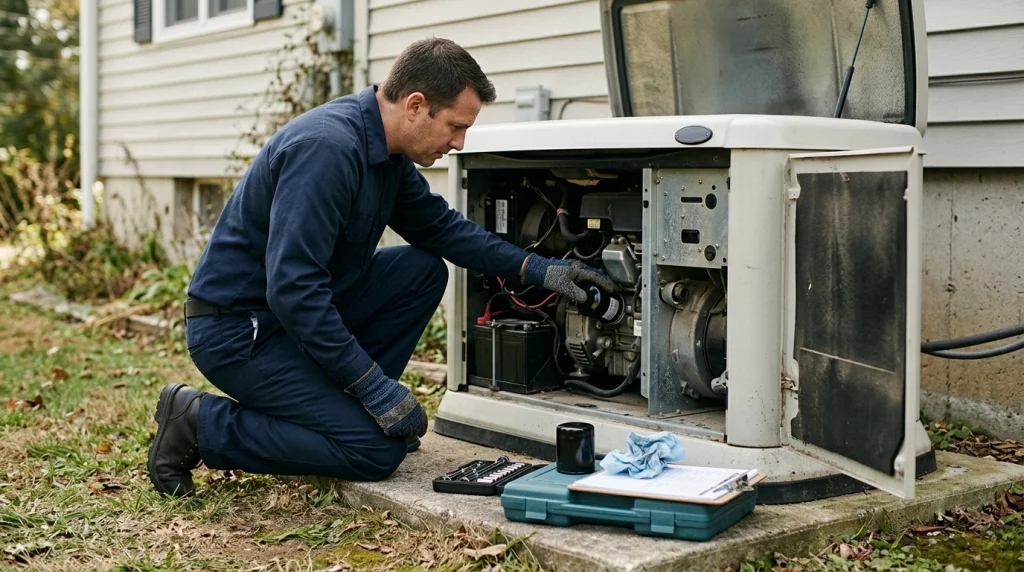
Kohler’s 14RCA, 20RCA, and 26RCA are useful starting points for residential backup planning. Their published starting prices differ by several thousand dollars before installation.
Here is how I would build an initial budget around these three models.
| Kohler Model | Rated Output | Starting MSRP | Installed Budget |
|---|---|---|---|
| 14RCA | 12 kW natural gas / 14 kW propane | $5,098 | $9,000–$13,000 |
| 20RCA | 18 kW natural gas / 20 kW propane | $6,016 | $11,000–$17,000 |
| 26RCA | 24 kW natural gas / 26 kW propane | $7,546 | $13,000–$20,000+ |
Equipment MSRPs reflect Kohler’s published listings checked in October 2026. Installed ranges are illustrative planning estimates, not manufacturer quotes or measured national averages.
Notice the natural gas ratings. A generator advertised as 20 kW on propane may deliver less power when connected to natural gas.
I would always size a generator using the fuel the homeowner intends to use. Otherwise, the chosen equipment may provide less capacity than expected.
What Is Included in a Kohler Generator Installation?
A complete installation normally includes much more than placing a generator beside the house. The contractor must connect and test an automatic backup power system.
The exact scope changes with your home, but a full-service proposal should account for the following work.
- Generator equipment: The selected Kohler unit and necessary factory accessories.
- Transfer equipment: A compatible automatic transfer switch and required controls.
- Electrical installation: Cabling, conduit, breakers, connections, and necessary panel modifications.
- Fuel connection: Approved natural gas or propane piping, fittings, and pressure verification.
- Mounting area: A suitable manufacturer-approved base or concrete pad.
- Permits: Electrical, mechanical, or gas permits where local authorities require them.
- Startup testing: Verification of automatic operation, transfer functions, and installed safety systems.
Some Kohler packages include transfer equipment, while other configurations require a separate purchase. Check the exact model and package rather than assuming every listing includes the same components.
Does Kohler installation include the transfer switch?
Not automatically in every purchase. Whether a switch comes with the generator depends on its model, package, and dealer offer.
The automatic transfer switch detects changes in utility power and helps connect the home to its standby supply. It also isolates generator power from the utility connection.
I would ask the dealer to show the transfer-switch model number and explain whether its installation is included. That removes a common source of confusion between estimates.
How Much Does Labor Cost to Install a Kohler Generator?
Installation labor and related work can add several thousand dollars to the equipment cost. Longer wiring distances, gas-system changes, and difficult access can push that amount higher.
For reference, HomeGuide’s generator cost research estimates common standby installation labor at $3,000–$5,000. More demanding projects can cost substantially more.
Common additional cost factors
- Electrical panel upgrades: Older equipment may need alterations before a safe connection is possible.
- Long cable runs: More distance means additional materials, conduit, trenching, and labor.
- Gas supply changes: Large generators may require increased pipe capacity or utility coordination.
- Propane storage: A new tank and its installation can add a separate expense.
- Ground preparation: Sloped land, drainage problems, or poor access can increase site costs.
These expenses do not apply equally to every installation. Some homes already have a suitable electrical panel and an accessible fuel supply.
That’s why an on-site assessment matters. An estimate based only on square footage cannot identify every condition that changes the final price.
What Would a $13,500 Kohler Installation Look Like?
One useful way to understand the price is to build a sample quote. I use the following example to show where the money can go.
This is a hypothetical 20RCA project with a standard fuel connection and no major service upgrade. It is not an actual contractor invoice.
| Example Expense | Estimated Cost |
|---|---|
| Kohler 20RCA generator | $6,016 |
| Automatic transfer switch and controls | $1,350 |
| Mounting pad and site preparation | $650 |
| Electrical materials and labor | $3,150 |
| Gas connection and associated work | $1,800 |
| Permits, inspection, and commissioning | $600 |
| Illustrative Total | $13,566 |
This example demonstrates why a $6,016 generator can become a $13,566 installed system. The difference covers equipment and services needed to make backup power work safely.
I would also keep a small contingency for unexpected work. A contractor may discover undersized gas piping or another issue during the site assessment.
What Size Kohler Generator Do I Need for My House?
The right generator size depends on the electrical loads you need during an outage. Home square footage alone cannot determine the correct capacity.
A small all-electric home may need more backup power than a larger home using natural gas for heating and cooking. I would start with appliances, not floor area.
How to estimate your backup power needs
- List the appliances and systems you want available during an outage.
- Record their running watts from labels or equipment documentation.
- Identify motors that need extra power when starting.
- Determine which heavy loads may operate at the same time.
- Ask an installer to verify the calculation and select the appropriate equipment.
Motor starting demand matters, especially for central air conditioning, sump pumps, and well pumps. A generator can appear large enough based on running watts but struggle during startup.
My home generator sizing guide explains how household loads affect the required wattage.
Is a 20 kW generator enough for a 2,500-square-foot house?
A 20 kW-class standby generator can provide substantial backup power for many 2,500-square-foot homes. Whether it can cover the entire home depends on heating, cooling, and other electrical demands.
An all-electric home may require more capacity or an effective load-management plan. See this 2,500-square-foot sizing example for a closer look at household requirements.
Is Natural Gas or Propane Cheaper for a Kohler Generator?
Natural gas can be the more convenient fuel when a suitable utility connection already exists. Propane is useful where natural gas service is unavailable.
The cheaper installation depends on your existing infrastructure, not simply the fuel’s name.
Natural gas installation considerations
- No separate on-site fuel tank is generally required.
- Existing gas piping may need capacity upgrades.
- Utility meter capacity must support the generator and other gas appliances.
- Fuel charges depend on local utility rates and actual electrical demand.
Propane installation considerations
- A suitable tank must already exist or be installed.
- Tank size should reflect expected generator runtime.
- Delivery availability matters during lengthy outages.
- The generator may provide a different power rating than when operating on natural gas.
I would request separate fuel-connection estimates when both options are practical. The initial installation cost and ongoing fuel expense both deserve attention.
What Hidden Costs Should You Watch for Before Installation?
The most frustrating generator expenses are often the ones missing from the initial sales discussion. I recommend checking these items before signing a contract.
- Utility coordination: Ask whether the gas meter or service line needs changes.
- Trenching: Confirm who pays for buried electrical conduit and fuel piping.
- Code compliance: Verify the required outdoor clearances and local installation rules.
- Permits: Find out whether all permit and inspection fees appear in the total.
- Load management: Ask whether extra modules or controls are required.
- Cold-weather accessories: Check whether your climate calls for additional equipment.
- Warranty conditions: Understand maintenance obligations and available service coverage.
Where should a Kohler standby generator be installed?
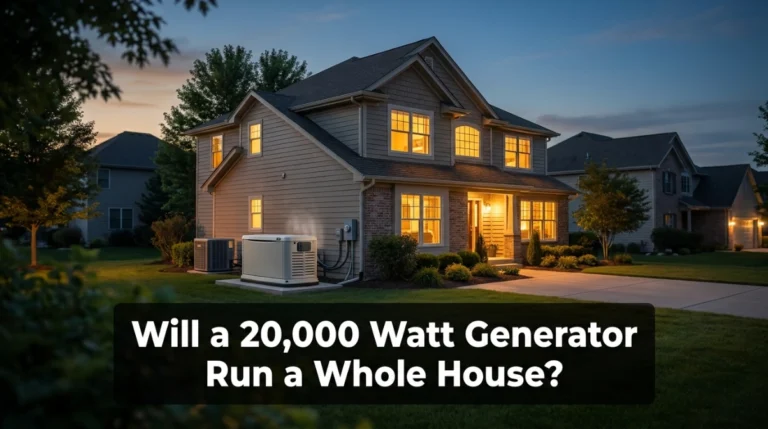
A permanent standby generator belongs outdoors in a location approved for its exact model. Required clearances depend on the manufacturer’s instructions, local codes, openings, and site conditions.
Do not automatically apply portable-generator placement rules to a permanently installed standby system. Ask the installer to document the applicable clearance requirements.
The Electrical Safety Foundation International explains generator exhaust hazards, carbon monoxide prevention, and safe transfer equipment.
Keep working carbon monoxide alarms inside your home. A professional installation does not eliminate the need for basic exhaust safety.
How Much Does It Cost to Maintain a Kohler Generator?
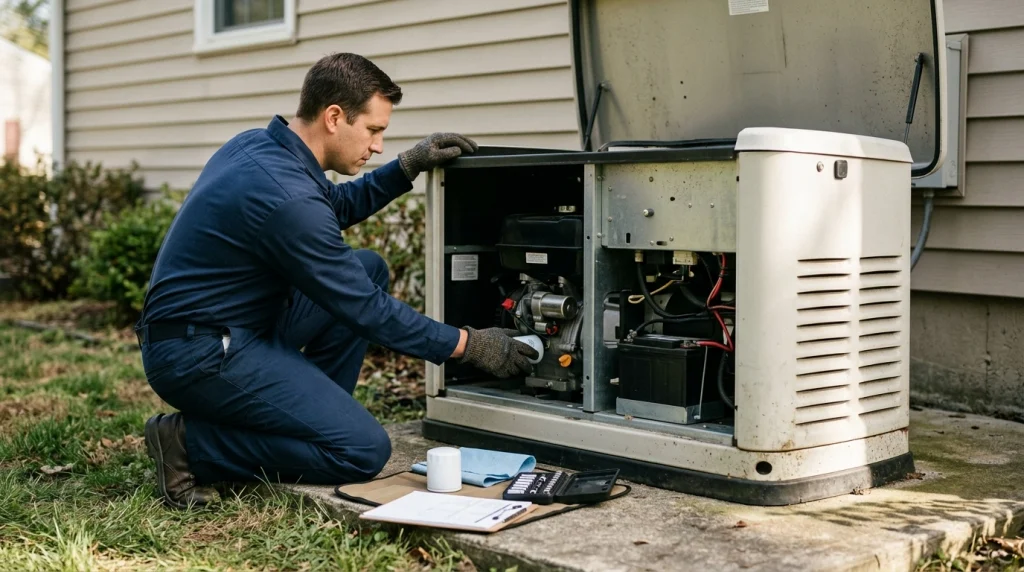
Buying the generator is not the final expense. Maintenance and fuel costs continue throughout its service life.
A reasonable planning allowance is approximately $200–$650 annually for routine professional maintenance, depending on the system and provider. Repairs and replacement parts can increase that amount.
Common maintenance tasks
- Changing engine oil and filters at the required intervals.
- Checking the battery and starting system.
- Inspecting spark plugs and air filters as specified.
- Testing automatic startup and transfer operation.
- Inspecting fuel connections and the generator enclosure.
- Following the manufacturer’s scheduled maintenance requirements.
Fuel cost is separate from servicing. It changes with generator load, fuel prices, and the length of each outage.
If you’re building an operating budget, my guide to generator running costs explains how fuel consumption becomes a dollar amount.
How Can You Save Money on a Kohler Generator Installation?
The best savings usually come from selecting the correct system and avoiding unnecessary construction. Cutting corners on electrical or fuel safety is not worth the risk.
Five ways to control your budget
- Compare three itemized quotes. Ask each contractor to price the same generator capacity, transfer equipment, and installation scope.
- Avoid unnecessary oversizing. Use a proper load calculation instead of buying the largest model available.
- Consider load management. Proper controls may reduce the generator capacity needed for certain appliances.
- Choose a practical location. A compliant installation position near existing connections may reduce wiring and trenching costs.
- Clarify included services. Compare permits, startup testing, warranty support, and fuel work before choosing a contractor.
I would not choose the cheapest quote without comparing its details. Two proposals with different scopes are not truly competing on equal terms.
Also, don’t assume the highest-priced package offers

Hi, I’m Michael Turner. I own a generator workshop in the United States and founded HomeGeneratorBlog to share practical, hands-on guidance about generator installation, maintenance, troubleshooting, safety, and backup power solutions. My goal is to help homeowners make smarter, more confident decisions through clear and reliable information