How to Keep a Generator Dry During Heavy Rain
Quick Answer
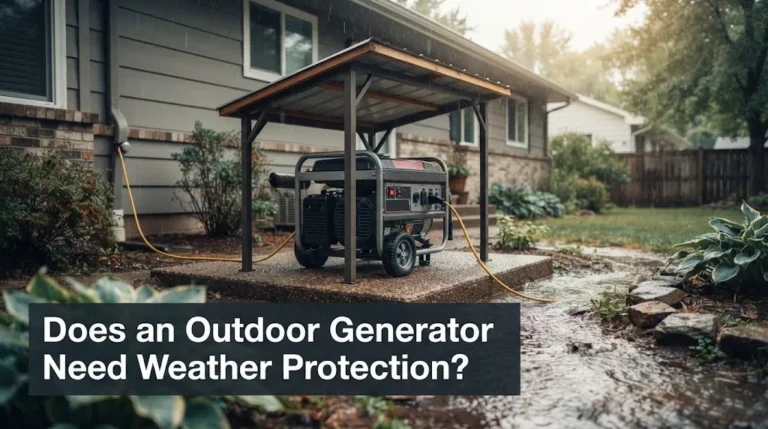
To keep a generator dry during heavy rain, place it on firm, elevated, well-drained ground and use only a weather shelter permitted by the generator manufacturer. A purpose-built running cover must protect the equipment without blocking cooling airflow or exhaust. Never drape an ordinary tarp over a running generator or move it indoors to escape the rain. If safe wet-weather operation cannot be maintained, shut it down according to the owner’s manual and wait for conditions to improve.
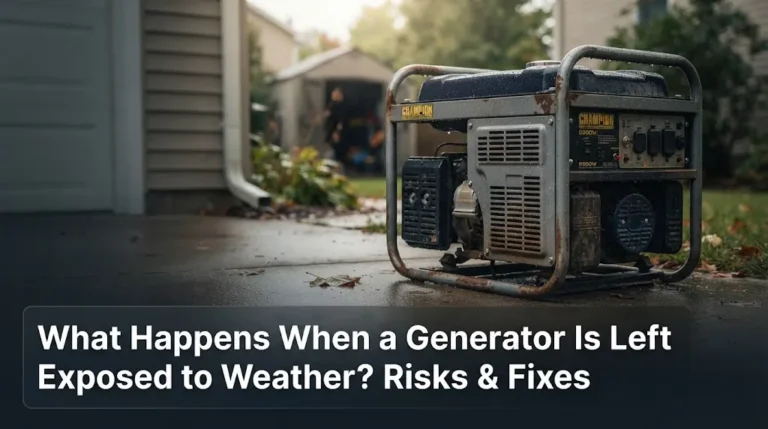
Heavy rain can expose a generator to water around its outlets, control panel, wiring, and engine components. The challenge is to protect these areas without creating overheating, fire, electrical shock, or carbon monoxide hazards.
The safest arrangement depends on whether your generator is operating during a power outage or sitting unused between emergencies. A storage cover can protect a switched-off machine, but a running generator needs a different type of weather protection.
1. Choose a Shelter Designed for Generator Operation
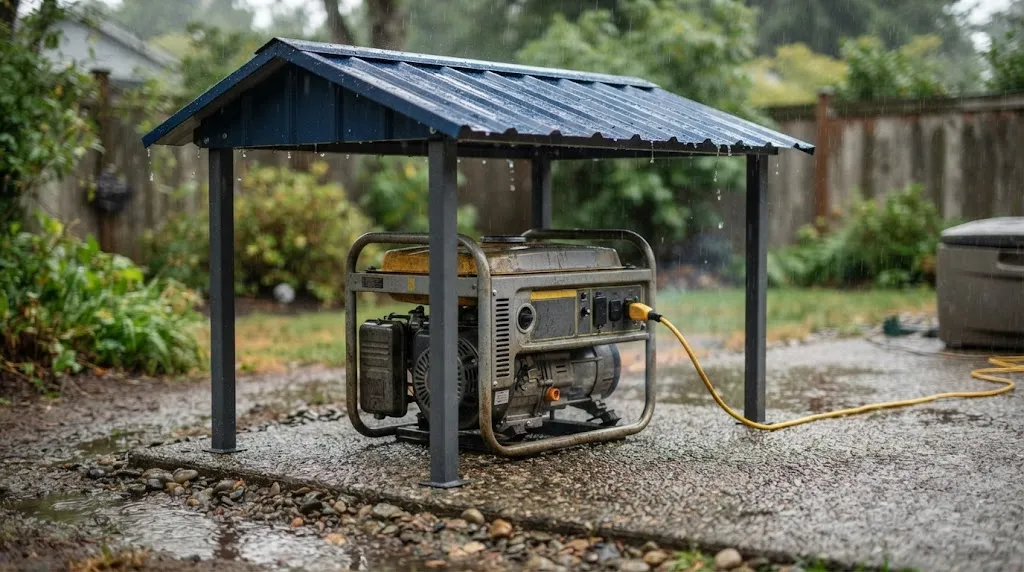
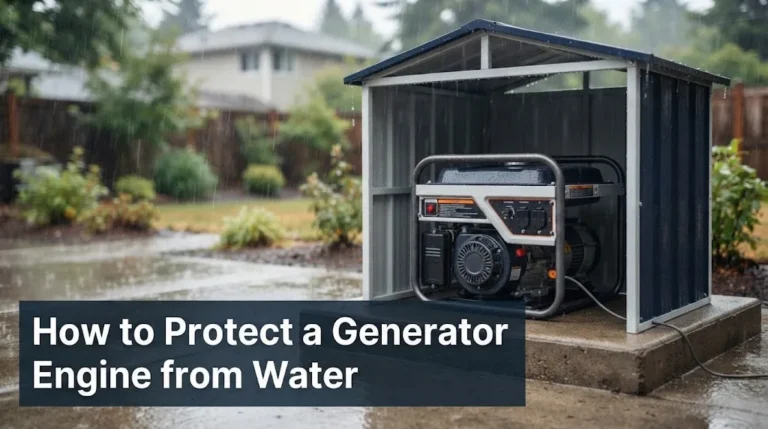
The most reliable way to protect a running portable generator from rain is to use a compatible shelter specifically designed and permitted for operation with that model. The shelter must keep rain away from vulnerable components while allowing cooling air and exhaust to escape freely.
Before installing a shelter, read the generator’s owner’s manual. Some manufacturers permit operation under an appropriate weather enclosure, while others instruct users to avoid operating in rain or wet conditions. A generic canopy does not automatically satisfy those requirements.
What makes a running shelter suitable?
- Appropriate materials: Use materials approved for the intended application that can withstand exposure to heat and weather.
- Open ventilation: Keep engine cooling inlets, exhaust outlets, and other ventilation openings unobstructed.
- Electrical protection: Prevent rain from reaching receptacles, plugs, control panels, and connected electrical equipment.
- Secure construction: The shelter should withstand expected wind without collapsing or blowing against the generator.
- Correct clearance: Follow the required distance from the exhaust, muffler, and other hot components.
A shelter must also allow exhaust to disperse safely. Even a roof that keeps the generator dry can create a dangerous arrangement if its walls, flaps, or surrounding structures trap exhaust fumes.
For more detail on choosing between storage and operating protection, see this guide to portable generator covers.
2. Never Drape an Ordinary Tarp Over a Running Generator
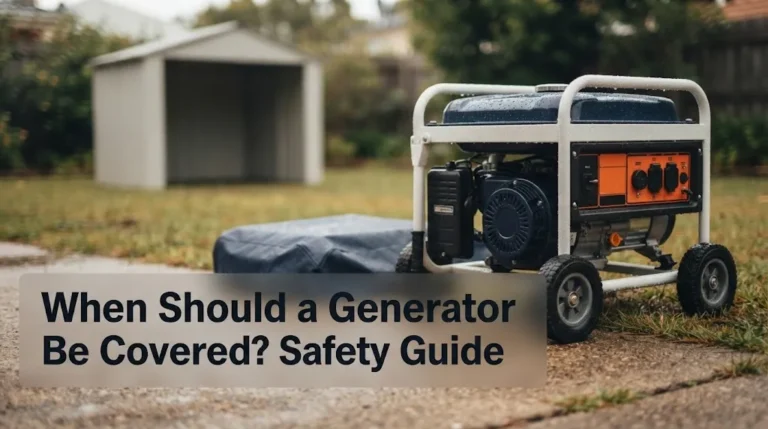
An ordinary plastic tarp or fitted storage cover is not a safe substitute for a purpose-built running shelter. Wind can push the material against hot surfaces, and sagging fabric can obstruct the air intake or exhaust.
Plastic can melt when exposed to excessive heat, while other fabrics may be damaged or ignite if they contact hot engine components. A tightly wrapped covering can also interfere with cooling and allow exhaust to collect around the machine.
If you need temporary rain protection, do not improvise by wrapping the generator in waterproof material. Use only a shelter that complies with the generator manufacturer’s instructions and applicable safety requirements. If no suitable arrangement is available, stop operating the generator when it is safe to do so.
A regular storage cover is useful after the generator has been shut down and completely cooled. Remove it before restarting the engine, even if the cover appears loose enough to allow some air through.
3. Place the Generator on High, Firm, Well-Drained Ground
A roof alone will not protect a generator if heavy rain causes water to pool beneath it or flow into its electrical connections. Choose a stable location where runoff can drain away naturally.
Before a storm arrives, check the proposed location for these problems:
- Low spots: Avoid depressions where rainwater collects.
- Drainage routes: Keep the generator away from gutters, downspouts, ditches, and areas where runoff flows.
- Unstable surfaces: Use a firm, level surface that will not shift or sink when saturated.
- Flood-prone areas: Do not place the machine where rising water could reach its base, electrical connections, or fuel system.
- Nearby combustibles: Keep leaves, cardboard, dry vegetation, and other combustible materials away from hot components.
Elevation helps only when the platform remains stable and complies with the generator’s installation instructions. Do not balance a heavy machine on loose bricks, unstable blocks, or a makeshift stand that could tip in strong winds.
Never operate a portable generator in standing water or handle electrical connections while standing on a wet surface. If flooding threatens the location, keep away from the equipment rather than attempting a dangerous move during the storm.
4. Keep Outlets, Plugs, and Extension Cords Dry
Keeping the engine itself under shelter is not enough. Water can enter electrical receptacles or reach plugs and cable connections, creating a risk of electric shock, short circuits, or equipment damage.
Use the following precautions when connecting appliances to a portable generator:
- Use heavy-duty extension cords rated for outdoor use and suitable for the connected electrical load.
- Inspect cords, plugs, and insulation for cuts, cracks, exposed conductors, or damaged connectors before use.
- Arrange cords so rainwater cannot run along them into connections, and keep connections away from puddles and runoff.
- Use only receptacle covers, weather-resistant outlets, and ground-fault circuit-interrupter protection where required and compatible with the equipment.
- Keep your hands dry and avoid touching electrical controls, plugs, or cables in wet conditions.
Do not assume that an outdoor-rated extension cord makes a wet connection safe. The complete setup, including the generator’s outlets and any connected equipment, must be suitable for the conditions.
Never connect a generator to household wiring by plugging it into a wall outlet. Supplying a home’s circuits requires an appropriate transfer arrangement installed according to applicable electrical requirements.
5. Maintain Safe Distance From Your Home
Rain protection must never come at the expense of exhaust safety. Fuel-burning portable generators produce carbon monoxide, an odorless, colorless gas that can be fatal when inhaled.
The U.S. Consumer Product Safety Commission’s generator safety guidance advises operating portable generators outdoors at least 20 feet from homes and buildings, with exhaust directed away from doors, windows, and vents.
Follow the instructions for your specific generator and maintain any greater clearance they require. Do not operate a portable generator inside a house, garage, shed, basement, or enclosed or partially enclosed area to keep it dry. An open door or fan does not make indoor operation safe.
Position the machine and its shelter so the exhaust can disperse into open air. Consider wind direction and nearby buildings, not just the distance to your own house.
Install working carbon monoxide alarms inside the home, following their placement instructions. A shelter or a generator’s automatic shutdown feature does not replace safe placement and ventilation.
6. What Should You Do if Heavy Rain Starts While the Generator Is Running?
If rain becomes heavy enough to threaten electrical safety, do not rush outside and throw a tarp over the machine. Follow the manufacturer’s wet-weather and shutdown instructions, and operate the controls only if you can reach them without exposure to wet electrical equipment or unsafe conditions.
- Assess the conditions from a safe position. Look for pooling water, wind-blown rain, a shelter that has shifted, or water approaching the electrical connections.
- Shut down when required. If the setup is no longer safe, follow the prescribed shutdown procedure when it can be done safely.
- Keep people away from hazards. Do not touch the generator, plugs, or cables if they are wet or surrounded by water.
- Wait for safe conditions. Do not move, cover, refuel, or inspect hot equipment during dangerous weather.
- Inspect before restarting. Once conditions are safe, follow the owner’s manual to check for water intrusion or damage before using the machine again.
If the generator has been flooded or water has entered its electrical components, do not simply restart it after the rain stops. Arrange an appropriate inspection or repair according to the manufacturer’s instructions.
For more detailed placement guidance, read where to place a portable generator safely.
7. Protect a Generator That Is Not Running
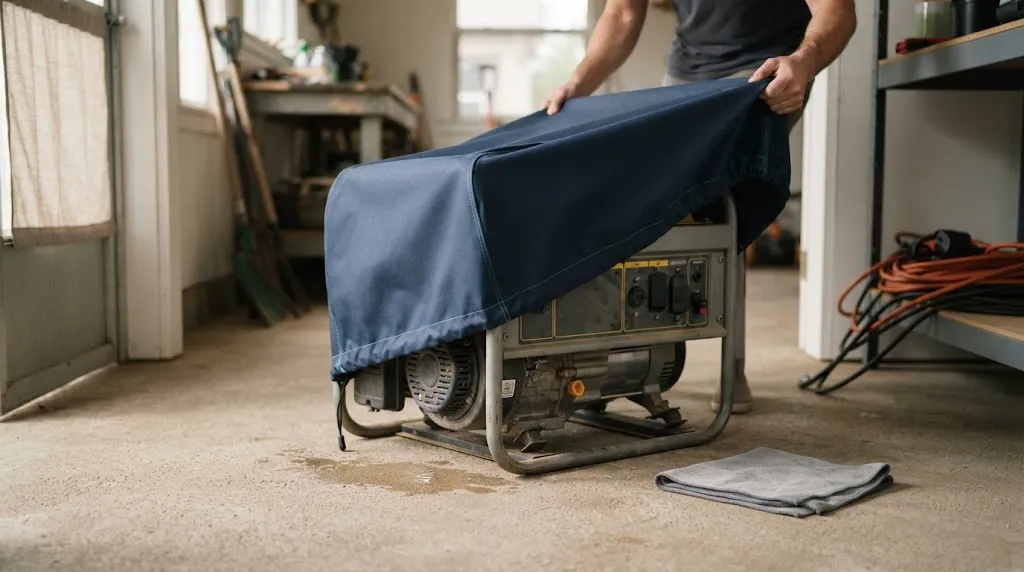
A stored generator is easier to protect because it does not need the cooling airflow and exhaust clearance required during operation. However, it should still be dry before you cover it.
- Switch it off properly. Disconnect electrical loads and follow the shutdown procedure in the manual.
- Let it cool completely. The engine and exhaust components must be cool before covering.
- Remove surface moisture. Allow the machine to dry, and clean away dirt or debris without spraying water into electrical components.
- Fit a suitable storage cover. Use a cover intended for the generator’s design and storage conditions.
- Secure the cover. Prevent wind from lifting it or rubbing it against controls and connectors.
- Inspect periodically. Look for trapped condensation, corrosion, damaged covers, and signs of water intrusion.
For longer storage periods, also follow the manual’s requirements for fuel, oil, battery maintenance, and ventilation. A cover protects against some environmental exposure, but it does not replace routine maintenance.
8. Common Mistakes That Make Rain Protection Less Safe
Several seemingly sensible precautions can create new hazards if they are used without considering the generator’s operating requirements.
- Wrapping the machine tightly: A waterproof covering can block cooling airflow or contact hot components.
- Building an enclosed shelter: Walls or low roofs may restrict ventilation and interfere with safe exhaust dispersal.
- Ignoring ground runoff: A dry top surface does not help if water pools around the generator or its connections.
- Assuming every generator is rain-resistant: Weather protection varies by model, so check the owner’s manual rather than relying on appearance.
- Handling wet connections: Never assume that gloves, ordinary footwear, or an extension cord make wet electrical equipment safe to touch.
- Covering the machine while it is hot: Residual heat can damage the cover or create a fire hazard.
- Moving it into a garage: Indoor or partially enclosed operation can expose people to lethal carbon monoxide.
The central rule is simple: a shelter should reduce exposure to rain without creating a different hazard. If you cannot protect the generator while maintaining the required ventilation, clearances, electrical safety, and outdoor placement, do not operate it in those conditions.
Related Product
Purpose-Built Generator Running Cover
A compatible running cover may help protect a portable generator during wet weather when the manufacturer permits its use. Verify fit, materials, ventilation, and clearance requirements before choosing one.
As an Amazon Associate, we earn from qualifying purchases.
Frequently Asked Questions
Can a portable generator run in heavy rain?
Only when the generator’s instructions permit the conditions and an appropriate weather-protection arrangement can be used safely. Some manufacturers advise waiting until rain passes. Never assume that a generic canopy or waterproof cover makes every generator safe to operate in heavy rain.
Can I use a plastic tarp to keep my generator dry?
A tarp may provide temporary protection for a switched-off, completely cool generator. Do not drape an ordinary tarp over a running machine because it can obstruct airflow, contact hot components, or interfere with exhaust dispersal.
Should I elevate my generator during a storm?
Place the generator on a firm, level surface that is above likely runoff and outside flood-prone areas. Any platform must be stable and consistent with the manufacturer’s instructions. Never operate a generator in standing water or on an improvised support that could tip over.
What should I do if rainwater reaches the generator’s outlets?
Keep away from wet electrical components and do not touch plugs or controls. Shut the generator down only if you can do so safely according to its instructions. Before reuse, follow the manufacturer’s guidance for water exposure and obtain an appropriate inspection if electrical components may have become wet.
Can I put a generator in a garage during a rainstorm?
No. Never operate a fuel-burning portable generator in a garage, even with the garage door open. Carbon monoxide can accumulate to dangerous levels. Keep the generator outdoors at the required distance from buildings and use only permitted weather protection.
Is a generator storage cover suitable for use while running?
Usually not. A storage cover is intended for a shut-down, cool machine, while a running cover must be specifically designed and approved for operating conditions. Check the exact generator and cover instructions before use.
Conclusion
Keeping a generator dry during heavy rain requires more than placing a waterproof cover over the engine. Use a manufacturer-approved running shelter when permitted, keep the generator on stable, well-drained ground, and protect electrical connections without blocking ventilation or exhaust.
If the rain becomes too severe for safe operation, follow the manufacturer’s shutdown instructions and wait for conditions to improve. Never use an ordinary tarp over a running generator or move a fuel-burning portable generator into a garage or other enclosed space. Planning the location and weather protection before storm season is the safest way to prepare for an outage.

Hi, I’m Michael Turner. I own a generator workshop in the United States and founded HomeGeneratorBlog to share practical, hands-on guidance about generator installation, maintenance, troubleshooting, safety, and backup power solutions. My goal is to help homeowners make smarter, more confident decisions through clear and reliable information