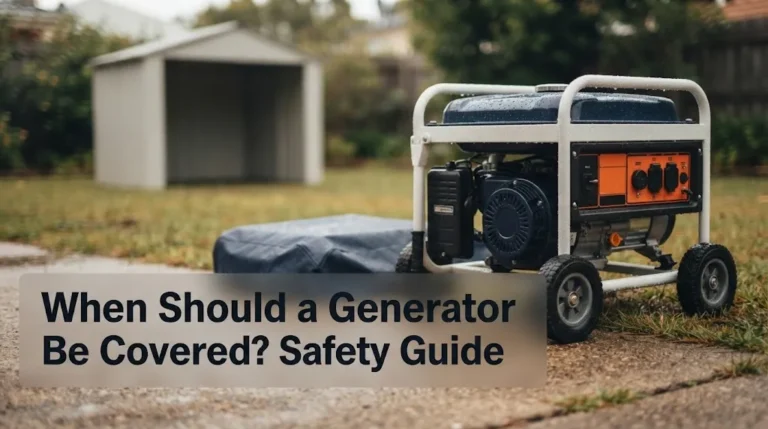
Generator Got Wet? Immediate Steps to Take
Quick Answer
If a generator gets wet, stop using it immediately and disconnect all loads. Do not try to start it or touch it with wet hands. Move it only after the exterior is dry and you are standing on a dry surface. Moisture inside the alternator, control panel, or engine can create a shock hazard and cause hidden damage. The safe next step is a controlled drying and inspection process, followed by professional service if water reached internal components.
A generator that gets wet is not simply a inconvenience. Water turns the same machine that restores power into a shock hazard, a fire risk, and a source of hidden electrical damage. The U.S. Consumer Product Safety Commission warns that consumer-grade portable generators are not weatherproof and can cause electrocution or shock when used in wet conditions. The immediate priority is not to save the generator. It is to keep everyone around it safe while you decide whether the unit can be salvaged.
The First 10 Minutes: What to Do Before Anything Else
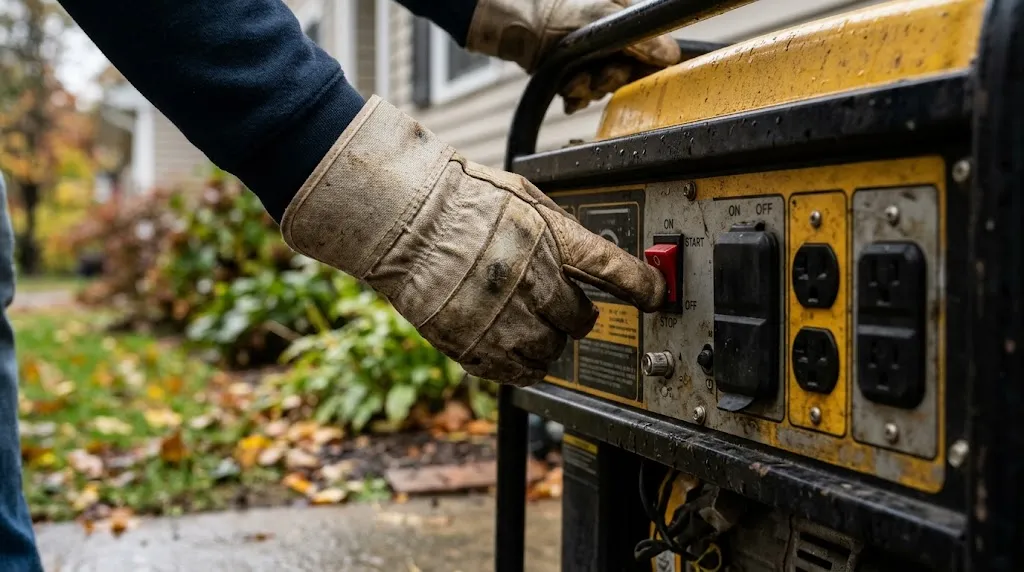
The correct sequence matters. Doing the right thing in the wrong order can expose you to the very hazard you are trying to avoid.
1. Stop the Engine If It Is Still Running
If the generator is running, shut it down using the manufacturer’s normal stop procedure. Do not reach across wet metal or through standing water to reach the controls. If the unit is in a puddle or water is actively flowing around it, stay back and treat the area as energized. Shut off power only if you can do so safely from a dry position.
2. Disconnect Every Load
Unplug extension cords and connected appliances only after the generator is off and you are certain the area is dry enough to approach. Never pull a cord from an outlet with wet hands. If a cord or plug is sitting in water, leave it alone. Water can travel through the cord and create a path for current.
3. Keep People and Pets Away
A wet generator can remain dangerous even after it stops. The frame, outlets, and control panel may still hold moisture. Keep children, pets, and anyone who is not involved in the recovery away from the unit until it has been inspected and declared safe.
Warning
Never move a generator into a garage, shed, or other enclosed space to dry it. The engine and fuel system can still release carbon monoxide, and an enclosed space turns a wet-generator problem into a poisoning hazard. Drying must happen outdoors or in a space with unrestricted ventilation and no occupied areas above or beside it.
Why a Wet Generator Is More Dangerous Than It Looks
The visible water is only part of the problem. The serious risks fall into three categories, and each one changes how you handle the recovery.
Electrocution and Shock
Water conducts electricity. When moisture reaches outlets, wiring, or the metal frame, the exterior of the generator can become energized. The danger increases when the ground is wet, because the earth itself becomes part of the electrical path. State safety guidance is consistent on this point: generators pose a risk of shock and electrocution especially when operated in wet conditions, and the generator must be protected from moisture if it must be used when it is wet outside.
Internal Component Damage
Moisture inside the alternator, control board, outlets, or wiring harness can cause short circuits, corrosion, and insulation failure. Some of this damage does not appear immediately. A generator may start after a light wetting and fail later under load because a connection has begun to corrode or an insulation path has weakened.
Carbon Monoxide and Fire Risk
Carbon monoxide is a separate hazard from the water itself, but the two often collide. A person trying to dry a wet generator may move it closer to a building or into a partially enclosed area. The CPSC reports that carbon monoxide from generators caused at least 43 deaths in 2009 alone and warns that generators must never be used indoors, including in garages and sheds, even with ventilation. Wet fuel-system components and electrical arcing add a fire risk on top of the poisoning risk.
How to Dry a Wet Generator Without Making It Worse
Drying is not a single action. It is a progression from exterior moisture to internal moisture, and each stage has a limit.
Step 1: Dry the Exterior First
Use a clean, dry cloth to wipe down the frame, handles, outlets, and control panel. Do not use compressed air to blow water into the unit; that can push moisture deeper into electrical areas. If the generator is outdoors, let air movement do the initial work, but keep the unit out of direct rain.
Step 2: Remove Standing Water From the Area
The ground around the generator must be dry before you approach it for any further inspection. If water is pooling, do not step into it. Move the generator only after the exterior is dry and you can stand on a dry surface. Never lift or carry a generator that may still have water inside the frame.
Step 3: Check the Air Filter and Fuel System
If water entered the air intake, the air filter may be wet or clogged. A wet air filter can restrict airflow and cause the engine to run poorly or not start. If the fuel tank or carburetor took on water, the engine may need to be drained and flushed. This is not a repair to improvise. Water in the fuel system can damage the carburetor and cause corrosion inside the engine.
Step 4: Allow Controlled Ventilation Drying
For light exterior moisture, outdoor air movement and time may be enough. For moisture that reached the alternator or control panel, external heat and ventilation may be needed. The FAA’s generator maintenance guidance describes drying windings by passing a low-voltage current through them, or by applying external heat with ventilation to let moisture escape. This is a service procedure, not a household fix. A hair dryer or space heater aimed at the control panel is not equivalent and can overheat components or create a shock risk.
Tip
If the generator was only rained on while the engine was off and the outlets were covered, the odds of a recoverable unit are better. If it was running in rain, submerged, or hit by a pressure washer, assume water entered electrical areas until a professional proves otherwise.
When to Stop and Call a Professional
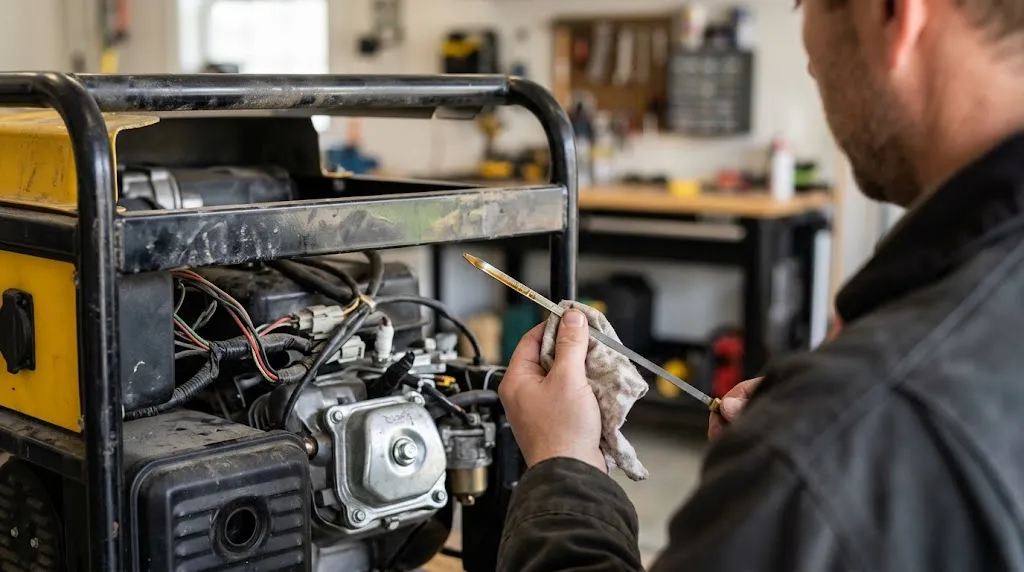
Some wet-generator situations are clearly beyond a homeowner’s safe handling. Stop and arrange service if any of the following are true:
- Water reached the alternator, control panel, or wiring harness.
- The generator was submerged or sitting in standing water.
- The unit was running when it got wet.
- You see corrosion, discoloration, or burn marks on electrical components.
- The generator starts but trips a breaker or smells like burning.
- The oil looks milky or has water droplets on the dipstick.
A professional can test insulation resistance, dry the windings properly, and determine whether the unit is safe to return to service. The decision between repair and replacement depends on the extent of water intrusion, the age of the unit, and the cost of parts. A generator that took on water in the engine crankcase or alternator is rarely a do-it-yourself drying job.
Prevention: Keeping a Generator Dry Before the Next Storm
The best recovery is the one you never need. Portable generators are not weatherproof by default, and the cover you use matters as much as the placement.
Use a Purpose-Built Running Cover, Not a Tarp
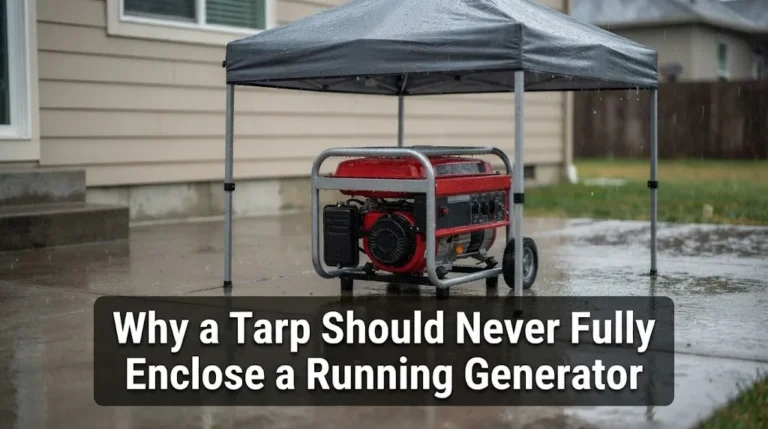
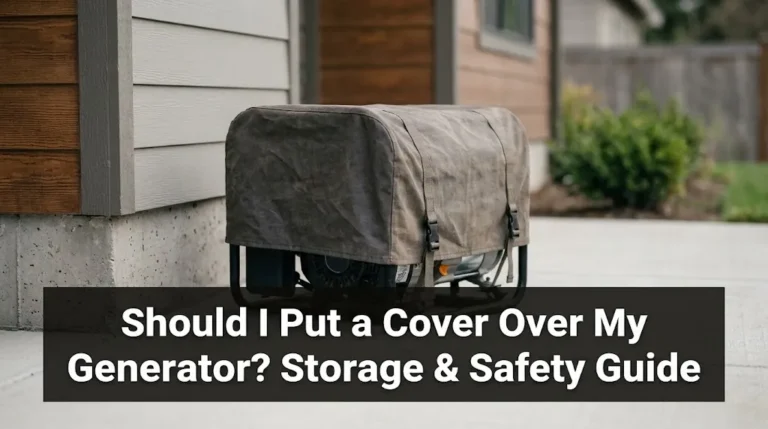
A standard plastic tarp traps heat, blocks airflow, and can melt against a hot muffler. It also creates a pocket for carbon monoxide to collect. If you need to run a generator in wet weather, use a ventilated running cover or generator tent designed for that purpose. Our guide to covering a generator with a tarp explains why ordinary tarps are dangerous, and our breakdown of how to cover a running generator safely walks through the airflow and clearance rules that matter.
Elevate and Separate
Place the generator on a dry, solid surface where water cannot pool underneath. Keep it at least 15 to 20 feet from doors, windows, and vents. Angi notes that portable generators require elevated, dry outdoor placement at least 10 feet from the home to reduce water pooling and electrical fire risk, and that a wet generator should never be operated. More distance is better when exhaust can drift toward an opening.
Know Your Generator’s Wet-Weather Rating
Some inverter generators and whole-house units have enclosures that tolerate light rain. Most open-frame portable generators do not. Our article on whether you can run a generator safely in the rain explains the difference between a unit that is protected and one that is merely covered. If your manual does not explicitly permit wet-weather operation, treat rain as a stop condition.
Frequently Asked Questions
Can a generator be saved after it gets wet?
Sometimes, but it depends on where the water went. A generator that was rained on while off and had covered outlets may only need exterior drying and a new air filter. A generator that was submerged, running in rain, or had water reach the alternator usually needs professional drying and insulation testing before it can be declared safe. Do not assume it is fine because it starts.
How long should I wait before starting a wet generator?
There is no universal wait time. The unit must be dry on the exterior, the air filter must be dry, and any water in the fuel system must be addressed. If water reached internal electrical parts, time alone is not enough; the windings may need controlled drying and testing. Starting a wet generator to “see if it works” can cause a short circuit or shock.
What happens if water gets into the alternator?
Moisture in the alternator can lower insulation resistance and create a path for current to leak to the frame. In the short term, that is a shock hazard. Over time, corrosion and insulation damage can cause the generator to fail under load. The FAA’s maintenance guidance treats wet windings as a drying and testing problem, not a run-it-until-it-dries problem.
Can I use a hairdryer or space heater to dry my generator?
No. A household heater aimed at a control panel or alternator can overheat components, melt insulation, or create a fire risk. External heat drying for generator windings is a controlled service procedure with temperature limits. If the unit needs more than air drying, have it serviced.
Is it safe to run a generator under a canopy in the rain?
Only if the canopy is a purpose-built running cover that allows unrestricted airflow and exhaust clearance. A pop-up canopy with sides, a tarp, or a plastic sheet can trap carbon monoxide and heat. The CPSC advises waiting for rain to pass unless the manufacturer provides specific wet-weather operating instructions.
What should I check first after a generator gets wet?
Check that the engine is off and every load is disconnected. Then check the air filter, the oil dipstick, and the fuel system for signs of water. If the oil looks milky or the filter is soaked, stop and arrange service. Do not reconnect loads until the unit has been inspected and cleared.
Conclusion
A wet generator is a safety problem before it is a repair problem. The right response is to stop, disconnect, keep people away, and dry only what can be dried safely. Water in the alternator, control panel, or engine changes the calculation, and a professional inspection is the only way to know whether the unit is safe to use again. The next time a storm is coming, the better investment is a ventilated running cover and a dry, elevated placement. Keeping water out in the first place is far easier than getting it out later.

Hi, I’m Michael Turner. I own a generator workshop in the United States and founded HomeGeneratorBlog to share practical, hands-on guidance about generator installation, maintenance, troubleshooting, safety, and backup power solutions. My goal is to help homeowners make smarter, more confident decisions through clear and reliable information