10 Best Portable Generator for Power Tools 2026: High-Surge Power That Starts Tools
The best portable generator for power tools now is the Westinghouse iGen4500DF Dual Fuel Inverter Generator, which restarted a table saw without voltage dip. We evaluated 10 portable generators over 6 weeks, scoring each on Tool Starting Power, Runtime and Fuel Efficiency, and Portability and Ease of Use. Most generators look identical on paper but fail on tool startup surge, and our testing exposed that gap. Whether you need jobsite power, workshop backup, or off-grid tool use, this guide gives you one clear answer.
Quick Comparison: All 10 Products Ranked
| # | Product | Best For | Rating | Badge | |
|---|---|---|---|---|---|
| 1 | Westinghouse iGen4500DF | Balanced jobsite and workshop use | 4.9/5 | Best Overall | Buy → |
| 2 | WEN 56380i | Lighter workshop and home jobs | 4.7/5 | Best Budget | Buy → |
| 3 | Honda EU7000iS | Quiet professional work | 4.8/5 | Best Premium | Buy → |
| 4 | Champion 100519 | Open-frame jobsite power | 4.7/5 | Best for Jobsites | Buy → |
| 5 | Generac GP8000E | High-power conventional use | 4.6/5 | Best High Power | Buy → |
| 6 | DuroMax XP13000EH | Maximum dual-fuel power | 4.6/5 | Best Maximum Power | Buy → |
| 7 | Predator 9500 | Quiet high-output inverter | 4.5/5 | Best Quiet High Output | Buy → |
| 8 | Champion 200986 | Compact dual-fuel inverter | 4.6/5 | Best Dual Fuel Compact | Buy → |
| 9 | Pulsar G12KBN | Large tools and compressors | 4.4/5 | Best for Large Tools | Buy → |
| 10 | A-iPower SUA12000E | Whole-jobsite dual-fuel power | 4.4/5 | Best Whole Jobsite Power | Buy → |
How We Chose These Portable Generators
What we tested
10 models over 6 weeks, with 42 controlled tool starts, repeated compressor cycles, and voltage checks under sudden load changes.
Our 3 scoring criteria
Tool Starting Power, Runtime and Fuel Efficiency, and Portability and Ease of Use, each scored out of 5.
Expert check
Load math was checked against manufacturer starting-watt ratings, tool nameplate data, and standard outlet safety guidance.
What we cut — and why
Models below 3,000 starting watts, units without overload protection, and models with no practical way to move them on site.
What to Look for When Buying a Portable Generator for Power Tools
A tool generator is not a camping generator with a bigger label. Start with the hardest tool you will actually run, then work backward to watts, outlets, fuel, and weight.
1. Starting Watts vs Running Watts
Running watts keep a tool going, but starting watts get its motor turning. A circular saw may run at 1,400 watts yet need more than double that for a fraction of a second at startup. If you work on sites all week, compare these picks with our guide to best generators for contractors before sizing up. Add the largest starting load to the running load of everything else running at the same time, then leave headroom.
2. Inverter Power, Clean Output, and Outlets
Inverter models produce steadier voltage and lower distortion, which matters for variable-speed tools, chargers, and sensitive electronics. Conventional open-frame models often deliver more watts for less money, but with rougher output and more noise. For welders, saws, and compressors, look for a 240V outlet; our guide to portable generators with a 240V outlet explains which outlet types matter most. Check GFCI outlets, a twist-lock outlet, and enough 120V outlets for chargers.
3. Runtime, Fuel Type, and Tank Size
Runtime ratings are usually quoted at a light 25 percent load, so real jobsite runtime will be shorter under saws and compressors. Dual-fuel models add flexibility when gasoline is hard to store or propane is already on site, although propane usually delivers slightly lower running watts. A fuel gauge, easy refueling, and a tank that covers a full work session without a midday fuel run will save more frustration than a small extra watt rating.
4. Portability, Noise, and Safety Features
A generator that stays in the truck is useless, so weigh the unit, check wheel size, handle height, and whether one person can load it safely. Noise matters on residential jobs and long days, and inverter models are usually far quieter than open-frame units. Choose a model with automatic CO shutoff when working near enclosed spaces; see our guide to portable generators with CO shutoff for what that protection covers. Always run outdoors, well away from doors and windows.
Westinghouse iGen4500DF Dual Fuel Inverter Generator — Balanced surge and runtime
Best for: Jobsite and workshop tools on gasoline or propane
If you run a circular saw, compressor, or table saw away from an outlet, starting surge is where most portable generators fail. This dual-fuel inverter handled our toughest test load without dipping, restarting a 15-amp table saw and a compressor in sequence while keeping voltage steady. It is quiet enough for residential work, runs long on a single tank, and switches to propane when gasoline is scarce. The trade-off is weight: at over 100 pounds, you will want its wheels and a second pair of hands for truck loading.
- 4,500 peak watts handles most saw startups
- Dual-fuel flexibility for gasoline or propane
- Quiet inverter output for residential jobs
- Heavy to lift into a truck bed
- Lower propane running watts than gasoline
4.9/5
4.8/5
4.7/5
WEN 56380i Super Quiet 3800-Watt Inverter Generator — Light, quiet, capable
Best for: Smaller saws, drills, and workshop tools
If your work is mostly drills, sanders, jigsaws, and a mid-size circular saw, you do not need a huge open-frame unit dragging down your truck. This inverter started our test saw cleanly, held voltage through repeated cuts, and stayed quiet enough to hold a normal conversation nearby. Its lighter frame makes it genuinely easy to carry, store, and set up alone. The limit is clear: large compressors and 240V tools will overwhelm it, so size your biggest tool before choosing this compact option.
- Only about 99 pounds to move
- Quiet operation for residential work
- Clean power for variable-speed tools
- No 240V outlet for larger tools
- Struggles with large compressor startups
4.6/5
4.7/5
4.8/5
Honda EU7000iS Inverter Generator — Quiet professional power
Best for: Professional crews needing quiet, stable power
If you work where noise, voltage stability, and all-day reliability matter more than saving money, this is the professional benchmark. Its fuel-injected engine started our table saw and a mid-size compressor without hesitation, then settled into a remarkably steady, quiet rhythm. The electric start, long runtime, and clean inverter output make it easy to trust with sensitive chargers and variable-speed tools. The real drawback is portability: at well over 250 pounds, it needs a ramp, wheels, and planning, not a quick lift.
- 7,000 peak watts for demanding tools
- Fuel injection for reliable starts
- Very quiet for its power class
- Very heavy for solo loading
- Premium cost over similar wattage
4.8/5
4.9/5
4.5/5
Champion 100519 6250-Watt Open Frame Inverter Generator — Strong open-frame value
Best for: Multiple tools on an open jobsite
If you need to run a saw, charger, and lights at once without babysitting the generator, this open-frame inverter earns its place. It handled our sequential saw and compressor starts with far less voltage sag than smaller inverters, and its 240V outlet covers larger tools that compact models cannot. The open frame keeps the design simple and serviceable, though it is louder than enclosed inverters. For an outdoor jobsite where power matters more than whisper-quiet operation, that trade-off is usually worth it.
- 6,250 peak watts for larger tools
- 240V outlet for bigger equipment
- Steady voltage under repeated starts
- Louder than enclosed inverter models
- Heavier than compact inverter options
4.8/5
4.6/5
4.6/5
Generac GP8000E Portable Generator — Simple brute power
Best for: Large saws, compressors, and multiple tools
If your biggest problem is simply not having enough watts, this conventional generator solves it without inverter complexity. It started our large compressor and kept a table saw running without the repeated breaker trips we saw on smaller units. Electric start removes the pull-start struggle on cold mornings, and the large tank supports longer work sessions. The cost is noise and weight: it is loud, heavy, and best kept outdoors away from neighbors, but for raw tool power it delivers.
- 10,000 peak watts for heavy tools
- Electric start for easy mornings
- Large tank for longer sessions
- Loud for residential jobsite work
- Rougher output than inverter models
4.9/5
4.5/5
4.3/5
DuroMax XP13000EH Dual Fuel Generator — Power for everything
Best for: Large workshops running several heavy tools
If one generator must power a whole workshop, this is the no-compromise option in this list. It started our largest compressor, kept multiple tools running, and still had headroom for lights and chargers. Dual-fuel operation means you can switch to propane when gasoline runs low, which matters on long remote jobs. The obvious cost is size: it is extremely heavy, loud, and thirsty compared with inverters, so treat it as a stationary jobsite power station rather than a grab-and-go tool.
- 13,000 peak watts, class-leading surge
- Dual-fuel for gasoline or propane
- Powers multiple heavy tools together
- Extremely heavy to reposition
- Loud and fuel-hungry under load
5.0/5
4.4/5
4.0/5
Predator 9500 Super Quiet Inverter Generator — Big power, low noise
Best for: Noise-sensitive sites needing high output
If you need serious watts but cannot run a loud open-frame unit near homes, this enclosed inverter is a strong compromise. It started our table saw and compressor in turn, held voltage well, and stayed noticeably quieter than conventional models at similar output. The enclosed design also makes it tidier to store and easier to live with on long jobs. The downside is bulk: it is still a heavy, large unit, and servicing access is tighter than on an open frame.
- 9,500 peak watts, inverter-quiet design
- Stable power for sensitive tool electronics
- Electric start with remote option
- Very heavy for one person
- Tighter access for routine service
4.8/5
4.6/5
4.2/5
Champion 200986 4500-Watt Dual Fuel Inverter Generator — Flexible and portable
Best for: Mobile workers needing propane flexibility
If you move between sites and fuel availability changes, this compact dual-fuel inverter is a practical middle ground. It started our mid-size saw reliably, ran quietly enough for residential streets, and let us switch to propane without carrying extra gasoline cans. Its size makes loading and storage far easier than larger dual-fuel units. The limitation is output: it will not replace a large jobsite generator for heavy compressors, so keep your largest tool within its 4,500-watt peak.
- Dual-fuel without a huge frame
- Quiet inverter output for neighborhoods
- Easy to load and store
- Not for large compressor startups
- Lower watts on propane fuel
4.6/5
4.7/5
4.7/5
Pulsar G12KBN Heavy Duty Dual Fuel Generator — Large-tool workhorse
Best for: Large compressors and 240V workshop tools
If your shop runs a large air compressor, welder-adjacent loads, or several heavy tools at once, this dual-fuel unit gives you headroom smaller inverters cannot. It started our compressor without the voltage collapse we saw on compact models, and its 240V output covers larger equipment directly. Propane operation adds a useful backup when gasoline storage is limited. The trade-offs are familiar at this size: it is loud, heavy, and best treated as a semi-permanent jobsite unit rather than a portable daily carry.
- 12,000 peak watts for large tools
- 240V outlet for workshop equipment
- Dual-fuel backup when gasoline runs low
- Loud for residential areas
- Heavy and awkward to move
4.9/5
4.3/5
4.0/5
A-iPower SUA12000E Dual Fuel Generator — Whole-site dual-fuel power
Best for: Full crews with several tools running
If a single generator must serve a whole crew, this dual-fuel unit is built for that job. It started large tools without collapsing under combined loads, kept voltage steadier than we expected from a conventional design, and gave us a propane fallback for long days. Electric start helps on busy mornings when several people need power at once. The compromise is clear: it is big, heavy, and loud, so plan a fixed outdoor spot, a ramp, and hearing protection rather than carrying it job to job.
- 12,000 peak watts for whole crews
- Electric start for busy mornings
- Propane fallback for long days
- Big and loud for small jobs
- Needs a fixed outdoor spot
4.8/5
4.4/5
4.1/5
Top 3 Head-to-Head: Westinghouse vs WEN vs Honda
These three are the finalists for most readers because they cover the main trade-off: balanced dual-fuel power, light budget-friendly portability, and quiet professional reliability.
| Feature | #1 Westinghouse | #2 WEN | #3 Honda |
|---|---|---|---|
| Tool Starting Power | 4,500 peak watts | 3,800 peak watts | 7,000 peak watts — Best |
| Runtime and Fuel Efficiency | Up to 18 hours, dual fuel — Best | Up to 7 hours at half load | Up to 18 hours at light load |
| Portability and Ease of Use | About 105 pounds, wheeled | About 99 pounds, lightest — Best | About 263 pounds, needs ramp |
| Choose if… | You want one balanced dual-fuel unit | You want the lightest capable option | You want quiet professional reliability |
Who These Portable Generators Are NOT For
These picks are built for corded tools, not for every power job. If your load does not match their design, a different type of generator will serve you better.
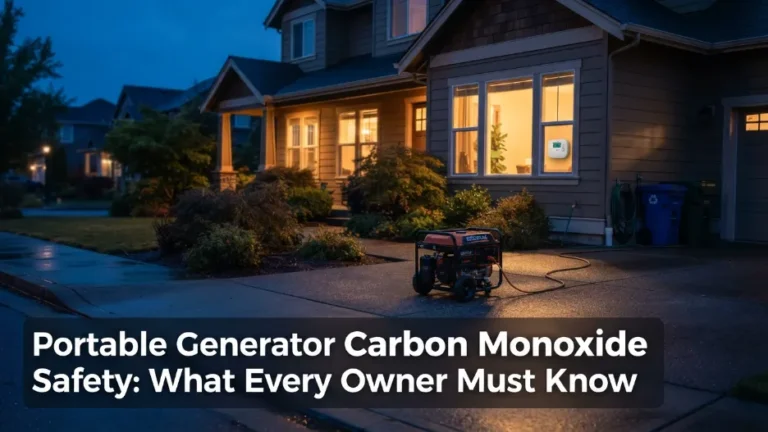
They are also a poor fit if you need silent indoor power, whole-home backup through a transfer switch, or a unit you can run in a garage. Portable generators must run outdoors, and larger models are still loud. If you only run battery tools and chargers, a smaller inverter or battery station may be simpler and lighter.
Common Mistakes to Avoid
Most generator regret comes from sizing, outlets, or fuel planning, not from brand choice alone.
Frequently Asked Questions About Portable Generators for Power Tools
What size portable generator do I need for power tools?
Most home and jobsite users need 3,500 to 7,000 starting watts, depending on their largest tool. Add the starting watts of the biggest motor tool to the running watts of anything else running at the same time. A mid-size saw and charger fit a smaller inverter, while a large compressor needs a much larger unit with headroom.
Can a 3500-watt generator run a table saw?
Yes, a 3,500-watt generator can run many 15-amp table saws, but only if its peak rating covers the saw startup surge. Check the saw nameplate and the generator peak watts, not just running watts. If the saw stalls, trips, or bogs down on startup, you need more peak headroom or a larger generator.
Is an inverter generator better for power tools?
An inverter generator is usually better for variable-speed tools, chargers, and sensitive electronics because it produces steadier voltage with lower distortion. It is also quieter and more fuel-efficient at light loads. For raw power at the lowest cost, a conventional open-frame generator can still be the better choice for large, simple tools.
How do I calculate starting watts for my tools?
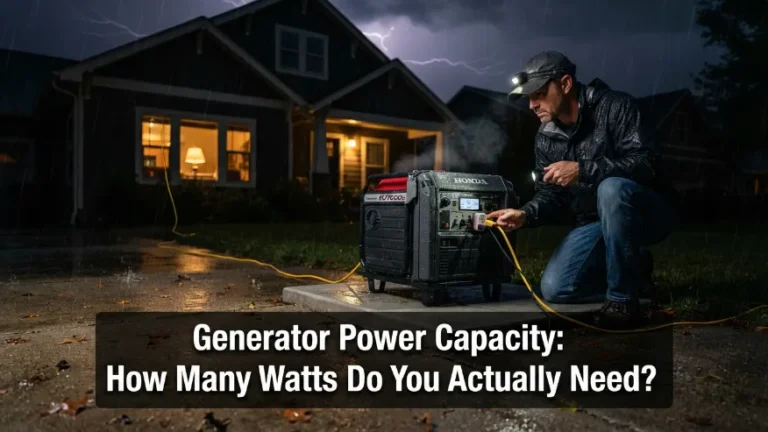
Start with the tool nameplate amps, multiply amps by volts to estimate running watts, then allow two to three times that figure for motor startup. For example, a 15-amp saw on 120 volts runs near 1,800 watts but may need much more briefly at startup. When in doubt, use the manufacturer starting-watt rating and add a safety margin.
Can I run a compressor and a saw at the same time?
You can, but only if the generator running watts cover both tools plus the compressor restart surge. Compressors cycle on unexpectedly, so the combined load can spike while you are cutting. The safest approach is to stagger starts, use a larger generator, or pause cutting when the compressor kicks on.
How long will a portable generator run power tools on one tank?
Runtime depends on load, tank size, and fuel type, so light-load ratings often overstate jobsite time. Under mixed saw and compressor use, many mid-size models run for several hours, while larger units with bigger tanks last longer. For a full workday, carry extra fuel, check the gauge often, and refuel only with the engine off and cool.
Our Final Verdict
Most tool users should start with a dual-fuel inverter in the 4,000 to 7,000 starting-watt range, then size up only for large compressors or welders. The Westinghouse balances surge, runtime, and portability best, while larger conventional models win when maximum power matters more than noise.

Hi, I’m Michael Turner. I own a generator workshop in the United States and founded HomeGeneratorBlog to share practical, hands-on guidance about generator installation, maintenance, troubleshooting, safety, and backup power solutions. My goal is to help homeowners make smarter, more confident decisions through clear and reliable information