Are Ryobi Inverter Generators Any Good? Honest 2026 Verdict
Quick Answer
Yes, Ryobi inverter generators are good for most casual and mid-level portable power needs, especially camping, tailgating, RV trips, and short home outages. They offer clean power, quiet operation, and fair prices, though they are not the toughest choice for daily job-site work. For a full brand comparison, see what the best inverter generator brands offer in 2026.
Why buyers choose Ryobi
- Good value: Prices sit below Honda and Yamaha, with solid features for the money.
- Clean power: Inverter output suits phones, laptops, TVs, and other sensitive electronics.
- Quiet design: Enclosed models run far quieter than open-frame conventional generators.
- Easy to buy: Ryobi is widely sold through Home Depot, with in-store pickup and support.
- Useful features: Many models offer eco mode, parallel capability, USB outlets, and CO shutdown.
When to look elsewhere
- Choose a premium brand if you need daily, heavy-duty, or whole-home backup power.
- Size up or parallel two units before you try to run a large RV air conditioner.
- Check the spec sheet for running watts, starting watts, runtime, and outlet types.
I’ve tested a lot of inverter generators in driveways, campsites, and outage weekends. Ryobi keeps showing up in the same place: a smart buy for regular people who want portable power without a premium price.
This guide goes past the sales page. You’ll get an honest read on noise, reliability, sizing, and common problems, plus how Ryobi stacks up against Honda, Champion, and Predator as of 2026.
In This Guide
- What Is a Ryobi Inverter Generator?
- Are Ryobi Inverter Generators Good for Home Backup, Camping, and RV Use?
- How Quiet Are Ryobi Inverter Generators?
- Are Ryobi Inverter Generators Reliable?
- Ryobi vs Honda, Champion, and Predator: How Do They Compare?
- What Size Ryobi Inverter Generator Do You Need?
- What Problems Do Owners Report, and How Do You Make a Ryobi Last?
- Frequently Asked Questions About Ryobi Inverter Generators
- Final Takeaway: Should You Buy a Ryobi Inverter Generator?
What Is a Ryobi Inverter Generator?
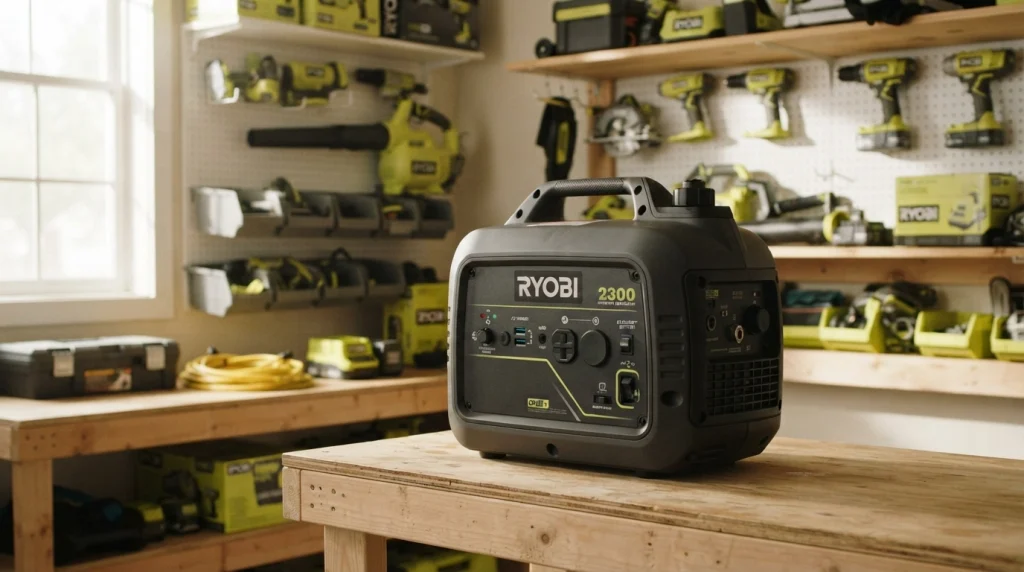
A Ryobi inverter generator is a portable generator that makes clean, stable power for electronics and small appliances. Ryobi sells it mainly through Home Depot, alongside its well-known power tools and outdoor gear.
The brand sits in the value tier. You get modern inverter tech without the price tag of a premium Japanese brand.
What does the Ryobi lineup cover?
Ryobi offers small suitcase models for camping and light use. It also offers larger wheeled models for RV use and longer home outages.
Most models run on gasoline. Some larger models add dual-fuel capability, so you can run gasoline or propane.
- Small suitcase units: Light, easy to carry, and sized for phones, lights, fans, and small coolers.
- Mid-size units: A common pick for RVs, tailgates, and a fridge plus a few essentials.
- Larger wheeled units: Built for higher loads, longer runtimes, and RV-ready outlets.
Features vary by model, so check the spec sheet before you buy. Look for running watts, tank size, outlet types, and parallel capability.
What is an inverter generator, exactly?
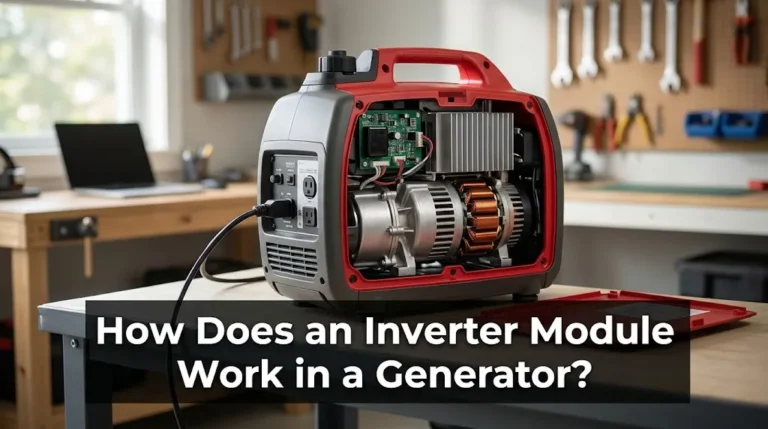
Definition: An inverter generator is a portable generator that converts raw engine power into clean sine wave electricity. Clean sine wave means smooth, stable power with low total harmonic distortion, or THD.
Low THD matters for laptops, phones, CPAP machines, and modern TVs. A conventional generator can produce rougher power that suits tools better than sensitive electronics.
Inverter models also adjust engine speed to match the load. That design cuts noise and saves fuel at light loads.
If you are new to this, start with what to look for in an inverter generator before you compare models. It covers watts, outlets, noise, and runtime in plain terms.
For current models, specs, and manuals, check Ryobi directly. Model names and features change often, and the manual is the final word on your unit.
Section takeaway: Ryobi makes a broad range of inverter generators, from light camping units to larger RV and backup models, all built around clean power and easy portability.
Are Ryobi Inverter Generators Good for Home Backup, Camping, and RV Use?
Yes, for short outages and light-to-moderate loads. A Ryobi inverter generator can keep a fridge cold, charge phones, run lights, and power a CPAP machine through a night without power.
It is not a whole-home standby generator. It will not run a full house, a central air conditioner, and an electric range at once.
Can a Ryobi inverter generator run a refrigerator?
Yes, in most cases a mid-size model can run a standard fridge. You still need headroom for starting watts, which spike when the compressor kicks on.
Running watts are the steady power a device uses. Starting watts, or surge watts, are the brief extra power a motor needs to start.
I once ran a fridge, a few LED lights, and phone chargers through a two-day outage on a mid-size inverter unit. The trick was simple: I started the fridge first, then added loads one at a time.
Is Ryobi good for camping and RV use?
Yes, this is where Ryobi shines. Small models are light enough to lift into a truck bed or SUV, and enclosed models keep campsite noise down.
For RV use, match the unit to your air conditioner. A small suitcase model may run lights and charge batteries, but it may not start a rooftop AC unit alone.
- Camping: Pick a light, quiet model with eco mode and USB charging.
- RV trips: Look for a 30A RV outlet and enough starting watts for your AC.
- Tailgating: A mid-size unit can run a TV, speakers, and a small cooler with ease.
- Job sites: Ryobi can run many tools, but daily heavy use favors a tougher commercial-grade unit.
Parallel capability helps here. It lets you link two compatible units for more power, instead of buying one huge generator.
For home hookups, use extension cords rated for outdoor use, or a proper inlet and transfer setup. A transfer switch safely connects a generator to home circuits and stops dangerous backfeed to the grid.
Safety note: Run generators outdoors only, well away from windows, doors, and vents. Use a transfer switch or interlock kit installed by a licensed electrician for any home-circuit connection, and check your owner’s manual before use.
Section takeaway: Ryobi works well for camping, RV trips, tailgating, and short outages, as long as you size the unit to your largest starting load.
How Quiet Are Ryobi Inverter Generators?
Ryobi inverter generators are quiet for portable generators, especially the enclosed suitcase models. They run far quieter than an open-frame conventional generator at the same load.
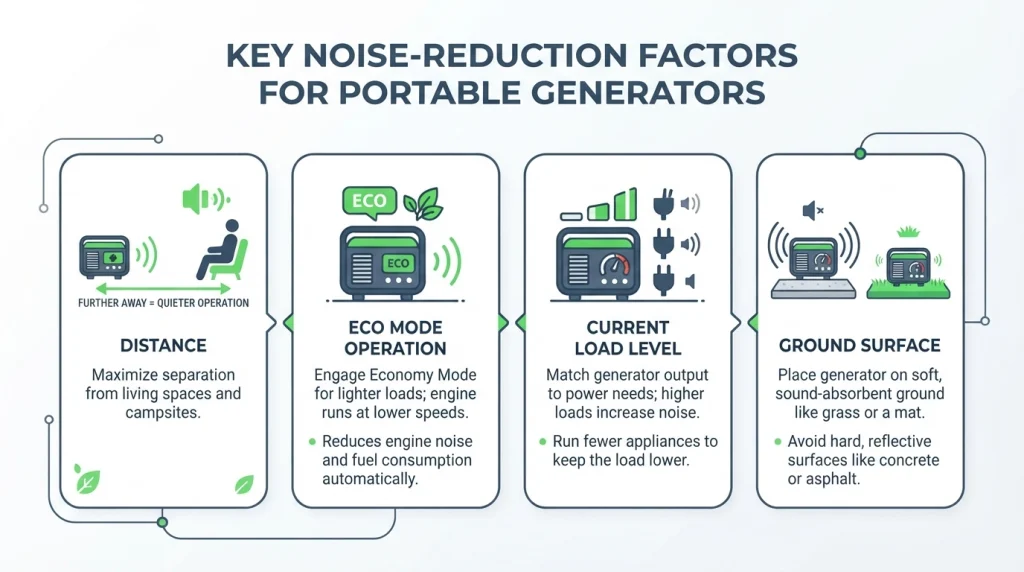
Noise still depends on load, distance, and eco mode. A unit at full load sounds louder than the same unit idling in eco mode.
What affects the noise you hear?
Distance changes everything. Sound drops fast as you move away, so place the unit as far as practical from tents, RVs, and neighbors.
Eco mode, or economy mode, slows the engine at light loads. That cuts both noise and fuel use when you only need a little power.
- Enclosed design: A closed case muffles engine noise better than an open frame.
- Eco mode: Lower engine speed means less noise at light loads.
- Load level: Heavy loads push the engine harder and raise noise.
- Surface and shelter: Hard surfaces reflect sound, while open ground and distance soften it.
Do not trust a single decibel number alone. Ratings use different distances and loads, so compare models on the same basis and check the spec sheet.
For context on the wider gap, see how inverter generators compare with conventional models on noise. The difference is easy to hear at a campsite.
Are Ryobi generators fuel-efficient?
Yes, inverter models tend to sip fuel at light loads. Eco mode is the main reason, since the engine does not race when demand is low.
Runtime claims vary by load and tank size. A unit may run many hours at 25% load and far fewer hours at 50% load, so read both figures.
Fresh fuel matters more than most buyers expect. Stale gasoline can clog a carburetor and cause hard starts, surging, or a no-start after storage.
For broader guidance on efficient backup power, see Energy.gov. It covers energy use and home resilience in plain, authoritative terms.
Section takeaway: Expect quiet, fuel-sipping performance at light loads, and louder, thirstier runs at full load, just like other quality inverter generators.
Are Ryobi Inverter Generators Reliable?
For occasional and seasonal use, yes. Most owners report easy starts, stable power, and good value when the unit is maintained and stored with fresh fuel.
Reliability drops when a generator sits for months with old gas. That pattern causes most hard-start and surging complaints across brands, not just Ryobi.
What do owners praise most?
Owners often praise the price, the quiet run, and the easy setup. Many like the push-button or electric start on larger models, plus the simple control panel.
Home Depot availability helps too. You can see the unit, ask questions, and handle warranty or service questions through a familiar retailer.
Where do owners report trouble?
Common complaints center on starting after storage, fuel-system issues, and overload shutdowns. A few owners also report short battery life on electric-start models or finicky app features where fitted.
Overload shutoff is a safety feature, not a flaw. It trips when you ask for more watts than the unit can supply, and it protects the inverter and your devices.
- Hard starting: Often tied to stale fuel, a dirty carburetor, or a weak battery.
- Surging: Often tied to old gas, a clogged fuel filter, or a load near the limit.
- Overload trips: Often tied to starting watts, not running watts, for motors and AC units.
- Short runtime: Often tied to high load, eco mode off, or a smaller tank than expected.
Build quality is solid for the price, but it is not Honda-grade for daily commercial use. Think weekend warrior, not job-site workhorse.
Compare owner feedback with care. See how Predator inverter generators fare on similar value and reliability questions, since both brands compete on price.
For independent testing and safety notes, Consumer Reports is a useful check before you buy. Use it alongside the manual and the spec sheet, not instead of them.
Section takeaway: Ryobi is reliable for regular home, camping, and RV use with basic care, but it is not built for constant heavy-duty duty.
Ryobi vs Honda, Champion, and Predator: How Do They Compare?
Ryobi wins on value and easy access. Honda wins on long-term durability and resale value, while Champion and Predator compete closely on price and features.
Your best pick depends on how often you run the unit. Occasional users gain little from a premium price, while daily users gain a lot from tougher build quality.
Which brand fits which buyer?
Honda suits buyers who want the quietest, most refined unit and plan to keep it for years. You pay more upfront, and you often get smoother running and strong dealer support.
Champion suits buyers who want strong features, dual-fuel choice, and good support at a mid-range price. Predator suits budget buyers who want maximum watts per dollar from Harbor Freight.
Ryobi suits Home Depot shoppers who want a fair price, clean power, and a unit they can pick up today. It is a practical middle ground, not a luxury pick.
Read whether Honda inverter generators are worth the money if you are torn between premium and value. The math changes with how many hours you run each year.
Also compare how Champion inverter generators hold up on reliability and support. Champion is often the closest rival to Ryobi on value.
| Brand | Best for | Typical price position | Watch-out |
|---|---|---|---|
| Ryobi | Camping, RV, short outages | Value to mid-range | Not ideal for daily heavy use |
| Honda | Long-term, frequent use | Premium | Higher upfront cost |
| Champion | Dual-fuel fans, RV owners | Value to mid-range | Model range is wide, so compare specs |
| Predator | Budget watts, occasional use | Budget to value | Support and parts vary by store |
| Westinghouse / WEN | Value buyers, RV use | Value to mid-range | Check outlet types and warranty terms |
Section takeaway: Choose Ryobi for value and convenience, Honda for maximum longevity, and Champion or Predator when a specific feature or price wins for your use.
What Size Ryobi Inverter Generator Do You Need?
Size by starting watts, not by hope. Add up running watts for everything you plan to run at once, then add the largest starting surge.
A fridge, a furnace blower, a sump pump, and an RV air conditioner all need extra surge power. Laptops, phones, lights, and TVs need far less.
How do you do the wattage math?
List each device, its running watts, and its starting watts from the label or manual. Add the running watts together, then add the highest starting surge once.
Leave headroom of about 20% if you can. Headroom stops overload trips and lets the engine run without strain.
- List essentials: Fridge, lights, chargers, CPAP, fan, or furnace blower.
- Add running watts: Sum the steady draw for all items running together.
- Add one surge: Add the largest starting watts for a motor or compressor.
- Check the spec sheet: Match the total to running watts and starting watts, not just the headline number.
What size fits common uses?
Small suitcase units suit charging, lights, fans, and small electronics. They are easy to carry, but they will not run large motors.
Mid-size units suit a fridge plus lights and chargers, or a small RV setup. Larger units suit RV air conditioning, power tools, and longer outage loads.
- Light camping: A small unit for phones, lights, and a fan.
- RV weekends: A mid-size or larger unit, sized to your AC starting watts.
- Short outages: A mid-size unit for a fridge, lights, chargers, and a CPAP.
- Longer outages: A larger unit or parallel pair, with fuel storage planned in advance.
When in doubt, size up or plan to parallel. It is cheaper than an overload trip in the middle of a hot night.
Safety note: Never plug a generator into a wall outlet to backfeed your home. Use outdoor-rated cords, a generator inlet, and a transfer switch or interlock installed by a licensed electrician.
Section takeaway: Do the wattage math first, leave headroom, and let starting watts decide the size, not the headline watt number.
What Problems Do Owners Report, and How Do You Make a Ryobi Last?
Most Ryobi problems trace back to fuel, storage, or overload. Fix those three, and most units start easier and last longer.
Break-in and maintenance matter too. A new engine needs an early oil change per the manual, plus regular checks after that.
How do you prevent stale-fuel problems?
Use fresh gasoline, and do not leave old fuel in the tank for months. Fuel stabilizer helps, but it does not make year-old gas fresh again.
Run the unit under load every few weeks during outage season. Short, regular runs keep the carburetor clear and the battery charged where fitted.
- Use fresh fuel: Buy small batches and store fuel safely in approved containers.
- Add stabilizer: Follow the product and manual guidance for storage.
- Drain for long storage: Follow the manual for draining the carburetor and tank.
- Check oil often: Low oil can trigger a shutdown and harm the engine.
What maintenance should you plan for?
Change oil on the schedule in your manual, and check the air filter and spark plug. Clean the spark arrestor where fitted, and inspect cords and outlets for damage.
Keep the unit dry, level, and clear of debris. Good airflow stops overheating and helps the engine breathe.
Store the generator in a dry place, with the fuel system prepared per the manual. Cover it only when cool and off, and never run it in a closed garage.
How do you stay safe with carbon monoxide?
Carbon monoxide, or CO, is odorless and deadly. Generators make CO, so placement is a safety decision, not a convenience choice.
Many newer Ryobi models include CO shutdown, which stops the engine when CO builds up. That feature helps, but it does not replace outdoor placement.
Place the unit outdoors, at least 20 feet from the house where possible, with exhaust pointed away. Keep it away from windows, doors, vents, and garages, even with the door open.
For official safety guidance, see the U.S. Consumer Product Safety Commission and the Centers for Disease Control and Prevention. Both stress outdoor use, distance from the home, and working CO alarms indoors.
Safety note: Run generators outdoors only and install battery-powered CO alarms in your home. Never run a generator in a garage, basement, crawl space, or near open windows.
Section takeaway: Fresh fuel, regular runs, on-schedule oil changes, and strict outdoor placement will do more for reliability than any add-on.
Frequently Asked Questions About Ryobi Inverter Generators
Are Ryobi inverter generators good for sensitive electronics?
Yes, inverter models produce clean sine wave power with low THD, which suits laptops, phones, TVs, and CPAP machines. Check the spec sheet for THD and outlet types, and use a surge protector where your manual allows it.
Can a Ryobi inverter generator run an RV air conditioner?
Some larger models can, but a small suitcase unit often cannot start a rooftop AC alone. Check your AC starting watts, size up if needed, or use a parallel kit with two compatible units.
How long will a Ryobi inverter generator run on a tank of gas?
Runtime depends on tank size, load, and eco mode, with light loads lasting far longer than full loads. Check the spec sheet for runtime at 25% and 50% load, and plan fuel storage for longer outages.
Are Ryobi inverter generators dual fuel?
Some larger Ryobi models offer dual-fuel operation on gasoline and propane, while many small models run on gasoline only. Propane stores longer and starts cleaner, but it may produce slightly less power, so check the spec sheet.
Where are Ryobi inverter generators sold and serviced?
Ryobi generators are sold mainly through Home Depot in the United States, with warranty and service handled through Ryobi and Home Depot channels. Keep your receipt, register the unit if offered, and follow the manual for warranty terms.
Should I buy Ryobi or Honda for camping?
Ryobi is the better value for occasional camping, with quiet enclosed models at a fair price. Honda is the better pick if you camp often, want the most refined run, and plan to keep the unit for many years.
Final Takeaway: Should You Buy a Ryobi Inverter Generator?
Buy a Ryobi inverter generator if you want good clean power, quiet operation, and fair value for camping, RV trips, and short outages. It is a practical choice for most households, not a compromise that leaves you stranded.
Skip Ryobi if you need daily job-site power or whole-home backup. In those cases, a premium inverter unit or a standby generator will serve you better.
Do the wattage math, check the spec sheet, and buy fresh fuel before the storm. A well-sized Ryobi, run outdoors and cared for with basic maintenance, is a generator you can count on when the lights go out.

Hi, I’m Michael Turner. I own a generator workshop in the United States and founded HomeGeneratorBlog to share practical, hands-on guidance about generator installation, maintenance, troubleshooting, safety, and backup power solutions. My goal is to help homeowners make smarter, more confident decisions through clear and reliable information