Which Inverter Generators Use Honda Engines? Genuine Honda Power vs Honda-Clone Engines Explained
Quick Answer
Which inverter generators use Honda engines? In 2026, it is almost only Honda’s own EU and EB inverter models, plus a small number of niche units built around a genuine Honda engine. Most other brands use their own engines or Honda-style clone engines, so check the engine label and manual before you trust a listing. If you want the full value picture, start with whether a Honda inverter generator is worth the money for your use.
The short list
- Honda’s own models: EU1000i, EU2200i, EU3200i, EU3000iS, and EU7000iS use genuine Honda engines.
- Niche exceptions: A few specialist units, such as Sawafuji Elemax models sold mainly outside North America, use Honda engines.
- Not Honda-powered: Yamaha, Champion, Westinghouse, WEN, Generac, Predator, and most others use their own or clone-style engines.
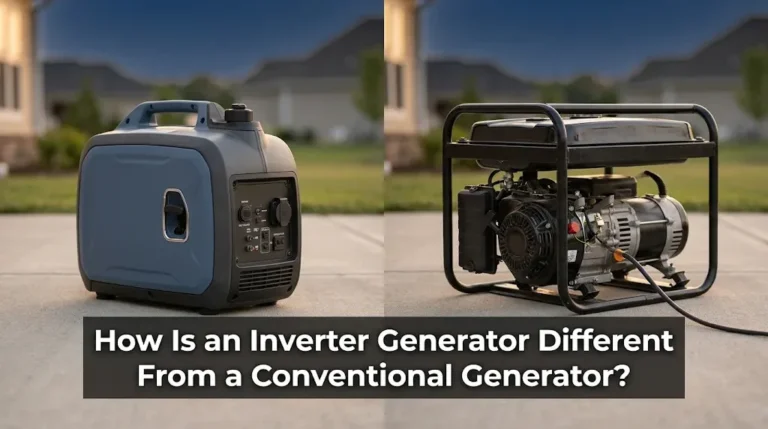
- Conventional trap: Some open-frame generators use Honda GX engines, but that does not make them inverter generators.
- Clone warning: “Honda-style,” “Honda-type,” and “GX-style” usually mean a copy, not a genuine Honda engine.
How to verify in 60 seconds
- Look for “Honda” on the engine, plus a Honda engine code such as GX, GXR, or GXH.
- Confirm the same code in the owner’s manual and on the maker’s official spec page.
- If the listing only says the engine “looks like” a Honda, treat it as a clone.
I’ve tested a lot of inverter generators over the years, from quiet suitcase units at campsites to larger machines that carried a fridge and a CPAP through a multi-day outage. The Honda question comes up in almost every buying conversation I have.
Shoppers see “Honda engine” in a listing and assume the whole generator will last like a Honda. Sometimes that is true, and often it is not.
This guide sorts genuine Honda power from look-alike engines, so you can buy with confidence.
In This Guide
- What Does “Uses a Honda Engine” Actually Mean?
- Which Honda Inverter Generators Use Honda Engines?
- Do Other Brands Use Genuine Honda Engines in Inverter Generators?
- Which Popular Inverter Generators Do Not Use Honda Engines?
- How Can You Tell a Genuine Honda Engine From a Honda Clone?
- Is a Honda Engine Worth the Higher Price?
- How Do You Choose the Right Inverter Generator?
- Frequently Asked Questions
- Final Takeaway: Buy the Engine You Can Prove
What Does “Uses a Honda Engine” Actually Mean?
A generator has two main parts that matter here: the engine and the inverter module. The engine burns fuel and spins, while the inverter turns that raw power into clean, stable power for your gear.
When a listing says “Honda engine,” it should mean Honda made the engine itself. It does not always mean Honda made the whole generator, and that distinction trips up a lot of buyers.
What is an inverter generator?
Definition: An inverter generator is a portable generator that makes AC power, converts it to DC, then inverts it back to clean AC power. That extra step lets the engine speed vary with load, which cuts noise and fuel use at light loads.
Clean power matters for sensitive electronics. THD, or total harmonic distortion, measures how clean that power is, and lower THD is better for laptops, phones, TVs, and a CPAP machine.
A clean sine wave is smooth power that closely matches what you get from a wall outlet. Most inverter generators aim for low THD, often under 3%, so check the spec sheet for the exact figure.
Three different “Honda” claims you will see
Listings use similar words for very different machines. Read the exact phrase, not just the brand name in the headline.
- Genuine Honda engine: Honda built the engine, and it carries Honda branding, a Honda model code, and a Honda serial number.
- Honda-powered: This can mean genuine, but only if the maker names the exact Honda engine model.
- Honda-style or Honda-type: This almost always means a clone engine copied from a Honda GX design, not a Honda engine.
I once helped a neighbor compare two units that looked nearly identical in photos. One had a Honda GX label and a Honda manual section, while the other said “Honda-type” in small print.
The second unit ran fine for light camping use. It did not have Honda parts support, Honda service, or Honda resale value, and that gap was the whole story.
Section takeaway: “Honda engine” should mean Honda built the engine, with a Honda code and serial number to prove it. If the wording is vague, assume it is not genuine until the manual proves otherwise.
Which Honda Inverter Generators Use Honda Engines?
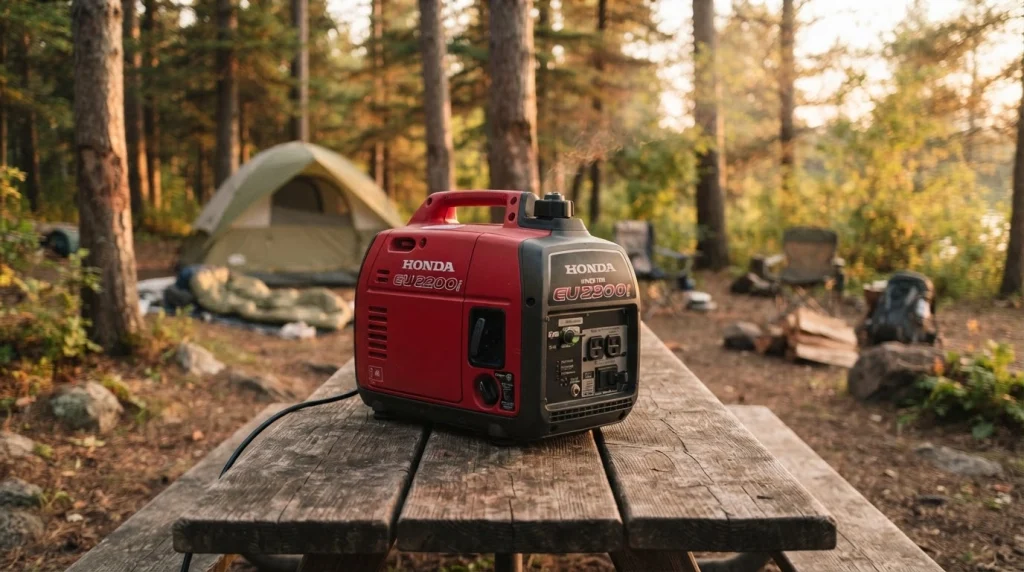
All of Honda’s own current inverter generators use genuine Honda engines. That is the simplest answer in this guide, and it is also the most reliable one.
Honda designs the engine and inverter to work as one system. That integration helps Honda units feel smooth, start easily, and hold steady under changing loads, so check the spec sheet for each model before you buy.
For the current lineup and official specs, check Honda Power Equipment or an authorized Honda dealer. Model availability varies by country, and some older models have been replaced.
Honda’s own inverter lineup at a glance
The table below gives a general guide to Honda’s familiar EU and EB inverter families. Wattage classes follow the model names, but running watts and starting watts vary by model and load, so always confirm exact figures on the spec sheet.
| Honda model family | Engine family | Typical size class | Best for |
|---|---|---|---|
| EU1000i / EU10i | Honda small four-stroke | About 1,000 watts peak | Phones, lights, small electronics |
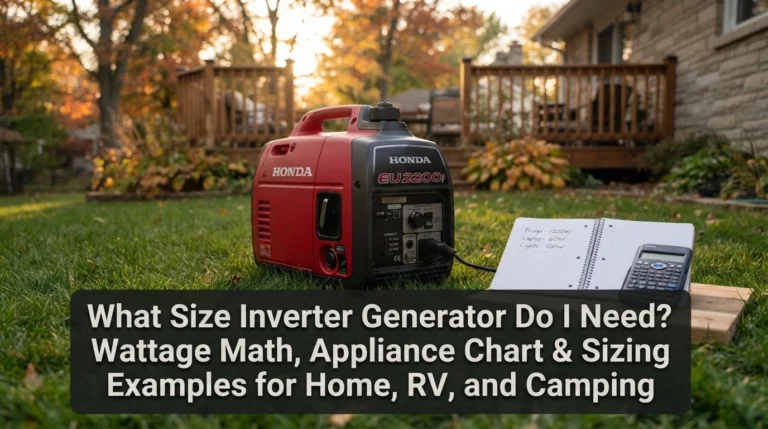
| EU2200i and Companion | Honda GXR120 | About 2,200 watts peak | Camping, RV basics, fridge, CPAP |
| EB2200i | Honda GXR120 | About 2,200 watts peak | Job-site and commercial use |
| EU3200i | Honda GX130, fuel-injected | About 3,200 watts peak | RV air conditioning, larger loads |
| EU3000iS | Honda four-stroke | About 3,000 watts peak | RV, home essentials, longer runs |
| EU7000iS | Honda GX390, fuel-injected | About 7,000 watts peak | Home backup, RV, 120/240V loads |
The EU2200i class is light enough to carry with one hand, and it pairs well for parallel use. The EU7000iS class is far heavier, but it can handle much larger home loads.
Parallel capability means you can link two matching inverter generators for more power. Honda’s Companion models are built for that job, with a 30-amp RV outlet, so check your manual for the correct parallel kit and limits.
Older Honda inverter models, such as the EU2000i, also used genuine Honda engines. Honda replaced that class with the EU2200i family, and used Honda units hold value well when they have service records and clean fuel history.
If you are weighing Honda against the wider market, compare the full field first. Our guide to the best inverter generator brands puts Honda in context with Yamaha, Champion, Westinghouse, and others.
Section takeaway: If you want a sure thing, buy a Honda-branded inverter generator. Every current Honda EU and EB inverter model uses a genuine Honda engine, built as one system with its inverter.
Do Other Brands Use Genuine Honda Engines in Inverter Generators?
Very few do, and none of the big mainstream inverter brands in North America rely on Honda engines for their inverter lines as of 2026. That surprises many shoppers, because Honda GX engines are common in other equipment.
Honda sells GX engines to equipment makers for pressure washers, pumps, and open-frame generators. Inverter generators are different, because the engine, alternator, and inverter must work as a tight, tuned package, so most brands build or source their own integrated engines instead.
The niche exceptions worth knowing
A small number of specialist inverter generators outside the mainstream North American market do use genuine Honda engines. The best-known example is the Sawafuji Elemax SHX series, sold mainly in Japan and parts of Asia.
Elemax SHX1000 and SHX2000 units have been listed with Honda GXH50 and GX100 engines. They are not common at North American retailers, and support can be limited outside their home markets, so check local availability and service first.
Other regional builders in Europe and Asia also sell Honda-engine generators, but most of those are conventional open-frame units, not inverters. Do not assume a Honda-engine label means inverter power, and check for “inverter” and a THD figure on the spec sheet.
Why Honda-powered conventional generators confuse the search
This is where most confusion starts. Brands such as NorthStar and DEWALT have sold open-frame portable generators with genuine Honda GX engines, including GX270, GX390, GX630, and GX690 models.
Those units are conventional generators, not inverter generators. They run at a fixed engine speed and do not produce the same clean, variable-speed inverter power, and they can be loud, heavy, and less suited to sensitive electronics.
A Honda GX engine in a conventional frame is a good sign for engine durability. It tells you nothing about THD, noise at camp, or eco-mode fuel savings, so judge inverter claims on inverter specs, not engine badges alone.
Honda does not widely rebadge its EU inverter generators under other mainstream brands in North America. If a listing claims a non-Honda inverter is “made by Honda,” ask for a Honda engine code, a Honda manual, and a dealer who will service it as a Honda.
Safety note: Run any gasoline generator outdoors and well away from windows, doors, and vents. Never run one in a garage, tent, or enclosed space, even with doors open.
Section takeaway: Outside Honda’s own lineup, genuine Honda engines in inverter generators are rare and mostly niche or regional. Honda-powered open-frame generators exist, but they are not inverter generators.
Which Popular Inverter Generators Do Not Use Honda Engines?
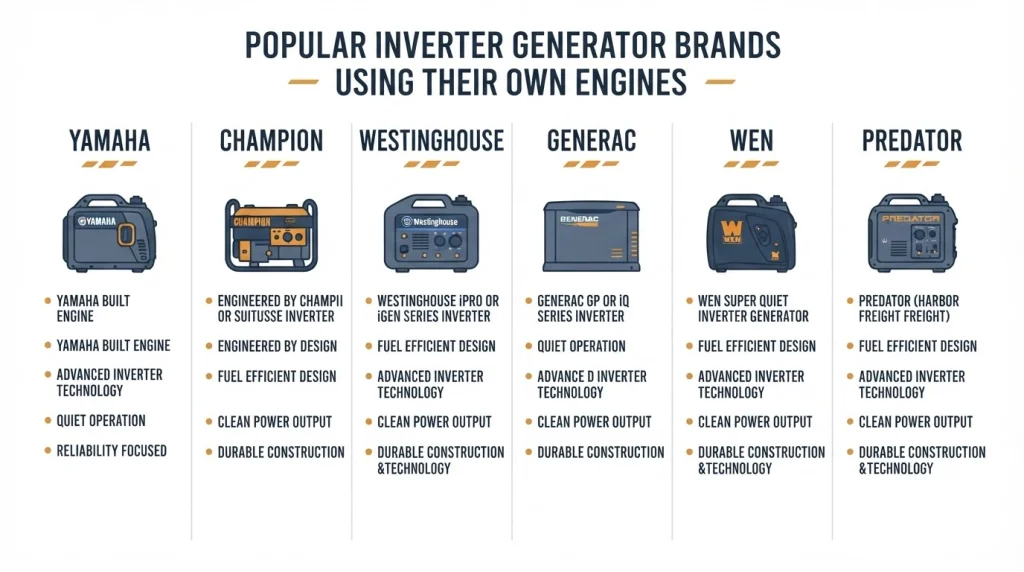
Most popular inverter generators do not use Honda engines. They use engines built by the generator brand, by a partner engine maker, or by a supplier that follows a Honda-style GX layout without being Honda.
That does not make them bad machines. Many are quiet, fuel-efficient, and well suited to camping, RV use, and home backup, but you should judge them on their own record, not on Honda’s reputation.
Brands that use their own engines
- Yamaha: Yamaha inverter generators use Yamaha engines, and they are Honda’s closest rival for quiet, refined inverter power.
- Champion: Champion inverter generators use Champion engines, and many models add dual-fuel capability that Honda’s gasoline-only EU models do not offer.
- Westinghouse: Westinghouse inverter generators use Westinghouse-branded engines, and the iGen line is known for dual-fuel options and remote start.
- Generac: Generac inverter generators use Generac engines, and Generac is best known for standby home generators.
- WEN: WEN inverter generators use WEN-branded engines, and they often cost less than Honda and Yamaha.
- DuroMax, Pulsar, and Predator: These brands use their own or supplier-built engines, often in a Honda-style layout, so check each spec sheet.
Yamaha deserves a special note because shoppers often compare it head to head with Honda. Learn more about how reliable Yamaha inverter generators are before you choose between the two.
Champion is the value contrast to Honda in many buying guides. Read whether Champion inverter generators are good and reliable if propane fuel matters to you.
What “Honda-style” really means on a spec sheet
Many low-cost engines copy the Honda GX overhead-valve layout, including similar bore, stroke, and mounting patterns. Makers such as Loncin, Rato, and Zongshen supply engines in this style to several generator brands.
Parts can sometimes swap between a clone and a genuine Honda GX, but that does not make them equal. Materials, tolerances, quality control, and warranty support can differ a lot, and a clone may wear faster under heavy, continuous loads.
I have run clone-engine units that started on the first pull for years with fresh fuel and regular oil changes. I have also seen one surge under a window AC when the load cycled hard, so maintenance and honest sizing matter more than the badge alone.
Section takeaway: Yamaha, Champion, Westinghouse, Generac, WEN, and most other inverter brands do not use Honda engines. Judge each on its own engine record, noise, THD, warranty, and service support.
How Can You Tell a Genuine Honda Engine From a Honda Clone?
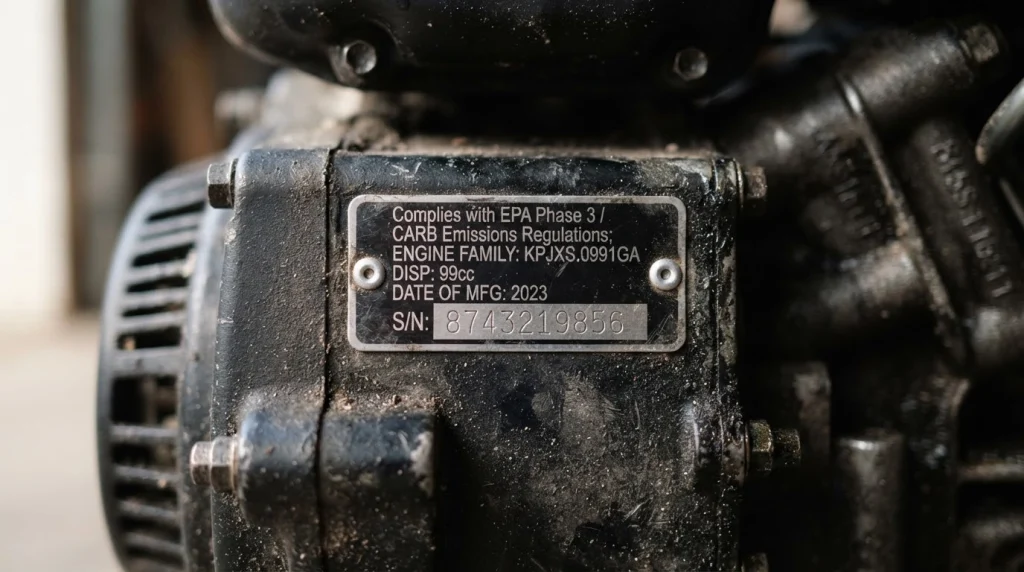
You can spot most fakes and clones in a few minutes if you know where to look. Start with the engine itself, not the sales page, because the engine tells the truth.
Genuine Honda engines carry clear Honda branding, a model code, and a serial number. Clone engines often carry a generic brand, a vague “OHV” label, or a code that mimics a Honda code without saying Honda.
Check the engine label and casting
Look for “Honda” on the recoil cover, valve cover, or engine shroud. Genuine Honda GX, GXR, GXH, GC, and iGX engines show the Honda name and the engine family code in a clean, consistent font.
Check for a serial number plate or stamped code on the engine block. Honda dealers can use that code to confirm the engine model, and a missing plate or a misspelled label is a warning sign.
Open the manual if you can. A genuine Honda-powered unit should include Honda engine information, oil specs, and service intervals that match Honda guidance, while a generic manual with no Honda engine section points to a clone.
Check the words in the listing
- Trust: “Honda GXR120 engine,” “Honda GX390 engine,” or “Honda GX130 engine” with a matching spec sheet.
- Question: “Powered by Honda” with no engine model named, or “Honda engine” with no Honda branding in photos.
- Assume clone: “Honda-style,” “Honda-type,” “GX-style,” “Honda clone,” or “196cc OHV” with no maker named.
Ask the seller for the exact engine make and model, the Honda serial number location, and who handles engine warranty service. Honest sellers answer fast, with photos and manual pages, while evasive answers are a reason to walk away.
Genuine Honda engines sold in the United States carry EPA emissions labels and compliance information. The Environmental Protection Agency sets emissions rules for small engines, and compliant units show that labeling clearly.
Check who backs the warranty and for how long. Honda engines often carry separate warranty support through Honda dealers, while clone engines are usually covered only by the generator brand, with shorter terms and fewer service centers.
For a full buying checklist, review what to look for in an inverter generator before you compare prices. Engine proof belongs on that list, next to watts, noise, and outlets.
Section takeaway: A genuine Honda engine proves itself with Honda branding, a clear model code, a serial number, and matching manual and warranty paperwork. Vague wording and missing labels point to a clone.
Is a Honda Engine Worth the Higher Price?
Sometimes yes, and sometimes no. It depends on how often you run the generator, how long you keep it, and how much you value quiet running, easy starts, and dealer support.
Honda inverter generators cost more per watt than most rivals. You pay for refinement, resale value, and a deep service network, and you do not always need that premium for weekend camping or short outages.
When Honda power is worth it
- Frequent use: You run the unit often for RV trips, job sites, or long outages, and reliability matters most.
- Quiet matters: You camp near others or run at night and need low noise at real distances.
- Long ownership: You plan to keep the generator for many years and want strong parts and resale support.
- Sensitive loads: You power laptops, medical gear, or audio gear often and want proven clean power.
I still remember a three-day outage when a small Honda carried a fridge, a few lights, and a CPAP without drama. It sipped fuel in eco mode and stayed quiet enough to sleep nearby, and that calm is what people pay for.
Eco mode, also called eco-throttle or economy mode, lets the engine slow down at light loads. That saves fuel and cuts noise, but it can cause a brief lag when a large load starts, so turn eco mode off for air conditioners and power tools.
When a non-Honda inverter makes more sense
Choose a rival when budget, propane, or higher watts matter more than Honda refinement. Dual-fuel models from Champion, Westinghouse, and WEN run on propane, which stores far longer than gasoline.
Propane also avoids many stale-fuel carburetor clogs, the most common reason a stored generator will not start. Keep gasoline fresh, use stabilizer if your manual allows it, and run the unit regularly.
Running watts vs starting watts still decides the choice. Running watts are what an appliance needs to keep going, while starting watts are the brief extra power a motor needs to start.
Add up running watts for everything you will run at once, then add the largest starting surge. If the total exceeds the generator’s running watts, size up or split loads, and check the spec sheet for both figures.
Safety note: Carbon monoxide is colorless and odorless, and it can kill quickly. The Centers for Disease Control and Prevention and the Consumer Product Safety Commission both warn to run generators outdoors, far from homes, with CO alarms inside.
Section takeaway: Honda is worth it for frequent, quiet, long-term use with strong service support. A good non-Honda inverter often wins on price, propane fuel, or watts per dollar for occasional use.
How Do You Choose the Right Inverter Generator?
Start with your loads, not the engine badge. A perfectly built 2,200-watt unit will still overload if you ask it to run an RV air conditioner, a microwave, and a fridge at once.
List what you must power, what you want to power, and what can wait. That list sets your wattage class, fuel type, and outlet needs, and then you can compare engines, noise, runtime, and warranty within that class.
Size by use case, not by headline watts
- About 1,000 to 2,200 watts peak: Phones, lights, laptops, CPAP, small fridge, and light camping loads.
- About 3,000 to 3,500 watts peak: RV basics, small window AC, fridge plus lights, and mid-size power tools.
- About 4,500 to 7,000 watts peak: Larger RV AC, home essentials, furnace blower, sump pump, and more tools.
- Parallel pairs: Two small inverters linked together can beat one large unit for weight, noise, and fuel use.
Check outlets before you buy. RV owners need a 30-amp RV outlet, while home backup may need a 30-amp or 50-amp outlet, GFCI protection, and a proper inlet.
A transfer switch or interlock kit lets you connect safely to home circuits. Never backfeed through a wall outlet, and use a transfer switch or interlock installed by a licensed electrician.
For broader backup planning, see guidance from the Department of Energy. Compare noise at the same distance, runtime at 25% and 50% load, tank size, and oil-change intervals per your manual.
If you are still torn between inverter and conventional power, read our inverter generator vs regular generator comparison. It explains THD, noise, fuel use, and cost in plain terms.
Safety note: Use a transfer switch or interlock installed by a licensed electrician for any home-circuit connection. Check your owner’s manual before use, and keep fuel away from heat and flames.
Section takeaway: Size for your real loads, pick fuel and outlets for your use, then choose the engine and brand with the best support in that class. The right size beats the right badge every time.
Frequently Asked Questions
Do any non-Honda inverter generators use Honda engines?
Very few mainstream models do as of 2026, and most use their own or supplier-built engines. Niche units such as Sawafuji Elemax models use Honda engines in some markets, but they are rare in North America.
Does Champion use Honda engines?
No, Champion inverter generators use Champion engines, not genuine Honda engines. Champion is known for dual-fuel models, strong features, and lower prices than Honda, so judge it on its own warranty and owner record.
Does Predator use Honda engines?
No, Predator inverter generators do not use genuine Honda engines. Predator engines follow a Honda-style GX layout, which is a clone-style design, not a Honda-built engine, and parts and service differ from Honda.
What Honda engine is in the EU2200i?
The Honda EU2200i uses the Honda GXR120 commercial-series engine. It is a genuine Honda four-stroke engine built to work with Honda’s inverter system, so check the spec sheet for the exact version in your market.
Are Honda clone engines bad?
Not always, but they vary more in materials, tolerances, and long-term durability. A well-made clone can serve occasional use with fresh fuel and regular oil changes, while frequent use favors a genuine Honda or Yamaha engine.
How do I know if my generator has a real Honda engine?
Look for Honda branding, a Honda engine code such as GX, GXR, or GXH, and a serial number on the engine. Confirm the same code in the owner’s manual and on the maker’s official spec page, since “Honda-style” alone is not genuine.
Final Takeaway: Buy the Engine You Can Prove
Which inverter generators use Honda engines? Honda’s own EU and EB models do, and almost no one else in the mainstream market does.
If Honda refinement, quiet running, and dealer support matter most, buy a Honda. If budget, propane, or higher watts matter more, buy a strong non-Honda inverter on its own merits.
List your must-run loads, check running and starting watts, and compare two or three models in that class. Buy the one you can prove, service, and carry with confidence.

Hi, I’m Michael Turner. I own a generator workshop in the United States and founded HomeGeneratorBlog to share practical, hands-on guidance about generator installation, maintenance, troubleshooting, safety, and backup power solutions. My goal is to help homeowners make smarter, more confident decisions through clear and reliable information