Do You Need an Inverter Generator for Home Backup Power? Essentials, Sizing & Safe Setup
Quick Answer
Do you need an inverter generator for home backup power? For most homes, yes if you want to keep a fridge, lights, phones, and a medical device running through a short outage. A 3,000 to 5,000 running-watt inverter generator covers those essentials for many houses, while a whole-house load needs a larger unit or a standby system.
You likely need one if:
- Outages hit often: You lose power more than once a year or for many hours at a time.
- Food or health matters: You must keep a fridge, freezer, CPAP, or furnace blower running.
- Work from home: You need clean power for a laptop, router, and phone charging.
- Quiet matters: You live close to neighbours and want lower noise than an open-frame unit.
- Budget is limited: You want backup without the cost and install of a standby generator.
You may not need one if:
- Outages are rare, short, and never risk food, heat, or health.
- You already have a standby generator, a large power station, or a reliable solar-plus-battery setup.
- You cannot store fuel safely or run a unit outdoors at least 20 feet from your home.
I have run a fridge and a CPAP through a two-night outage on a small inverter generator. I have also watched a neighbour overload a unit on a window AC and lose power again.
That gap between a calm outage and a second blackout comes down to one thing. You need the right size, the right loads, and a safe hookup.
This guide walks through that decision in plain terms. You will learn when an inverter generator makes sense, what size to buy, what it can run, how to connect it, and what it costs in 2026.
In This Guide
- What Is an Inverter Generator for Home Backup?
- Do You Need One, or Is Another Option Better?
- What Size Inverter Generator Do You Need for Home Backup?
- Inverter Generator vs Conventional vs Standby: Which Fits Your Home?
- What Can an Inverter Generator Run During an Outage?
- How Do You Connect an Inverter Generator to Your House Safely?
- How Much Does Home Backup With an Inverter Generator Cost?
- How Do You Keep It Ready When the Power Goes Out?
- Frequently Asked Questions
What Is an Inverter Generator for Home Backup?
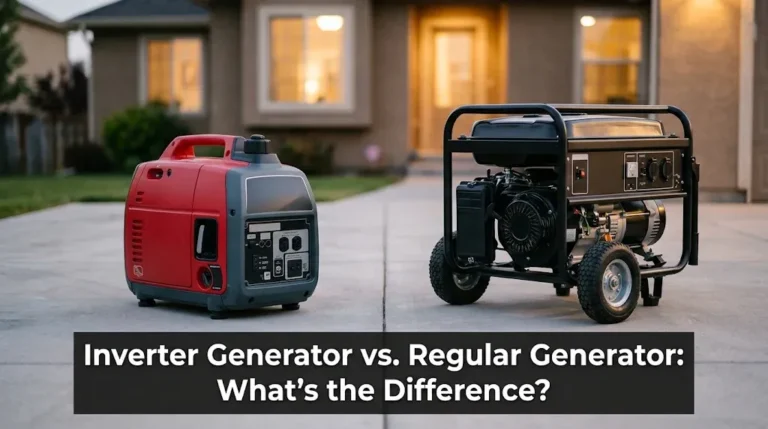
An inverter generator is a portable generator that makes clean, stable power by converting raw AC to DC, then back to smooth AC. That clean sine wave is safe for phones, laptops, routers, and CPAP machines.
It differs from a conventional open-frame generator in one key way. The engine speed changes with the load, so it runs quieter and uses less fuel at light loads.
Why clean power matters at home
Sensitive electronics hate dirty power. Voltage spikes and high total harmonic distortion, or THD, can damage chargers and controls over time.
Most inverter generators keep THD under 3%. Check the spec sheet for your model, because the exact figure varies by brand and size.
What home backup means in practice
Home backup does not have to mean powering every circuit. For most families, it means keeping food cold, lights on, phones charged, and one or two key loads running.
That narrower goal is why a portable inverter generator works so well. You pick the essentials, size for them, and rotate other loads as needed.
Section takeaway: An inverter generator gives you quiet, clean, portable power for essentials, not automatic whole-house coverage.
Do You Need One, or Is Another Option Better?
Start with your outage history, not a sales page. If your power fails for hours, spoils food, or stops heat in winter, backup power is a real need.
If outages last 20 minutes and you just lose Wi-Fi, a small power station may be enough. Match the tool to the problem.
Signs you do need an inverter generator
- You live in a storm, heat, or ice-prone area with outages each year.
- You have a well pump, sump pump, or furnace blower that must run.
- Someone at home uses a CPAP, oxygen concentrator, or powered medical device.
- You work from home and lose income when the power drops.
- You have a large fridge or freezer full of food.
Signs you may not need one yet
- Your grid is stable and outages are rare and brief.
- You live in an apartment with no safe outdoor space to run a generator.
- You cannot store gasoline or propane safely, or local rules ban generator use.
- Your only need is phone charging for a few hours.
I learned this the hard way during a summer storm. My first plan was to run everything at once, and the generator tripped in minutes.
My second plan worked. I ran the fridge, a few lights, and the router, then added the fan only after the fridge cycled off.
Safety note: Run any generator outdoors, at least 20 feet from your home, with the exhaust pointed away from windows, doors, and vents.
Section takeaway: You need an inverter generator when outages threaten food, heat, health, or work, and a smaller backup will not cover those loads.
What Size Inverter Generator Do You Need for Home Backup?
Size is the question that decides everything else. Too small, and the unit overloads when a fridge or pump starts.
Too large, and you pay more, burn more fuel, and haul more weight than you need. Aim for your real essentials, plus a margin.
How do you size it in four steps?
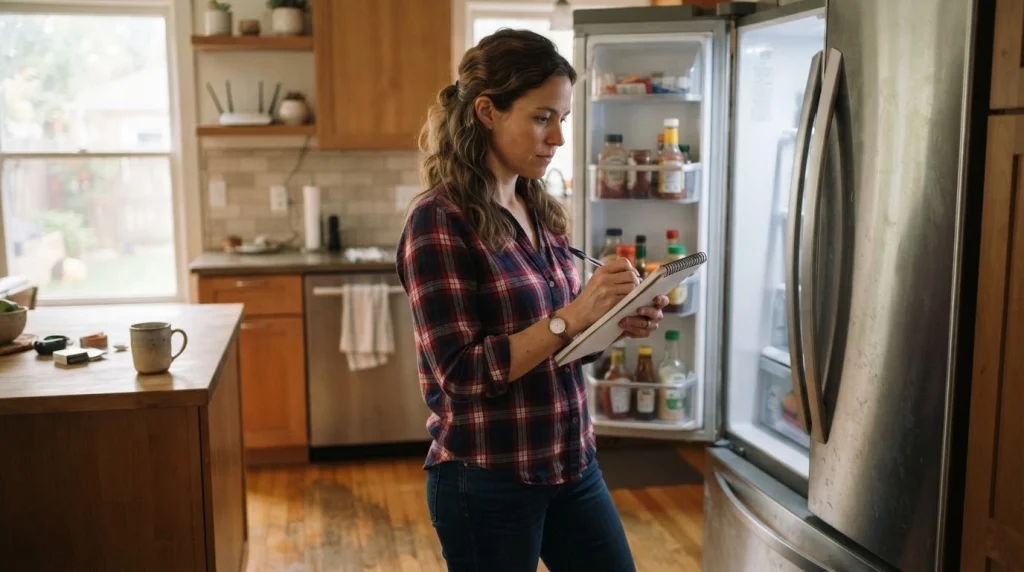
- List essentials: Write down every load you must run at the same time.
- Add running watts: Add the steady watts for each item from its label or manual.
- Add starting watts: Add the highest starting surge, often from a fridge, pump, or AC.
- Add a margin: Add 20% headroom, then pick a unit with that running-watt rating or higher.
Running watts are the steady power a device uses while it runs. Starting watts, or surge watts, are the short burst a motor needs to start.
A fridge may run at 150 watts but need 1,200 watts to start. That surge is why so many first-time buyers undersize their generator.
Use this guide to calculate the generator wattage you need before you shop. It walks through the same math with appliance examples.
Also learn the difference between running watts and starting watts if those terms still feel fuzzy. The distinction matters most for motor loads.
What size fits which home?
- 2,000 watts: Lights, phones, laptop, router, and a small fridge in rotation.
- 3,000 to 3,500 watts: Fridge, lights, CPAP, TV, and a furnace blower or small window AC in many cases.
- 4,500 to 5,000 watts: Fridge plus freezer, sump pump, furnace, and more lights and devices.
- 7,000 watts or more: Larger homes, a well pump, or a small central AC with a soft start, if the unit offers 240V.
Check your spec sheet for 240V output before you plan for it. Many small inverter generators offer 120V only, and that limits what they can feed through a transfer switch.
Section takeaway: Size for running watts plus the largest starting surge, then add 20% headroom.
Inverter Generator vs Conventional vs Standby: Which Fits Your Home?
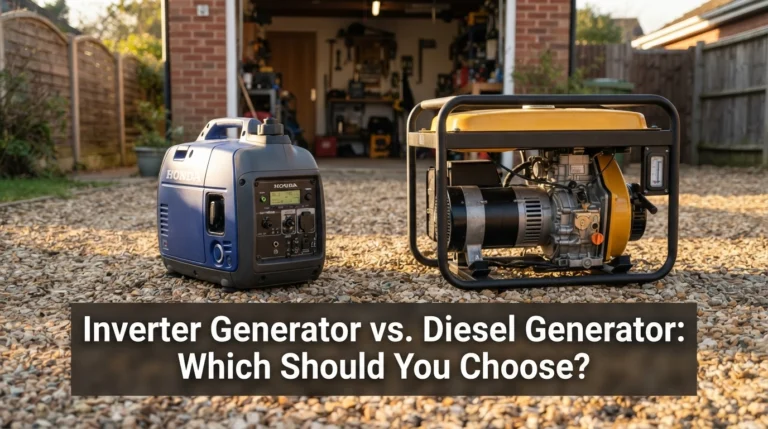
An inverter generator is not the only way to back up a home. A conventional portable generator costs less per watt, while a standby generator starts on its own.
The right choice depends on noise, fuel, budget, and how much of the house you must power. Use the table below to compare them at a glance.
| Feature | Inverter Generator | Conventional Portable | Standby Generator |
|---|---|---|---|
| Power quality | Clean sine wave, low THD | Rougher output, higher THD | Clean and stable for home loads |
| Noise | Quieter, often 50 to 60 dB at light load | Louder, often 70 dB or more | Moderate, housed outdoors |
| Fuel use | Efficient at part load, eco mode helps | Fixed speed, burns more at light load | Natural gas or propane, runs longer |
| Typical cost | Mid-range, $500 to $2,500 for home sizes | Lower per watt, often $400 to $1,500 | High, often $5,000 to $15,000 installed |
| Best for | Essentials, electronics, and quiet use | Heavy loads and job sites | Whole-house, automatic backup |
A dual fuel inverter generator adds flexibility. It can run on gasoline or propane, and propane stores longer without going stale.
A portable power station is another option for short, quiet backup. It has no fumes and no fuel, but it stores far less energy than a fuelled generator.
For more on safe home power, see guidance from Energy.gov and Consumer Reports. Both cover backup options without pushing one brand.
Section takeaway: Pick an inverter for quiet, clean essentials, a conventional unit for cheap raw watts, and a standby unit for automatic whole-house cover.
What Can an Inverter Generator Run During an Outage?
A 3,000-watt inverter generator can run a lot more than most buyers expect. It cannot run everything at once, though, and that is where a load plan helps.
Use the ranges below as a starting point. Always check the label on your own appliance, because age, size, and model change the draw.
| Appliance | Running Watts | Starting Watts |
|---|---|---|
| Fridge | 100 to 200 | 800 to 1,200 |
| Freezer | 100 to 200 | 800 to 1,200 |
| Furnace blower | 500 to 1,200 | 1,000 to 2,000 |
| Sump pump | 800 to 1,050 | 1,300 to 2,150 |
| Window AC, 8,000 BTU | 700 to 1,000 | 1,800 to 2,500 |
| CPAP machine | 30 to 60 | 30 to 60 |
| Laptop and router | 50 to 150 | 50 to 150 |
What should you run first?
- Fridge and freezer: Run them in blocks, then unplug one to free watts.
- Heat or cooling: Pick one comfort load at a time in extreme weather.
- Medical devices: Keep these on a steady circuit and test them before an outage.
- Lights and comms: LED lights, phones, and a router use very little power.
Avoid electric heaters, kettles, and large ovens on a small inverter generator. They draw 1,200 to 1,800 watts each and leave little room for anything else.
If you need a short list to plan around, see our picks for the best generator for home essentials. It focuses on the loads that matter most in an outage.
Section takeaway: Run essentials in priority order, rotate heavy loads, and skip high-heat appliances on a small unit.
How Do You Connect an Inverter Generator to Your House Safely?
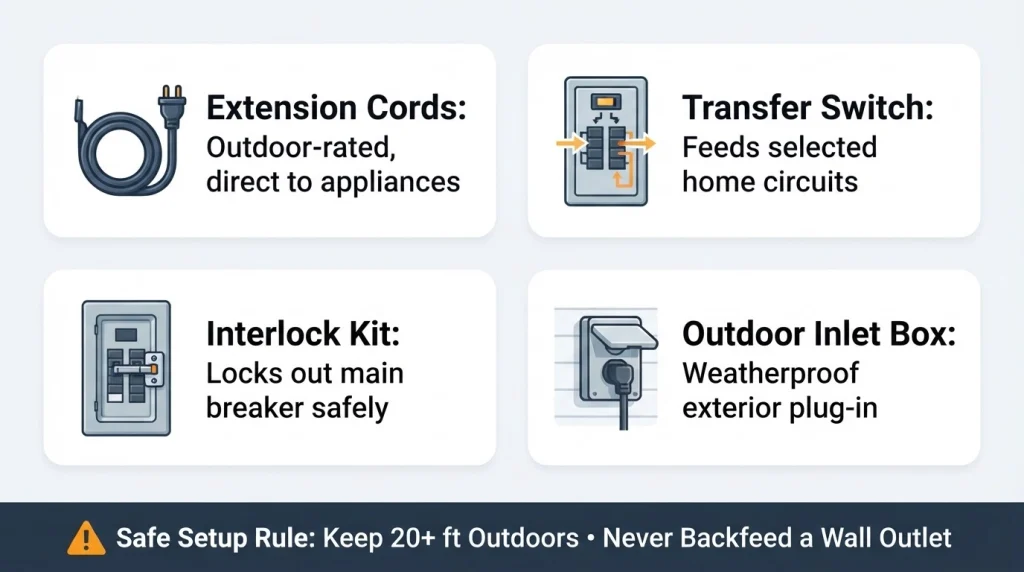
The safest way to power house circuits is a transfer switch or an interlock kit, installed by a licensed electrician. Both stop backfeed, which can injure utility workers and damage your home.
Never plug a generator into a wall outlet. That shortcut, called backfeeding, is dangerous and illegal in many areas.
What are your safe connection options?
- Extension cords: Run heavy-duty, outdoor-rated cords straight to each appliance.
- Transfer switch: Feed selected circuits through a dedicated inlet and switch.
- Interlock kit: Lock out the main breaker so generator power cannot feed the grid.
- Generator inlet box: Plug the generator into an outdoor inlet instead of running cords through a window.
Extension cords are the simplest option for a short outage. Keep cords short, dry, and rated for the load, and never run them under rugs or through doors that pinch them.
A transfer switch is the better choice if you lose power often. It lets you power chosen circuits without moving cords around the house.
For a clear look at the risks, read our guide on a generator without a transfer switch. It explains what is safe, what is not, and when to call an electrician.
Safety note: Use a transfer switch or interlock installed by a licensed electrician, and check your owner’s manual before use. Keep the generator outdoors and well away from windows, doors, and vents.
For official safety guidance, see CDC guidance on carbon monoxide and CPSC generator safety information. Both stress outdoor use and working CO alarms.
Section takeaway: Use cords for simple loads, and a transfer switch or interlock for house circuits, and never backfeed through a wall outlet.
How Much Does Home Backup With an Inverter Generator Cost?
The generator is only part of the total cost. You also need fuel, cords or a transfer switch, oil, and basic maintenance supplies.
Plan for the full setup, not just the sticker price. A cheap unit with no safe hookup is not a backup plan.
What will you pay in 2026?
- 2,000-watt inverter: About $400 to $900 for a good home-use model.
- 3,000 to 3,500 watts: About $700 to $1,400, depending on brand and features.
- 4,500 to 5,000 watts: About $1,000 to $2,500, often with 240V and electric start.
- Transfer switch install: About $500 to $1,500, plus the switch and inlet parts.
- Fuel and upkeep: About $50 to $150 per year for fuel, oil, and a spare plug.
Eco mode can stretch runtime a lot at light loads. A unit rated for 8 hours at 50% load may run much longer at 25% load, so check the spec sheet for both figures.
For a deeper price breakdown by size, see how much an inverter generator costs. It covers hidden costs that buyers often miss.
Section takeaway: Budget for the generator, a safe hookup, fuel, and upkeep, not just the unit itself.
How Do You Keep It Ready When the Power Goes Out?
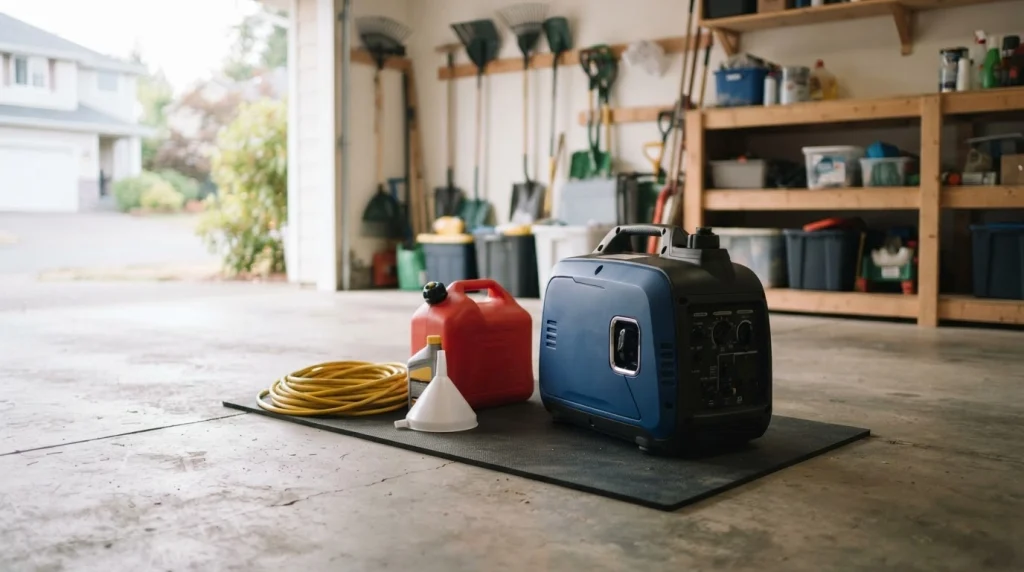
A generator that will not start is worse than no generator. It gives you false comfort until the outage hits.
Most failures come from stale fuel, a dead battery, or a clogged carburetor. All three are easy to prevent with a simple routine.
What is a simple readiness routine?
- Run it monthly: Start it under a light load for 15 to 20 minutes.
- Use fresh fuel: Add fuel stabiliser, rotate stored fuel, and drain it for long storage if your manual says so.
- Change oil on schedule: Follow your manual for the first break-in change and later intervals.
- Test the load: Plug in your fridge and lights once a season to confirm the plan works.
- Store it dry and covered: Keep it in a dry spot, with cords, oil, and a funnel in one kit.
Keep a written load list taped to the unit. In a dark house, you will not want to guess which plugs to use first.
Also keep working CO alarms on every level of your home. Test them monthly, and replace batteries as your alarm maker directs.
Safety note: Store fuel in approved containers, away from heat and living spaces, and never refuel a hot generator.
Section takeaway: Test monthly, keep fuel fresh, and keep a simple load list with the unit.
Frequently Asked Questions
Do I need an inverter generator if I already have a power station?
Not always. A power station is fine for phones, lights, and a laptop for a few hours, but it runs out fast on a fridge or furnace.
An inverter generator wins for longer outages because you can refuel it and keep going.
Can one inverter generator power my whole house?
Most portable inverter generators cannot power a whole house at once. They are sized for essentials, not every circuit, heater, and AC together.
Two units in parallel, or a large 240V model, can cover more, but a standby system is the usual whole-house answer.
Is an inverter generator safe for a CPAP machine?
Yes, in most cases, because inverter power is clean and stable. Use the maker’s power supply, test the setup before an outage, and keep the unit outdoors.
Check your CPAP manual for wattage and any warnings about generator use.
How long will an inverter generator run on one tank?
It depends on size, load, and eco mode. Many home-size units run 8 to 12 hours at 50% load, and longer at 25% load.
Check the spec sheet for runtime at both 25% and 50% load before you buy.
Can I run an inverter generator in the rain?
No, not in open rain. Water can damage outlets and create a shock risk, even on an inverter model.
Use a generator tent or canopy made for running units, with open airflow and the exhaust pointed away from your home.
Do I need a transfer switch for an inverter generator?
You need one if you want to power house circuits through your panel. Extension cords are fine for direct appliance loads, but they cannot safely feed the panel.
Have a licensed electrician install the switch or interlock kit.
What size is best for most homes?
For most homes, 3,000 to 5,000 running watts is the sweet spot. It covers a fridge, lights, devices, and one larger load like a furnace blower or sump pump.
Go smaller only if your list is short, and go larger if you have a well pump or central AC.
So, do you need an inverter generator for home backup power? If outages threaten food, heat, health, or work, the answer is yes for most homes.
Pick your essentials first, size for them with headroom, and set up a safe connection before the next storm. Then test the whole plan once, so the first real outage feels calm, not chaotic.

Hi, I’m Michael Turner. I own a generator workshop in the United States and founded HomeGeneratorBlog to share practical, hands-on guidance about generator installation, maintenance, troubleshooting, safety, and backup power solutions. My goal is to help homeowners make smarter, more confident decisions through clear and reliable information