Are Hyundai Inverter Generators Any Good? Honest 2026 Guide
Quick Answer
Yes, Hyundai inverter generators are good value choices for camping, RV trips, and light home backup. They offer clean power, quiet operation, and useful features at a lower price than premium brands, though long-term dealer support can vary by model and seller. Compare them with the best inverter generator brands before you buy.
Why Hyundai Works for Many Buyers
- Clean power: Inverter models suit phones, laptops, TVs, and other sensitive electronics.
- Quiet design: Enclosed models run much quieter than open-frame conventional generators.
- Good value: Prices often sit below Honda and Yamaha for similar wattage.
- Portable sizes: Small suitcase models are easy to lift, carry, and store.
- Useful features: Many models offer eco mode, parallel capability, and USB outlets.
Check Before You Buy
- Match running watts, not starting watts, to your must-run loads.
- Confirm warranty terms, parts access, and who handles service in your area.
- Check the spec sheet for noise, runtime, outlets, and parallel kit needs.
I’ve tested inverter generators on campsites, in RV parks, and through long outages at home. Hyundai keeps coming up when buyers want quiet, clean power without paying a premium price.
This guide goes deeper than a simple yes or no. You’ll learn how Hyundai models perform, where they shine, where they fall short, and how to pick the right size for your loads.
In This Guide
- What Is a Hyundai Inverter Generator?
- Are Hyundai Inverter Generators Reliable?
- How Quiet Are Hyundai Inverter Generators?
- Hyundai vs Honda, Champion, and Westinghouse: How Do They Compare?
- What Can a Hyundai Inverter Generator Run?
- What Are the Pros and Cons of Hyundai Inverter Generators?
- How Do You Choose the Right Hyundai Model and Keep It Running Well?
- Frequently Asked Questions About Hyundai Inverter Generators
- The Bottom Line: Should You Buy a Hyundai Inverter Generator?
What Is a Hyundai Inverter Generator?
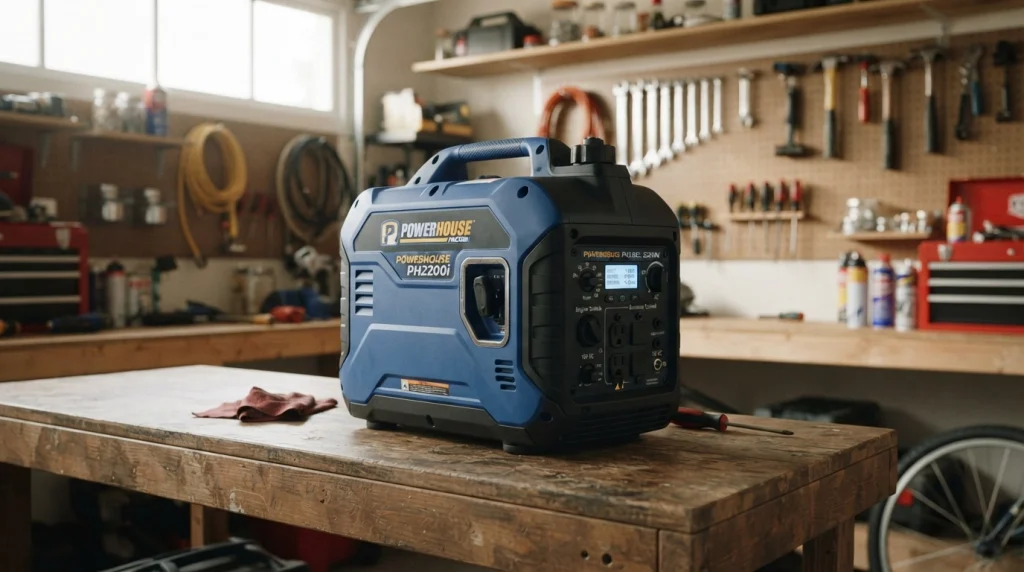
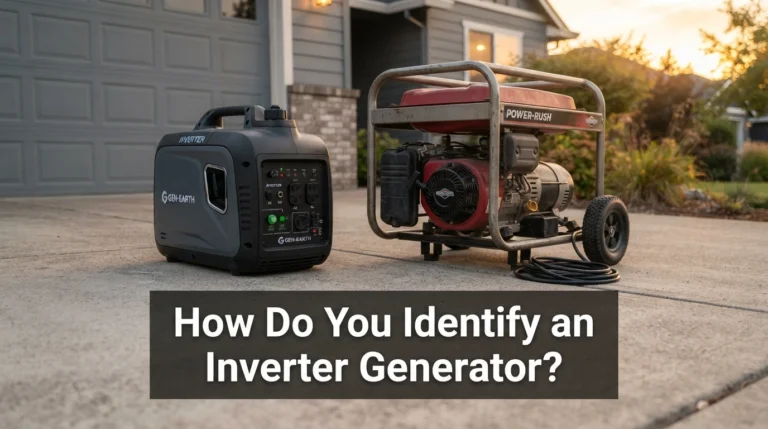
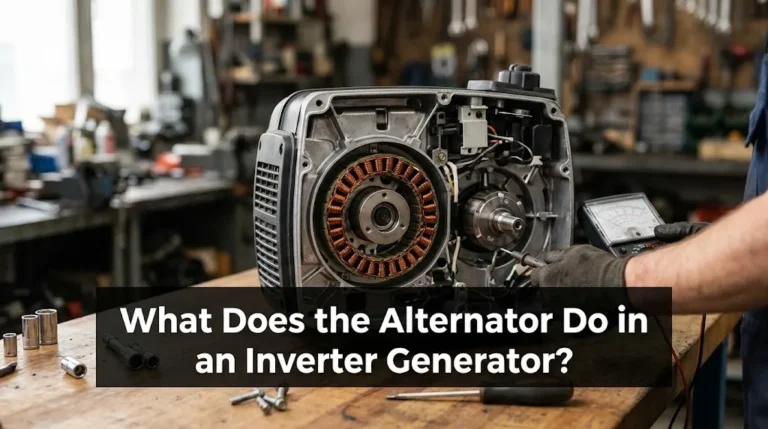
An inverter generator is a portable generator that creates clean, stable power for sensitive electronics. It makes AC power, converts it to DC, then inverts it back to smooth AC power.
That extra step matters. It keeps voltage and frequency steady when loads change, and it helps the engine slow down when demand drops.
What does Hyundai bring to the inverter generator market?
Hyundai is best known for cars, but its power equipment line covers portable generators, inverter generators, pressure washers, and lawn tools. In portable power, Hyundai competes mainly on value, features, and compact design.
Most Hyundai inverter models follow the familiar suitcase or enclosed style. You’ll find carry handles, covered outlets, eco-throttle modes, and low-oil shutdown on many models.
As of 2026, the range spans small camping units to larger models suited to RV use and light home backup. Exact models, wattage, and features vary by market and seller, so check the spec sheet for the unit in front of you.
What is clean power, and why does THD matter?
Clean sine wave power means smooth, stable output close to grid power. Total harmonic distortion, or THD, measures how much that wave distorts.
Lower THD is better for laptops, phones, TVs, CPAP machines, and modern furnace controls. Inverter generators typically keep THD low, while many open-frame conventional generators do not.
Don’t guess from the box alone. Look for the THD figure, outlet types, and running watts on the spec sheet before you plug in pricey gear.
- Running watts: the power a generator can supply nonstop.
- Starting watts: the short surge for motors at startup.
- Eco mode: a setting that slows the engine at light loads to save fuel and cut noise.
- Parallel capability: the option to link two matching units for more power.
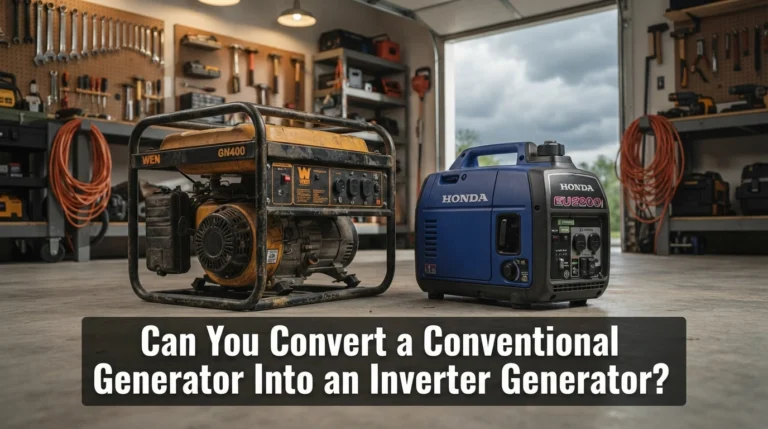
If you’re new to specs, start with what to look for in an inverter generator so wattage, noise, and outlets make sense. It will make the Hyundai models much easier to judge.
Section takeaway: A Hyundai inverter generator is a compact, value-focused portable power source built for clean, quiet output. Judge each model on running watts, THD, noise, and outlets, not on brand name alone.
Are Hyundai Inverter Generators Reliable?
For typical camping, RV, and occasional outage use, Hyundai inverter generators are generally reliable when sized right and maintained well. Problems show up most often from stale fuel, overload, and long storage without care.
That pattern holds across most mid-priced brands. The engine and inverter module can last well, but neglect shortens life fast.
What does reliable mean in real use?
Reliable means it starts on the second or third pull after storage. It holds steady power under load, and it doesn’t surge, stall, or trip when a fridge cycles on.
I’ve run a small inverter unit through a two-night outage with a fridge, a few lights, phones, and a CPAP machine. The key was load discipline, not raw size.
We cycled the fridge, kept the window AC off, and refueled outdoors in daylight. That routine matters more than brand for short outages.
Where do owners report problems?
Common complaints across value inverter brands include hard starting after months idle, carburetor trouble from old gasoline, and confusion over parallel kits. Some buyers also report slow parts or service help through online-only sellers.
Hyundai is not immune to those issues. A strong local dealer or clear warranty route can matter more than a small price saving.
- Stale fuel: gasoline can gum up a carburetor in weeks or months.
- Overload: too many loads at once can trip the inverter or stall the engine.
- Low oil: low-oil shutdown protects the engine, but it can surprise first-time owners.
- Storage: damp storage can corrode parts and drain a starter battery.
Break-in and first oil changes follow your owner’s manual. Don’t skip them, and don’t run a new unit at full load for hours on day one.
Safety note: Run any generator outdoors, well away from windows, doors, and vents. Never run one in a garage, shed, or enclosed porch, even with doors open.
For broader safety guidance, the U.S. Consumer Product Safety Commission publishes generator safety advice. It is worth a quick read before your first outage.
Section takeaway: Hyundai reliability is solid for light, regular use when you maintain fuel, oil, and load limits. Buy from a seller with clear warranty support, and test the unit before you truly need it.
How Quiet Are Hyundai Inverter Generators?
Hyundai enclosed inverter models are quiet enough for most campsites and RV parks when used with care. They are far quieter than open-frame conventional generators at similar loads.
Noise still depends on load, distance, and ground surface. A unit at full load sounds louder than the same unit in eco mode.
How should you read a dB rating?
A dB rating states sound level, often measured at a set distance and load. Ratings from different brands are not always measured the same way.
Don’t compare a quiet-load figure with a full-load figure. Check distance, load, and eco-mode status on the spec sheet.
In real terms, small enclosed inverter generators often sit in the conversation-to-quiet-street range at light loads. Larger units and heavy loads push noise higher, so placement still counts.
How do you keep noise down at a campsite?
Place the generator as far from tents as your cord safely allows. Point the exhaust away from neighbors, and use eco mode when loads allow.
I once parked a small inverter unit behind a truck, on grass, with the exhaust facing open ground. Neighbors barely noticed it during dinner, but they heard it clearly when I added a kettle.
That lesson stuck. Load control is noise control, and eco mode only helps when demand stays low.
- Use a heavy-duty outdoor extension cord rated for the load.
- Keep the unit level, on firm ground, with clear airflow.
- Follow campground quiet hours, even if your unit seems quiet.
- Turn off eco mode for motor loads that surge at startup.
Noise also affects home use. A quiet generator still needs distance from open windows, and a long cord beats a close, loud placement.
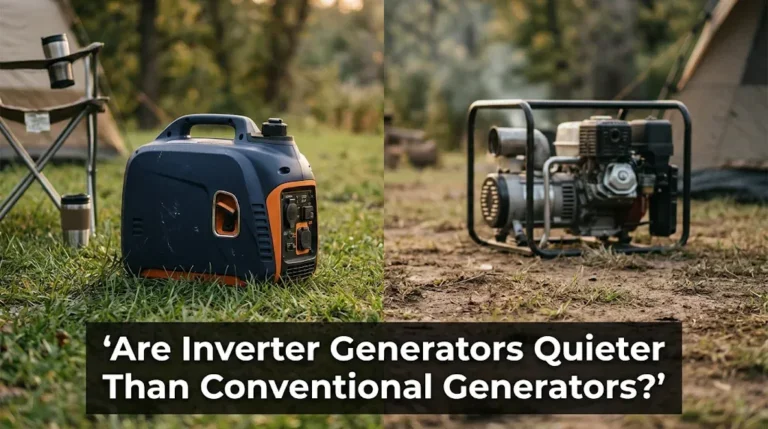
Learn more about how inverter models stack up in are inverter generators quieter than conventional generators. It explains why enclosed design and variable speed make such a difference.
Section takeaway: Hyundai inverter generators are quiet for their size, but load and placement decide how quiet they feel. Use eco mode wisely, keep distance, and check the spec sheet rating conditions.
Hyundai vs Honda, Champion, and Westinghouse: How Do They Compare?
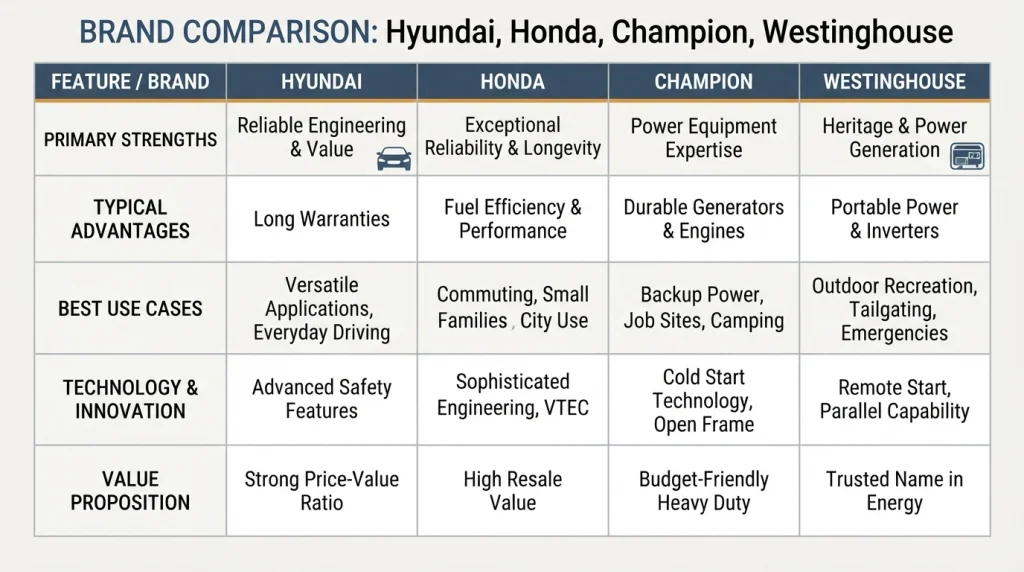
Hyundai wins on price and features per dollar. Honda wins on dealer depth and long-term resale, while Champion and Westinghouse often sit between them on support and choice.
Your best pick depends on how often you’ll use it. Daily job-site use and rare camping use call for different trade-offs.
| Brand focus | Typical strength | Watch-out | Best for |
|---|---|---|---|
| Hyundai | Value, compact design, useful features | Service access can vary by seller | Camping, RV, light backup |
| Honda | Refinement, dealer network, resale | Higher price for similar wattage | Frequent use, long ownership |
| Champion | Wide range, dual-fuel choice, support | Size and weight vary widely | Home backup, RV, dual fuel |
| Westinghouse | Strong RV-ready options, remote start | Check outlet and fuel options per model | RV, camping, backup |
Is Honda worth the extra money over Hyundai?
Honda often feels smoother, quieter, and easier to service over many years. That polish costs more upfront, and it can pay off if you run a generator often.
For a few camping trips a year, the gap narrows. A well-kept Hyundai can serve that use well at a lower price.
Read are Honda inverter generators worth the money if you want the full premium-brand case. It helps you weigh upfront cost against long-term ownership.
How does Champion compare for home backup?
Champion offers many dual-fuel inverter models, which appeal to buyers who want propane storage. Propane stores longer than gasoline, and it avoids some stale-fuel trouble.
Hyundai’s gasoline-focused lineup can still work for backup, but fuel rotation matters more. Store fuel safely, rotate it, and test the unit monthly in outage season.
See are Champion inverter generators good and reliable for a closer look at that brand’s strengths. It is a useful cross-check before you commit.
Section takeaway: Hyundai is a smart value pick, Honda is the long-term premium pick, and Champion and Westinghouse offer strong middle-ground choice. Match the brand to use frequency, fuel choice, and local support.
What Can a Hyundai Inverter Generator Run?
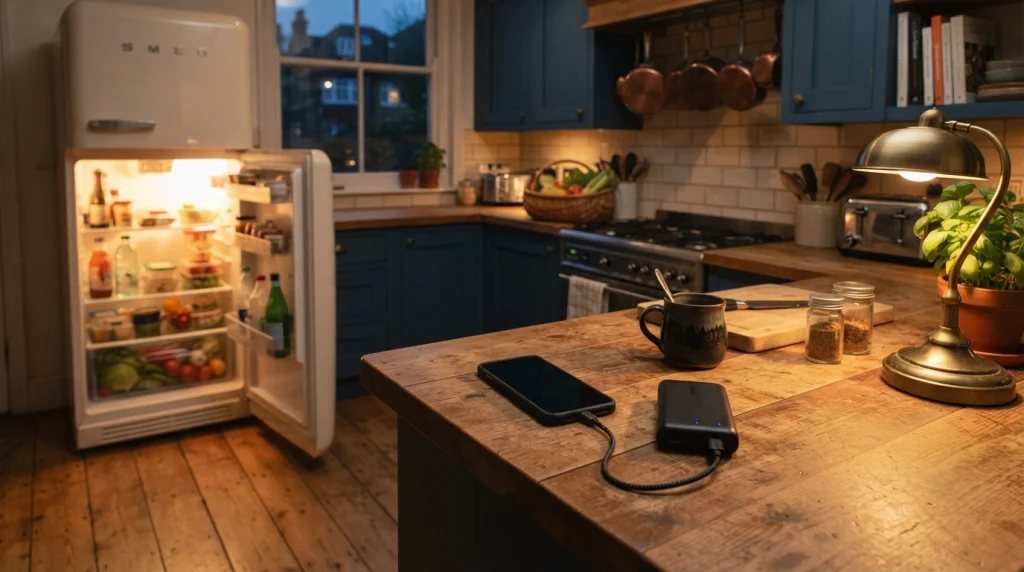
A small Hyundai inverter generator can run lights, phones, laptops, a TV, and a fridge in turn. A larger model can add a microwave, small window AC, or RV air conditioner, if wattage allows.
Size decides everything. Add up running watts first, then check starting watts for motors.
How do you do the wattage math?
List your must-run items, then add their running watts. Add the largest starting surge once, not for every item.
Use nameplate figures where you can. General ranges help for planning, but your fridge, pump, or AC may differ.
- Refrigerator: often 100–200 running watts, with a higher startup surge.
- CPAP machine: often 30–90 watts without a heated humidifier.
- Laptop and phones: often under 150 watts combined.
- Microwave: often 900–1,200 watts while cooking.
- RV air conditioner: often 1,200–1,800 running watts, plus a large surge.
Keep a 20% headroom margin when you can. A generator at 100% load runs louder, hotter, and shorter.
Can a Hyundai inverter generator run a refrigerator and a CPAP at once?
Yes, in most cases a 2,000-watt-class inverter unit can handle both, plus lights and charging. Start the fridge first, let it settle, then add the CPAP and small loads.
Don’t add a microwave or kettle at the same time. Stagger big loads, and watch for overload warnings.
For RV air conditioning, check the AC’s locked-rotor surge and the generator’s starting watts. A soft-start kit can help in some RV setups, but follow the RV and generator manuals.
Safety note: Use a transfer switch, inlet, or interlock kit installed by a licensed electrician for home circuits. Never backfeed through a wall outlet.
The U.S. Department of Energy offers general home energy and backup-power guidance. Pair that with your manual and local codes for home hookups.
Section takeaway: Most Hyundai inverter models suit essentials, camping, and RV loads when sized with headroom. Do the math, stagger motor starts, and never guess wattage for an air conditioner or pump.
What Are the Pros and Cons of Hyundai Inverter Generators?
Hyundai’s pros center on value, quiet enclosed design, and clean power. Its cons center on variable service access and the need to check specs model by model.
No brand wins every category. The right choice is the one that fits your loads, budget, and support options.
What are the main pros?
- Lower price: You often get similar wattage for less than Honda or Yamaha.
- Quiet operation: Enclosed models suit campsites, RV parks, and close neighbors.
- Clean power: Inverter output suits phones, laptops, and medical devices like CPAP machines.
- Fuel savings: Eco mode cuts fuel use and noise at light loads.
- Portability: Small models lift easily and store in a trunk or RV bay.
- Features: USB ports, parallel ports, and digital displays appear on many models.
What are the main cons?
- Service variation: Dealer and parts access can differ by region and seller.
- Model confusion: Similar names can hide different outlets, fuel, and start types.
- Limited heavy backup: Small models cannot run a whole home or large well pump.
- Fuel care: Gasoline models need rotation, stabilizer, and carburetor care.
- Parallel limits: Not every model parallels, and kits may be sold apart.
I weigh service access heavily after a friend waited weeks for a small part during storm season. The generator was fine, but the wait was not.
Ask who honors the warranty before you buy. A clear answer beats a low price when an outage is coming.
Section takeaway: Hyundai offers strong value and quiet, clean power for light and mid-size loads. Confirm service, outlets, and parallel needs first, and the cons stay manageable.
How Do You Choose the Right Hyundai Model and Keep It Running Well?
Start with loads, then pick size, fuel, outlets, and start type. A model that fits your real loads will beat a bigger, noisier unit you dread moving.
Check the spec sheet for every claim that matters. Price, wattage, and noise can all shift between model years.
Which size should you choose?
For camping and charging, a 2,000-watt-class unit often suffices. For RV use with an air conditioner, look larger or plan for parallel use.
For light home backup, list essentials first. A fridge, sump pump, furnace blower, lights, and charging add up fast.
- List must-run loads and their running watts.
- Add the largest motor surge once.
- Add 20% headroom for safety and noise.
- Check outlets: 120V household, 30A RV, USB, and 12V DC.
- Confirm start type: recoil, electric, or remote start.
Dual-fuel and propane options can ease fuel storage, but output often drops on propane. Check running watts for each fuel on the spec sheet.
How much should you expect to pay?
Small Hyundai inverter models often cost less than premium rivals, while larger RV-ready models cost more but still undercut top-tier brands. Prices shift with season, seller, and features, so compare delivered totals.
Don’t judge value on starting watts alone. Compare running watts, runtime at 25% and 50% load, noise, warranty, and included accessories.
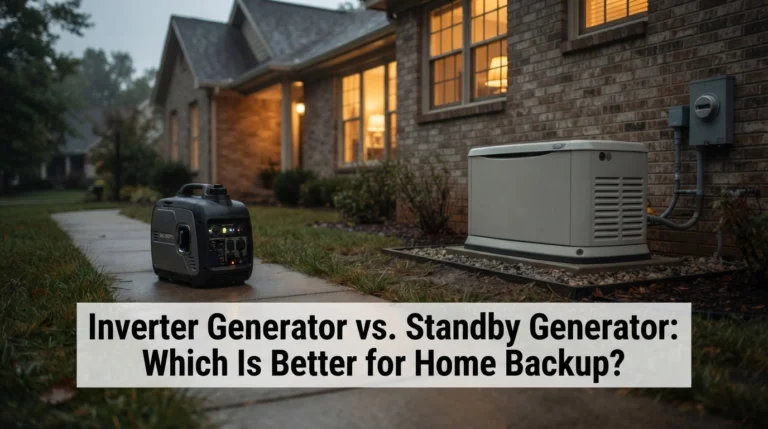
See are inverter generators worth buying to test the wider value case. It helps you decide if an inverter model beats a conventional generator for your use.
What maintenance keeps a Hyundai reliable?
Follow the owner’s manual for break-in, oil changes, air filter checks, and spark plug service. Intervals vary by model and use, so don’t copy another brand’s schedule.
Fuel care does the most good. Use fresh gasoline, add stabilizer if the manual allows, and run the unit dry or drain fuel for long storage as directed.
- Test-run monthly in storm season, under a light load.
- Check oil before each use, and top up with the grade in the manual.
- Keep air vents clear, and clean or replace the air filter as needed.
- Store in a dry, covered spot, with the unit cool and fuel handled safely.
- Keep a spare spark plug, oil, and funnel with the generator.
Carbon monoxide safety deserves equal care. The Centers for Disease Control and Prevention warns that generators must stay outdoors and away from windows. Install working CO alarms in your home, and never ignore one.
Safety note: Let the generator cool before refueling, and refuel outdoors away from ignition sources. Store fuel in approved containers, away from living spaces.
For independent buying context, Consumer Reports covers generator testing and safety topics. Use it alongside the spec sheet, not instead of it.
Section takeaway: Choose by running watts and outlets, compare delivered value, and maintain fuel and oil on schedule. A tested, well-kept Hyundai will serve you far better than a larger unit left idle.
Frequently Asked Questions About Hyundai Inverter Generators
Are Hyundai inverter generators good for camping?
Yes, small enclosed Hyundai models suit camping well. They offer quiet operation, clean power for phones and laptops, and easy carry weight. Check campground rules, use eco mode, and keep the unit away from tents.
Are Hyundai inverter generators good for home backup?
Yes, for light backup such as a fridge, lights, CPAP, and charging. They are not whole-home units, so prioritize essentials and stagger loads. Use a proper inlet or transfer switch for home circuits.
Are Hyundai inverter generators as good as Honda?
Hyundai offers better value, while Honda often offers more refinement, dealer depth, and resale value. For frequent, long-term use, Honda can justify its price. For occasional camping and light backup, Hyundai often suffices.
How long do Hyundai inverter generators last?
Life depends on use, load, fuel care, and maintenance. With regular oil changes, fresh fuel, and sensible loads, many inverter generators last for years of seasonal use. Follow the manual and test the unit often.
Can you run two Hyundai inverter generators in parallel?
Some models support parallel operation with a matching kit, but not all do. Check the spec sheet for parallel capability, kit type, and wattage limits. Only parallel matching, compatible models as the manual directs.
Do Hyundai inverter generators work with sensitive electronics?
Yes, inverter output suits laptops, phones, TVs, and CPAP machines when THD stays low. Check the THD figure and running watts on the spec sheet. Avoid overload, and use surge protection where the manual suggests it.
The Bottom Line: Should You Buy a Hyundai Inverter Generator?
Buy a Hyundai inverter generator if you want quiet, clean power at a fair price for camping, RV trips, or light home backup. It is a strong value choice when you size it right and buy from a seller with clear support.
Skip it, or look at Honda or Champion, if you need heavy daily use, whole-home backup, or the widest dealer network. Those needs call for more power, more support, or both.
Do the wattage math, check the spec sheet, and test your unit before storm season. That prep turns a good generator into a reliable one when power fails.

Hi, I’m Michael Turner. I own a generator workshop in the United States and founded HomeGeneratorBlog to share practical, hands-on guidance about generator installation, maintenance, troubleshooting, safety, and backup power solutions. My goal is to help homeowners make smarter, more confident decisions through clear and reliable information